10 Scenic North Carolina State Parks Perfect For A Weekend Away
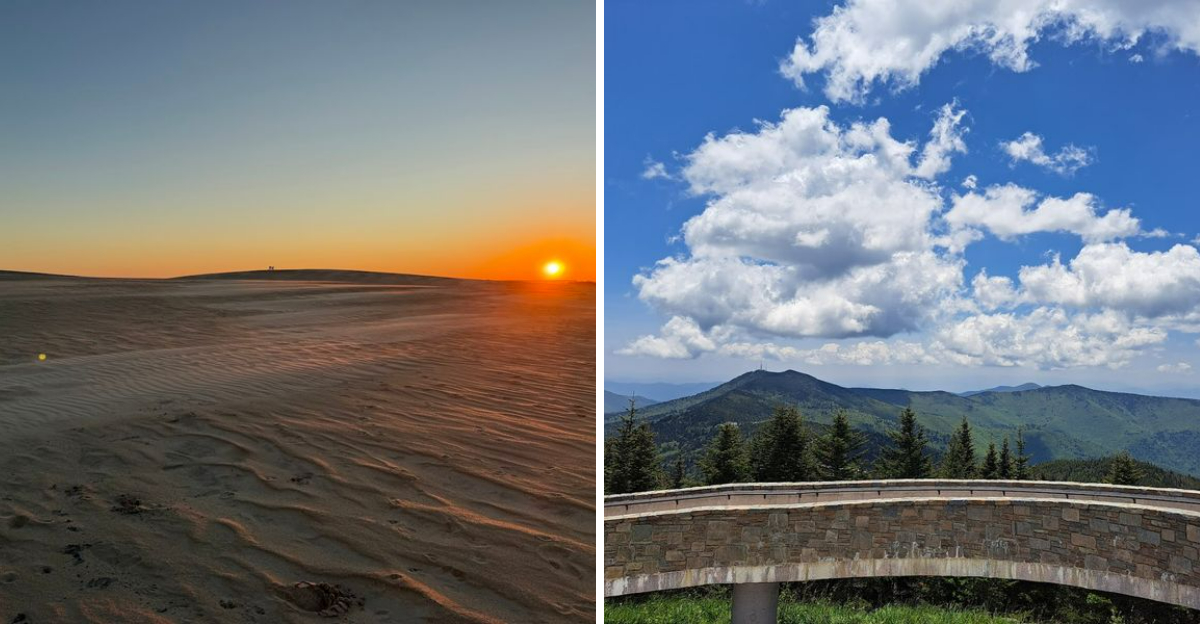
I didn’t expect North Carolina to change the way I think about weekend trips. One day I stood on a mountain with clouds beneath my feet.
Two days later I was climbing a sand dune taller than most buildings, barefoot, sunburned, completely hooked. North Carolina state parks don’t ease you in.
They throw mountains, waterfalls, ancient forests, and wild coastline at you all at once, and somehow it never feels like too much. It feels like exactly enough.
If you’ve been waiting for a sign to finally book that weekend trip, consider this it. Keep reading and you won’t be disappointed.
1. Hanging Rock State Park
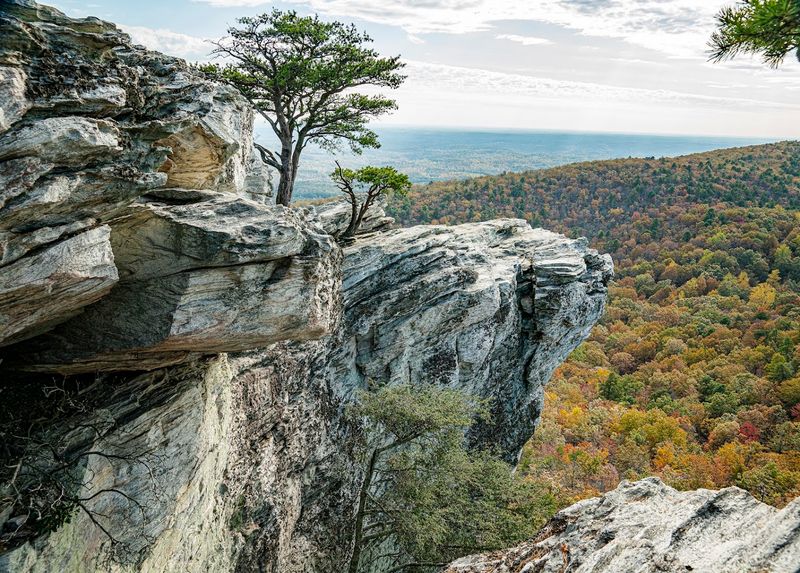
Some hikes reward you with a view. Hanging Rock rewards you with a feeling that the whole world just got smaller.
Perched in the Sauratown Mountains, this park is one of North Carolina’s most dramatic landscapes, and it earns that title every single time.
The park sits at 1790 Hanging Rock Park Rd, Danbury, NC 27016, covering over 8,000 acres of trails, waterfalls, and rocky overlooks. With more than 48 miles of marked trails, there is something for every fitness level.
From easy lakeside strolls to steep ridge climbs that will have your legs questioning your life choices.
The summit trail to Hanging Rock is about a 2.2-mile round trip. The quartzite cliffs at the top make for impressive photos, and on clear days you can see the Blue Ridge Mountains in the distance.
The park also has a 12-acre lake with a swimming beach, canoe rentals, and a bathhouse for cooling off after the hike.
Camping is available with both tent and trailer sites, plus vacation cabins if you want a roof over your head. Wildlife is plentiful here, including deer, wild turkey, and a variety of songbirds.
This is the kind of park that makes you want to put your phone away and just look around for a while.
2. Pilot Mountain State Park
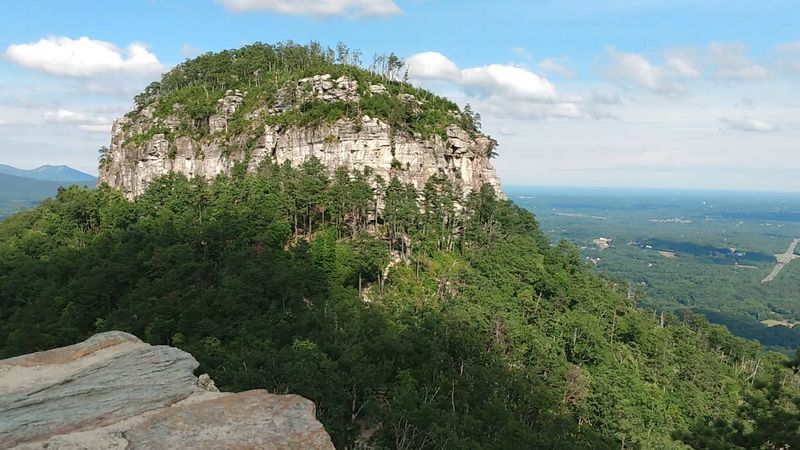
You will spot it from the highway before you even reach the exit. That unmistakable rounded knob rising out of the Piedmont flatlands like nature decided to make a statement.
Pilot Mountain is hard to miss, and even harder to forget once you have stood at its base looking straight up.
The park is located at 1721 Pilot Knob Park Rd, Pinnacle, NC 27043, and it protects one of the most recognizable natural landmarks in the entire state. The main attraction is Big Pinnacle, a 200-foot quartzite knob that sits atop the 2,421-foot mountain.
Hiking around the base of the knob is allowed, though climbing on the rock itself is not permitted, which keeps the formation pristine.
The park has two separate sections connected by a corridor of land along the Yadkin River. The mountain section offers hiking and rock climbing on designated routes, while the river section provides canoe access, fishing, and additional trails through river bottomland.
It is genuinely two parks in one.
Fall is spectacular here. The surrounding hardwood forest turns brilliant shades of orange and red, and the knob practically glows against the autumn sky.
Camping is available in both sections of the park, with sites for tents and RVs. Bring a pair of binoculars because the hawk watching during migration season is outstanding from the upper overlooks.
3. Stone Mountain State Park
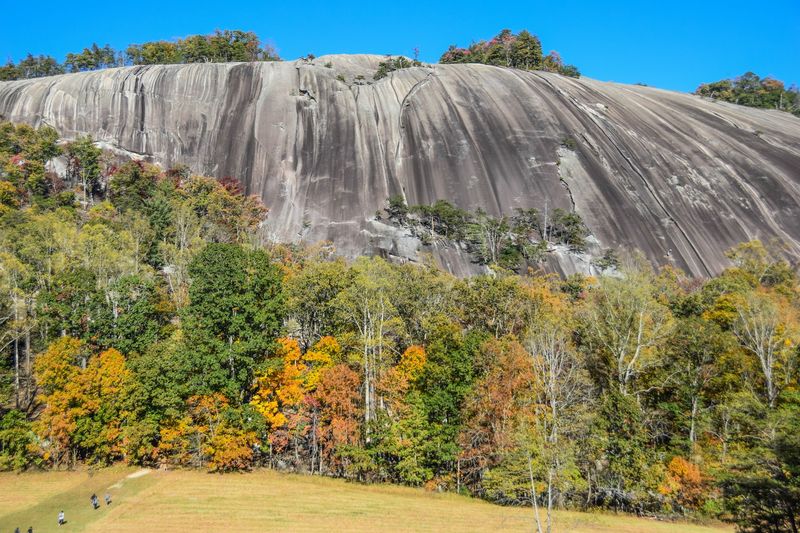
Picture a bare granite dome the size of a small town rising straight out of the Blue Ridge foothills. That is Stone Mountain, and it is every bit as impressive up close as it sounds.
The scale of this place genuinely catches you off guard the first time you see it.
Located at 3042 Frank Pkwy, Roaring Gap, NC 28668, Stone Mountain State Park is home to a massive 600-foot granite dome that rises dramatically above the surrounding landscape. The mountain is a National Natural Landmark, which means the federal government agrees it is worth protecting.
That kind of endorsement carries some weight.
The Stone Mountain Loop Trail is the park’s signature hike, covering about 4.5 miles and climbing the exposed granite face with the help of iron handrails bolted into the rock.
The summit offers sweeping views of the surrounding mountains and valleys, and on a clear day, the visibility is remarkable. Take your time on the descent because the smooth granite gets slippery when wet.
The park is also one of the top rock climbing destinations in the Southeast, with over 200 established climbing routes on the main face. Trout fishing is popular in the park’s streams, and wildlife sightings are common.
Camping is available year-round, with tent sites and walk-in sites scattered through the forest. Wildflowers bloom across the rocky outcrops in spring and create a surprisingly colorful contrast against all that grey granite.
4. Mount Mitchell State Park
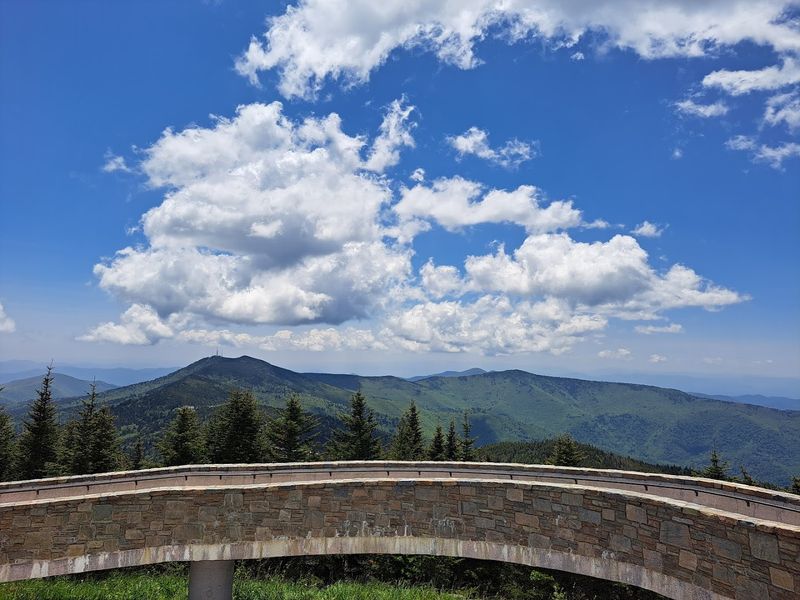
Some mountains give you altitude. Mount Mitchell gives you bragging rights.
At 6,684 feet, it is the highest point east of the Mississippi River, and standing at the top, that title feels completely earned.
The park is accessible via NC-128 off the Blue Ridge Parkway, at 2388 NC-128, Burnsville, NC 28714. The drive up is an experience on its own, winding through dense spruce-fir forest that feels more like Canada than the American South.
Temperatures at the summit run about 15 to 20 degrees cooler than in the valley, so pack a layer even in summer.
The summit observation tower offers a 360-degree view across the Black Mountain range and beyond. On clear days, you can see over 80 miles in every direction.
Several trails range from easy nature walks to strenuous ridge hikes, including the Deep Gap Trail connecting to the surrounding national forest.
The high-elevation spruce-fir forest is a rare and fragile ecosystem, home to species found almost nowhere else in the South. A restaurant and camp store operate seasonally at the park.
Camping is tent-only and fills up fast, so book well in advance. When the clouds sit below you at sunrise here, you will understand why people keep coming back.
5. Gorges State Park
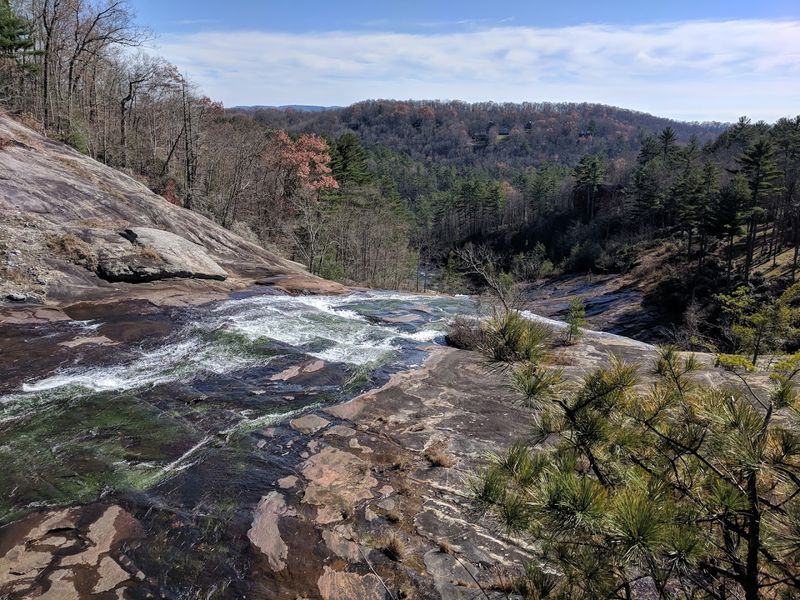
Most people don’t expect North Carolina to look like this. Gorges State Park gets over 80 inches of rain a year, and every mossy rock, fern-covered slope, and roaring waterfall proves it.
The park sits at 976 Grassy Ridge Rd, Sapphire, NC 28774, along the southern Blue Ridge Escarpment. Here, the mountains drop sharply toward the South Carolina piedmont.
That dramatic elevation change creates a unique microclimate supporting rare plant communities found almost nowhere else in the region. Botanists genuinely get excited about this place.
Waterfalls are the main event. The park has multiple cascades, including Rainbow Falls, which drops 150 feet into a pool below.
Trails are steep and rugged, but the effort pays off. Wear sturdy shoes and expect stream crossings on most routes.
Horseback riding is permitted on designated trails. A primitive camping area welcomes backpackers who want to sleep deep in the forest.
The Toxaway River runs through the park and offers excellent trout fishing in a genuinely remote setting. Wildlife includes black bears, otters, and over 200 bird species.
Visit in spring and you get wildflowers, rushing waterfalls, and a shade of green that seems almost too vivid to be real.
6. Jockey’s Ridge State Park
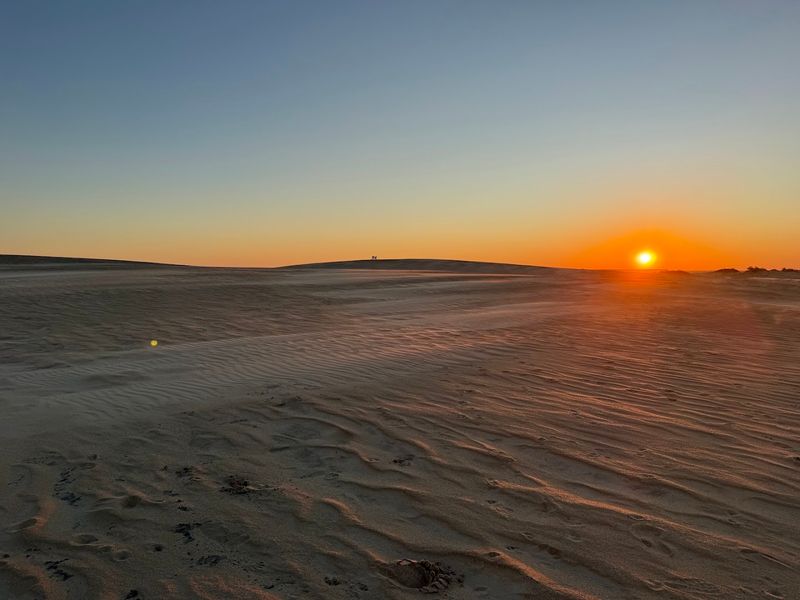
A 100-foot sand dune. A hang glider passing overhead.
The Atlantic Ocean glittering in the distance. Jockey’s Ridge is legitimately one of the most unusual places in all of North Carolina, and that is saying something.
The park sits at 300 W Carolista Dr, Nags Head, NC 27959, right in the heart of the Outer Banks. The dunes here are the tallest active sand dunes on the East Coast.
They shift constantly with the wind, which means the landscape looks different from one visit to the next. The main dune reaches about 80 to 100 feet depending on recent wind patterns.
Hang gliding lessons are available through a concessionaire right at the park. This is one of the few places in the country where beginners can learn to fly with soft sand as a landing zone.
Kite flying is equally popular, and the wind is almost always cooperating. Sunset from the top of the dune is a full social event, with crowds gathering every evening to watch the sky turn colors over the sound.
The park also has a nature trail through a rare maritime shrub thicket habitat. The adjacent Roanoke Sound offers kayaking and paddleboarding access.
There is no camping on site, but the surrounding Nags Head area has plenty of accommodation options. Summer gets busy, so arriving early earns you the dunes almost to yourself.
7. Hammocks Beach State Park
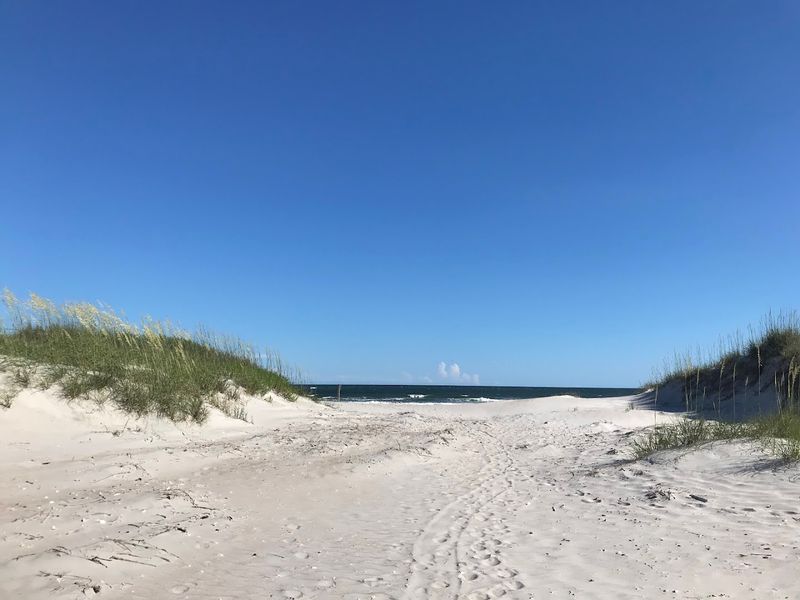
Getting to Bear Island requires a ferry, and that short boat ride is basically the park’s way of filtering out anyone who is not serious about the experience. What waits on the other side is one of the most pristine and undeveloped barrier island beaches on the entire East Coast.
The island itself is about 4 miles long and remains beautifully undeveloped. Bear Island is a critical nesting habitat for loggerhead sea turtles, and park staff monitor nests throughout the summer season.
Walking the beach at night during nesting season requires a permit and is carefully managed to protect the turtles. Watching a sea turtle nest is genuinely one of the most moving things you can witness in nature.
The surf fishing on Bear Island is excellent. Anglers regularly pull in redfish, flounder, and bluefish from the shore.
Primitive camping is available on the island, with designated sites behind the dunes. Paddling to the island in your own kayak or canoe is also permitted.
The marsh paddling around the mainland section of the park is beautiful on its own. This is a place that rewards the effort it takes to reach it.
Hammocks Beach State Park is accessed from 1572 Hammock Beach Road, Swansboro, NC 28584. The mainland section has a visitor center and ferry dock, with boats running seasonally to Bear Island.
8. Lake James State Park
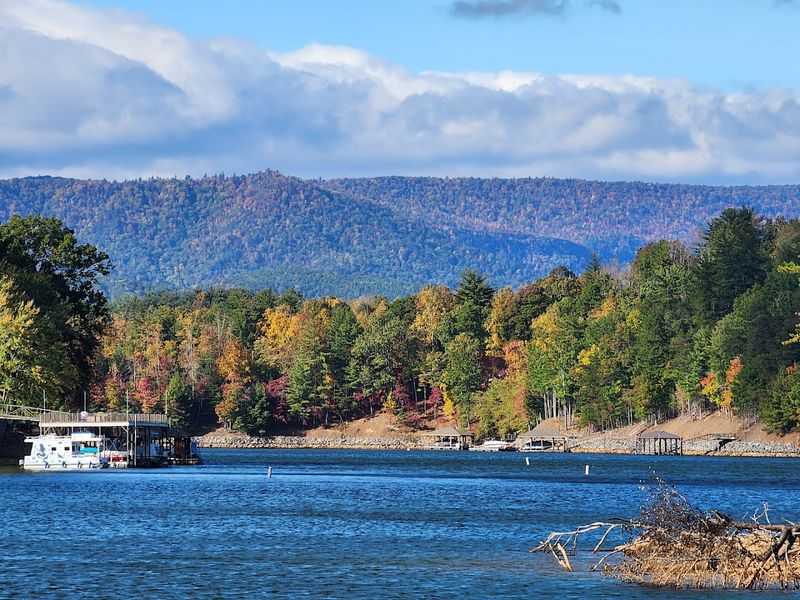
Some lakes feel manufactured. Lake James feels like it belongs exactly where it is, framed by the foothills of the Blue Ridge with Linville Gorge looming in the background.
The water is so clear you can see straight to the bottom in the shallows. It is a genuinely beautiful place to spend a weekend.
The park wraps around portions of a 6,812-acre reservoir created in the 1920s. The surrounding mountains give the lake a dramatic backdrop that most flatland reservoirs simply cannot compete with.
On calm mornings, the reflection of the ridgelines on the water is almost disorienting.
Swimming, kayaking, canoeing, and stand-up paddleboarding are all popular here. The park has a designated swim beach with lifeguards on duty during summer, plus a kayak and canoe launch for those who bring their own equipment.
Rentals are also available seasonally.
Hiking trails wind through the forest above the lake, offering elevated views of the water and surrounding mountains. The Overmountain Victory National Historic Trail passes through the park, adding a layer of history to the scenery.
Camping is available with both lakeside and forested sites, and reservations fill up quickly during summer. Fall is arguably the best time to visit, when the hardwood forest turns every shade of orange, gold, and red imaginable.
Lake James State Park is located at 2229 Lake James State Park Rd, Nebo, NC 28761.
9. Crowders Mountain State Park
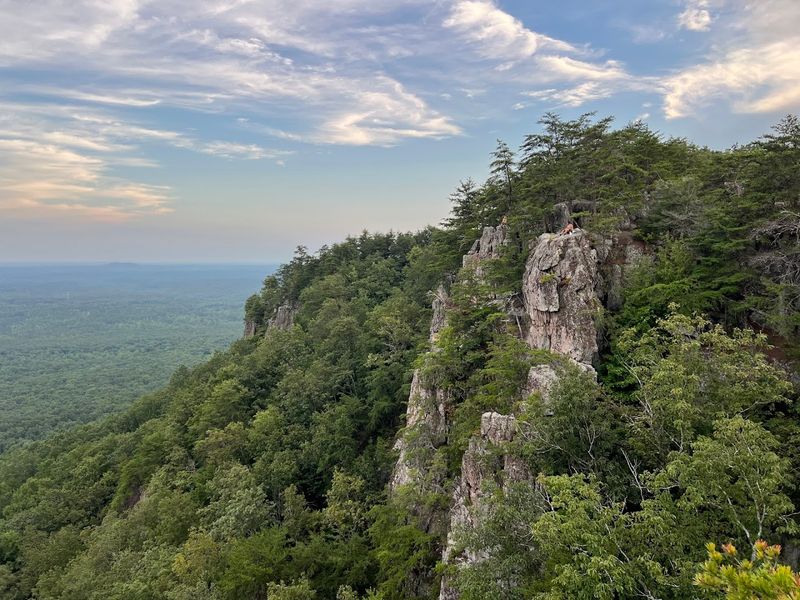
Most people in Charlotte don’t realize a real mountain wilderness sits less than 30 minutes from the city center. Crowders Mountain is the kind of place that makes you question why you ever paid for a gym membership.
The park protects two prominent monadnocks, Crowders Mountain at 1,625 feet and Kings Pinnacle at 1,705 feet, rising sharply above the surrounding Piedmont plain. These are not casual bumps in the landscape.
They are serious geological features with exposed cliff faces and long-range views that feel completely out of place this close to a major city.
Rock climbing is a major draw, with over 150 established routes on the quartzite cliffs ranging from beginner-friendly to seriously technical. One of the most rewarding hikes leads to Kings Pinnacle, where views stretch into South Carolina on clear days.
The trail is steep in sections and gets busy on weekends. A weekday visit is worth planning if your schedule allows.
The park sits at 522 Park Office Ln, Kings Mountain, NC 28086, with over 11 miles of hiking trails and a fishing lake stocked with bass and catfish. Picnic areas are well maintained and make a solid base for a family day trip.
Fall hiking here is excellent, with the elevation providing enough color to make the effort worthwhile. For Charlotte residents, this park is basically a backyard treasure.
10. Raven Rock State Park
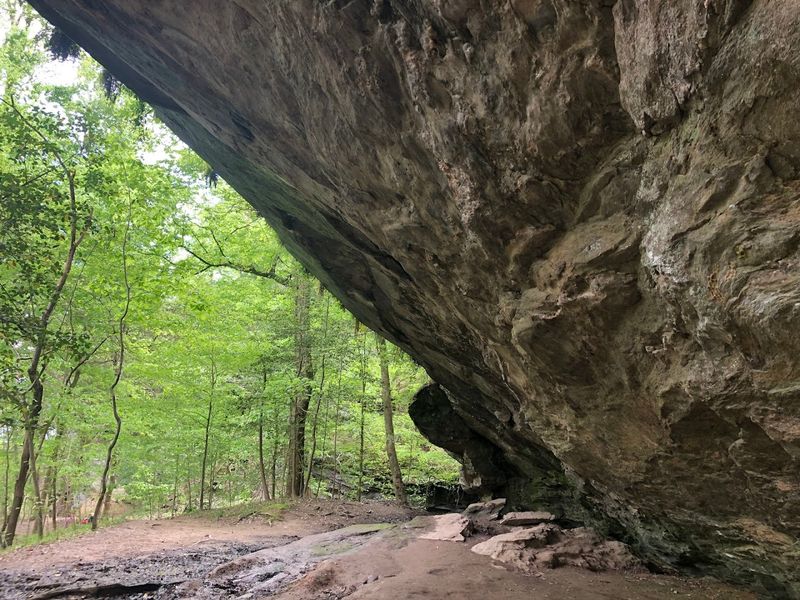
A 150-foot crystalline rock face rising above the Cape Fear River is not something you forget. Raven Rock State Park does not announce itself loudly, but it absolutely delivers.
The massive tilted rock outcrop that gives the park its name is a remnant of ancient geological activity. Geologists consider it one of the most significant rock exposures in the entire Piedmont region.
That kind of distinction earns a visit.
Over 35 miles of trails wind through longleaf pine forest, hardwood bottomland, and along the river. The main Raven Rock Loop Trail is about 2.7 miles.
It takes you directly to the base of the rock formation, with several overlook points offering different perspectives on the formation and the river below. The trail is well-maintained and suitable for most fitness levels.
You’ll find the park at 3009 Raven Rock Rd, Lillington, NC 27546, in the Sandhills region of central North Carolina. The Cape Fear River runs along the park boundary and offers excellent fishing for bass, catfish, and bream.
Camping is available with both tent and RV sites. Birdwatching is outstanding year-round, with the longleaf pine habitat supporting species like the red-cockaded woodpecker.
Spring wildflowers along the river corridor are a genuine highlight worth timing your visit around.