Schnitzel, Spaetzle And Red Cabbage Anchor The Menu At This German Kitchen On Florida’S Gulf Coast
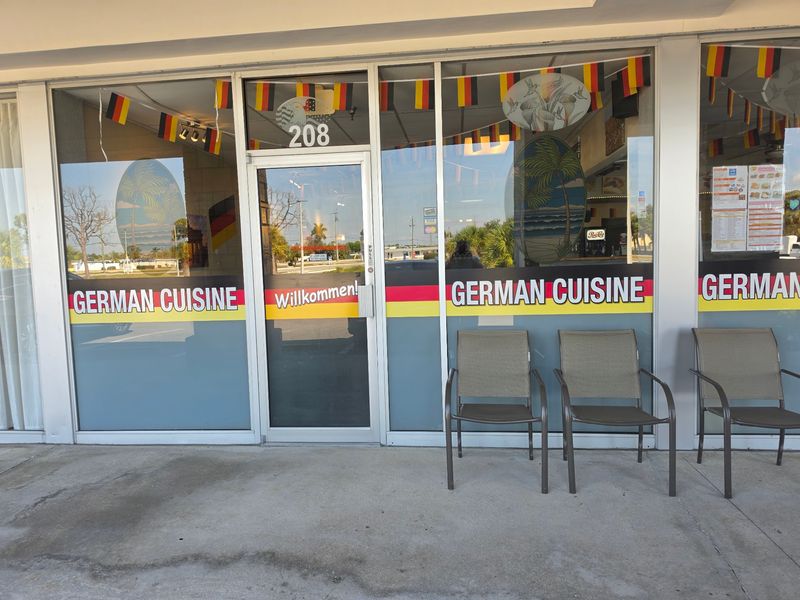
Sometimes the best meal of a Florida trip hides behind a plain storefront in a strip mall you have driven past a hundred times. That was the case here, where a narrow room with older decor turns out to hold a kitchen serving pork cutlets pounded thin, homemade noodles, and cabbage simmered sweet and tart.
The couple running it cook from family recipes carried over from Germany, and they are usually in the dining room saying hello. If you like food made slowly and served without fuss, this one sticks with you.
A Strip Mall Address on the Road to the Island
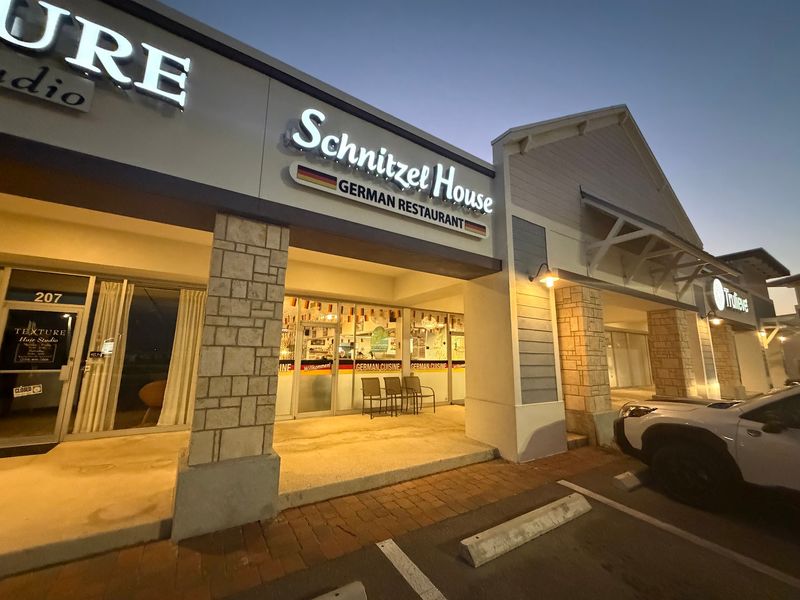
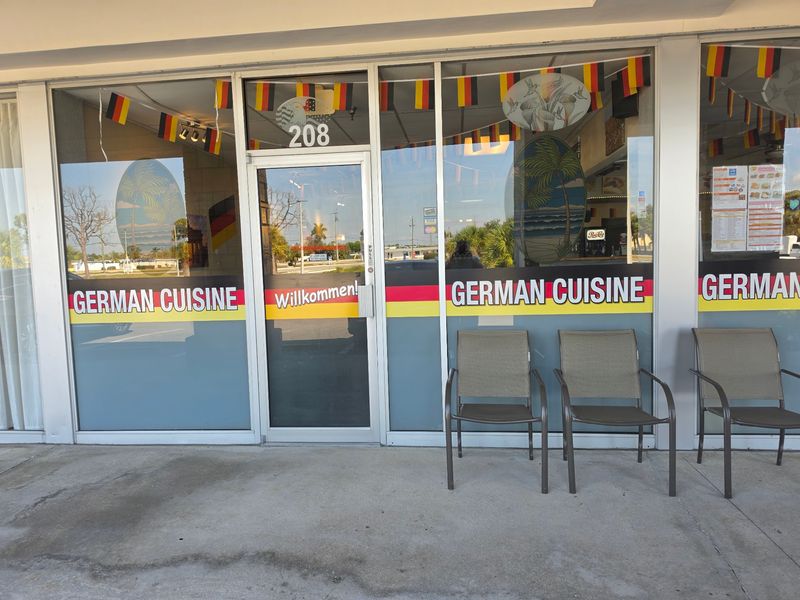
Drivers heading toward the bridge to Estero Island pass this place constantly without registering it. Schnitzel House sits in a commercial plaza on San Carlos Boulevard, sharing a row of storefronts with the kind of neighbors you would expect: signage that blends into the stucco, parking out front, nothing designed to stop traffic.
What the building hides is a full German kitchen run by Andreas and Petra, a husband and wife team who cook the food they grew up eating. Andreas started cooking professionally in 1996, and the recipes he uses trace back through his family rather than a corporate binder.
Inside, the room is modest and clean, with seating that fills up fast once the doors open. The decor leans older, and nobody seems bothered by that.
Plates arrive hot, portions run generous, and the noise is conversation rather than music.
The address is 17274 San Carlos Boulevard, Suite 209, Fort Myers Beach, Florida. Punch it into your phone, because the sign is easy to miss at highway speed, especially when beach traffic has your attention elsewhere.
How a 1991 Honeymoon Turned Into a Florida Kitchen
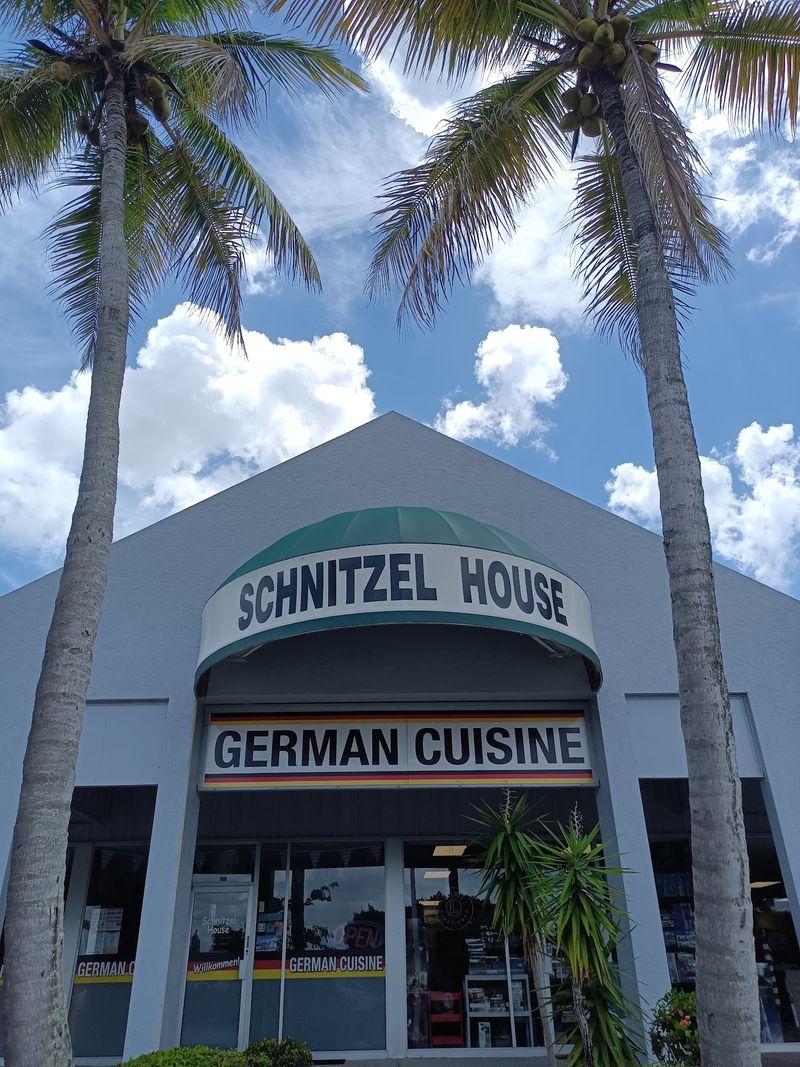
Back in 1991, Andreas and Petra came to Florida on their honeymoon. The trip clearly stuck.
Years later the couple built a restaurant here, thousands of miles from where the recipes originated, and the Gulf Coast gained a kitchen turning out sauerbraten and rouladen.
Andreas began cooking in 1996, drawing on dishes his family had made for generations. That lineage shows up in small ways: the spaetzle is mixed in house rather than pulled from a bag, the croquettes are shaped by hand, and the cakes are baked on site.
Petra often works the front of the house, greeting people at the door and taking orders herself. The chef has been known to come out of the kitchen mid service to say hello.
German gets spoken freely between the two of them, which tells you plenty about how the food is approached.
Responding to one message about a visit, the owners wrote: “We are so happy you enjoyed your evening in our family atmosphere.” The phrasing is not marketing language. It is roughly how the room actually operates on a busy evening.
Twenty-Five Ways to Order a Schnitzel
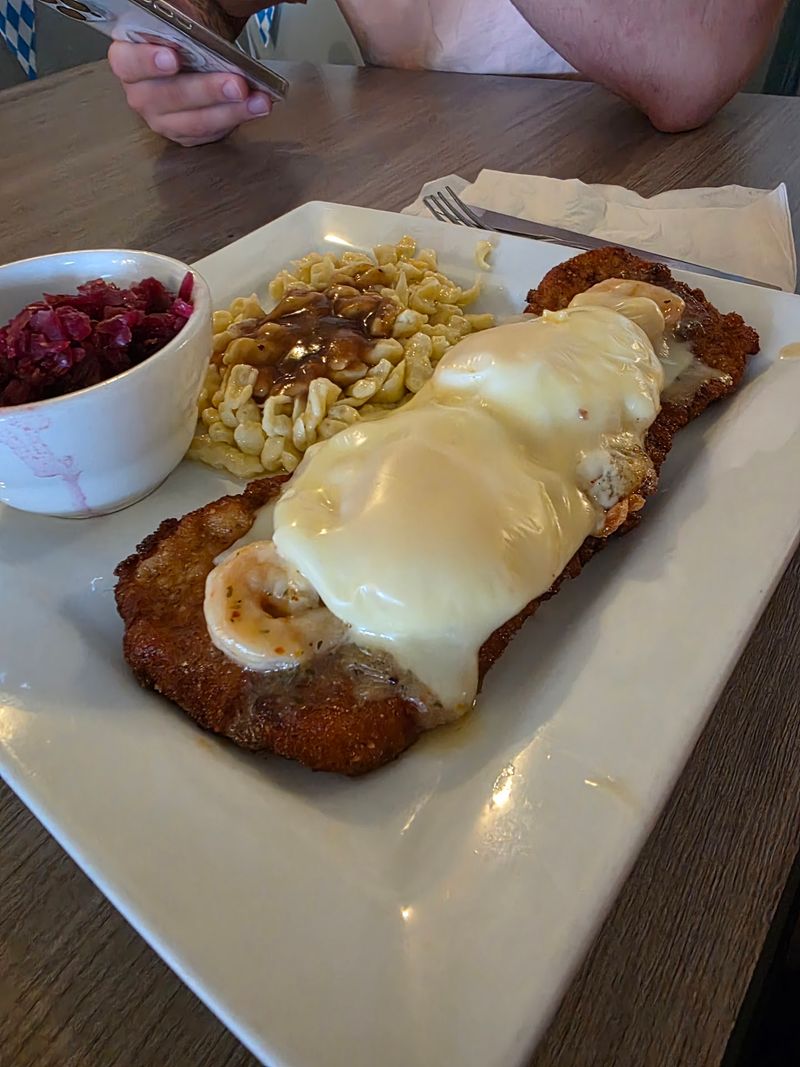
Pick a protein first: pork loin, chicken breast, or veal cutlet. Then pick a treatment.
The menu runs past two dozen schnitzel entrees, which sounds excessive until you start reading and realize each sauce genuinely changes the dish.
Wiener Schnitzel keeps things classic, thin and golden with a lemon wedge. Jaeger Schnitzel arrives under a mushroom and onion sauce that soaks into whatever starch you chose.
Zigeuner Schnitzel gets a bell pepper sauce with some sweetness to it, while Swiss Schnitzel comes layered with ham and cheese.
There is a Hollandaise version served with white asparagus, and a schnitzel burger for anyone who wants the cutlet between bread. Curry sauce shows up too, borrowed from the bratwurst side of the menu.
One detail matters if you are watching how you eat: the cutlets can be prepared without breadcrumbs, pan seared instead of breaded. Same portion, lighter finish, no negotiation required.
The breaded version stays crisp all the way to the last bite, which is harder to pull off than the menu lets on.
Spaetzle That Refuses to Be Heavy
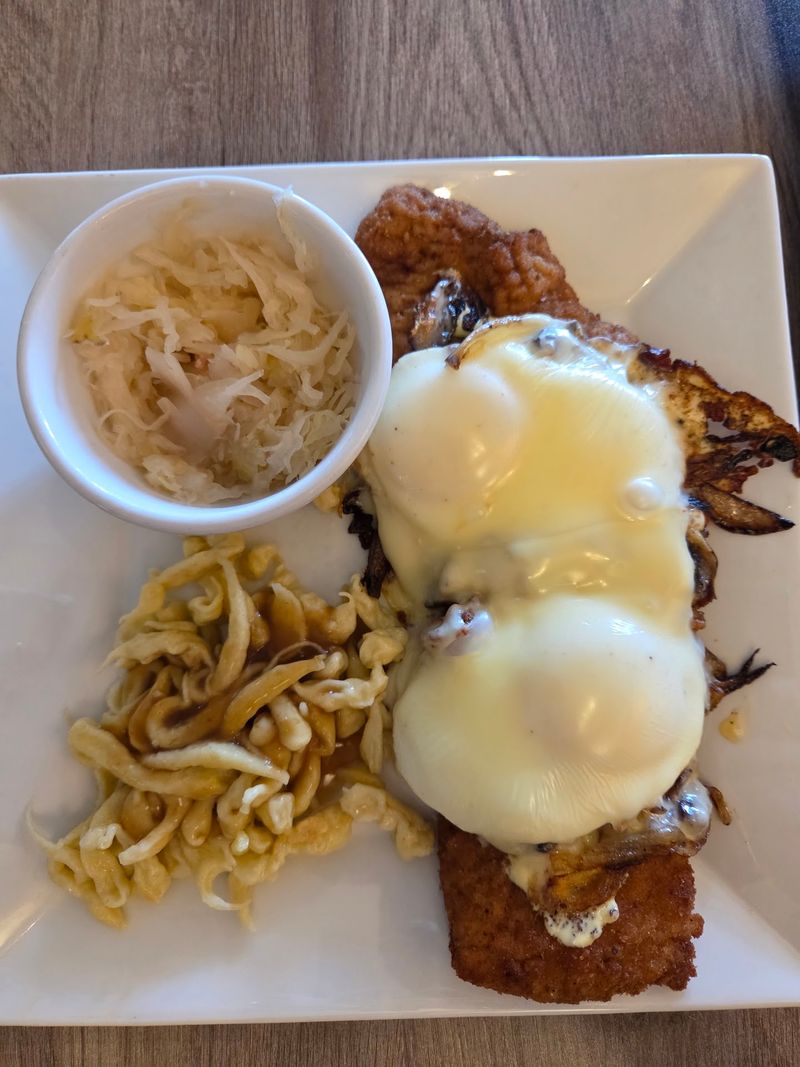
Bad spaetzle is dense. It sits in the stomach like wet dough and ruins the rest of the plate.
The version here goes the other direction, coming out light and tender, which is the whole trick with a noodle made from nothing but egg, flour, and patience.
Ordered alongside a schnitzel with gravy poured over, it becomes the quiet star of the meal. The noodles catch sauce in every crevice.
Six mentions of spaetzle turn up in conversation about this kitchen, and the homemade noodles get named right alongside the potato pancakes.
Speaking of those, the potato pancakes are the most talked about side on the whole menu. Crisp edges, soft centers, applesauce alongside if you want the sweet contrast.
The starch options keep going: mashed potatoes, home fries, roasted potatoes with bacon and onions, cold potato salad, and a warm German potato salad. Kroketten, the little fried potato croquettes, are made in house and disappear from the plate quickly.
Ordering just one side feels like a missed opportunity.
Sweet and Sour Red Cabbage, Sauerkraut, and the Rest of the Supporting Cast
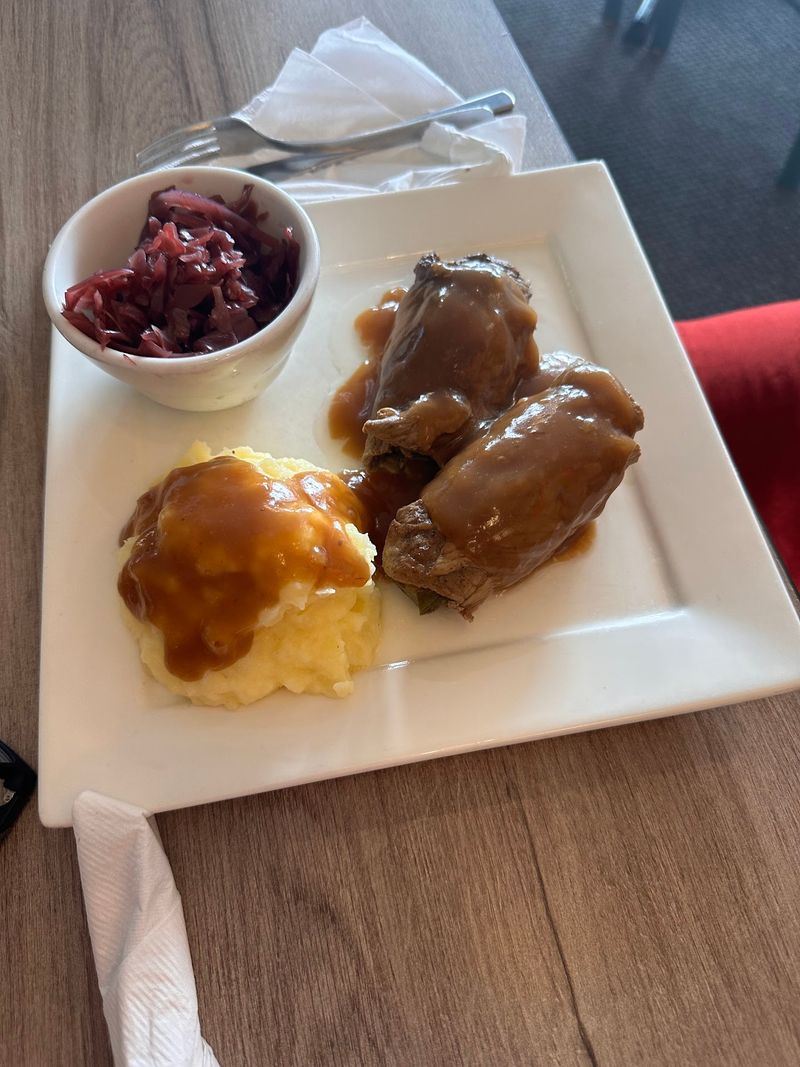
Red cabbage does something specific on a German plate. Cooked down sweet and sour, it cuts straight through the richness of fried pork and cream sauce, resetting your palate between bites.
The version served here gets ordered constantly, and it pairs naturally with the beef goulash and cabbage rolls.
Sauerkraut arrives hot rather than cold from a jar, tart enough to balance a heavy entree without overwhelming it. Applesauce sits on the menu as another counterpoint, particularly next to the potato pancakes.
Beyond schnitzel, the kitchen covers the classics properly. Sauerbraten, the marinated pot roast, comes up often.
Beef rouladen gets stuffed, rolled, and served in gravy, a dish that many American kitchens skip entirely. Cabbage rolls and several bratwurst preparations round things out, including one served with curry sauce.
Soups deserve a mention before your entree lands. Gulasch soup brings real depth, and the liver dumpling soup is the kind of old country starter that is hard to find anywhere along Florida’s Gulf Coast.
Pierogies, filled with cheese and potato, also appear as a starter.
Desserts Baked on the Premises
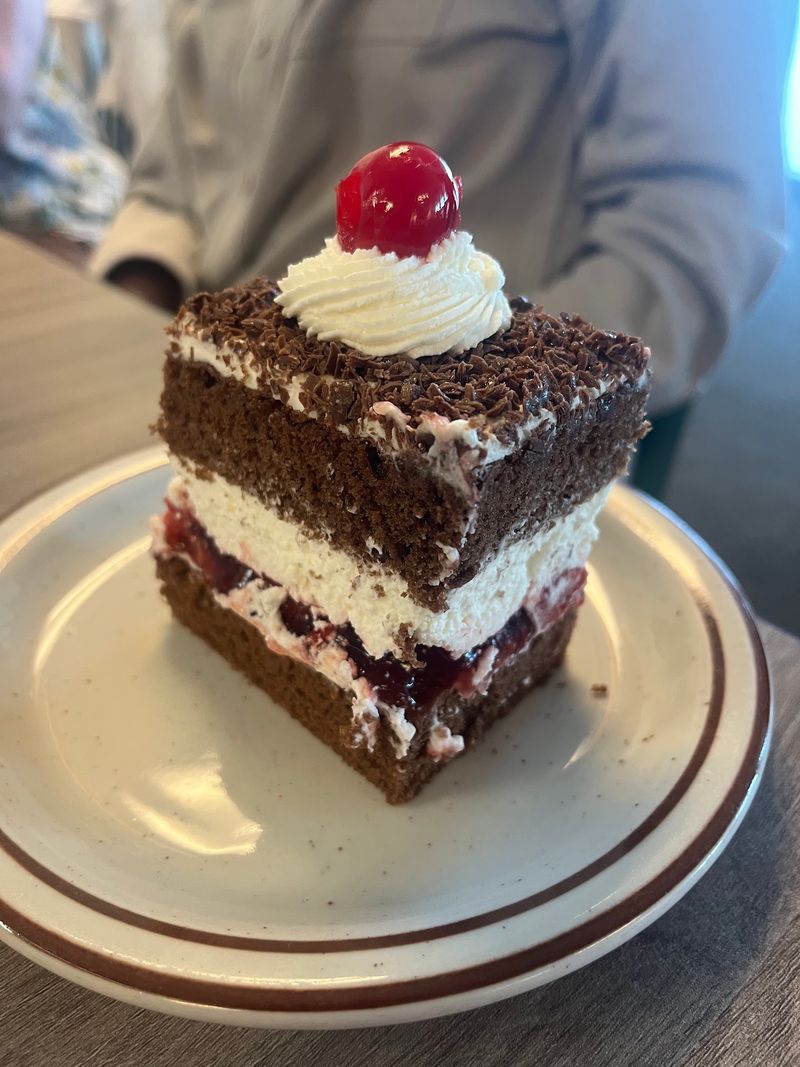
Save room. That advice gets ignored regularly here, because the entrees are large and the sides are generous, and then the dessert list appears and the math stops working.
Black Forest cake is the headliner, layered chocolate with cherries and cream. Herrentorte shows up as another option, and there is a wine cake described as something close to a layered Boston cream in texture, moist and sweet.
Everything is made in house, which is not a small thing for a restaurant this size. A kitchen turning out two dozen schnitzel variations plus soups plus sides could reasonably buy its cakes from a distributor.
This one bakes them instead.
A practical workaround: order a slice to go. The portions at dinner are substantial enough that dessert often travels home in a box, which turns out to be a fine arrangement.
Cake eaten later in the evening loses nothing.
If you cannot decide, the pastry selection changes what is available, so ask what came out of the oven that day before committing to the obvious choice.
The Room Feels Like Somebody’s Dining Room
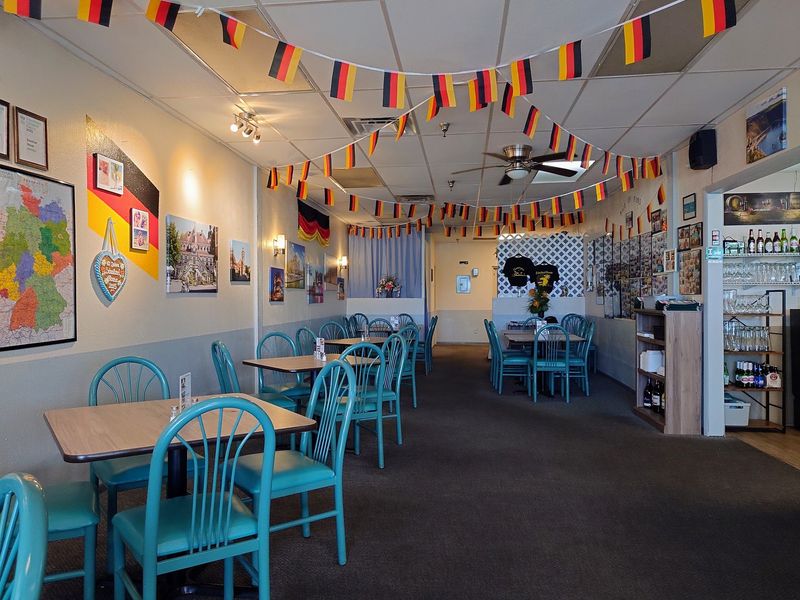
Nobody is going to call this space glamorous. The decor has some age on it, the room is compact, and the seating arrangement puts tables close enough that you can hear the conversation next to you.
That proximity turns out to be part of the appeal. German gets spoken at neighboring tables.
Plates get passed around. Someone at the next table might offer you a taste of their crispy pork shank, and the whole evening starts to feel like a shared meal rather than parallel private dinners.
Petra works the floor herself, and the chef surfaces from the kitchen when there is a break in tickets. Service moves quickly without feeling rushed, and the atmosphere stays warm even when every seat is taken.
The room is clean, bright, and airy despite its modest size. Families with kids fit fine.
Anyone homesick for Germany will recognize the rhythm immediately.
What the space lacks in design budget it recovers in hospitality. Eating here feels closer to being hosted than being served, which is a distinction most restaurants never manage.
Why German Television Came Calling
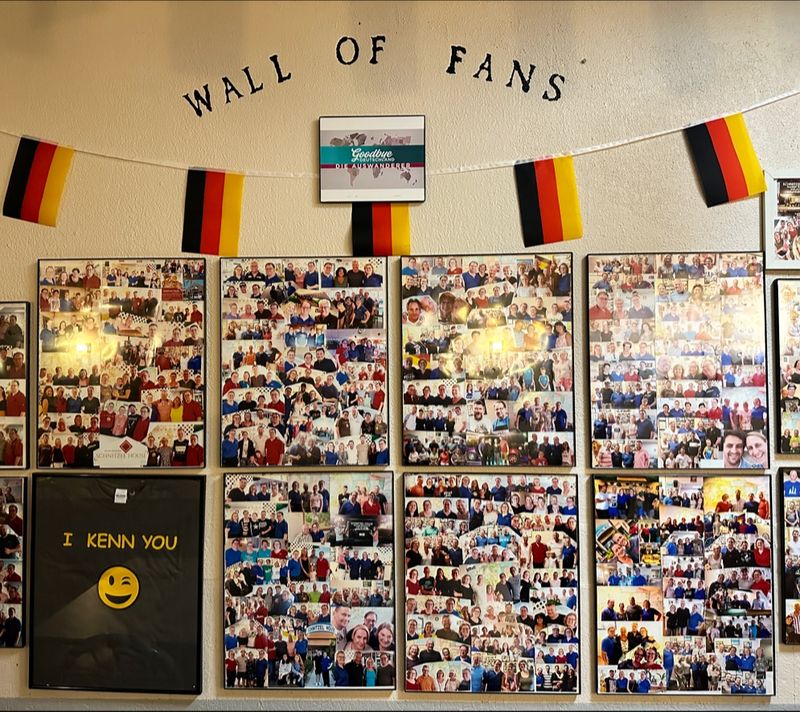
Here is an odd wrinkle in the story: the owners have appeared on German television, featured on a program about Germans who emigrate abroad, called Die Auswanderer. Traveling Germans occasionally arrive in Fort Myers Beach already knowing the faces behind the counter.
Photos get taken. Andreas and Petra oblige, and the exchange usually happens in German.
For a restaurant in a Florida strip mall, that is a strange and rather charming level of recognition.
The restaurant has been operating for more than a decade at this location, weathering everything the Gulf Coast has thrown at it. That kind of staying power in a beach-adjacent market says something about the cooking.
With a 4.6 star average across more than 700 reviews, the consistency holds up across years, not just a good season. The owners reply to nearly every comment personally, thanking people by hand rather than through a template.
None of the television attention seems to have changed the operation. Same small room, same hours, same recipes.
The cameras came and went, and the kitchen kept frying cutlets.
Planning Dinner: Hours, Reservations, and Getting There
Five nights a week, Tuesday through Saturday, the doors open at 4 p.m. and close at 8 p.m. Sundays and Mondays are dark.
That four hour window is narrow, so showing up at 7:45 hoping for a leisurely dinner is a gamble.
Call ahead for a reservation, particularly during Florida’s winter season when the beach traffic swells. The dining room is small and fills quickly once service starts.
Prices are reasonable and portions are large, a combination that makes the drive worthwhile even from an hour inland. People do make that drive.
Parking sits directly in front of the plaza on San Carlos Boulevard, free and uncomplicated. The restaurant is on the mainland side of the bridge, so you can stop on the way to Estero Island or on the way back without crossing water.
One strategy that pays off: arrive right at four, order a soup, take your time with the entree, and box the cake. Early seating means shorter waits and a quieter room.
Worth Finding Before the Bridge
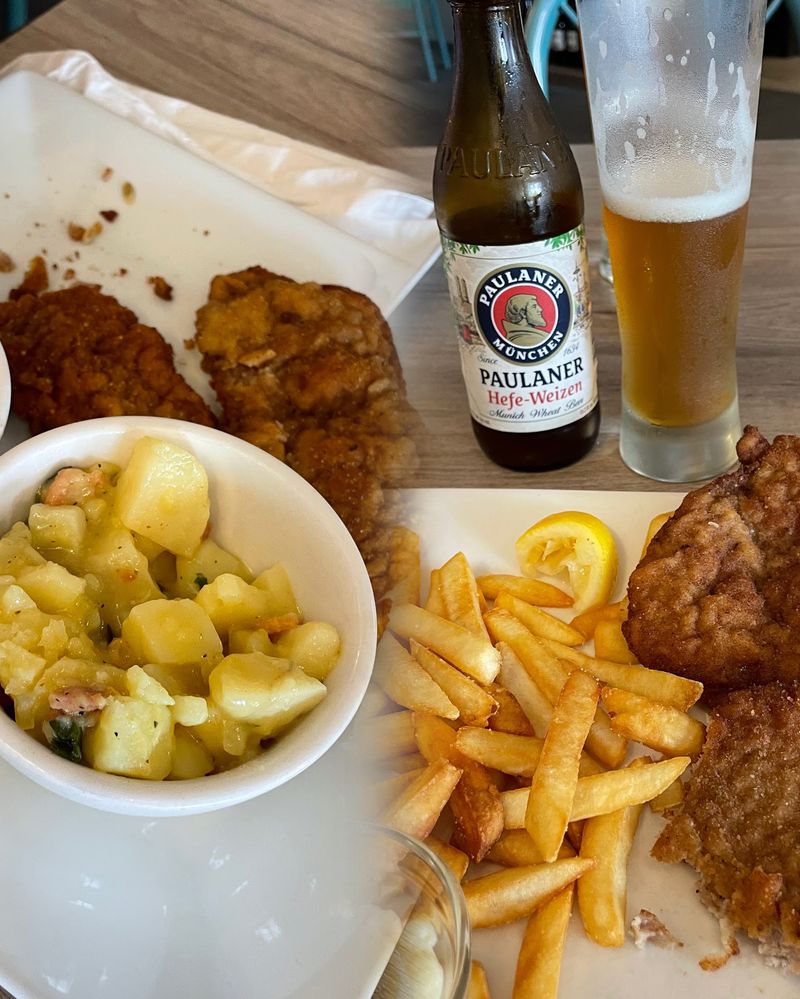
Gulf Coast dining leans hard toward grouper sandwiches and shrimp baskets, which is fine until you want something else entirely. A plate of pork cutlet with mushroom sauce, tender noodles, and tart red cabbage offers a completely different kind of satisfaction, and there are not many places in southwest Florida serving it this carefully.
The value proposition is straightforward. Fair prices, big portions, everything made in house, and owners who treat the dining room like an extension of their home.
If you are new to German food, start with the Jaeger Schnitzel, spaetzle, and red cabbage. That trio explains the whole cuisine in one plate.
If you already know what you are doing, go for the sauerbraten or rouladen, dishes that take real time to prepare and rarely turn up on American menus.
The building will not impress you from the parking lot. The food will handle that part.
Get there early, bring an appetite you have been building all afternoon, and plan on leaving with a box of cake for later.