10 Secret Southern California Swimming Spots That Make Summer Feel Like A Private Escape
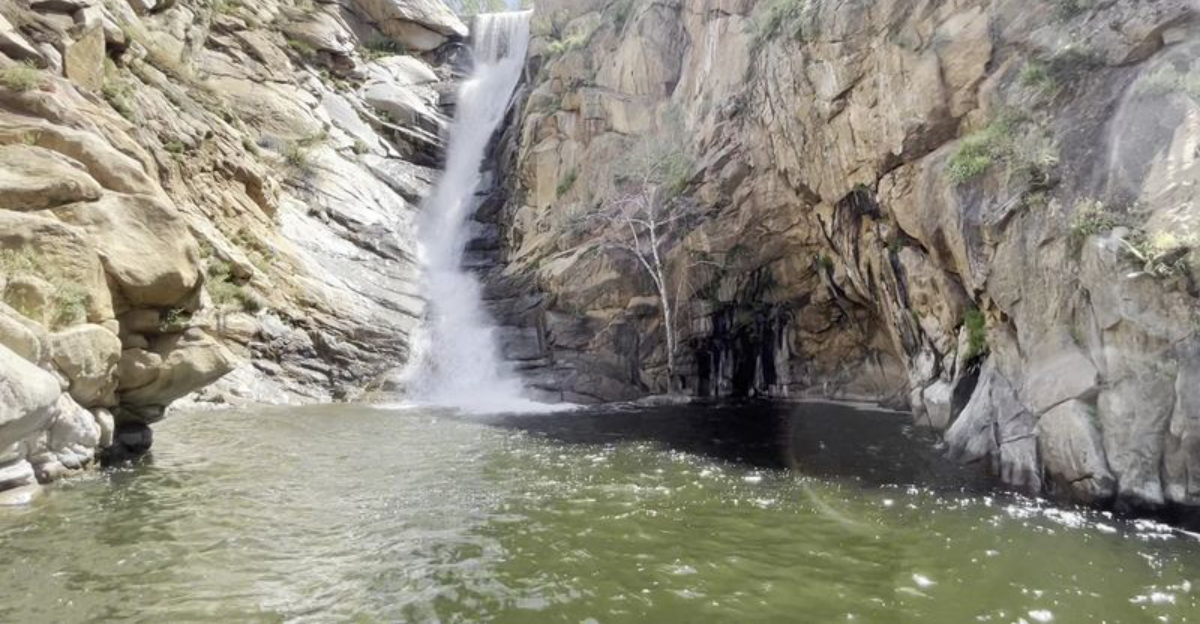
The best summer swim spots feel like someone forgot to put them in the brochure.
Not every good day needs a packed beach, a parking battle, or a towel-to-towel crowd situation.
Sometimes the better plan is a quieter bend in the water, a rocky pool, or a shaded place where the heat finally loses its grip.
The whole mood changes when the water feels found instead of advertised.
A private-feeling swim in Southern California is basically summer cheating.
These secret-feeling spots are built for people who like a little effort with their cool-down.
A short hike can make the first splash feel earned. A backroad can turn the drive into part of the escape.
Even a small patch of shade near clear water can feel luxurious when the temperature is acting rude.
The trick is respecting the places that still feel quiet. Pack out everything, watch conditions, and avoid treating hidden water like a personal amusement park.
1. Red Rock Pools, Santa Ynez River, Los Padres National Forest
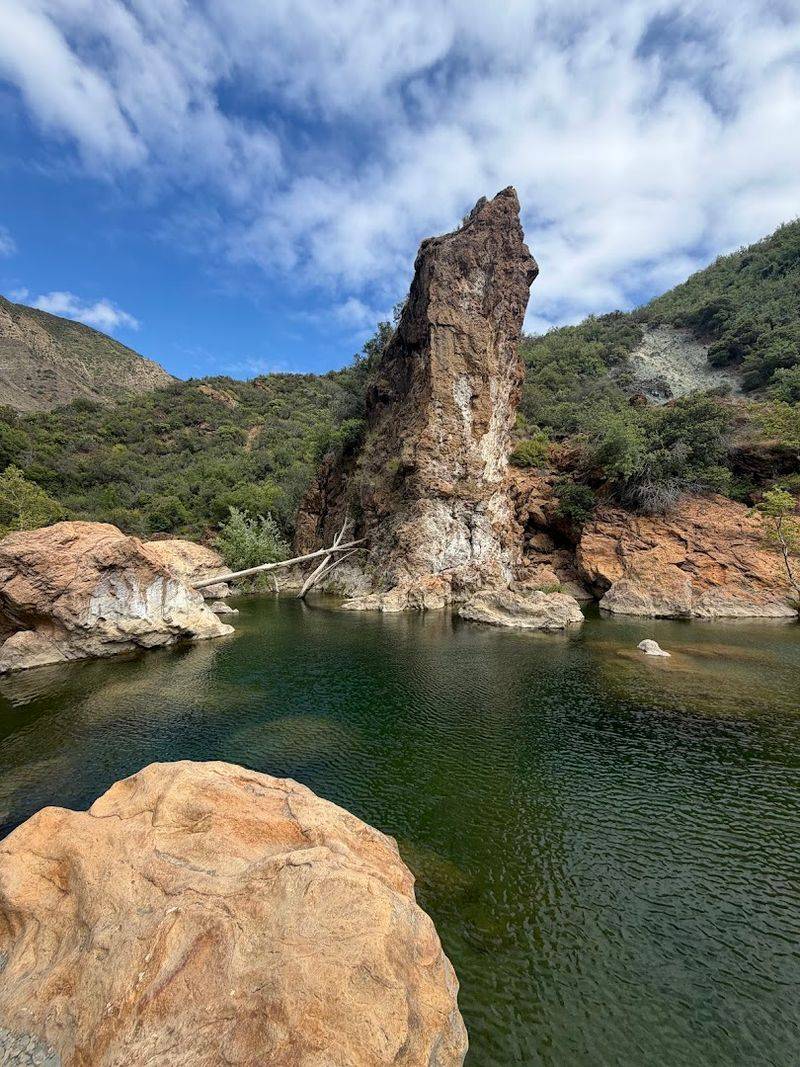
Along the Santa Ynez River about five miles up Paradise Road from Santa Barbara, the Red Rock Day Use Area earns its name from the striking red sandstone formations that frame its swimming pools.
The area sits at 3505 Paradise Rd, Santa Barbara, CA 93105, and offers picnic tables, barbecues, and restroom facilities when the site is open.
A $10 per vehicle day-use fee applies, or visitors can use a PMC Annual Pass purchased for $50.
The main swimming pools are roughly half a mile from the trailhead, making the walk short and accessible for most visitors.
Shade from surrounding trees helps keep temperatures manageable even on hot summer afternoons. Dogs are welcome but must stay on a leash no longer than six feet at all times.
An Adventure Pass is generally required for parking within Los Padres National Forest.
Paradise Road may close during winter months when river levels rise, so checking road conditions before heading out is strongly recommended.
Weekends tend to draw larger crowds to the main pools, so arriving early on a Saturday or Sunday helps secure a quieter spot. Cliff jumping and diving are not recommended anywhere along this stretch of river.
2. Santa Paula Canyon Punch Bowls, Los Padres National Forest, near Santa Paula
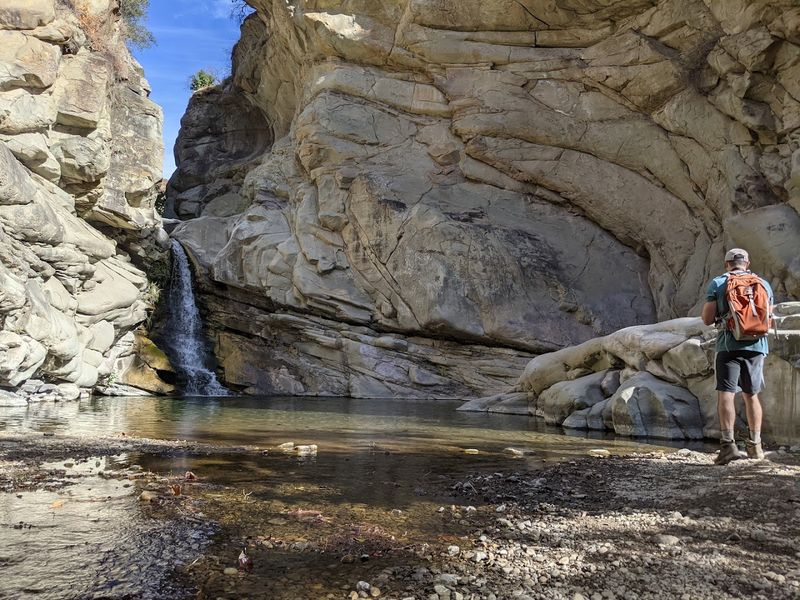
Few hikes in Southern California deliver a payoff quite like the Santa Paula Canyon Punch Bowls, where a 25-foot waterfall drops into a clear, cool pool carved out of smooth rock by Santa Paula Creek.
The trailhead sits off Route 150 near Santa Paula, with parking available on the north side of the highway just east of Thomas Aquinas College.
No entrance fee is typically required for the trail itself, though an Adventure Pass may apply for certain parking areas within Los Padres National Forest.
The round trip covers roughly eight miles with about 800 feet of elevation change, and the full hike can take close to four hours depending on pace.
Some trail sections are faint and require careful attention to stay on route. Trekking poles and plenty of water are genuinely useful here.
Summer temperatures along exposed sections of the trail can climb quickly, making spring and fall the more comfortable seasons for this hike.
Dogs are permitted but must remain leashed throughout. Past the Big Cone Campground area, the creek opens up into shallower, quieter sections that tend to attract fewer visitors than the main pool.
Arriving on a weekday rather than a weekend significantly improves the chances of having the Punch Bowl nearly to oneself.
3. Sespe River Trail Swimming Holes, Sespe Wilderness, near Ojai
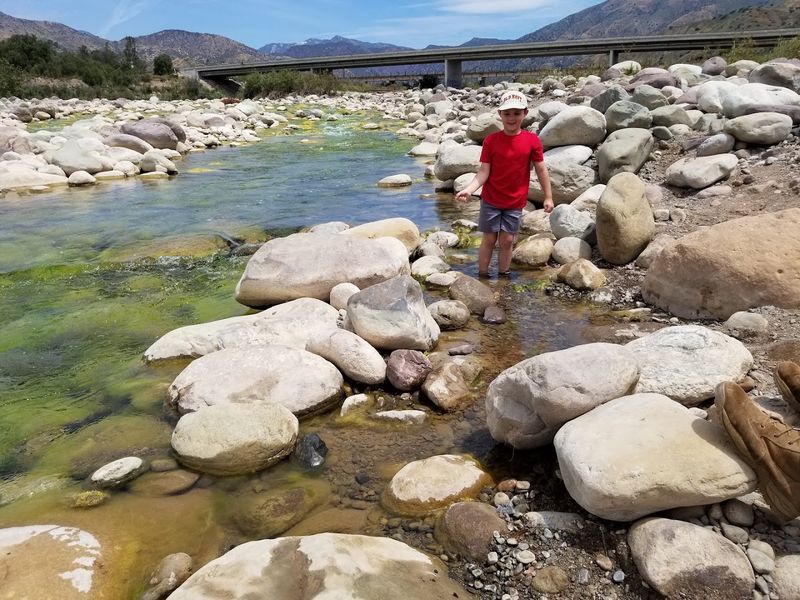
Running through one of the largest roadless wilderness areas in Southern California, the Sespe River offers a string of natural swimming holes that reward hikers willing to put in some trail miles.
The Sespe Wilderness sits within Los Padres National Forest near the town of Ojai, and the river corridor stays surprisingly green even during dry summer months thanks to year-round water flow in certain sections.
The landscape shifts between open chaparral slopes and shaded riparian corridors lined with willows and sycamores.
Access typically begins at the Sespe River Trailhead off Lion Camp Road near Fillmore, and the further a visitor hikes, the more secluded the swimming spots become.
An Adventure Pass is required for parking at most Los Padres National Forest trailheads.
Water levels and swimming conditions vary significantly by season, with late spring and early summer generally offering the most reliable flow.
Trail conditions can change after storms, and some creek crossings may be impassable during high water periods.
Carrying a paper map or downloaded offline map is a smart move since cell signal is unreliable throughout much of the wilderness.
The payoff for the effort is a genuine sense of solitude that is increasingly hard to find during Southern California summers.
Always check current trail conditions with the Los Padres National Forest office before visiting.
4. Reyes Creek Dipping Holes, Los Padres National Forest, near Maricopa
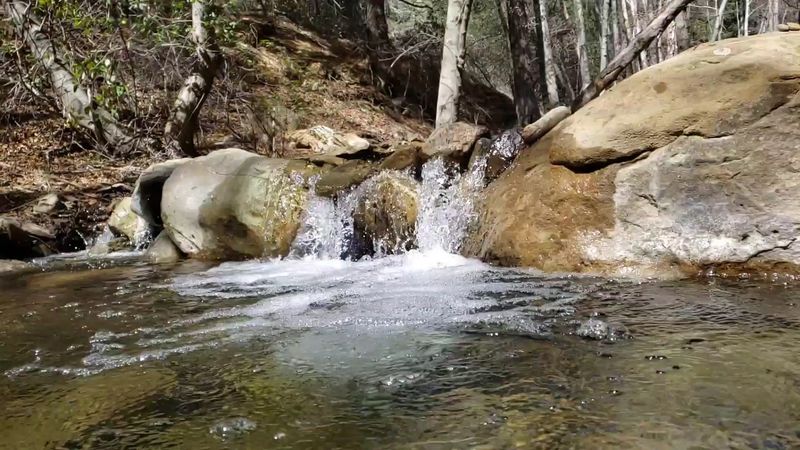
Reyes Creek flows quietly through the Mt. Pinos district of Los Padres National Forest, forming small dipping holes and shallow pools that offer a cool pause on a warm day.
The area sits in a remote section of the forest near the communities of Maricopa and Ozena, far from the coastal crowds that dominate summer weekends elsewhere in Southern California.
Getting there requires driving along winding mountain roads, which naturally limits the number of visitors who make the trip.
The creek runs through a landscape of oaks and pines, providing natural shade that keeps the water and surrounding banks noticeably cooler than the exposed chaparral lower down.
An Adventure Pass is generally required for parking within this section of Los Padres National Forest.
Visitors should verify current road and campground conditions before heading out, as some access roads and facilities in this area have experienced closures in recent years.
Water levels in Reyes Creek tend to peak in spring and taper through summer, so earlier in the season typically means better swimming conditions.
The area rewards patience and a willingness to explore along the creek banks rather than expecting a single dramatic feature.
Packing out all trash and following Leave No Trace principles helps preserve the quiet, undisturbed character that makes this spot worth the drive in the first place.
5. Cedar Creek Falls, Cleveland National Forest, near Ramona
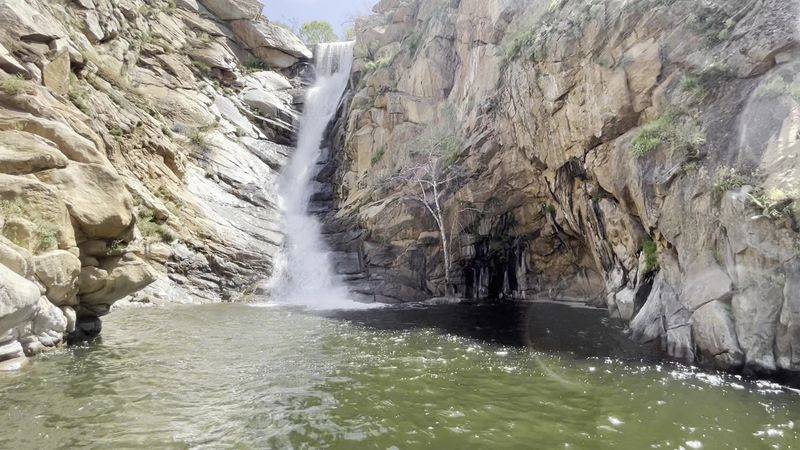
An 80-foot waterfall dropping into a wide aquamarine pool makes Cedar Creek Falls one of the most visually striking swimming destinations in all of Cleveland National Forest.
A visitor use permit is required year-round to access the Cedar Creek Falls Permit Area, and permits must be reserved in advance through Recreation.gov at $6 per group of up to five people.
Two trailheads serve the falls: the east access near Julian off Eagle Peak Road and the west access in Ramona at the San Diego River Gorge Trailhead off Thornbush Road.
The hike is approximately six miles round trip with a strenuous 1,180-foot climb on the return leg.
Heat-related illness is a documented risk during summer, and the U.S. Forest Service strongly discourages hiking when temperatures exceed 90 degrees Fahrenheit.
Fall, winter, and spring offer far more comfortable conditions for the trail, and summer visits often find the waterfall reduced or the pool stagnant.
Dogs are not permitted on this trail. Cliffs surrounding the falls are closed to jumping, climbing, and diving.
An Adventure Pass or National Forest parking pass is also required in addition to the Cedar Creek Falls permit. Weekend parking lots routinely fill by 7 or 8 in the morning during peak season.
6. Three Sisters Falls, Cleveland National Forest, near Descanso
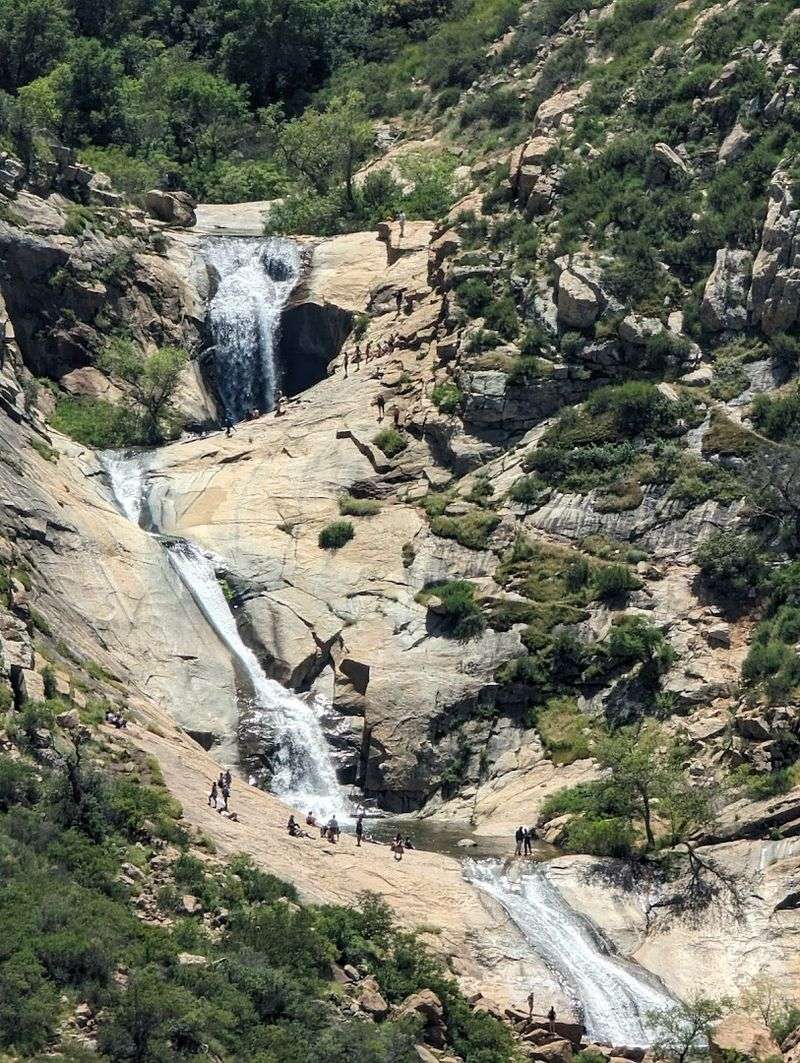
Cascading down a series of granite steps in the backcountry of Cleveland National Forest, Three Sisters Falls is a multi-tiered waterfall system that forms natural pools between its drops.
The falls sit in a remote canyon near the communities of Descanso and Julian in San Diego County, and reaching them requires a moderately strenuous hike through exposed chaparral terrain.
Summer temperatures in this area can be intense, and visiting during the cooler months of fall, winter, or spring is generally more comfortable and safer.
An Adventure Pass or equivalent National Forest parking pass is required for vehicles parked at the trailhead.
Conditions at the falls and along the trail can change significantly after storms or during drought years, so checking with the Cleveland National Forest Palomar Ranger District before visiting is a practical step.
The trail is not always well-marked, and navigating with a downloaded offline map helps avoid wrong turns.
Water flow at the falls varies considerably by season, with the strongest flow typically occurring after winter rains and into early spring.
During dry summer months, the pools may be shallow or the falls reduced to a trickle.
The canyon setting provides some shade near the water, which makes the destination feel genuinely refreshing on days when the surrounding hillsides are baking.
7. Green Valley Falls, Cuyamaca Rancho State Park, Descanso
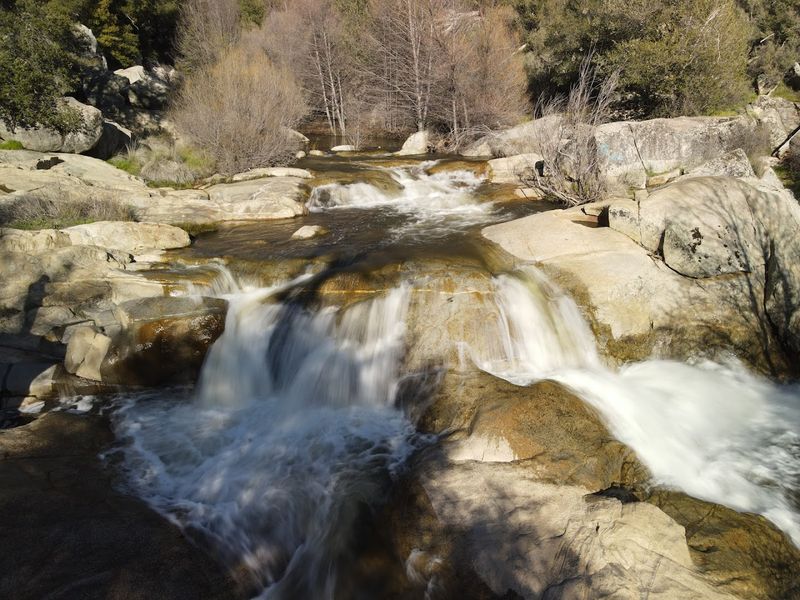
Sitting at roughly 4,000 feet of elevation, Green Valley Falls brings a noticeably cooler energy than most Southern California swimming spots, thanks to the surrounding pine forest and the steady flow of Sweetwater River.
The falls are found within the Green Valley Campground area of Cuyamaca Rancho State Park, about 50 miles east of San Diego along Highway 79. A $10 per vehicle day-use parking fee is required to access the area.
Multiple small cascades and clear shallow pools make this a particularly good destination for families with younger kids who prefer wading and splashing over deep water swimming.
Picnic tables, restrooms, and barbecue grills are available within the campground. Dogs are allowed in the campground itself but are not permitted on the trails leading to the falls.
The campground typically closes from December through March, so visits are best planned between late spring and early fall.
The elevation keeps afternoon temperatures noticeably milder than the surrounding lowlands, which adds to the appeal during July and August.
A short walk from the campground brings visitors to the first cascade, and exploring further upstream reveals additional pools tucked between granite boulders.
Fire use is restricted to designated areas only, and all visitors are expected to pack out their trash and leave the creek banks as they found them.
8. Cooper Canyon Falls, Angeles National Forest, near Buckhorn Campground
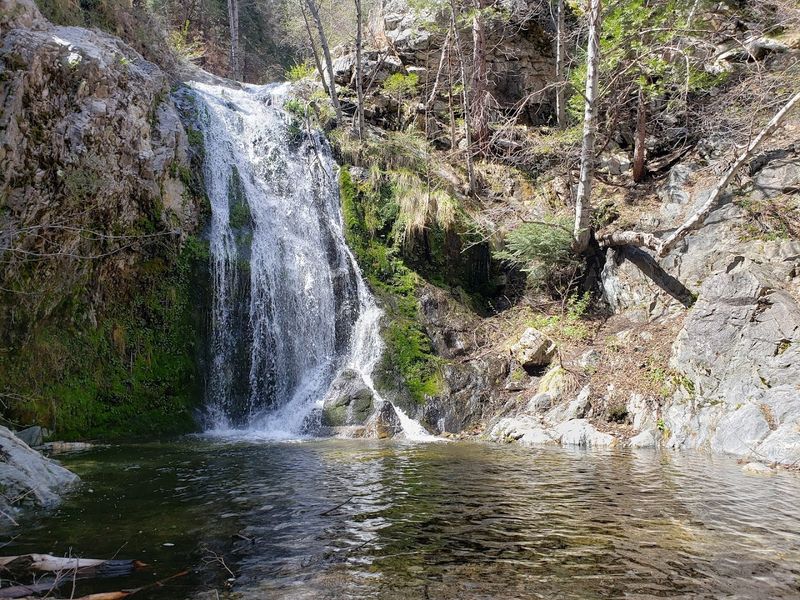
Flowing year-round through a shaded canyon deep in the San Gabriel Mountains, Cooper Canyon Falls drops 25 feet into a cool pool that feels genuinely removed from the Los Angeles basin heat just an hour away.
The Burkhart Trail leading to the falls begins at the end of Buckhorn Campground within Angeles National Forest, and the round trip covers approximately three miles with around 828 feet of elevation gain on the return.
An Adventure Pass or America the Beautiful Interagency Pass is required for parking at the trailhead.
The trail follows a forested creek corridor for much of the route, providing consistent shade from a canopy of pines and firs that keeps the hike comfortable even in summer.
Water flow is strongest in April and May when snowmelt from higher elevations feeds the stream, but the falls typically maintain a noticeable flow through summer and into early fall.
Weekday visits offer a noticeably quieter experience than weekends.
Dogs are welcome on the trail when kept on a leash. If the Buckhorn Campground gate is closed, parking along Angeles Crest Highway and walking in adds some distance to the approach.
Past fire activity in the area has left some downed trees and loose rock along sections of the trail, so watching footing carefully is worthwhile.
The creek itself offers additional shaded pools beyond the main falls for those willing to explore a bit further downstream.
9. Murray Canyon, Indian Canyons, Palm Springs
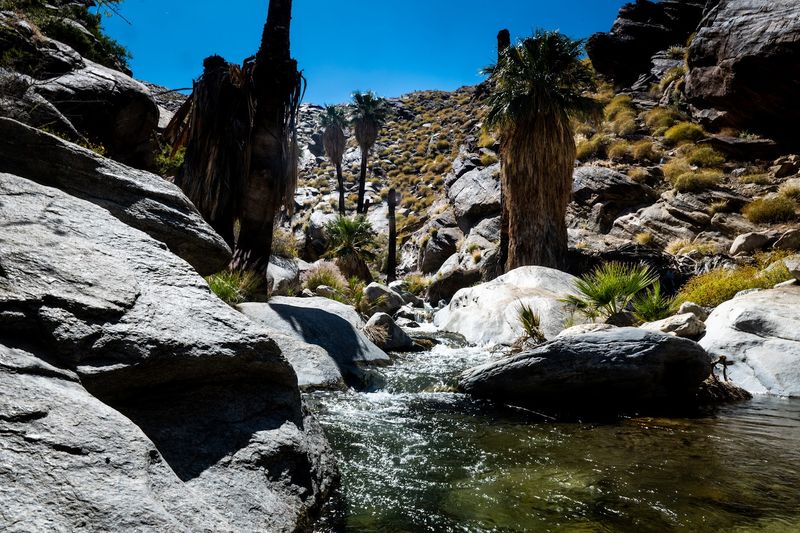
Running through a palm-lined desert canyon owned and managed by the Agua Caliente Band of Cahuilla Indians, Murray Canyon offers one of the more unexpected oasis experiences in Southern California.
The canyon is part of the Indian Canyons system and features natural springs, seasonal creek flow, and groves of native California fan palms that create genuine pockets of shade in an otherwise sun-baked landscape. The contrast between the rocky desert terrain and the lush canyon floor is striking.
Ranger-led hikes are available and provide useful context about the native plants, wildlife, and cultural history of the Agua Caliente people who have called this land home for generations.
Admission fees, operating hours, and any reservation requirements are subject to change, so checking the official Indian Canyons website before visiting is a reliable step.
The canyons tend to draw steady visitor traffic, particularly on weekends and during cooler months.
Water flow in Murray Canyon varies by season, with the best creek conditions typically found in late winter and spring following seasonal rains.
Summer visits are possible but can be extremely hot, and early morning starts are strongly advisable.
The trail is well-defined and moderate in difficulty, making it accessible to most visitors with basic hiking footwear and adequate water supplies for the desert environment.
10. Tahquitz Canyon Falls, Tahquitz Canyon, Palm Springs
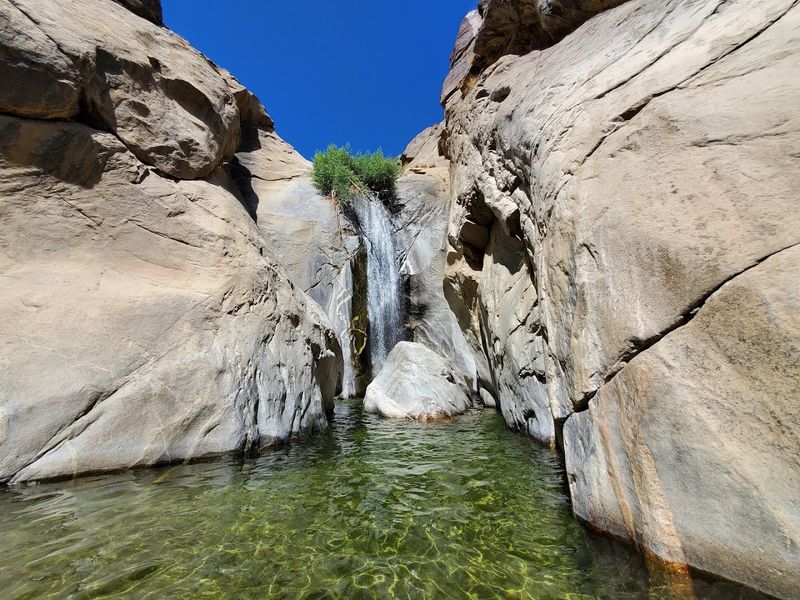
A 60-foot seasonal waterfall anchors the cultural and natural landscape of Tahquitz Canyon, a place the Agua Caliente Band of Cahuilla Indians has considered sacred for centuries.
The Tahquitz Canyon Visitor Center serves as the starting point for all canyon visits, offering exhibits about the history and ecology of the area along with a short film called The Legend of Tahquitz.
Admission fees and operating hours apply, and checking the official Tahquitz Canyon website before visiting ensures current and accurate information.
The canyon trail is a two-mile loop with about 350 feet of elevation gain, passing ancient rock art, remnants of traditional irrigation systems, and a variety of native plants and wildlife along the way.
Ranger-led tours are offered regularly and provide meaningful context that enriches the experience considerably.
The waterfall flows most reliably from late winter through spring when seasonal rains fill the canyon creek.
Summer visits can encounter reduced or absent water flow at the falls, and the canyon heat during July and August is significant.
Morning visits during summer are far more manageable than midday arrivals.
The site accommodates a limited number of visitors per day, which helps maintain a quieter atmosphere than many other Palm Springs attractions.
Respectful behavior toward the cultural significance of the canyon is expected from all visitors throughout their time on the trail.