Some 50 Stained Glass Windows Glow During Candlelit Concerts In This Pennsylvania Cathedral
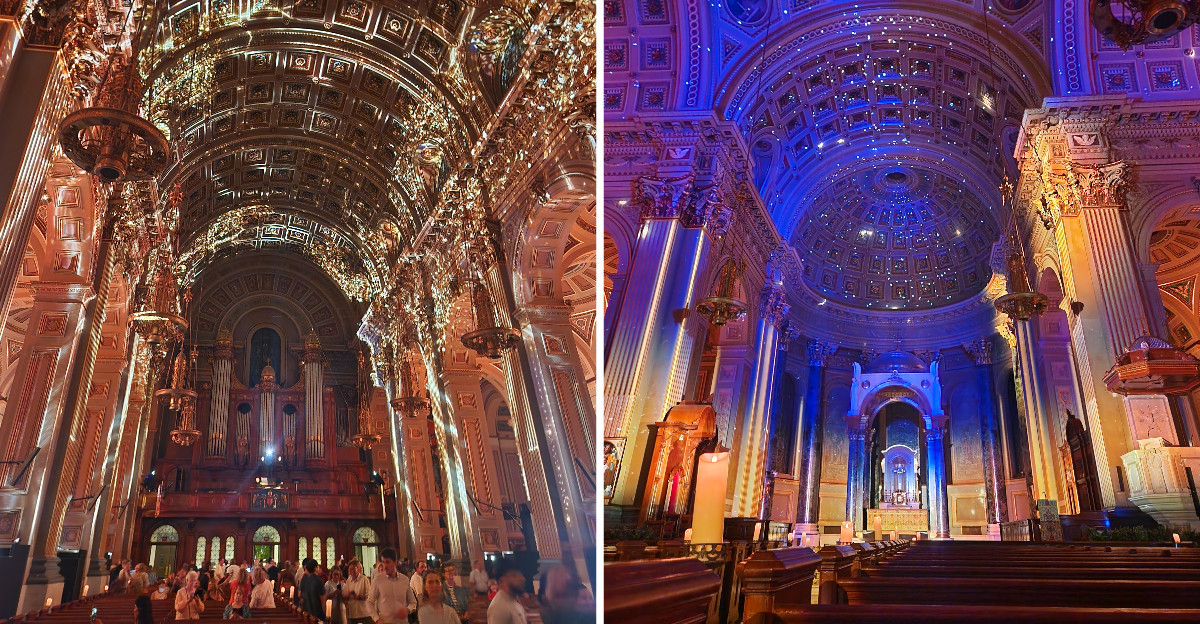
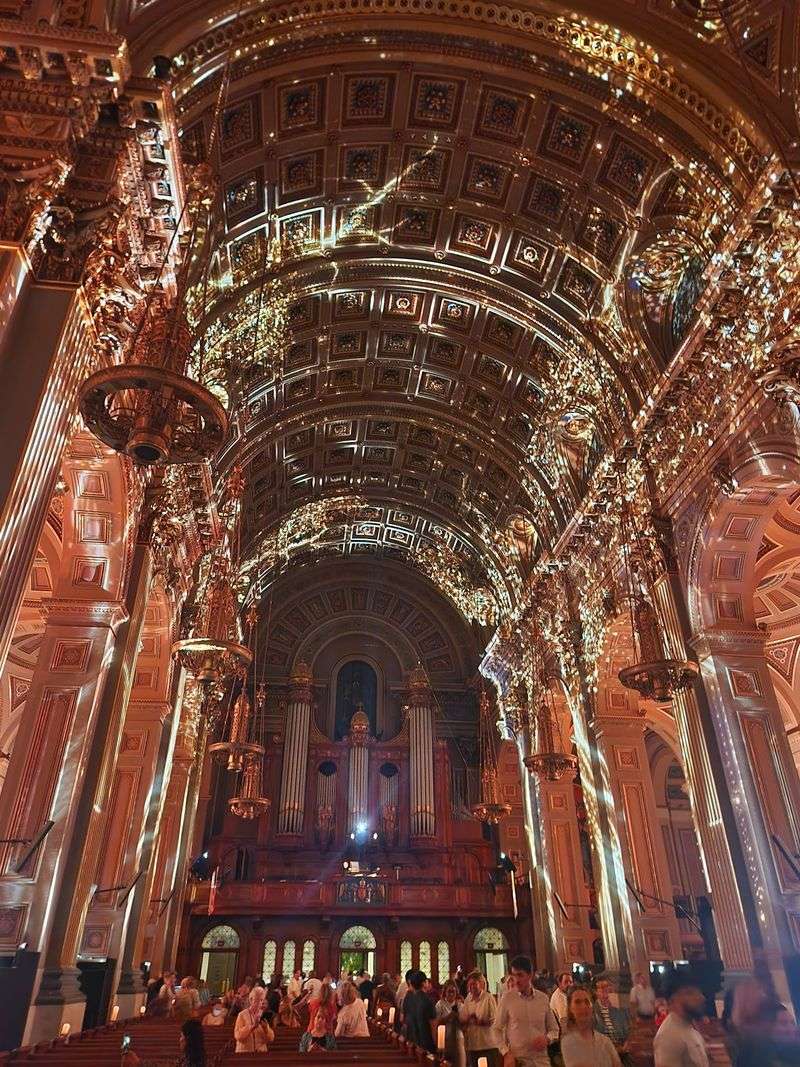
A string quartet plays under a dome that rises 156 feet, while thousands of flameless candles flicker across marble floors.
Overhead, a painting by the same artist behind the U.S. Capitol dome glows in the low light.
That alone would make a fine night out. But the windows here tell a stranger story.
The lower walls were built without side windows for a reason tied to the 1840s, and the colored glass sits high above the street on purpose.
I like how one building can hold a music hall, a history lesson, and a sacred space all at once.
It’s also the largest Catholic church in Pennsylvania, so the scale hits you before the first note does.
So what happens when old glass, live music, and candlelight share the same room? I can’t imagine a better excuse for an evening drive.
A Brownstone Giant With A Green Dome You Can Spot Blocks Away
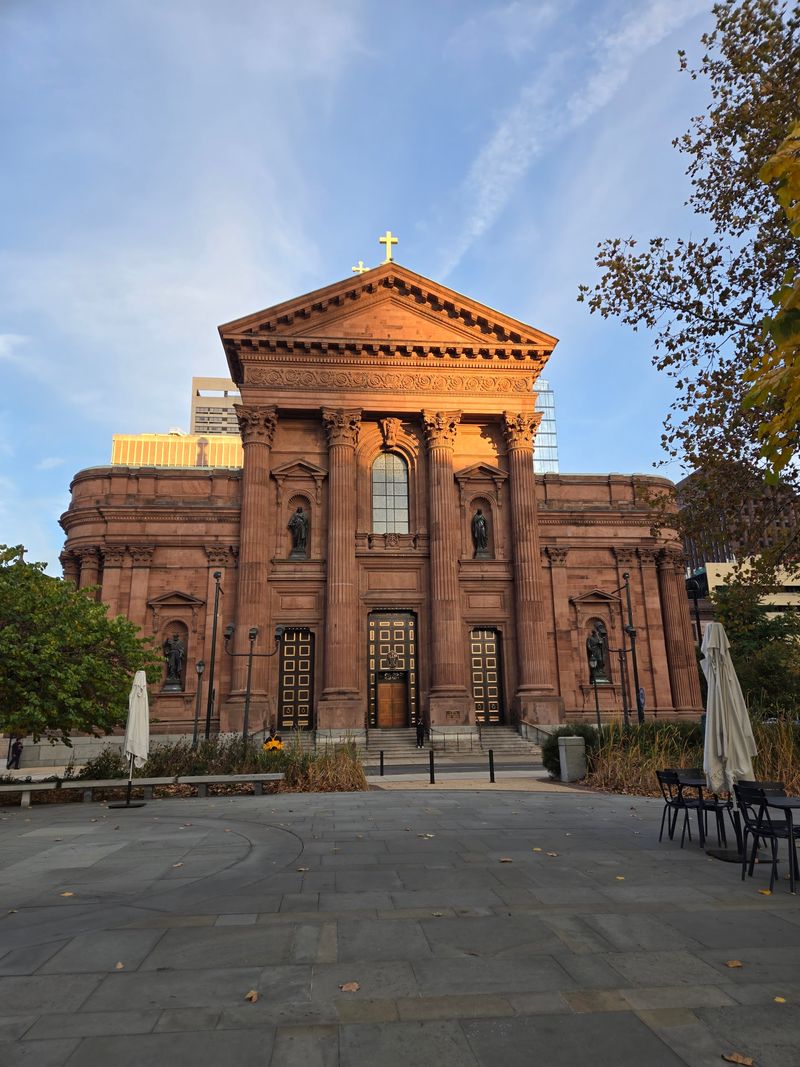
Brownstone, columns, and a copper-clad dome make a big first impression on Logan Square. The Cathedral Basilica of Saints Peter and Paul sits right in Philadelphia, close to the Benjamin Franklin Parkway.
It serves as the Mother Church of the Archdiocese of Philadelphia. That means it holds the cathedra, the official chair of the Archbishop.
Size is part of the appeal here. It’s known as the largest Catholic church in Pennsylvania and the largest brownstone building in the city.
The green dome pokes above the trees along the Parkway. Walk nearby and your eyes will keep drifting toward it, whether you planned a visit or not.
Inside, the church seats roughly 2,000 people. Daily and weekend Masses are open to everyone, and entry to look around is free.
So the building works on two levels at once. It’s an active parish with a full worship schedule, and it’s also a landmark that welcomes curious travelers.
Families from across Pennsylvania can treat it as a quiet stop during a city day. Music lovers, though, may want to come back after dark, when the whole place changes character.
Why The Colored Glass Sits So High Off The Street
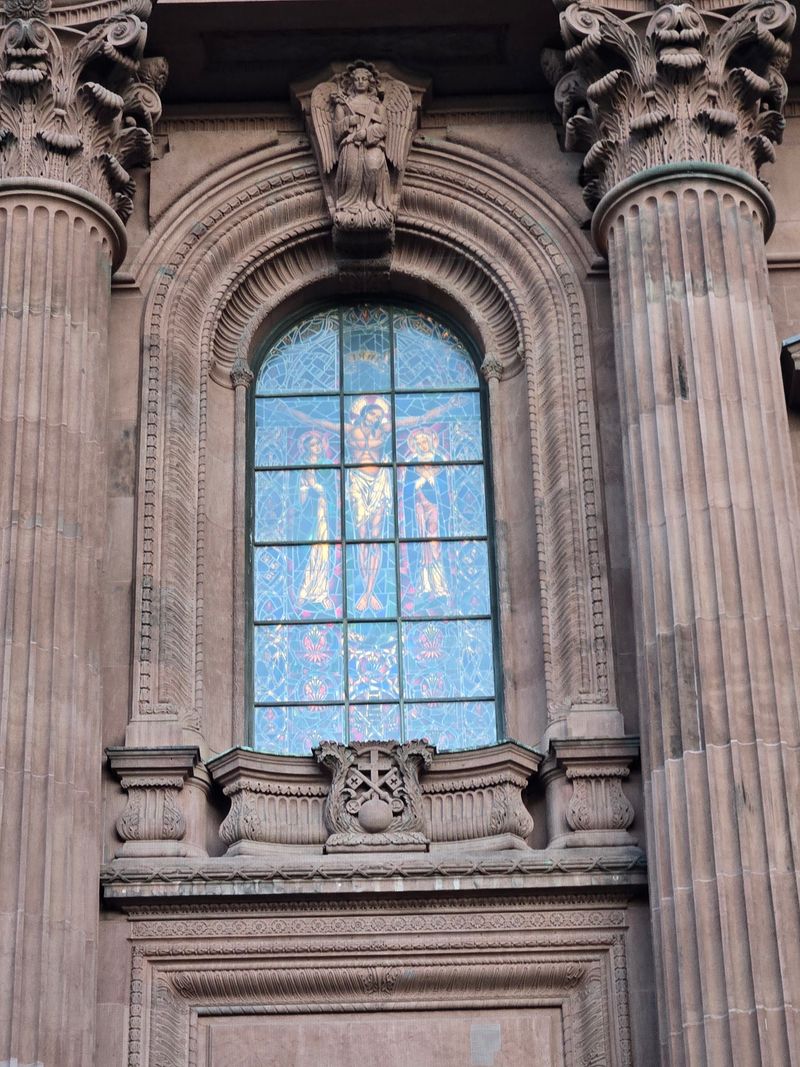
Look at the lower walls from the sidewalk and you’ll notice something missing. There are no side windows at street level.
That choice traces back to 1844, when anti-Catholic unrest in Philadelphia targeted churches. Builders wanted the new cathedral’s glass safely out of reach from thrown stones.
A popular legend adds a fun twist to the story. It says the window height was set by how far the strongest worker could toss a rock.
Nobody can prove that tale, so treat it as cathedral folklore. Still, it’s a great detail to share with the kids on the walk up Race Street.
Construction began in 1846 with the cornerstone. The cathedral was finished and dedicated in 1864, after nearly two decades of work.
Those dates mean the building rose through the Civil War years. Its Palladian facade came along after 1850, adding the grand columned front you see today.
The cathedral was listed on the National Register of Historic Places in 1971. That’s a nice nod for a building that started life as a careful answer to a tense moment.
Saints, Scholars, And A Whole Lot Of Color Up Top
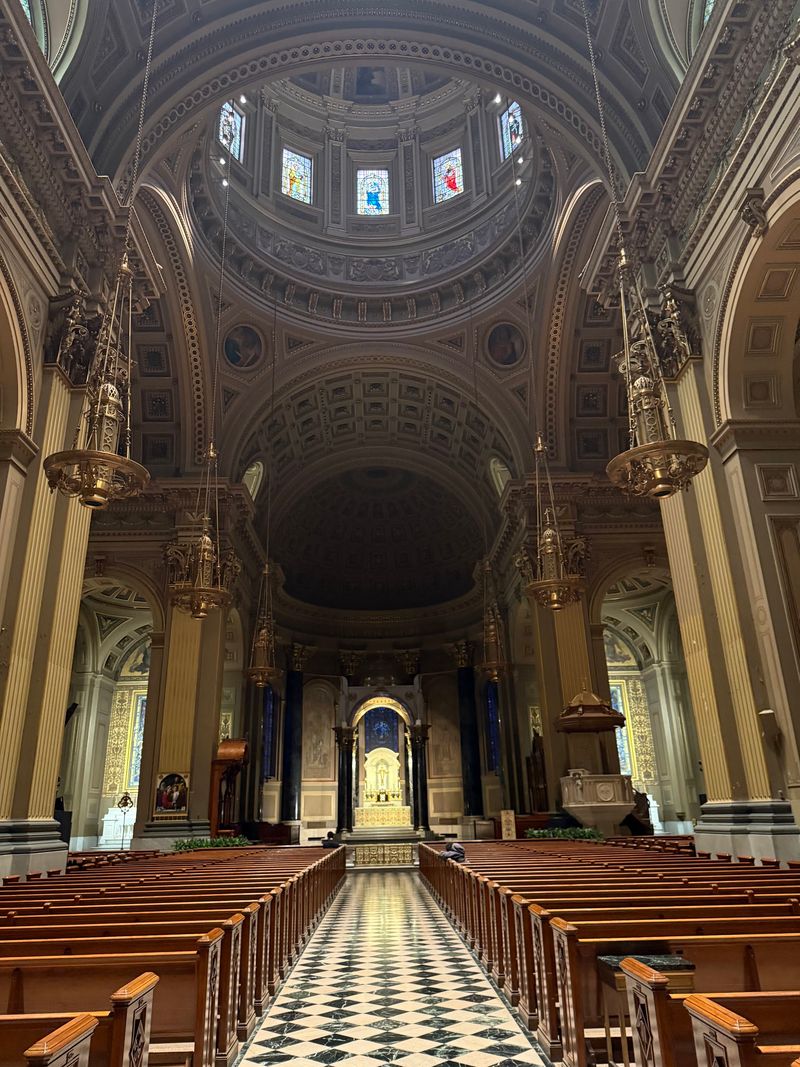
Color pours in from above rather than from the sides. Thanks to that high placement, the stained glass seems to float near the ceiling.
On the third level of the great dome, windows show Mary holding the Child Jesus. Saint Peter and Saint Paul, the cathedral’s namesakes, stand on either side.
Other windows honor Doctors of the Church. Saint Augustine and Saint Jerome are among the figures you can pick out in the glass.
An oversized apse of stained glass also anchors the space behind the altar. It’s the kind of window that makes you stop mid-step.
Daylight shifts the mood through the day. Morning light feels different from late afternoon, so the colors never look quite the same twice.
Bring binoculars if you like detail work. The figures sit high, and a little zoom helps you read the stories they tell.
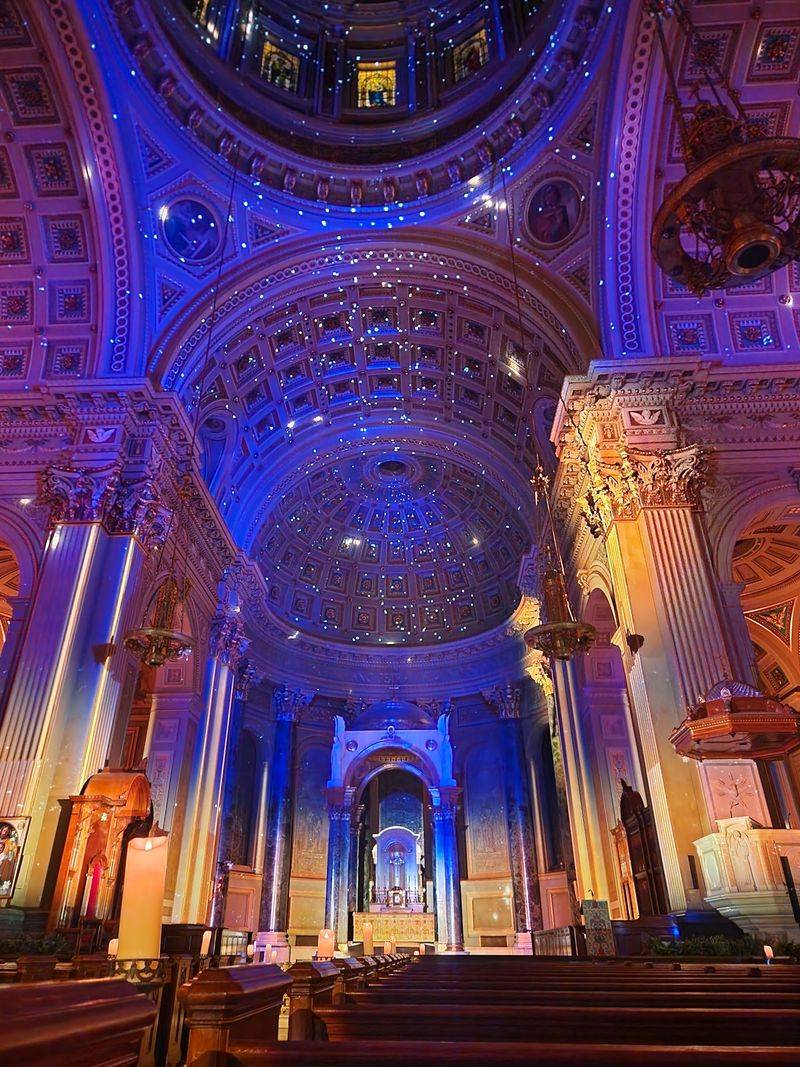
During evening events, the glass plays a different role. Instead of sunlight pouring in, soft interior light and candle glow bring the windows to life in a quieter, moodier way.
Flameless Candles And Live Strings Under The Dome
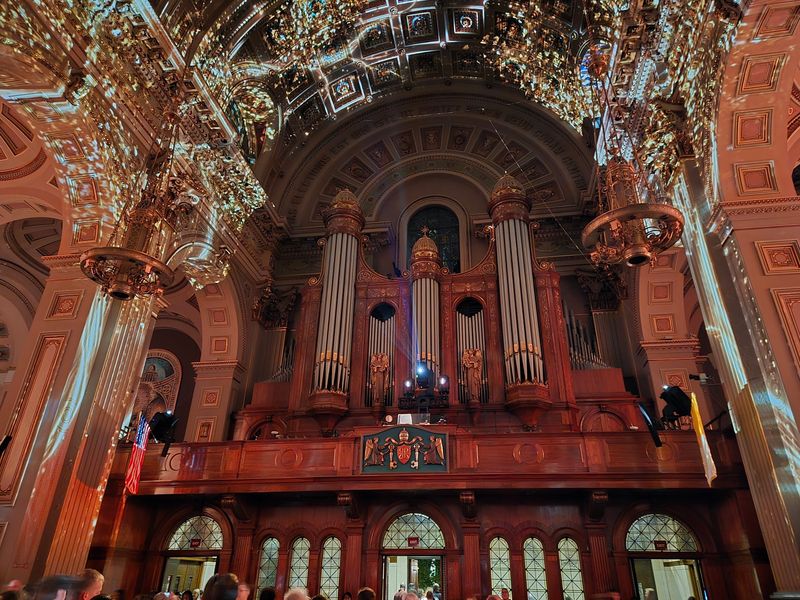
Thousands of flameless candles set the scene for the Candlelight Concerts held here. Live musicians play in the nave while the soft glow spreads across stone and marble.
Programs can range from classical favorites to modern pop and film music arranged for strings. Lineups change, so check the schedule to see what’s coming up.
The candles are battery powered, which keeps a historic interior safe. They still flicker enough to make the room feel warm and hushed.
Acoustics in a space this size do a lot of the heavy lifting. A small ensemble can sound surprisingly full when the sound rolls up into the dome.
Tickets are sold for specific dates and seating areas. Prices and showtimes shift, so it’s smart to look before you plan the drive.
Date night fits naturally here, and so does a special outing with grown children or grandparents. The pace is calm, and the setting does half the talking.
Arrive with time to look around before the music starts. Watching the glass catch the candle glow is part of the show.
The Capitol Dome Painter Left His Mark Here Too
Constantino Brumidi is famous for painting inside the U.S. Capitol in Washington.
Pennsylvania gets a piece of his talent too.
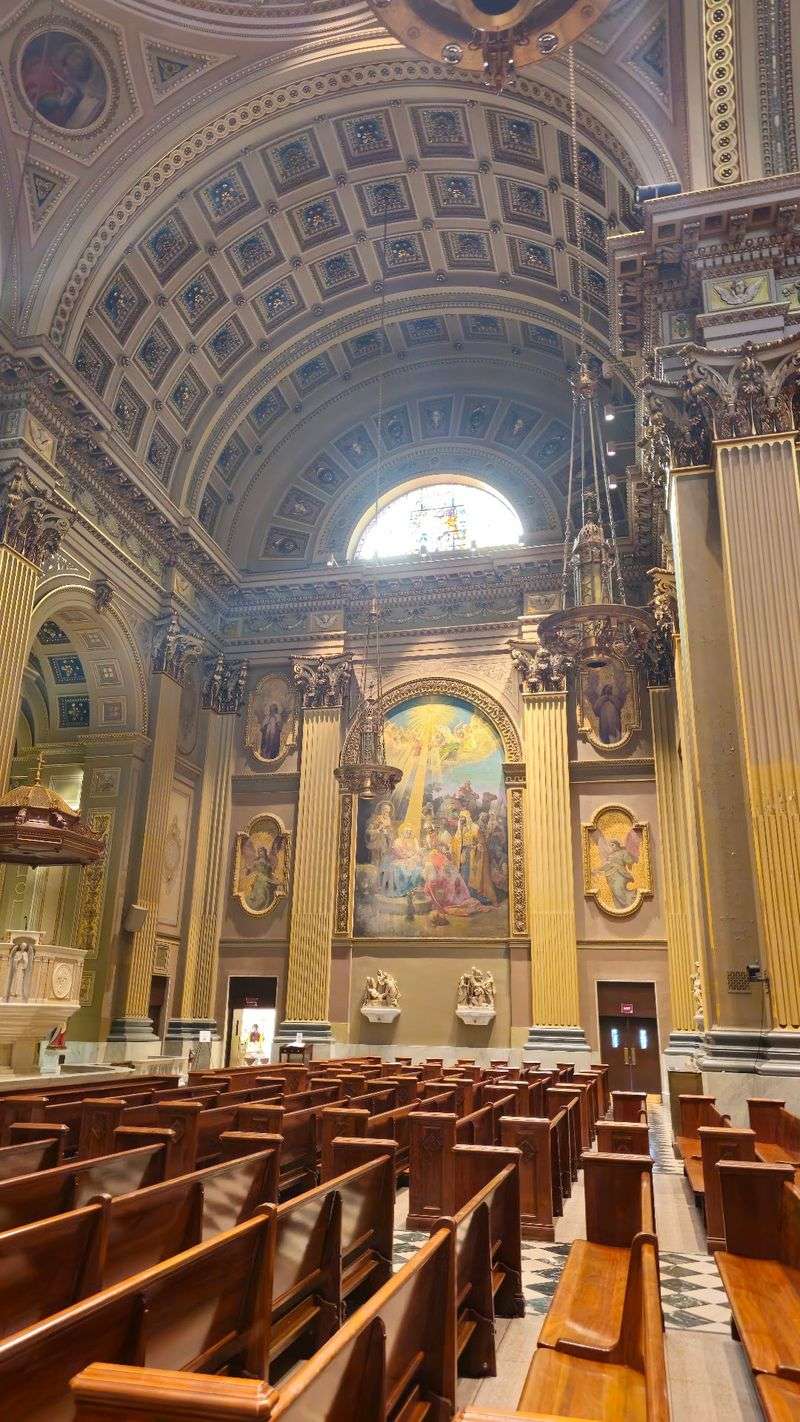
In 1862, Brumidi completed The Assumption of the Blessed Virgin inside the cathedral’s dome. Much of the interior decoration is also credited to him.
That dome rises 156 feet and 8 inches above the floor. Tilting your head back to take it in is basically required.
A painting that high needs patience to appreciate. Find a pew, sit for a few minutes, and let your eyes adjust to the colors and figures.
It’s a fun connection for history buffs and school groups. You can stand in Philadelphia and see work from the same hand that decorated the nation’s capitol.
The fresco feels especially dramatic during evening events. When the room dims, light washes across the dome and the painting seems to lift away from the ceiling.
Pair this with the stained glass and the whole upper half of the building feels like a gallery. Just remember to look down occasionally so you don’t bump into a column.
Home To America’s First Native-Born Saint
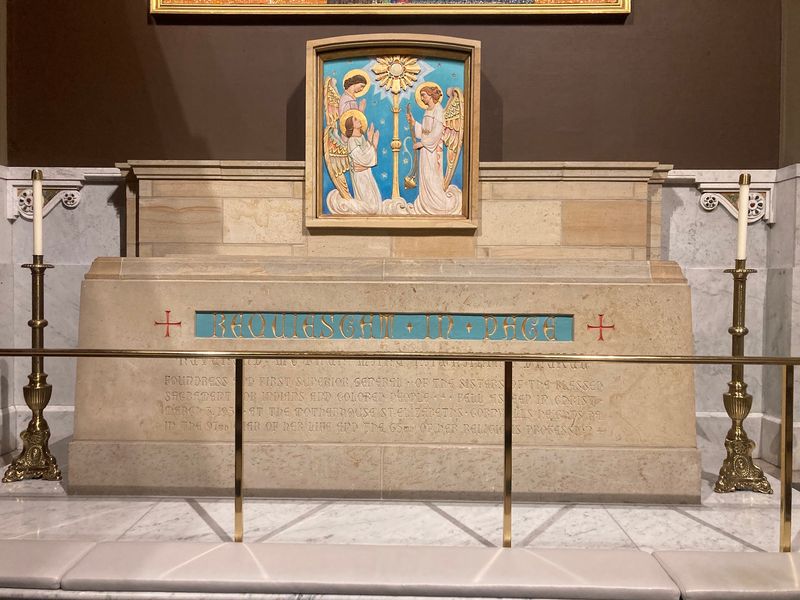
Saint Katharine Drexel grew up in Philadelphia. She became the first American-born saint, and her shrine is inside this cathedral.
The shrine sits among the chapels near the central nave. It holds her tomb and relics, making it a meaningful stop for pilgrims.
Drexel is remembered for using her family fortune to support education and missions. Her story gives the building a personal, hometown connection.
Faith history runs deep here in other ways too. Pope John Paul II celebrated Mass at the cathedral in 1979, and Pope Francis did the same in 2015.
Mother Teresa also visited during the 41st International Eucharistic Congress. That’s quite a guest list for one Race Street address.
Visitors of any background are welcome to pause at the shrine. A few quiet minutes there can be one of the calmest parts of a busy city day.
Catholic families from across Pennsylvania may find the shrine especially moving. History fans will appreciate it as a link to a woman whose work reached far beyond the state.
Good To Know Before You Head Inside
Entry for a simple visit costs nothing. You can stop in during open hours, which run longer on weekends to fit the Mass schedule.
Hours can change for services and special events. A quick check ahead saves you from arriving during a closed window.
The cathedral asks for modest clothing. Men are asked to remove hats once inside.
Ticketed evening events may include security screening at the door. Give yourself a few extra minutes so you’re not hurrying to your seat.
A church shop sells religious items and gifts. Its hours are more limited than the main building’s, so don’t count on it late in the day.
Restrooms exist but are on the small side. It’s worth planning a stop before showtime if you’re attending a concert or Luminiscence.
Mass is open to all, including those who aren’t Catholic. Respectful quiet goes a long way, especially if a service is underway when you arrive.
Planning ahead turns a good visit into a smooth one. The building rewards a relaxed pace.
Finding Race Street And A Place To Park
GPS will take you to 1723 Race St, Philadelphia, PA 19103. The cathedral faces Logan Square, one of the city’s best-known public spaces.
That location puts you close to the Benjamin Franklin Parkway. Museums and fountains sit within an easy walk, so the cathedral fits neatly into a bigger day.
Driving in from elsewhere in Pennsylvania means planning for city parking. Nearby garages are the simplest choice, though they aren’t cheap.
Street parking can be tight in this part of Center City. Building in time to circle the block or walk from a garage keeps the stress down.
Public transit and rideshare are other options. Many hotels in Center City sit within walking distance as well.
Restaurants line the surrounding blocks too. Grabbing dinner before an evening concert is easy without moving the car.
Families on a budget might pair a free daytime visit with a picnic in Logan Square. Then decide later whether to return for a ticketed evening event.