Spend The Night In A Waterfront Pier Cabin At This South Carolina State Park
South Carolina has a state park where your morning coffee can come with water underneath your feet.
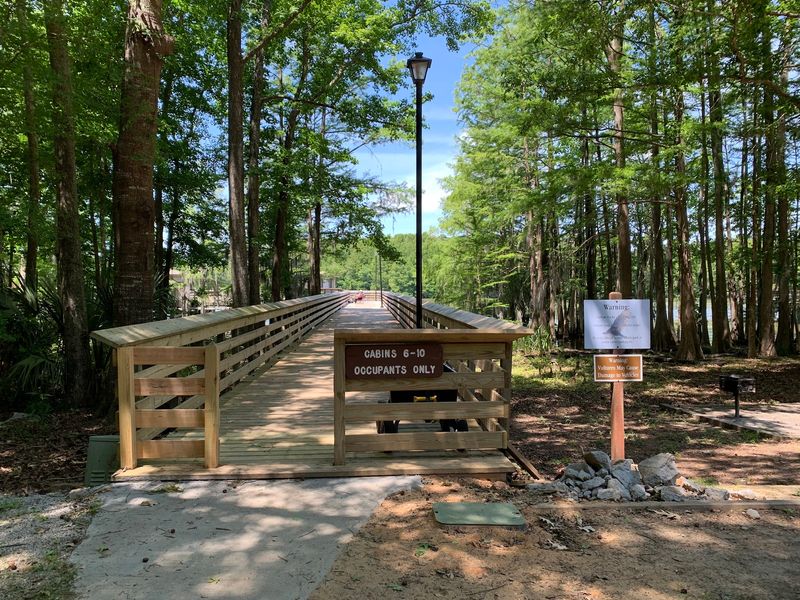
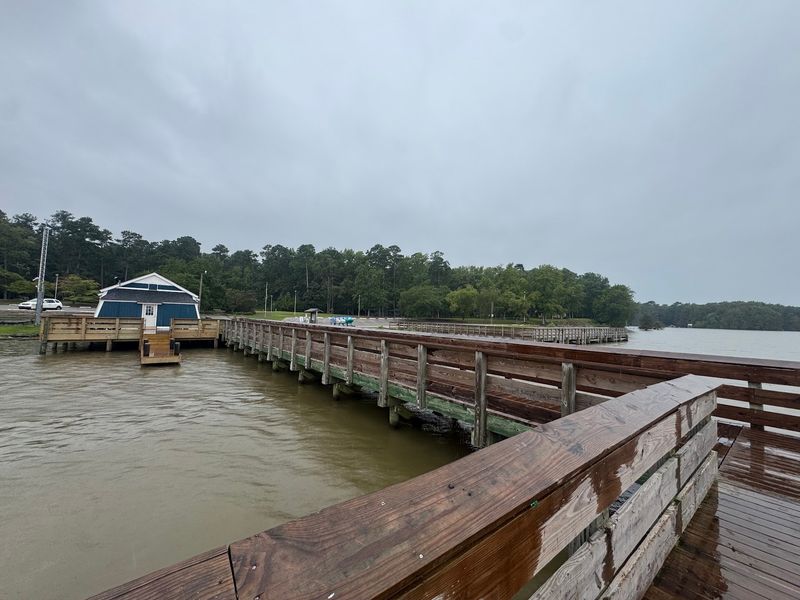
Pier cabins stretch over the lake, giving overnight guests an unusually peaceful place to wake up.
Outside, bike trails, pine woods, wildlife, and nearby wetlands offer plenty to explore once you finally leave the deck.
The hardest part might be convincing yourself to go anywhere at all. I would book early, bring breakfast supplies, and happily spend half the morning doing nothing.
Would you stay one night or immediately start planning a three-night escape?
Round Cabins Built Over Water
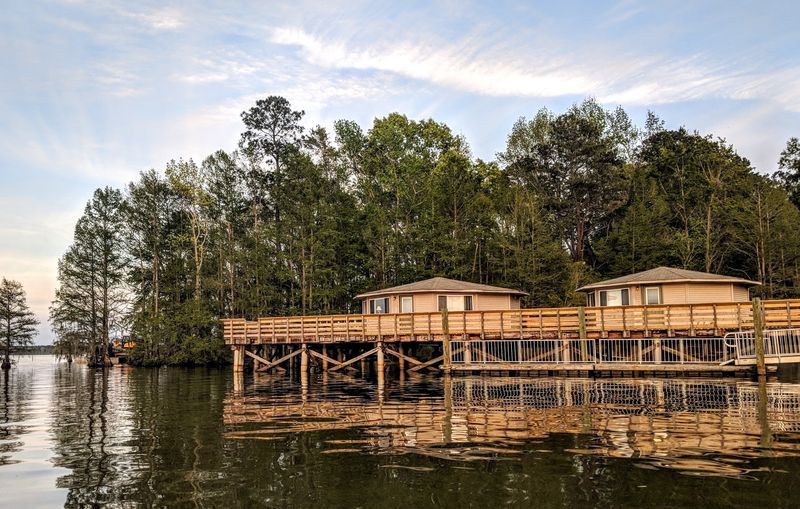
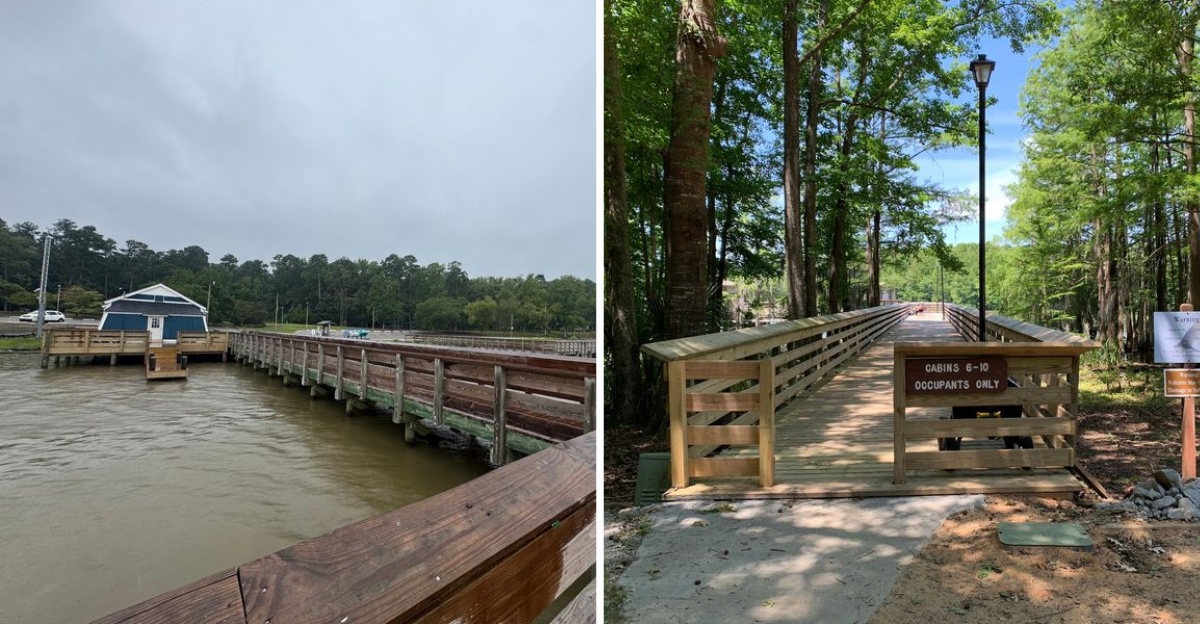
Waking up with water directly beneath the floorboards changes how a morning feels. Ten of the cabins here sit right on piers over Lake Marion.
Locals call them rondettes because of their unusual circular shape.
Each one has two bedrooms and comes furnished for an easy arrival. Heating, air conditioning, and linens are all provided. A small kitchen holds basic cooking utensils, a coffee maker, and a microwave.
Twenty more rondette cabins sit along the lakeshore for guests who prefer solid ground nearby. Square footage varies slightly between cabins, but they hold the same number of guests.
Reservations open up to 13 months ahead, which matters more than you might guess. Pier cabins fill fast during warm months, so early booking is the smart move. Select cabins welcome pets, so the dog does not have to miss the trip.
Swimming near the pier cabins is not allowed, a safety rule worth remembering before anyone cannonballs. There is a designated swimming area elsewhere in the park instead. You will find these cabins at Santee State Park, 251 State Park Rd in Santee.
Lake Marion’s Enormous Playground
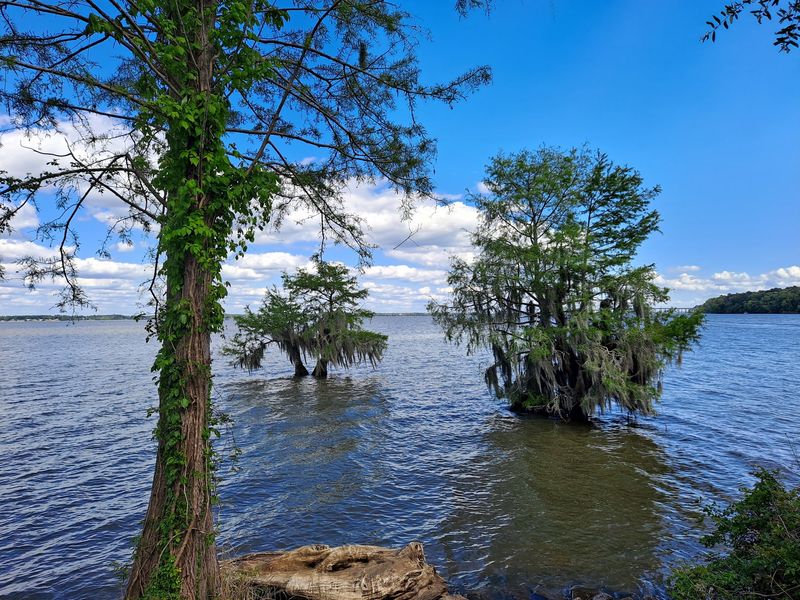
Over 110,000 acres of water sit outside the cabin door. Lake Marion is the largest lake in South Carolina, and the scale is hard to grasp until you are on it.
Coves, channels, and quiet shorelines keep going long after you expect them to end.
The region carries the nickname Santee Cooper Country. Along with neighboring Lake Moultrie, this lake helped launch America’s inland striped bass fishery. That history still shapes the fishing culture around here.
What surprised me most was the flooded cypress forest. Ancient trees rise straight out of the open water, creating a scene unlike anything else in the state. Morning mist across those trunks is worth setting an alarm for.
Two boat ramps make launching your own vessel simple. If you did not tow a boat down the interstate, rentals solve that problem quickly. Kayaks and canoes are both available.
Because the lake is so large, crowded weekends never feel cramped on the water. There is always another bend to slip around. I found a silent cove within twenty minutes of paddling, and had it entirely to myself.
Catfish, Bass And Bragging Rights
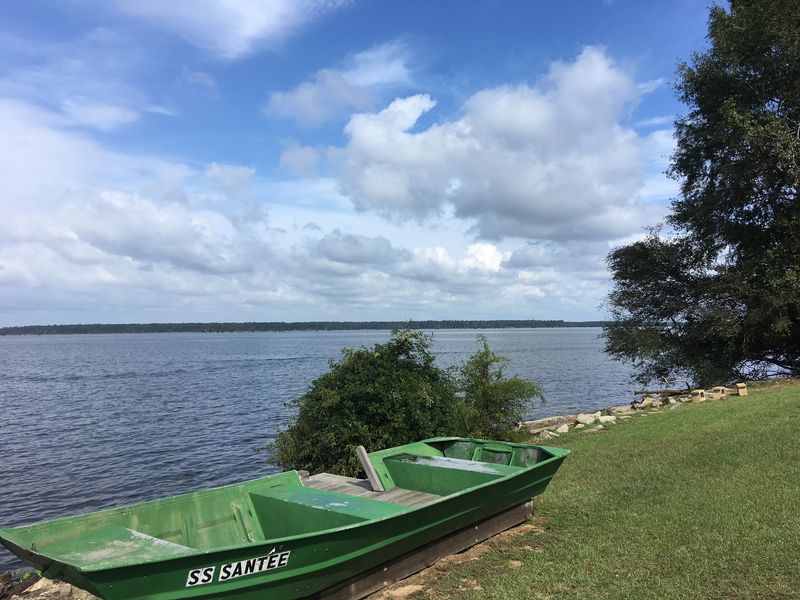
Anglers talk about this lake with real reverence. Lake Marion produced the state record largemouth bass for South Carolina, weighing over 16 pounds.
That single fact pulls serious bass fishermen off I-95 every season.
Catfish are the headline attraction, and they grow impressively large here. Striped bass, bream, and crappie round out the list of regular catches. Variety keeps the day interesting even when the big ones stay shy.
Pier cabin guests get the shortest commute imaginable. You can cast a line from your own deck before breakfast. I watched fish break the surface repeatedly while still in my slippers.
A fishing pier near Cypress Landing, the park store, welcomes anglers at any hour. The store also carries tackle and basic fishing gear if you forgot something at home. Firewood and snacks are available there too.
For wider water, launch from either boat ramp and drift among the cypress trunks. Many anglers swear their best spots hide in that flooded forest. Bring a valid South Carolina fishing license, easily picked up at the visitor center.
Patience pays here, and so does an early alarm.
Sandy Trails And Hidden Sinkholes
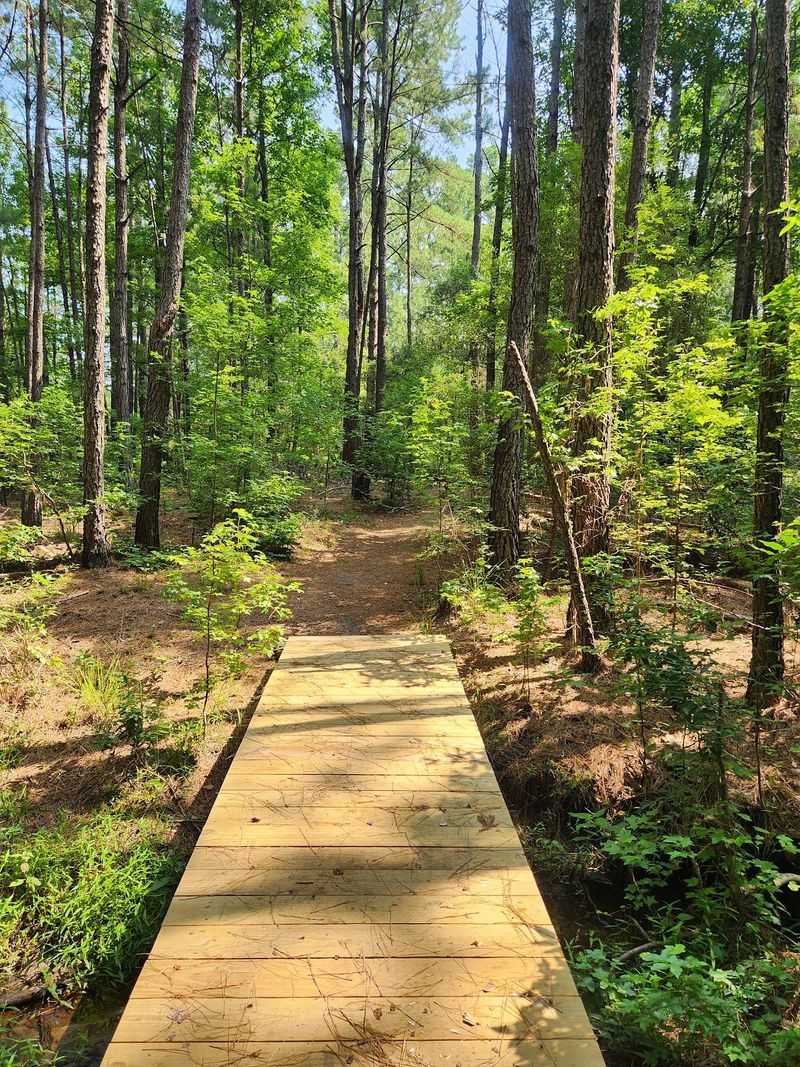
More than 10 miles of paths wind away from the shoreline. The longest is a 7.5-mile hiking and biking trail that loops through mixed pine and hardwood forest.
Length makes it moderate rather than technical.
Cyclists should know the surface is mostly sand with plenty of exposed roots. Fat tires or full suspension will make the ride far more pleasant. Riding over pine needles is oddly quiet and very satisfying.
Shorter walks suit families and anyone saving energy for the water. Limestone Nature Trail, Oak Pinolly Trail, and Sinkhole Pond Trail each run roughly three quarters of a mile to a mile. All three are marked and well maintained.
Natural sinkholes are the geological surprise along several routes. These depressions form as underlying limestone slowly erodes away.
Santee Limestone was first identified in this region around 1842, which gives the ground beneath your boots real scientific pedigree.
Wildflowers, ferns, and towering oaks fill in the scenery between landmarks. Watch your footing, since roots hide easily under fallen leaves. My favorite stretch delivered lake glimpses through the trees at least a dozen times.
Paddles, Pontoons And Splashing Around
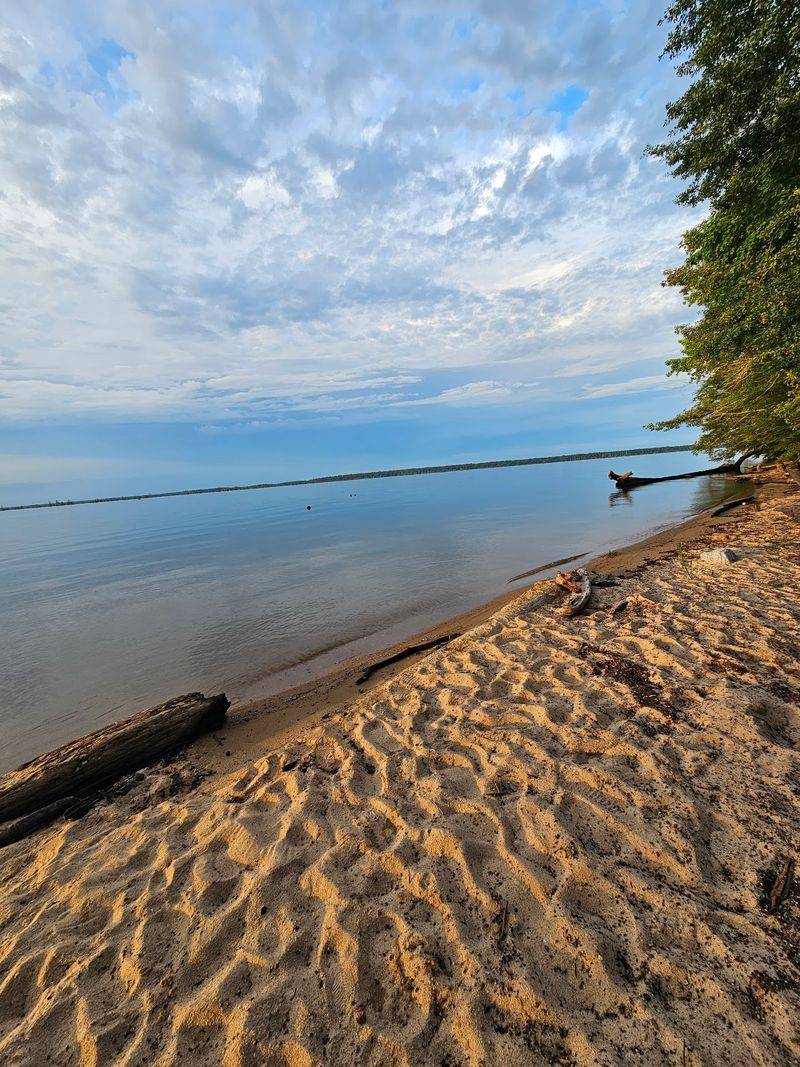
Getting on the water here is refreshingly uncomplicated. A self-serve kiosk handles kayak rentals, so you can grab a boat without a long wait.
Canoes are also available for those who prefer a wider ride. Guided pontoon tours are the star attraction for many visitors. They carry you into the swampy headwaters among the cypress trees.
Guides share lake history and point out wildlife that most paddlers would miss entirely.
Paddling on your own has different rewards. Quiet coves and narrow channels open up when your only motor is your arms. Herons tolerate a silent kayak far better than an engine.
Swimming is permitted in Lake Marion, and there is a small beach area for cooling off. Remember that the pier cabin area is closed to swimmers. Rangers will happily point you toward the right spot.
Both boat ramps accommodate motorized vessels for cruising or faster water sports. Morning water tends to be calmest for beginners.
I set out just after sunrise, and the surface looked like polished glass the whole way out.
Ancient Trees Standing In Water
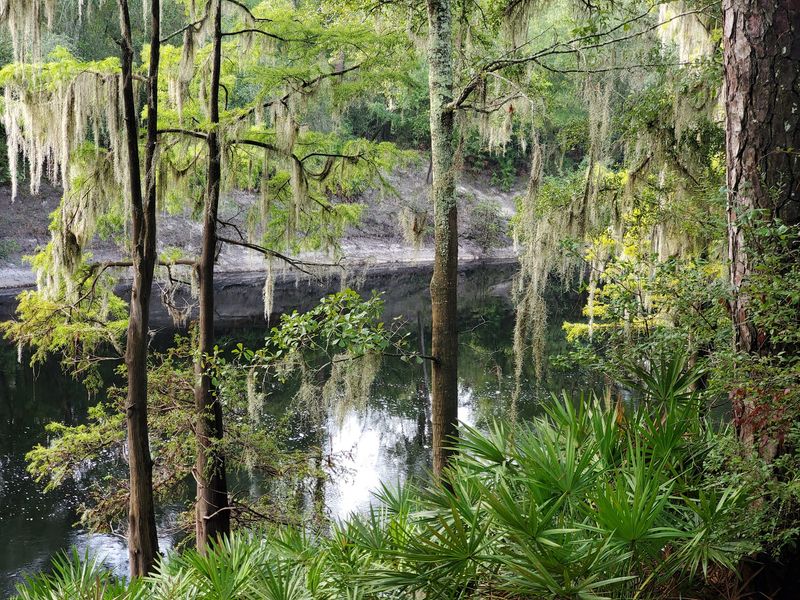
Nothing prepares you for trees growing out of open lake. The flooded cypress forest sits deep in Lake Marion and looks almost invented.
Morning mist drifting between the trunks makes photographers lose track of time. Here is the surprising part. This is not an original swamp at all.
When the lake was impounded in the 1940s, these trees were submerged, and they simply adapted and kept growing.
That resilience gave the area real ecological value. Root systems shelter fish, and branches host birds throughout the year. Pontoon tours take visitors right into the heart of it.
Anglers anchor among the trunks hoping for a strong bite. Kayakers slip between them looking for narrow passages and quiet corners. Both experiences feel completely different from open water paddling.
Light changes the mood constantly through the day. Early hours bring haze and stillness, while late afternoon turns the water copper. I went twice in one visit because the second trip looked nothing like the first.
If you only make time for one thing beyond the cabin deck, choose this. The cypress forest is the signature scene at Santee State Park, and it earns that title honestly.
Deer, Alligators And Bald Eagles
Wildlife here behaves like it owns the place, and honestly it does.
White-tailed deer wander through wooded sections with total confidence. One paused mid-chew to stare at me before continuing its snack.
Fox squirrels are another treat, since they are the largest tree squirrel in North America. Their size genuinely startles first-time visitors. Look for them in open pine areas.
Alligators bask along banks and glide through shallow water during warmer months. Keep a respectful distance and enjoy the show from safety. Turtles sunning on logs are far more approachable.
Birders should bring binoculars and patience. Osprey dive for fish with dramatic accuracy, while great blue herons stalk the shallows slowly. Painted buntings and various woodpeckers also appear on the park’s birding list.
Bald eagles occasionally cruise overhead, which never stops feeling like a special event. Spanish moss hanging from oak branches adds to the southern atmosphere. Land-locked striped bass swim below, completing the cast of characters.
Campgrounds, Store And Smart Planning
Not everyone wants a cabin, and the campgrounds hold up beautifully. Cypress View offers 50 sites, while Lakeshore Campground has 108.
Both include water and electrical hookups plus restrooms with hot showers.
RVs up to 40 feet fit here, and sites come with a fire ring and picnic table. Cypress View sits closer to the store and trails. Lakeshore requires a short drive but rewards you with excellent water views.
Group travelers should look at the Village Round, a community meeting building with a large screened grilling area for up to 75 people. Picnic shelters serve day visitors well.
Three playgrounds keep children busy, and there are pickleball and cornhole options too.
Cypress Landing, the park store, stocks a few groceries, firewood, and fishing gear. There is a Wi-Fi lounge inside and an electric vehicle charging station on site. Rangers there are quick with helpful directions.
Park hours run from 6 a.m. until dark year-round, with the office open 8 a.m. to 5 p.m. Admission is collected at the visitor center. Pack bug spray, because mosquitoes near the water mean business.