This Spring Experience One Of Georgia’s Most Stunning Floral Displays
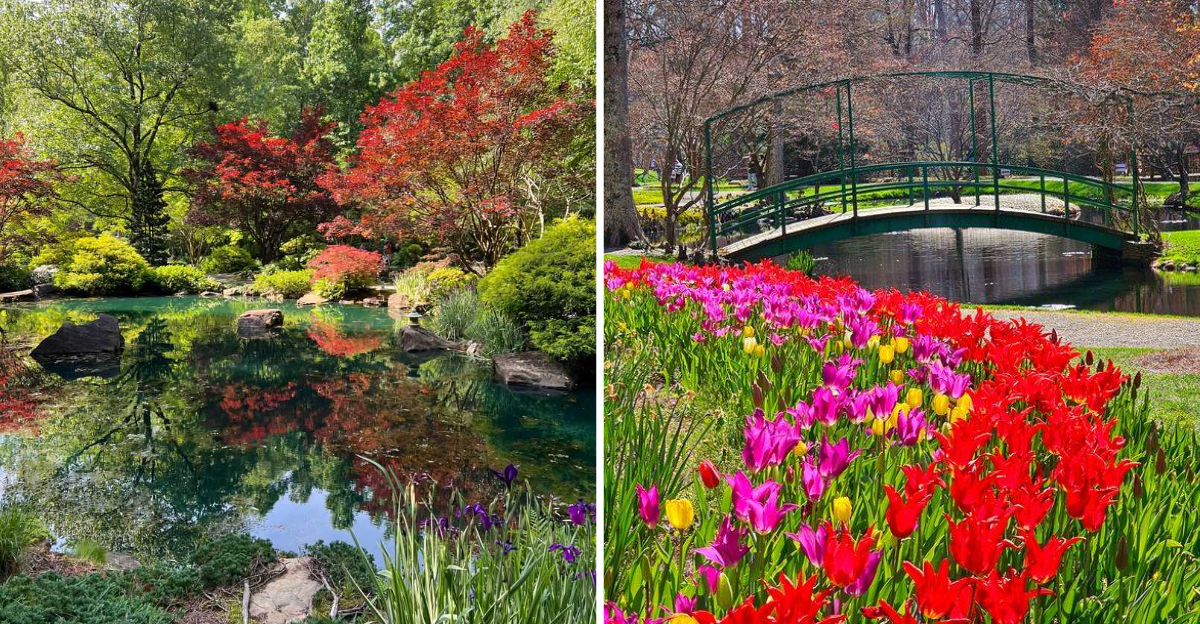
Spring in Georgia brings an explosion of color that feels almost magical, and nowhere captures that transformation better than Gibbs Gardens. Nestled in the foothills of the North Georgia mountains at 1987 Gibbs Drive in Ball Ground, this breathtaking destination spans 376 acres of meticulously cultivated beauty. As the season unfolds, waves of tulips, daffodils, azaleas, and dogwoods paint the landscape in vivid shades that seem to stretch endlessly.
Winding pathways lead visitors through themed garden spaces, quiet reflection areas, and panoramic overlooks that invite you to slow down and take everything in. Each turn reveals a new display, thoughtfully designed to highlight nature at its peak. The fresh mountain air and peaceful surroundings make the experience feel restorative as well as inspiring.
Whether you are a gardening enthusiast, a photographer, or simply someone who loves springtime scenery, Gibbs Gardens offers a journey through one of the Southeast’s most spectacular seasonal showcases.
1. The Daffodil Garden Stretches Across 20 Acres
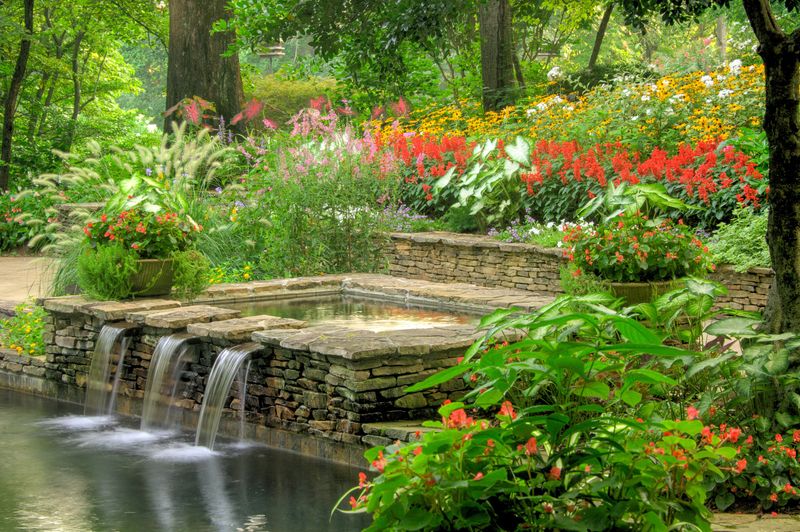
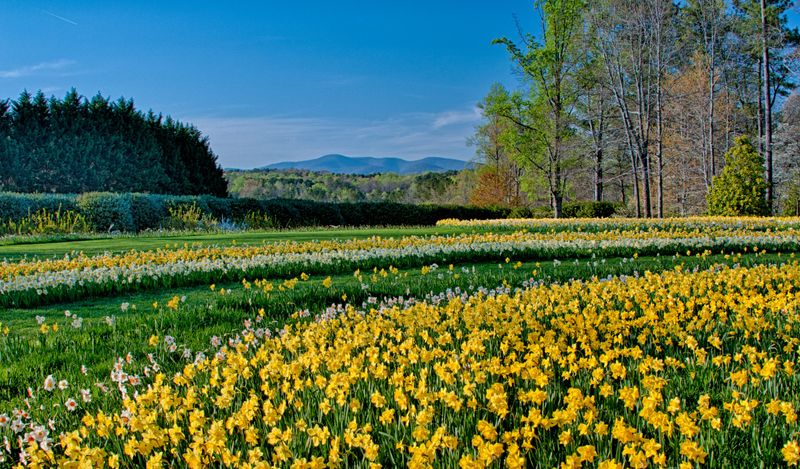
Imagine standing before 20 million daffodils swaying in the spring breeze. The Daffodil Garden at Gibbs Gardens creates one of the largest displays of these cheerful flowers anywhere in the nation.
Walking through this golden wonderland feels like stepping into a painting. The flowers carpet the rolling terrain in waves of yellow, cream, and white. Each bloom adds to the stunning visual effect that draws photographers and nature lovers from across the country.
The best time to visit is typically mid-March through early April. Weather conditions can shift the peak bloom period slightly each year. I recommend checking the garden’s website before planning your trip to catch the flowers at their absolute best.
2. Japanese Gardens Offer Serene Beauty
Finding peace becomes effortless in the Japanese Gardens section. Traditional design elements blend seamlessly with the natural Georgia landscape.
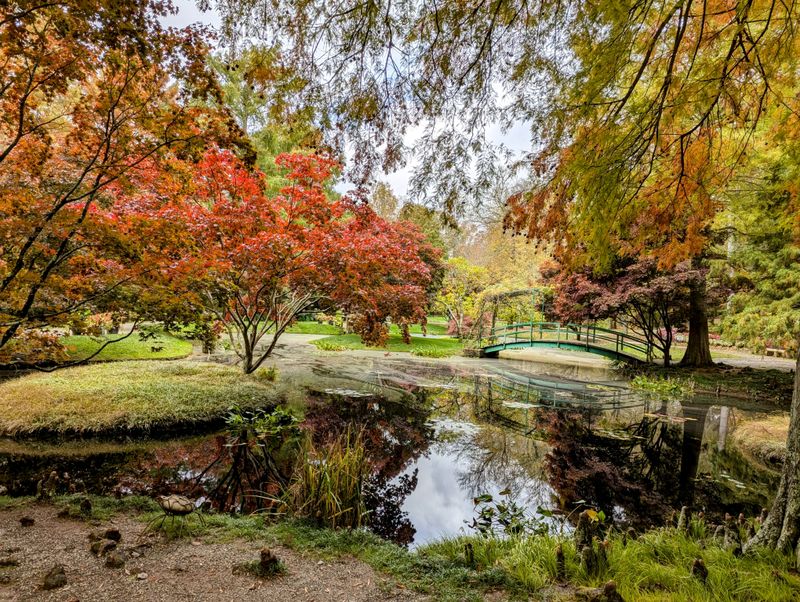
Stone lanterns guide your path alongside tranquil water features. Carefully pruned trees and shrubs create living sculptures that change with each season. The attention to authentic Japanese gardening techniques shows in every carefully placed rock and thoughtfully positioned plant.
Koi fish glide through clear ponds beneath arching bridges. The sound of water trickling over stones adds to the meditative atmosphere. Spring brings cherry blossoms and azaleas that enhance the already beautiful setting with bursts of pink and white color that complement the traditional green landscape perfectly.
3. Manor House Gardens Showcase Formal Design
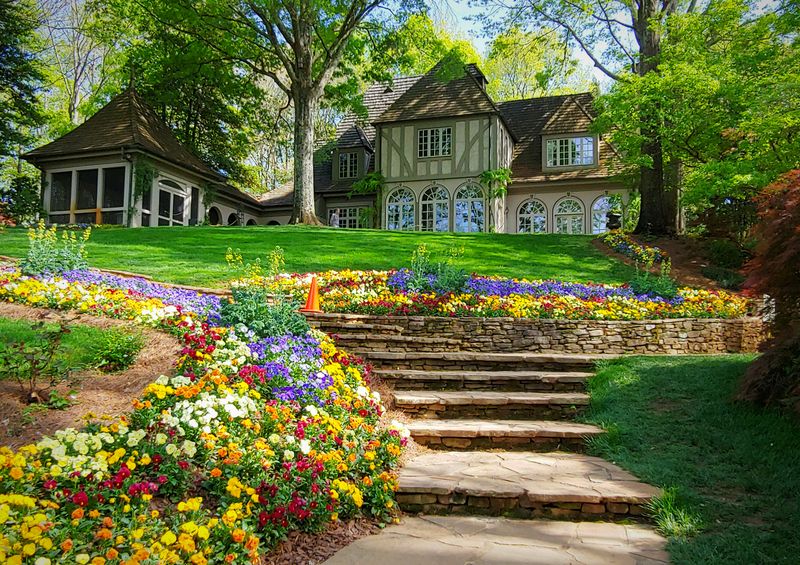
European elegance defines the Manor House Gardens experience. Formal parterres and geometric designs create a sophisticated atmosphere that contrasts beautifully with the wilder woodland areas.
Boxwood hedges outline beds filled with seasonal flowers. Symmetrical pathways lead visitors through carefully planned color combinations. The formality of the design reflects centuries-old gardening traditions brought to life in a modern American setting.
Fountains serve as focal points throughout this section. The manor house itself provides an impressive backdrop for the manicured lawns and flower beds. During spring, tulips and other bulbs add structured pops of color that enhance the garden’s architectural qualities and demonstrate how formal gardening principles create lasting visual impact.
4. Waterlily Gardens Create Monet-Like Scenes
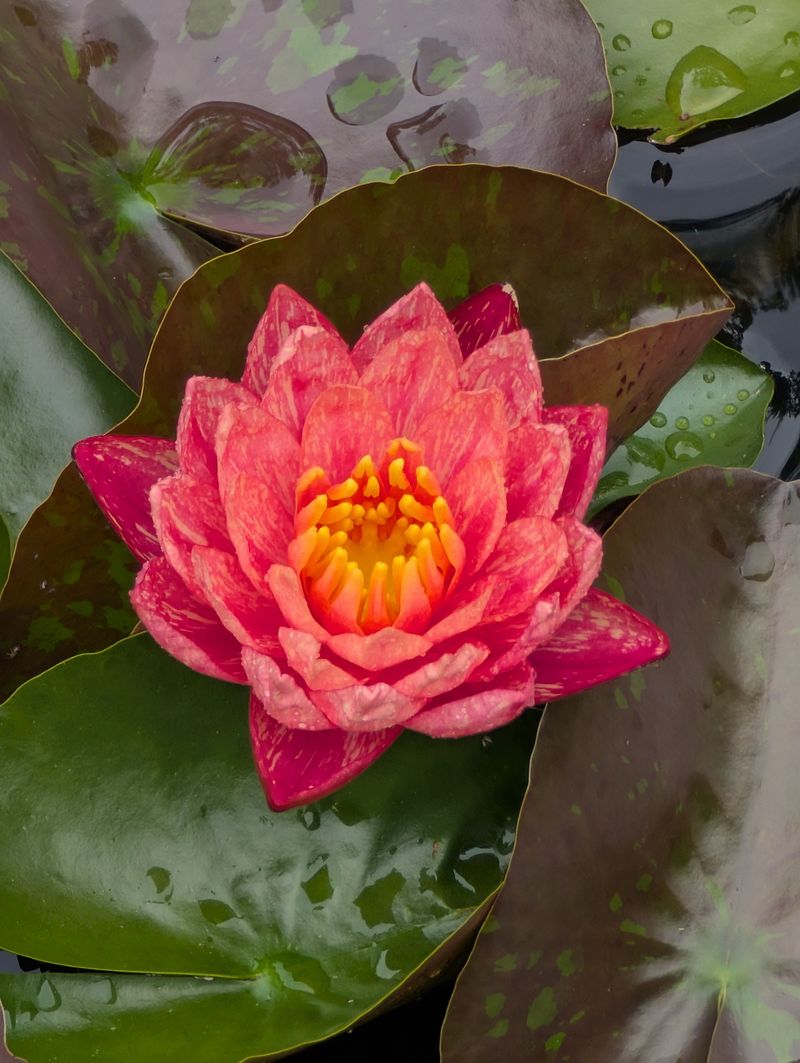
Water becomes a canvas for floating beauty in the Waterlily Gardens. These aquatic displays transform simple ponds into living works of art reminiscent of famous Impressionist paintings.
Lily pads spread across the water’s surface like green plates. Flowers in shades of pink, white, and yellow rise above the foliage. The reflections in the still water double the visual impact and create photo opportunities that seem almost too perfect to be real.
Summer brings the peak bloom period for waterlilies. However, spring offers its own charm as the first flowers begin to open. Dragonflies dart among the blooms while frogs provide a natural soundtrack that makes you forget you’re just an hour north of Atlanta’s urban sprawl.
5. Fern Glade Provides Cool Forest Retreat
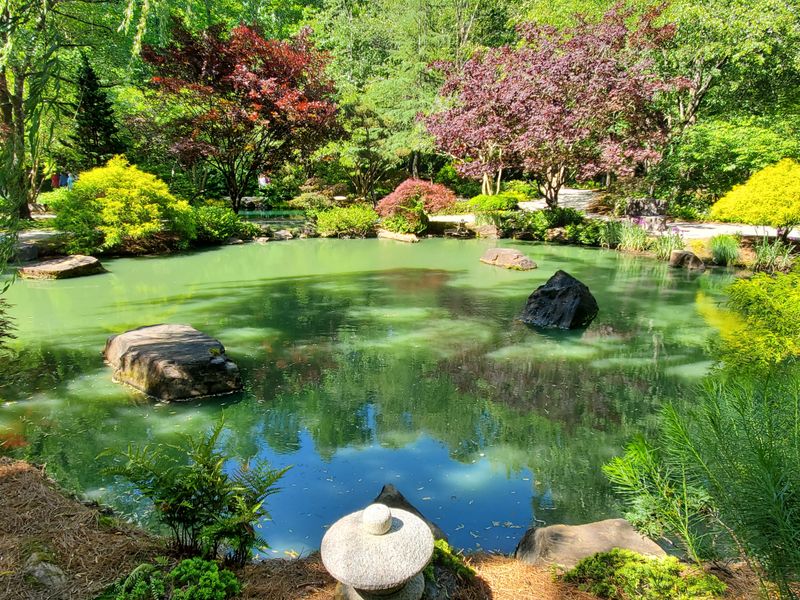
Cool shade and ancient plants await in the Fern Glade. This woodland area showcases dozens of fern species in their natural habitat.
Ferns unfurl their fronds in early spring like nature’s own work of origami. The delicate patterns of each species create textural interest even without colorful flowers. Moss-covered rocks and fallen logs provide the perfect growing conditions for these prehistoric plants.
The microclimate here stays noticeably cooler than open areas. Humidity from the surrounding vegetation creates ideal conditions for sensitive plant species. I find this section particularly refreshing during late spring visits when temperatures start climbing and the dense tree canopy provides natural air conditioning that makes walking comfortable even on warmer afternoons.
6. Valley Overlook Provides Breathtaking Views
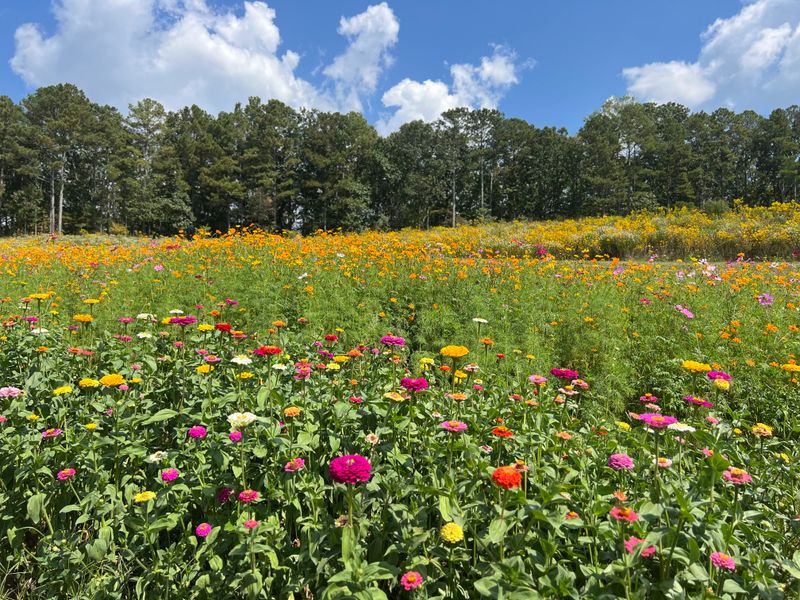
Perspective changes everything at the Valley Overlook. Climbing to this elevated position rewards visitors with sweeping views of the entire property and the surrounding North Georgia mountains.
From this height, the garden’s grand scale becomes apparent. Different garden sections create a patchwork of colors and textures across the valley floor. The mountain backdrop frames the cultivated beauty with wild, natural scenery.
Spring offers particularly dramatic views when flowering trees dot the landscape. Redbuds and dogwoods add pink and white accents to the green hillsides. Bring your camera because the photo opportunities from this spot are exceptional, especially during the golden hours of early morning or late afternoon when the light creates long shadows and warm tones across the valley below.
7. Azalea Trail Explodes With Color
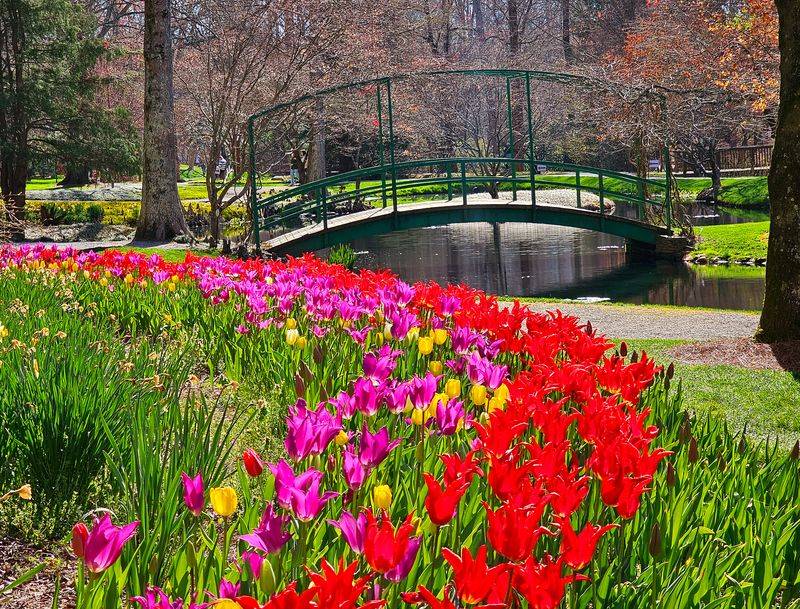
Colors seem to vibrate along the Azalea Trail during peak bloom. Thousands of these flowering shrubs create a corridor of intense color that stops visitors in their tracks.
Azaleas in every imaginable shade line the winding paths. Pink, red, purple, white, and coral blooms compete for attention. The concentration of color in this area reaches levels that seem almost unnatural in their intensity.
Late April typically brings the peak display. The blooming period can last several weeks depending on weather conditions. Native azaleas mix with cultivated varieties to extend the season and provide different flower forms.
The fragrance in this section adds another sensory dimension that enhances the already overwhelming visual experience of walking through this floral tunnel.
8. Reflection Pool Doubles The Beauty
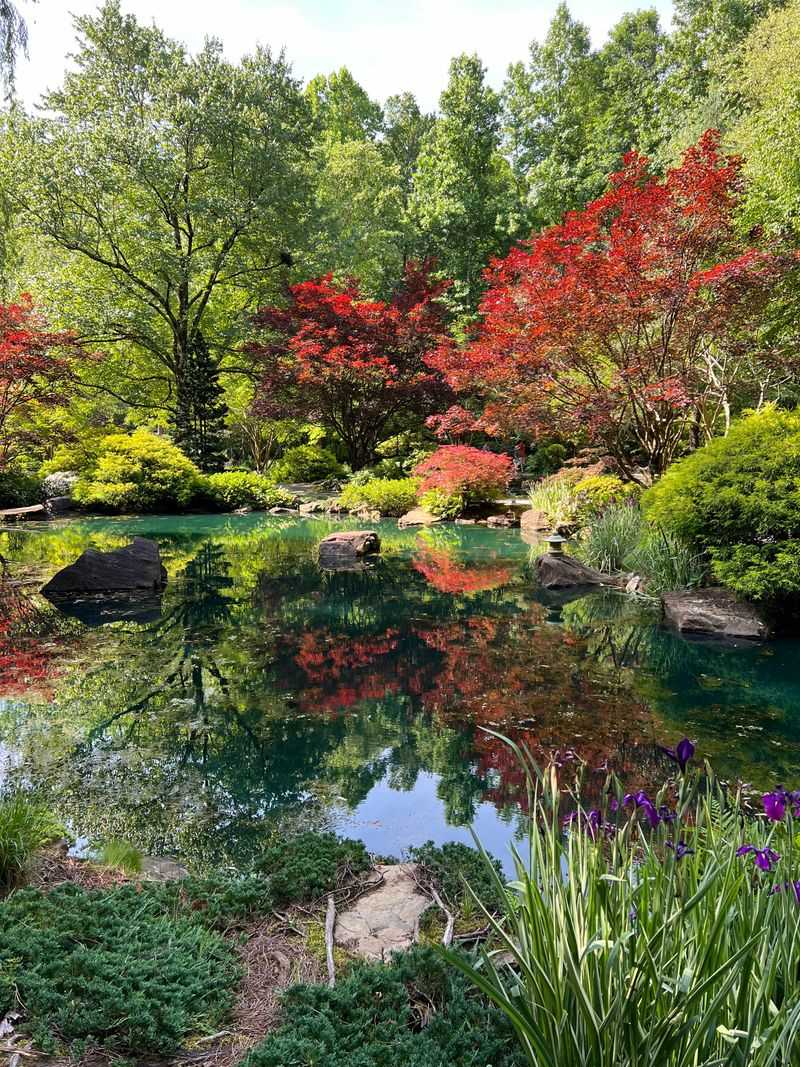
Symmetry reaches perfection at the Reflection Pool. Still water creates mirror images that double the impact of surrounding plantings.
The pool’s surface acts like glass on calm days. Trees, flowers, and sky reflect with such clarity that distinguishing up from down becomes difficult. The optical illusion creates a sense of infinite space.
Morning visits often provide the best reflections before wind disturbs the water. Spring clouds add drama to the mirrored sky while flowering trees frame the pool’s edges. Photographers love this spot because the reflections create compositions that need little editing.
The natural symmetry does all the work, producing images that capture the garden’s beauty in a unique and memorable way that showcases both reality and reflection.
9. Wildflower Meadow Celebrates Native Plants
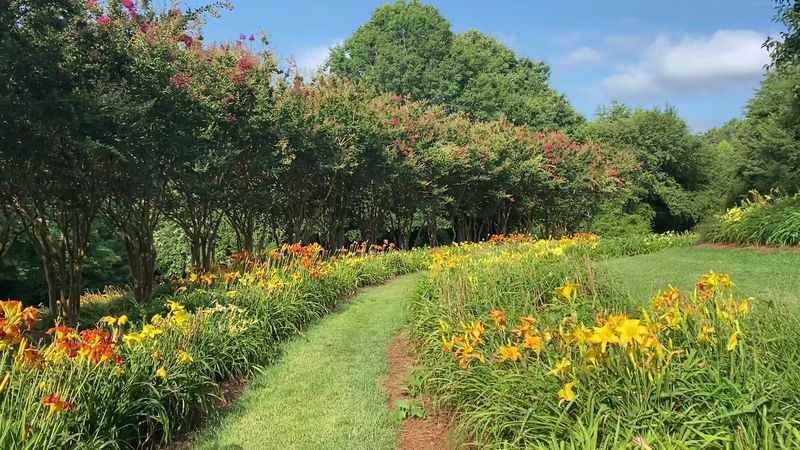
Natural beauty takes center stage in the Wildflower Meadow. Native Georgia plants grow in informal drifts that mimic wild landscapes.
Wildflowers attract butterflies and bees throughout the growing season. Spring brings early bloomers like wild lupine and phlox. The meadow demonstrates how native plants thrive with minimal intervention when given appropriate conditions.
Walking paths wind through the meadow without imposing rigid structure. The casual layout encourages exploration and discovery. This section shows a different side of gardening that values ecological function alongside beauty.
Native plant enthusiasts appreciate seeing how these species perform in a garden setting, proving that environmental stewardship and visual appeal can coexist beautifully in landscape design.
10. Terrace Gardens Feature Cascading Blooms
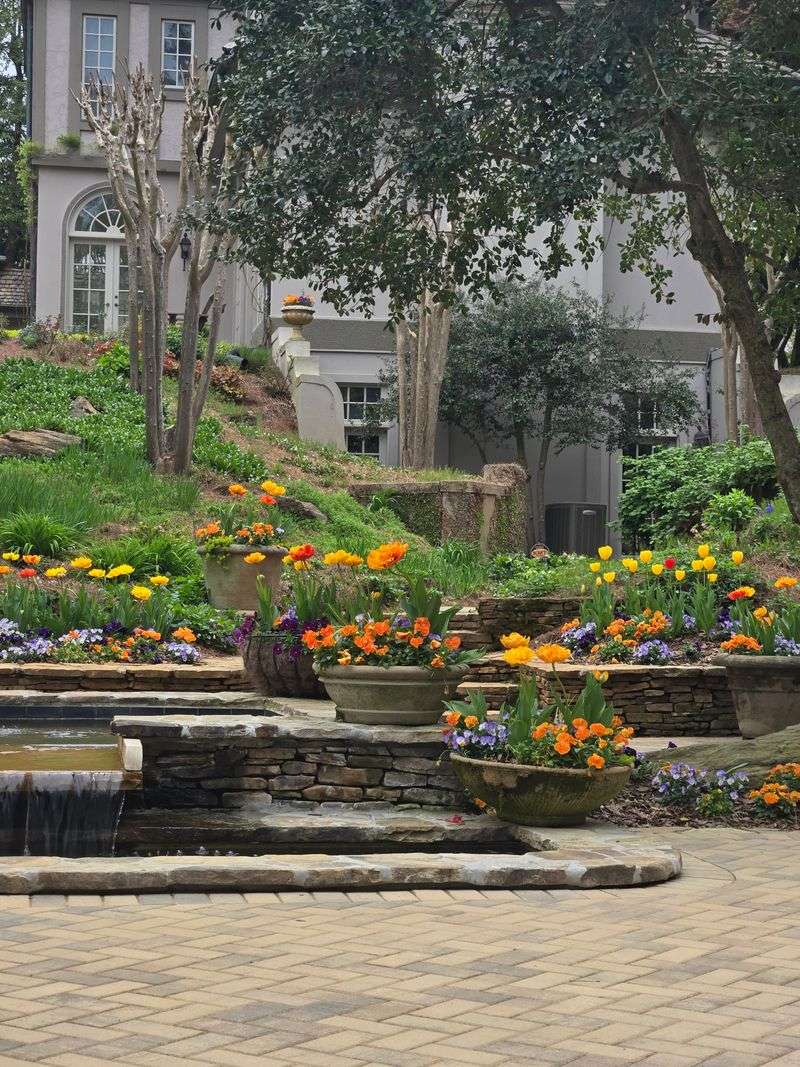
Gravity becomes a design element in the Terrace Gardens. Multiple levels create a cascading effect that leads the eye downward through layers of plantings.
Stone walls separate each terrace level. Plants spill over the edges, softening the hard surfaces. The vertical dimension adds interest that flat gardens cannot achieve.
Each terrace hosts different plant combinations suited to its specific microclimate. Upper levels receive more sun while lower areas stay moister. Spring bulbs planted in masses create rivers of color flowing down the hillside.
The terracing also makes steep slopes accessible and safe for visitors while maximizing planting space. This clever design turns a challenging landscape feature into one of the garden’s most distinctive and memorable areas that showcases horticultural creativity.
11. Bog Garden Showcases Unique Plants
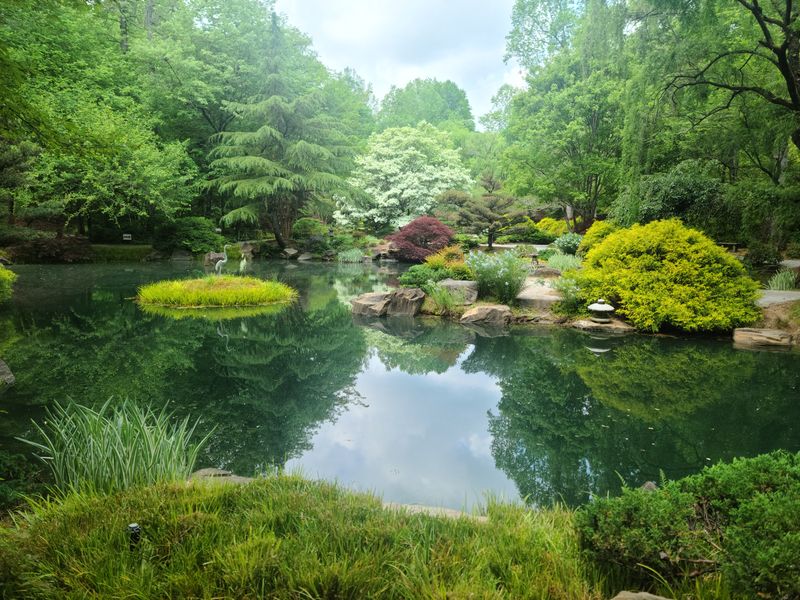
Wet feet don’t bother the plants in the Bog Garden. This specialized area demonstrates how waterlogged soil supports unique plant communities.
Carnivorous pitcher plants display their unusual trapping mechanisms. Marsh marigolds add bright yellow flowers to the wet landscape. These moisture-loving species rarely get featured in typical gardens, making this section particularly educational.
Boardwalks keep visitors dry while providing close views of bog plants. The constantly moist soil creates growing conditions that most garden plants would hate. Spring brings fresh growth and flowers specially adapted to wet environments.
Watching how these specialized plants thrive in conditions that would kill roses or daffodils teaches valuable lessons about matching plants to their preferred habitats and expands understanding of gardening possibilities beyond traditional approaches.
12. Rose Garden Displays Classic Favorites
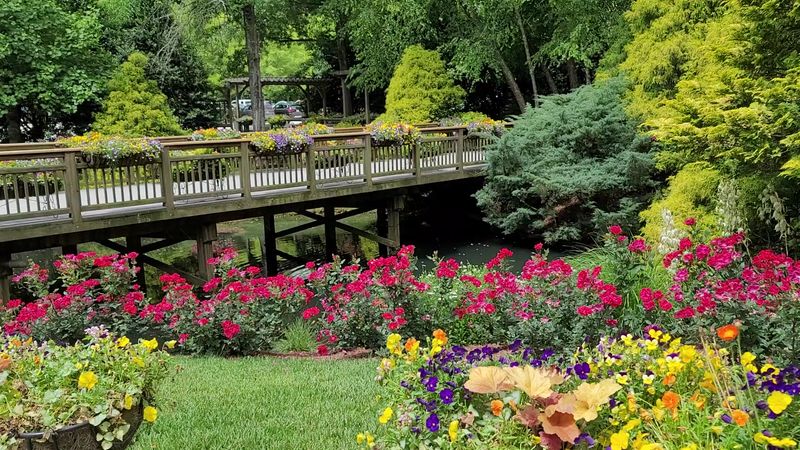
Romance fills the air in the Rose Garden. Classic varieties and modern hybrids demonstrate the incredible diversity within this beloved flower family.
Climbing roses scale arbors and trellises. Shrub roses fill beds with abundant blooms. The color range spans from pure white through yellows, pinks, reds, and even purple tones.
Late spring marks the first major flush of blooms. Many varieties continue flowering throughout summer and into fall. The fragrance in this area can be overwhelming in the best possible way.
Different rose types bloom at slightly different times, extending the season of interest. Visiting multiple times throughout the growing season reveals how the rose garden transforms and shows why these flowers have captivated gardeners for centuries across countless cultures worldwide.
13. Children’s Garden Engages Young Visitors
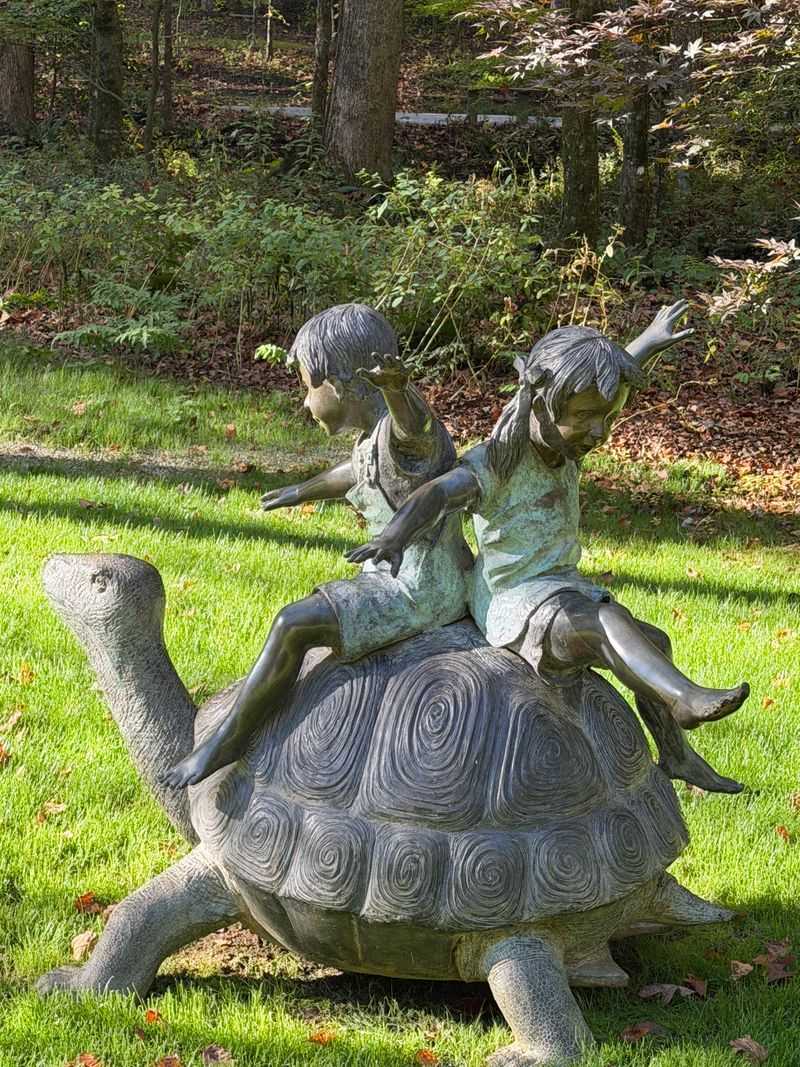
Little hands find plenty to explore in the Children’s Garden. This section uses plants and design features scaled for younger visitors.
Interactive elements encourage touching and close observation. Plants with interesting textures invite tactile exploration. The design recognizes that children experience gardens differently than adults and adapts accordingly.
Bright colors and bold shapes capture young attention spans. Pathways stay wide enough for small legs to navigate comfortably. Spring brings flowers that kids find especially appealing, like cheerful pansies and fuzzy lamb’s ear foliage.
Creating positive garden experiences during childhood builds lifelong appreciation for plants and nature. This dedicated space shows that serious horticulture and family fun don’t have to be separate goals but can enhance each other beautifully when thoughtful planning brings them together.
14. Woodland Walk Winds Through Native Forest
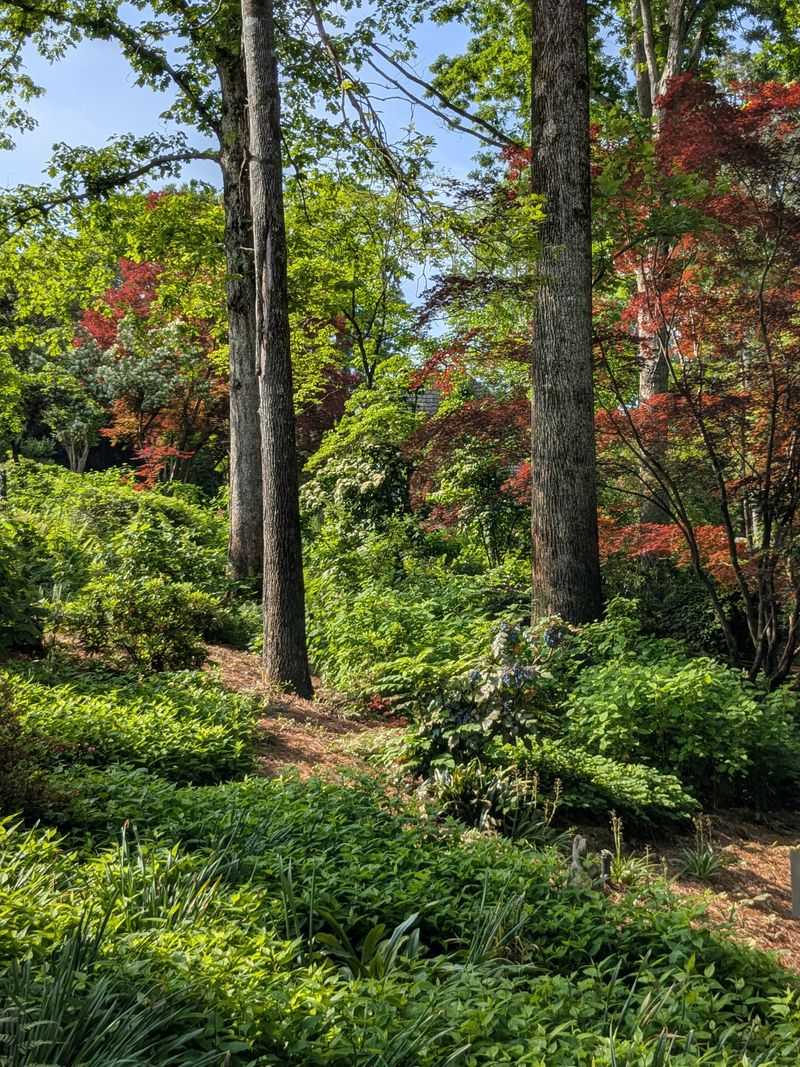
Stepping onto the Woodland Walk feels like entering a different world. Native forest surrounds the trail, creating an immersive natural experience.
Spring ephemeral wildflowers carpet the forest floor before tree leaves fully emerge. Trilliums, bloodroot, and jack-in-the-pulpit appear briefly each year. These native plants complete their life cycles before the tree canopy blocks the sunlight they need.
The woodland demonstrates natural plant communities that existed before human intervention. Interpreting signs help identify native trees, shrubs, and herbaceous plants. Walking this trail provides education alongside recreation.
The cooler temperatures under the forest canopy offer comfortable conditions even as spring days warm up, making this route popular with visitors seeking both natural beauty and physical comfort during their garden exploration.
15. Seasonal Events Enhance The Experience
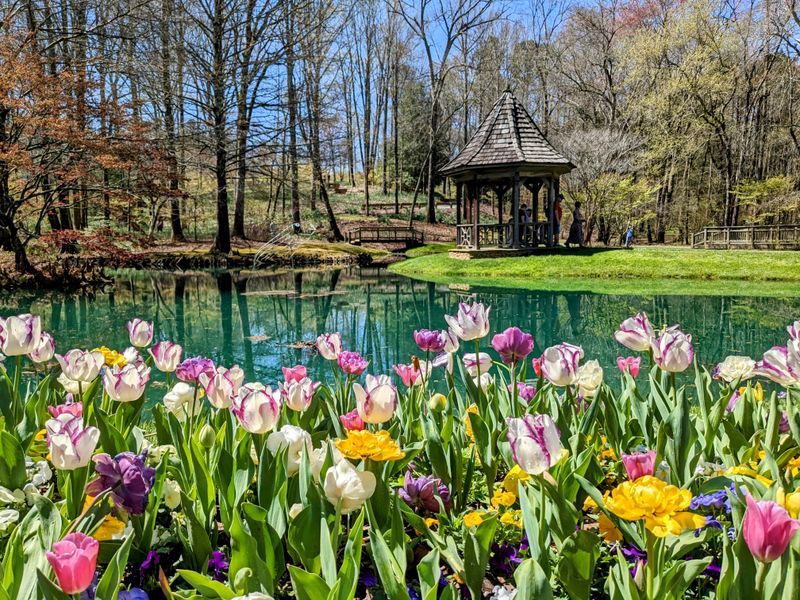
Special programming adds extra dimensions to garden visits. Seasonal events throughout spring bring educational opportunities and entertainment.
Guided tours led by knowledgeable staff reveal details casual visitors might miss. Photography workshops help capture the garden’s beauty more effectively. Plant sales offer chances to take home specimens that performed well in the gardens.
Spring festivals celebrate the peak bloom periods with extended hours and special activities. Live music sometimes provides ambiance in various garden locations. Educational lectures cover topics from pruning techniques to native plant conservation.
Checking the event schedule before visiting can enhance your experience significantly. These programs demonstrate that gardens serve purposes beyond passive beauty, functioning as community gathering spaces and outdoor classrooms that enrich visitors’ understanding and appreciation of the natural world around them.
16. Photography Opportunities Abound Everywhere
Every turn reveals another perfect composition. The gardens provide endless subjects for photographers of all skill levels.
Macro photographers find intricate flower details to capture. Landscape shooters enjoy sweeping vistas and carefully designed views. The variety of garden styles ensures diverse photographic subjects within a single location.
Morning light creates soft, flattering conditions for flower photography. Late afternoon brings warm tones and long shadows. Spring’s varied weather adds dramatic skies that enhance outdoor images.
Whether you shoot with a professional camera or a smartphone, you’ll leave with memory cards full of beautiful images. The garden’s design considers sight lines and visual focal points, essentially creating pre-composed scenes that make even amateur photographers look skilled when they capture these thoughtfully planned views on camera.