Spring Is The Perfect Time To Visit These 10 Stunning Places In Florida
There is a version of Florida that has nothing to do with theme parks or crowded beaches, and spring is the best time to find it.
The winter visitors have gone home, the air carries just enough warmth to feel like a gift, and the natural world is doing things that will genuinely stop you mid-sentence.
I have spent more spring weekends than I can count driving Florida’s back roads looking for the good stuff, the kind that does not make it onto postcards but absolutely should.
Crystal springs so clear they look digitally enhanced. Cypress swamps draped in Spanish moss that make you feel like time stopped somewhere around 1890.
Manatees floating past your kayak with the kind of calm that makes your whole week better instantly.
This state in spring is a completely different place from the one most people think they know, and these destinations are exactly where you need to be.
1. Rainbow Springs State Park
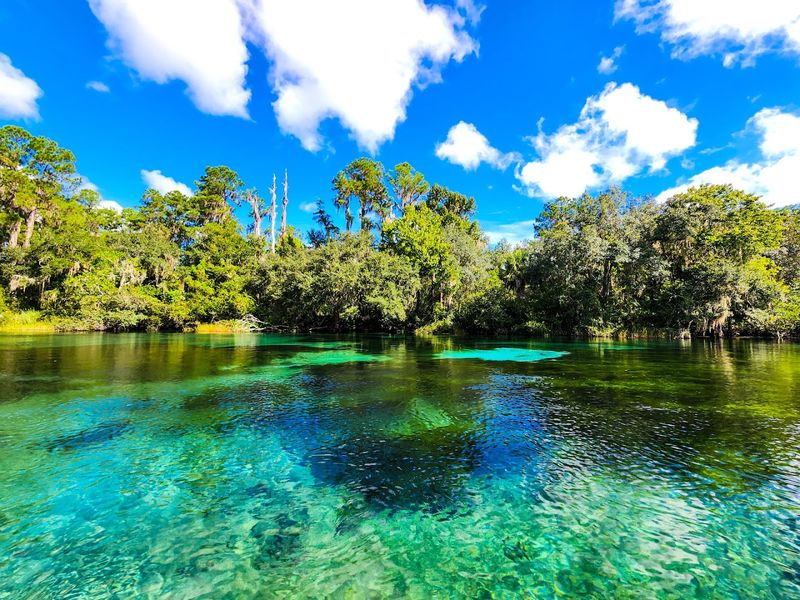
Some places earn their names honestly, and Rainbow Springs is one of them. The water here glows in shades of blue and green so vivid it almost looks fake, like someone spilled a bottle of food coloring into the earth.
Standing at the headspring on a bright spring morning, I genuinely questioned whether I was still in Florida or had somehow wandered into a Caribbean postcard.
The park sits at 19158 SW 81st Place Road in Dunnellon, and it is one of Florida’s four first-magnitude springs, pumping out over 400 million gallons of water daily.
That water stays a steady 68 degrees year-round, which feels absolutely refreshing when the spring air creeps toward the 80s. Tubing down the river is the main event here, and the current is gentle enough for all ages.
Beyond the water, the park has stunning waterfall features built during the 1930s that still look magical today.
Wildflowers bloom along the trails in spring, and the butterfly garden draws dozens of species. Arrive early on weekends because this place fills up fast, and for good reason.
2. Ichetucknee Springs State Park
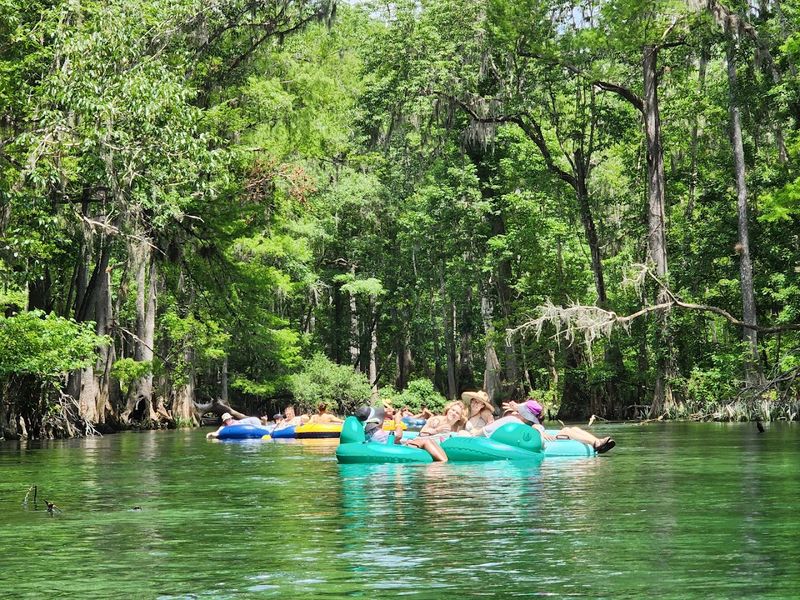
If you have never floated a spring-fed river while a turtle watches you from a log with absolutely zero concern, you have not truly relaxed.
Ichetucknee Springs delivers that exact experience with remarkable consistency. The river runs about six miles and is fed by nine springs, keeping the water a clear, cool 68 degrees no matter what the sun is doing overhead.
Spring is the best season to visit because the daily tuber limit has not hit its summer peak yet, meaning you actually get to enjoy the silence of the forest rather than the soundtrack of a crowd.
Great blue herons stand perfectly still in the shallows, and river otters occasionally pop up beside your tube to say hello before disappearing again.
Located at 12087 SW US Highway 27 in Fort White, the park offers both tubing rentals and a trail system for those who prefer dry land.
The North Tubing Takeout provides a shorter float, while the full river run takes about three hours.
Pack a snack, wear sunscreen, and just let the current do all the work. Sometimes the best travel plans involve doing absolutely nothing.
3. Blue Spring State Park
Blue Spring in spring is a bit of a paradox.
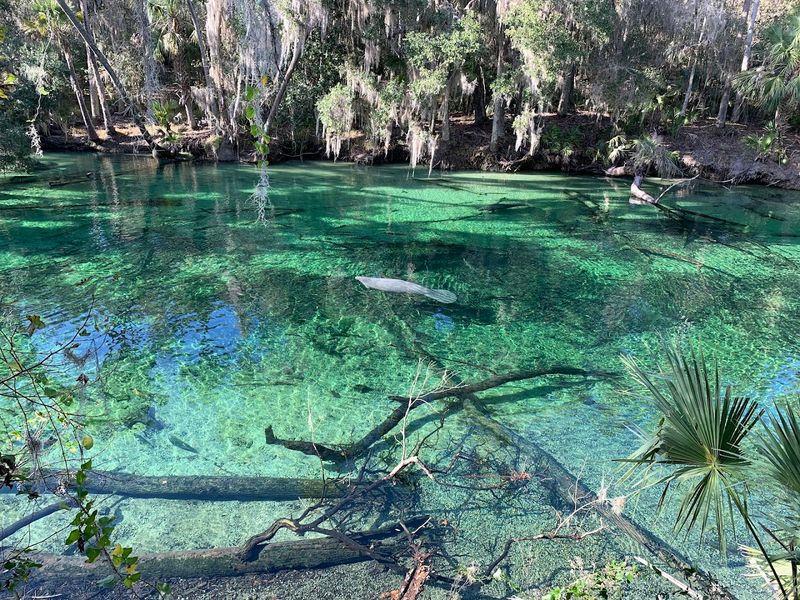
By March, the manatees that packed the spring all winter start heading back out to the St. Johns River, but enough of them linger that you can still spot these enormous, peaceful creatures drifting just below the surface.
Watching a 1,000-pound manatee glide past with the grace of a slow-motion cloud is one of those moments that genuinely resets your nervous system.
The spring run at 2100 W French Avenue in Orange City is short but spectacular.
The water is strikingly blue and remarkably transparent, and the boardwalk that runs alongside it gives you a front-row view without getting wet.
Snorkeling is allowed after the manatee season officially closes, typically in mid-March, and the visibility is extraordinary.
The surrounding park has shaded picnic areas, a campground, and river access for canoes and kayaks. Spring brings blooming wildflowers along the trails and plenty of bird activity in the hammock forest.
The park also has real historical depth, with the Thursby House on the grounds dating back to the 1870s. It is a full day destination that earns every minute you give it.
4. Wakulla Springs State Park
Wakulla Springs holds a world record most parks cannot claim.
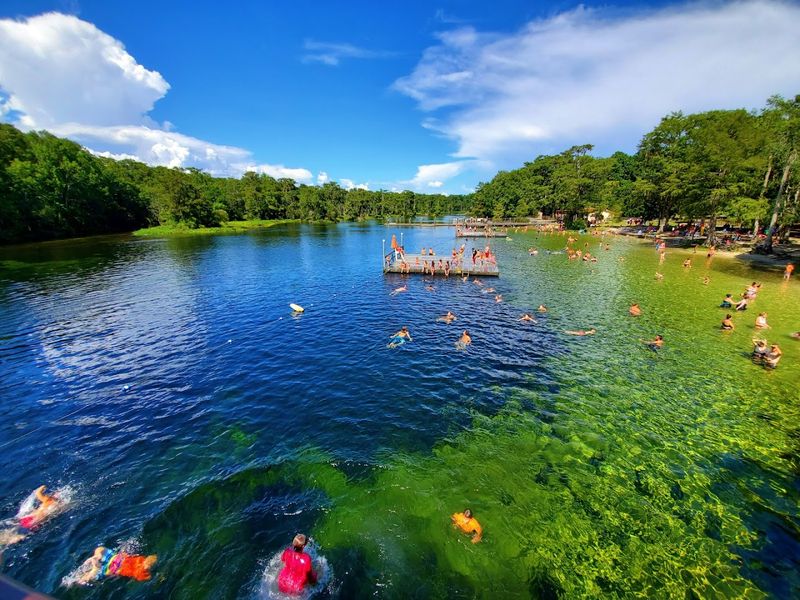
It is one of the largest and deepest freshwater springs on the planet, and standing at the edge of that impossibly clear water, you can see straight down to the bottom without any effort at all.
The spring basin is massive, and the color shifts from bright turquoise near the edges to a deep, almost electric blue at the center.
Spring is ideal here because the wildlife is extraordinarily active.
The glass-bottom boat tours run year-round, but in spring the anhinga colonies are nesting, alligators are sunning on the banks, and the forest is buzzing with songbirds passing through on migration.
Limpkins call from the cypress trees in a sound so dramatic it once served as the Tarzan yell in old Hollywood films.
The park at 465 Wakulla Park Drive in Wakulla Springs also has a beautiful 1930s lodge right on the grounds, which adds a sense of old Florida charm that most state parks simply cannot match.
Swimming is allowed in a designated area near the spring, and the water is refreshingly cool. Get there before 10 a.m. on weekends and the whole place feels like it belongs only to you.
5. Three Sisters Springs
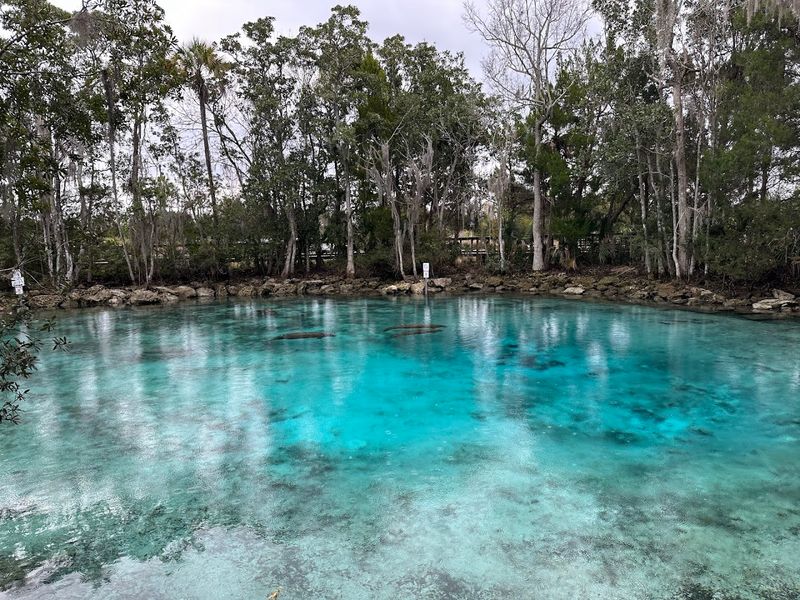
Three Sisters Springs looks like something out of a nature documentary, and honestly, it practically is.
Three circular spring vents sit side by side, each pumping out clear, cool water that creates an otherworldly pool system connected by shallow channels.
The aquatic plants below the surface wave gently in the current, and if you are snorkeling over them, the whole scene feels like flying over a slow-moving underwater meadow.
Manatees use this spring as a warm-water refuge through winter and into early spring, and even as temperatures rise, individuals occasionally drift through.
Swimming alongside a manatee here is entirely possible and absolutely unforgettable. Rangers and staff do an excellent job keeping interactions respectful, so the animals remain relaxed and unhurried.
Access to the springs is managed through the Crystal River National Wildlife Refuge, and the trailhead is located at 917 Three Sisters Springs Trail in Crystal River.
A boardwalk system lets you view the springs without entering the water if you prefer to stay dry. Kayak and canoe tours from local outfitters are a popular way to arrive.
Spring mornings here are genuinely magical, with mist rising off the water and birds calling from the buttonbush along the edges.
6. Myakka River State Park
Most people picture Florida as beaches and palm trees, which means they completely miss places like Myakka River State Park.
This is old Florida, the kind that existed long before condos and theme parks arrived.
Vast open prairies stretch in every direction, the river winds through ancient floodplain forest, and the wildlife here is so abundant it borders on absurd.
Spring is prime bird-watching season at Myakka. Sandhill cranes stroll across the open grasslands, roseate spoonbills glow pink in the shallows, and wood storks gather in numbers that will genuinely surprise you.
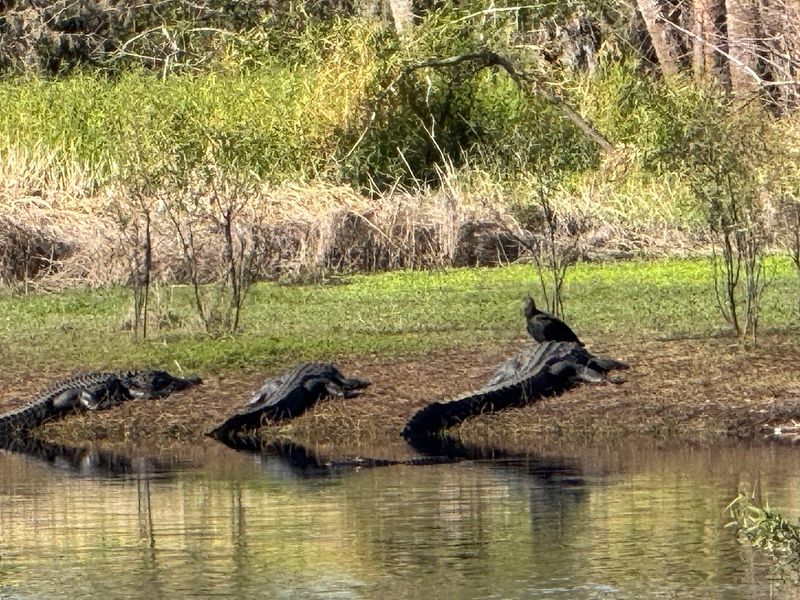
The Upper Myakka Lake draws alligators in concentrations that make first-time visitors stop and count in disbelief.
I counted over thirty in a single glance on one March morning, and I was not even at the best viewing spot yet.
The park at 13208 State Road 72 in Sarasota has over 37,000 acres to explore, with hiking trails, canoe launches, and even an airboat tour on the lake.
The Canopy Walkway is a must-do, putting you up in the treetops above the floodplain forest for a perspective you cannot get anywhere else. Bring binoculars, wear comfortable shoes, and plan for at least half a day.
7. Corkscrew Swamp Sanctuary
Walking into Corkscrew Swamp Sanctuary feels like stepping back about 500 years.
The old-growth bald cypress trees here are among the oldest in North America, with some standing for over 500 years and reaching heights of 130 feet.
The boardwalk winds through this cathedral of trees, and the silence is the kind that makes you speak in a lower voice without even deciding to.
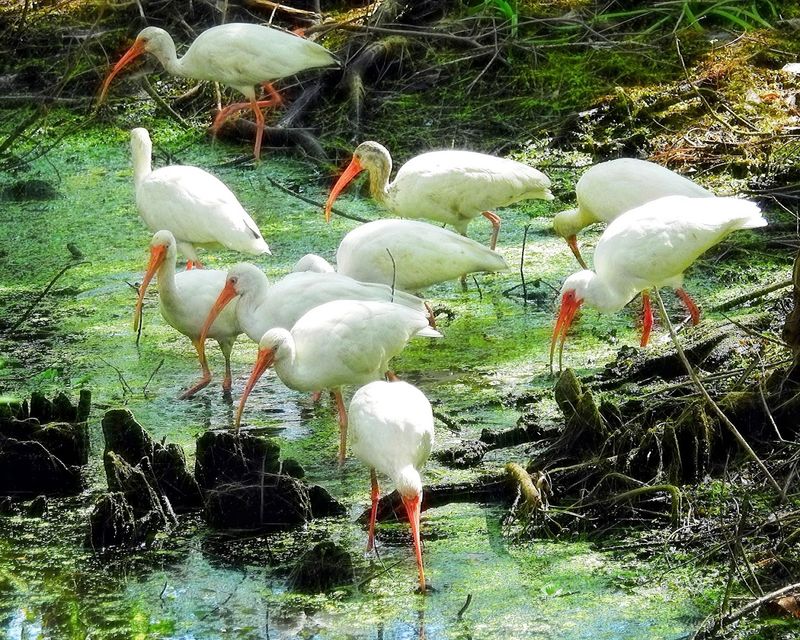
Spring is when the wood stork nesting colony, one of the largest in the country, wraps up its season, and the activity around the rookery is extraordinary.
Dozens of large, prehistoric-looking birds tend to their nests while alligators patrol the water below. The whole scene is chaotic, loud, and completely fascinating.
Operated by the National Audubon Society, the sanctuary at 375 Sanctuary Road W in Naples is accessible via a 2.5-mile boardwalk that takes about two hours to complete at a leisurely pace.
The interpretive signage along the route is genuinely informative without being overwhelming.
Spring wildflowers bloom along the drier sections, and the light filtering through the cypress canopy in the late morning is the kind of thing photographers plan entire trips around.
Admission is modest and entirely worth it.
8. Bok Tower Gardens
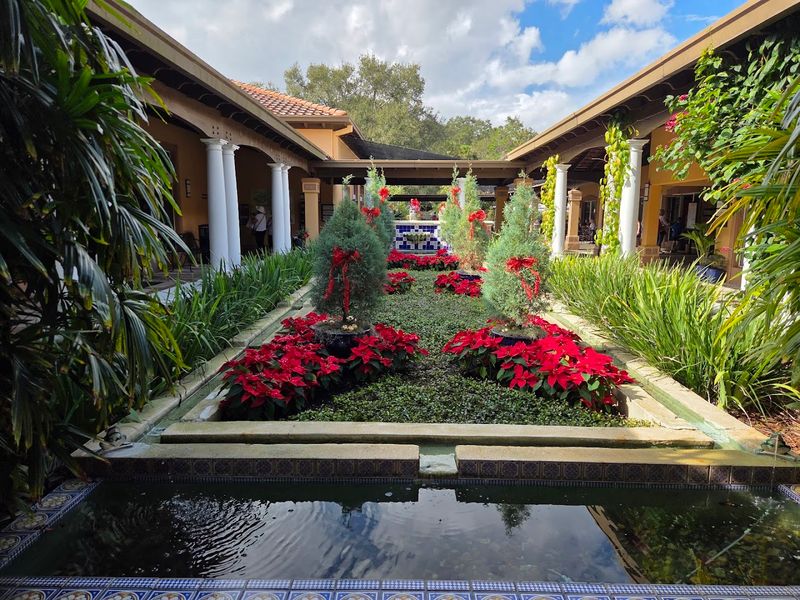
There is something quietly extraordinary about standing in a garden at the highest point in peninsular Florida, listening to carillon bells ring out across a landscape of blooming azaleas and ancient oaks.
Bok Tower Gardens does not shout for your attention. It earns it slowly, and then completely.
The tower itself is a 205-foot Art Deco and Gothic Revival structure built in 1929, and it is genuinely one of the most beautiful buildings in Florida.
The carillon concerts play twice daily, and the sound carries across the gardens in a way that feels both grand and intimate at the same time.
Spring is peak azalea season here, and the color display around the reflection pool is spectacular.
The grounds at 1151 Tower Boulevard in Lake Wales cover 250 acres and include a restored 1930s estate home called Pinewood Estate, which offers tours on select days.
The trail system winds through pine forest and garden areas that feel completely different from each other, keeping the walk interesting from start to finish.
Children enjoy the interactive Hammock Hollow area, making this a solid family destination. Plan to spend at least two to three hours, and bring a picnic if the weather cooperates.
9. Everglades National Park
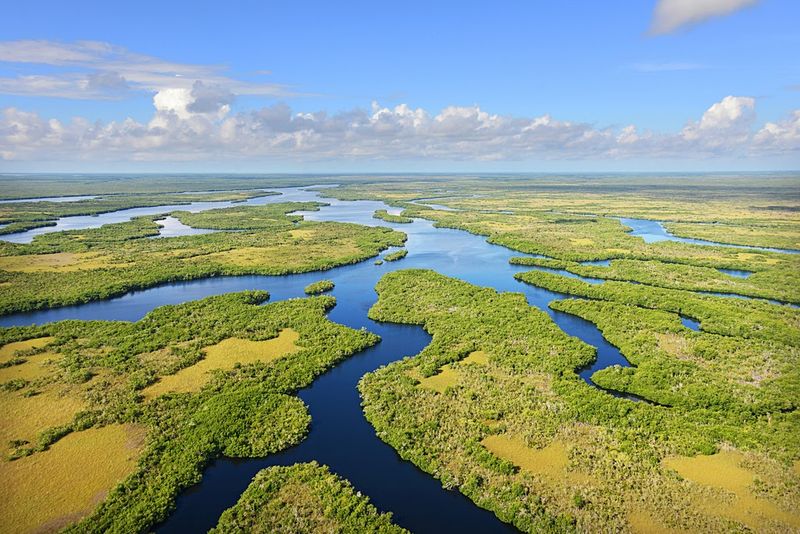
The Everglades is the only place on Earth where alligators and American crocodiles share the same habitat, and spring is hands-down the best time to see both.
Water levels drop as the dry season peaks in March and April, concentrating wildlife around remaining pools and sloughs in numbers that feel almost theatrical.
Wading birds gather in massive feeding frenzies, and the viewing from the park’s roadside pullouts is genuinely world-class.
The park entrance at 40001 State Road 9336 in Homestead leads you into an ecosystem unlike anything else in North America.
The Anhinga Trail delivers extraordinary wildlife encounters in a short half-mile loop, with anhingas, herons, and alligators so close you barely need binoculars.
The Shark Valley tram tour gives a broader view of the interior, with a 65-foot observation tower at the midpoint.
Spring temperatures are more forgiving than summer, and the mosquito levels drop significantly compared to the wet season.
Sunrise at Flamingo Point, at the park’s southern tip, is the kind of experience that makes you reconsider your morning habits entirely.
Kayaking through the mangrove tunnels near Nine Mile Pond is peaceful in a way that is hard to describe and impossible to forget.
10. Crystal River National Wildlife Refuge
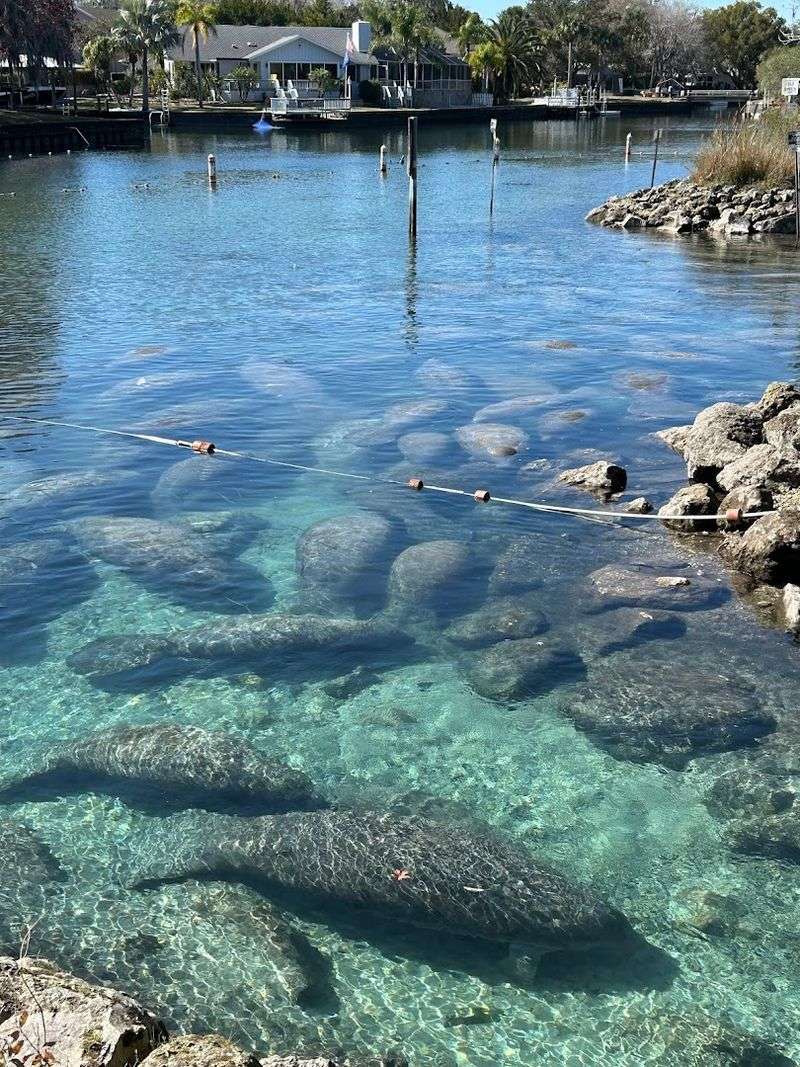
Crystal River National Wildlife Refuge exists for one primary reason: protecting the West Indian manatee.
Kings Bay, the body of water the refuge centers on, is fed by over 30 springs and stays warm enough year-round to attract manatees seeking relief from cooler Gulf waters.
By spring, the population in the bay transitions from its winter peak, but the animals are still present and remarkably approachable.
The refuge at 1502 SE Kings Bay Drive in Crystal River is one of the only places in the United States where swimming with manatees in the wild is permitted under specific federal guidelines.
Guided tours operate out of Crystal River and take visitors into designated areas where manatee encounters are passive and respectful.
Watching a manatee investigate your snorkel mask with calm curiosity is genuinely one of the most charming wildlife experiences Florida offers.
Spring mornings on Kings Bay are stunning, with mist lifting off the water as the sun rises and pelicans cruising overhead.
Kayaking through the bay’s channels is a peaceful way to explore on your own timeline.
The surrounding town of Crystal River has good waterfront dining options nearby, making this an easy full-day trip from either Tampa or Orlando without any stress.