Stand Eye-To-Eye With An 65-Foot Waterfall At This Eastern Idaho Overlook
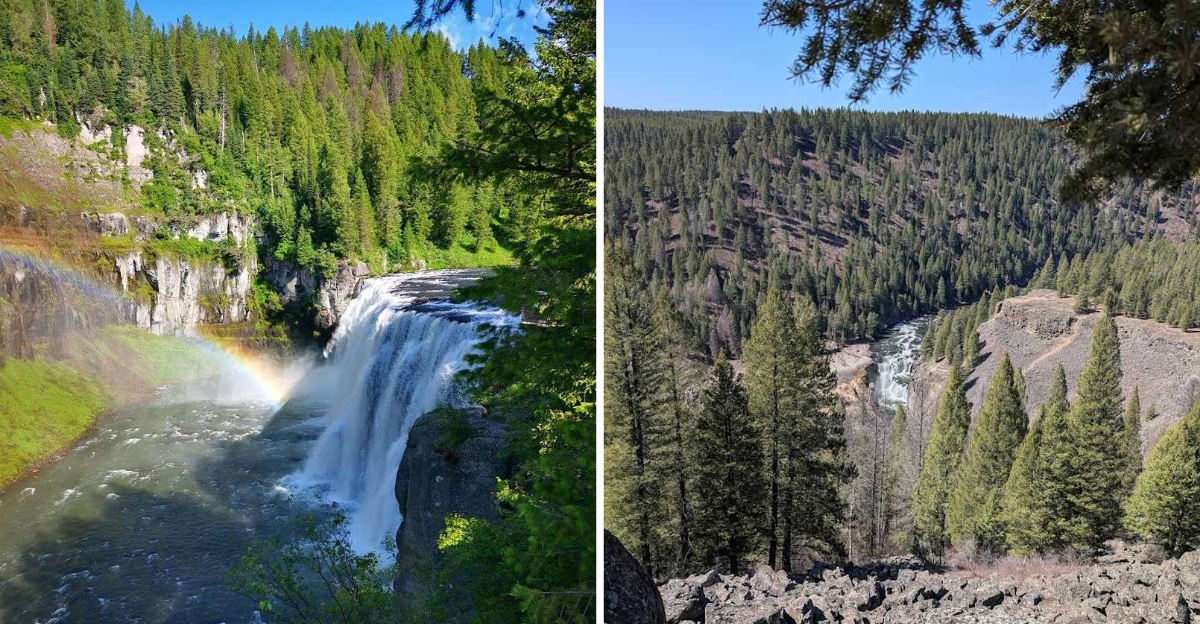
Roaring white water fills the whole canyon. Some waterfalls you reach after a long hike. This one stops you the instant it appears.
A sixty-five-foot curtain crashes below the railing. Mist drifts up and cools your face. Idaho holds this dramatic overlook out east.
The river carved this gorge over ages. Dark volcanic rock frames the powerful fall. Ten quiet minutes here still feels worth it.
The sound alone stays with you and the view repays every traveler who stops.
Photographers crowd the rail. The canyon glows in soft morning light. Pull over and take it in.
How This Waterfall Came To Be
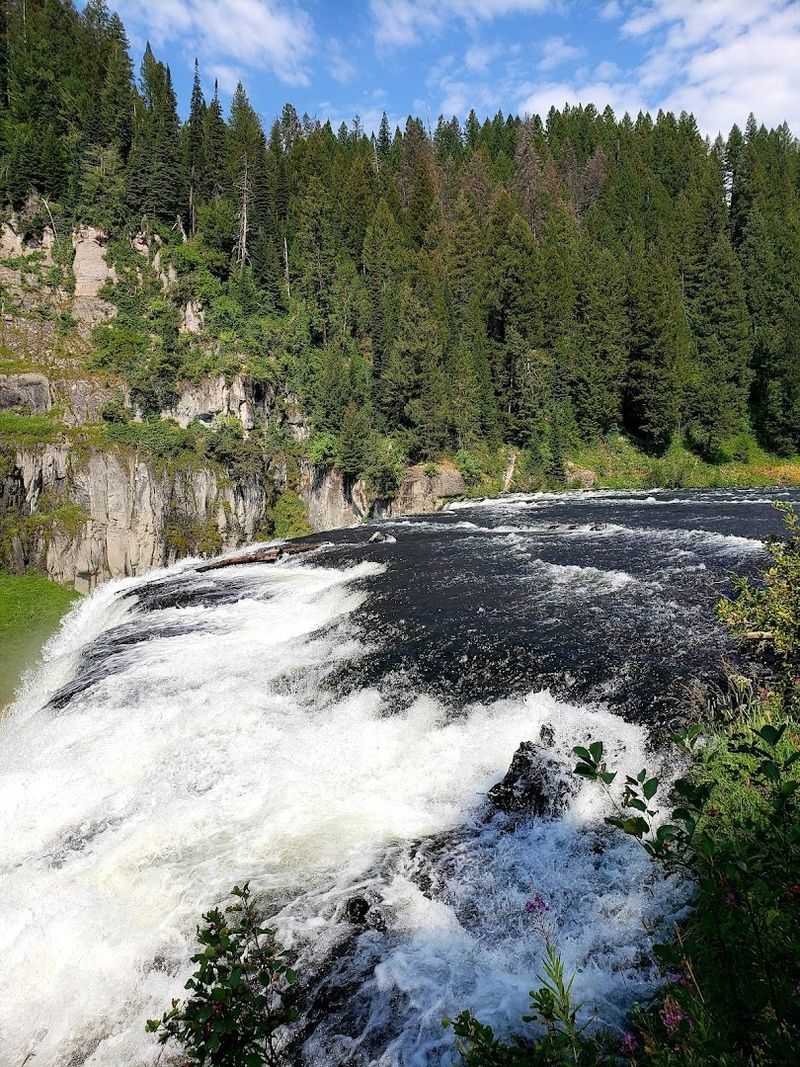
Long before any road or overlook existed here, volcanic forces were quietly shaping the land beneath what is now eastern Idaho.
The Henry’s Fork carved through layers of hardened volcanic ash known as Mesa Falls Tuff, with basalt forming the inner canyon walls.
That slow, relentless erosion created the dramatic canyon walls you see today at the Lower Mesa Falls Observation Site.
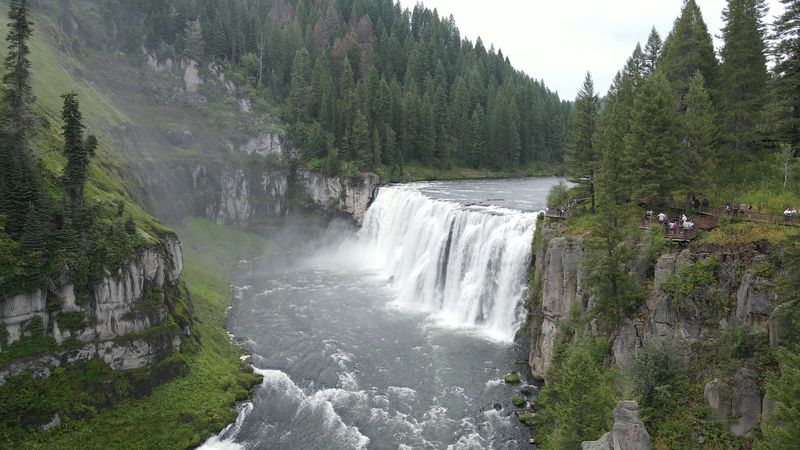
The falls themselves drop 65 feet in a powerful, wide cascade. The river does not trickle here.
It thunders. The basalt columns framing the falls are a direct reminder of the volcanic past that defines so much of this corner of Idaho.
The Caribou-Targhee National Forest manages the area, preserving both the natural landscape and the access that lets visitors appreciate it.
Knowing the backstory makes standing at that overlook feel even more meaningful, because you realize you are witnessing the result of forces that operated on a timescale almost impossible to imagine.
What The Overlook Actually Looks Like
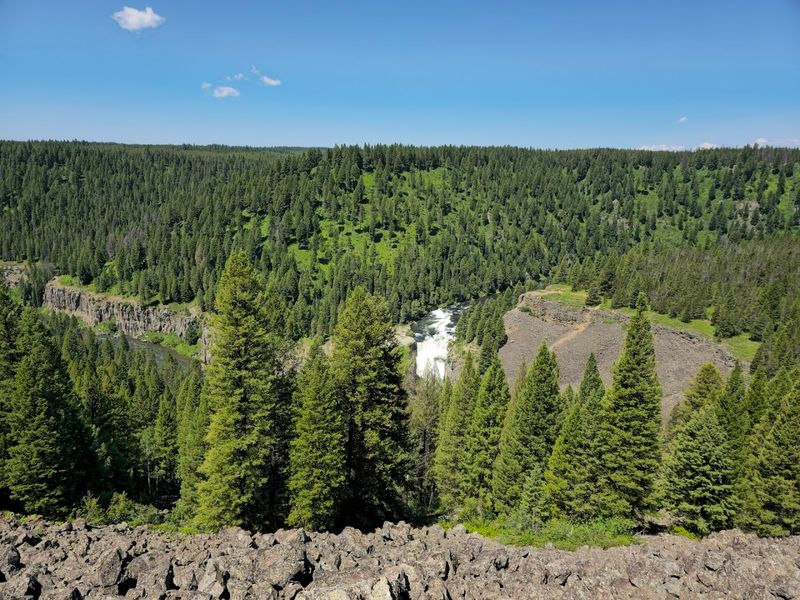
Arriving at the observation area on the Mesa Falls Scenic Byway (Idaho Highway 47), about 14 miles northeast of Ashton, the first thing you notice is how quickly the payoff comes.
The parking area is compact and easy to navigate, and the walk to the actual viewpoint is short enough that even visitors with limited mobility can reach it without difficulty.
Within a couple of minutes, you are standing at a railed overlook with an unobstructed view straight across to the falls.
The perspective here is genuinely unusual. Rather than looking up at a waterfall from below, you meet it almost at eye level.
The 65-foot drop unfolds in front of you, wide and forceful, with the canyon walls rising on both sides.
The sound hits you before the full view does, a deep, continuous roar that feels like it vibrates through the railing under your hands.
Mist drifts up from the base of the falls on warmer days, cooling the air around the platform in a way that feels refreshing rather than cold. The surrounding pine forest frames the scene beautifully.
Wildlife And Forest Surroundings
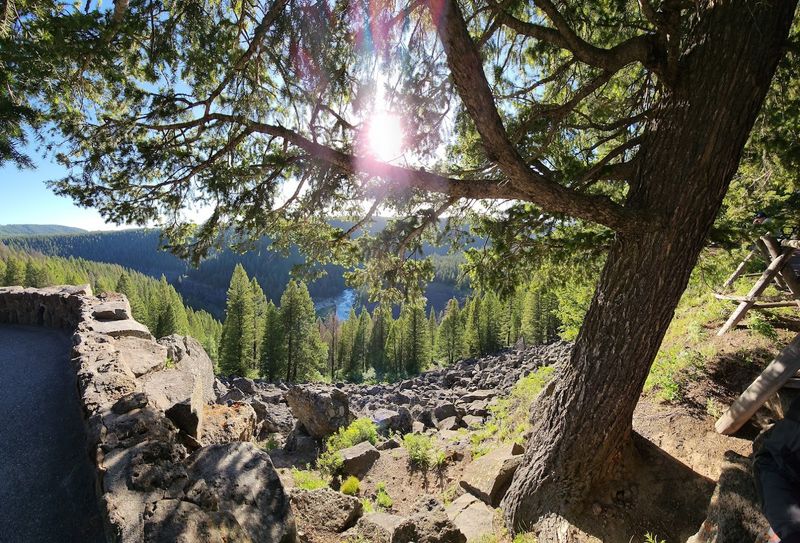
The forest surrounding the observation site is not just a backdrop. It is a living ecosystem worth paying attention to during your visit.
The Caribou-Targhee National Forest in this part of Idaho supports a wide range of wildlife, and even a short stop at the overlook can yield unexpected sightings.
Osprey and eagles sometimes circle the canyon, riding the thermal currents that rise from the river below.
Wildflowers bloom along the road and near the trailheads in late spring and early summer, adding bursts of color to the green forest floor.
Species like Indian paintbrush and lupine are common in this elevation range. The tall lodgepole pines create a canopy that filters the light beautifully and keeps the trails cooler during summer heat.
Mosquitoes are a real presence during the warmer months, particularly near the water. Bringing insect repellent is a practical step that makes the visit considerably more enjoyable.
Elk are known to move through this part of Idaho, though they tend to keep their distance from busy areas during peak visitor hours.
Hiking Options Near The Falls
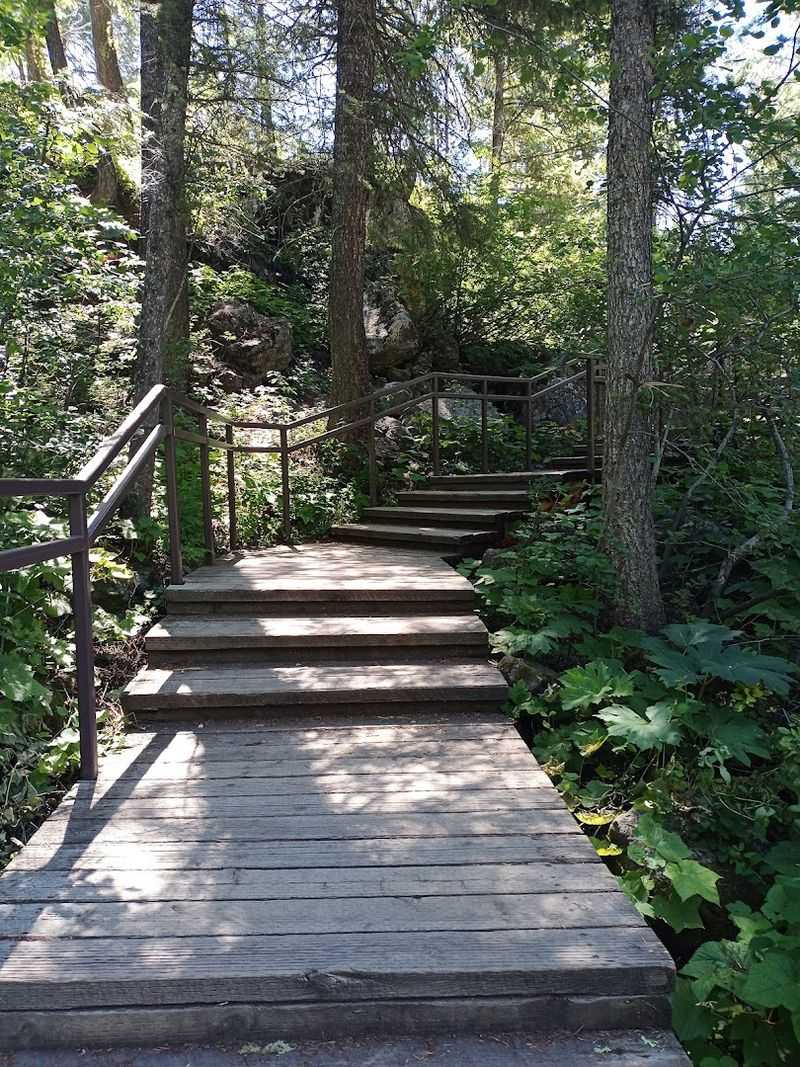
Not everyone realizes that the overlook is just one way to experience this area.
A trail connects the lower and upper falls sections, running roughly two miles round trip through the forest. The path is notably flat and free of major obstacles, making it one of the more accessible waterfall hikes in Idaho for families and casual walkers.
The trail winds through tall pines with occasional openings that frame views of the canyon and surrounding ridgeline.
Groups of all ages have completed this route comfortably, and the surface stays manageable even after rain. Sturdy walking shoes are sufficient for most of the trail, though the areas closest to the canyon edge can be uneven.
Two separate parking areas serve different parts of the falls system. Choosing your starting point depends on which section you want to prioritize.
Starting at the lower area and hiking toward the upper falls builds anticipation nicely, ending at the more developed visitor area near Upper Mesa Falls.
The round trip takes around an hour at a relaxed pace, leaving plenty of time to linger at viewpoints along the way.
Pairing It With Upper Mesa Falls
Most visitors who stop at the lower observation site also make the short drive to Upper Mesa Falls, and the combination makes for a well-rounded day.
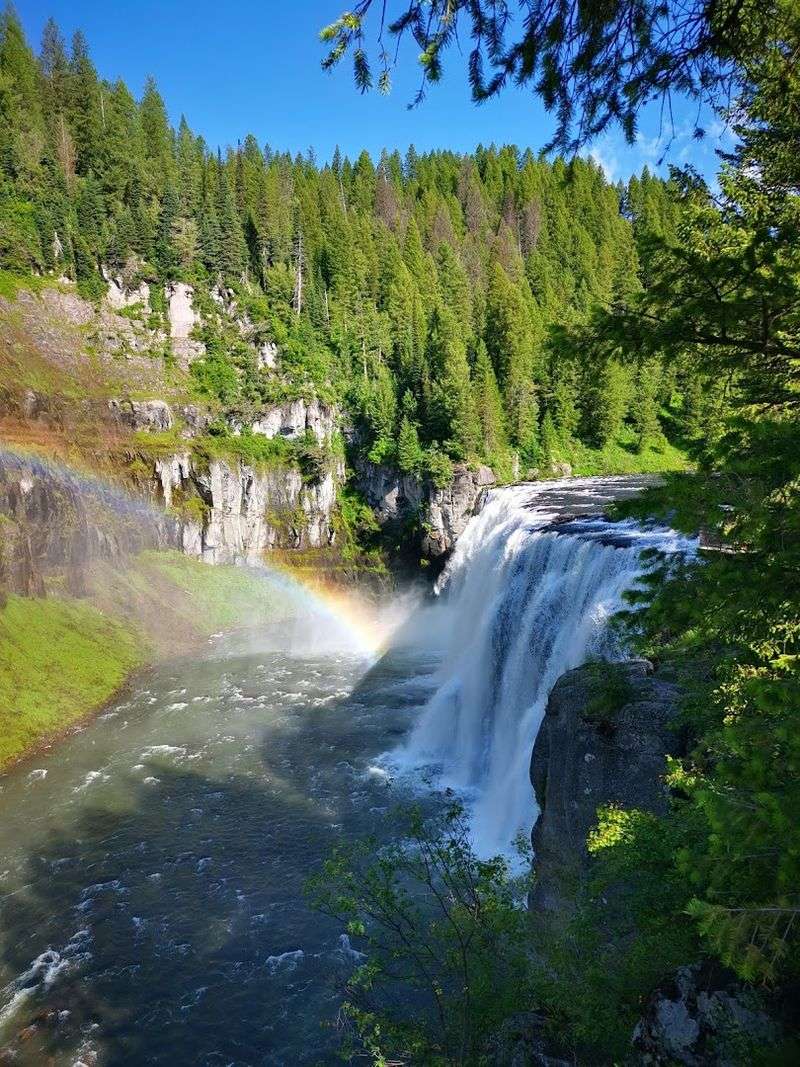
Upper Mesa Falls is taller, dropping around 114 feet, and the developed viewing area there includes a historic ranger station, a visitor center, and a boardwalk that brings you surprisingly close to the edge of the falls.
The contrast between the two experiences is part of what makes visiting both worthwhile. The lower site offers a broad, panoramic perspective where you take in the full width of the falls from across the canyon.
The upper site puts you right in the action, with mist on your face and the sound of the falls loud enough to make conversation difficult. Together, they tell the full story of what the Henry’s Fork does as it moves through this section of Idaho.
Planning a half-day trip that covers both falls is easy given how close they are to each other along the scenic byway. Starting at the Lower Mesa Falls Observation Site and finishing at the upper area creates a natural progression.
The Best Seasons To Visit
Timing matters at any outdoor destination, and this one is no exception.
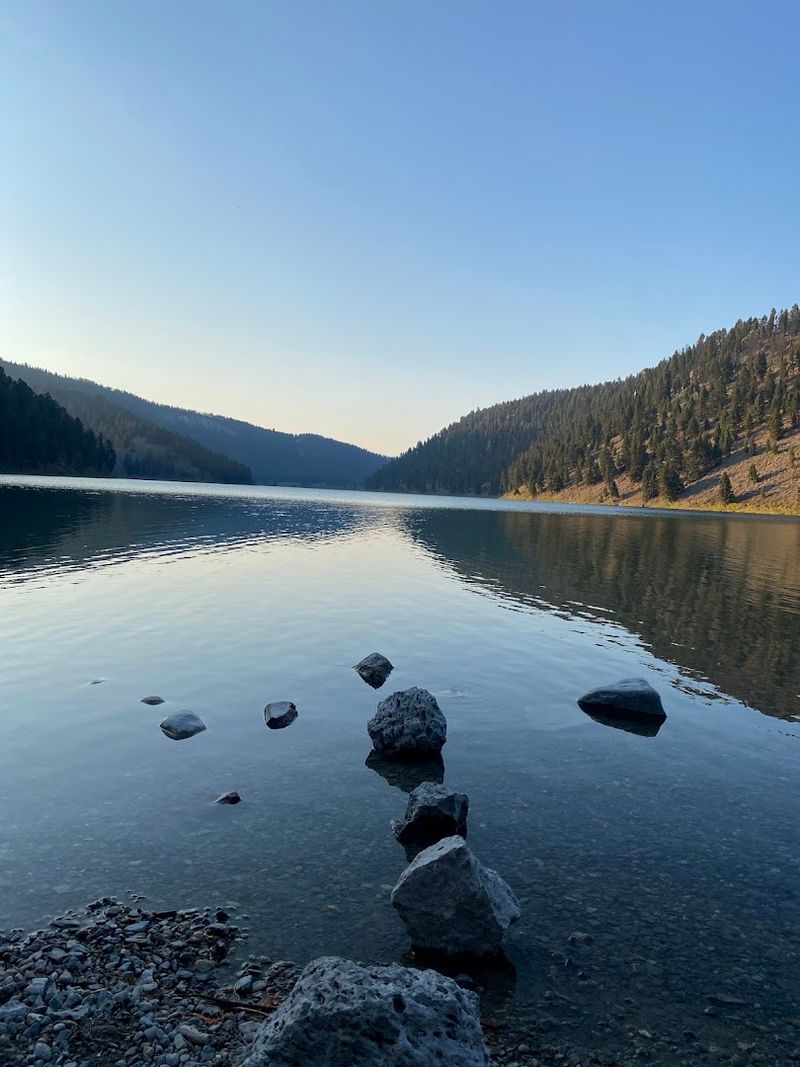
Late spring and early summer bring the highest water volume to the falls, fed by snowmelt from the surrounding mountains.
During this period, the Henry’s Fork runs fast and full, and the falls put on their most powerful display. The roar carries further, the mist rises higher, and the whole scene feels almost overwhelming in the best possible way.
Autumn is a quieter but equally compelling time to visit. The aspen and cottonwood trees lining the canyon turn shades of gold and orange, wrapping the dark basalt walls in warm color.
Water levels drop compared to spring, but the falls remain impressive, and the reduced crowds make the experience feel more personal. Summer visits are popular in Idaho, and the area around Ashton draws steady traffic heading toward Yellowstone.
Arriving early in the morning on a summer day helps you avoid the busiest periods. Winter access is limited and road conditions can be unpredictable, so most visitors plan their trips between May and October.
Practical Tips Before You Go
A little preparation goes a long way at this destination.
The site is managed by the U.S. Forest Service as part of the Caribou-Targhee National Forest, and a parking fee applies at certain areas within the Mesa Falls Scenic Byway corridor.
Carrying cash is a smart move, as the fee station does not always accept cards. The lower observation area has historically been free to access, but it is worth confirming current conditions before your trip.
Vault toilets are available at the parking area, which is genuinely useful given how remote the location feels.
Charging your phone fully before heading out is important if you plan to take photos, because you will want every bit of battery life the moment the falls come into view.
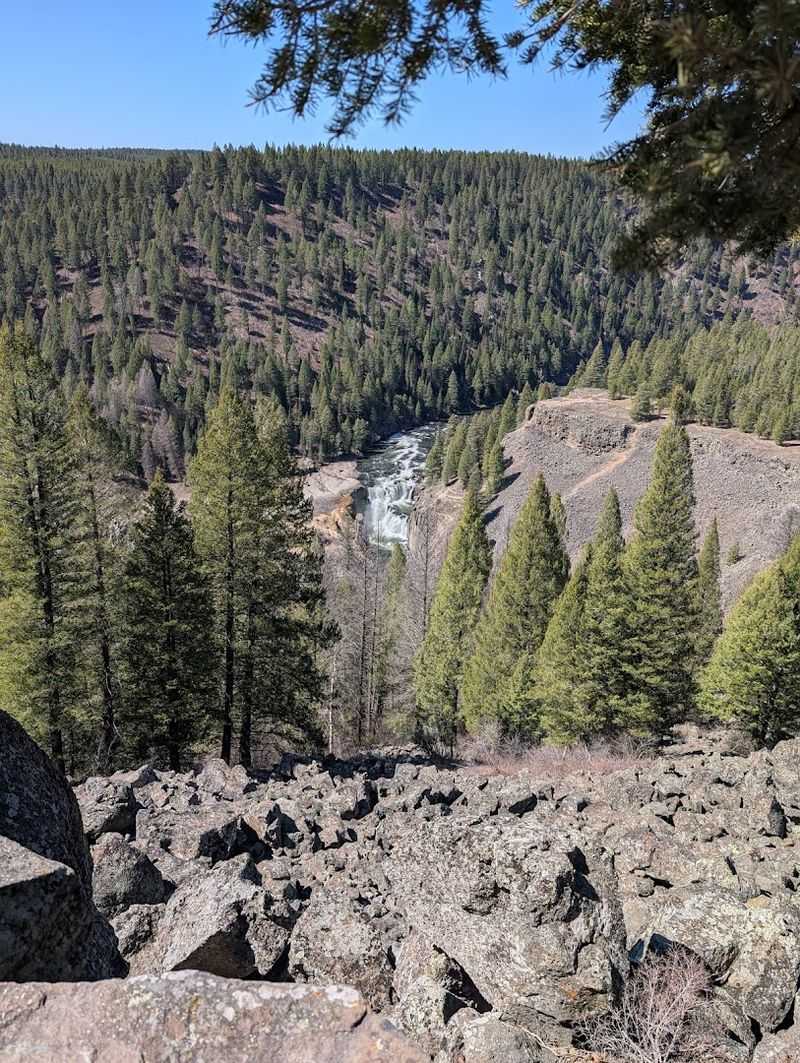
The drive along the Mesa Falls Scenic Byway is scenic on its own. The road passes through dense forest and offers occasional glimpses of the surrounding landscape.
Allow extra time to stop and take in the surroundings rather than treating the drive as purely functional.
Making The Most Of Your Visit
There is a rhythm to visiting this place that rewards a slow approach.
Arriving with enough time to simply stand at the overlook without rushing makes a real difference. The falls do not change dramatically from minute to minute, but the light does.
Morning light hits the canyon walls at an angle that brings out the texture of the basalt. Late afternoon turns the mist golden in a way that makes every photograph look effortless.
Bringing a wide-angle lens or using your phone’s panoramic mode helps capture the full breadth of the scene, since the falls span a considerable width across the canyon.
Binoculars are a useful addition for spotting birds along the canyon rim or examining the detail of the rock formations on the far wall.
The Lower Mesa Falls Observation Site is a place that works equally well as a solo stop and as part of a larger road trip through eastern Idaho toward Yellowstone. Its location along a well-maintained forest road means it fits naturally into a longer itinerary.