10 Stunning Maine Lighthouse Islands You Can Explore
Maine has lighthouses the way other places have coffee shops. They are everywhere, and they are wonderful.
The best ones sit on islands you can actually visit.
Forget admiring these beauties from a distant parking lot. You can hop a ferry or a tour boat and go straight to them.
Salt air, crashing waves, and a beacon waiting at the end.
Some islands let you climb the tower for views that go forever. Others come with hiking trails, seabirds, and the occasional curious seal.
A few even let you sleep where the keeper once lived.
These are adventures, not just photo stops. You earn the view with a boat ride and a little salty wind.
That effort makes the payoff feel completely magical.
Pack a windbreaker and a sense of wonder. Maine keeps its best beacons just offshore, waiting for you.
1. Monhegan Island Light
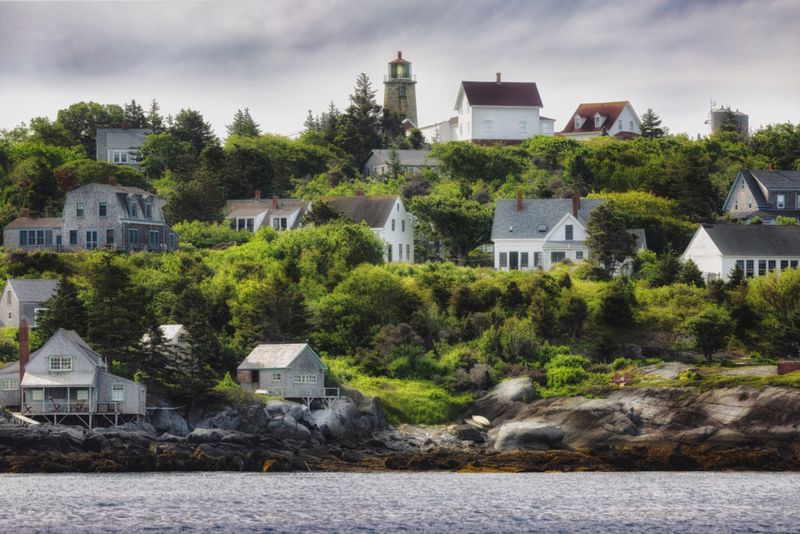
Monhegan is the kind of island that makes you feel like you stepped into a painting, because artists literally have been painting it for over a century.
The lighthouse here dates back to 1824, and standing next to it, you can almost feel the weight of all those years of guiding ships safely past these dramatic cliffs.
The island sits about 12 miles offshore from Port Clyde, which means the ferry ride alone is an adventure. No cars are allowed on the island, so you walk everywhere.
That is honestly a gift.
The Monhegan Museum of Art and History is housed right in the old keeper’s dwelling next to the lighthouse. It showcases the island’s deep connection to artists like Rockwell Kent and Jamie Wyeth.
The trails here are rugged and rewarding, leading to cliffs with views that will genuinely stop you in your tracks.
Plan for a full day at minimum, and pack a lunch because the island operates on its own relaxed schedule. Monhegan rewards the curious and patient traveler more than almost anywhere else on the Maine coast.
2. Seguin Island Light
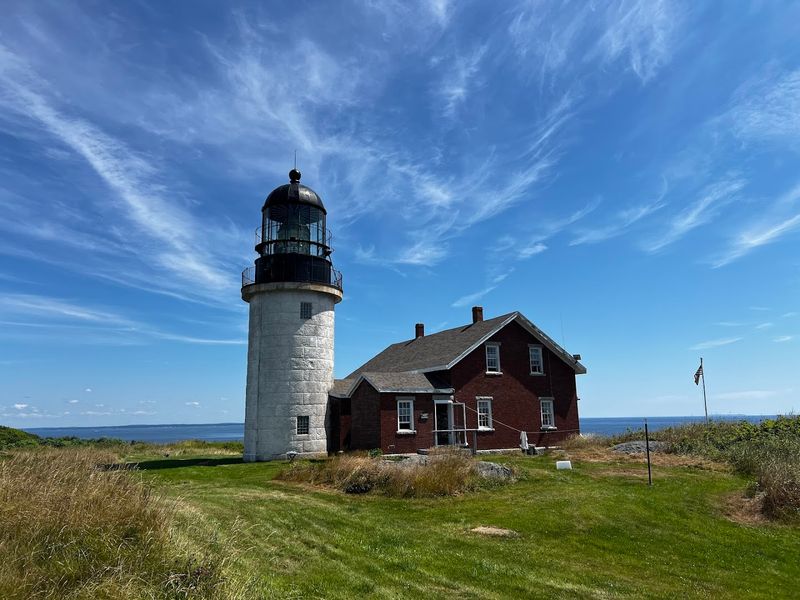
Seguin Island Light holds a record worth bragging about. It is the highest lighthouse above sea level in Maine, standing 180 feet above the water on a nearly treeless island just south of the Kennebec River mouth.
That wind hits different up there.
Built originally in 1795 and rebuilt in 1857, the current granite tower is a serious piece of history. The Friends of Seguin Island maintain the lighthouse and actually offer overnight stays for volunteers willing to help with upkeep.
That is one of the coolest ways to experience a lighthouse I have ever heard of.
Getting there requires a private boat or charter, which adds to the sense of earned adventure. Once you arrive, the panoramic views of the open Atlantic are absolutely worth every minute of the boat ride.
The island has a resident population of seabirds, and the sound of the fog signal in misty weather is something you will not forget quickly.
The keeper’s house is open for tours during summer months, giving you a real look at what isolated lighthouse life actually looked like. Seguin is raw, beautiful, and completely unforgettable.
3. Wood Island Light
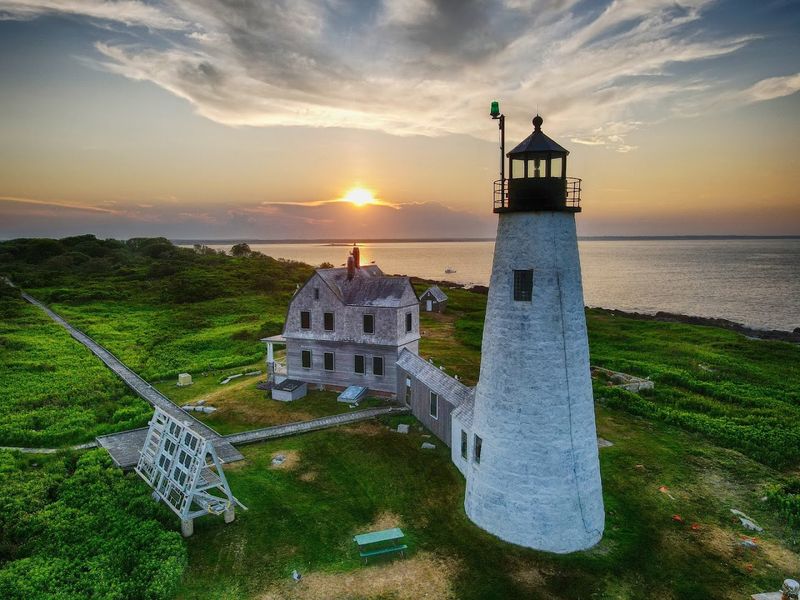
Wood Island Light sits at the mouth of the Saco River near Biddeford Pool, and it has been watching over those waters since 1808.
The current tower was built in 1858 and still has that sturdy, no-nonsense Maine lighthouse look that makes photographers extremely happy.
What makes Wood Island especially interesting is that the Friends of Wood Island Light offer guided tours during the summer season.
You can actually walk through the restored keeper’s house and climb the tower for sweeping views of the southern Maine coast and the open ocean beyond. Not every lighthouse gives you that kind of access.
The island itself is a nesting ground for seabirds, including roseate terns and common eiders. Birders make special trips just for that reason.
The boat trip over from Biddeford Pool is short and scenic, and the whole experience feels refreshingly low-key compared to more crowded coastal destinations.
Local tour operators run regular trips during the warmer months, making it one of the more accessible lighthouse islands on this list.
If you want a lighthouse experience that mixes history, wildlife, and genuine coastal charm without a long journey, Wood Island Light is a smart and satisfying choice.
4. Isle Au Haut Robinson Point Light
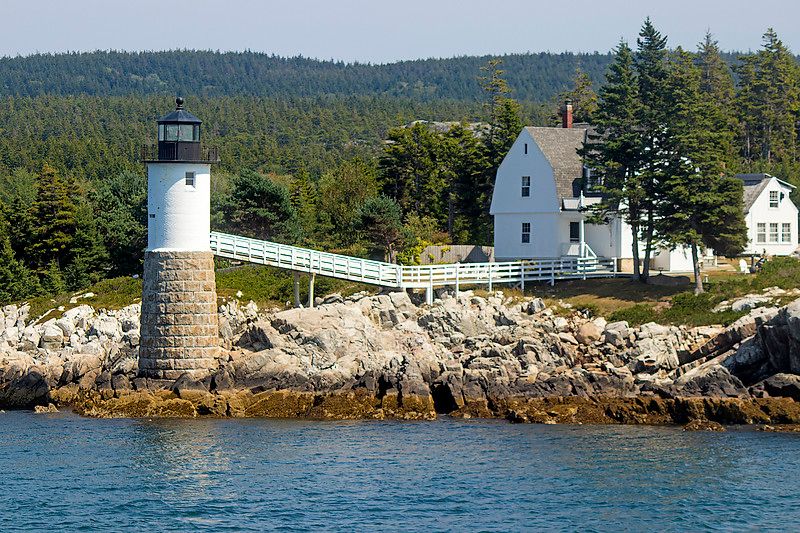
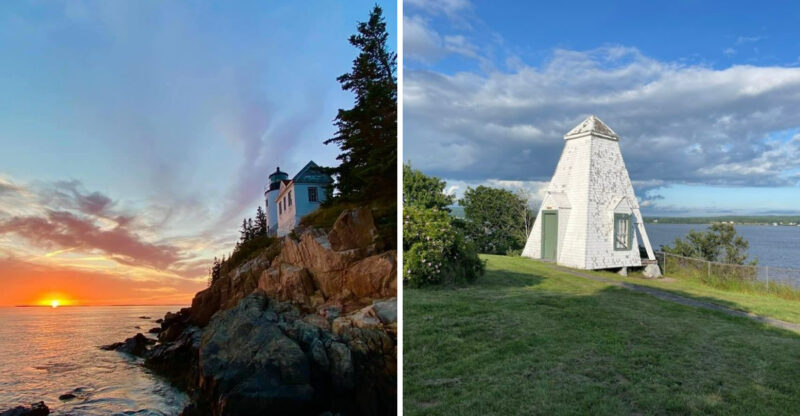
Isle au Haut is one of those places where Acadia National Park feels completely different from the crowds at Bar Harbor.
About half the island is part of the park, and Robinson Point Light sits right at the edge of it, small and striking against the dark spruce forest behind it.
The lighthouse was built in 1907 and is now operated as a bed and breakfast called The Keeper’s House. Staying there is one of the most unique lodging experiences in all of New England.
No televisions, no crowds, just the sound of the ocean and complete island quiet.
Getting to Isle au Haut requires a mail boat from Stonington, which runs a limited schedule. That limited access is actually what keeps the island so peaceful and unspoiled.
The hiking trails through the national park section of the island are stunning, with rocky coastline, quiet coves, and forest paths that feel genuinely remote.
Duck Harbor is a favorite spot for kayakers and campers.
If you are the type of traveler who wants to earn your scenery and truly unplug, Robinson Point Light and Isle au Haut will give you exactly that kind of unforgettable, soul-settling experience.
5. Burnt Coat Harbor Light, Swan’s Island
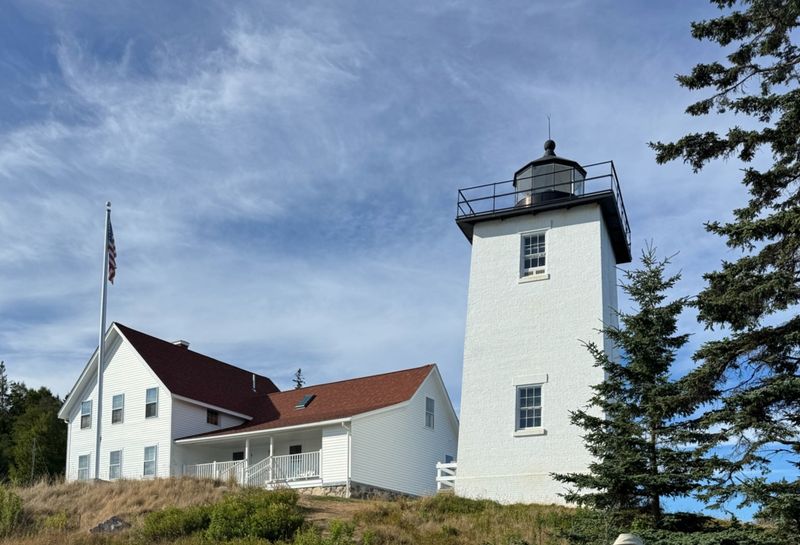
Swan’s Island is already a bit of an off-the-beaten-path destination, and Burnt Coat Harbor Light makes the trip even more worthwhile.
The lighthouse sits on Hockamock Head at the entrance to Burnt Coat Harbor, which might have the most dramatically named harbor in all of Maine.
Built in 1872, the square lighthouse tower is attached directly to the keeper’s house, giving the whole structure a compact, sturdy look that suits the rugged island landscape perfectly.
The surrounding area is peaceful and largely undeveloped, which means you get views without the distraction of crowds or development.
Swan’s Island itself is reached by a ferry from Bass Harbor on Mount Desert Island, making it a natural add-on to an Acadia National Park trip.
The island has a small lobster fishing community, a few local shops, and a genuine working-Maine-coast atmosphere that is increasingly rare.
The lighthouse grounds are open to visitors, and the walk out to the point offers beautiful views of the harbor and the surrounding islands.
Sunset from this spot is particularly spectacular. Pack a picnic, take your time, and let the quietness of Swan’s Island remind you why slow travel is always worth it.
6. Little River Light, Cutler
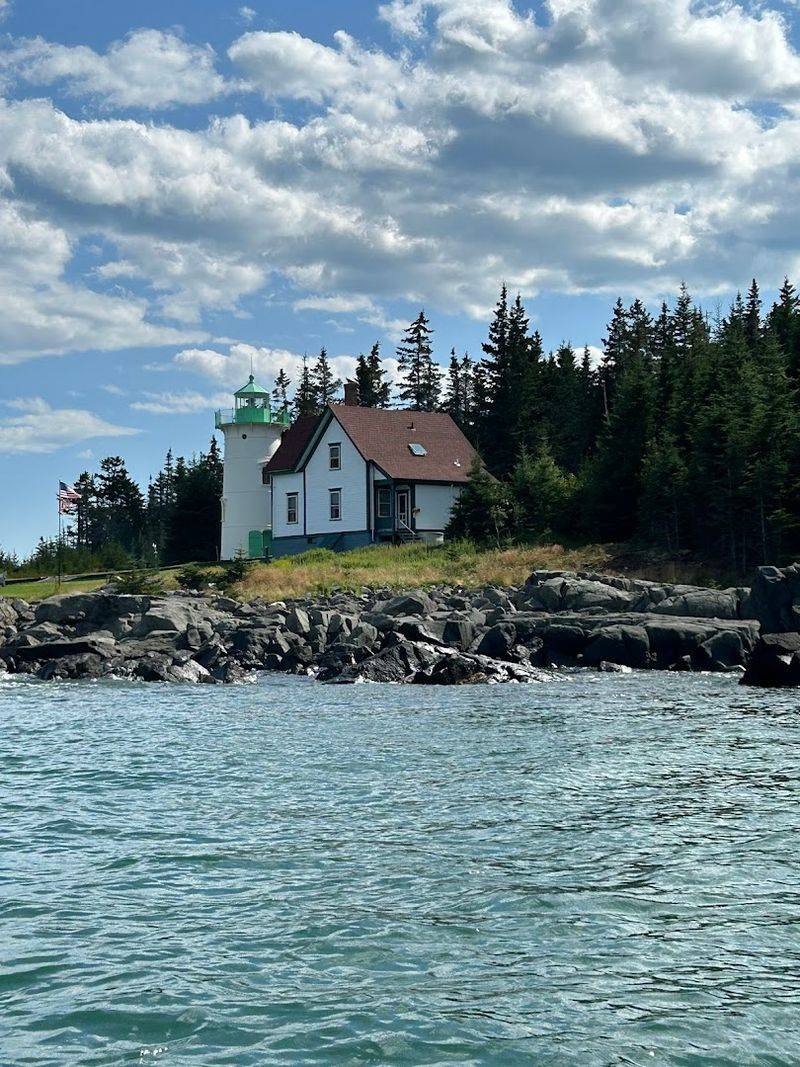
Cutler is about as far Downeast as you can get without crossing into Canada, and Little River Light feels like it belongs to another era entirely.
Perched on a small island at the entrance to Cutler Harbor, this lighthouse has been guiding boats since 1847, though the current tower dates from 1876.
The American Lighthouse Foundation restored the keeper’s house and now offers overnight stays for guests who want a genuinely remote lighthouse experience.
Waking up on Little River Island with nothing but spruce trees, seabirds, and ocean sounds around you is the kind of morning that resets your entire perspective on life.
Access is by private boat from Cutler, and the surrounding waters are known for dramatic tidal activity and abundant wildlife including bald eagles and harbor seals.
The Bold Coast, which stretches along the shoreline near Cutler, is considered one of the wildest and most scenic stretches of coastline in the entire eastern United States.
Little River Light fits perfectly into that landscape.
If you are road-tripping through Downeast Maine and looking for a lighthouse that feels genuinely off the tourist trail, this one is your reward for making the long drive out here.
7. Baker Island Light, Acadia
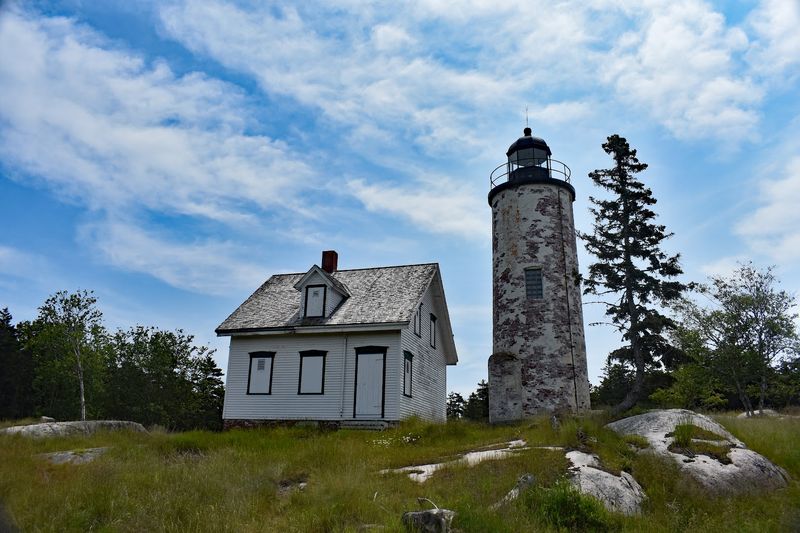
Baker Island sits about four miles south of Mount Desert Island, and it is part of Acadia National Park in the best possible way.
The lighthouse has been here since 1828, and the island itself has a fascinating history of early settlers who farmed and fished these waters long before the park existed.
Getting to Baker Island requires a boat trip, and the National Park Service occasionally runs ranger-led excursions out here during the summer.
Those tours are genuinely excellent, mixing lighthouse history with the natural and cultural story of the island in a way that keeps you engaged the whole time.
The shoreline of Baker Island is lined with massive rounded boulders that look like they were placed by hand, which makes exploring the perimeter feel like a slow, satisfying puzzle.
The forest interior is quiet and dense, home to nesting seabirds that you can observe without disturbing their habitat. Views from the island back toward Acadia’s mountains are spectacular on clear days.
Baker Island is one of those places that rewards you for putting in the effort to get there. It is not the easiest stop on this list, but it is absolutely one of the most memorable and worth every bit of planning.
8. Bear Island Light, Cranberry Isles
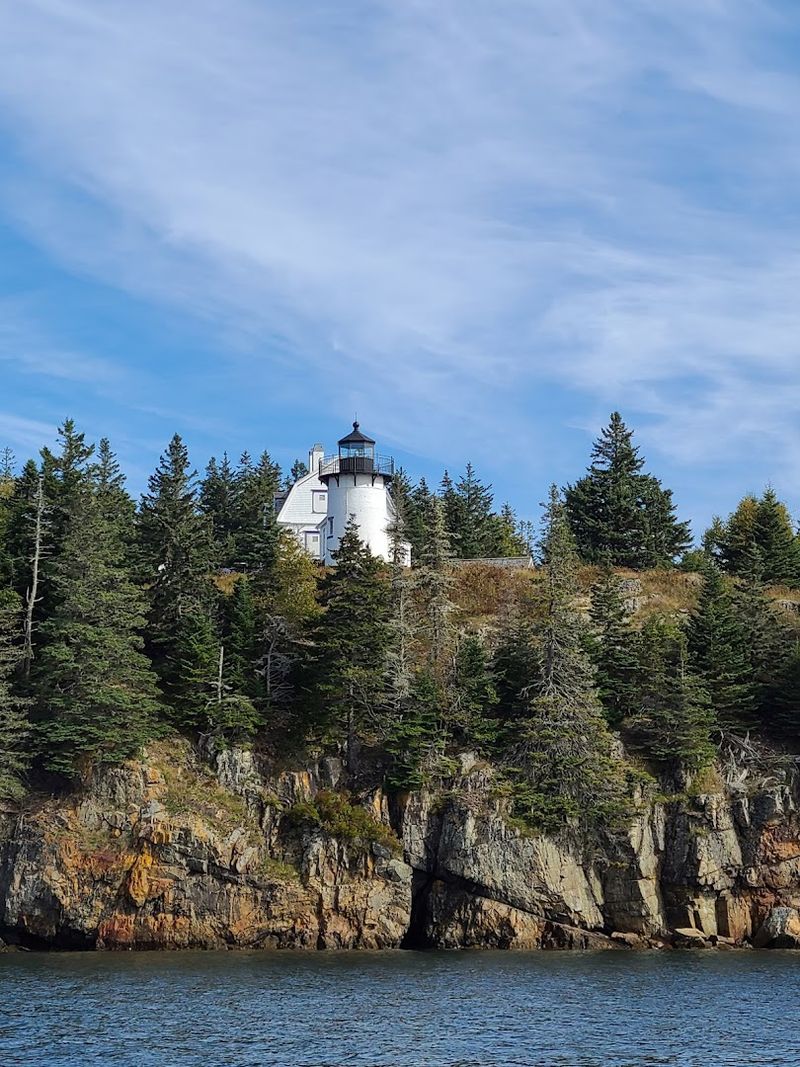
Bear Island Light is the kind of lighthouse you spot from a boat and immediately want to know more about.
Sitting at the entrance to Northeast Harbor in the Cranberry Isles, this compact lighthouse has been marking these waters since 1839, with the current tower built in 1889.
The Cranberry Isles are a short ferry ride from Northeast Harbor or Southwest Harbor on Mount Desert Island.
Great Cranberry and Little Cranberry, also known as Islesford, are the main destinations, but Bear Island sits just offshore and is visible from the water throughout your visit.
Islesford itself has the charming Islesford Historical Museum, which tells the story of island life in this part of Acadia.
Combining a visit to the Cranberry Isles with views of Bear Island Light makes for a wonderfully layered day trip that covers art, history, and coastal scenery all at once.
Kayakers sometimes paddle close to Bear Island for a better look at the lighthouse and its rocky surroundings.
The light is still active and maintained by the Coast Guard, which means it is doing its original job after more than 130 years. That kind of continuity is quietly remarkable and worth appreciating.
9. Whitehead Light, St. George
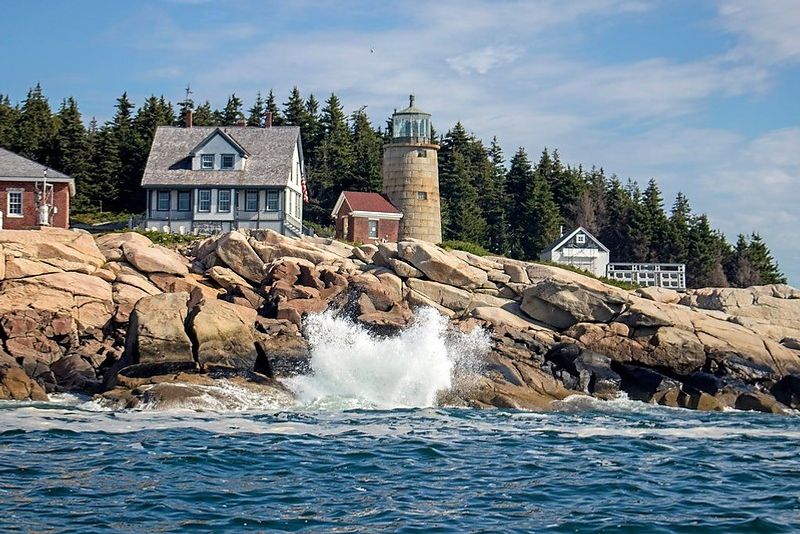
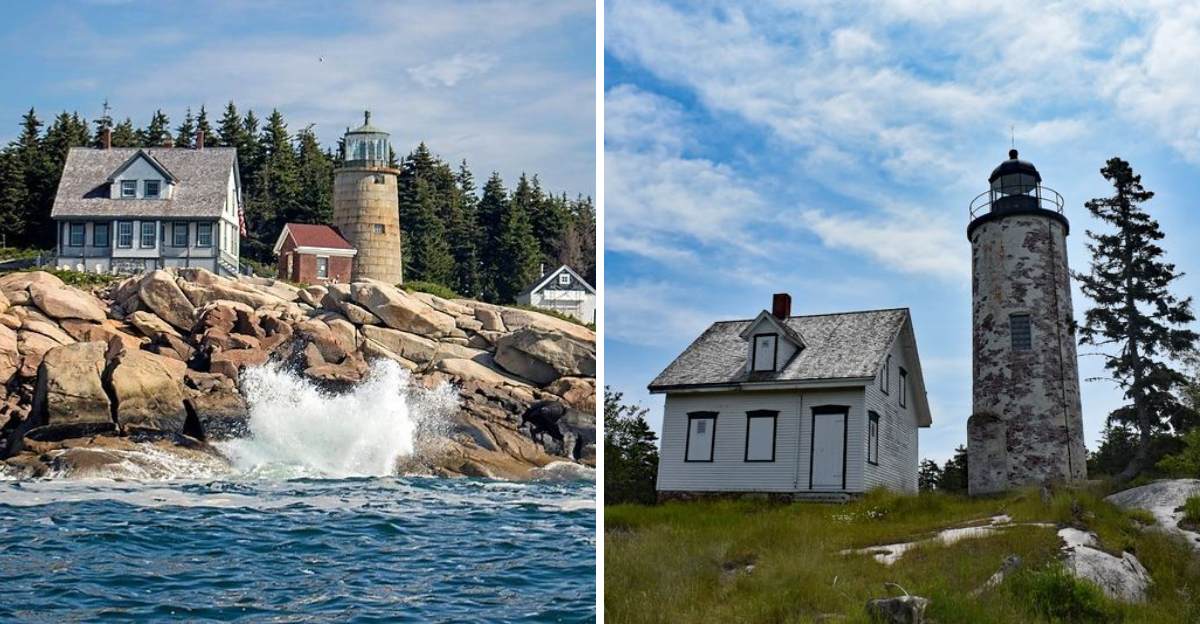
Whitehead Island sits in the middle of the Muscle Ridge Channel near St. George, and the lighthouse there has one of the most dramatic settings of any light on this list.
Bold granite ledges drop straight into the sea, and the sound of the ocean against those rocks is something you feel as much as hear.
The lighthouse dates back to 1807, making it one of the oldest on the Maine coast.
Henry David Thoreau mentioned Whitehead in his writings about Maine, which says something about how striking this place has always been to visitors with sharp eyes.
The Island Institute has been involved with Whitehead Island, and the site has been used as an educational and marine research station over the years.
Access is limited, which is part of what keeps this lighthouse feeling so wild and unspoiled. Charter boats from the Tenants Harbor and Rockland area sometimes pass close enough for excellent views.
The surrounding waters are rich with marine life, and bald eagles are commonly spotted soaring over the ledges.
Whitehead Light rewards the traveler who does not need to walk up to something to appreciate it. Sometimes the best view is from the water, looking in.
10. Eagle Island Light, Penobscot Bay
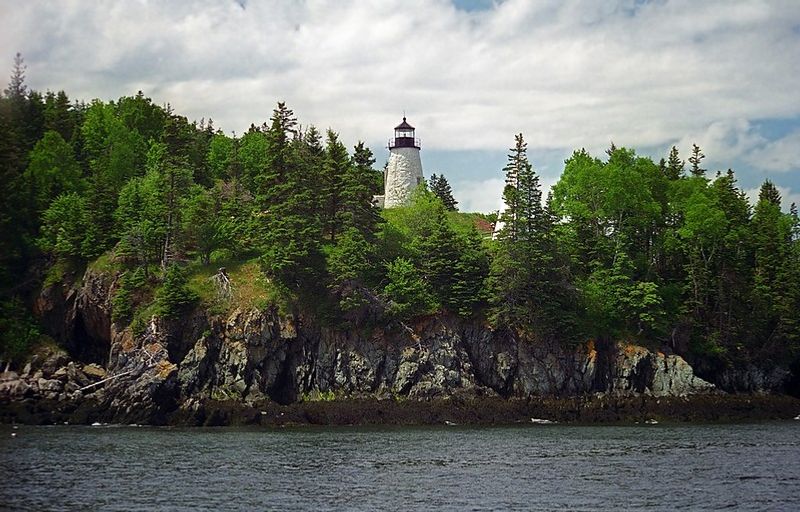
Eagle Island sits in the western part of Penobscot Bay, not far from the Pumpkin Island area, and the lighthouse there has been a quiet fixture of this beautiful bay since 1838.
Penobscot Bay is famous for its sailing, its islands, and its impossibly blue water on clear summer days.
The lighthouse is a classic Maine design, white tower, simple keeper’s house, rocky shore, and it fits the bay landscape like it grew there naturally.
Eagle Island itself is wooded and relatively small, giving the whole scene a storybook quality that is hard to describe without sounding dramatic.
Access is by private boat or charter from nearby towns like Deer Isle or Stonington.
Penobscot Bay is a popular sailing destination, and many charter boats and windjammer cruises pass close to Eagle Island as part of their routes.
That makes it possible to see the lighthouse even without arranging a dedicated island landing. The bay itself is spectacular from the water, with dozens of spruce-covered islands dotting the horizon in every direction.
Eagle Island Light is a quieter entry on this list, but in a bay this beautiful, quiet is exactly the right register. Come at golden hour if you possibly can.