Take A One-Day Road Trip Through Kentucky To See 9 Historic Covered Bridges
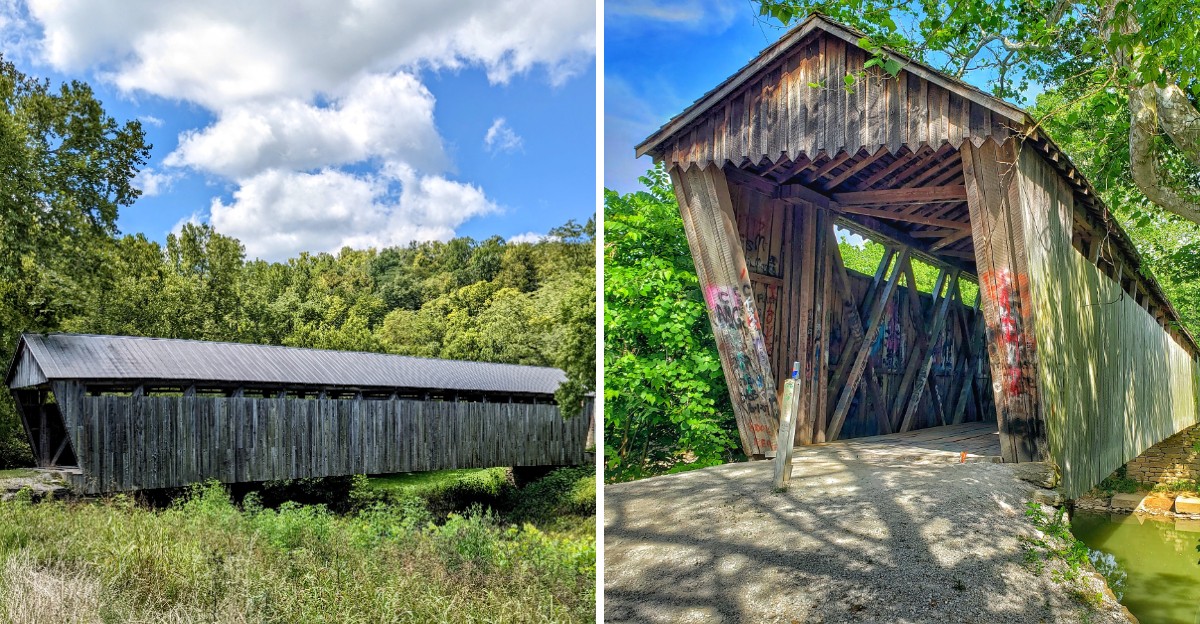
Some road trips are all about the destination. This one is all about the bridges.
Kentucky still has a handful of historic covered bridges, and each one has a story to tell. You might feel like you’ve driven straight into an old postcard.
Your kids might ask if horses and buggies are coming next. You can tell them the bridges are old enough to remember those days.
Pack your snacks and charge your phone, because you’ll want plenty of photos. Every bridge has its own charm, from weathered wood to quiet creeks below.
The winding backroads between them are honestly half the fun. You’ll pass farms, rolling hills, and small towns along the way.
Don’t forget to slow down and actually enjoy the view. Your camera roll will definitely thank you later.
So fill up the tank and grab your favorite playlist. History is waiting just around the next bend.
1. Dover Covered Bridge
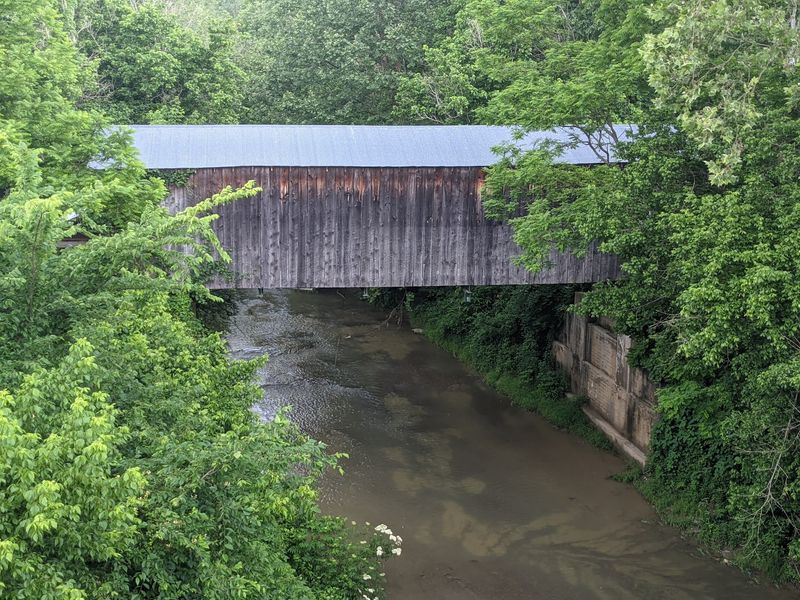
Start your day at the bridge that got here first. Built in 1835, this one is widely called the oldest surviving covered bridge in Kentucky.
Back then, it worked as a toll bridge. Travelers paid a fee to cross Lees Creek, which feels funny now that it’s a free photo stop.
You can still drive through it, which makes it a popular kickoff spot. A new road alignment bypassed it in 2005, yet the old bridge stayed in use.
That’s a big deal for a structure nearly two centuries old. Most bridges from that era have long since vanished or rotted away.
The bridge measures about 61 to 63 feet long. It’s short and sweet, so you won’t spend long inside.
Look closely at the frame while you’re there. It uses a Queenpost truss, which is an unusual design for covered bridges in the state.
A Queenpost truss uses two upright posts to help hold up the span. Think of them as a pair of sturdy shoulders sharing the load.
Plenty of care went into keeping it standing. Crews made major repairs and restorations in 1928, 1966, and 2001.
The bridge is also listed on the National Register of Historic Places. So you’re starting the trip with real history, not a replica.
Tip: drive through slowly and roll your windows down. The rumble of tires on old boards makes a fun soundtrack to begin the journey.
Address: Lees Creek Road, Dover, KY 41034
2. Walcott Covered Bridge
Locals simply call it The White Bridge, and the nickname fits. The community has a tradition of keeping it painted bright white.
Its story starts in 1824, when the first version went up. The bridge was later rebuilt in 1881.
Then came real trouble. Floods in 1997 and 1998 badly damaged the old structure over Locust Creek.
Rather than give up, people rebuilt it with new timbers in the early 2000s. They also moved it about 400 feet east of its original spot to protect it.
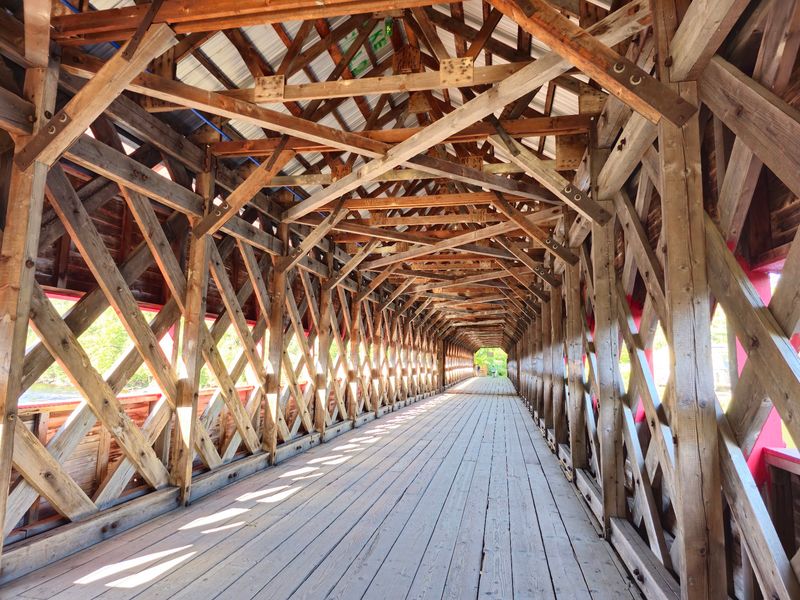
The span runs about 74 to 75 feet long. Its frame combines a King post and Queen post truss, so it borrows a little from both styles.
Cars haven’t used it since highway traffic bypassed it in 1954. Today, it’s for walkers only, which means you can take your time.
Here’s the fun part. The creek bed at the new site is shallow, so visitors can walk underneath and see how the bridge is built.
Wear shoes you don’t mind getting a bit muddy. A peek at the underside shows details you’d miss from the deck.
History buffs will like this one too. The bridge played a role in the Civil War’s Raid on Augusta.
It was listed on the National Register of Historic Places in 1975. Not bad for a bridge that has started over more than once.
Address: 25 Wellsburg Walcott Road, Brooksville, KY 41004
3. Johnson Creek Covered Bridge
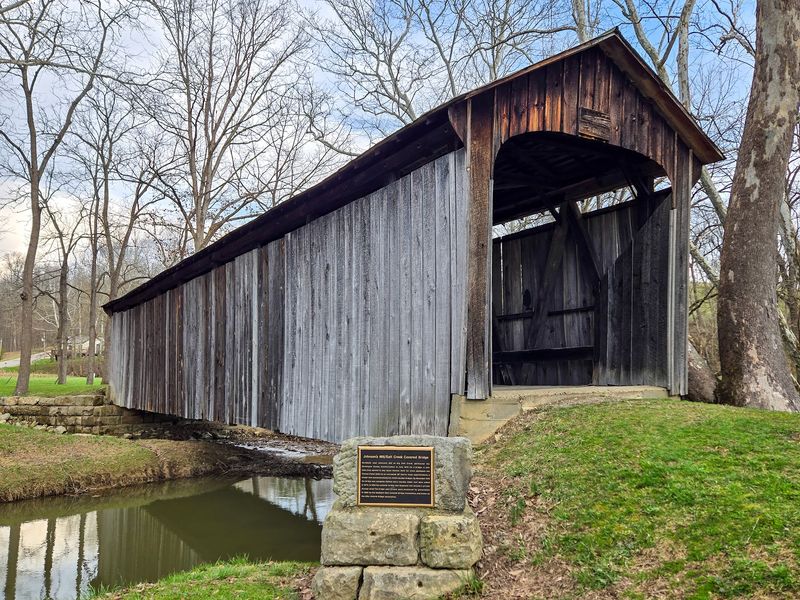
Engineering fans, get ready for a rare find. This bridge is the only known example of Robert Smith’s truss system in Kentucky.
That alone makes the drive to Robertson County worth it. You won’t see this design anywhere else in the state.
Jacob N. Bower built the bridge in 1874.
He was part of a family that left a big mark on covered bridges in this region.
Around 1912, his son Louis Bower added arches to the bridge. The goal was to help it handle more traffic.
Look for those arches along the sides. They show how builders adapted old bridges as travel changed.
The bridge stretches roughly 114 to 131 feet long. It’s also about 16 feet wide, which gives it a roomy feel inside.
Cars can’t cross it anymore. That’s good news for you, since you can stroll and snap pictures without dodging traffic.
For a while, older reports described it as being in poor shape. Then crews fully restored it in 2009, giving it a fresh lease on life.
It joined the National Register of Historic Places in 1976. That listing helps protect its story for future visitors.
Keep an eye out for the Bower name as you travel. It pops up again later on this trip, and spotting the family link is half the fun.
Address: Covered Bridge Rd, Mount Olivet, KY 41064
4. Ringo’s Mill Covered Bridge
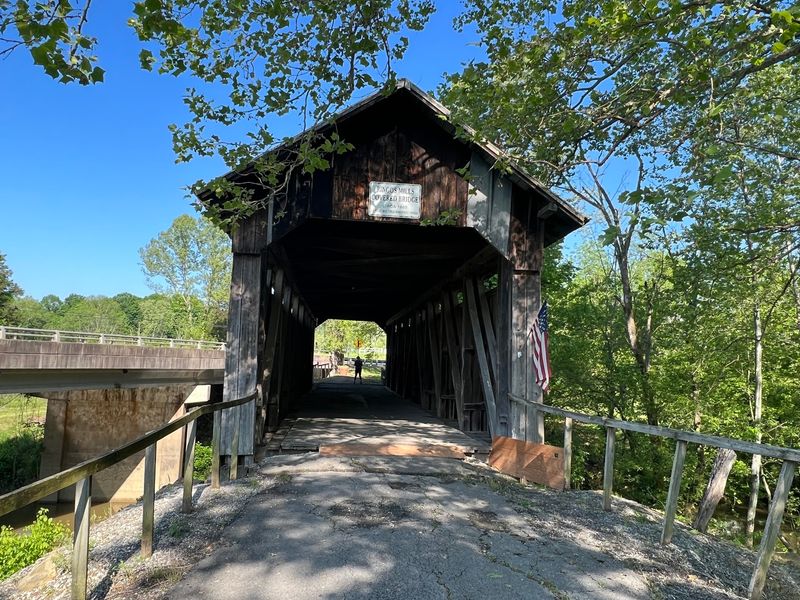
A grist mill once sat about 50 yards downstream from this spot. That’s where the bridge got its name.
Construction took place between 1867 and 1870. The bridge crosses Fox Creek in Fleming County, one of three covered bridges in the county.
Inside, you’ll find a Burr Truss design with original yellow pine trusses. That means some of the wood holding it up dates back to the 1800s.
The walls are double-sided and made from yellow poplar. Openings near the top of the siding let in light and fresh air.
Those gaps act a bit like windows in a church. They keep the inside from feeling like a dark tunnel.
The bridge is about 86 to 90 feet long. Its abutments are made of red stone with a concrete facing.
Cars stopped using it after a concrete bridge bypassed it in 1968. Pedestrians can still visit, though restoration work was underway as of December 2023.
Since work may affect access, check local updates before you go. A quick look ahead can save you a surprise.
The bridge earned a spot on the National Register of Historic Places in 1976. The state has invested in fixing up Fleming County’s bridges, so this one is getting real attention.
Pack a snack and enjoy the quiet creek setting. It’s an easy spot to stretch your legs between drives.
Address: 3576 Ringos Mills Rd, Hillsboro, KY 41049
5. Grange City Covered Bridge
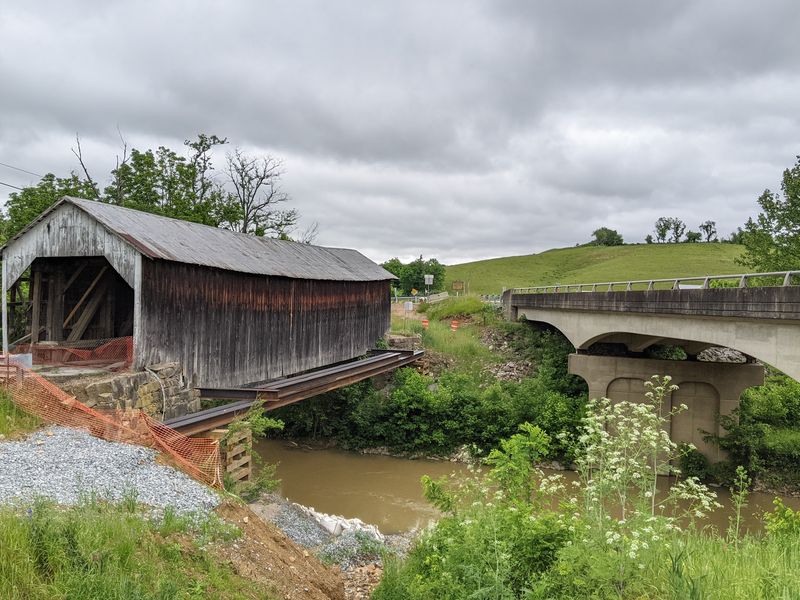
Rustic doesn’t begin to cover it. This bridge is often called the most rustic of Fleming County’s three covered bridges.
You may also hear it called the Hillsboro Covered Bridge. Both names point to the same old span over Fox Creek.
Builders put it up sometime between 1865 and 1870. It measures 86 feet long and uses a Multiple Kingpost truss.
Its look has changed over time. The bridge originally had double-sided yellow poplar, but corrugated sheet metal now covers its roof and sides.
That metal gives it a farm-shed charm you won’t see at the other stops. Under it sit abutments made of red stone.
Fox Creek hasn’t always been kind here. Floodwaters badly damaged the bridge in 2020, so crews had to stabilize it.
A full restoration followed as part of a state effort to save Fleming County’s covered bridges. As of December 2023, that work was in progress.
Cars haven’t crossed it since 1968. Pedestrians can visit, but it’s smart to check on construction before making the trip.
The bridge joined the National Register of Historic Places in 1976. It shares that year with its Fox Creek neighbor, Ringo’s Mill.
Since the two bridges cross the same creek, pair them back to back. You get two different styles in one short stretch of your Kentucky loop.
Address: KY 111 and City Road, Hillsboro, KY 41049
6. Goddard Covered Bridge
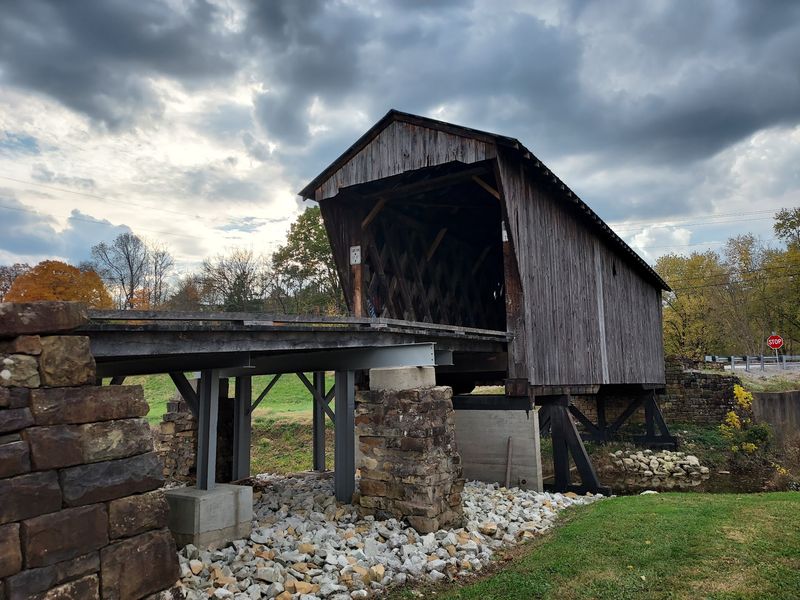
Want the postcard shot of the day? This bridge sits with the Pea Ridge Mountains and a historic country church in the background.
Some folks call it the Goddard White Bridge. It spans Sand Lick Creek and measures 63 feet long.
The design is what makes it special. It’s the only remaining example of Ithiel Town Lattice design in Kentucky.
Picture a crisscross pattern of timbers, like a giant wooden fence. Those timbers are joined with wooden pegs called trunnels.
Nobody knows the exact year it was built. Joseph Goddard built it using Ithiel Town’s 1820 lattice design.
The bridge wasn’t always in this spot. It originally stood about a mile south and was moved in 1933 when Highway 32 was rebuilt.
Restoration work happened in 1968 and again from 2004 to 2006. Much of the original structure was kept.
You can still drive across, but there’s a gross weight limit under 4 tons. Leave the moving truck at home.
Timing your trip right adds a bonus. The Covered Bridge Festival takes place here on the fourth Saturday in August.
The bridge has been on the National Register of Historic Places since 1975. Grab your camera and frame the church through the portal.
Address: 10544 Morehead Rd, Wallingford, KY 41093
7. Cabin Creek Covered Bridge
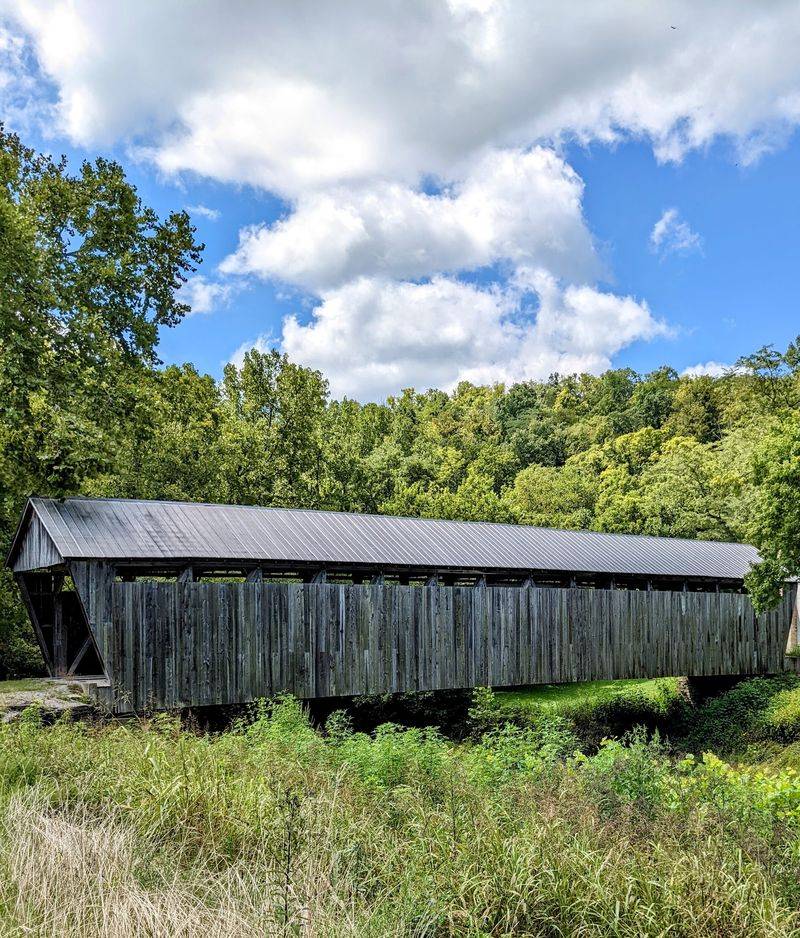
Light pours in along the whole length of this bridge. The trick is simple: there’s no siding right below the eaves.
That open strip creates a clerestory effect. Inside, the bridge feels bright instead of gloomy.
At 114 feet long, it gives you plenty of room to enjoy that glow. It crosses Cabin Creek in Lewis County.
Builders put it up around 1867 to 1873. Experts don’t fully agree on its frame, though.
Older sources call it a Burr truss. Some experts now suggest it uses a multiple kingpost truss instead.
Either way, you can study the beams and pick a side. Bridge debates make great car conversation.
Remember the Bower family? Louis Bower reinforced this bridge around 1914 by adding an arch to each side.
That’s the same Louis who added arches to Johnson Creek. Spotting his handiwork twice feels like a scavenger hunt.
Cars stopped crossing in 1983. A restoration between 2012 and 2014 helped keep it in good shape.
It was listed on the National Register of Historic Places in 1976. Visit in the late afternoon for the best light through that open strip.
Address: 4771 Cabin Creek Rd, Vanceburg, KY 41179
8. Colville Covered Bridge
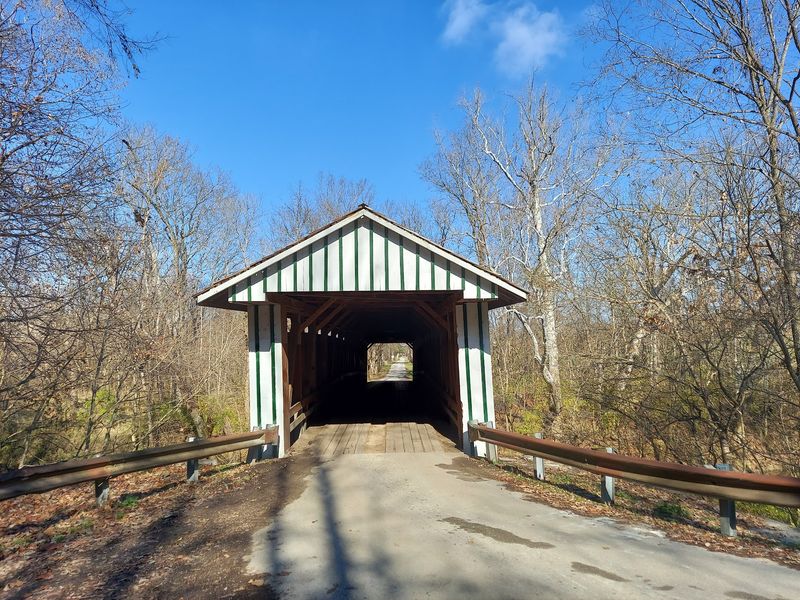
Got your car keys handy? This is one of the few covered bridges in Kentucky you can still drive through.
It stretches 120 to 124 feet over Hinkston Creek. At about 18 feet wide, it feels roomy for an old timber bridge.
Jacob Bower of the Bower Bridge Company built it in 1877. Yes, that Bower family again.
Watch for the Bower green and white portal details at the entrances. They’re a well-known feature of this bridge.
Sources differ a little on the frame. Many describe a Multiple Kingpost truss, while some call it a Burr Truss.
The bridge was first built from yellow poplar. Over the years, it needed help to stay standing.
In 1937, it was raised to its current height. The goal was to keep it safer from flood damage.
Floods still found a way. After damage in 1997, a major renovation took two years to finish.
It was listed on the National Register of Historic Places in 1974. That makes it one of the earlier bridges on this list to earn the honor.
Drive through once, then park and walk back for photos. The green and white trim pops against the trees.
Address: Colville Road, Millersburg, KY 40348
9. Switzer Covered Bridge
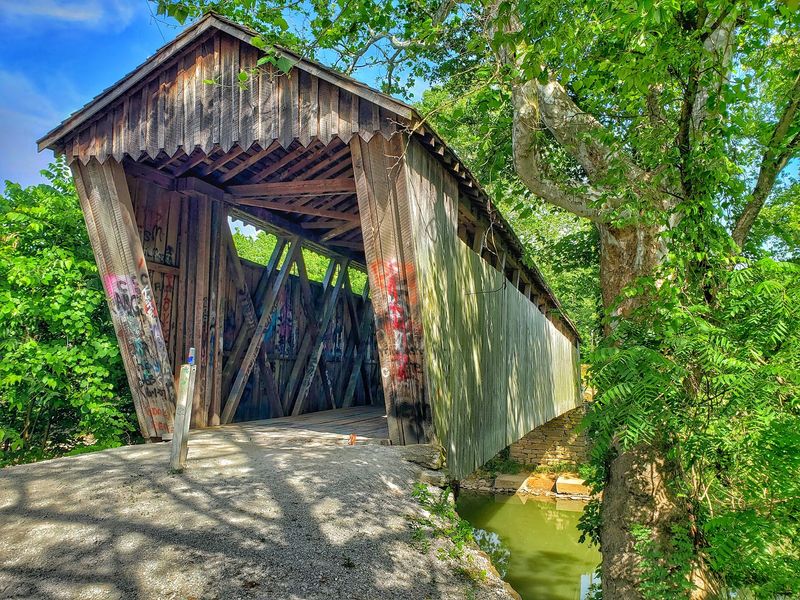
Save the official one for last. In 1998, state lawmakers named this the Official Bridge of Kentucky.
That same year, it was rebuilt after a tough stretch. A flood in March 1997 washed the bridge off its foundation.
Talk about a comeback. Within about a year, it was back in place over North Elkhorn Creek.
George Hockensmith built the bridge around 1855. It was restored in 1906 and again in 1990, before the flood ever hit.
Look at the entrances first. They have sawtooth edges that make the bridge easy to recognize.
The frame uses a Howe truss design. Its lattice is pinned with wooden trunnels, much like the pegs at Goddard.
The span runs about 120 to 126 feet long. It’s only about 11 feet wide, so it feels snug inside.
Cars can’t cross, but walkers can. That makes it a relaxing place to end your road trip on foot.
It joined the National Register of Historic Places in 1974. Frankfort, the state capital, is close by if you want dinner after.
Nine bridges and plenty of creek views later, you’ve earned a rest. Not bad for a day spent chasing old wooden tunnels.
Address: Off Rocky Branch Rd, Switzer, Frankfort, KY 40601