Take A Road Trip To 10 Of The Most Unusual Attractions In All Of Washington
Road-trip rule: one stop should make absolutely no sense until you see it yourself.
Washington makes that rule easy to follow. Leave the obvious attractions behind for a while, and the route gets strange in the best possible way.
These are the detours that interrupt a normal drive with a double take.
Some are funny. Some are historic. Others exist for reasons that feel almost impossible to explain quickly.
That unpredictability keeps the miles interesting.
One bizarre roadside discovery often becomes more memorable than another polished attraction.
When the itinerary starts feeling too sensible, these stops are exactly what it needs.
1. Fremont Troll, Seattle
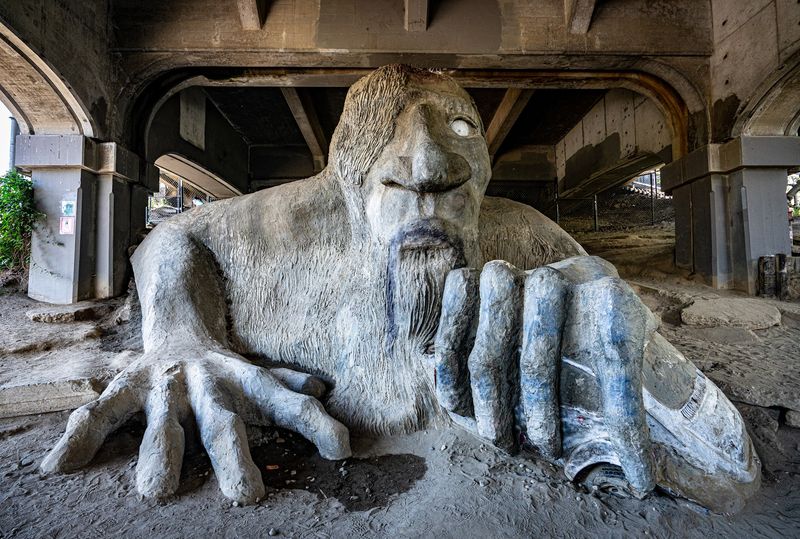
The hubcap eye is the first clue that this is no ordinary piece of public art. Under the north end of the Aurora Bridge, an 18-foot giant crouches in the shadows.
The Fremont Troll in Seattle weighs roughly 13,000 pounds. Steel rebar, wire, and concrete shaped every wrinkle of its scowling face.
Four local artists built it back in 1990 after winning a neighborhood competition. The goal was simple: reclaim a neglected patch beneath the bridge.
In its left hand sits a real Volkswagen Beetle, squashed but famous. The car originally held a time capsule, which was later removed after vandalism.
The sculpture has long doubled as an informal play structure, with visitors climbing onto its hand and car for photos. Perch in the giant palm or lean against the crumpled bumper.
Crowd levels vary throughout the day, so visiting earlier can make photography easier.
Every October 31, Trolloween celebrates the sculpture’s birthday with live music, a theatrical pageant, and a neighborhood procession. The surrounding streets brim with odd shops and bohemian cafes.
The roadway alongside was officially renamed Troll Avenue North in 2005. That detail alone tells you how much locals adore this beast.
You will find the sculpture at N 36th St and Troll Ave N. Park a few blocks away and wander in on foot. Few urban artworks reward curiosity this generously, and admission costs nothing but your time.
2. Teapot Dome Historical Site, Zillah
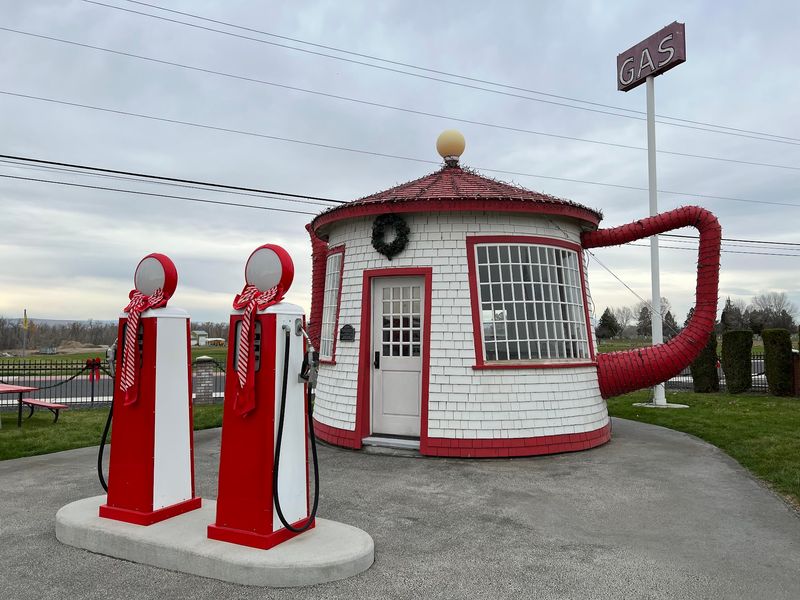
Are you seeing what I am seeing out there in the vineyards? A building shaped exactly like a teapot, spout and handle included.
The Teapot Dome Historical Site sits in Zillah, deep in the Yakima Valley. Its cylindrical body and curved spout make it instantly recognizable from the road.
Built in 1922 as a roadside service station, the teapot-shaped structure turned a national political scandal into novelty architecture. The design nodded straight at the Teapot Dome Scandal making headlines that decade.
Novelty architecture was booming then, built to grab the eye of passing drivers. Few examples survived the years as gracefully as this one.
The structure was relocated in 1978 and moved again in 2012 to its present First Avenue site. Demolition threatened it before preservation efforts stepped in and saved the day.
Today it functions as a visitor center and small museum rather than a working fuel station. Interpretive signage explains how politics and pumps collided here.
Its bright teapot shape remains easy to spot against the surrounding Yakima Valley landscape.
Combine the stop with nearby fruit stands and orchard drives. The valley grows apples, cherries, and hops in abundance.
Look for it at 117 First Ave, just off the main route. Parking is easy and the pause takes only minutes.
History rarely comes shaped like something you would pour tea from, which is precisely the charm.
3. Stonehenge Memorial, Goldendale
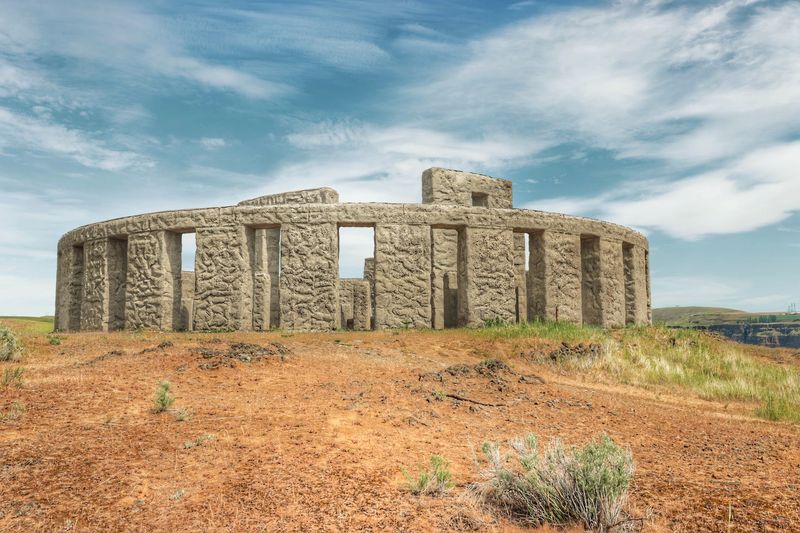
Let me look at it from this angle: ancient England, rebuilt above an American river. The monoliths rise from a windy bluff, gray and imposing.
Stonehenge Memorial near Goldendale overlooks the Columbia River Gorge. Concrete stands in for sarsen stone, scaled and arranged in the familiar circle.
Construction began in 1918 with the altar-stone dedication, and the full memorial was completed and rededicated in 1929.
The site is described by its managing museum as the nation’s first World War I monument, with its altar stone dedicated before the war had ended.
Its alignment was calculated to the astronomical horizon, which differs slightly from the actual midsummer sunrise at the site.
Walking between the towering slabs takes only a few minutes. Standing still and listening to the wind takes considerably longer.
Views stretch across the gorge toward brown hills and shining water. Sunset turns the whole scene warm and cinematic.
Bring a jacket, because the bluff catches steady breezes year round. Sturdy shoes help on the gravel pathways nearby.
Nearby overlooks and a small memorial garden reward a slower stroll. Interpretive plaques explain Hill’s intentions in his own words.
The memorial at 97 Stonehenge Drive is free and open daily from 7 a.m. to dusk. Sunrise trips feel especially peaceful before traffic picks up.
Solemn, strange, and genuinely beautiful, this circle earns its detour.
4. World’s Largest Egg, Winlock
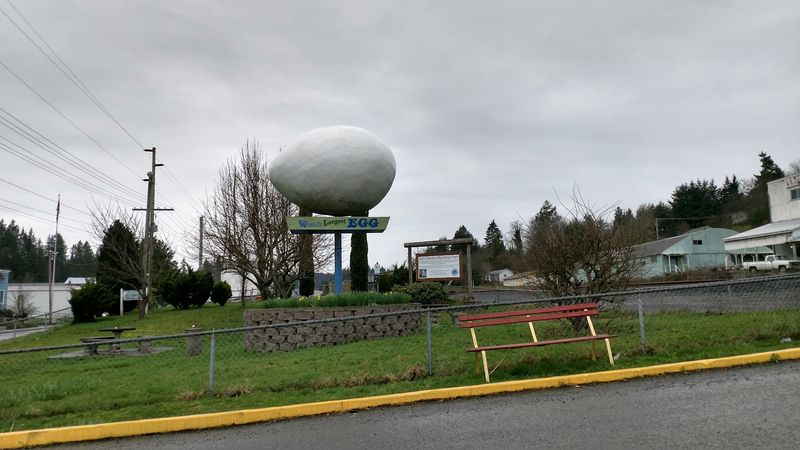
An egg roughly the size of a compact car? Funny, right? It rests on a pedestal in the middle of a very small town.
Winlock still promotes the 12-foot, 1,200-pound sculpture as the World’s Largest Egg. The smooth white shape looms over passing traffic on the main drag.
Poultry farming once powered this corner of Lewis County. Trains hauled crates of local eggs out by the thousands.
The monument celebrates that heritage with cheerful exaggeration. Over the years its paint scheme has changed several times.
Photos work best from the sidewalk, where you can frame the whole shell. Its 12-foot length makes the oversized sculpture an easy scale-comparison photo stop.
Egg Day continues on the third Saturday in June as a celebration of the town’s poultry history. Expect small-town booths, music, and plenty of egg-themed humor.
The surrounding streets hold antique shops and a historic depot. A short stroll fills out the stop nicely.
Winlock sits about 13 miles from Interstate 5, making the egg a manageable detour between Portland and Seattle.
Roadside monuments this cheerfully oversized keep road trips from turning into a blur of gas stations.
5. Marsh’s Free Museum, Long Beach
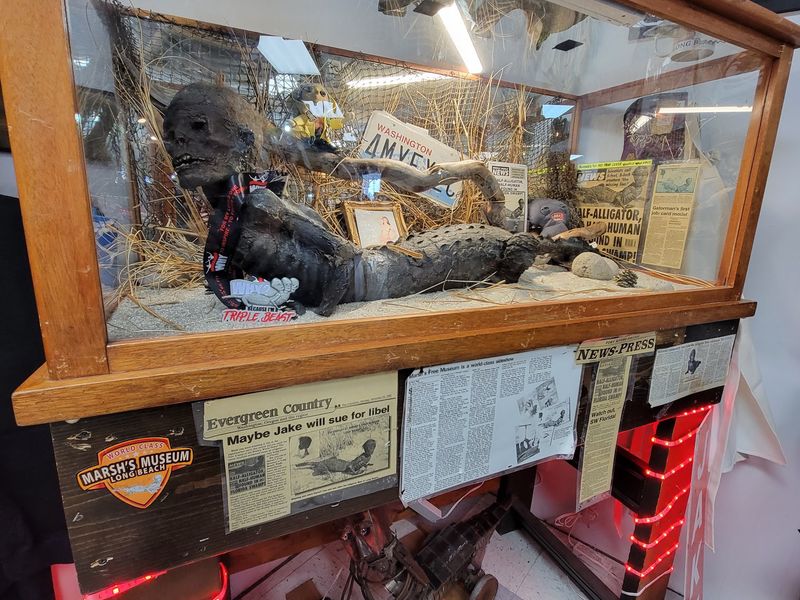
Shrunken heads, a two-headed calf, antique machines, and other curiosities quickly establish the tone inside. Crowded shelves, glass cases, and antique arcade machines fill every inch.
Marsh’s Free Museum anchors the main street of Long Beach on the Pacific coast. Part curiosity cabinet, part souvenir shop, entirely unforgettable.
The star attraction is Jake the Alligator Man, a sideshow-style curiosity whose origins remain uncertain and are widely believed to involve manufactured gaff work.
Antique arcade and fortune-telling machines still operate alongside the museum’s curiosities.
Shelves hold seashells, postcards, taffy, and genuinely strange taxidermy. Browsing takes longer than anyone expects.
Nothing here is polished or high-tech, and that is the entire appeal. Hand-lettered signs explain exhibits in charmingly blunt language.
Rainy coastal afternoons make this the ideal indoor escape. The beach and the famous boardwalk sit just minutes away.
Admission remains free, making it easy to browse the collection before deciding whether to pick up a souvenir. Souvenirs range from silly to genuinely collectible.
Crowd levels vary sharply with the Long Beach visitor season, so allow extra time during busy summer periods.
Find the whole strange collection at 409 Pacific Ave S. Parking fills quickly during peak season. Fans of sideshow history and oddball Americana will lose an hour here happily.
6. Leavenworth Nutcracker Museum
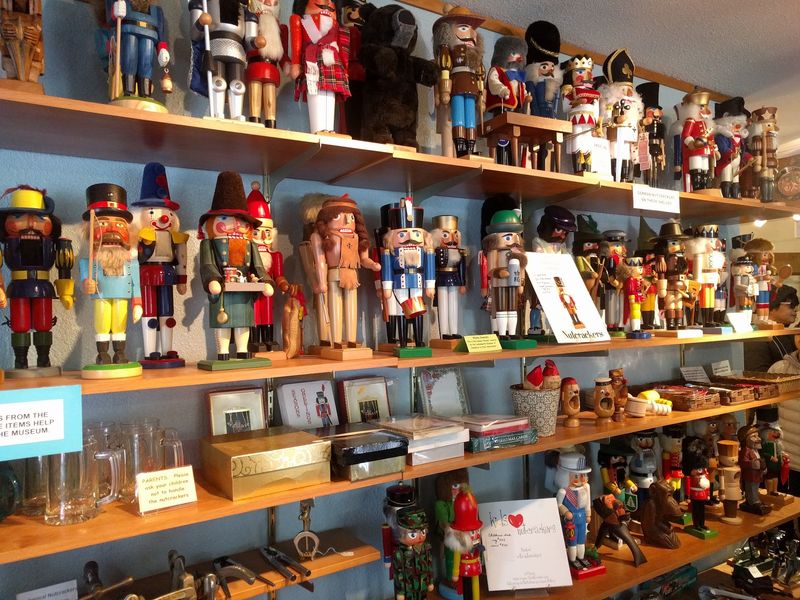
An entire museum devoted to nutcracking tools sounds narrow until the displays reveal centuries of wildly different designs. More than 9,000 nutcrackers and related tools now fill the collection.
The Leavenworth Nutcracker Museum sits inside a Bavarian-styled village in the Cascade foothills. Display cases climb the walls from floor to ceiling.
The collection spans materials, cultures, and periods ranging from ancient nutting stones to modern acrylic designs. Some are tiny brass figures, others tower over a foot tall.
Exhibits trace how nutcrackers evolved from practical tools to holiday decorations. Early versions look nothing like the painted soldiers most people picture.
Labels explain regional carving traditions, especially those from the Erzgebirge mountains. Craftsmanship details reward slow looking.
Washington winter transforms the surrounding town into a snowy storybook with lights everywhere. The museum stays busy through the holiday season.
Museum hours are currently 11 a.m. to 5 p.m. Monday through Saturday and 11 a.m. to 4:30 p.m. Sunday, with holiday changes possible. Hours can shift seasonally, so check before driving up.
Children and adults can take part in organized nutcracker hunts using lists, clipboards, and pencils. Adults tend to linger over the antiques.
The building sits at 735 Front St, right beside the main pedestrian strip. Bakeries and shops surround it. Obsessive collecting has rarely looked this cheerful or this well organized.
7. Ginkgo Petrified Forest Interpretive Center, Vantage
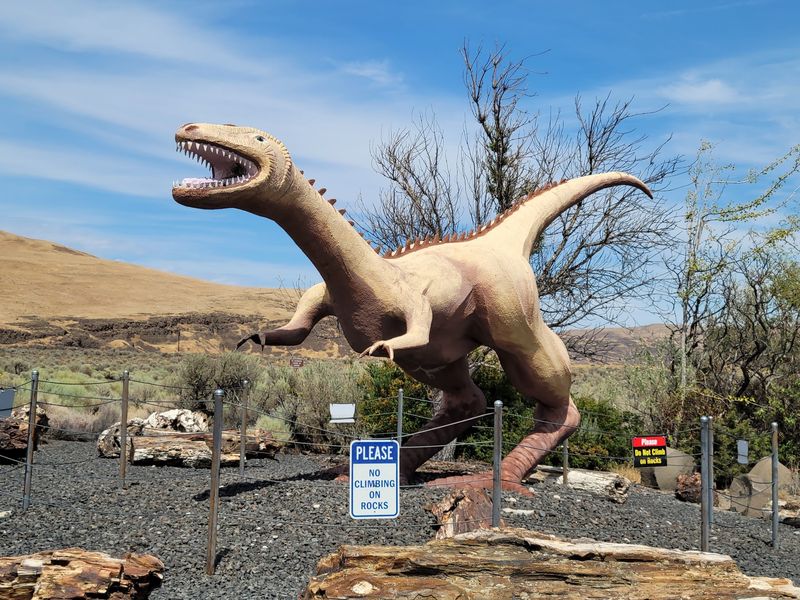
Trees turning into solid stone still scrambles my brain a little. Millions of years compressed into something you can touch with one hand.
The Ginkgo Petrified Forest Interpretive Center near Vantage explains exactly how it happened. Lava sealed waterlogged logs from the air, and silica released from cooling basalt slowly replaced their plant cells with minerals.
More than 40 wood types are recognized in the National Natural Landmark documentation, while historical park accounts have reported more than 50 tree species. Redwood, maple, oak, and the rare ginkgo all appear.
The site is recognized as one of North America’s most diverse fossil forests and the continent’s most diverse known locality of Miocene petrified wood.
The fossil assemblage remains scientifically important because it preserves an unusually diverse mix of ancient wood types.
A 1.25-mile interpretive trail leads through the fossil bed past dozens of exposed petrified logs. Interpretive signs mark the most impressive specimens along the way.
Desert sun hits hard in summer, so carry water and a hat. Spring brings seasonal wildflowers, while summer heat can make extra water and sun protection especially important.
Inside, exhibits display polished cross-sections showing growth rings from ancient trunks. Colors range from honey gold to deep red.
Views over the Columbia River add drama to the whole area. Wind turbines spin on the ridges above.
This Washington center sits at 630 Ginkgo Ave. Hours vary by season, so plan accordingly. Geology this vivid turns a highway rest break into a genuine time-travel lesson.
8. Espresso Chalet Bigfoot, Gold Bar
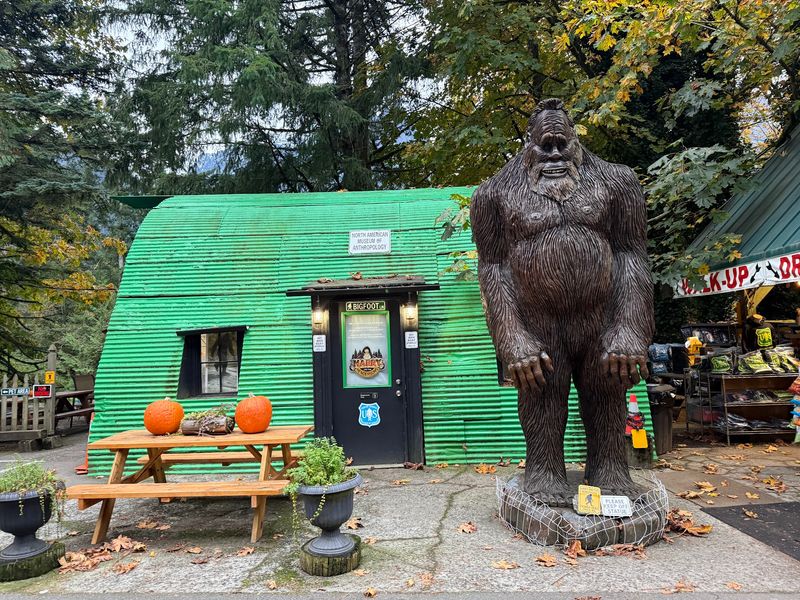
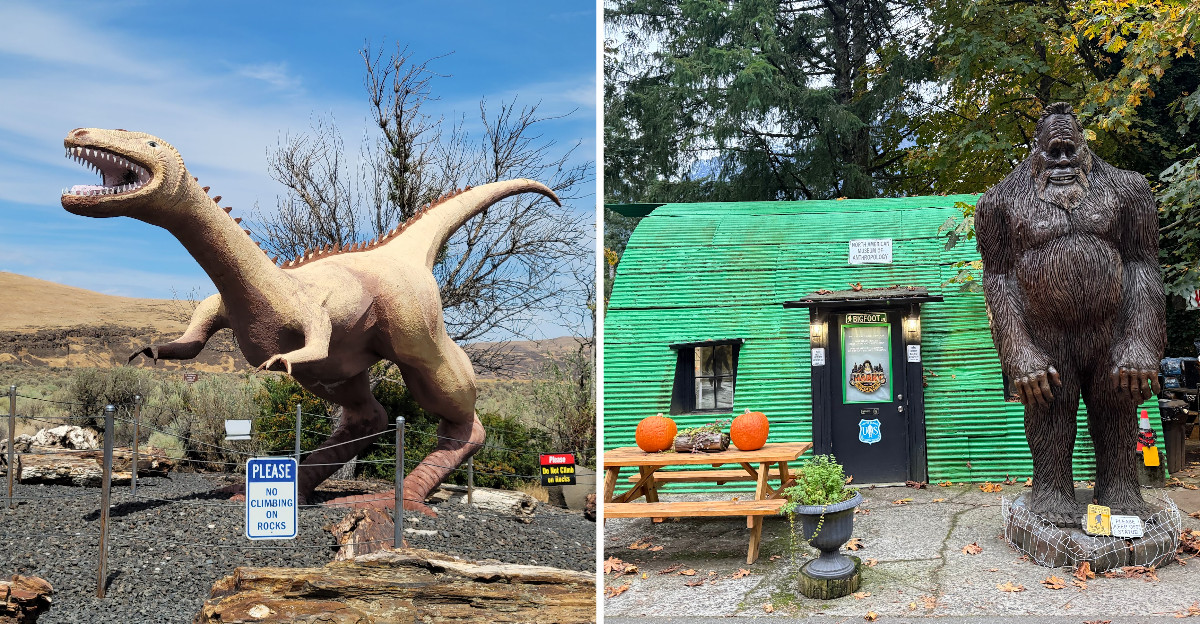
The roadside coffee stop sits along US-2 near Index, surrounded by Cascade scenery. The oversized statue has become a landmark for mountain travelers.
The Bigfoot theme has a more concrete connection here because the property was used during filming of Harry and the Hendersons.
The chalet leans into that legend without taking itself too seriously. The oversized Bigfoot figure makes the property an obvious roadside photo stop.
Espresso drinks come fast and hot, which matters on chilly mornings. Its US-2 location makes it a convenient stop for travelers heading toward Stevens Pass.
Highway 2 continues east toward Stevens Pass and alpine scenery. This makes an ideal caffeine checkpoint before the climb.
Nearby Wallace Falls State Park adds a waterfall hike to the itinerary. Trailheads sit only minutes away.
Autumn brings golden leaves along the river corridor. Summer mornings often start with mist hanging in the trees.
You will find the stand at 50010 State Route 2 in Index, directly along the highway. Pull-in parking sits right beside the statue.
Folklore and fresh brews rarely share a parking lot this happily, and the combination works.
9. Nutty Narrows Bridge, Longview
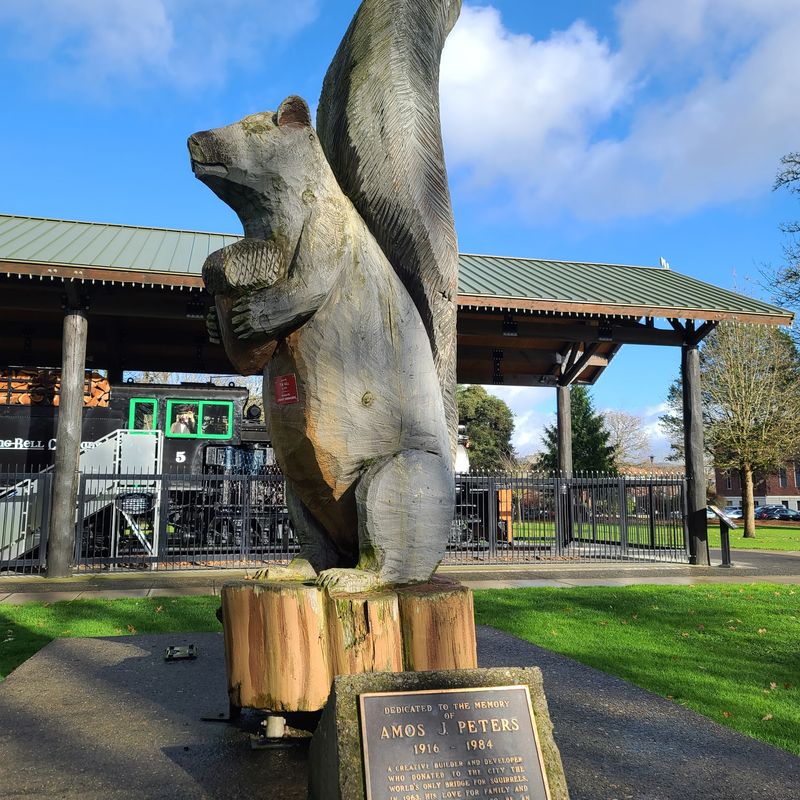
Longview really does have a 60-foot bridge built specifically to help squirrels cross a busy street. It hangs high above traffic, complete with tiny cables and a wooden deck.
Longview gave the world the Nutty Narrows Bridge back in 1963. A local builder named Amos Peters designed it after watching squirrels struggle to cross.
The original span uses a flattened fire-hose deck with an aluminum mock-suspension structure and stretches about 60 feet between trees.
Reports of squirrels using the bridge began soon after it opened. Watching one scamper across still draws smiles from people below.
Longview now has multiple squirrel bridges, and the annual festival offers guided bridge tours.
The annual festival returns on August 22, 2026, with live entertainment, vendors, children’s activities, and squirrel-bridge tours.
This Washington bridge sits near Olympia Way and 18th Ave, beside a leafy park. Benches nearby make squirrel-watching comfortable.
Bring patience and a zoom lens for the best action shots. Squirrel crossings are unpredictable, so patience matters more than arriving at a particular hour.
Nearby Lake Sacajawea Park adds a pleasant stroll to the stop. Ducks, trails, and picnic tables round out the afternoon.
Small-town kindness engineered into aluminum and rope deserves at least one photo in your camera roll.
10. Afterglow Vista, Friday Harbor
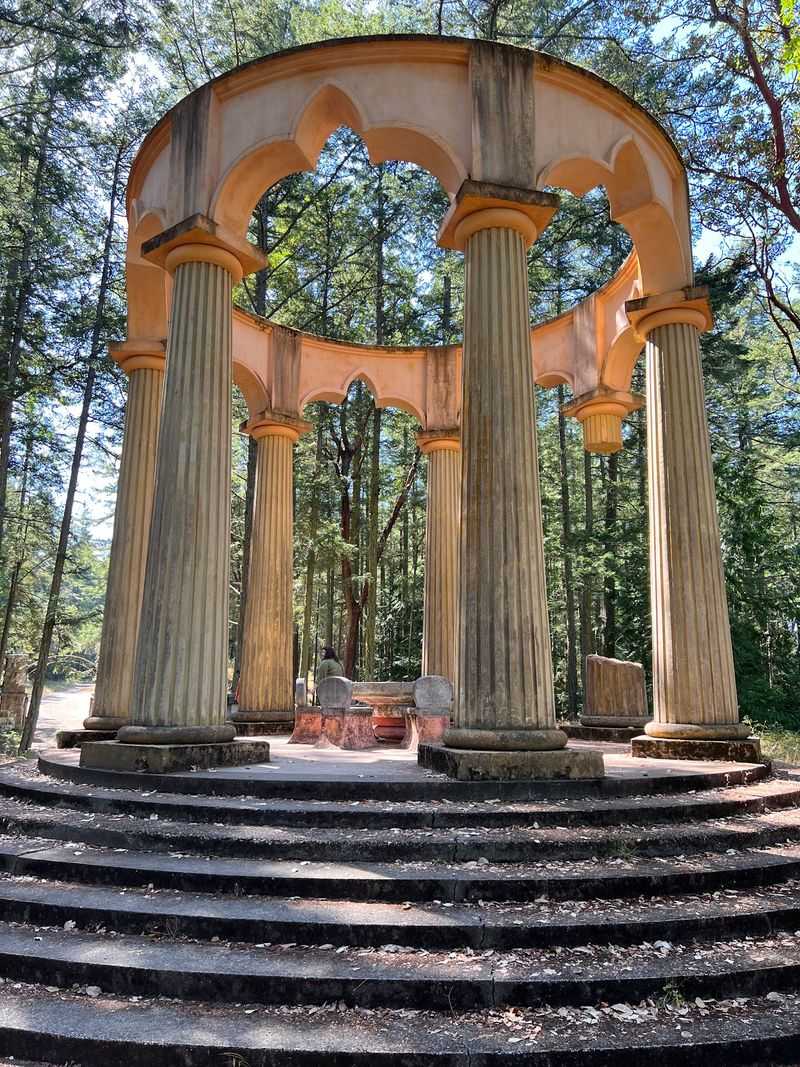
Forest clearings hide the best surprises. Stone columns rise from the moss, circling a table and empty chairs.
Afterglow Vista rests in the woods outside Friday Harbor on San Juan Island. Completed in 1936 as a family mausoleum, the memorial combines neoclassical design with extensive Masonic symbolism.
Limestone, marble, and concrete form the open-air memorial, where six chairs and six corresponding columns surround a round table.
Every element carries symbolism tied to the family’s beliefs. One column is deliberately broken to symbolize life ending before a person’s work is finished.
The six stone chairs are actually crypts holding family ashes, so the site is best approached as a burial place rather than ordinary seating.
Reaching the memorial requires a short forest walk from the parking area. A marked forest trail leads through the cemetery to the mausoleum. Filtered forest light changes the appearance of the memorial throughout the day.
Ferries from Anacortes bring you to the island, so plan sailing times ahead. From Friday Harbor, the memorial requires a drive north toward Roche Harbor before the short forest walk begins.
Combine this Washington stop with lavender farms, whale-watching, or harbor shops. The island rewards a full day easily.
Access is through the Roche Harbor cemetery area, where a marked trail leads through the woods to the memorial. Keep voices low out of courtesy.
Peaceful, symbolic, and quietly stunning, it closes this road trip on a thoughtful note.