Take These 11 Kentucky Trails That Lead To Hidden Ghost Towns, Ruins And Cemeteries Left Behind
Your weekend hikes have started to blur into one long stretch of trees and the same old waterfall. The easy fix is another loop around the local park with a podcast in your ears.
Kentucky has a far more interesting plan, and it comes with a side of goosebumps. Some of these trails lead to entire communities that packed up and never came back.
At one old coal camp, you can hear recorded stories from the people who actually lived there. Another path climbs a mountain to a farming settlement whose last resident left in 1951.
Towering iron furnace stacks still stand in the woods like forgotten chimneys. You will also find old cemeteries and Civil War sites that invite a moment of quiet respect.
Every stop comes with history you can see up close. Lace up your boots.
Pack some water. Leave every relic exactly where you found it.
1. Blue Heron Mining Community
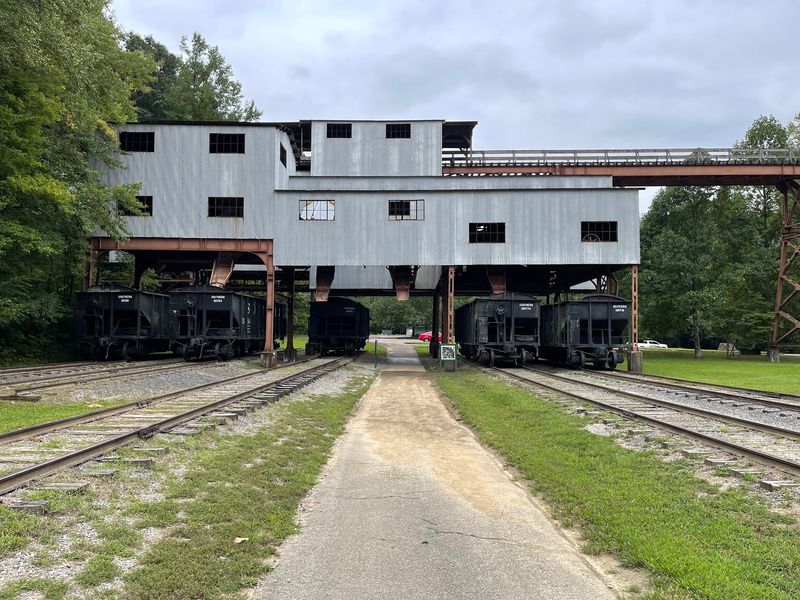
Some towns fade quietly, but this one came back as a metal skeleton that talks. From 1937 to 1962, Blue Heron, also called Mine 18, buzzed with coal miners and their families.
When the mine closed, people packed up and left. Buildings were hauled away or slowly gave in to the forest.
Then the National Park Service had a clever idea in the 1980s. Crews built open metal frames on the original sites, known as ghost structures.
You can wander through outlines of a depot, a school, a company store, and homes. Each frame shows the shape of daily life without a single wall getting in the way.
Here is the best part. Press a button inside a structure, and you hear former residents and miners sharing their own memories.
Their voices fill the empty frames with stories about paydays, classrooms, and neighbors. It feels less like a museum and more like eavesdropping on the past.
Save time for the huge coal tipple bridge that still spans the river. Walk across it for wide views of the gorge and the rugged hills around it.
Set your GPS for 8249 Mine 18 Rd, Strunk, deep in the Big South Fork area. The drive winds, so take it slow and enjoy the curves.
Bring comfy shoes and a curious ear. The stories here reward anyone willing to stop, listen, and linger a little longer.
2. Hensley Settlement At Cumberland Gap National Historical Park
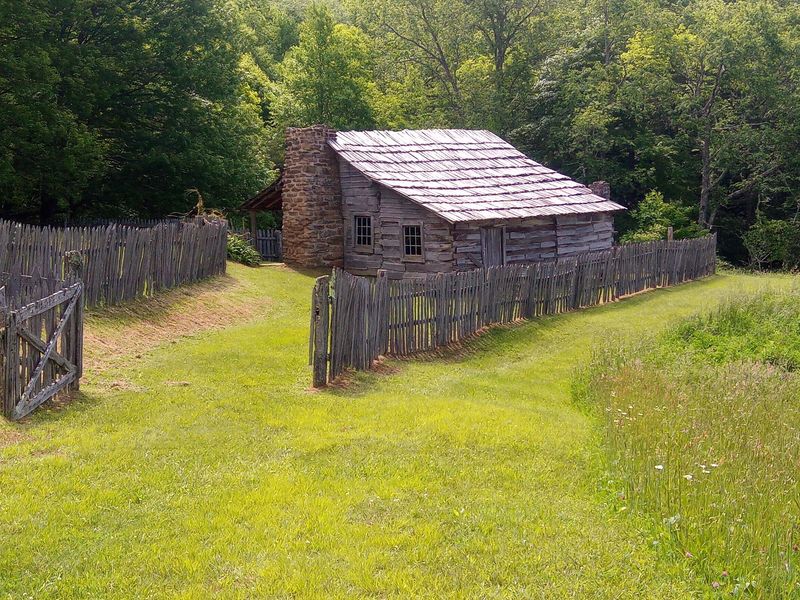
Imagine a town that simply skipped the twentieth century and seemed perfectly fine with it. Hensley Settlement sits on top of Brush Mountain, and it was founded in 1903.
Roads never reached it, and electricity never arrived. Families grew, built, and fixed nearly everything with their own hands.
People stayed until 1951, when the last resident finally moved away. What remains feels frozen, like someone pressed pause on a quiet farm day.
A collection of restored historic buildings is preserved across the mountaintop, including log homes, a schoolhouse and other structures tied to settlement life.
Peek into the schoolhouse and picture kids hiking in for lessons. Then stop at the spring house, where cool mountain water once kept food fresh.
Split-rail fences and open fields add to the old-time charm. The quiet up here is so deep you might hear your own footsteps echo.
Start your trip at the park visitor center, 91 Bartlett Park Rd, Middlesboro, Kentucky. From there, you can plan how to reach the mountaintop.
Hikers can take a long trail up the mountain, which makes for a solid workout. Shuttle tours have also been offered during warmer months, so check ahead.
Pack water, snacks, and a good hat for the journey. Hensley rewards patient explorers with a rare, honest look at mountain self-reliance.
3. Center Furnace Trail At Land Between The Lakes
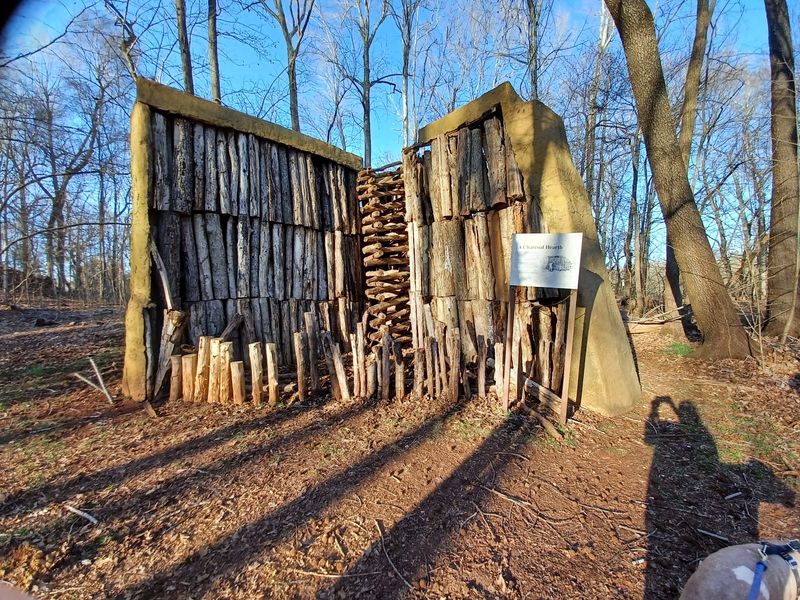
Not every trail needs to be long to feel packed with secrets. This one loops just 0.3 miles, yet it covers decades of iron-making history.
Center Furnace ran on and off from about 1852 to 1912. Most of the original building is gone, but a tall brick stack still stands proud.
Along the path, you pass old cisterns, tools, and a replica charcoal hearth. Each stop shows how workers turned trees and ore into iron.
The hearth helps you picture the smoky, sweaty side of the job. Signs along the way piece the whole process together in plain language.
Then comes a surprise among the trees. The grave of Dr. Thomas T.
Watson, an early investor, rests beside the trail.
His burial site was moved here when Lake Barkley was created. It is a quiet, respectful spot worth a pause.
Keep walking and you meet the Wolf Tree, a white oak about 150 years old. Its wide, sprawling branches make every other tree look shy.
The trail is short and accessible, which makes it great for families and casual walkers. You can finish it in about the time it takes to eat a sandwich.
Look for it at 3146 Silver Trail Rd, Cadiz, KY, inside Land Between the Lakes. Pair it with other stops in the area for a full day of exploring.
4. Otter Creek Outdoor Recreation Area
Maps from long ago list towns you will never find on a road sign today. Plain Dealing, Garnettsville, and Lick Skillet once dotted the land around Otter Creek.
Those communities faded away as Fort Knox expanded. Their stories still linger in the woods, fields, and rocky bluffs.
Garnettsville was a busy village back in 1792. It even had a three-story water mill, which was a big deal for the time.
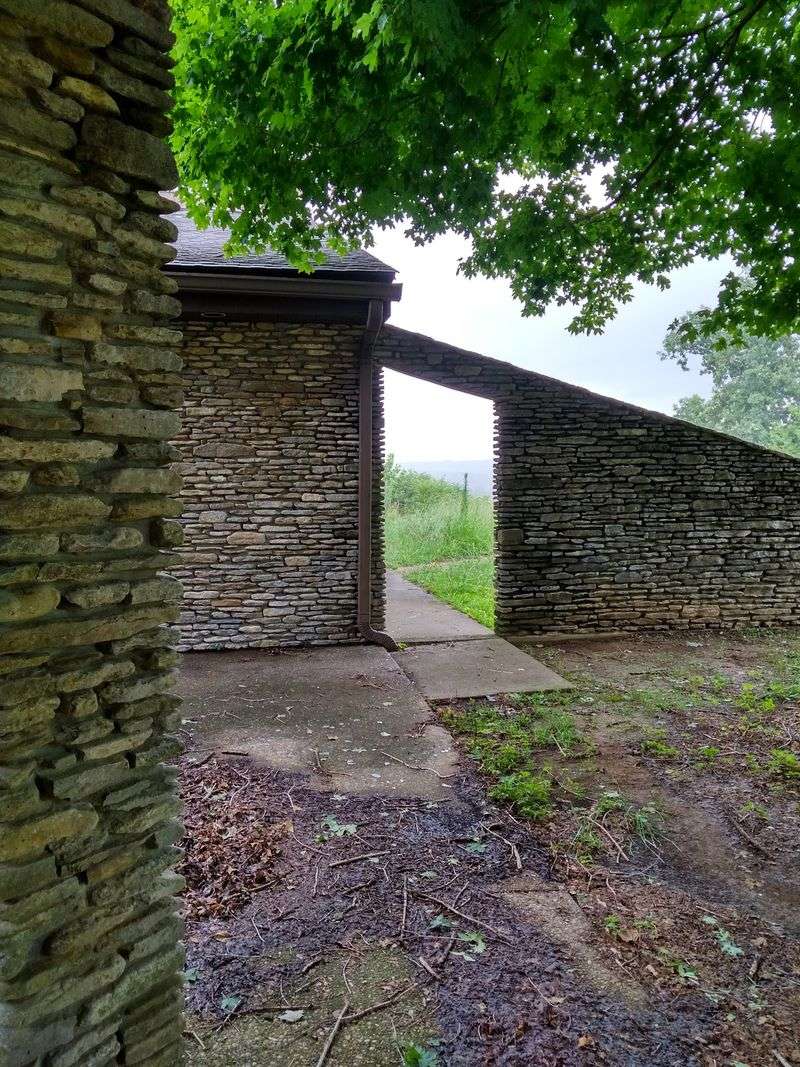
Today, you can spot remnants of past settlements scattered through the park. An old stone school building still stands, its roof slowly caving in.
On a hill beside that school sits a small cemetery. Other secluded burial grounds dot Otter Creek Road, and some are so hidden that few people know they exist.
Morgan’s Cave adds a splash of adventure to the trip. Local lore calls it a hideaway for Morgan’s Raiders, and a stream still flows through it.
The site is also believed to hold traces of the old Fitch Farm. Accounts mention a home, barns, an icehouse, a cistern, and a blacksmith shop.
Bring a trail map and a sense of detective fun. Half the joy here is spotting a stone wall and wondering who built it.
The park entrance is at 850 Otter Creek Park Rd, Brandenburg. Trails there also reward you with sweeping views of the Ohio River.
Wear sturdy boots, because some paths get rocky. History here takes a little effort to find, and that is part of the fun.
5. Raven Run Nature Sanctuary
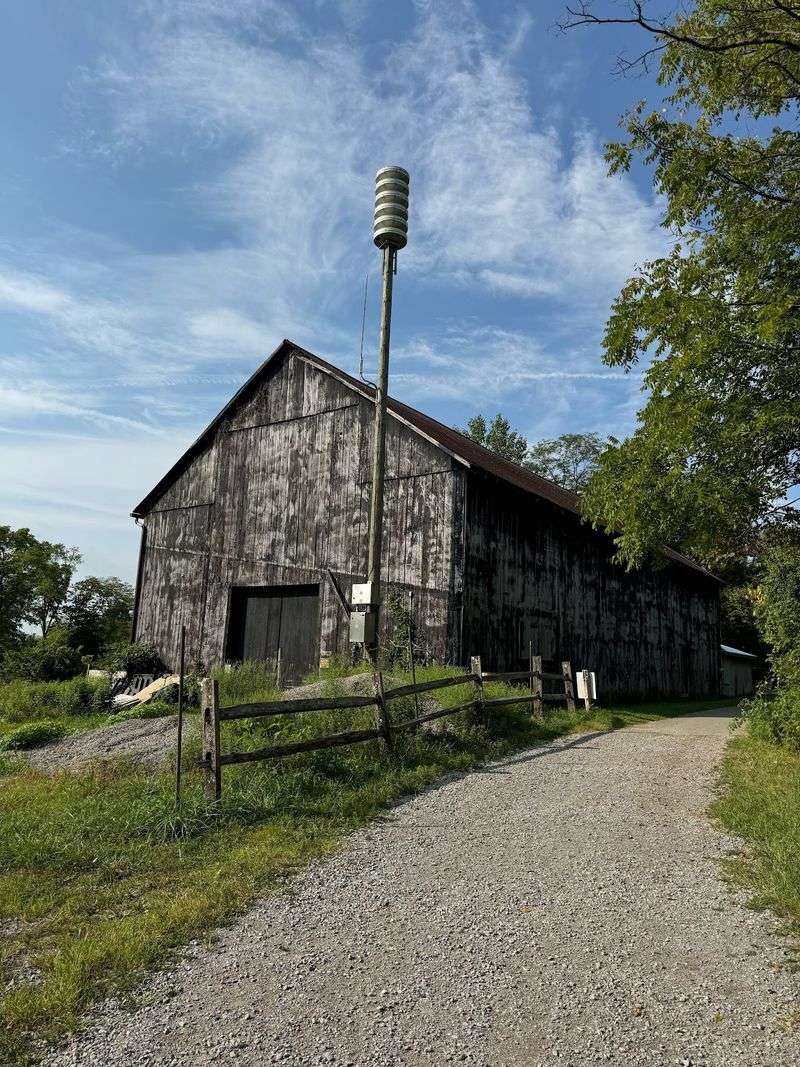
Lexington is famous for horses, but its wild side keeps a pioneer past. Raven Run Nature Sanctuary protects 734 acres along the dramatic Kentucky River Palisades.
The cliffs alone are worth the trip. Yet the real treasure is the trail of 19th-century clues left by early settlers.
First up is the site of Evans Mill. An 1833 grist mill once ground grain here for the surrounding farms.
Next, the Prather Homestead gives you a peek at farm life in the early 1800s. The land belonged to a soldier from the Revolutionary era.
Behind the homestead, a low rock wall circles the Prather family cemetery. It is said to hold 36 burials, a quiet reminder of generations who called this home.
Keep an eye out for the Moore Grave, too. It marks the resting place of Archibald Moore, another name from the area’s early days.
An old lime kiln from around the turn of the century rounds out the set. Settlers burned limestone in kilns like this to make lime for building and farming.
The sanctuary sits at 3885 Raven Run Way, Lexington. Pick up a trail map at the nature center before you set out.
Trails range from easy strolls to steeper climbs. Spring wildflowers and fall colors make each season feel like a brand-new visit.
Bring binoculars for birds and a camera for the palisades. Pets and bikes stay home, which keeps the paths peaceful for wildlife and walkers alike.
6. Mammoth Cave National Park
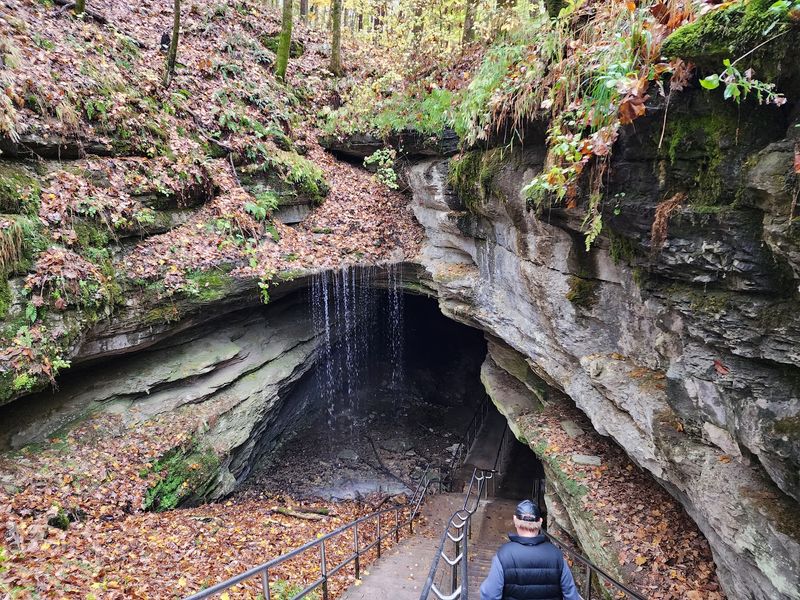
Most people come for the underground, but the land above tells its own quiet story. Before this became a national park in 1941, nearly 600 families lived here.
They were spread across about 30 small rural communities. The Civilian Conservation Corps later removed homes and fences so the land could return to wilderness.
Yet the past did not vanish completely. Historic churches and more than 80 known cemeteries remain scattered through the park.
Mammoth Cave Baptist Church and Cemetery dates back to 1827. Some burial grounds here show off impressive stonework, so slow down and look closely.
The Old Guide’s Cemetery holds a special place in cave history. Stephen Bishop, a famous early cave explorer, rests there beside three tuberculosis patients.
Those patients connect to one of the strangest chapters underground. In 1842, a doctor tried an experimental treatment by housing patients inside the cave.
Some of their stone huts still stand along cave tour routes. Seeing them in the dim light is a moment you will not forget quickly.
Start your trip at 1 Mammoth Cave Pkwy, Mammoth Cave, where rangers can point you toward trails. Cave tickets often sell out, so book ahead when you can.
Above ground, miles of hiking paths wind past sinkholes, springs, and old roads. Every trail offers a chance to stumble upon a forgotten church or stone marker.
7. Perryville Battlefield State Historic Site
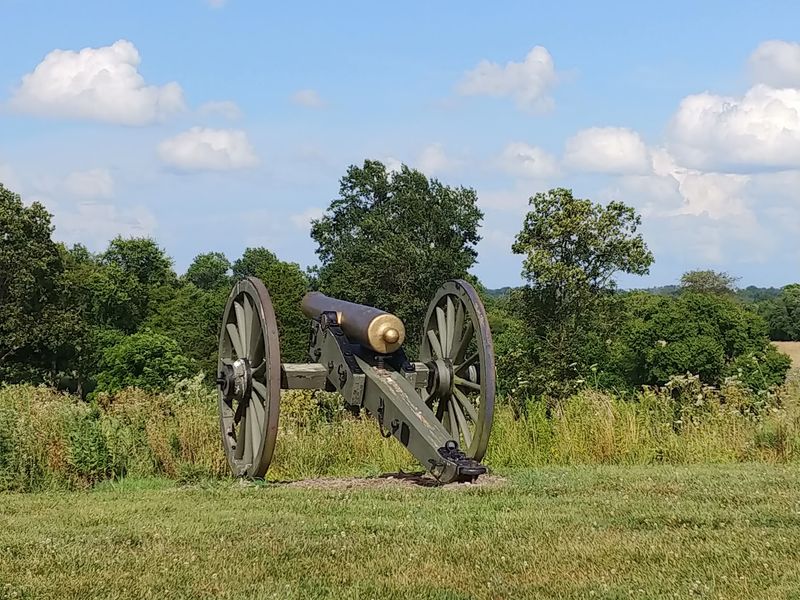
Few places look almost exactly as they did in 1862, but Perryville comes remarkably close. This 745-acre park marks the largest battle ever fought in Kentucky.
The fighting took place on October 8, 1862. Today, the rolling hills and open fields remain among the most unaltered historic landscapes in the nation.
Stand on a ridge, and you can take in views that have barely changed. Fences, farmland, and quiet creeks set a surprisingly peaceful scene.
The Confederate Cemetery began on Henry Bottom’s farm in 1862. A monument was dedicated there in 1902 to honor the soldiers buried on the site.
Many unmarked graves are also scattered on and around the battlefield. Walking the trails, you sense the weight of history in every step.
For a different chapter, follow the Sleettown Trail. It leads to the site of Sleettown, an African American community that thrived from 1865 to the 1930s.
Residents there built a lasting community and kept their own cemetery. That story of resilience adds a hopeful layer to the whole visit.
You will find the park at 1825 Battlefield Rd, Perryville. Stop at the visitor center first to grab a map and get your bearings.
Trails vary in length, so you can pick a short loop or a longer trek. Wear sturdy shoes, since the grass can get slick after rain.
Bring water and give yourself plenty of time. The views alone make it hard to leave.
8. Mill Springs Battlefield National Monument

January is not usually hiking season, yet January 19, 1862, reshaped this quiet corner of Kentucky. Mill Springs saw one of the first decisive Union victories of the era.
Today, the preserved battlefield lets you walk the same ground. Signs along the paths explain how the day unfolded, one field at a time.
Mill Springs National Cemetery is a moving stop. Of its 722 graves from that era, 408 belong to unknown soldiers.
Rows of white markers stretch across the grass in neat lines. It is a place for quiet reflection and a respectful pace.
Nearby Zollicoffer Park adds another layer. It holds a monument to Confederate General Felix Zollicoffer, a mass grave, and a cemetery.
The driving tour also leads to the historic Brown-Lanier House. Its sturdy frame gives you a sense of how local families lived in the 1800s.
Then comes the Mill Springs Mill, which is run by the Army Corps of Engineers. Its big water wheel makes a great photo, and the mill opens seasonally.
Head to 9020 W Highway 80, Nancy, to reach the visitor center. Staff there can help you map out the driving tour stops.
Plan for a mix of driving and short walks. Each stop is compact, so you can see a lot in a single afternoon.
Bring a jacket in cooler months, since the fields can feel breezy. History feels closer when you stand right where it happened.
9. Fort Duffield Park And Historic Site
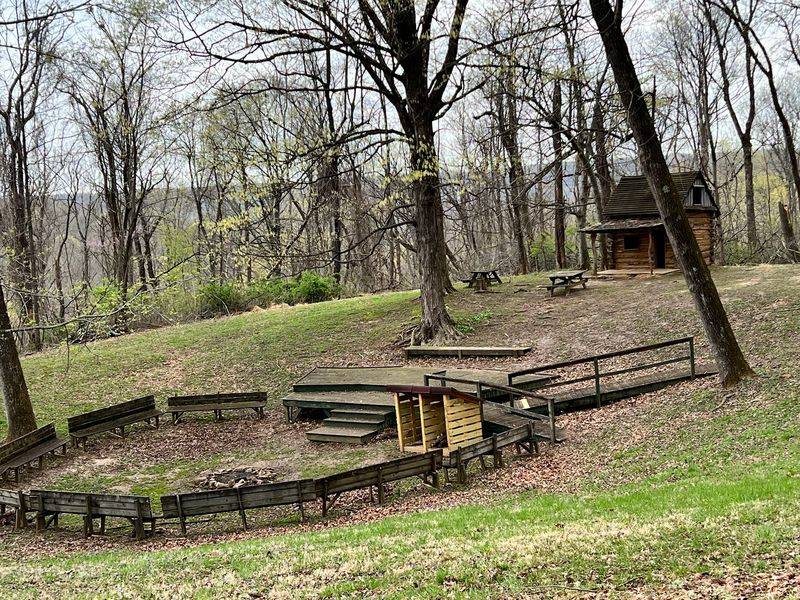
Dirt walls do not sound exciting until you learn they have held their shape for over 160 years. Fort Duffield is Kentucky’s oldest surviving Union earthen fort, built in late 1861.
It sits high above the spot where the Ohio and Salt Rivers meet. Soldiers chose this hill for its commanding view of both waterways.
The earthworks remain remarkably intact. You can walk right along the original walls, just as soldiers did long ago.
From the top, the rivers stretch out below like shiny ribbons. It is easy to see why this spot mattered so much.
On the west side of Fort Hill, a memorial cemetery honors soldiers stationed at West Point. Stone markers and a monument pay tribute to their service.
Records show that illness, rather than combat, was the biggest threat at this camp. That detail reveals how tough daily life was during that cold winter.
Getting there is part of the adventure. The site is at Dixie Hwy at Salt River Dr, West Point, and the climb up the hill gets your heart pumping.
Mountain bikers also love the trails that wind through the surrounding woods. Hikers share the paths, so keep your eyes open and your pace friendly.
Bring water, a camera, and your best imagination for the visit. The fort may be made of dirt, but its stories are rock solid.
10. Cottage Furnace
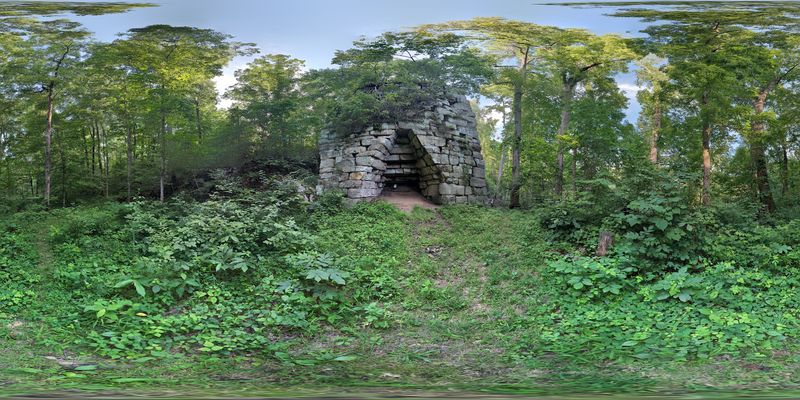
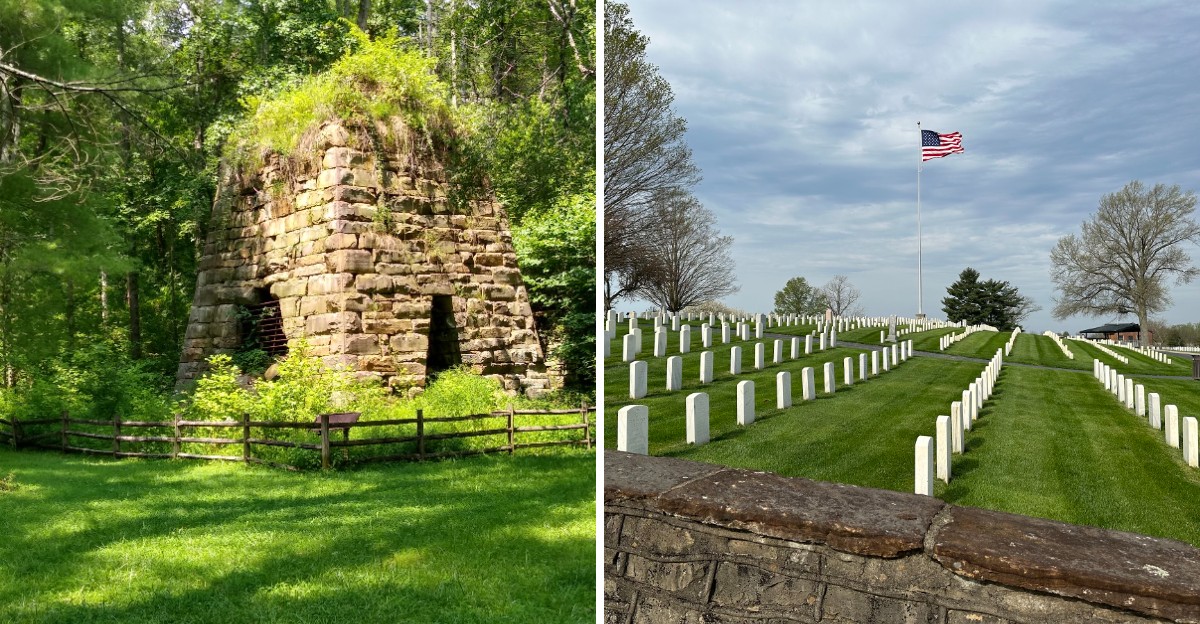
Picture a stone giant standing alone in the forest, keeping a secret in its belly. Cottage Furnace was built in 1853 and ran until 1879.
Workers stacked heavy stone blocks to create its sturdy shape. The result still stands as a striking monument to an old Kentucky industry.
It earned a claim to fame as the first hot blast furnace in its area. That meant heated air was blown in to help the fire work more efficiently.
A small community grew up around the furnace. People called that settlement Marbleyard, and the road nearby still carries the name.
Now for the twist. The furnace’s insides eventually hardened into a solid core that could not be moved.
That stubborn lump forced the furnace to shut down for good. Stories link the closing to a difficult time in the owner’s life, which adds a layer of legend.
You can find it off Marbleyard Rd, Irvine, within the Daniel Boone National Forest. A short walk brings you right to the base of the stack.
Stand close and look up at the stonework. The arches and cut blocks show serious skill from builders who had no modern machines.
Gravel roads lead the way, so a vehicle with decent clearance helps. Fall is a lovely time to visit, when leaves frame the gray stone in gold and red.
Bring a snack and enjoy the calm woods. Few places blend history and nature so well.
11. Clear Creek Furnace
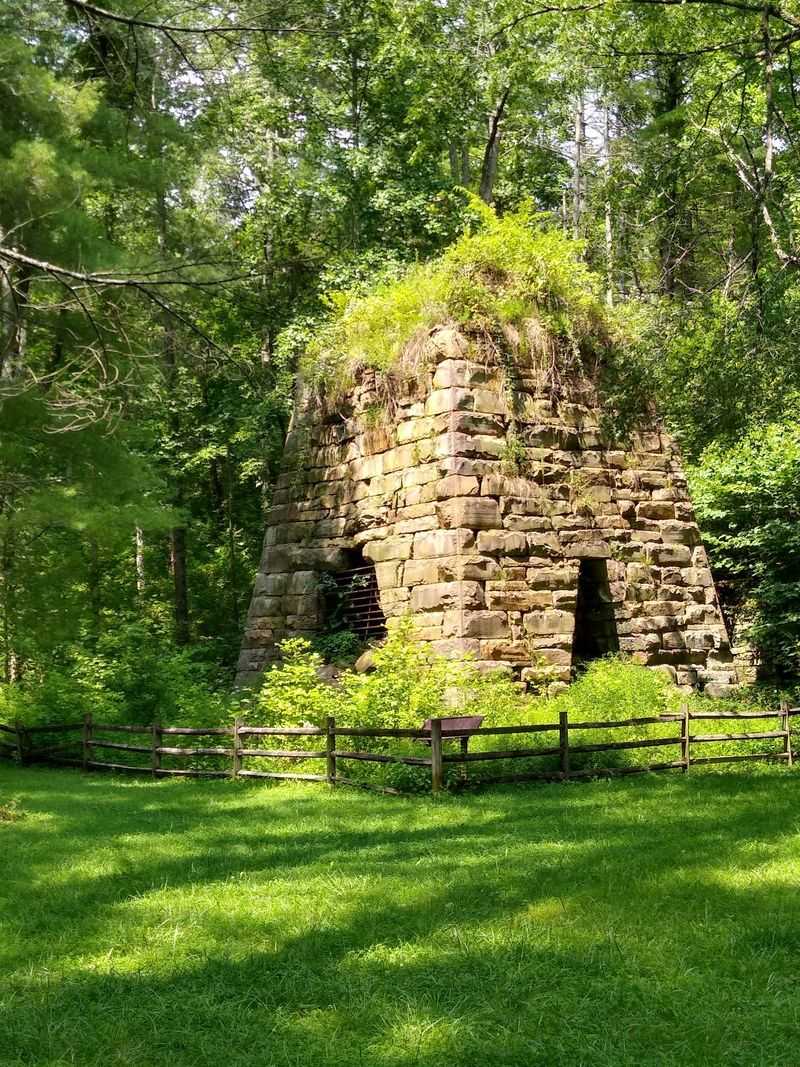
Railway cars once rolled on wheels born in these Kentucky hills. Clear Creek Furnace, built in 1839, produced iron mainly used for those wheels.
Its impressive stone stack still towers over the forest today. It ranks among the best-preserved 19th-century iron furnaces in the state.
The furnace kept working until 1875. For a stretch from 1872 to 1873, it was rebuilt and renamed Bath Furnace.
Look around, and the woods start sharing clues. Traces of old iron ore mines and worker housing still dot the surrounding land.
Here is a fun twist that sounds made up but is true. Archaeologists have found curious glass spirals made from furnace slag in the area.
Nobody expects something so pretty from industrial leftovers. Keep your eyes on the ground, but leave any finds right where they are.
The site sits along Clear Creek Rd, Salt Lick, inside the Daniel Boone National Forest. Nearby, Clear Creek Lake offers a peaceful spot for a picnic break.
Trails in the area lead to cliffs, streams, and quiet forest views. The Sheltowee Trace also passes through this part of the forest, tempting longer hikers.
Spring brings wildflowers along the creek banks. Autumn paints the ridges in shades that make the old stone stack look even grander.
Wear sturdy shoes and bring a small field guide. Between the history and the scenery, this last stop makes a fitting finale for your ghost town tour.