The Ancient Petroglyphs At The End Of This One Mile Michigan Hike Are Worth Every Single Step It Takes To Get There
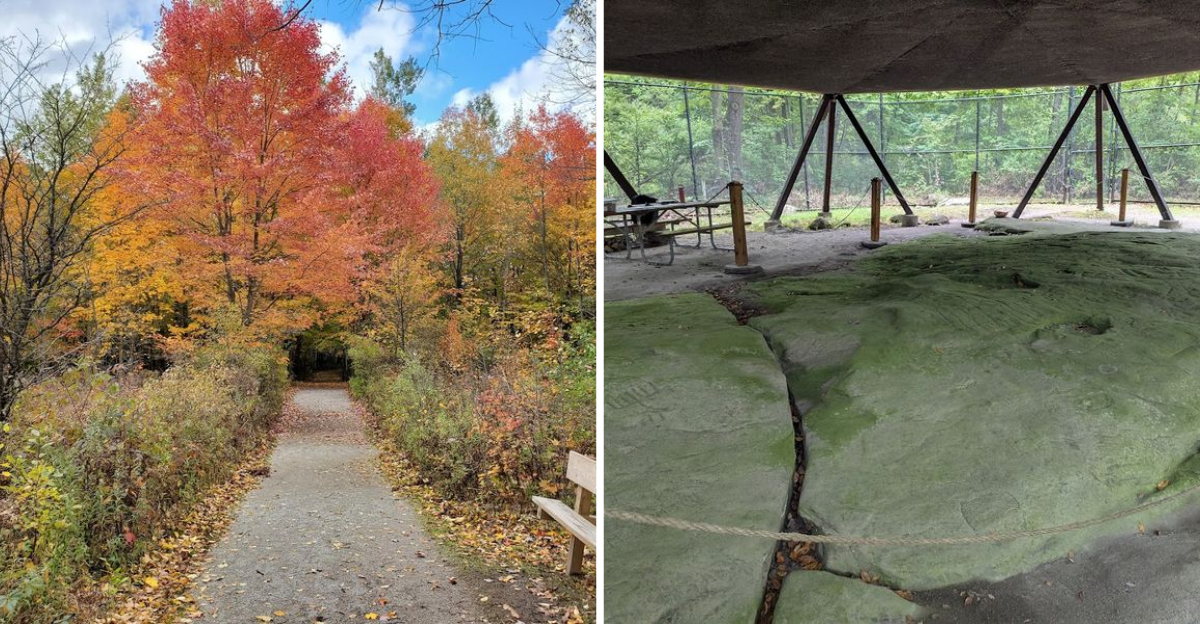
One mile sounds modest until you see what actually waits at the end. Michigan has a trail that ends with something few people truly expect.
Ancient carvings etched into sandstone a thousand years ago, still sitting in the landscape they have always occupied. The hike builds the right anticipation before the petroglyphs come into view.
Then the path opens and the covered shelter appears. I stopped walking the moment I saw it and just stood there for a while.
The silence around it feels entirely appropriate for what it is. These are not reproductions or replicas of anything.
They are the real thing, preserved and patient. Prepare yourself for something that earns the word ancient completely.
One Mile That Feels Like Much More
The trail at Sanilac Petroglyphs Historic State Park is only about one mile long, but do not let that fool you into thinking it is a quick stroll.
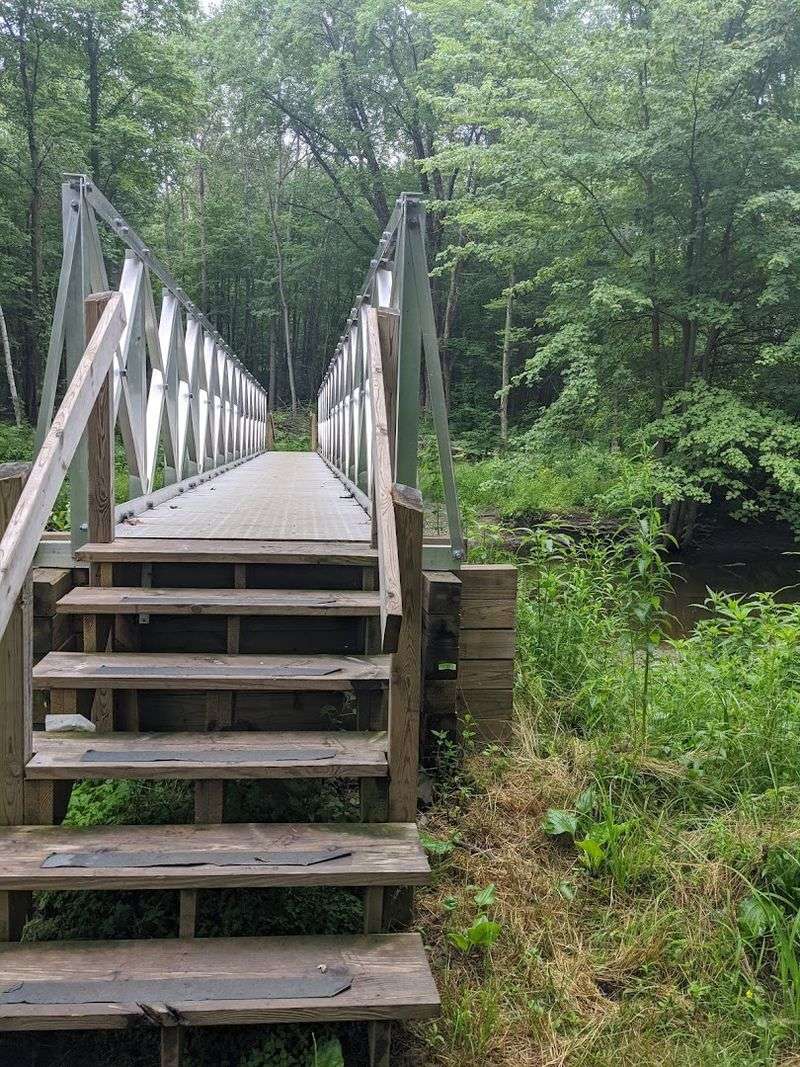
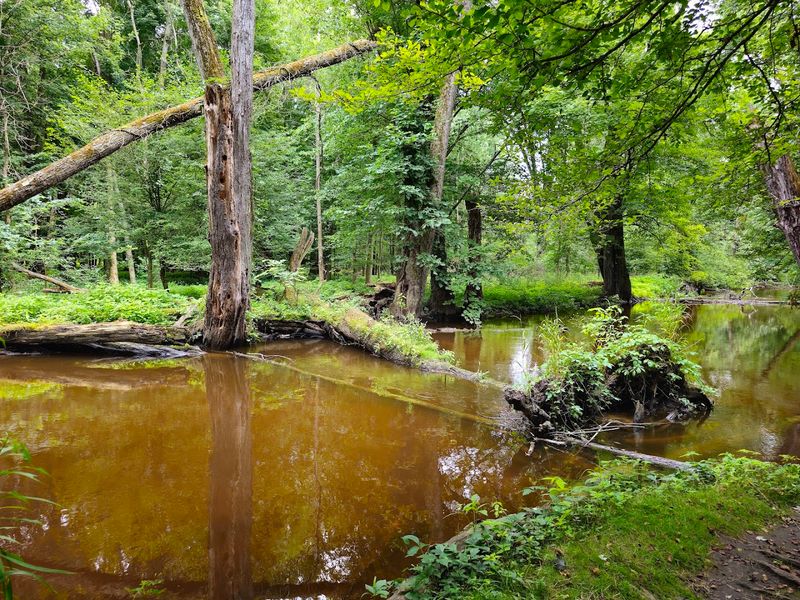
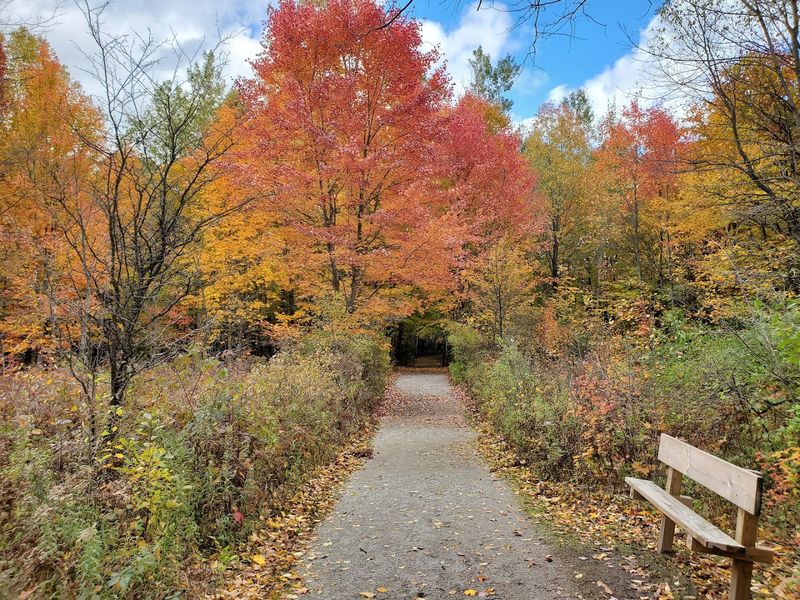
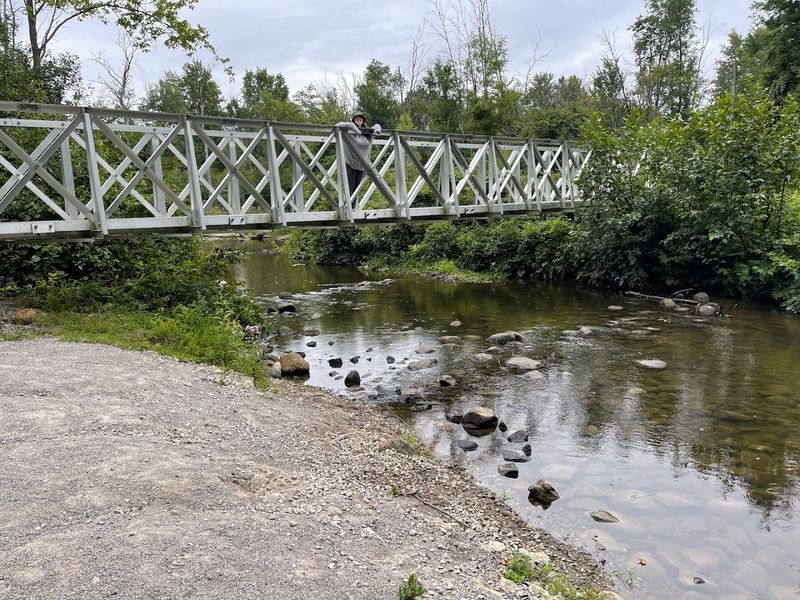
The path winds through a dense canopy of trees, crosses wooden bridges over the Cass River, and offers some genuinely beautiful stretches of woodland scenery.
I noticed right away that the ground is uneven, with wide tree roots rising across the path and scattered rocks that demand your full attention.
Wear sturdy shoes, not sandals. The trail is not paved, and some sections feel almost primeval, with cattail plants lining the riverbank and birdsong filling the air.
Benches are placed at thoughtful intervals along the route, so you can pause, breathe, and actually absorb the surroundings. The whole loop took me about an hour and a half at a relaxed pace.
Michigan forests have a particular stillness to them, and this trail captures that quality beautifully. Every step of this mile felt intentional and rewarding.
A Thousand Years Carved Into Stone
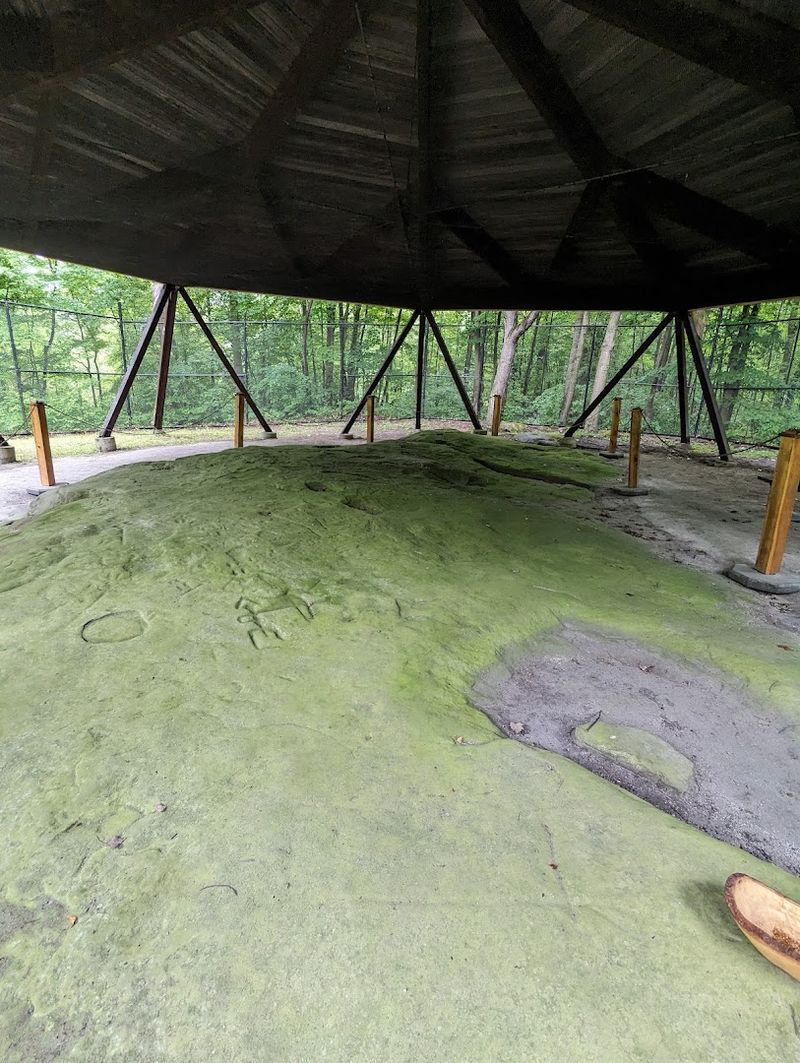
Roughly 1,000 years ago, people from the Woodland Native American culture stood in this very spot and carved images into a flat slab of sandstone.
That single fact stopped me in my tracks the moment I heard it from one of the park guides. The carvings at Sanilac Petroglyphs Historic State Park are believed to be among the only known petroglyphs in the state of Michigan, which makes this site genuinely rare.
The figures carved into the rock include human shapes, animal outlines, and symbols whose meanings are still studied and respected today.
Scholars believe the carvings held spiritual and ceremonial significance for the people who made them. Local Native American communities still visit the site and leave offerings, which I found deeply moving.
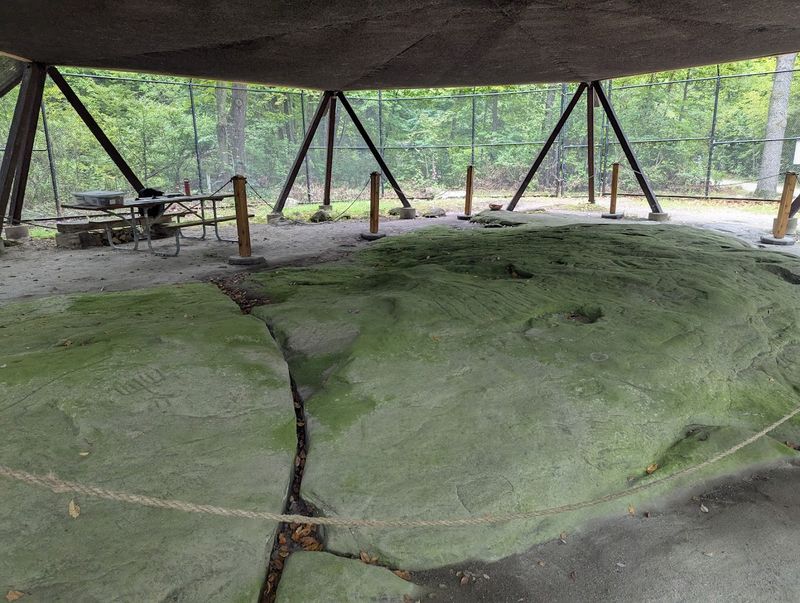
A covered shelter now protects the sandstone slab from rain and frost.
The park is located at 8251 S Germania Rd in Cass City in Michigan’s Thumb region. Standing beneath that shelter, looking down at marks made a millennium ago, felt like pressing my hand against the pulse of history itself.
Guides Who Change Everything
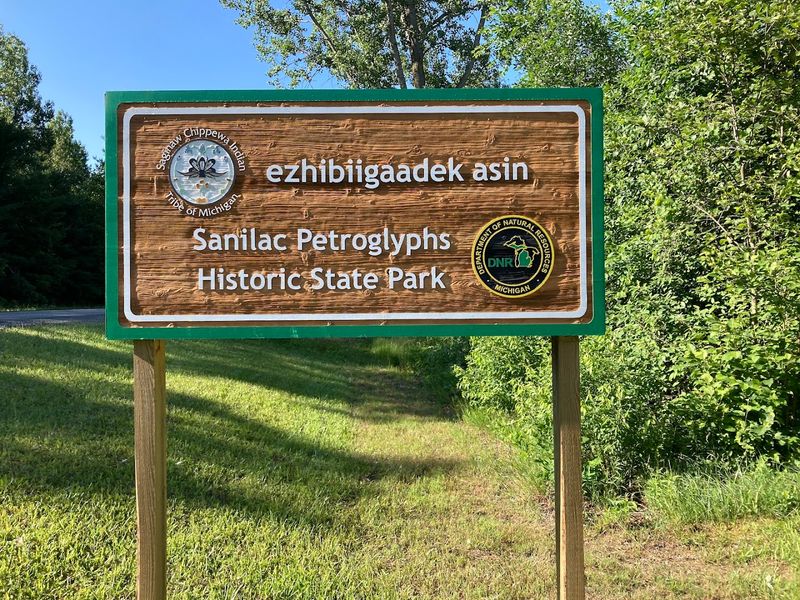
One of the best decisions I made on my visit was joining a guided tour. The volunteers and park staff who lead these tours are genuinely passionate about the history they share.
They walked our small group through each carved figure, explaining possible meanings and cultural context with a depth that no trail marker could replicate.
The guides pointed out details I never would have noticed on my own, including faint carvings that blend into the sandstone at certain angles.
Tours at Sanilac Petroglyphs Historic State Park run during open hours, which are Wednesday through Sunday from 10 AM to 5 PM. The park is closed on Mondays and Tuesdays.
Michigan has no shortage of beautiful parks, but very few offer this kind of direct, human-guided connection to ancient culture. The tour alone is worth planning your whole trip around.
Cover Goes Up After Labor Day
Timing your visit to this park matters more than you might think. The petroglyphs themselves are only accessible from late spring through early fall.
After Labor Day weekend, the sandstone slab is covered and fenced off to protect it from harsh Michigan winters. I learned this the hard way from a fellow hiker who had driven two hours only to find the carvings enclosed.
The sweet spot for visiting is between late May and early September. Summer weekends tend to bring more families and school groups, so if you prefer a quieter experience, aim for a Wednesday or Thursday morning.
The trail itself is open year-round, even when the petroglyphs are covered, making it a pleasant off-season hike.
Fall color along the Cass River is reportedly stunning, so an autumn hike still has real appeal even without petroglyph access. Michigan weather can shift quickly in the Thumb region, so pack a light layer regardless of the season.
The River That Resets Your Whole System
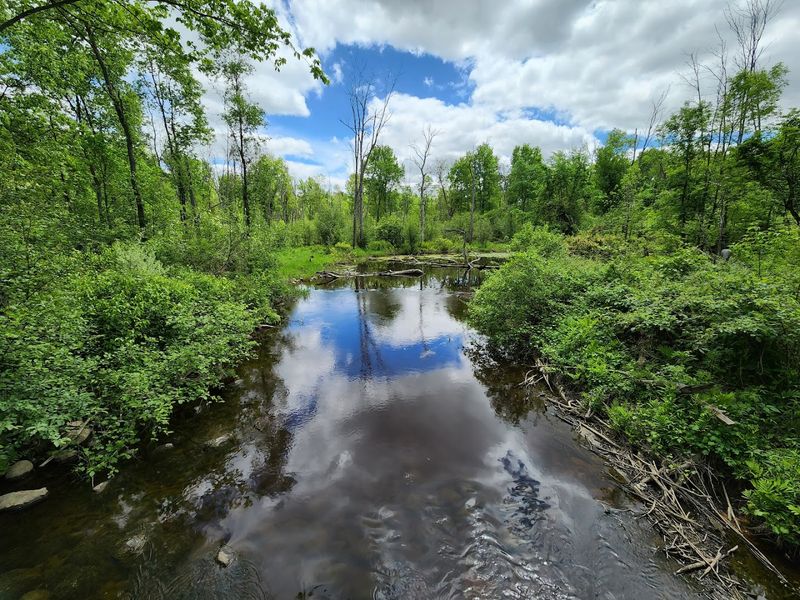
The Cass River is the quiet star of this park, and I say that with full respect to the thousand-year-old carvings nearby.
The river runs alongside and beneath the trail, crossed by wooden bridges that offer some of the most peaceful views I have found in Michigan.
Standing on one of those bridges and watching the water move slowly through the trees felt like a reset button for my whole nervous system.
The riverbanks are lined with cattails, wildflowers, and the kind of thick vegetation that hums with insect life in summer.
The sound of moving water follows you for much of the hike, which adds a natural soundtrack to the experience. I sat on a bench near the water for a good ten minutes, doing absolutely nothing, and it was perfect.
The sandstone that makes up the petroglyph slab is part of the same geological story as the river. Water and stone have shaped this landscape for thousands of years.
Don’t Forget To Bring Bug Spray
Getting the most out of this park takes a little planning. Parking is free but limited to a small gravel lot, so arriving early on busy summer weekends is a smart strategy.
The lot fills up faster than you would expect for such a low-profile destination. I arrived mid-morning on a Saturday and found a spot without trouble, but the lot was nearly full by noon.
Restroom facilities are basic but available. There is a primitive outhouse on site, which is functional and reasonably maintained.
Facilities are minimal, so you should plan accordingly, especially if you are visiting with young children. Bug spray is not optional here.
The riverside vegetation creates ideal conditions for mosquitoes, particularly in June and July.
The trail includes roots and uneven terrain that may be challenging for visitors with mobility limitations. There are no playgrounds, so this park works best for families with older kids or adults who enjoy a nature-focused outing.
Sanilac Petroglyphs Historic State Park keeps things simple and unpretentious, which is a big part of its appeal in Michigan’s often-overlooked Thumb region.
Ancient Carvings Meet Forest Light
My camera barely left my hand during this entire visit.
The combination of ancient carvings, river reflections, and dense forest canopy creates a layered visual environment that rewards anyone who pays attention.
The petroglyph shelter itself presents an interesting challenge: the carvings are best photographed in soft, indirect light, so overcast days can actually produce better images than bright sunshine.
The bridges over the Cass River are natural frames for landscape shots. I found the best light for river photography in the late morning, when sunlight filtered through the trees at a low angle.
The wide tree roots crossing the trail also make for striking foreground elements in forest shots.
Every turn on this trail offers something worth stopping for. Bring more memory card space than you think you need.
The informational trail markers are also worth photographing, as they provide historical context that enhances the story behind your images. Michigan has many photogenic parks, but few combine natural beauty with cultural history in quite the same way as this one.
Quiet Context And Real Connection
Some places are fun to visit and easy to forget. This is not one of them.
I drove home from Sanilac Petroglyphs Historic State Park thinking about those carvings for the rest of the day.
There is something about standing in a spot where people gathered centuries ago for purposes that still carry meaning today that changes the way you look at the landscape around you.
The park does not try to be flashy. There are no gift shops, no elaborate visitor centers, no crowds jostling for selfies.
What it offers instead is quiet, context, and connection. Few places this small carry this much weight. You feel it the moment you step beneath the shelter.
The knowledgeable staff, the shaded trail, the sound of the Cass River, and the ancient images in the stone all work together to create something that feels rare in modern travel.
If you have been looking for a place that combines outdoor beauty with genuine historical depth, this one-mile hike delivers far more than its modest length suggests.