The Cathedral Of The Rockies In Idaho Has Stained Glass Windows Taller Than A House
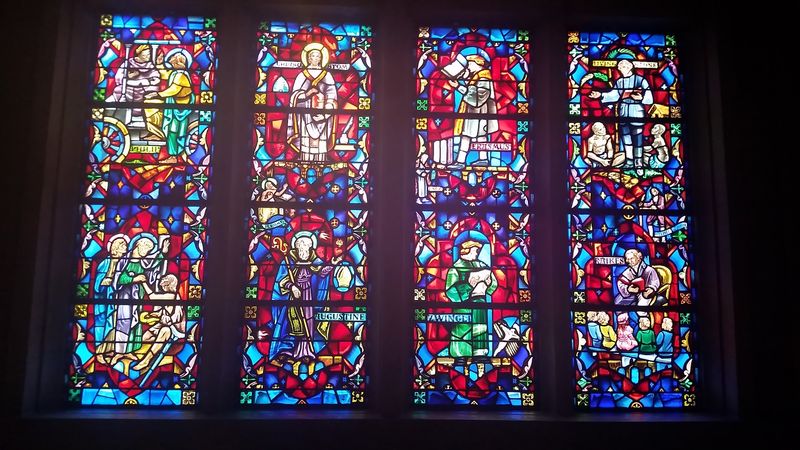
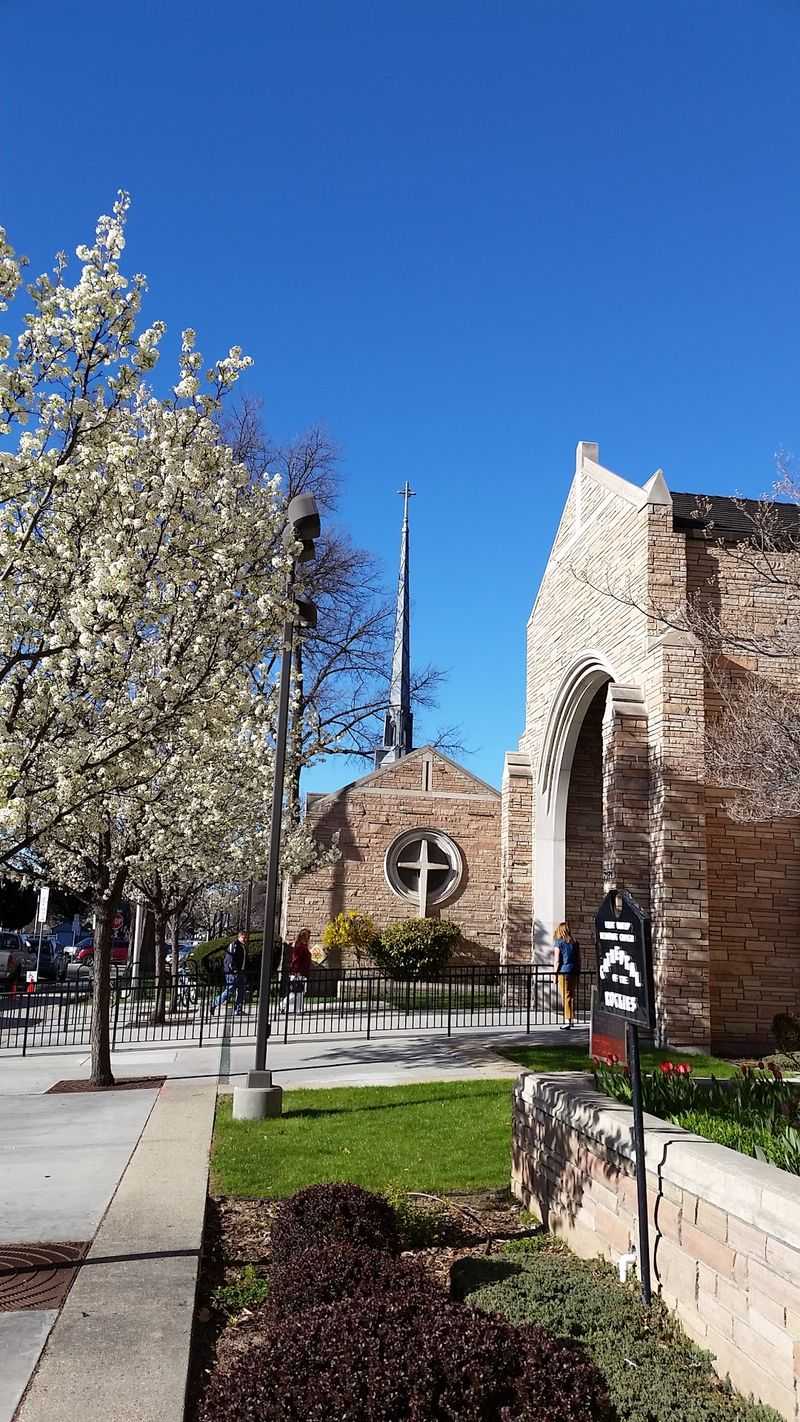
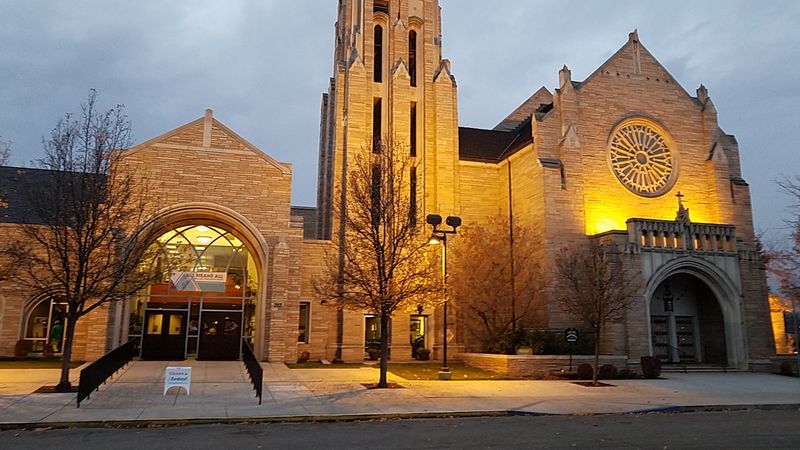
Brick bungalows, shady sidewalks, and porch swings line the blocks around one of Idaho’s most surprising churches. From the curb it reads as a handsome Gothic building, but inside, some of the stained glass windows climb about 30 feet, taller than many of the houses outside.
Those glowing panels tell stories spanning faith, history, and a change the congregation made only a few years ago. Walk in on a sunny afternoon and the whole room turns into color.
Spires Over The North End
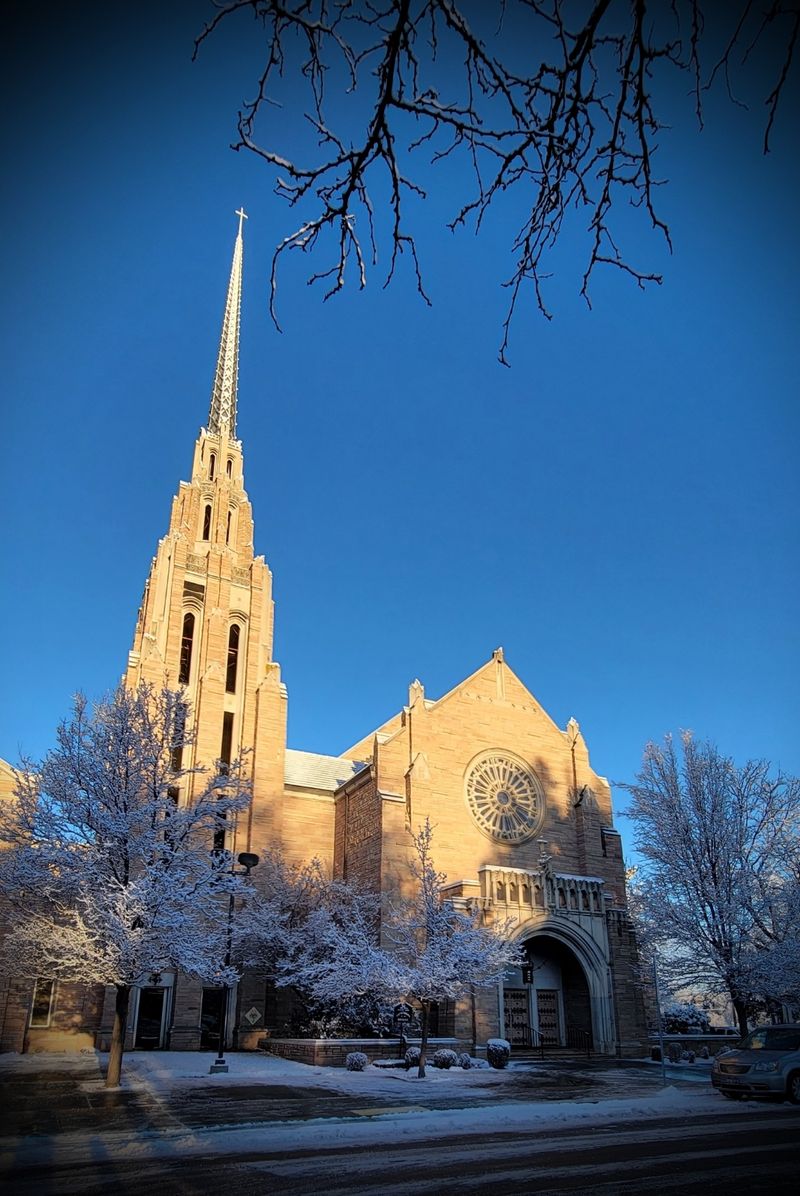
Drive a few blocks north of downtown Boise and the skyline changes fast. Office towers give way to brick bungalows, old sycamores, and porches, and then a pointed Gothic roofline climbs above it all like something borrowed from a much older city.
Officially, the building is Boise First United Methodist Church. Most people across Idaho’s Treasure Valley simply call it the Cathedral of the Rockies, a nickname that matches its size far better than the formal title does.
The setting is the historic North End, one of the capital city’s most walkable neighborhoods. Kids bike past on their way to school, dog walkers loop the block, and the church sits right in the middle of that everyday rhythm, close enough to the Idaho State Capitol to make a combined outing easy.
What pulls most first-time visitors inside, though, is the glass. Some of the stained glass windows here stretch about 30 feet tall, which is taller than plenty of the two-story homes lining nearby streets.
Stand beside one in the afternoon and the scale finally makes sense.
An active congregation still fills the pews every week, so this is a working church first and a sightseeing stop second.
Roots Planted In 1872
Long before Idaho became a state, Methodists in Boise were already gathering. The congregation traces its beginnings to 1872, back when the town was a young frontier settlement along the Boise River and statehood was still nearly two decades away.
That long history is part of why the church carries so much weight in the Treasure Valley. Generations of Boise families have marked big life moments here, from baptisms to celebrations of life, and plenty of older residents can point to the pews where their grandparents once sat.
The current building is younger than the congregation. Its Gothic Revival sanctuary was completed in 1960, giving the historic congregation a home built to match its ambitions.
You’ll find it at 717 N 11th St in Boise, where tree-lined North End streets meet the edge of downtown. The location puts it within easy reach of neighborhood cafes, the Hyde Park shopping strip, and the Capitol grounds.
For a church that passed its 150th birthday in 2022, it still feels woven into the daily life of the neighborhood rather than frozen in the past. That balance of old and new shows up everywhere once you step inside.
Two Architects, One Vision
Harold E. Wagoner and Jedd Jones had a tricky assignment in the late 1950s.
The congregation wanted a church that honored centuries of Gothic tradition, yet it also had to function as a modern building for a growing mid-century city.
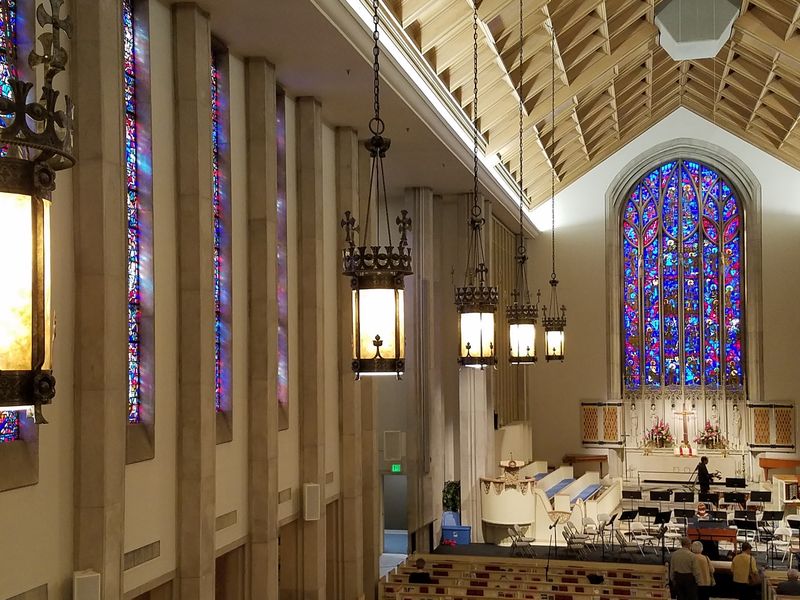
Their answer was a Gothic Revival design with a practical streak. Pointed arches, vertical lines, and a soaring sanctuary nod to the great cathedrals of Europe, while the overall plan was shaped for a busy modern congregation that finished its new home in 1960.
The most important decision, at least for visitors today, was how many windows to include. The architects filled the walls with tall, numerous openings, and that choice is exactly why the interior glows the way it does on a sunny Idaho afternoon.
Gothic architecture has always been about light. Medieval builders pushed walls higher and thinner so they could fit more glass, and Wagoner and Jones borrowed that same idea for a church in the high desert of southwestern Idaho.
Look up from the sidewalk and notice how the lines draw your eye skyward. Look up from inside and you’ll see where all that height was really headed.
Glass Taller Than Rooftops
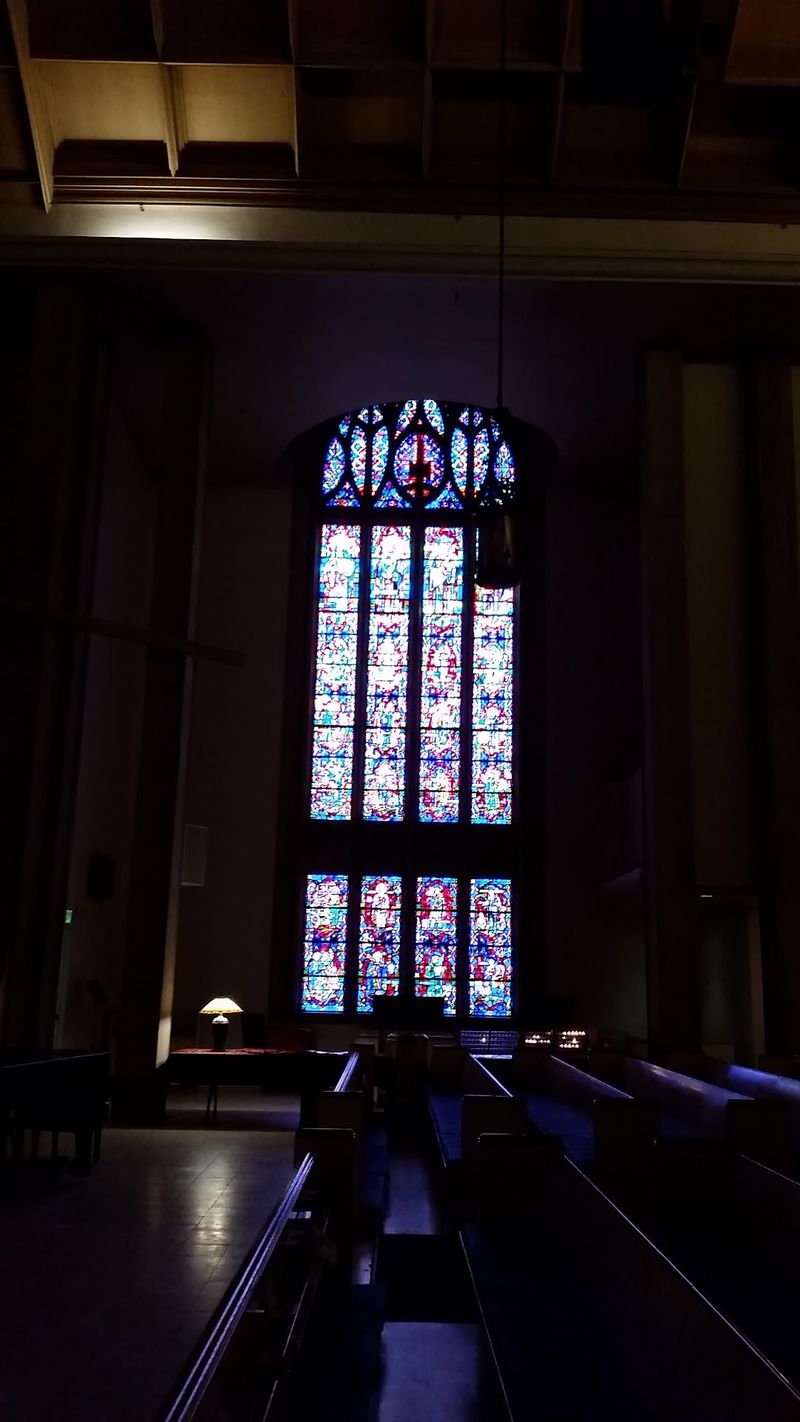
Thirty feet. That’s roughly the height of a two-story house with its roof included, and it’s also how tall some of the stained glass windows at the Cathedral of the Rockies reach.
The biggest panels live in the Parish Life Center, where they stretch across nearly the entire eastern and western walls. Instead of a wall with windows, you get something closer to a wall made of windows, with color running high overhead on both sides of the room.
Timing changes everything here. Morning sun pours through the east side and throws patches of color across the floor, while the western glass takes over as the day slides toward evening.
Photos rarely capture the scale. A phone camera flattens the height, so most people end up standing still for a minute, head tipped back, simply taking it in before trying to frame a shot.
For families driving in from smaller Idaho towns, this is the detail worth the trip. A kid who shrugs at historic buildings may still stop and point when a single window is taller than the house back home.
Bring a little patience, and let your eyes adjust before you move on.
Stories Written In Color
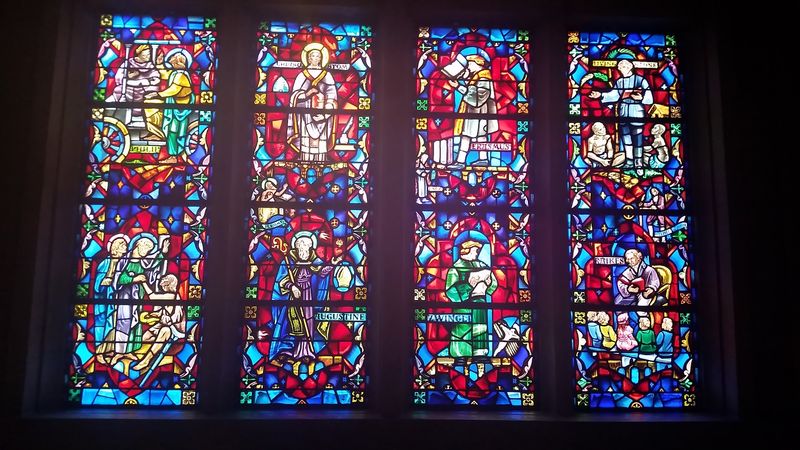
Every pane is doing more than letting in light. The windows work like giant picture books, and each one carries a piece of a larger story that ties together Biblical scenes, Christian history, and moments from American heritage.
Walk slowly and the themes start to connect. Familiar faith stories sit near figures from the long history of the church, and patriotic imagery appears in some panels too, reflecting the era when the glass was commissioned in the late 1950s.
For centuries, stained glass served as a teaching tool. Many worshippers in medieval Europe could not read, so the windows told the stories for them, and the same visual approach still works for modern visitors who wander in curious but unsure what they are looking at.
A good strategy is to pick one window and study it closely before moving on. Look for recurring symbols, the way figures are grouped, and how the artists used deeper colors to draw attention to key moments.
Tours have been offered in the past, and staff members tend to be friendly with curious guests. Asking the church office about tour options is the best way to hear the backstory behind individual panels.
A Window Rewritten In 2021
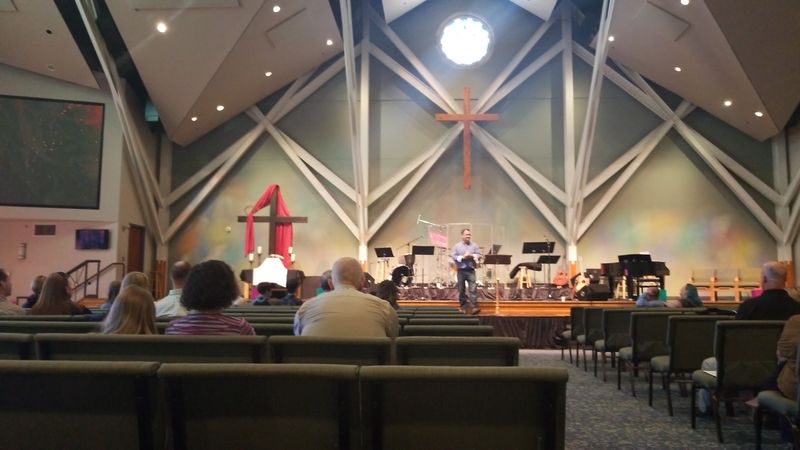
One panel from the 1958 commission once showed George Washington, Abraham Lincoln, and Robert E. Lee side by side.
It was meant to reflect American leadership, and it also mirrored a strong southern influence present in Boise at the time.
Decades later, the congregation took a hard look at that choice. After years of discussion, the church decided in 2020 to remove the image of Lee, concluding that it did not fit its mission and was unwelcome to many people in the community.
The replacement arrived in 2021. The new stained glass depicts Bishop Leontine T.
Kelly, the first African-American woman elected a bishop in the United Methodist Church, and her portrait now holds the place where the old figure once stood.
Change stories like this spark conversation around Idaho, and this one did too. Some longtime Boise residents remember the original panel, while newer arrivals may have only ever seen Bishop Kelly in that spot.
Either way, the window is a rare chance to see a historic building actively updating its own story. Glass that looks permanent turned out to be part of a conversation still unfolding in the North End.
Stop by and compare it with the surrounding panels.
Where The Organ Takes Over
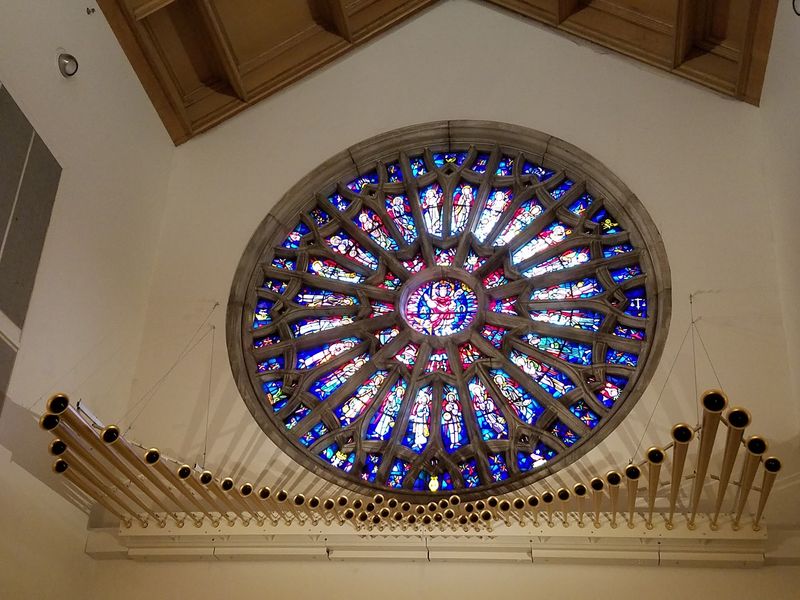
Sound behaves differently under a Gothic ceiling. Notes from the organ rise, linger, and roll back down through the sanctuary, and the organist here plays with enough skill to make people ask where the church found him.
Music runs deep in the life of the Cathedral of the Rockies. The church offers both traditional and contemporary services, so a Sunday might mean hymns and organ in one setting and a band-style worship set in another.
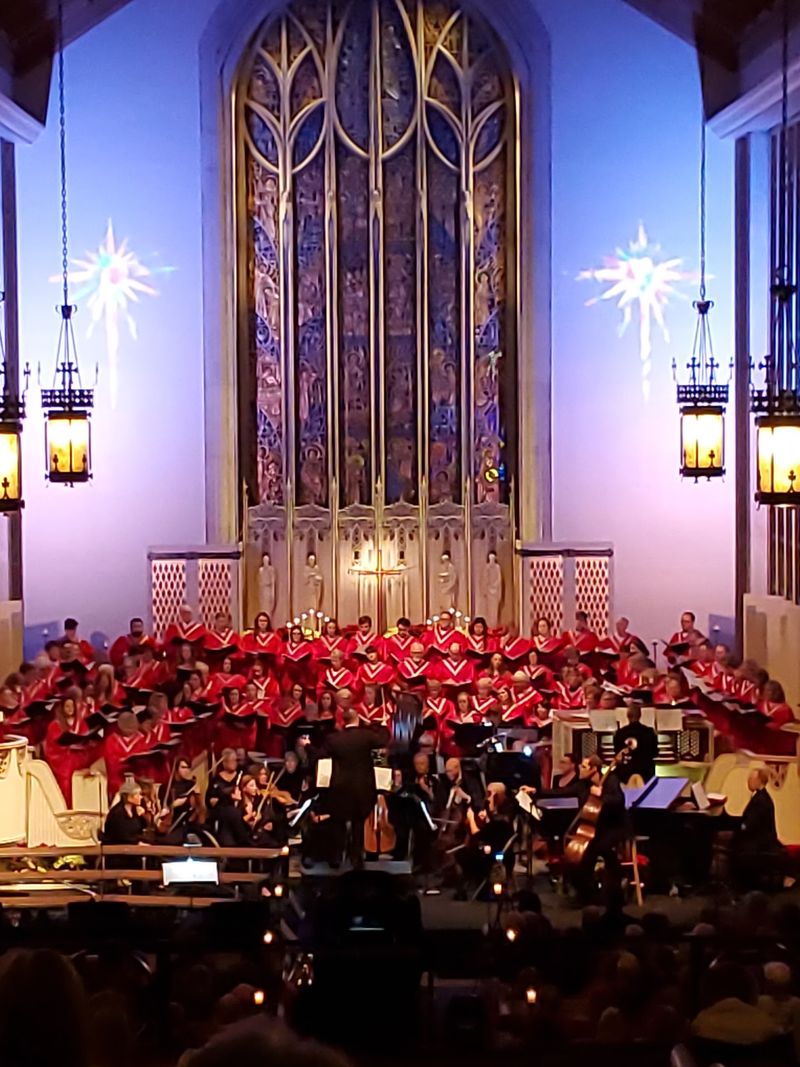
Concerts are part of the draw too. Community vocal groups and choral events have used the sanctuary, and even people who never attend Sunday services come for the performances and the acoustics.
Hearing a choir in front of those towering windows is a different experience than seeing the glass in silence. The music seems to fill every corner of the room, and the colored light adds a quiet visual layer to the performance.
Keep an eye on local event listings around the holidays and in spring, when choral concerts tend to crowd Boise calendars. Arrive early for a good seat, since the space can fill with families, music lovers, and neighbors from across the Treasure Valley.
All Means All, Literally
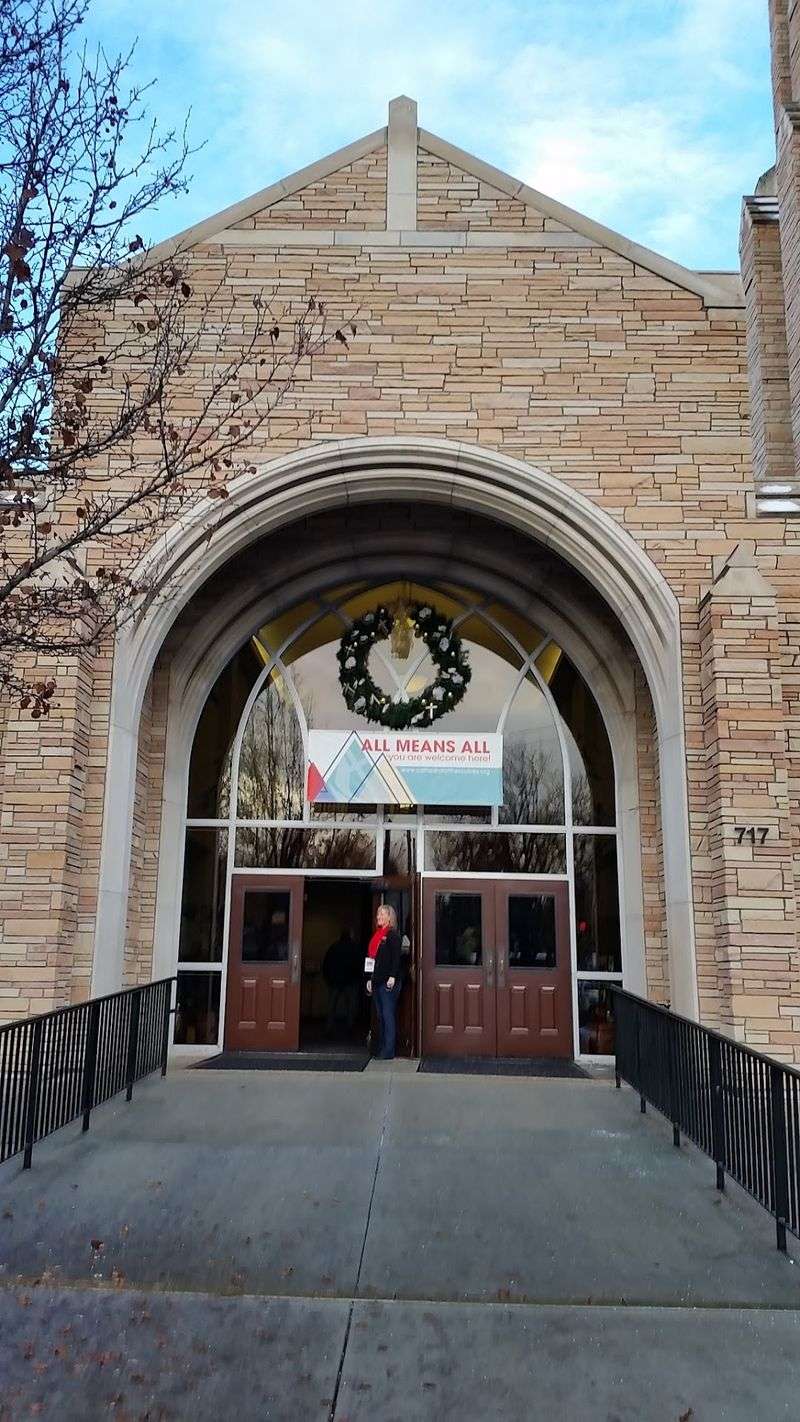
A short phrase shows up again and again around this congregation: All Means All. It is the church’s motto, and the church treats it as a working promise rather than a line on a banner.
The welcome is practical, not just spoken. The church has provided sack lunches to people in need, with volunteers working to connect unhoused guests to referrals and additional help.
Service shows up in quieter ways too. Families have received careful support when planning celebrations of life for loved ones, and a children’s program aims to give kids an energetic, kind place of their own on Sunday mornings.
The church has also stepped into community conversations many congregations avoid. It has hosted gatherings with other local churches on safety and preparedness, and sermons regularly take on social topics directly.
Not everyone agrees with the church’s public stances, and the congregation’s views on social issues are openly displayed. Visitors should know that going in, as this is a church with a clear voice.
Anyone looking for a place that makes room for a wide range of people will likely feel at home here. And yes, donuts have been known to appear on Sunday mornings.
Sunday Mornings Or Weekday Wanders
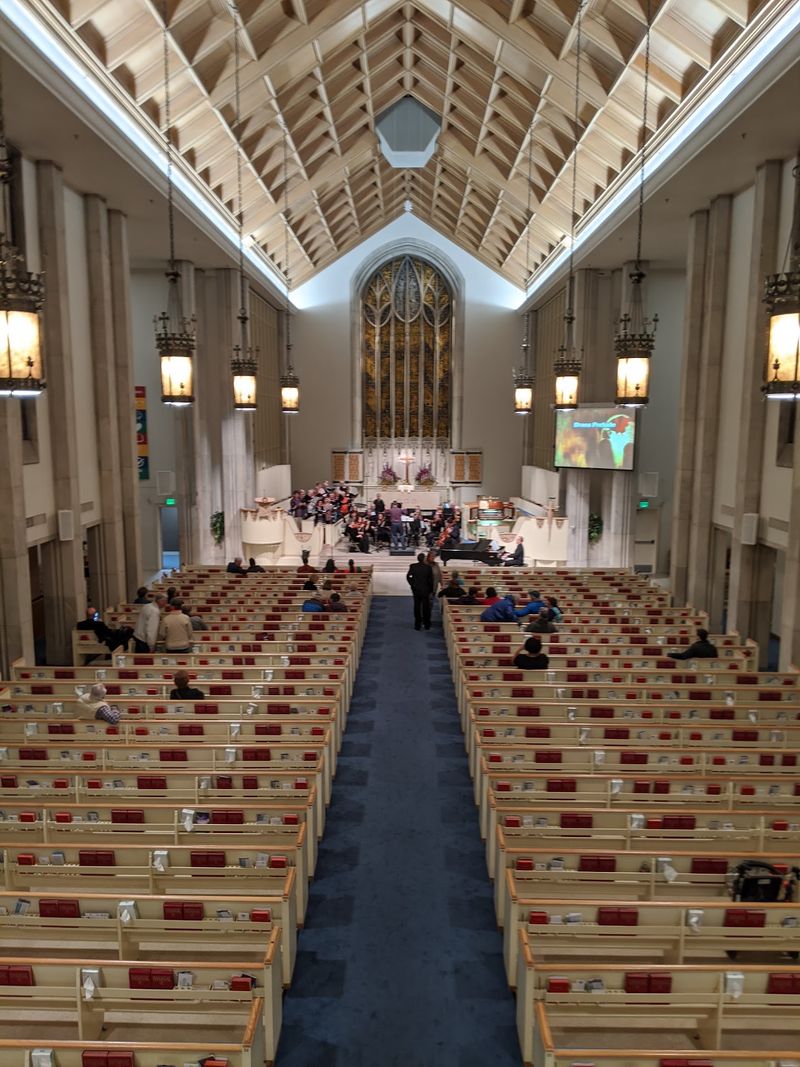
Think about what kind of visit you want before heading over. Worshippers, architecture fans, and concertgoers will each experience the building in a completely different way.
Sunday mornings are the liveliest time. Services bring music, a full sanctuary, and a friendly crowd, and newcomers are welcomed into both the traditional and contemporary styles of worship.
Weekdays feel calmer. The church office keeps regular business hours during the workweek, which can make it easier to ask about seeing the sanctuary or the Parish Life Center windows when nothing else is scheduled.
Photographers and history buffs will appreciate quieter visits, while families with young kids may enjoy Sunday, when a dedicated children’s area gives little ones their own space. Parents new to the church may want to ask a greeter how the kids program works before the service starts, since the setup and names differ from traditional Sunday school.
Retirees and slow travelers will find plenty to like, too. There is no rush and no crowd pushing you along, just time to sit in a pew and let the glass do its work.
Remember that this is an active place of worship first. Quiet voices and respectful photography go a long way.
Before You Park Downtown
Parking in the North End can take a little planning, especially with construction popping up around the neighborhood. Recent visitors attending concerts have still found spots without much trouble, so arriving a few minutes early usually solves the problem.
The church sits at 717 N 11th St in Boise, just a short walk from downtown. If you are already exploring the Capitol area or grabbing breakfast in the city center, it makes an easy add-on stop on foot.
Hours vary through the week. The office is generally open on weekdays, Sunday mornings center on worship, and Saturdays are usually quiet, so check the church’s schedule before driving in.
Services are open to the public, and a visit to see the glass makes an easy, low-key outing. Special concerts may have their own ticketing, so look at event details ahead of time.
From elsewhere in Idaho, the trip is simple. Interstate 84 brings travelers into Boise from the Magic Valley to the east or the Oregon line to the west, and the church sits only a few minutes from the main downtown exits.
Pack a light jacket in cooler months for the walk from the car.
Worth The Upward Glance
Plenty of Boise buildings are bigger, newer, or flashier. Few can match the moment of walking into a room where the windows rise higher than a house and the light changes color as the sun crosses the sky.
For locals, the Cathedral of the Rockies is a familiar North End landmark, the kind of place you drive past for years before finally stepping inside. For visitors from other corners of Idaho, from the Panhandle to the Snake River Plain, it is an easy addition to any trip to the capital.
The appeal goes beyond the glass. A congregation dating to 1872, a mid-century Gothic Revival design, a music program that draws concert crowds, and a window that was rewritten in 2021 all give the building layers worth exploring.
Not every visitor will share the church’s outlook, and that’s fine. The architecture and artistry stand on their own, and they reward anyone willing to slow down.
Plan for a sunny day if you can. Then find a quiet seat, look up, and give those thirty-foot panels a few unhurried minutes to show off what Idaho light can do.