The Charming California Island Where Private Cars Are All But Banned
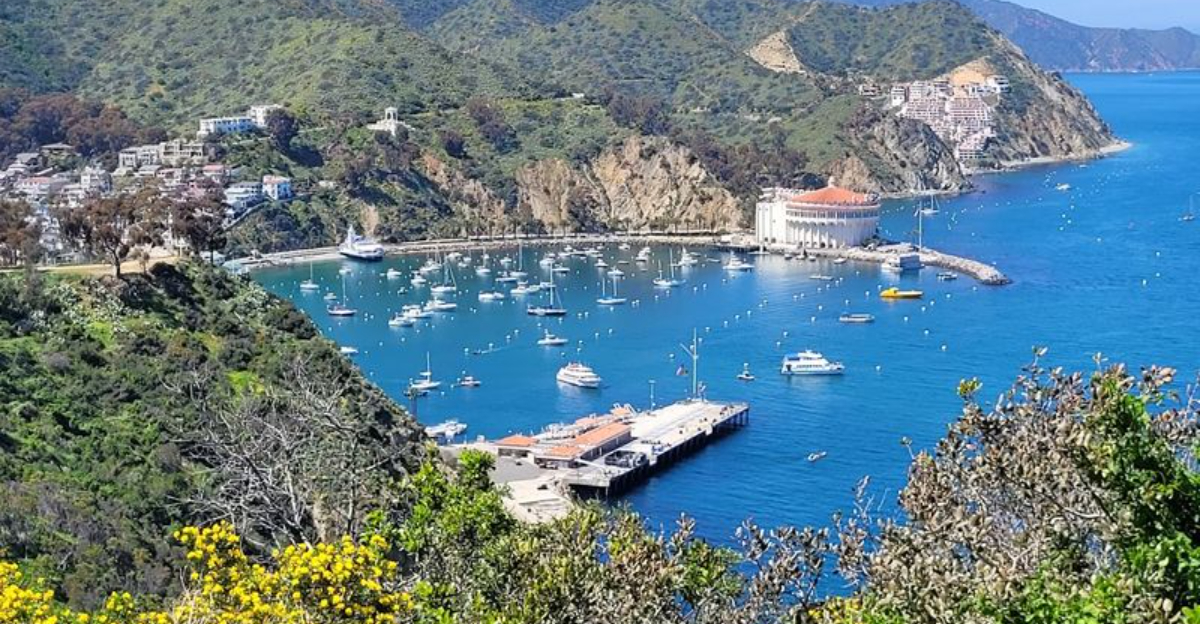
Just 22 miles off the coast of Southern California sits a small island that plays by its own rules, and it feels different right away. No traffic noise. No crowded streets. Everything moves at a slower pace.
Getting around looks nothing like the mainland. Walking becomes the default. Golf carts replace cars. The whole rhythm of the day shifts without you even trying.
It is not just about what is missing. It is about what you notice more. Ocean air feels stronger. Views stay uninterrupted. Time stretches out in a way that feels easy.
Places like this are what make California feel completely different, where slowing down is not a choice but part of the experience from the moment you arrive.
Exploring becomes simpler. Plans stay loose. The island invites you to take your time instead of rushing through it.
Off the coast, Santa Catalina Island offers a rare kind of escape, one shaped by quiet streets, open views, and a way of getting around that changes everything.
A 25-Year Wait Just To Own A Car
Few places in the United States make car ownership feel like winning a lottery, but Santa Catalina Island comes close.
Residents of Avalon who want to own a full-sized vehicle must join a waiting list that could stretch up to 25 years before their name comes up.
The policy has been in place for decades and was designed to keep the island from becoming gridlocked like many mainland towns.
The number of vehicles permitted on the island is strictly capped, and new cars are only added when existing ones are removed from the list.
This system keeps the roads quiet and the air noticeably cleaner than what most visitors are used to on the mainland.
Walking through Avalon on a weekend morning, the absence of engine noise is one of the first things that stands out.
For visitors, no car is needed at all since the town of Avalon covers just under three square miles and most attractions are within comfortable walking distance.
The vehicle restriction is not just a quirky policy but a genuine part of what shapes daily life and the overall feel of the island.
Catalina’s car culture is, by design, almost nonexistent.
Golf Carts Rule The Road
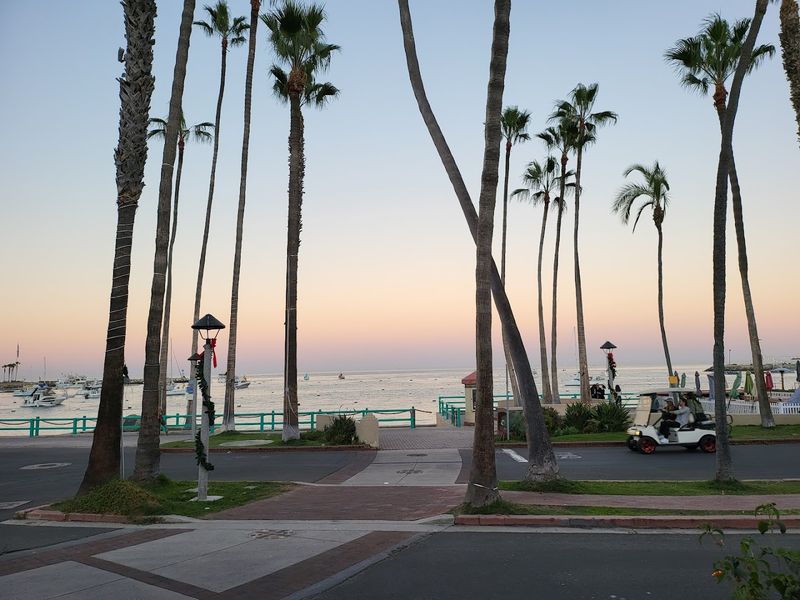
Golf carts are the closest thing to a personal vehicle that most people will ever operate on Santa Catalina Island.
Visitors can rent them by the hour in Avalon to cruise the hillside roads overlooking the harbor, and the views from those winding paths are genuinely worth the trip.
Rentals are available from several providers near the waterfront area of Avalon. There is a practical limit to keep in mind though.
Rentals are capped at a maximum of two hours per booking, so the experience is meant to be a scenic outing rather than an all-day mode of transport.
The two-hour window is usually enough to take in the upper roads and enjoy the panoramic views of the Pacific Ocean stretching out below.
Golf carts are also used by island residents for everyday errands, giving Catalina streets a relaxed, almost resort-like rhythm that feels very different from the pace of a typical California city.
Children, older visitors, and anyone who prefers not to walk long distances tend to find golf cart rentals especially useful.
Booking in advance during peak summer weekends could save time since availability tends to tighten up quickly on busy days.
Avalon: A Town Small Enough To Walk In An Afternoon
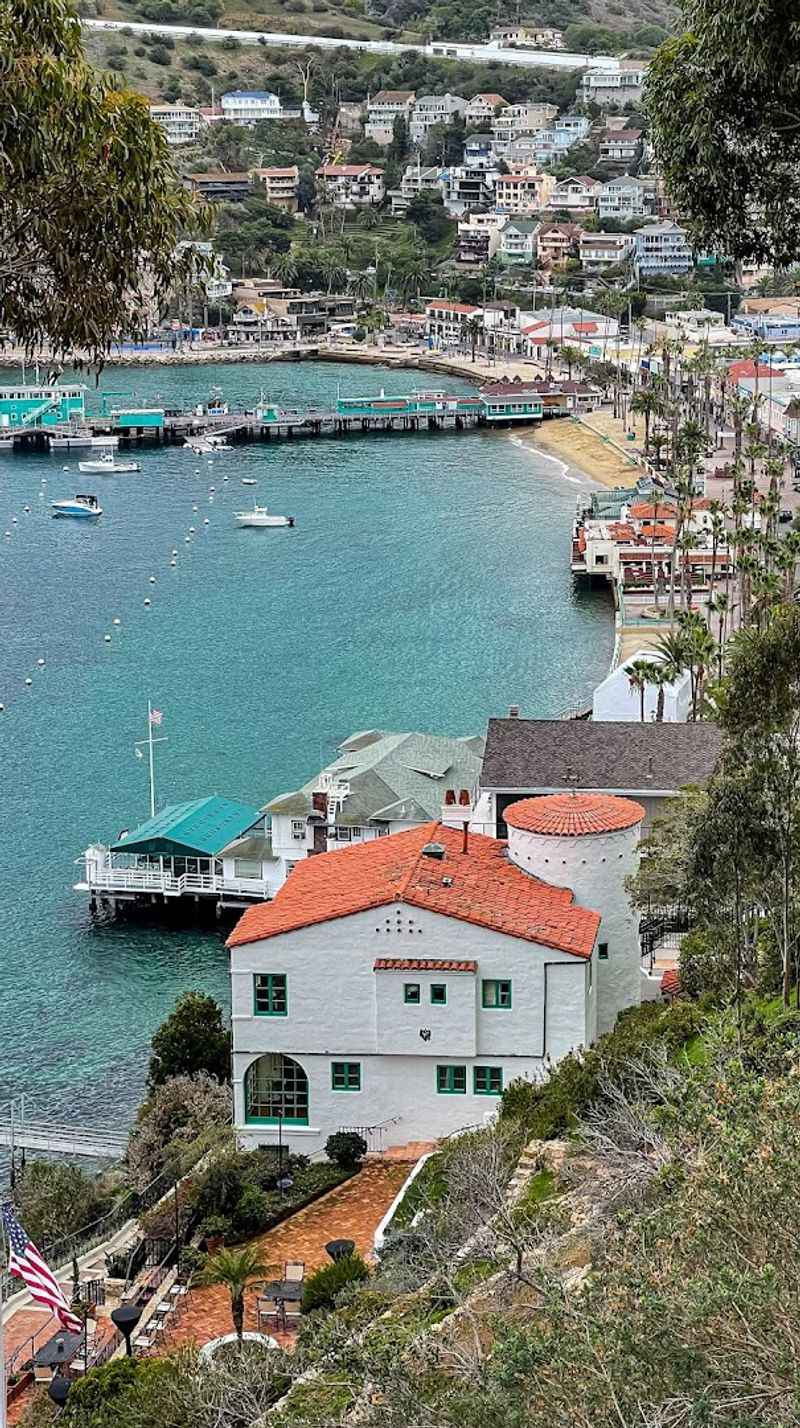
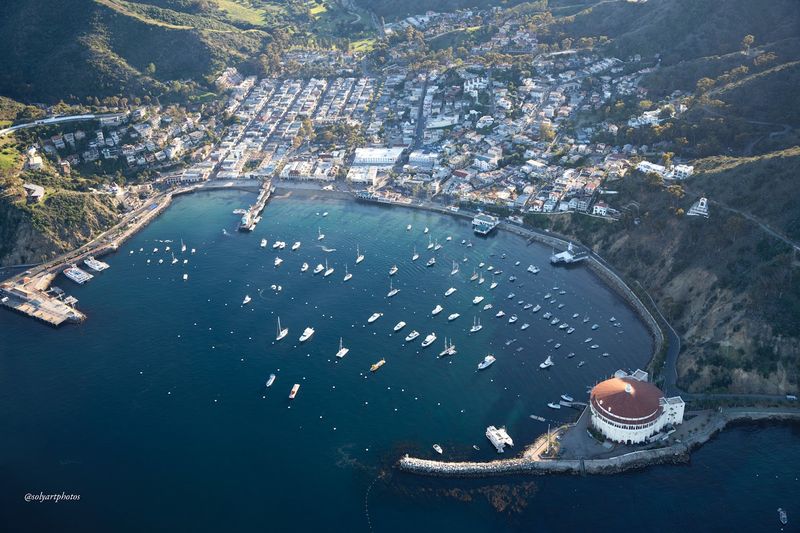
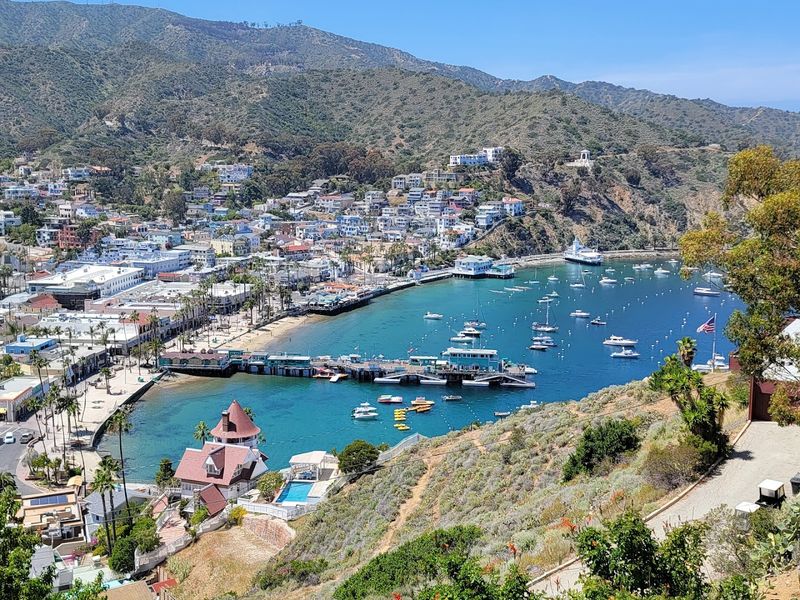
Avalon is the only incorporated city on Santa Catalina Island and also the southernmost city in Los Angeles County.
The entire town covers just under three square miles, making it one of the most compact and walkable communities in California.
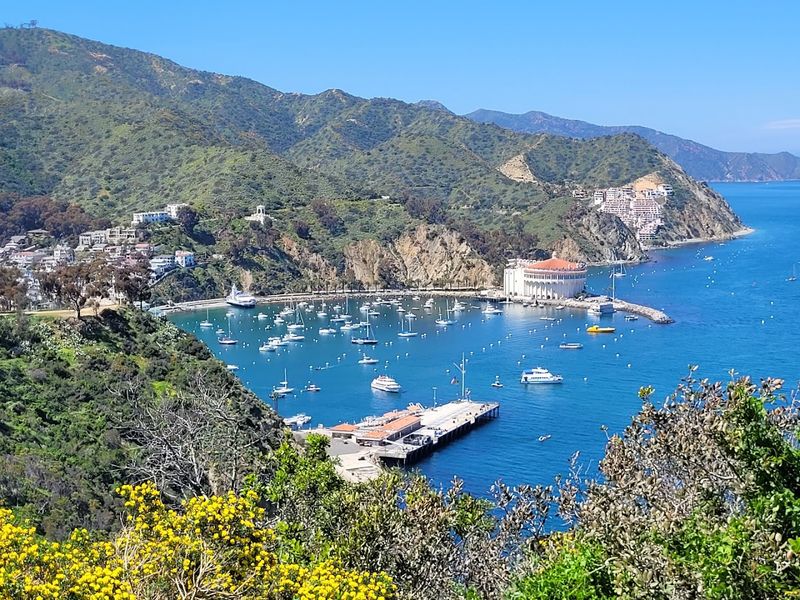
From the ferry dock to the famous Catalina Casino building, most of Avalon can be explored on foot without breaking a sweat.
The waterfront promenade is lined with shops, restaurants, and casual eateries, all within a short stroll of each other.
Side streets climb gently up into residential hillsides where small cottages and bungalows sit tucked between flowering plants and ocean views.
The pace of life here is noticeably unhurried compared to the mainland, and that slowness tends to be contagious after just a few hours.
Families with younger children often appreciate how manageable the town layout is since there is no need to navigate a car, find parking, or cross busy intersections.
Older visitors and those with limited mobility may find the hillside streets a bit steep in places, so flat waterfront routes are always a reliable option.
Avalon rewards slow exploration more than rushing, and the town feels most alive in the late morning when foot traffic picks up near the harbor.
Two Harbors: The Quiet Side Of The Island
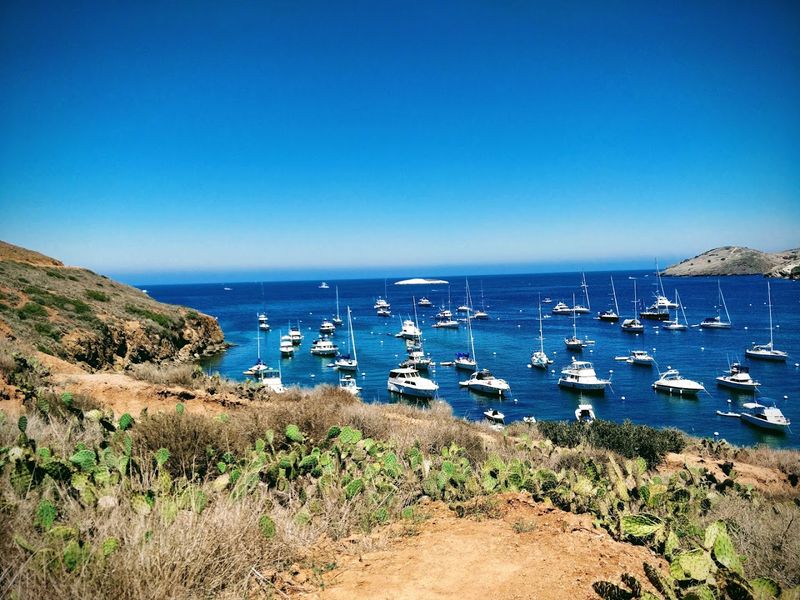
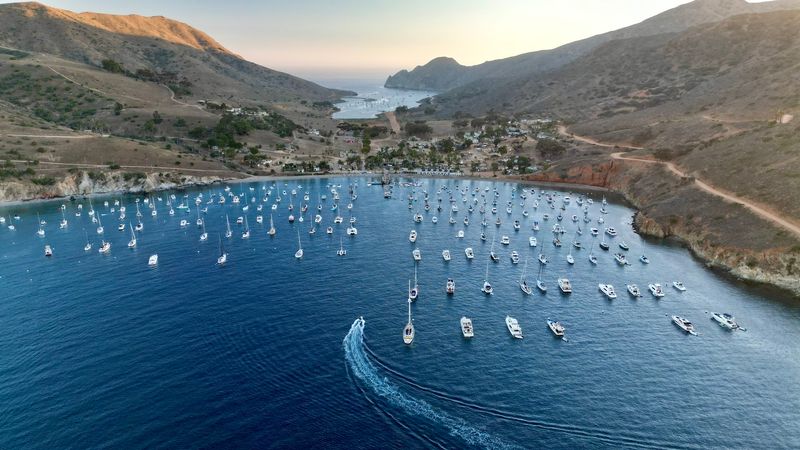
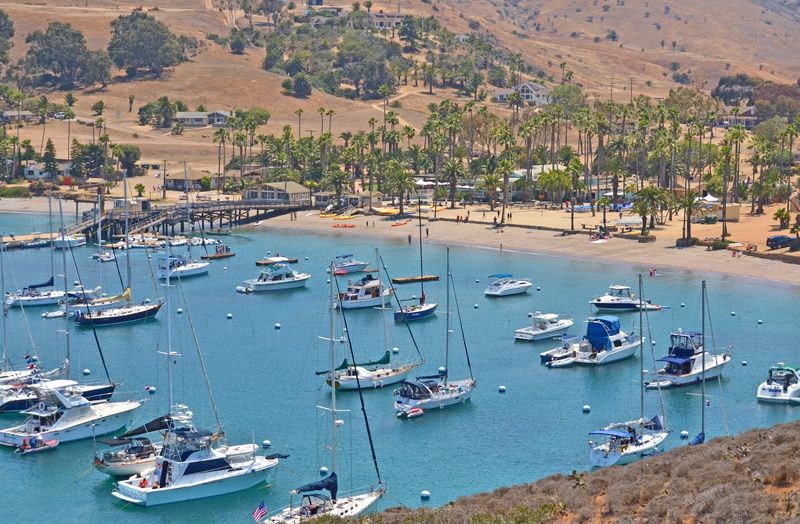
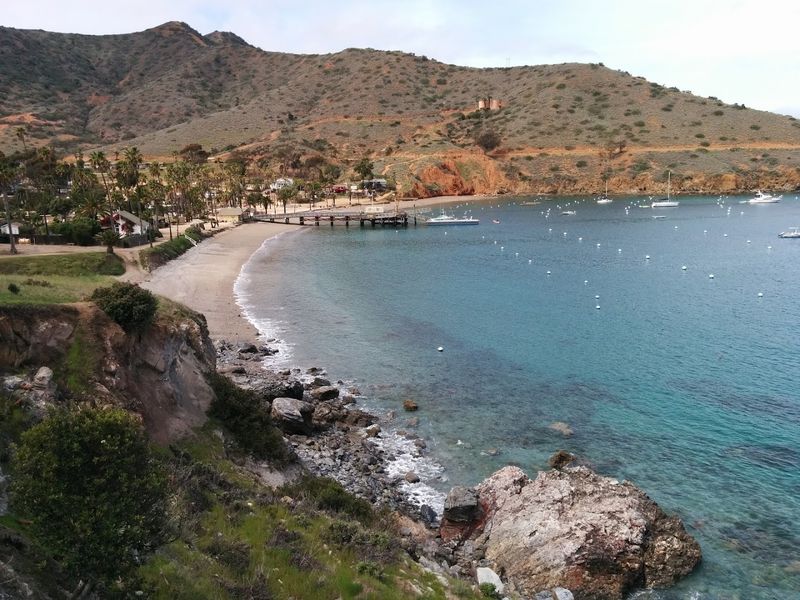
On the narrow isthmus connecting the two halves of Santa Catalina Island sits Two Harbors, a small and remote village that feels worlds away from the relative bustle of Avalon.
The community is accessible by ferry from Avalon or by boat from the mainland, and it draws visitors who are looking for hiking, kayaking, and a quieter pace of island life.
There are no paved roads for cars here either, which reinforces the stripped-down, back-to-nature atmosphere.
The landscape around Two Harbors is rugged and largely undeveloped, with trails leading into the interior of the island where the Catalina Island Conservancy manages a large portion of the land.
Bison, which were brought to the island decades ago for a film shoot and never removed, are sometimes spotted in this area.
Seeing one of these large animals grazing in the California coastal scrub is a surprisingly memorable experience.
Camping is available near Two Harbors for those who want to spend the night under the stars with the Pacific on both sides of them.
The village has a small restaurant and basic amenities, but the draw here is clearly the outdoors rather than dining or shopping.
Two Harbors is best suited to visitors who enjoy unplugging and spending time outside.
The COAST Shuttle: Public Transit Island Style
Getting around Avalon without a car or golf cart is made easier by a public transit service called COAST, which operates as an on-demand, point-to-point shuttle system.
Fares start at just two dollars per rider, making it one of the most affordable transportation options on the island.
The service uses small vans and shuttle vehicles suited to the narrow roads of Avalon.
COAST functions similarly to a rideshare service in that passengers request a pickup rather than waiting at a fixed bus stop on a set schedule.
The system is designed to serve both residents and visitors, and it tends to be especially useful for those staying farther from the waterfront or needing to reach the upper parts of town.
Response times can vary depending on how busy the island is on any given day.
For visitors who prefer not to rent a golf cart or who find the hillside streets too steep for comfortable walking, COAST offers a practical and budget-friendly alternative.
The drivers are generally familiar with the island and can offer guidance on where to go.
Checking current COAST operating hours before arriving is a good idea since schedules could shift during off-peak seasons or holidays.
Taking The Ferry From The Mainland
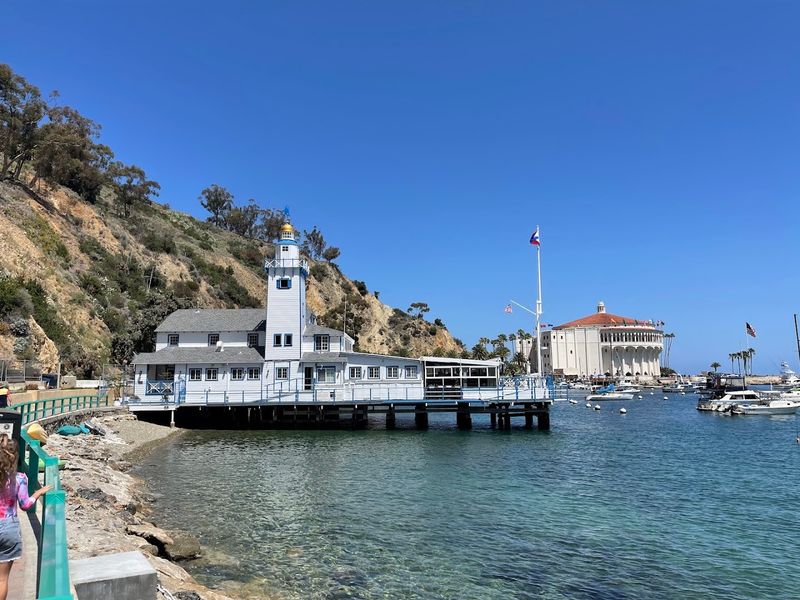
Reaching Santa Catalina Island from the mainland involves a ferry ride that most visitors find to be part of the experience rather than just a means of getting there.
The most common departure point is Long Beach, California, and the crossing typically takes about one hour depending on sea conditions.
Catalina Express is the primary ferry operator serving the route and runs multiple departures daily.
Other departure points include San Pedro and Dana Point, giving visitors from different parts of Southern California some flexibility in how they plan their trip.
Seats can be reserved in advance online, which is strongly recommended during summer weekends and holidays when ferries tend to fill up quickly.
The upper deck of the ferry offers open-air seating with views of the California coastline and, on clear days, the island itself coming into view well before arrival.
Motion sickness is worth planning for since the open ocean crossing can be bumpy depending on wind and swell.
Over-the-counter motion sickness remedies taken before boarding tend to help for those who are sensitive to boat travel.
Arriving at the Avalon ferry terminal and stepping onto the dock with the harbor spread out ahead is one of those small travel moments that tends to stick in the memory.
No Car Rentals Available On The Island
Car rental agencies simply do not exist on Santa Catalina Island, and that is by design rather than oversight.
The island’s vehicle cap means there are no fleets of rental cars waiting at the ferry terminal the way there might be at an airport or in a typical tourist town.
Visitors who arrive expecting to pick up a rental and drive around will need to adjust their plans quickly.
The absence of car rentals is not as limiting as it might initially sound.
Avalon is genuinely small enough to navigate on foot, and for anyone wanting to cover more ground, golf carts, bicycles, and the COAST shuttle cover most practical needs.
Bicycle rentals are available in Avalon for those who enjoy pedaling at their own pace.
Bringing a personal vehicle to the island via the ferry is also not permitted for standard visitors, which means everyone arrives on equal footing in terms of transportation.
The policy reinforces the island’s pedestrian-first culture and keeps the streets calm even during peak tourist seasons.
For many visitors, the novelty of spending an entire day exploring a California destination without ever needing a car ends up being one of the most refreshing parts of the trip.
The Catalina Casino: A Landmark That Is Not A Gambling Hall
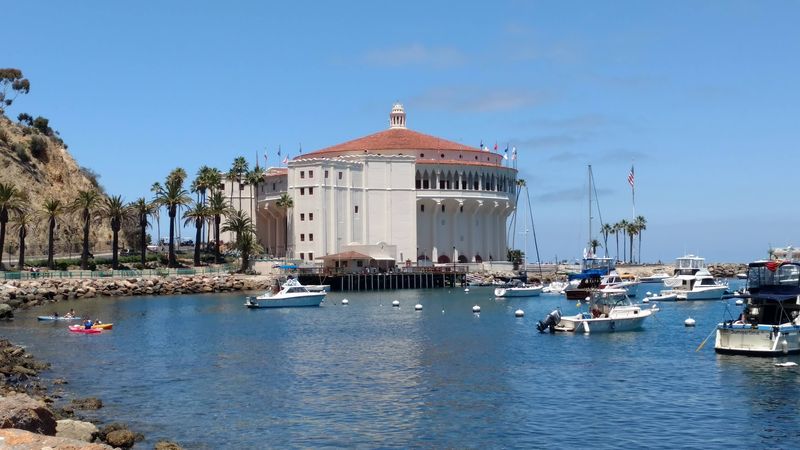
One of the most recognizable structures on Santa Catalina Island is the Catalina Casino, a large circular white building that sits prominently at the edge of the Avalon harbor.
Despite its name, the building has never been used for gambling.
The word casino comes from an Italian term meaning gathering place, and the building was constructed in 1929 as an entertainment and community venue.
The Catalina Casino is located at 1 Casino Way, Avalon, CA 90704, and it houses a 1,184-seat movie theater on the ground floor along with a ballroom on the upper level that was once one of the most famous big-band dance venues in the country.
The theater still operates and shows films to this day, making it one of the oldest continuously operating movie theaters in California.
The Art Deco architecture and hand-painted murals inside the building are genuinely worth seeing even for visitors who are not attending a film or event.
Guided tours of the Casino are available and provide context about the building’s history and its role in shaping Catalina’s cultural identity.
The exterior is lit up beautifully at night and is visible from most points along the Avalon waterfront.
Arriving by the harbor at dusk with the Casino illuminated in the background is a classic Catalina arrival experience.
The Cyclone Boat: Traveling Between Avalon And Two Harbors
For visitors who want to experience both Avalon and Two Harbors during a single trip, the Cyclone Power Boat offers a direct connection between the two communities.
The ride takes approximately 40 minutes and follows the Catalina coastline, offering views of the island’s rugged sea cliffs and kelp-rich waters.
It is a more scenic and dynamic alternative to retracing the ferry route back to the mainland.
The boat runs on a schedule that can vary by season, so checking current departure times before planning a same-day round trip between the two towns is important.
Seats are limited and the service can fill up during peak summer months, making advance reservations a practical idea.
The journey itself passes through some of the most visually striking sections of the island’s coastline.
Traveling from Avalon to Two Harbors by boat gives a useful sense of just how large and undeveloped most of Santa Catalina Island actually is.
The stretch of coastline between the two communities is almost entirely wild, with no visible development for long portions of the trip.
Passengers who sit on the outer deck tend to get the best views but should bring a light jacket since the ocean breeze on the water can be noticeably cooler than temperatures on land.
Protecting The Environment: Why The Car Ban Exists
The vehicle restrictions on Santa Catalina Island are not just about keeping traffic manageable in a small town.
They serve a broader environmental purpose tied to protecting one of the most ecologically significant islands off the California coast.
Reducing vehicle emissions, limiting road construction, and keeping noise pollution low all contribute to maintaining the island’s natural ecosystems.
About 88 percent of Santa Catalina Island is managed and protected by the Catalina Island Conservancy, a nonprofit organization dedicated to preserving the island’s native plants and animals.
The conservancy maintains hiking trails, conducts wildlife research, and works to restore native habitats that were altered by decades of non-native species introduction.
The car-free culture of the island supports these conservation goals by reducing the human footprint on the land.
Visitors who take a hike into the island’s interior can see firsthand how different the landscape feels compared to developed areas of Southern California.
The air is cleaner, the sounds are natural, and the sense of open space is striking given how close the island sits to one of the most densely populated regions in the country.
Staying on marked trails and respecting conservancy rules helps ensure that the island stays in good shape for future visits.
Unique Wildlife Found Nowhere Else
Santa Catalina Island is home to several animal species found nowhere else on Earth, and spotting them in the wild is one of the more unexpected pleasures of visiting the island.
The Catalina Island fox is among the most well-known of these endemic species, a small and surprisingly bold little animal that is noticeably smaller than mainland gray foxes.
The island fox was once critically endangered but has recovered significantly thanks to conservation efforts.
The Catalina two-striped garter snake is another species unique to the island, typically found near freshwater sources in the interior.
Bison also roam the island, descendants of a small herd brought over in the 1920s for a film production that was never fully removed.
The herd is now managed by the Catalina Island Conservancy to keep its numbers at a sustainable level for the island’s ecosystem.
Bird life on the island is also rich, with several species using Catalina as a stopover or nesting site during migration seasons.
Snorkeling and diving in the waters around the island reveals another layer of biodiversity, including bright orange garibaldi fish, which are the California state marine fish.
The combination of land and sea wildlife makes Catalina an unusually rewarding destination for anyone interested in nature.