The Florida Scenic Drive That Crosses The Ocean And Feels A World Away From Everything
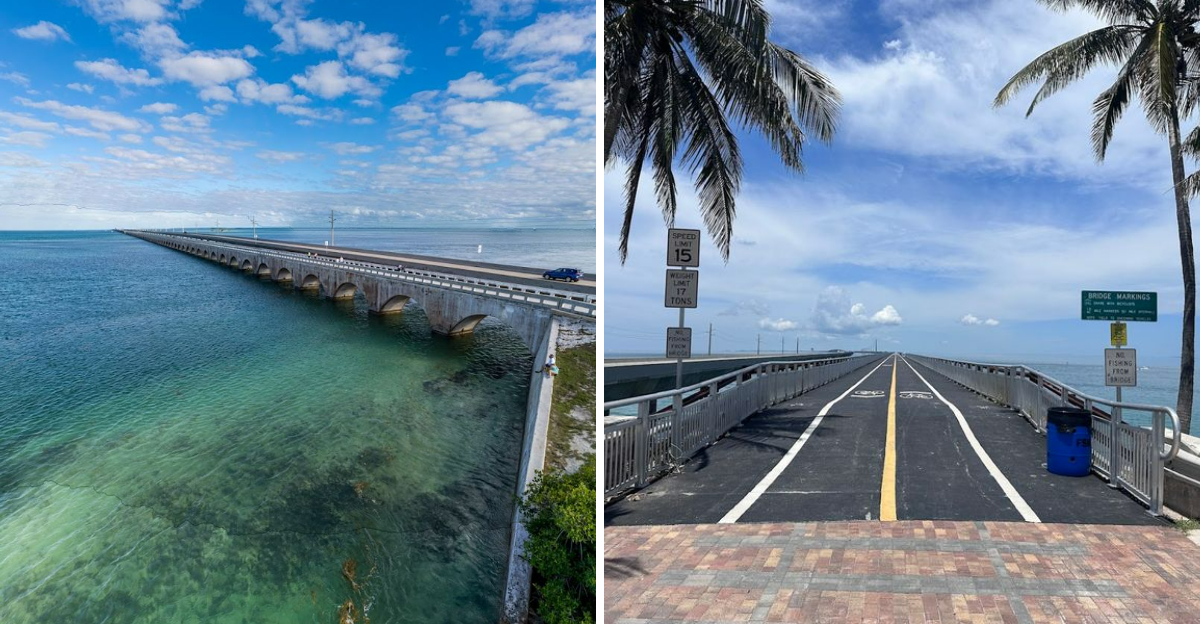
The road just disappeared into water. One second I had land on both sides, then nothing but blue stretching to the edge of the sky.
My hands tightened on the wheel out of pure instinct, even though the pavement never actually ended. Bridges kept appearing out of nowhere, connecting tiny islands like stepping stones across the sea.
Locals warned me this drive plays tricks on first timers. They were right.
Florida does not feel like itself out here. It feels like driving through open ocean with land as an afterthought.
Fishing boats drifted past on one side while pelicans dove for dinner on the other. I pulled over more than once just to sit and stare.
Some roads take you somewhere. This one makes you forget where you started, and reminds you why people fall in love with Florida in the first place.
A Drive That Feels Like Flying Over The Ocean
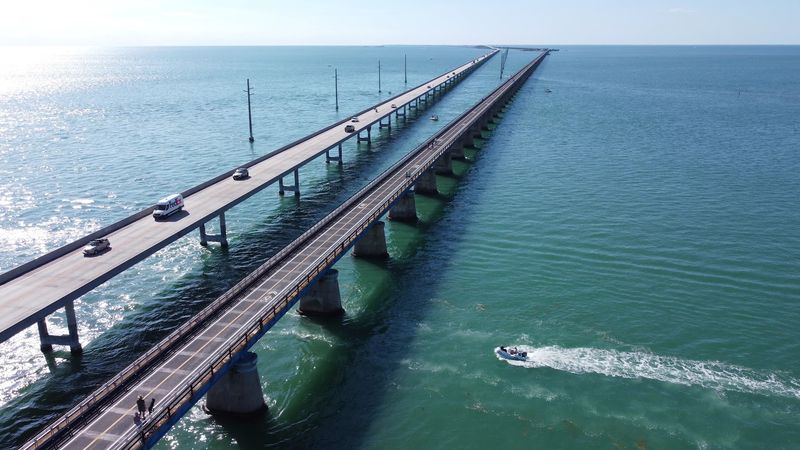
Nothing prepares you for that first moment the land disappears on both sides. You are driving, and suddenly the ocean swallows everything around you.
It feels less like a bridge and more like a runway over the sea.
The water shifts from deep navy to brilliant turquoise as you move across. On a clear day, you can see the ocean floor in places.
The color alone makes you want to pull over and stare.
The bridge officially measures 6.79 miles long and opened on May 24, 1982. It connects Knights Key in Marathon to Little Duck Key.
That stretch of road is part of the famous Overseas Highway, U.S. Route 1.
Driving it feels surreal in the best possible way. Time does something strange out there.
Look at the water far ahead and you feel still. Look at nearby lanes and you feel fast.
Seven Mile Bridge is one of the most recognizable landmarks along Florida’s Overseas Highway and offers sweeping views across the surrounding waters of the Florida Keys.
The Remarkable History Behind Two Parallel Bridges
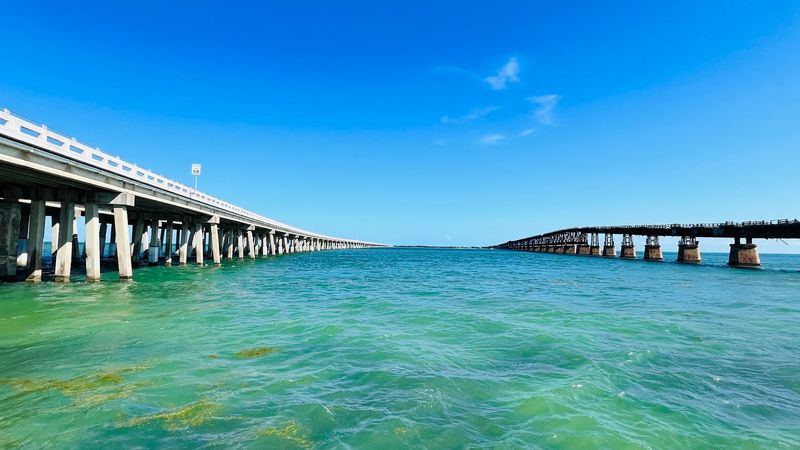
Standing at the edge, you notice something most drivers miss entirely. There are actually two bridges running side by side out there.
One is the smooth modern highway. The other is the original, now beautifully weathered old structure.
The original bridge was built between 1909 and 1912. Railroad tycoon Henry Flagler pushed it through as part of his bold Overseas Railroad project.
Critics called it impossible. Some called it foolish.
A catastrophic hurricane in 1935 destroyed sections of the railroad. The federal government stepped in and converted what remained into a roadway for cars by 1938.
Old railroad tracks were even repurposed as guardrails along the converted road.
The new concrete box girder bridge was constructed between 1978 and 1982. Engineers designed it with precast concrete sections for strength and durability.
Near the center, the bridge rises to give boats a 65-foot clearance underneath.
Seeing both structures together gives you a real sense of history. One bridge shows what was built with sheer human determination.
The other shows how far engineering has come since those early railroad days.
The Small Island That Carries A Century Of History
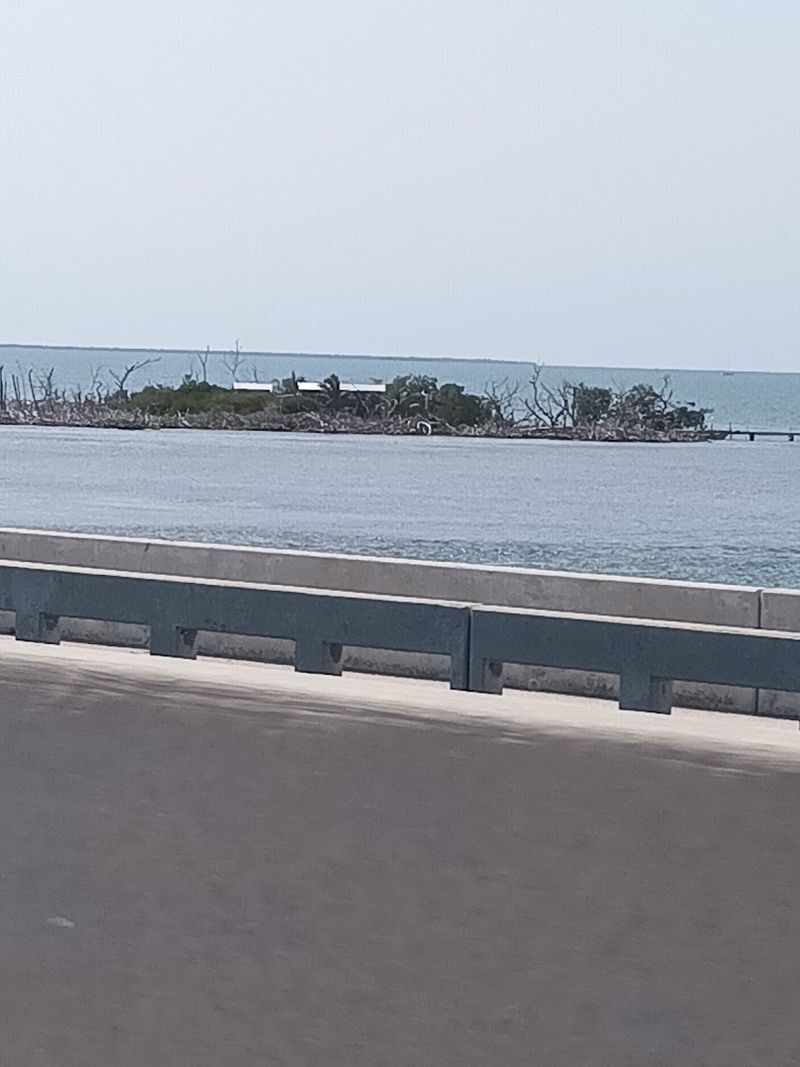
About two miles out on the old bridge, a tiny island appears like something from another era. Pigeon Key sits quietly beneath the old bridge structure, barely five acres in size.
It carries more history than its small footprint suggests.
This island once served as a work camp for the laborers who built Henry Flagler’s original railroad bridge. Workers lived, ate, and slept here while constructing one of the most ambitious engineering projects of the early 1900s.
The conditions were tough, and the work was relentless.
Today, several of the original wooden buildings still stand on the island. A ferry runs visitors out from the mainland side for a closer look.
You can also walk or bike the 2.2-mile restored section of the old bridge to reach it on foot.
The island offers guided tours that explain the railroad era in real detail. Exhibits inside the historic buildings bring the stories of those early workers to life.
It is genuinely fascinating, not just pretty scenery.
Wildlife around Pigeon Key is equally impressive. Sea turtles have been spotted swimming in the clear water nearby.
The combination of history and nature makes this stop completely worthwhile.
Sunrise And Sunset Views That Stop You Cold
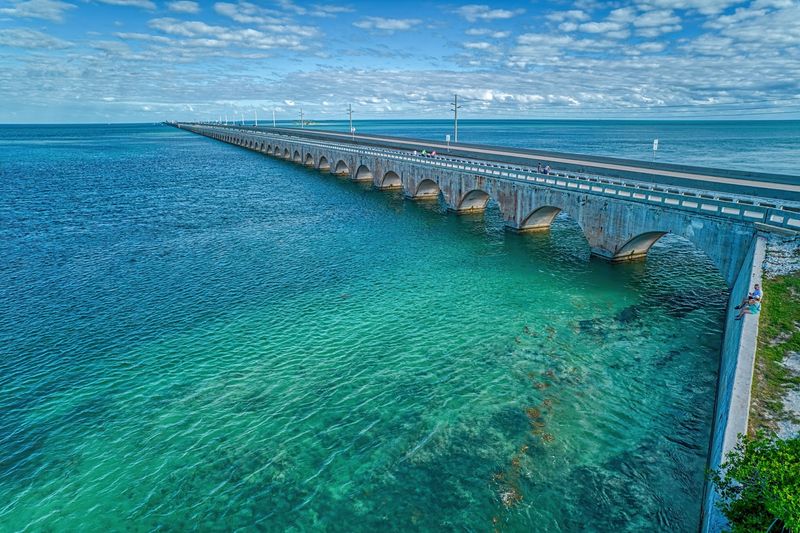
Catching a sunrise on this bridge is one of those experiences that earns permanent space in your memory. The sky turns shades of pink and gold that seem almost too vivid to be real.
The water reflects everything back like a giant mirror below you.
Sunset is equally spectacular from the other direction. Locals and visitors alike crowd the small parking areas on both sides as the light fades.
Drones buzz overhead. Cameras click constantly.
Everyone is trying to capture something almost impossible to photograph well.
The parking area on the Marathon side fills up fast before sunset. Getting there 30 minutes early gives you a much better chance of finding a spot.
The view from the old bridge section is particularly open and unobstructed.
Morning visits have a calmer, quieter energy to them. Cyclists and joggers are usually out early, moving steadily along the old bridge path.
The air is fresh and cool, and the water glows in early light.
Photographers specifically seek out this location for its sweeping architectural lines against the open sky. The contrast between the geometric bridge structure and the soft ocean colors is genuinely striking.
Plan your timing carefully and you will not be disappointed.
Walking And Cycling The Old Bridge Path
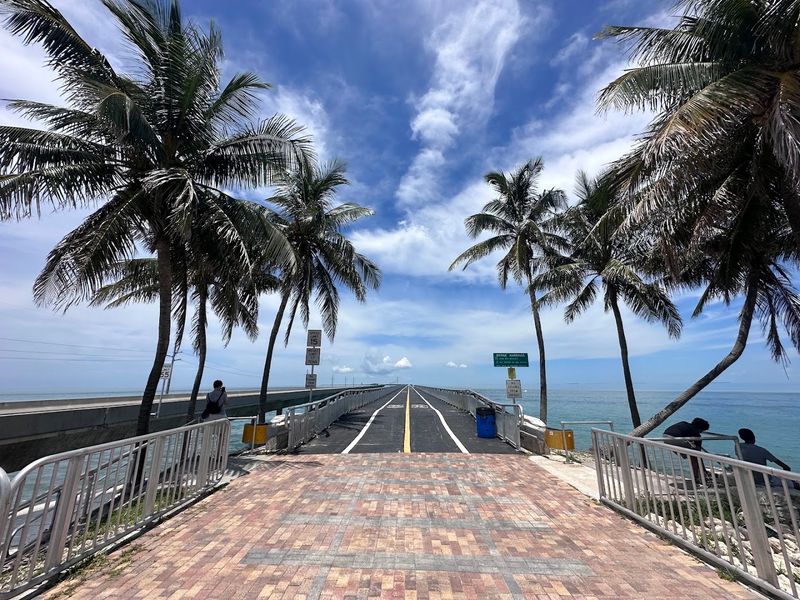
Pulling on running shoes and stepping onto the old bridge path is a completely different experience from driving across. The ocean is right there beside you, close and immediate.
There is no windshield between you and the salt air.
The restored pedestrian and cycling section stretches 2.2 miles from the Marathon end. It is flat, open, and completely exposed to the sky.
That sounds simple, but the effect is genuinely breathtaking on a clear morning.
Walkers regularly underestimate the distance. Four miles round trip sounds manageable until the Florida sun gets serious around midday.
Bring water, sunscreen, and more energy than you think you need.
Cyclists move quickly along the path and reach Pigeon Key in a comfortable amount of time. Bikes can be rented near the Marathon area for those who do not bring their own.
The ride out and back gives you a full hour of open-water views.
Wildlife sightings along the path are common and genuinely exciting. Sea turtles surface near the bridge supports.
Pelicans glide low over the water just feet away. The combination of exercise, scenery, and wildlife makes this one of the most memorable outdoor activities in the entire Florida Keys region.
Fishing Off The Bridge With Ocean Views
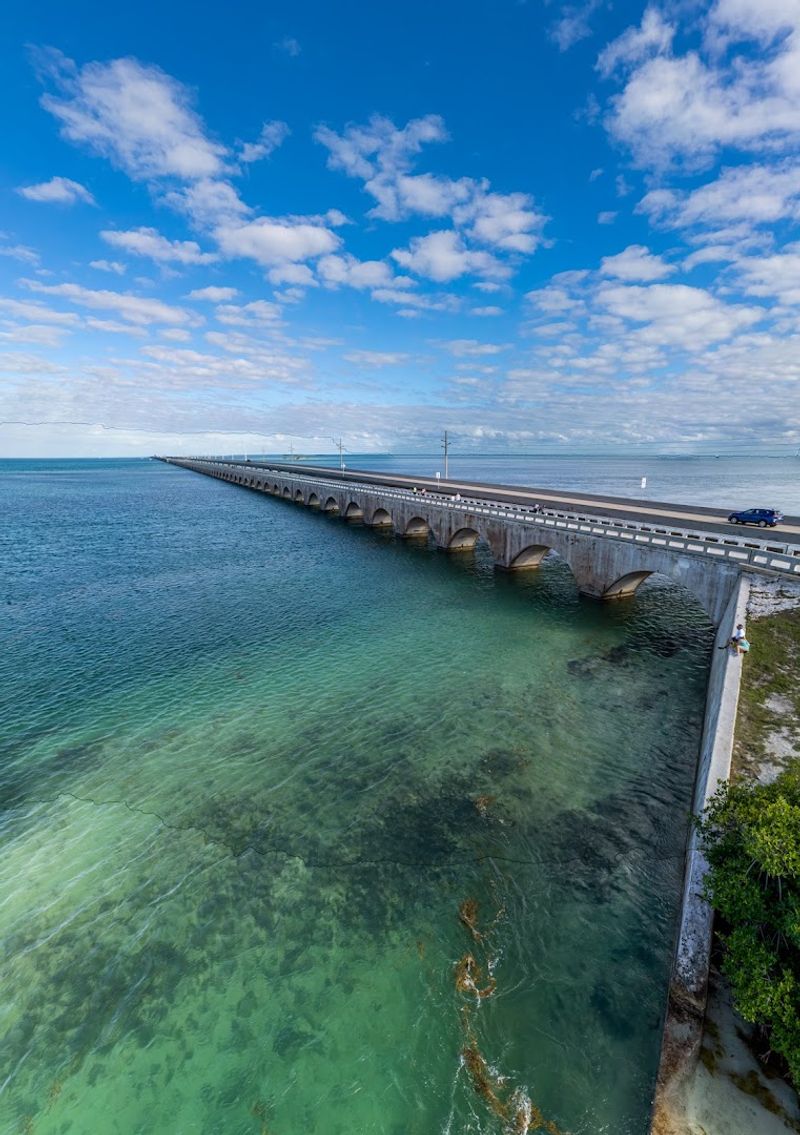
Few fishing spots in Florida offer a backdrop quite like this one. Standing on the old bridge with a line in the water, surrounded by open ocean, feels almost absurdly good.
The scenery alone would make it worth the trip even without a single bite.
Fishing is available at designated locations near the Seven Mile Bridge, but fishing is not permitted from the restored pedestrian section of the Old Seven Mile Bridge. The water is clear enough in many spots to actually watch fish moving below.
If you plan to fish at nearby designated locations, be sure to obtain a valid Florida fishing license before your visit. Having everything sorted ahead of time means more time with your line in the water.
Common catches in the area include tarpon, snapper, and various other species that thrive in the warm Keys waters. Experienced anglers know that bridge pilings attract baitfish.
Where baitfish gather, bigger fish follow close behind.
Morning and early evening tend to produce the best results for fishing. The light is better, the temperature is cooler, and the fish are more active.
Even non-anglers enjoy watching from nearby as patient fishers work the current.
The Annual Seven Mile Bridge Run Every April
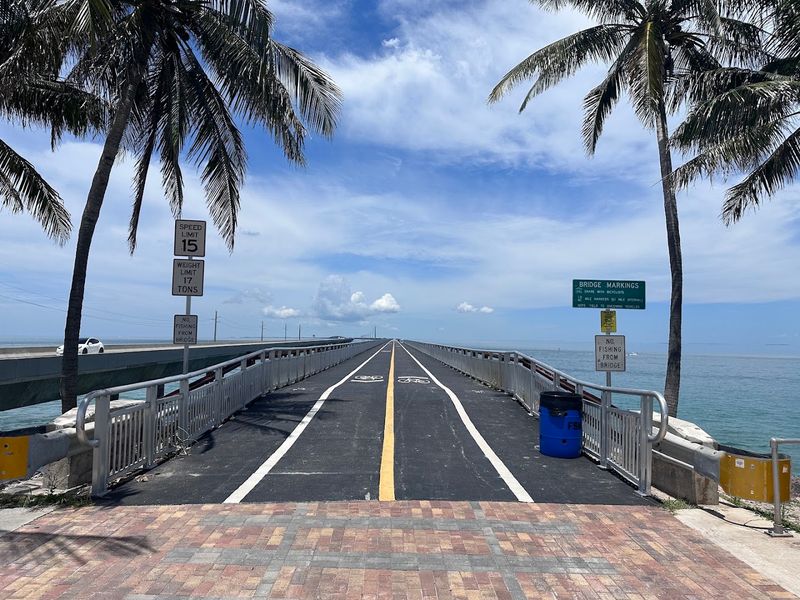
Every April, something extraordinary happens on this stretch of highway. Up to 1,500 runners line up at dawn and race across one of the most scenic courses in the entire United States.
The Seven Mile Bridge Run is a bucket-list event for serious and casual runners alike.
The course runs the full length of the bridge, point to point. Participants run with nothing but open ocean on both sides for nearly seven miles.
No other road race in America offers quite that combination of challenge and scenery.
Registration fills quickly each year, so planning ahead is essential. The event draws athletes from across the country and beyond.
Many participants say the experience feels more like an adventure than a traditional road race.
Support crews and spectators gather at both ends of the bridge to cheer runners through. The energy at the finish line is enthusiastic and genuinely celebratory.
Crossing that finish line with ocean views in every direction is a moment runners talk about for years.
Even if running is not your thing, watching the event from the sidelines is entertaining and inspiring. The spectacle of 1,500 people moving across an ocean bridge at sunrise is something worth seeing.
Check the official event calendar if you want to plan your Keys visit around it.
Marine Life And Wildlife Around The Bridge
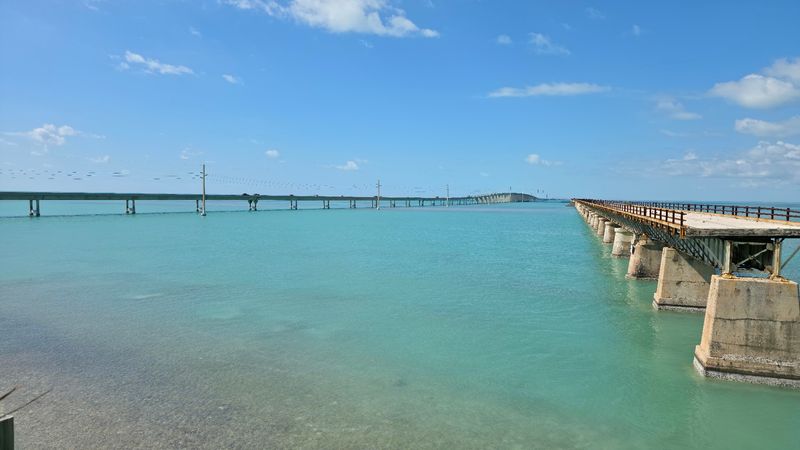
The water around this bridge is alive in ways that constantly surprise first-time visitors. Turtles surface casually near the old bridge supports, completely unbothered by the people watching from above.
Pelicans dive just feet from the walkway railing.
The clarity of the water here is remarkable on calm days. Standing on the pedestrian path, you can look straight down and see the sandy bottom below.
Fish move in loose groups around the bridge pilings, using the structure as shelter.
Dolphins have been spotted passing through the area, particularly in early morning hours. The open water channels on both sides of the bridge serve as natural travel routes for marine life.
Patience and quiet observation reward curious visitors generously.
Birdwatchers find the area productive throughout the year. Herons, ospreys, and various shorebirds use the bridge structure and nearby shallow flats regularly.
Binoculars add a lot to any visit here for those who enjoy watching wildlife closely.
The marine environment around the Florida Keys is part of a protected ecosystem. Visitors are encouraged to observe wildlife without disturbing it.
Keeping the area clean and respecting the natural surroundings ensures this incredible place stays healthy for future visitors to enjoy just as much.
Practical Tips For Getting The Most From Your Visit
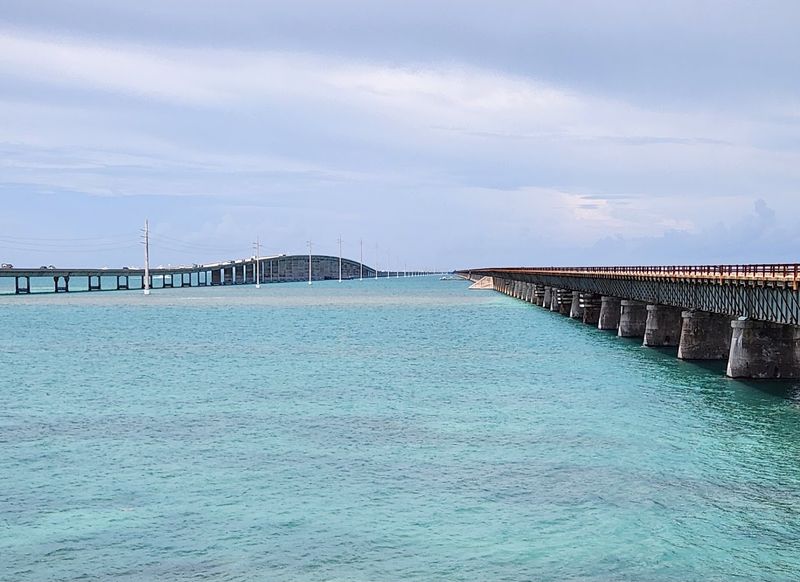
Planning your visit even slightly changes the whole experience here. The official parking lot on the Marathon side is genuinely small and fills fast.
Arriving before 9 a.m. or after 4 p.m. gives you a much better shot at finding a spot without frustration.
An overflow parking area sits across the road from the main lot. Most visitors do not notice it immediately, so checking both sides saves time.
A covered picnic area with tables and benches near the parking zone makes a great rest stop.
The address for navigation purposes is Seven Mile Bridge, Florida, along U.S. Route 1.
Plugging this into your map app before leaving Marathon makes the approach straightforward. Driving from north to south is generally recommended for the best photo angles along the way.
Comfortable walking shoes matter more than most people expect. The bridge surface is smooth but fully exposed with zero shade.
A hat, sunglasses, and a full water bottle are genuinely necessary, not optional extras.