The Historic Florida Town Where The Past Still Lingers Around Every Corner
Some places leave a mark on your soul before you even leave them. You walk down one street and somehow already know you will be back.
This small Florida town was one of those places for me. I was driving through with no plan, no reason except curiosity, and I had to stop.
History here is not locked behind museum glass. It lives on the porches of old homes, in the smells drifting through open doors, in the faces of locals who know exactly what time it is without checking their phones.
Florida has two sides. Everyone knows the loud, shiny one.
But the state also hides quieter stories in the shade of old oak lined back roads. This is one of those stories.
The state has been keeping this secret for a long time. And once you see it, you will not forget it.
The Long History Behind Florida’s Oldest Inland Town
Long before most American cities had paved roads, Micanopy was already a busy place. Spanish explorer Hernando De Soto recorded a Timucuan village on this exact site back in 1539.
That is nearly 500 years of continuous human presence in one small spot.
Naturalist William Bartram passed through in 1774 and found a thriving Seminole village called Cuscowilla here. The official American settlement followed in 1823, making Micanopy the oldest continuously inhabited inland town in Florida.
That title is not just a fun fact. It is a full history lesson packed into a single ZIP code.
The town was officially named Micanopy in 1834, honoring Chief Micanopy of the Seminole Nation, one of the most respected leaders of his time. Before that name stuck, locals called the settlement Wanton’s, after early settler Edward Wanton.
Walking these streets, you can almost feel all those layers of time pressing gently upward through the old brick sidewalks beneath your feet.
The Micanopy Historic District And Its National Register Status
Not every small town earns a spot on the National Register of Historic Places. Micanopy earned that recognition on January 28, 1983, when the Micanopy Historic District was officially designated a U.S. historic district.
That designation was not handed out lightly.
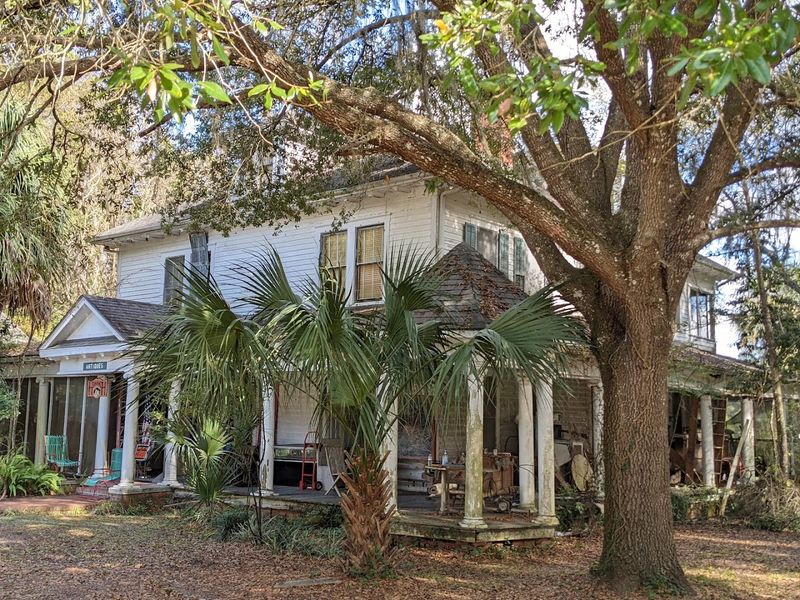
The district preserves vernacular architecture alongside Greek Revival homes and 19th-century commercial buildings. Many of these structures have been carefully restored since that 1983 listing.
Walking through the district feels less like sightseeing and more like time travel.
The area sits south of Gainesville in Alachua County, part of the Gainesville Metropolitan Statistical Area, yet it carries none of that city’s pace or noise. The population hovers around 648 people, which means the historic character has stayed remarkably intact.
Big crowds have not had the chance to dilute what makes this place so genuinely special and worth every single mile of the drive to get here.
The Street That Gives Micanopy Its Character
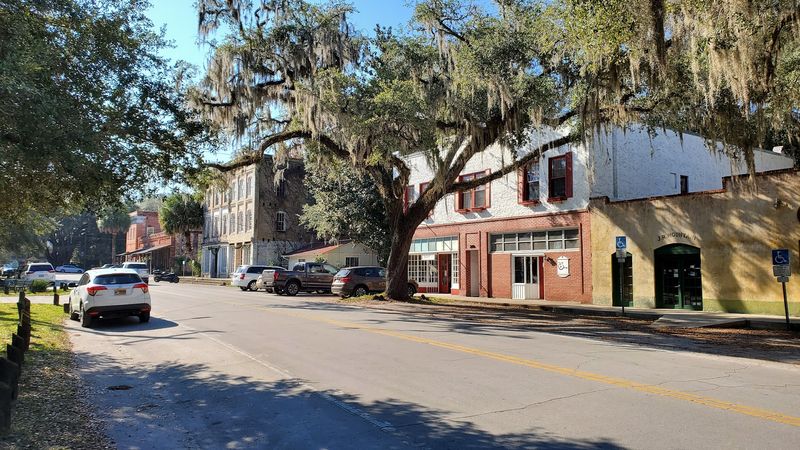
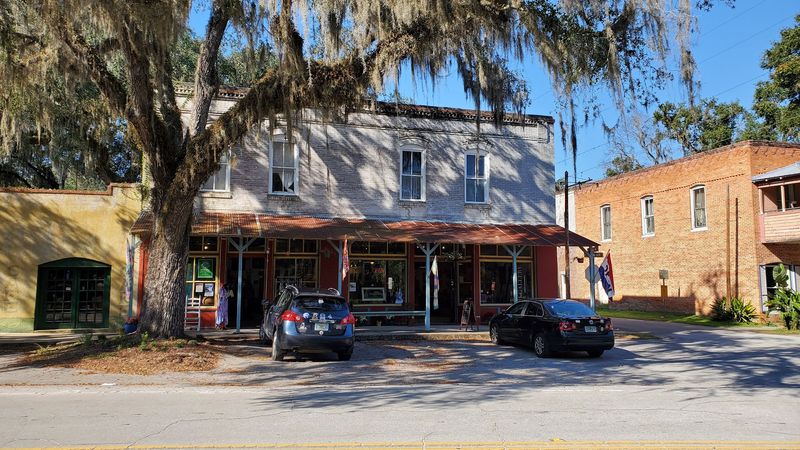
Main Street goes by a different name here, and that alone tells you something. Cholokka Boulevard is the beating heart of Micanopy, and it punches well above its weight.
For such a short stretch of road, it packs in a surprising amount of personality.
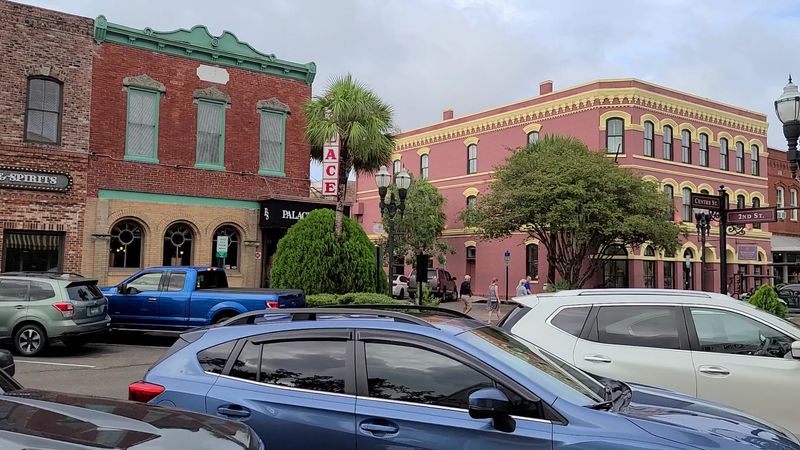
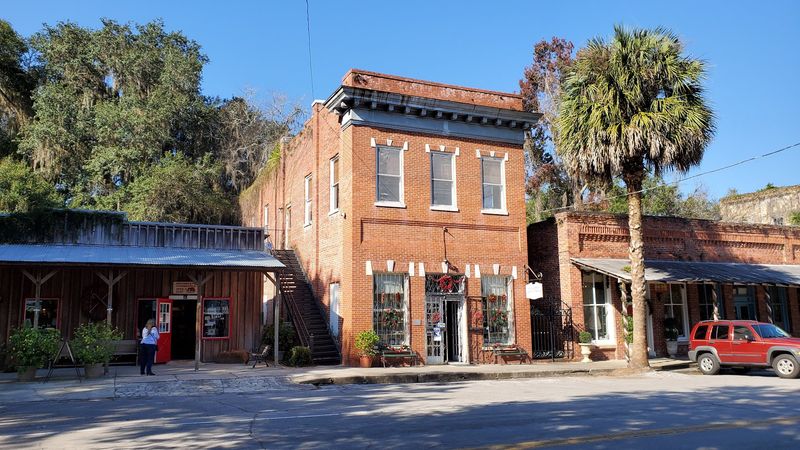
Antique shops, boutiques, and small cafes fill historic structures that have stood for well over a century. Browsing through one of these shops feels genuinely different from scrolling online.
You never quite know what you will find sitting on a dusty shelf or tucked behind a glass case.
The architecture along Cholokka Boulevard is part of the experience too. The Mott-May Building, constructed before 1900, showcases Gothic Revival commercial design that you rarely see outside a textbook.
Every storefront has its own character, its own age, its own quiet story. Spending an afternoon here does not require a plan or a budget.
You can wander freely, pick up something unexpected, and leave feeling like you actually discovered something real rather than just visited another tourist stop.
Inside The Historic Herlong Mansion
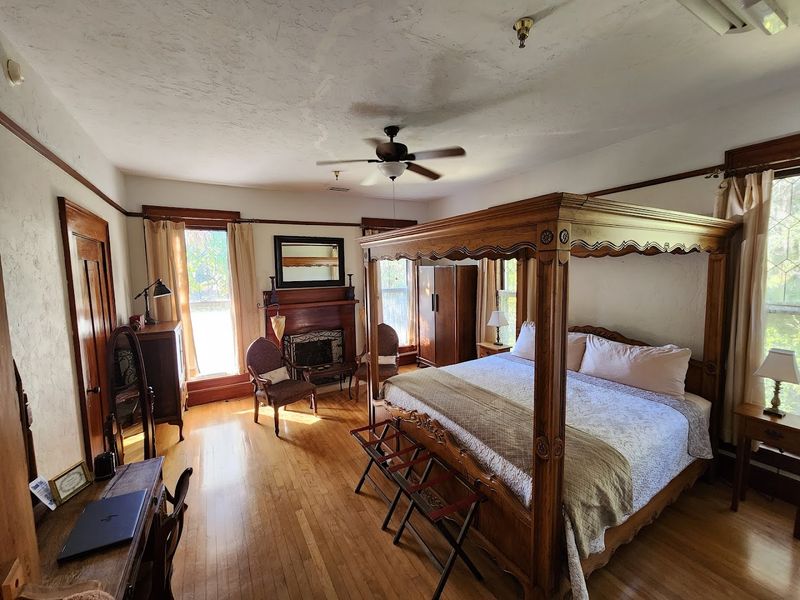
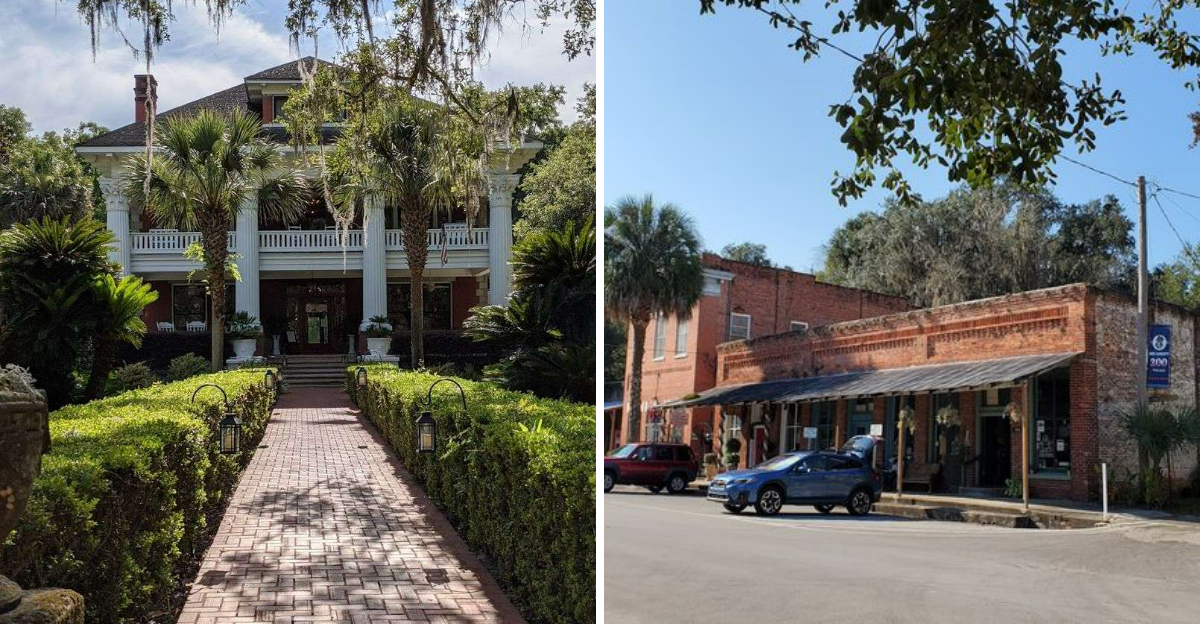
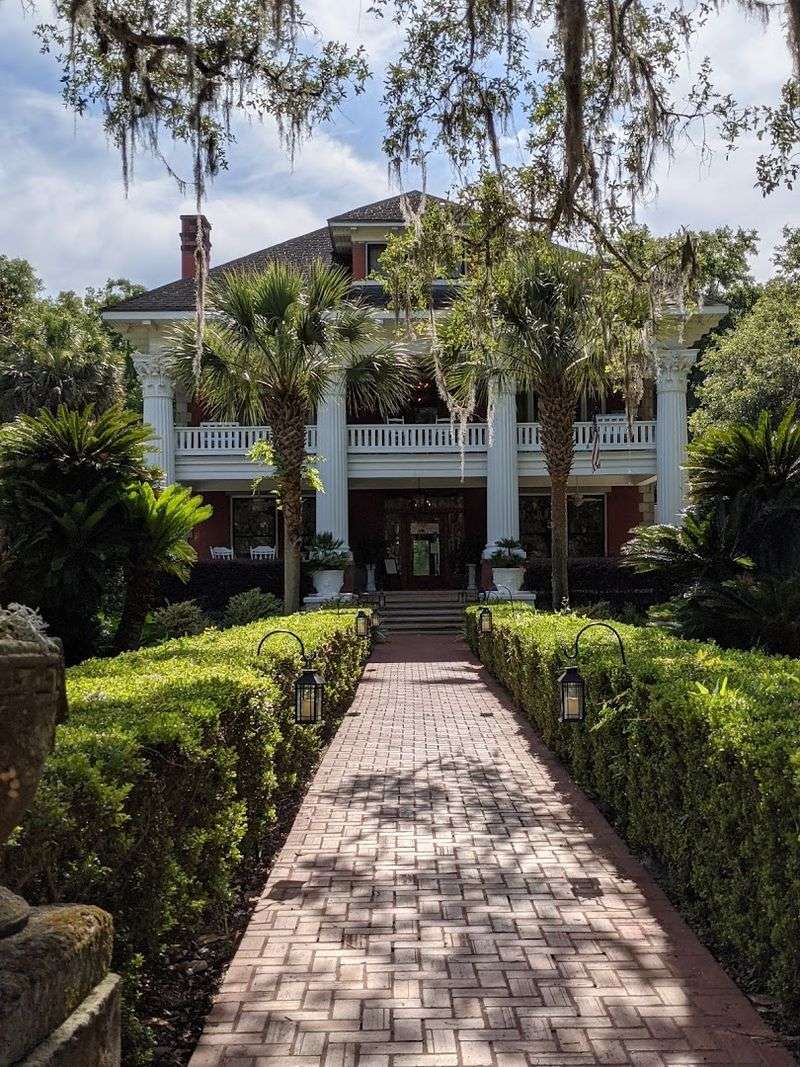
Few buildings in this part of the state carry as much architectural drama as the Herlong Mansion. It started life modestly as a Cracker-style farmhouse in the 1840s.
Then in 1910, it got a serious upgrade into the Southern Greek Revival style you see today.
The transformation is striking. Tall white columns frame the entrance, and the proportions feel grand without being cold.
It now operates as a bed and breakfast, meaning you can actually sleep inside a piece of living history rather than just admire it from the sidewalk.
Staying at the Herlong Mansion puts you right in the middle of the historic district. The address is 402 NE Cholokka Blvd, Micanopy, FL 32667, easy to find once you are rolling down the boulevard.
Waking up here, surrounded by moss-draped oaks and 19th-century architecture, resets something in your brain. It is the kind of morning that makes you want to sit on a porch with coffee and absolutely nothing on your schedule.
That feeling is exactly what Micanopy does best.
Inside The Museum That Preserves Micanopy’s Past
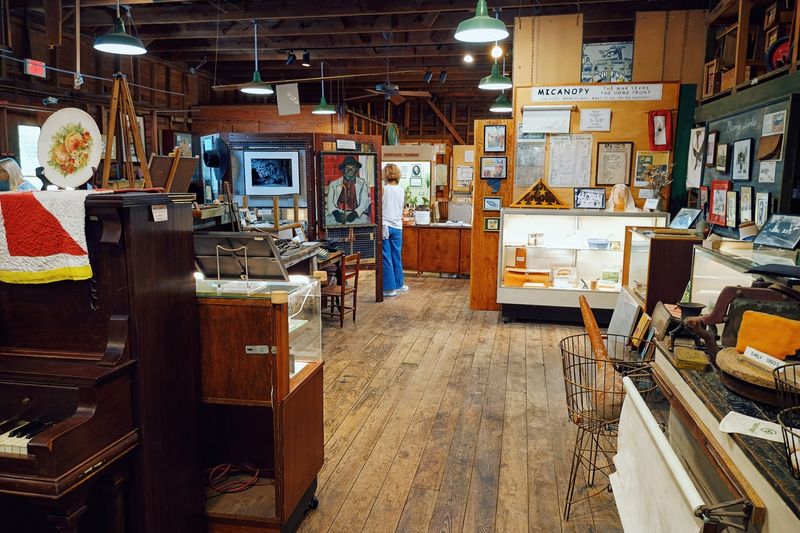
History museums can feel dry and distant, but this one does not. The Micanopy Historical Society Museum keeps things grounded with real artifacts that connect you directly to the people who lived here.
It is genuinely engaging, even if history was never your favorite subject in school.
The exhibits cover a wide range of local stories. A replica of an 1800s general store sits inside the museum, giving visitors a tangible sense of daily life from that era.
There are detailed sections on the founding families, the Seminole Nation’s deep roots in this land, and the remarkable layering of cultures that shaped this small town over centuries.
The museum is a great starting point before you explore the rest of the town. Understanding what happened here adds real depth to every building and every street you walk past afterward.
Archaeological studies have confirmed the locations of Fort Defiance and Fort Micanopy right inside the town limits. Knowing that history as you stroll around changes how everything looks.
Suddenly those quiet corners feel loaded with stories, and every old brick seems to have something to say.
The Historic Cemetery That Reflects Micanopy’s Long History
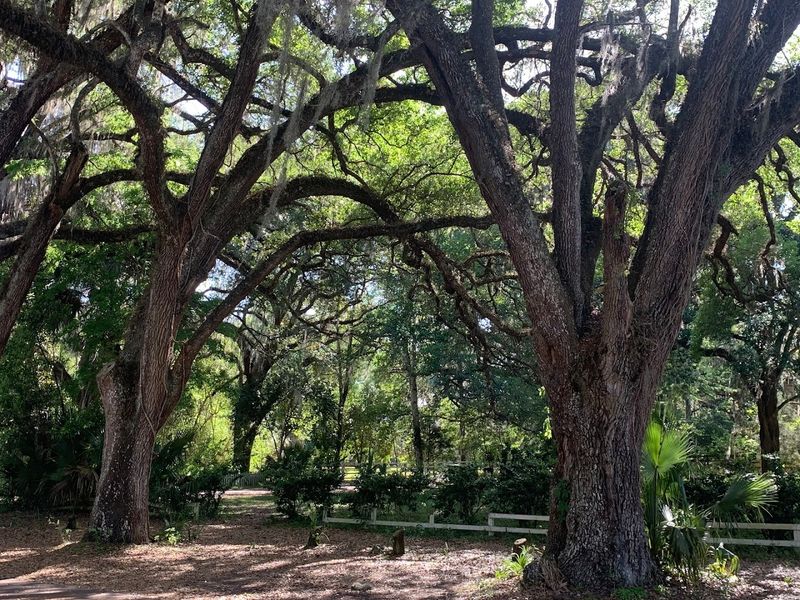
Cemeteries are not always on the typical tourist list, but this one earns a visit. The Micanopy Historic Cemetery holds burials dating back to 1826, making it one of the oldest active burial grounds in the interior of the state.
That is nearly 200 years of local history in one place.
The grounds hold the remains of early pioneers who shaped this community from the ground up. More than a hundred veterans are buried here, representing generations that lived through defining moments in American history.
Walking among the headstones gives you a real sense of continuity, of how many lives have passed through this small town.
The moss-covered oak trees overhead create a canopy that feels almost cathedral-like. Light filters through in long, soft beams that make the whole space feel contemplative and calm.
This is not a sad place. It is a thoughtful one.
Spending even 20 minutes here puts the rest of your visit into a much richer perspective. History stops feeling abstract when you can read a name on a stone and do the math on how long ago that person walked the same streets you just did.
The Small Florida Town That Caught Hollywood’s Attention
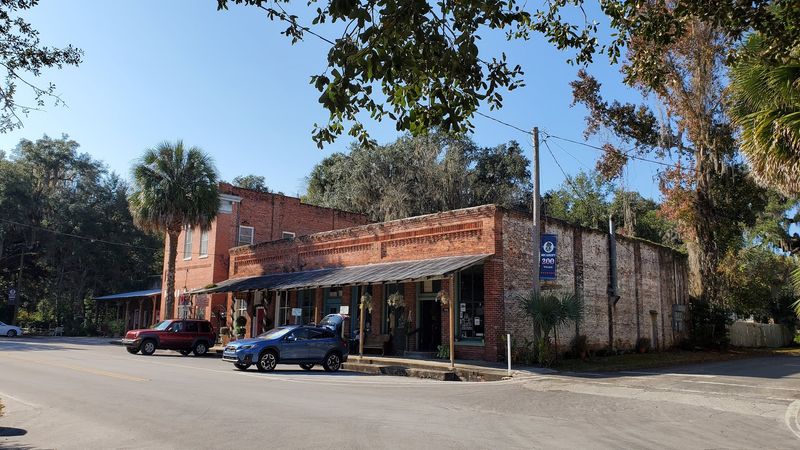
Not many towns with fewer than 700 residents have appeared on the big screen, but Micanopy has managed it more than once. Filmmakers have used its rustic streets and preserved architecture as backdrops for actual Hollywood productions.
The results speak for themselves.
The 1991 film Doc Hollywood, starring Michael J. Fox, used Micanopy as a stand-in for a fictional small Southern town.
The choice made perfect sense. The town already looked like a movie set without any added decoration.
Cross Creek, a film based on the life of author Marjorie Kinnan Rawlings, also used the area for its authentic atmosphere.
Knowing this as you walk down Cholokka Boulevard adds a playful layer to the experience. You start noticing angles and light in a different way.
That storefront could have been a scene. That oak-lined lane could have been a shot.
The town did not change for the cameras. The cameras came to the town precisely because it had refused to change.
That kind of quiet authenticity is genuinely rare and increasingly hard to find anywhere in the country today.
Moses Elias Levy And An Ambitious Early Community Vision
Few founding stories are as ambitious or as layered as this one. In 1823, Moses Elias Levy established the first official American settlement in Micanopy.
But he did not stop at simply building a town. He had a far bigger vision in mind.
Levy attempted to create Pilgrimage Plantation, a communal settlement designed as a refuge for Jewish people fleeing persecution across Europe. The plan was ahead of its time and deeply idealistic.
It ultimately did not succeed as Levy had hoped, but the attempt itself says a great deal about the kind of thinking that shaped this town from its earliest days.
That story rarely makes it into the main tourist brochures, which is a shame. It adds a dimension to Micanopy that goes well beyond antique shops and pretty architecture.
This was a place where someone tried to build something meaningful and lasting for a community in need. That spirit of purpose left a mark on the town’s identity.
Micanopy has always been more than just a pretty face. It has always carried a sense of intention that most small towns never develop at all.
The Small Florida Town That Never Lost Its Historic Charm
Some nicknames are just marketing. This one is earned.
Micanopy carries the title The Town That Time Forgot not because it is stuck or neglected, but because it has genuinely chosen to honor what it has. That choice shows up in every preserved building and every unrushed afternoon on the boulevard.
The ancient moss-draped oak trees have been here longer than any structure in town. They arch over the streets like a living canopy that connects the present to a very distant past.
Combine that with brick buildings from the 1800s and a population under 700, and you have a place that resists the usual pressures of modern development.
Visiting Micanopy is not about checking off a list of attractions. It is about slowing down enough to actually notice where you are.
The town sits in Alachua County, just south of Gainesville, easy to reach but easy to overlook if you are always in a hurry. Take the detour.
Walk the boulevard slowly. Read the historical markers.
This is one of those rare places that rewards patience and punishes rushing. Come here ready to absorb, not just observe.