The History Inside This West Virginia Landmark Is More Fascinating Than Most People Realize
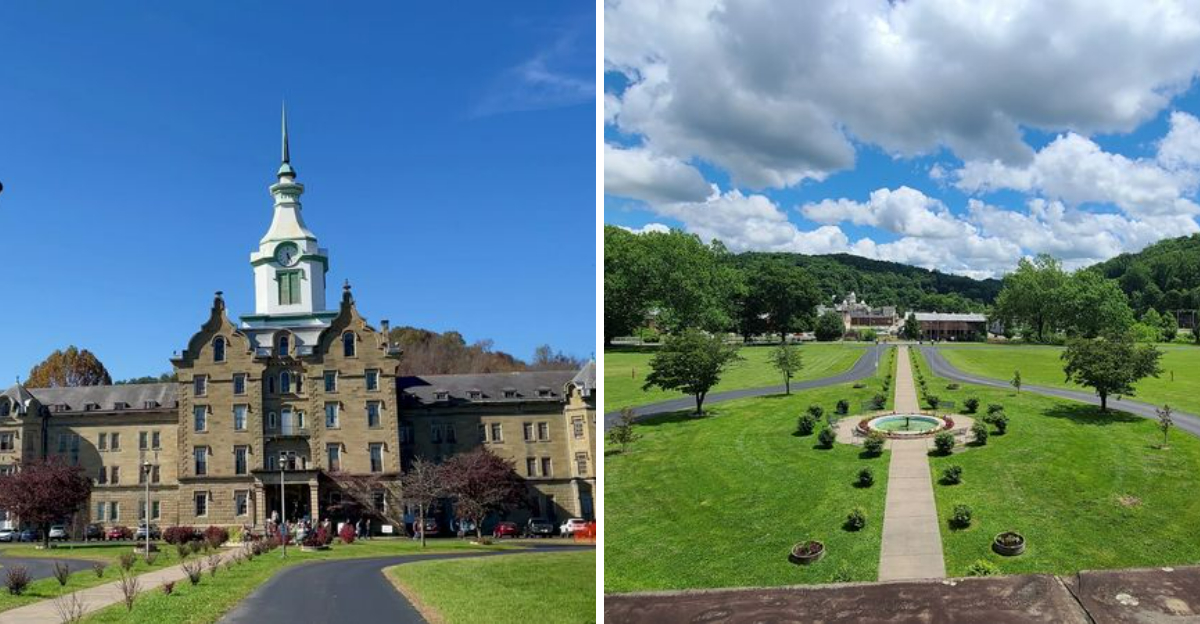
I thought I knew this story. A quick stop, a few photos, maybe an hour of wandering.
Four hours later, I was still inside, completely unable to leave. Some places hold history the polite way, behind glass cases and tidy plaques.
This one does not. The walls themselves feel like witnesses.
Every corridor carries weight. Every room asks you to slow down and pay attention.
What surprised me most was not the size, though the size is staggering. It was the layers.
Stories of medicine, architecture, tragedy, and resilience all stacked inside one structure. West Virginia has plenty of landmarks, but nothing prepared me for this one.
Most visitors come for the legend. They leave moved by the truth.
The real history buried in this corner of West Virginia is stranger and sadder than any ghost story. It deserves to be told properly.
A Building So Massive It Defies Belief
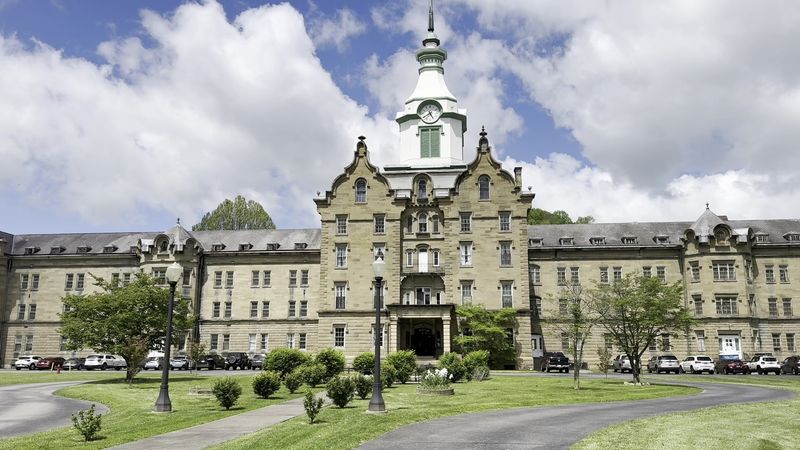
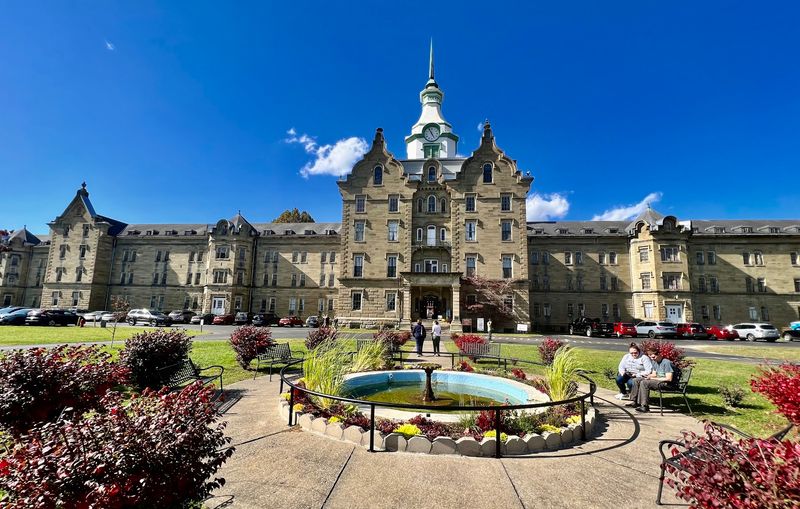
Few buildings in North America can stop you cold just by existing. The Trans-Allegheny Lunatic Asylum is one of them.
It is recognized as one of the largest hand-cut stone masonry structures on the continent.
Some sources place it as the second largest in the world, surpassed only by the Kremlin. That fact alone made me stand in the parking lot for a full minute just staring.
Construction began in 1858 and was not completed until 1881. That is over two decades of cutting, hauling, and stacking stone by hand.
The sheer labor involved is almost impossible to picture today.
The building spans a massive footprint across 666 acres of grounds. It was designed to be entirely self-sufficient, with its own farm, dairy, and waterworks.
Visiting the site at 50 S River Ave, Weston, WV 26452 makes the scale finally real.
The architecture blends Gothic and Italianate styles in a way that feels both grand and heavy. Every corridor seems to stretch further than the last.
It is the kind of place that earns your full attention before you even buy a ticket.
The Kirkbride Plan And Why It Mattered
Architect Richard Snowden Andrews had a specific vision when he designed this asylum. He followed the Kirkbride Plan, a 19th-century approach to mental health treatment that was genuinely ahead of its time.
The idea was refreshingly human for its era. Fresh air, natural light, and a calm environment were believed to help patients heal.
Wings were staggered so every room received both sunlight and cross-ventilation.
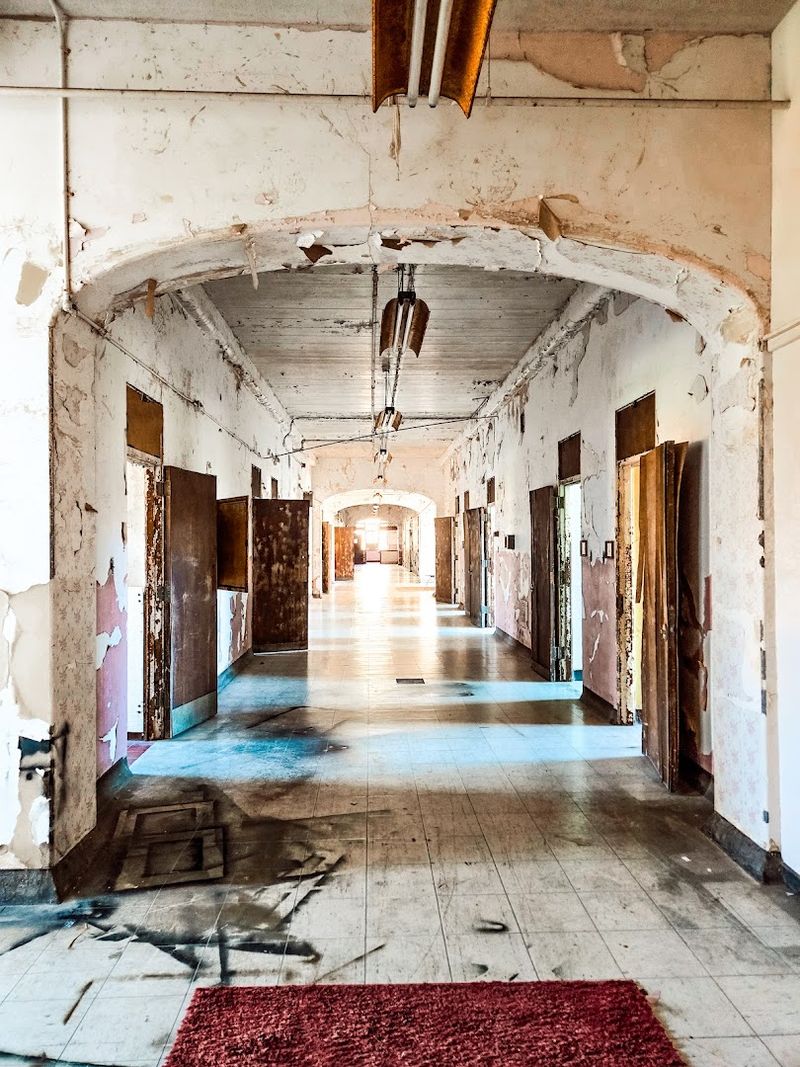
Standing inside one of those long corridors, you can still feel the logic of the design. Tall windows line the walls, and the light shifts throughout the day in a way that feels almost intentional.
It was therapeutic architecture, and it shows.
The philosophy behind the Kirkbride Plan treated mental illness as something that could be addressed through environment. That was a radical idea in the 1800s.
Most institutions at the time offered little more than confinement.
Touring these wings gives you a strange mix of admiration and sadness. The building was built with good intentions.
What happened inside over the following century is a far more complicated story worth understanding.
Overcrowding That Pushed Every Limit
The original design called for 250 patients. By the 1950s, the population had swelled to 2,400.
That gap between intention and reality tells you everything about what this place became.
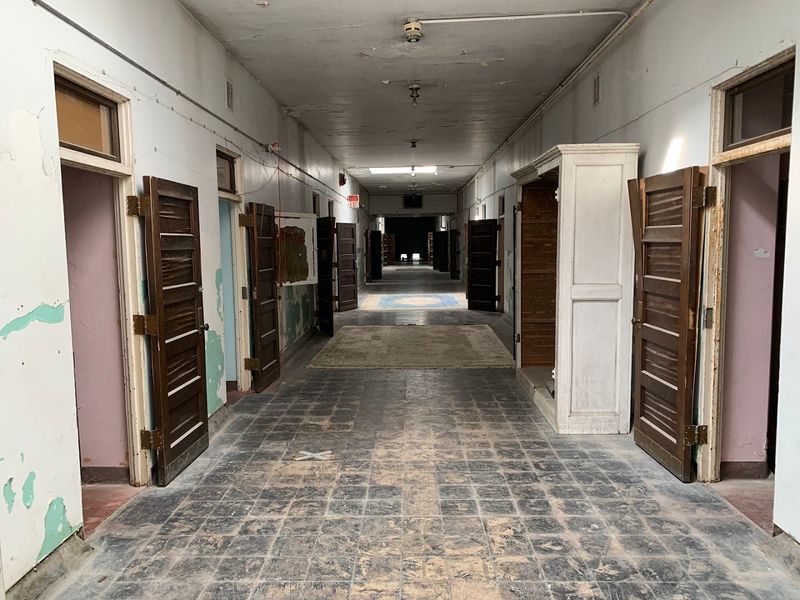
Hallways that were meant to carry fresh air and calm became sleeping spaces. Rooms built for one person held up to four.
Reports from 1938 and 1949 documented poor sanitation, insufficient furniture, and inadequate heating throughout the facility.
What is most striking is how ordinary the admission reasons could be. People were committed for conditions listed as domestic troubles, laziness, egotism, and even novel reading.
By modern standards, those reasons are almost unbelievable.
The overcrowding created a feedback loop that was nearly impossible to escape. More patients meant fewer resources per person.
Fewer resources meant worse outcomes. Worse outcomes meant longer stays.
Touring this section of history during a visit feels genuinely sobering. The physical space you walk through is the same space where thousands of people lived in conditions far below what anyone deserved.
Understanding that context makes every room feel heavier and more important to preserve.
Medical Treatments That Changed Everything
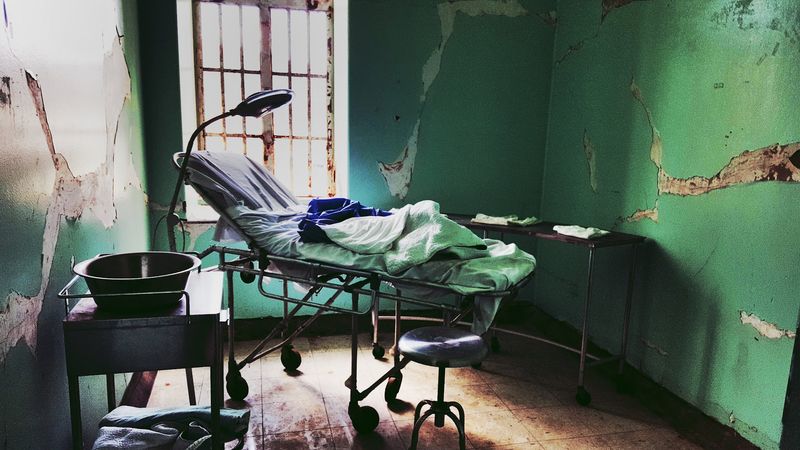
Medical history inside these walls is not easy reading, but it is essential to understanding the full story. Treatments used here included insulin-shock therapy, electroshock therapy, hydrotherapy, and lobotomies.
The early 1950s brought something called the West Virginia Lobotomy Project. It was an organized effort to reduce the patient population through surgical procedures.
The goal was practical, but the methods were deeply troubling by any standard.
Hydrotherapy involved prolonged baths intended to calm agitated patients. Electroshock therapy was used widely across psychiatric institutions of the era.
Both treatments reflected a medical field still searching for reliable answers.
Walking through the medical building today, you can see equipment and displays that bring this history into sharp focus. Tour guides speak about these methods with care and historical context.
The goal is understanding, not spectacle.
What strikes me most is how quickly medical understanding shifted. Treatments considered standard in the 1940s and 1950s were largely abandoned within decades.
The asylum’s medical history is a clear reminder that science keeps moving, and that humility in medicine matters enormously.
From Abandonment To National Historic Landmark
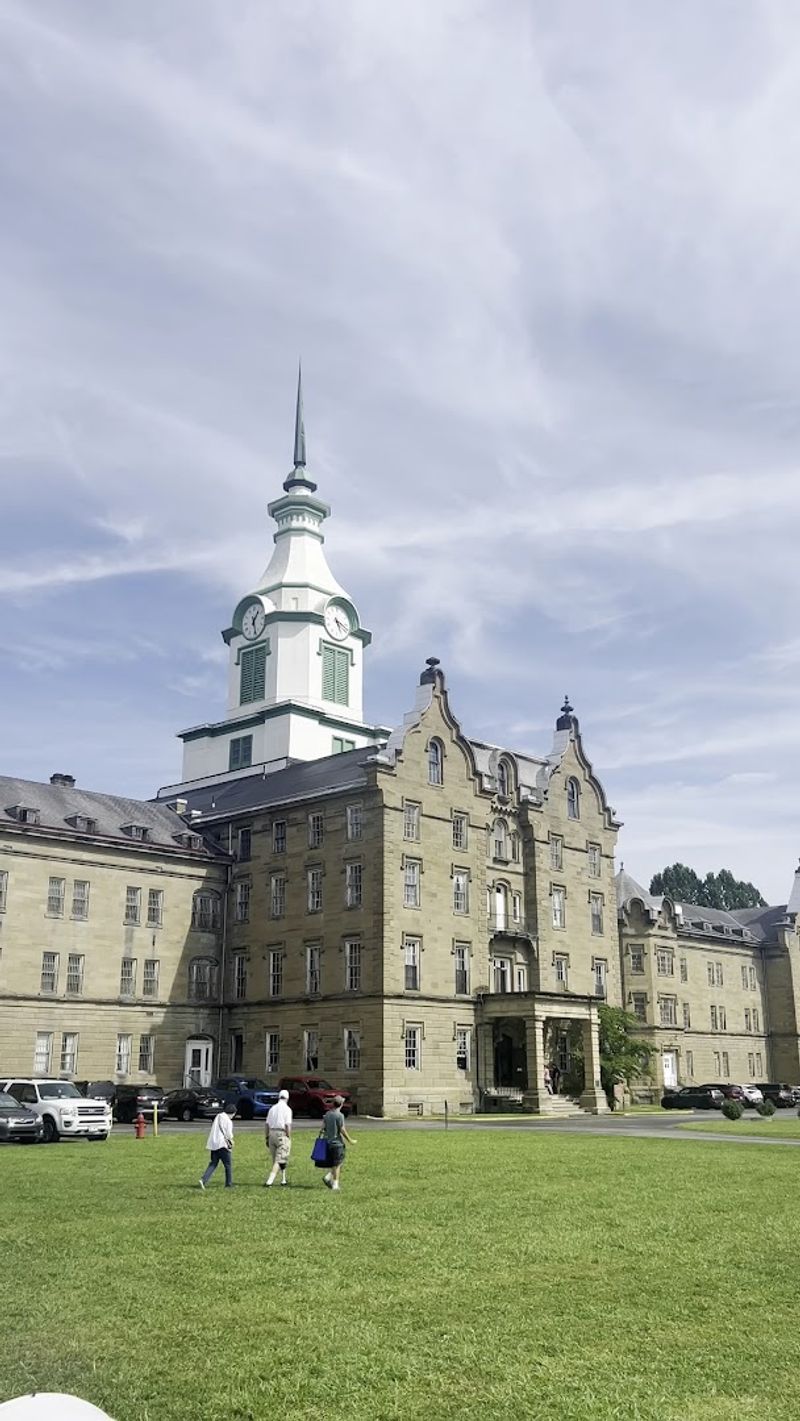
After 130 years of operation, Weston State Hospital closed in 1994. Patients were transferred to the new William R.
Sharpe Jr. Hospital nearby. The building was left empty, and years of neglect followed.
In 1999, the interior suffered damage when police officers used the abandoned building for a paintball game. That incident led to dismissals and drew public attention back to the site.
The building needed someone willing to take it seriously.
In 2007, the property was auctioned and purchased for $1.5 million. The new owner reverted the original name, Trans-Allegheny Lunatic Asylum, and reopened it as a tourist attraction in March 2008.
Tour revenue has funded ongoing restoration ever since.
The landmark had already been designated a National Historic Landmark in 1990, four years before it even closed. That designation recognized its architectural and historical significance on a national level.
Few buildings earn that recognition while still operating.
The comeback story here is genuinely inspiring. A building that could have been demolished or left to decay is now one of the most visited historic sites in the region.
Preservation won, and visitors are the direct beneficiaries of that outcome.
The Grounds That Held An Entire Community
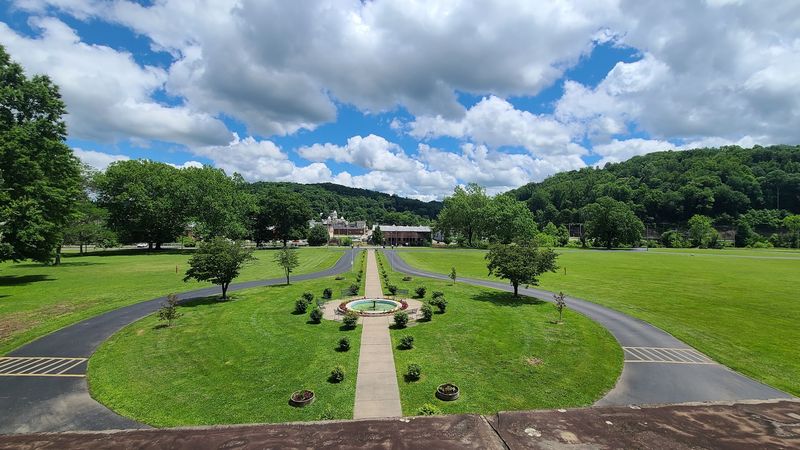
Six hundred and sixty-six acres sounds like a number until you actually walk the grounds. The asylum was designed to function as a fully self-sufficient community, not just a building.
It had its own farm, dairy, waterworks, and cemetery.
Patients who could work were often assigned tasks on the farm or in the various support operations. The idea was that productive activity contributed to recovery.
The cemetery on the grounds holds the remains of patients who passed away and were never claimed by their families. Gravestones were marked only with identification numbers, not names.
That detail is one of the most quietly affecting parts of the entire visit.
The farm and support structures made the asylum nearly independent from the surrounding community for decades. Food, water, and labor were all sourced internally.
That level of self-containment was both practical and isolating in ways that shaped the culture inside.
Spending time on the grounds rather than just inside the building gives the whole experience more texture. The open space around the stone walls tells its own story about how this institution saw itself and its place in the world.
Tours That Bring Every Layer Of History To Life
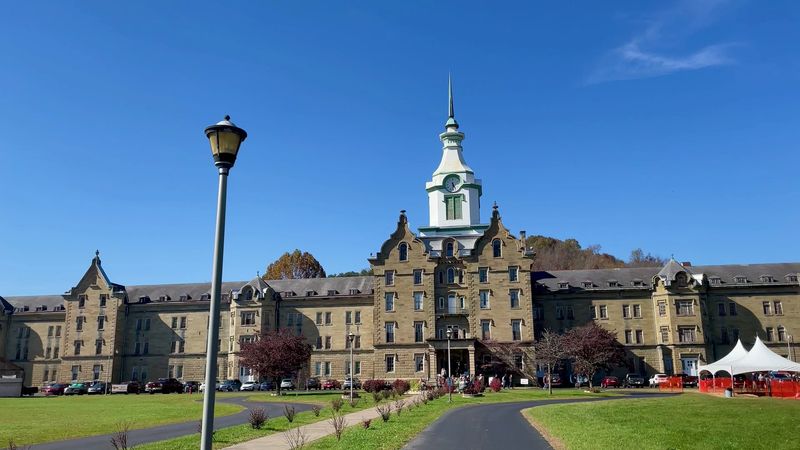
Not every historic site knows how to tell its own story well. This one does.
The range of tours available at the Trans-Allegheny Lunatic Asylum covers historical, paranormal, flashlight, VIP, and ghost hunt options.
The 90-minute four-floor historical tour is a strong starting point. Guides cover the architecture, the patient history, the medical treatments, and the building’s evolution across more than a century.
Some guides even wear period clothing, which adds a layer of atmosphere that photographs cannot capture.
The paranormal tours run into the evening hours and attract a different kind of visitor. The history alone is enough to make the experience memorable.
Tours generally run Tuesday through Sunday during the season, with Mondays closed, but checking current tour times before visiting is recommended. The building is not climate controlled, so dressing in layers is practical advice worth taking seriously.
Comfortable shoes matter too, because the building is enormous.
Ticket prices are widely considered fair, especially given that proceeds support the ongoing restoration.
Why This Landmark Stays With You Long After You Leave
Some places are interesting for an afternoon. This one keeps working on you for days afterward.
The combination of architectural ambition, human struggle, and historical weight creates something genuinely rare.
The hand-cut stone walls do not just look impressive. They represent decades of labor by people who built something meant to help others.
That original intention sits quietly underneath all the harder history that followed.
Visiting with someone who asks a lot of questions makes the experience even richer. Guides are consistently described as knowledgeable and patient with curious visitors.
The depth of information available here rewards genuine curiosity.
The gift shop offers souvenirs, and there is reportedly a resident opossum named Pickle who has charmed more than a few visitors on their way out. That detail is completely real and somehow perfect for a place this layered.
What this landmark offers is not just a tour of a spooky old building. It is a serious, textured look at how society treated vulnerable people, how architecture tried to help, and how history gets preserved when people care enough to show up.