The Missouri Attraction Where Grown Adults Forget They Are Not Kids Anymore
I have a fairly high threshold for things described as unique.
That word gets used so freely and so carelessly that it has lost most of its original meaning, which is a shame because occasionally something actually earns it.
This Missouri attraction earns it completely and then keeps going.
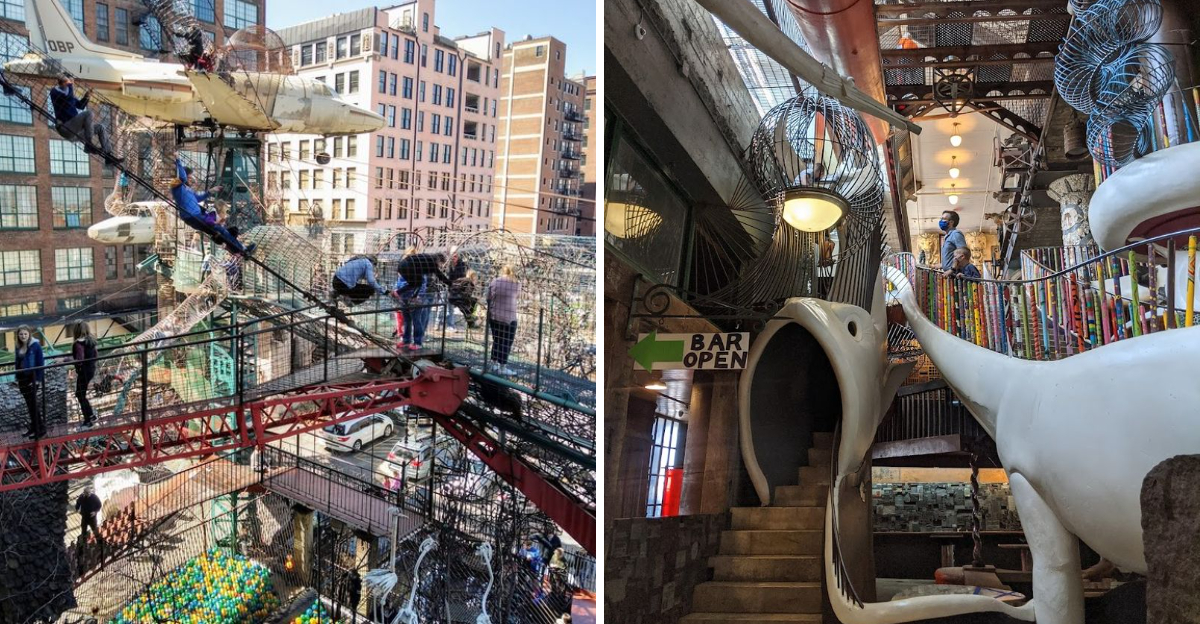
It is housed in a converted St. Louis shoe factory, that has been reimagined as something between an art installation, a jungle gym, and a fever dream designed by someone who refused to accept that fun had an age limit.
This is the kind of place that makes you walk through the door as a functioning adult and emerge two hours later covered in dust with genuinely no idea where the time went.
The tunnels go places you do not expect. The slides are faster than they look.
The rooftop will make you question several decisions simultaneously.
Missouri has built something here that simply should not work as well as it does, and yet.
The Building That Rewired My Brain
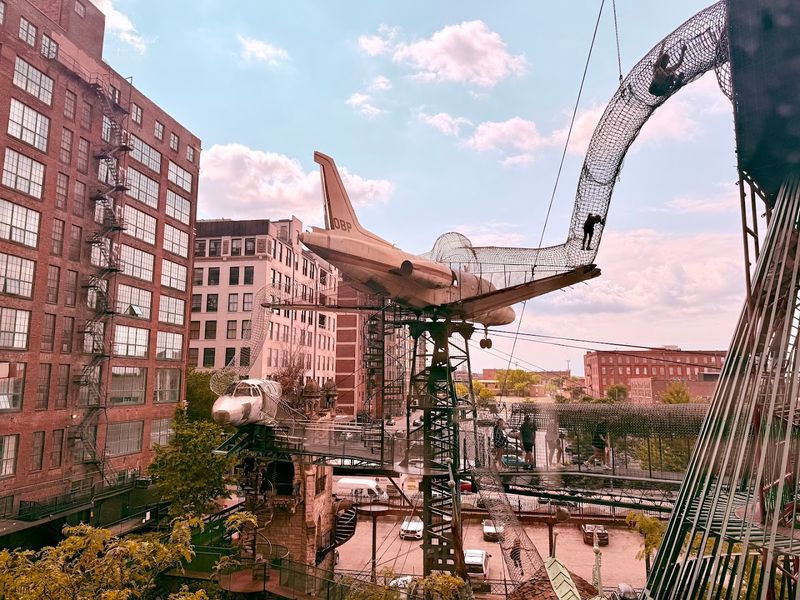
Nobody warned me that City Museum would make me feel like a ten-year-old again. Built inside a massive former shoe factory, this place is part playground, part art installation, and entirely its own universe.
The moment you step inside, your brain shifts gears completely.
Artist Bob Cassilly founded City Museum in 1997, transforming discarded architectural pieces, old bridges, and salvaged materials into something that defies every category. It is not a traditional museum.
There are no velvet ropes, no quiet galleries, no whispering visitors.
Instead, there are tunnels, caves, slides, and suspended school buses dangling off the roof. Adults squeeze through passageways meant for no particular size.
Kids and grown-ups share the same wide-eyed expression throughout. The building itself is the exhibit, and every corner holds something unexpected.
City Museum, at 750 N 16th St, St. Louis, Missouri, earns every bit of its reputation as one of the most original destinations in the entire country.
Where School Buses Become Landmarks
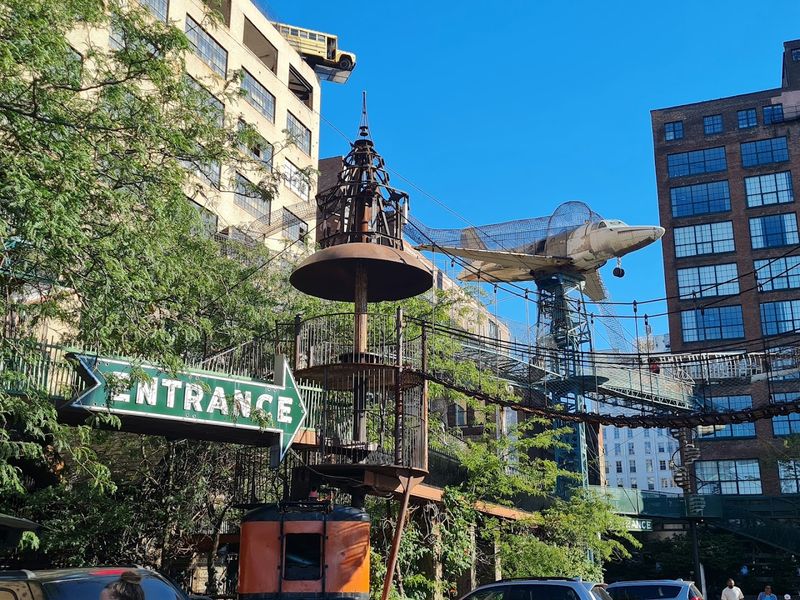
Seeing a school bus hanging off a rooftop is not something your eyes are prepared for on a random Tuesday afternoon.
The rooftop deck at City Museum is one of those places that makes you laugh out loud before you even fully understand what you are looking at.
Two decommissioned school buses jut dramatically over the building’s edge, and yes, you can climb inside them.
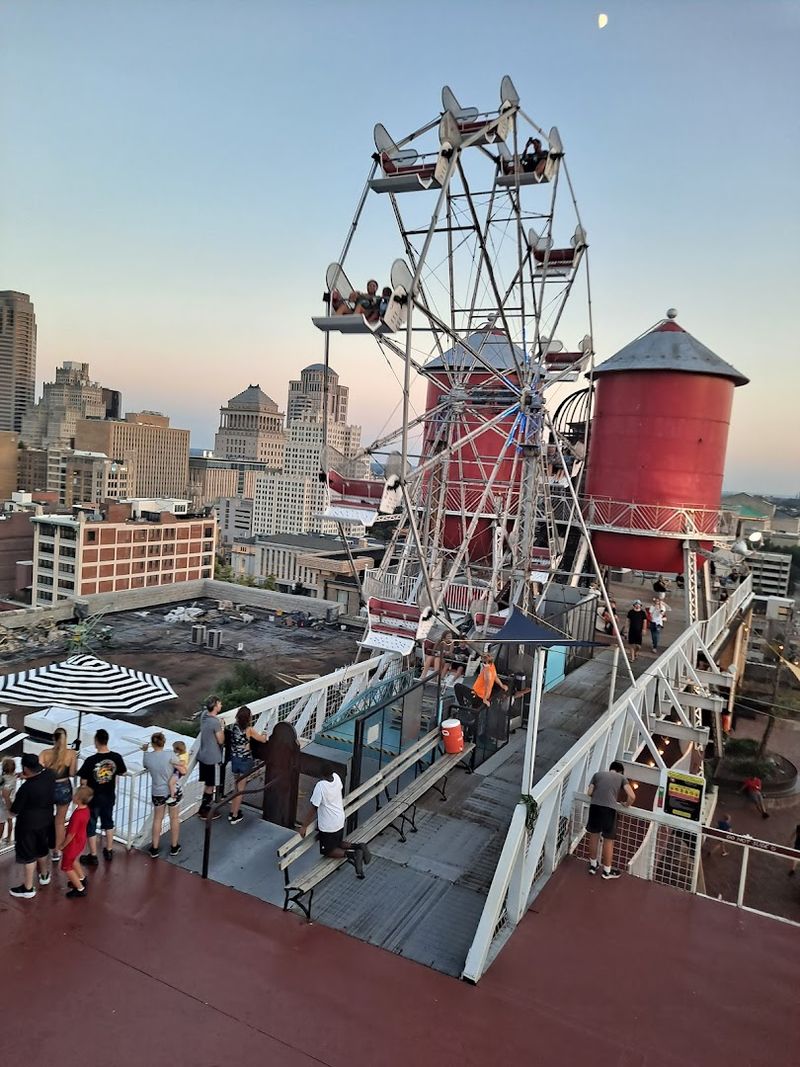
Up here, the skyline of St. Louis stretches out in every direction. The Gateway Arch is visible on clear days, sitting quietly on the horizon while absolute chaos unfolds around you.
There is a Ferris wheel on the roof too, which feels both absurd and completely logical once you have spent an hour inside this building.
The outdoor climbing structures weave and spiral across the rooftop, made from repurposed cranes, rebar, and salvaged metal. Brave visitors crawl through enclosed mesh tunnels suspended several stories above the street.
It is thrilling in the best possible way. The rooftop alone justifies the admission price, and it gives you a story worth telling at every dinner party for the rest of your life.
Underground And Completely Obsessed
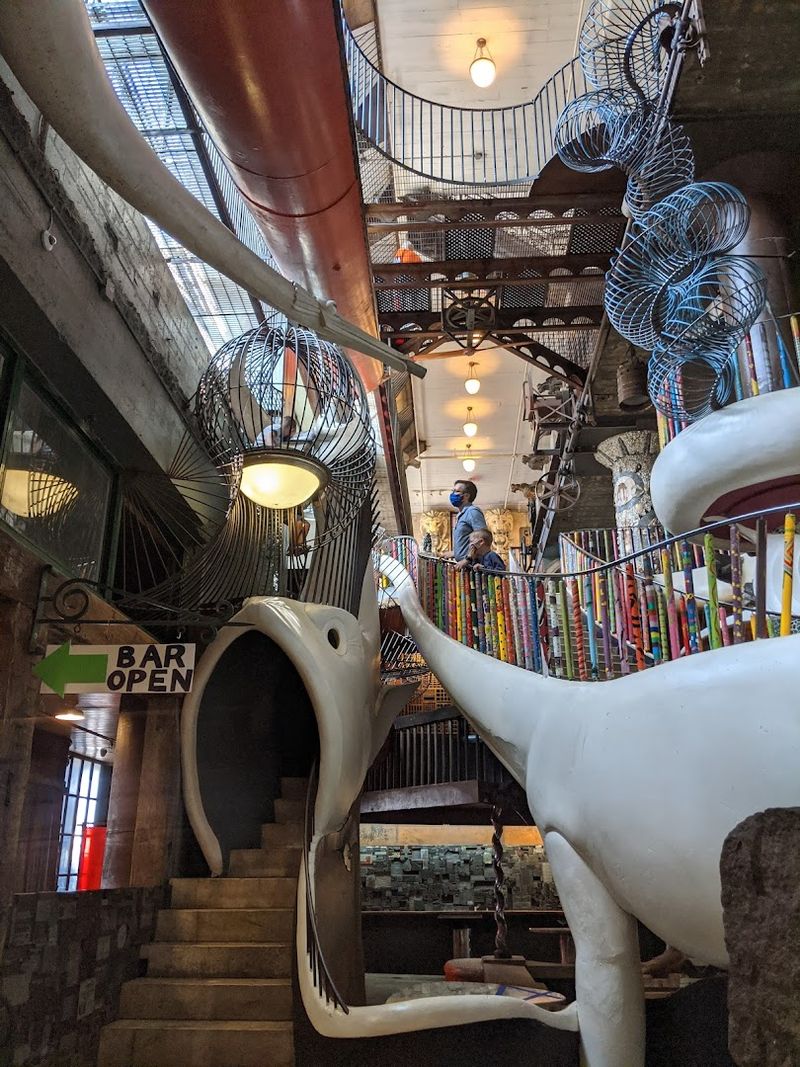
Somewhere beneath the main floor of City Museum, there is a network of caves that will make you question your relationship with open spaces.
These are not decorative caves with painted walls and gift shop lighting. They are tight, winding, legitimately dark tunnels that require actual crawling, ducking, and creative body positioning.
The cave system winds through the lower levels of the building, connecting to other areas in ways that feel impossible to map.
I got turned around twice and came out somewhere completely different than I intended. That, it turns out, is the whole point.
There are spots where the ceiling drops low enough that you have to flatten yourself to move forward. There are wider chambers where groups of people pause to catch their breath and laugh at themselves.
The caves were built using real architectural salvage, giving them a texture and weight that feels genuinely ancient even though they are entirely constructed.
Emerging back into the main hall after twenty minutes underground feels like resurfacing from another dimension entirely. Your sense of direction will not survive the caves, but your sense of fun absolutely will.
The Building Has Bones
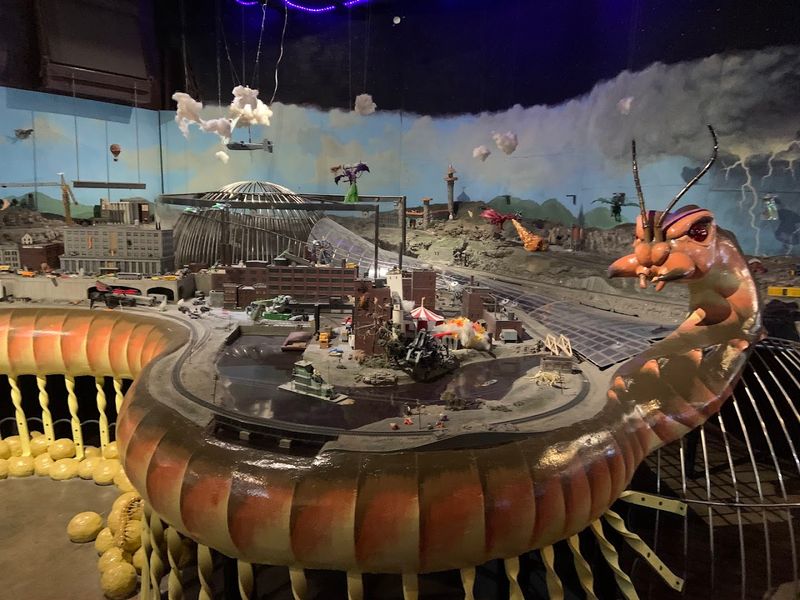
Before City Museum was a playground for the eternally young at heart, this building made shoes for much of America.
The structure was originally the International Shoe Company factory, one of the largest shoe manufacturers in the world during the early twentieth century.
The building opened in 1901 and operated for decades before closing its doors.
You can still feel the industrial bones of the place if you pay attention. The ceilings soar to heights that remind you this space once held massive machinery and hundreds of workers.
The brick is original, the columns are original, and the scale of everything feels rooted in a different era of American manufacturing.
Bob Cassilly saw something most people would have overlooked in an abandoned factory. He spent years transforming it piece by piece, using salvaged materials from demolished buildings across St. Louis.
Ornate facades, iron gates, stone carvings, and architectural fragments from the city’s own history became the raw material for City Museum’s interior.
The result is a place that carries genuine historical weight underneath all the joy and noise. Knowing the history makes the whole experience richer.
The Outdoor Jungle Gym That Has No Rules
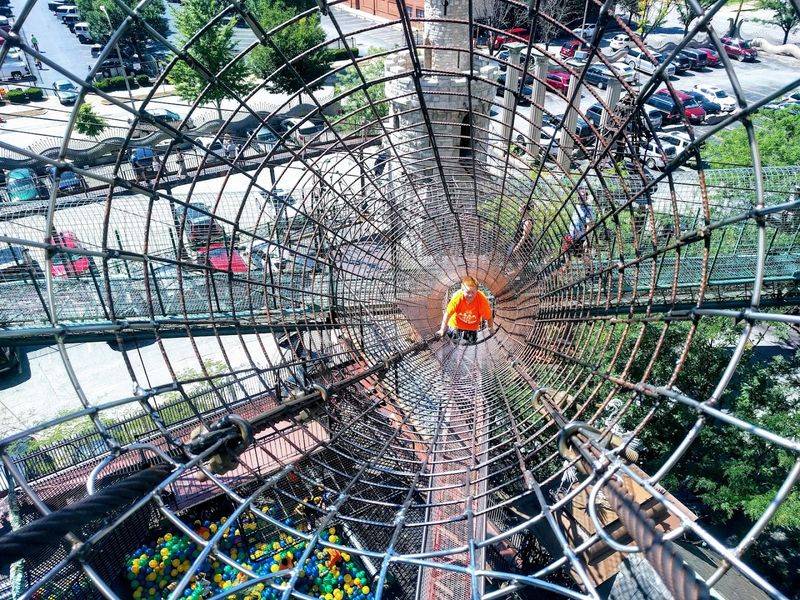
MonstroCity sounds like something a child invented during recess, and that is exactly the energy it delivers.
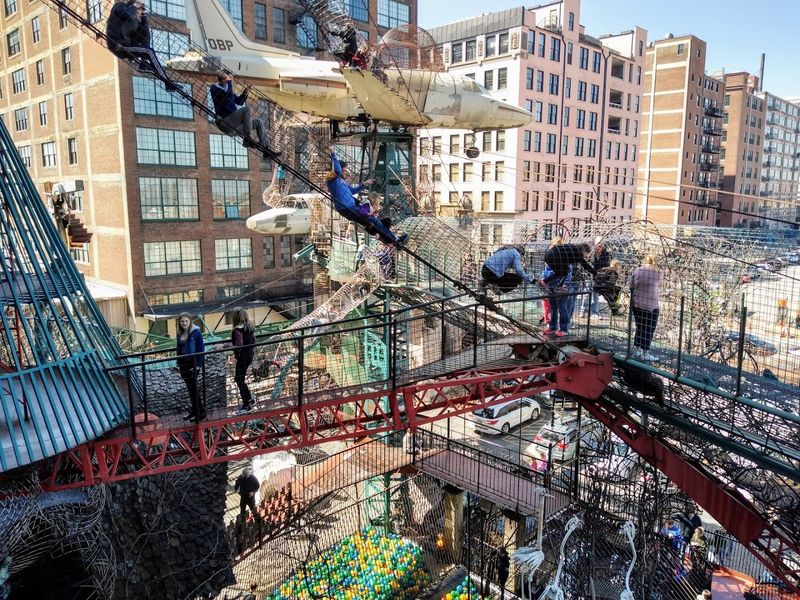
This massive outdoor climbing structure wraps around the exterior of City Museum like a fever dream built from cranes, fuselages, and salvaged architectural steel. It is enormous, multi-leveled, and completely open to anyone willing to climb it.
Old airplane fuselages are embedded into the structure. Repurposed construction cranes form the skeleton of the whole thing.
Mesh tunnels connect platforms at varying heights, and small caves are tucked into unexpected corners throughout.
Watching adults navigate it with the same focus they probably bring to spreadsheets is genuinely entertaining.
MonstroCity changes slightly over time as new salvaged elements get incorporated into the structure. That means repeat visitors always find something they did not notice before.
The whole thing sits in an outdoor space adjacent to the main building, and on a sunny day it becomes the social center of the entire museum.
Strangers help each other through tricky sections. Groups cheer when someone finally squeezes through a particularly narrow passage.
The structure does not just entertain people. It turns them into a temporary community built entirely around shared silliness.
Fastest Way To Lose Your Dignity Gracefully
There is a ten-story slide inside City Museum, and the only appropriate response upon seeing it is to immediately get in line. The slides here are not the gentle plastic kind from a neighborhood park.
They are long, fast, built into the architecture of the building, and they end with a landing that surprises you every single time.
The most famous slide drops several stories through the interior of the building, twisting through the structure before depositing riders onto a padded landing area. Your hair will not recover quickly.
Your composure will not recover at all. Both of those things are acceptable outcomes.
There are multiple slides throughout City Museum, ranging from manageable to genuinely exhilarating. Some are built into the cave system.
Others emerge from unexpected openings in the walls.
A few require navigating a tunnel system just to reach the entrance. The whole setup rewards exploration and punishes anyone who tries to follow a logical path through the building.
The slides are not just attractions inside City Museum. They are the building’s way of reminding you that the fastest route is always the most fun one, regardless of your age or professional title.
The Enchanted Caves And Architectural Salvage Art
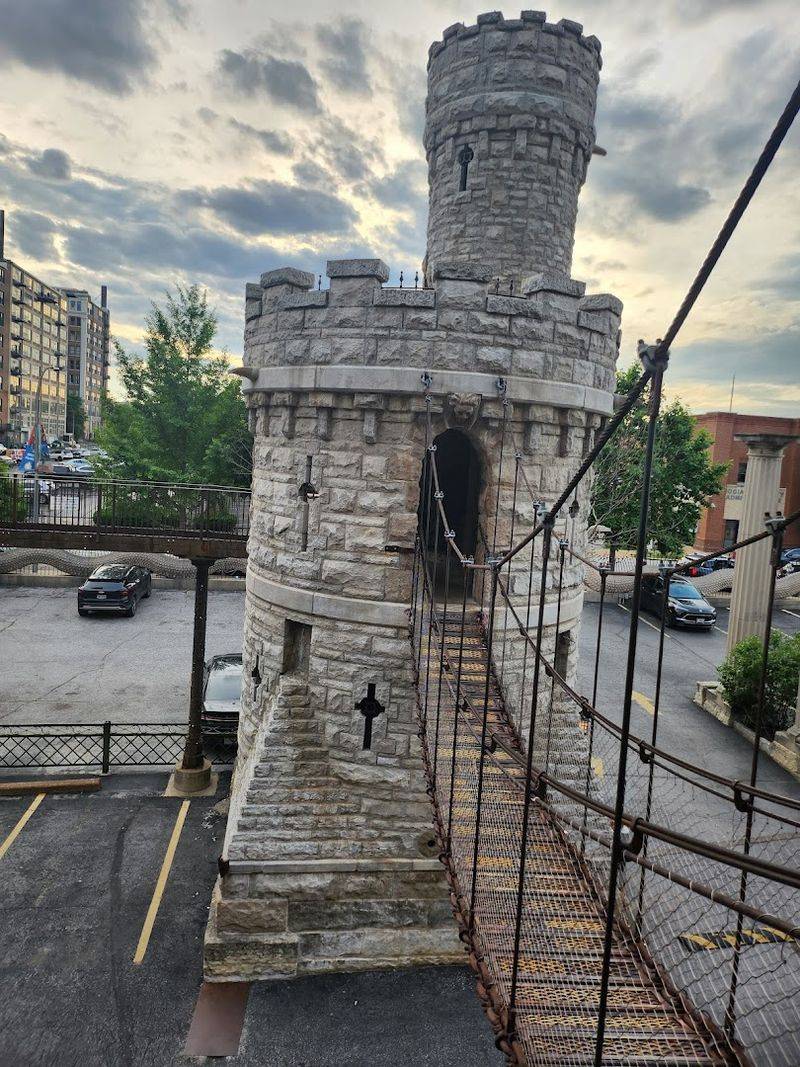
City Museum is essentially a love letter to St. Louis buildings that no longer exist.
When historic structures across the city were demolished over the decades, Bob Cassilly collected their decorative elements and brought them here.
Stone gargoyles, ornamental ironwork, stained glass panels, and carved facades from buildings that disappeared long ago now live inside this former factory.
Walking through certain sections of City Museum feels like an accidental history lesson. You pass a carved stone arch that once framed the entrance of a downtown building from the 1890s.
You duck under a decorative iron gate that probably once marked the boundary of a grand estate. The details are extraordinary if you slow down long enough to notice them.
This salvage approach gives City Museum a texture that purpose-built attractions simply cannot replicate. Everything here has a previous life, and that history is layered into every surface.
The artistic vision behind it all is consistent even when the elements are wildly different from each other. It takes real skill to make a collection of architectural orphans feel like a coherent and beautiful whole.
City Museum pulls that off in a way that becomes more impressive the longer you spend inside it.
What To Know Before You Go
City Museum is the kind of place that rewards preparation without requiring it. Wear clothes you do not mind getting dusty, scuffed, or slightly grass-stained.
Closed-toe shoes are strongly recommended because you will be climbing, crawling, and squeezing through spaces that sandals were not designed for.
Bring a small bag you can wear on your back so your hands stay free throughout.
The museum is open most days, though hours shift seasonally, so checking the official website before arriving saves frustration.
Admission prices vary based on age and the time of year. The rooftop and certain special areas sometimes carry separate fees, so reviewing the current pricing before you go helps you plan the day properly.
City Museum works best when you give it a full afternoon.
Rushing through it means missing the best parts, which are almost always tucked into corners you would never find in the first thirty minutes.
Go on a weekday if your schedule allows, since weekend crowds can make the popular tunnels and slides feel like a slow-moving queue.
Parking is available nearby along 16th Street and in surrounding lots.