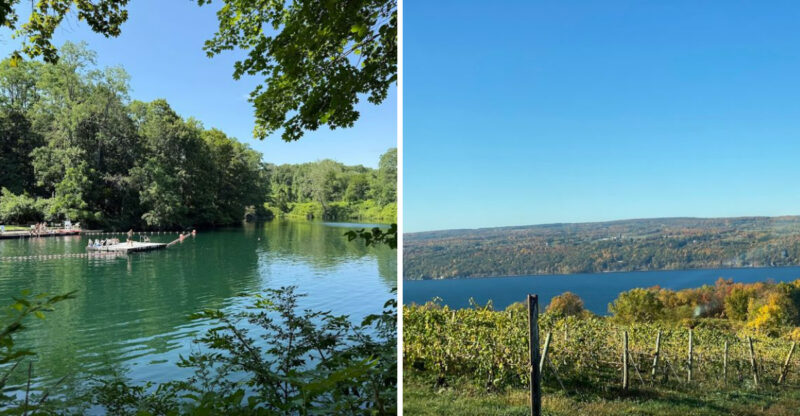
The 9 New York Animal Sanctuaries Where You Can Spend A Day With Rescued Animals
A goat is chewing your shoelace, a cow wants attention, and somebody nearby has already fallen in love with a pig.
Welcome to a very good day!
New York has animal sanctuaries where rescued farm residents get safe pastures, warm barns, and the chance to simply be themselves.
That is what makes visiting so much fun.
Every animal has a personality, and every rescue story adds another layer. Some residents are shy. Others act like they own the place.
You arrive thinking you will take a few photos and leave. Then one curious face follows you around, and suddenly the goodbye gets surprisingly difficult.
1. Farm Sanctuary, Watkins Glen
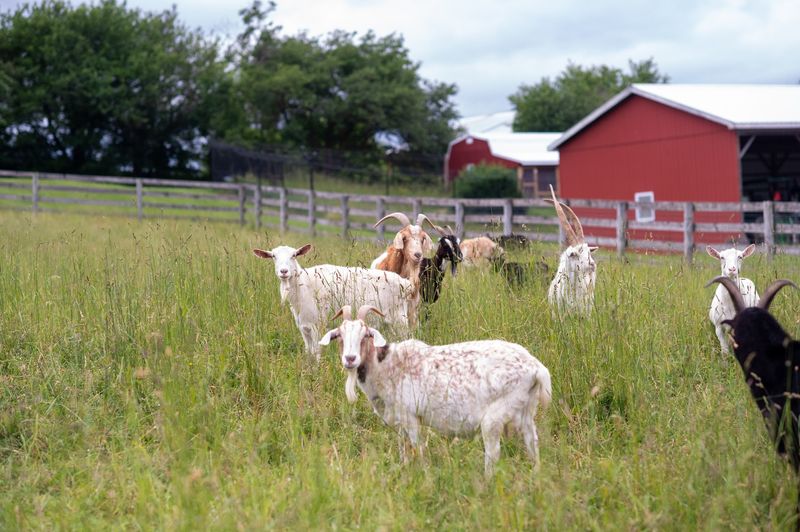
Have you ever wondered what a pig thinks about all day? Snacks and naps certainly seem to rank high.
Farm Sanctuary in Watkins Glen spreads across 275 acres in the Finger Lakes, where hundreds of rescued cows, pigs, turkeys, goats, sheep, and other farm animals receive lifelong care.
Guided visits currently run 60 to 90 minutes, and advance registration is required for every sanctuary visit.
Tour routes pass through barns, pastures, and uneven farm terrain while introducing residents and the circumstances that brought them to safety.
Closed-toe shoes are required, and gravel, dirt, slopes, mud, or dust can affect the route. Wheelchairs and walkers are not permitted inside animal areas for safety, so visitors needing accommodations should arrange them before arriving.
The Kitchen adds an easy lunch stop with seasonal plant-based food using ingredients from local farms and the sanctuary garden. The Sanctuary Shop is also open on tour days for books, apparel, gifts, and keepsakes.
Overnight stays are available in tiny houses and a larger cabin for members. A plant-based breakfast is included, along with a guided sanctuary experience when conditions allow.
The 2026 public tour season runs on select dates from spring through fall, with additional winter lodging available. Find the sanctuary at 3100 Aikens Road, about 20 minutes west of Watkins Glen beside Sugar Hill State Forest.
2. Catskill Animal Sanctuary, Saugerties
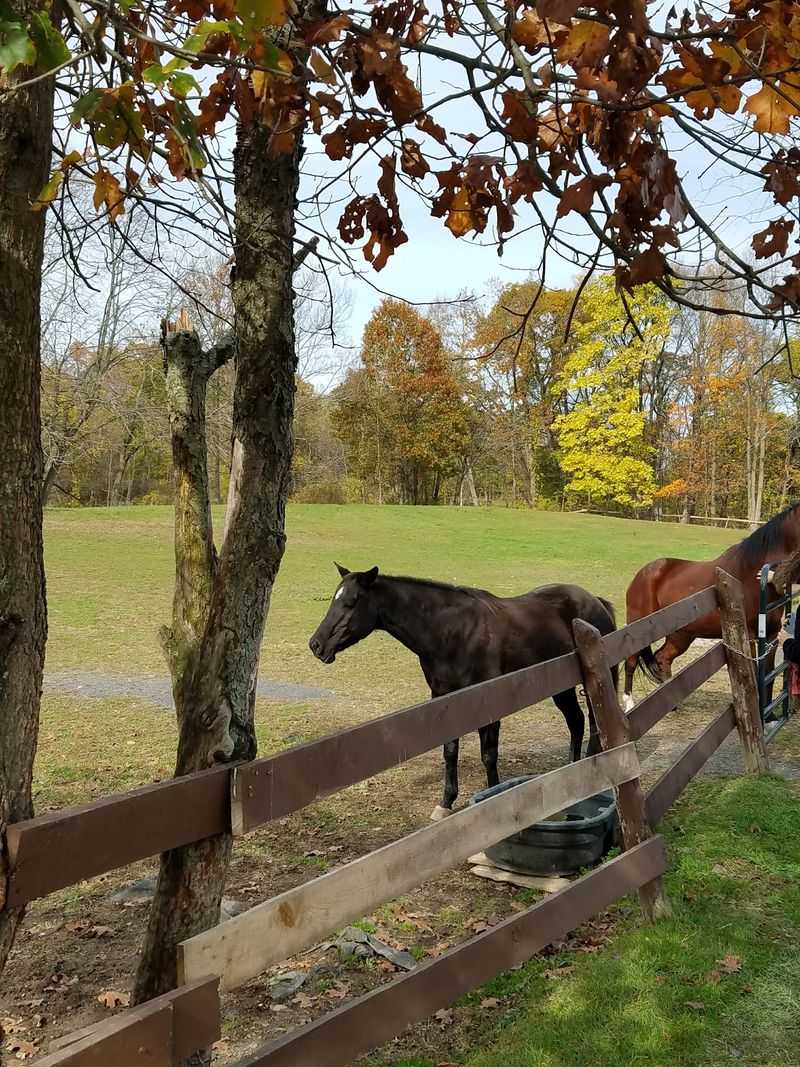
A goat strolling past like it owns the farm can reset the whole mood in seconds.
Catskill Animal Sanctuary in Saugerties is celebrating 25 years of rescue work in the Hudson Valley in 2026.
More than 5,000 farmed animals have passed through its care since the nonprofit opened in 2001, while current residents include cows, pigs, sheep, goats, horses, chickens, turkeys, ducks, and others across the property.
During the 2026 public season, visitor options included 90-minute guided tours, shorter family-focused tours, and weekend day passes.
Every visit required advance scheduling. Day passes allowed guests age 12 and older to explore designated areas at their own pace while also joining a guided tour.
For fall visits, private 90-minute sanctuary tours continue on selected dates into November. These offer a closer educational look at residents who enjoy interaction while giving shy animals appropriate space.
This is a sanctuary rather than a petting zoo, so contact depends on each animal and the safety needs of the day. Quiet observation can be just as rewarding as a close encounter.
The restored Homestead guest house provides lodging on sanctuary grounds as a membership benefit, with a vegan breakfast included for eligible guests.
The address is 316 Old Stage Road, a few minutes from the New York State Thruway and within easy reach of the Catskill Mountains.
3. Woodstock Farm Sanctuary, High Falls
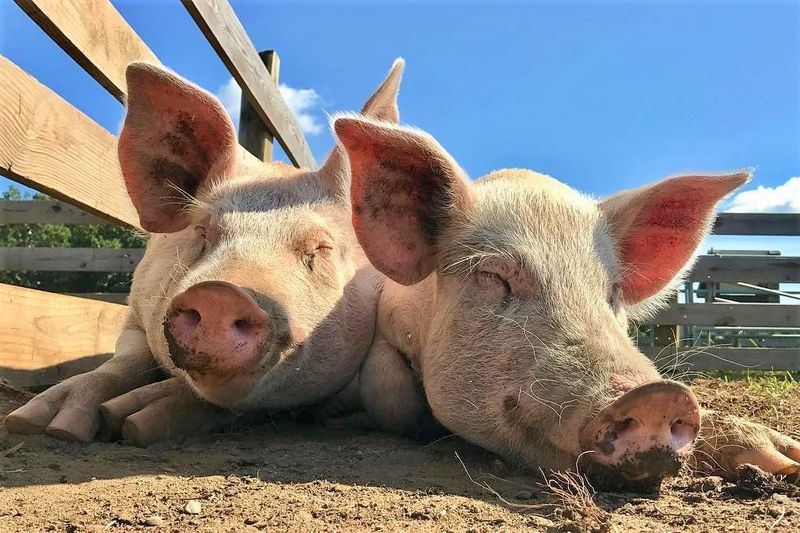
Nearly 300 rescued animals share one Hudson Valley hillside.
Woodstock Farm Sanctuary in High Falls covers 135 acres. Founded in 2004, the nonprofit combines lifelong care with public education and advocacy.
Cows, pigs, goats, sheep, chickens, turkeys, rabbits, and other residents live here after rescue from neglect, exploitation, abandonment, or other difficult circumstances.
Public education tours are the main way to visit. Advance tickets are strongly encouraged because capacity is limited, and walk-in availability is not guaranteed.
A shorter kid-friendly tour is offered at selected times, while regular guided visits focus on individual residents, their histories, and the sanctuary’s broader animal-protection work.
The 2026 season extends well into fall, with the final regular public tours scheduled for November. Special autumn programs add occasional chances to see pigs, turkeys, and other residents during seasonal activities.
The 135-acre setting becomes especially striking when Hudson Valley foliage changes, but practical farm clothing still matters. Tours continue in ordinary rain, so sturdy shoes and layers are useful.
Visitors who want more time can stay at The Gray Barn, an inn on the sanctuary grounds where a plant-based breakfast is served each morning. Private tours are also available on selected dates.
The entrance is at 2 Rescue Road in High Falls. Booking ahead gives the animals, staff, and visitors a calmer and more predictable experience.
4. Asha’s Farm Sanctuary, Newfane
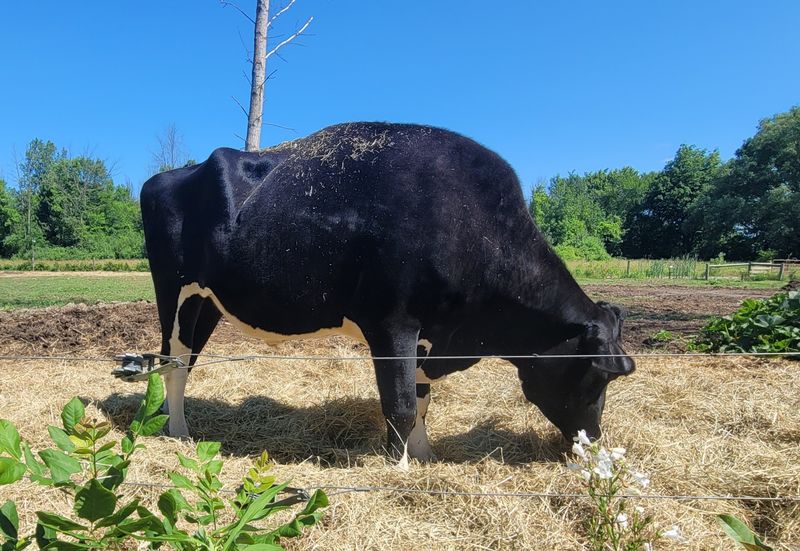
It makes you wonder, doesn’t it, how calm a pasture can feel? The answer might surprise you.
Asha’s Farm Sanctuary in Newfane focuses primarily on rescued cows and combines animal care with community programs rooted in Christian teachings about mercy and compassion.
Public access in 2026 is more structured than a casual drop-in farm visit.
From May through October, the main bookable option is a three-hour Private Sanctuary Escape for groups of up to six.
The visit includes a plant-based meal, an educational presentation, guided time with the cattle, and a self-guided nature trail for quiet reflection. Reservations require advance planning rather than same-day arrival.
The sanctuary also schedules larger community events. Its 2026 calendar has included a fall cow festival and lists a Thanksgiving gathering centered on a plant-based meal and time with rescued cattle.
Family programs have also paired animal visits with educational activities and shared meals.
The property includes wooded areas, barns, pasture, and a nature trail, creating a slower setting than a traditional attraction.
Close contact with the herd happens within the structure of the scheduled experience rather than through unrestricted wandering.
The address remains 2969 Coomer Road in Newfane, in quiet western New York farm country. Anyone hoping to visit should reserve the appropriate experience first, since ordinary public hours are not posted as open farm access.
5. Broome Animal Sanctuary, Middleburgh
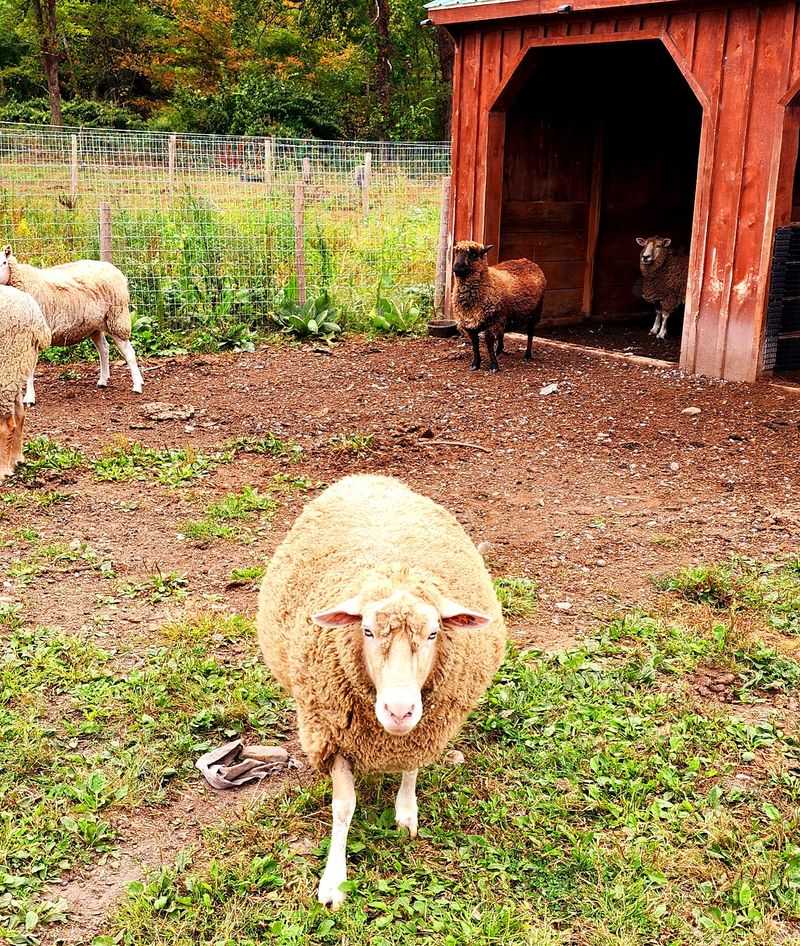
Alpacas make everything better. Their fluffy hairdos alone deserve applause.
Broome Animal Sanctuary in Middleburgh provides refuge to a mixed group of rescued farm animals and also works to educate visitors about animal welfare and factory farming.
Pigs, cows, sheep, goats, alpacas, rabbits, and birds are among the residents cared for on the property.
Visits take the form of scheduled small-group tours rather than open wandering.
Current 2026 tours last up to 90 minutes and introduce guests to some of the animals while explaining their backgrounds and daily care. Larger groups can arrange separate visits in advance.
This is not a petting zoo, and no particular animal interaction is guaranteed. Some residents may approach visitors, while others need more distance.
Running, chasing, and loud behavior are prohibited so animals with difficult histories can remain comfortable.
The walking route crosses rough ground, which matters when planning footwear and mobility needs. Strollers and other mobility devices are not permitted on the tour route, and sturdy shoes are the safer choice after wet weather.
Older references to an annual vegan festival should not be treated as a guaranteed current event; the sanctuary’s posted festival information is from earlier years.
Tour check-in uses 315 State Route 145 in Middleburgh. Advance booking keeps group sizes controlled and helps preserve a calm environment for the residents.
6. Cracker Box Palace, North Rose
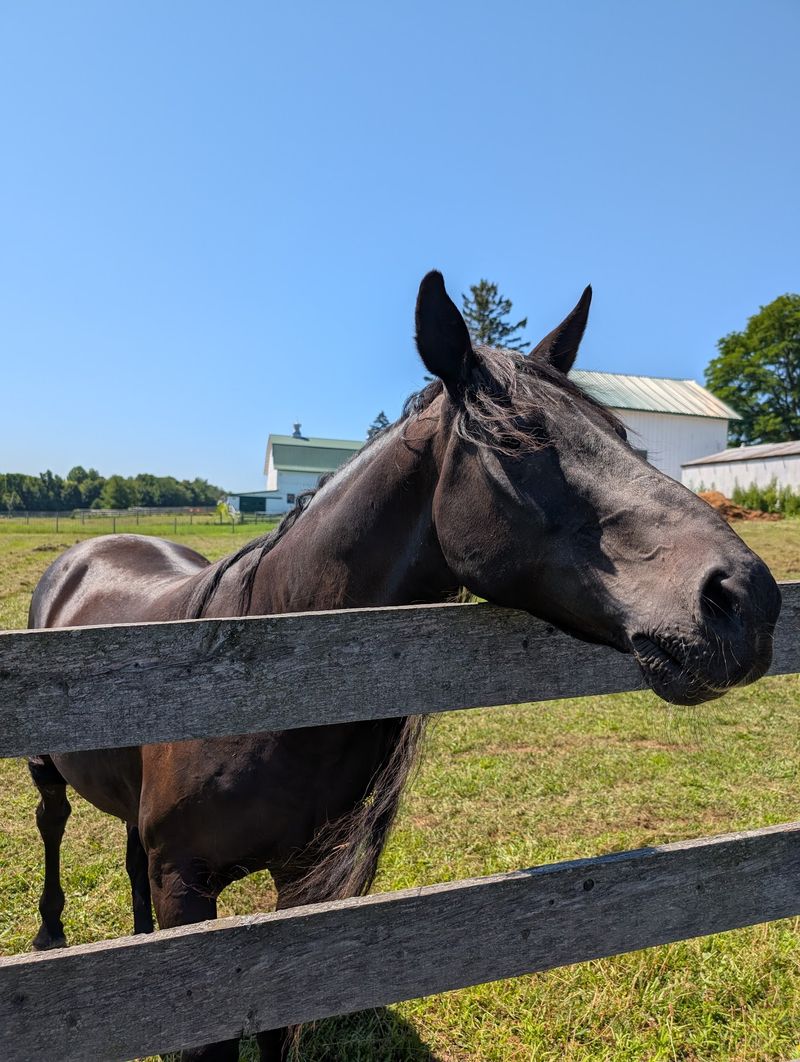
Just imagine for a second a barn older than your great-great-grandparents. Now picture rescued horses napping inside it.
Cracker Box Palace operates at historic Alasa Farms in North Rose, combining farm-animal rescue, historic preservation, conservation, and outdoor recreation across 627 protected acres.
Horses, cows, pigs, goats, sheep, birds, rabbits, and other rescued or sheltered animals live in the historic farm complex.
The property is listed on the National Register of Historic Places, and two surviving buildings date to its Shaker period.
That history gives a barn visit another layer, especially when paired with the surrounding fields, woods, wetlands, and old farm structures.
Barns are open daily for visitors, and admission is not required, although donations support animal care. Guided tours require advance arrangements.
The wider property also contains an extensive marked trail network used for hiking, wildlife watching, and horseback riding.
A seasonal restriction matters right now. From October 1 through January 2, the yellow, orange, pink, and purple trails are closed as part of the deer-management program.
Red, blue, and green trails remain available, and high-visibility clothing is recommended during hunting season.
The entrance is at 6420 Shaker Road in North Rose. Combining barn time with an open trail can easily turn the stop into a longer countryside visit.
7. Safe Haven Farm Sanctuary, Poughquag
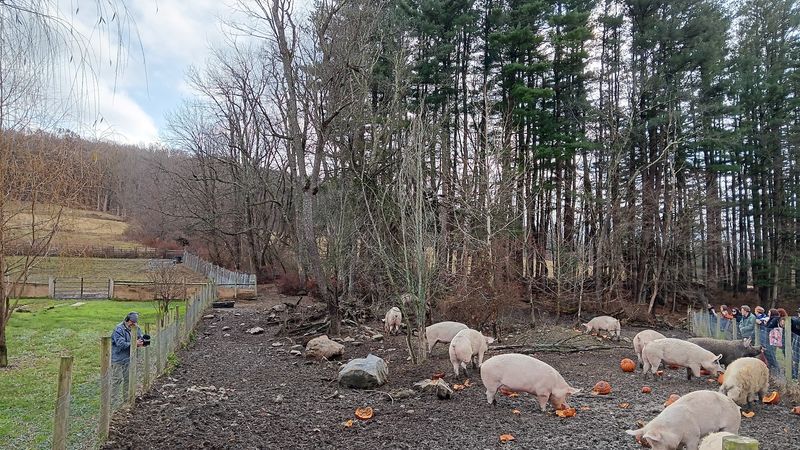
Safe Haven Farm Sanctuary is tucked in Poughquag, in the Mid-Hudson Valley. Over 170 rescued animals live here for good.
The sanctuary has provided lifelong care since 2008 for farmed animals rescued from neglect, abuse, and slaughter.
Current residents include pigs, goats, sheep, chickens, turkeys, donkeys, cows, horses, and other animals, creating a varied outdoor visit rather than a single-species experience.
Tours are small, outdoors, and weather dependent. Reservations must be made at least 24 hours ahead, with weekend tours normally beginning just before noon.
The first activity is feeding the larger pigs their lunch, followed by a guided walk through pasture areas and stories about individual rescues. Weekday visits may sometimes be arranged, but they also begin around midday.
Farm conditions can be muddy, so sturdy shoes and washable clothing make sense. Outside food cannot be given to residents because some animals follow special diets, although approved treats may be available during the tour.
An on-site farmhouse cottage offers another way to stay longer. Eligible guests receive a sanctuary tour and a simple plant-based breakfast setup, while the cottage intentionally skips television and Wi-Fi for a quieter stay.
The sanctuary is at 254 Gardner Hollow Road in rural Poughquag, New York. Calling ahead is essential because it does not operate as a walk-in attraction with fixed daily visitor hours.
8. Sweet Farm, Himrod
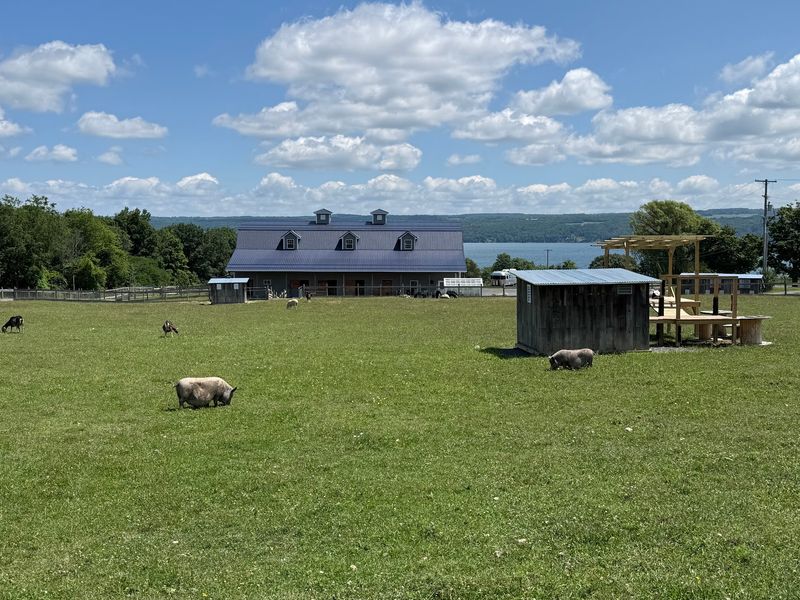
A climate sanctuary sounds a little like a superhero base. Here, the heroes have wool and hooves.
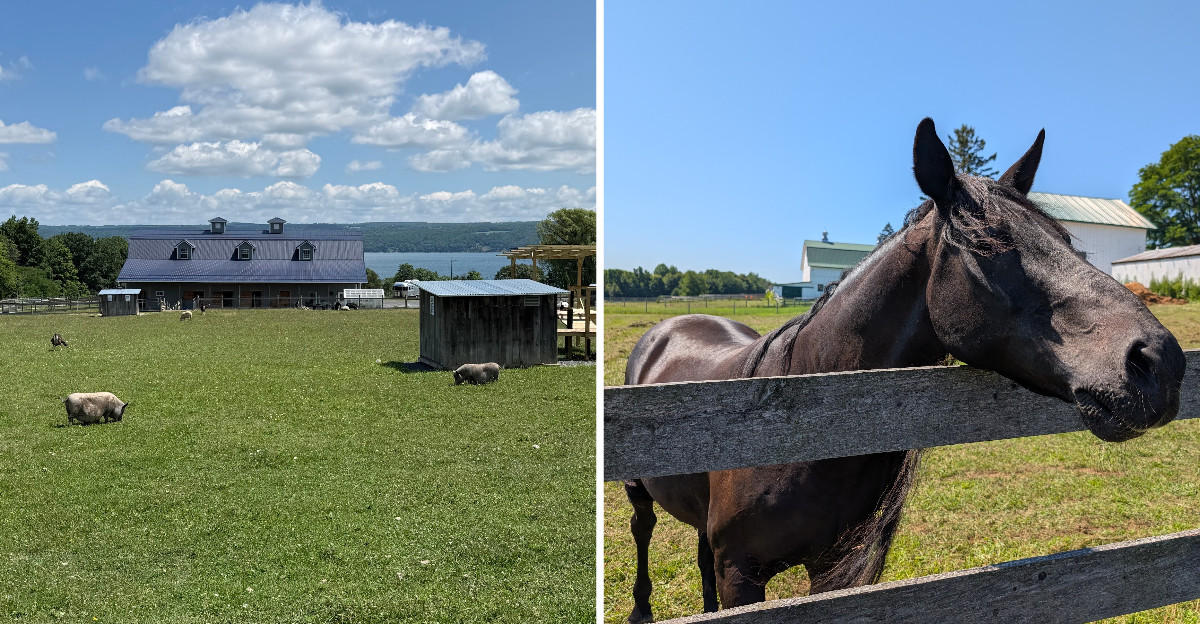
Sweet Farm in Himrod sits on more than 50 acres overlooking Seneca Lake and cares for more than 150 rescued animals.
Sheep, goats, llamas, pigs, chickens, and other residents share the property with regenerative growing areas devoted to food, flowers, and agricultural education.
One-hour public tours run year-round and require reservations. Depending on the season, tour dates may be offered daily or weekly.
Visits bring guests close to selected residents while explaining rescue work, sustainable agriculture, and the farm’s broader environmental programs. Private tours provide additional time and can include garden or foraging-trail components.
The nonprofit began in California in 2015 before relocating its rescued animals to the Finger Lakes after wildfire and drought threats intensified.
The larger New York property allowed the organization to expand both animal care and crop production.
During the growing season, a pay-what-you-can farm stand operates around the clock with produce and flowers raised on site.
The farm grows hundreds of vegetable and flower varieties and also contributes food to the surrounding community.
Virtual Goat-2-Meeting sessions remain available for anyone who cannot travel to Himrod.
Find Sweet Farm at 210 Hall Road. Visitors should book the animal experience rather than dropping in, because unscheduled access around the rescued residents is not permitted.
9. Lewis Oliver Farm Sanctuary, Northport
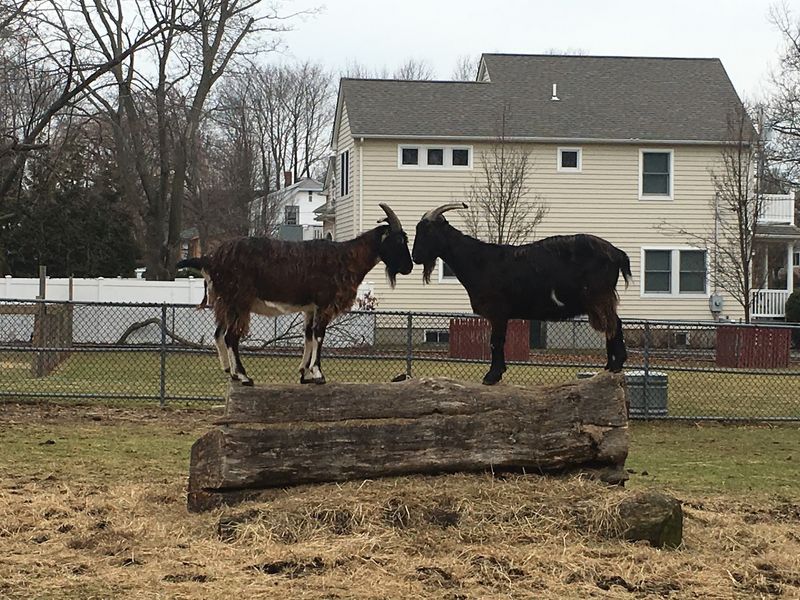
Few farms mix old history and fresh ideas this well.
Lewis Oliver Farm Sanctuary in Northport is a Long Island property dating to the mid-1800s.
It began as a dairy farm and now gives lifelong care to a small group of rescued farm animals while preserving one of the community’s longstanding agricultural landmarks.
The farm was jointly purchased by the Town of Huntington and Suffolk County in 2007 for preservation.
An all-volunteer nonprofit handles daily animal care, gardens, educational programs, fundraising, and much of the visitor experience.
Current residents include a cow, goats, sheep, alpacas, chickens, ducks, and turkeys. Original barns remain part of the property, while botanical and vegetable gardens support birds, insects, and other native wildlife.
The L.O.V.E. Center focuses on vegan education beside a small country store. Both are currently open on Saturdays when volunteer staffing allows.
The gardens also have a paved visitor path available during those Saturday hours.
Weekday animal-visiting hours generally run from late morning into early afternoon, while weekend access depends heavily on volunteer availability and weather.
Admission is not charged, though private donations fund animal care and programming.
The farm is on Burt Avenue in Northport. Checking current hours before driving over is important because staffing can change, especially on weekends.
A short visit can combine rescued animals, historic barns, gardens, and local agricultural history in one compact stop.