The 300-Acre New York Animal Sanctuary Where You Can Meet Rescued Wildlife Most People Rarely See
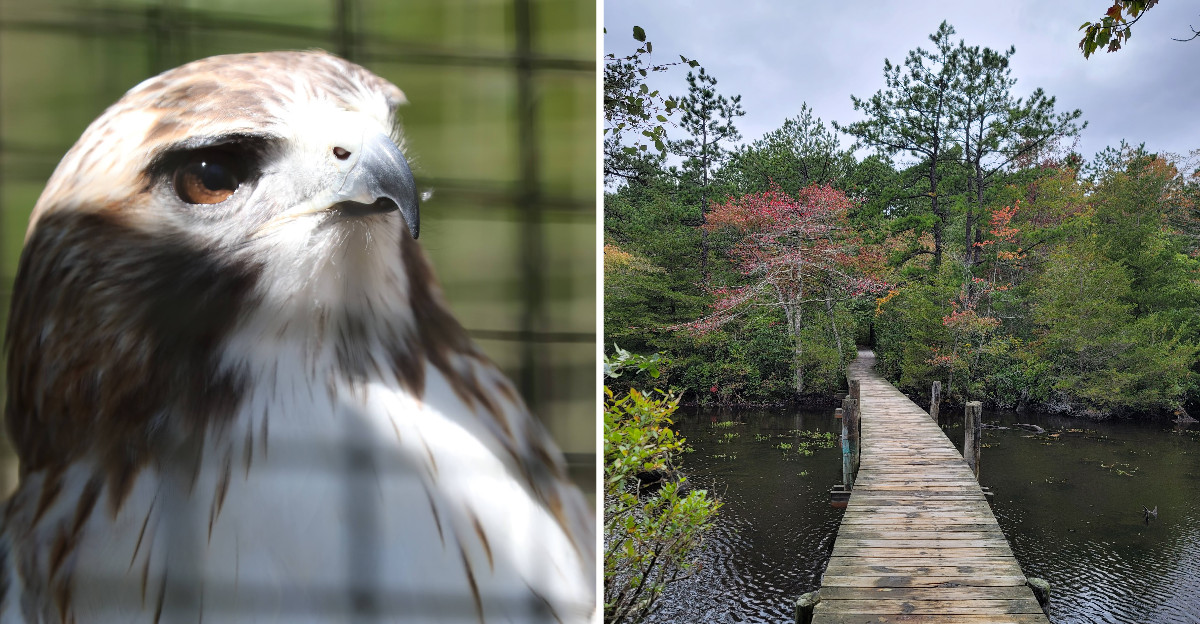
A nearly blind great horned owl named Hooter lives here, right next to a red-tailed hawk named Charlie with a broken wing.
My first word for this place was nice. Nice is not even close.
Those birds can’t survive in the wild anymore, so they work as teachers instead. Down the path, giant tortoises hang out in a greenhouse.
Okay, nice is officially fired. Surprising is better, but I need a better word for that.
The same grounds once held an ice company that cut frozen blocks from a pond.
Now the land protects rare dwarf pines in a corner of New York most people zoom past. Now we’re getting closer.
And you can wander it for free, every single day of the year. So what’s the right word? Maybe you should help me decide.
These Rescued Animals Have Jobs, And They Take Them Seriously
Hooter the great horned owl has lived at Quogue Wildlife Refuge since 2004.
He was raised around people and cannot return to a natural habitat. Now more than thirty years old, he rests in an enclosure away from the public displays, although his familiar hooting can sometimes be heard.
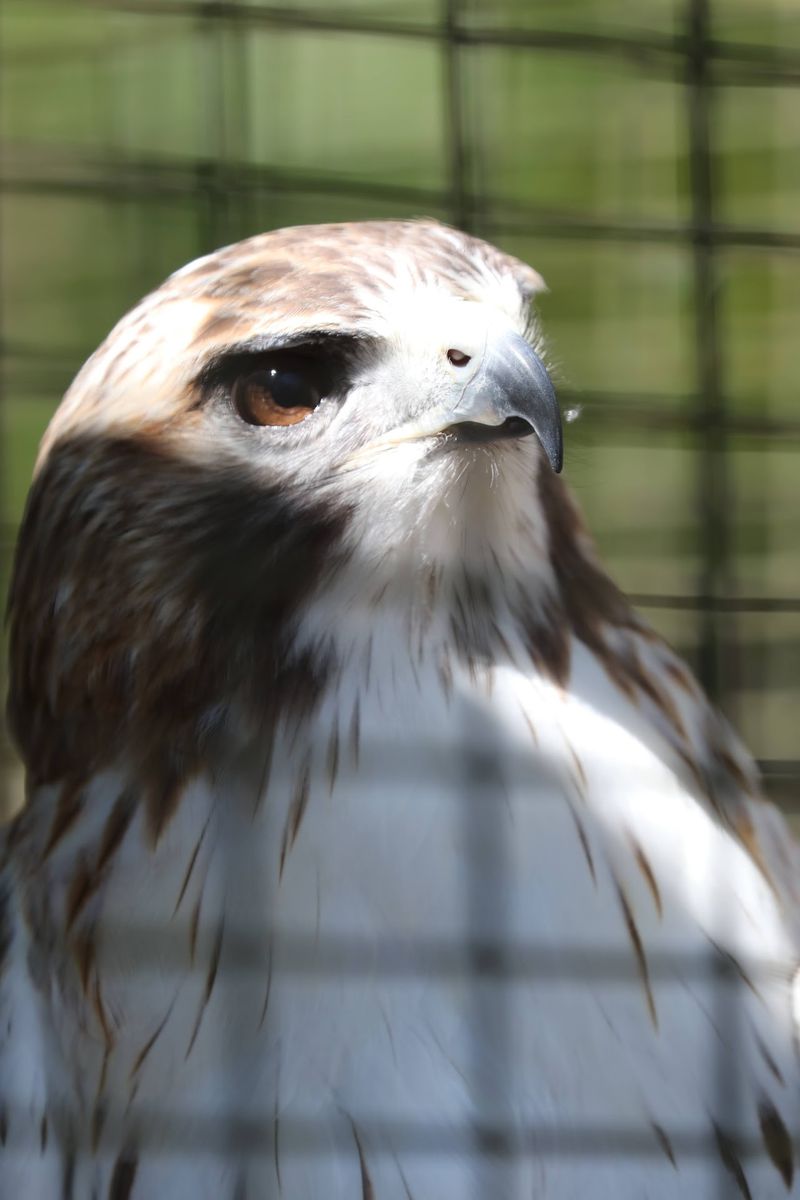
Charlie the red-tailed hawk is another longtime resident. He arrived after an injury to his left wing in 2008. Instead of soaring above Long Island, he serves as one of the refuge’s animal ambassadors.
The Outdoor Wildlife Complex also houses a barred owl, screech owls, a Cooper’s hawk, and a peregrine falcon.
There’s also Sugar, a Virginia opossum that arrived in 2024. She’s mostly active after dark, so an afternoon appearance is a little bonus rather than a sure thing.
Take your time near the enclosures. Watching an owl turn its head or a hawk study its surroundings is surprisingly absorbing.
Giant Tortoises Are Waiting Past The Pollinator Garden
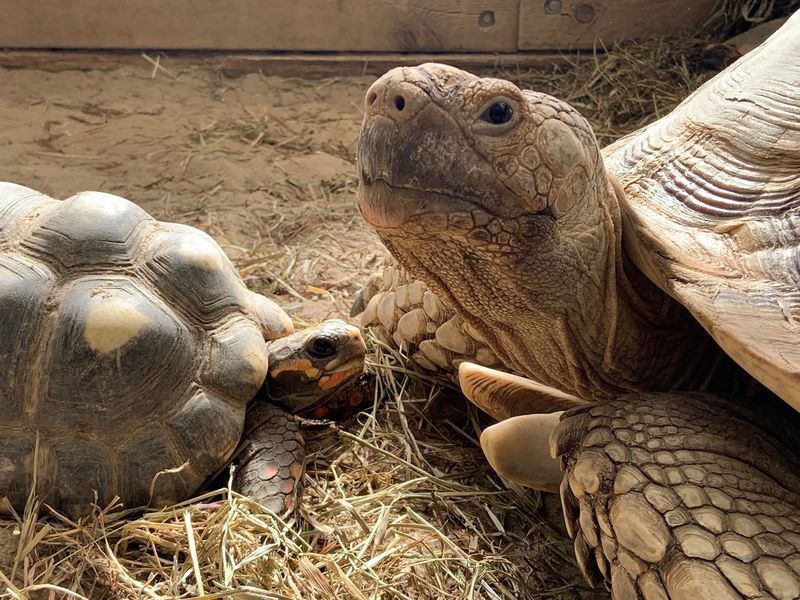
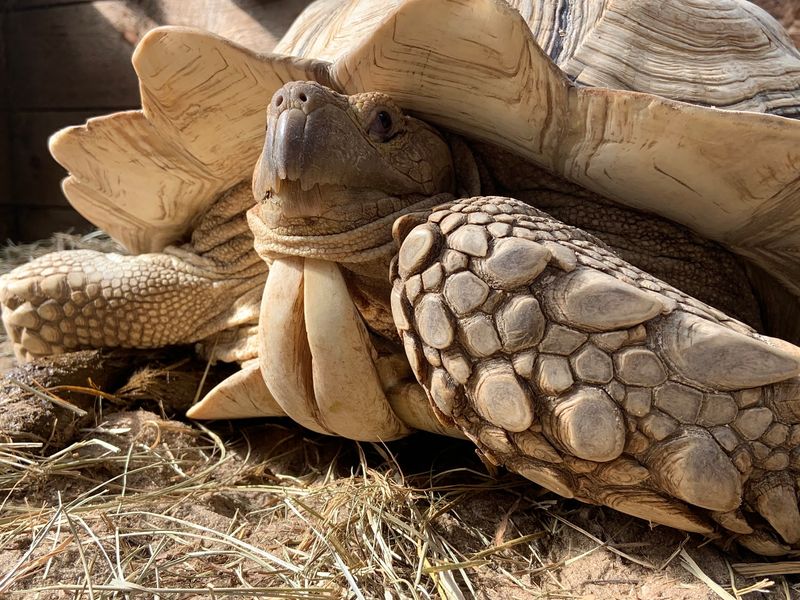
Owls and hawks get plenty of attention, but slow and steady has its own fan club. African spurred tortoises live in a greenhouse just beyond the refuge’s pollinator garden, alongside a red-footed tortoise.
Unlike the native birds outside, these reptiles come from other parts of the world and need a climate-controlled home.
The greenhouse was constructed in 2014 and opened to the public the following year.
Its controlled temperature and roomy enclosure give the tortoises space to move, explore, and dig. You may spot one wandering near the plants, or simply having a remarkably unhurried afternoon.
Outside, the garden features flowering plants chosen to support bees, butterflies, and hummingbirds. A brick walkway winds through the planting area, adding another reason to linger.
Seasonal blooms give the garden changing colors, while the tortoises carry on at their own pace.
Kids especially love the contrast. One minute you’re watching insects dart from flower to flower; the next you’re waiting for an enormous reptile to take another step. That’s a memorable double feature.
The Nature Center Has A Remarkable Cast Of Creatures
Madagascar hissing cockroaches live indoors here, and they’re only the beginning of the Charles Banks Belt Nature Center’s unusual animal collection.
Its residents include bearded dragons, ball pythons, leopard geckos, Vietnamese walking sticks, and chinchillas.
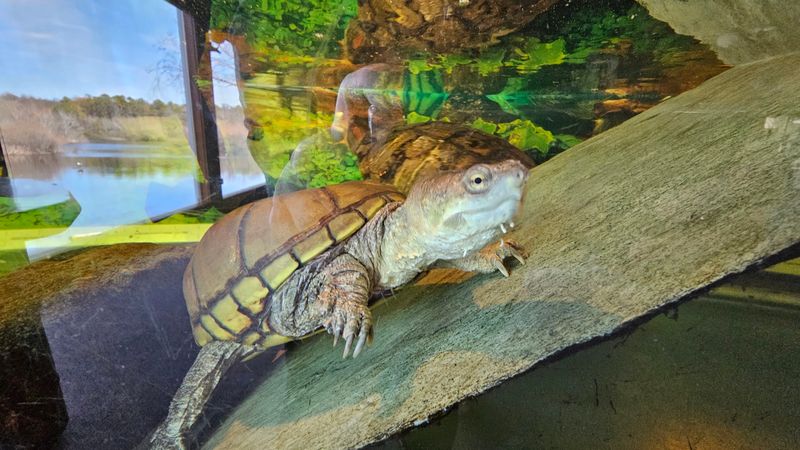
An eastern box turtle is part of the collection too. The walking sticks are particularly good at blending into branches, while the chinchillas are usually most active near dawn and dusk.
Normally, the building offers pond-facing windows, a children’s area, and wildlife exhibits. In late 2026, however, it is closed for renovations.
Construction began in July. The original 1970 building is being updated, with more room planned for educational programs and exhibits.
Indoor animals and staff have moved temporarily, making the displays unavailable to walk-in visitors.
Fortunately, the outdoor wildlife enclosures and trails remain open. The refuge also continues to organize educational activities throughout the year.
For now, save the indoor creature-spotting for a future visit. There’s still an impressive amount of wildlife to discover outside.
Seven Miles Of Trails Wind Through Remarkably Different Landscapes
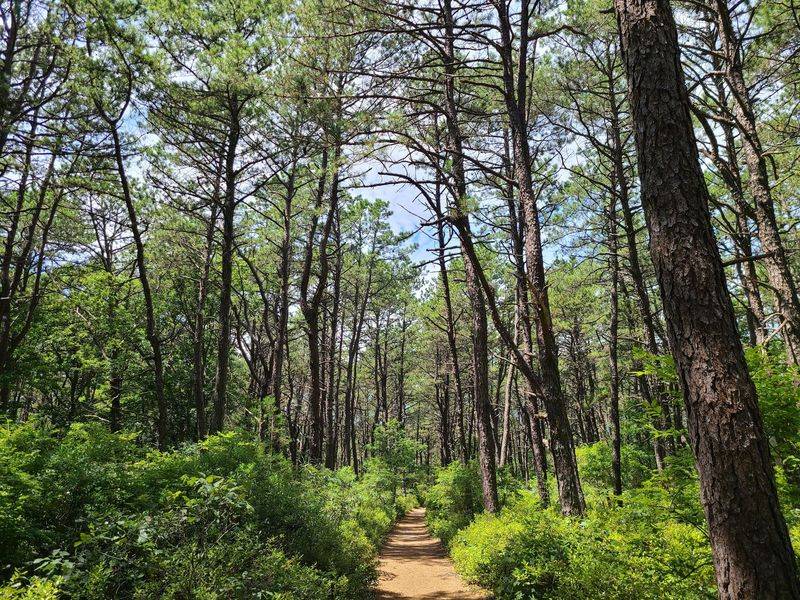
Seven miles is a lot of wandering room for a place you can explore for free. The trails at Quogue Wildlife Refuge cross 305 acres of protected land on Long Island.
You’ll pass pine woods, ponds, bogs, wetlands, and open areas. In the Pine Barrens, ecologically rare dwarf pines grow in sandy soil, giving the forest an unexpectedly miniature appearance.
The main pathway is suitable for many strollers and wheelchairs, allowing families to enjoy the surroundings without committing to a longer woodland trek. Elsewhere, sturdy shoes help on uneven ground.
Some sections are temporarily closed for work involving southern pine beetle damage. Follow the signs and remain on designated open routes, even if a familiar loop looks inviting.
Dogs and bicycles aren’t permitted, and the refuge also prohibits picnicking. Those rules protect wildlife habitat.
Walking is possible year-round, with snowshoeing and cross-country skiing options when winter conditions cooperate.
Choose a short circuit around the pond or venture farther among the pines. This New York preserve offers very different scenery without requiring a long drive between stops.
The Pond Out Back Used To Supply An Ice Company
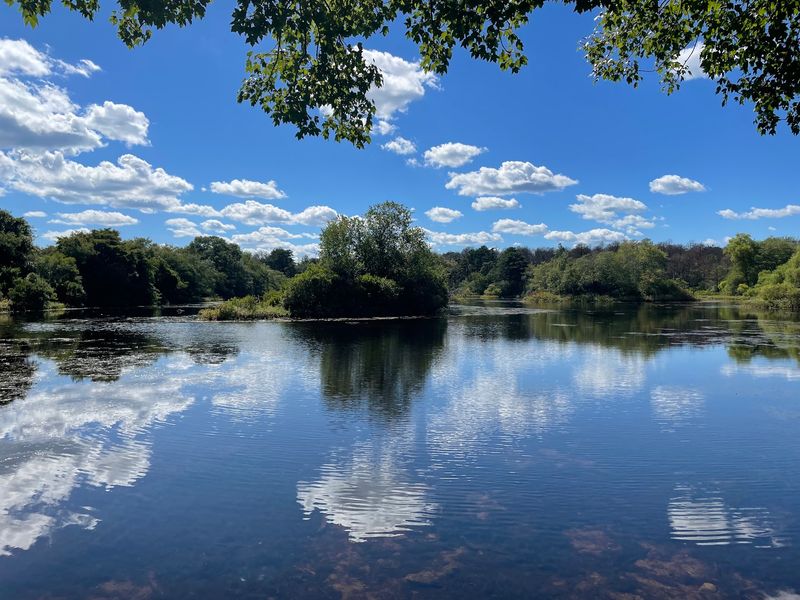
Long before household refrigerators became common, an ice company worked the land that now forms part of the refuge.
Workers cut frozen blocks, stored them, and supplied ice for nearby homes and businesses.
The Quogue Ice Company initially operated along Quantuck Creek, then moved its work to the pond near today’s refuge in the early twentieth century. Old Ice Pond still carries that history in its name.
The refuge maintains an Ice Harvesting Museum with century-old equipment. The tools reveal how much physical work went into providing something that now comes from a kitchen freezer at the push of a button.
Look at the pond today and the scene is entirely different. Trees reflect in the water, birds gather along the edges, and the surrounding paths provide a peaceful place to watch the seasons change.
The industrial past makes the property’s transformation into a wildlife sanctuary even more remarkable. That quiet pond seems even more interesting when you know its working past.
A Group Concerned About Ducks Started It All
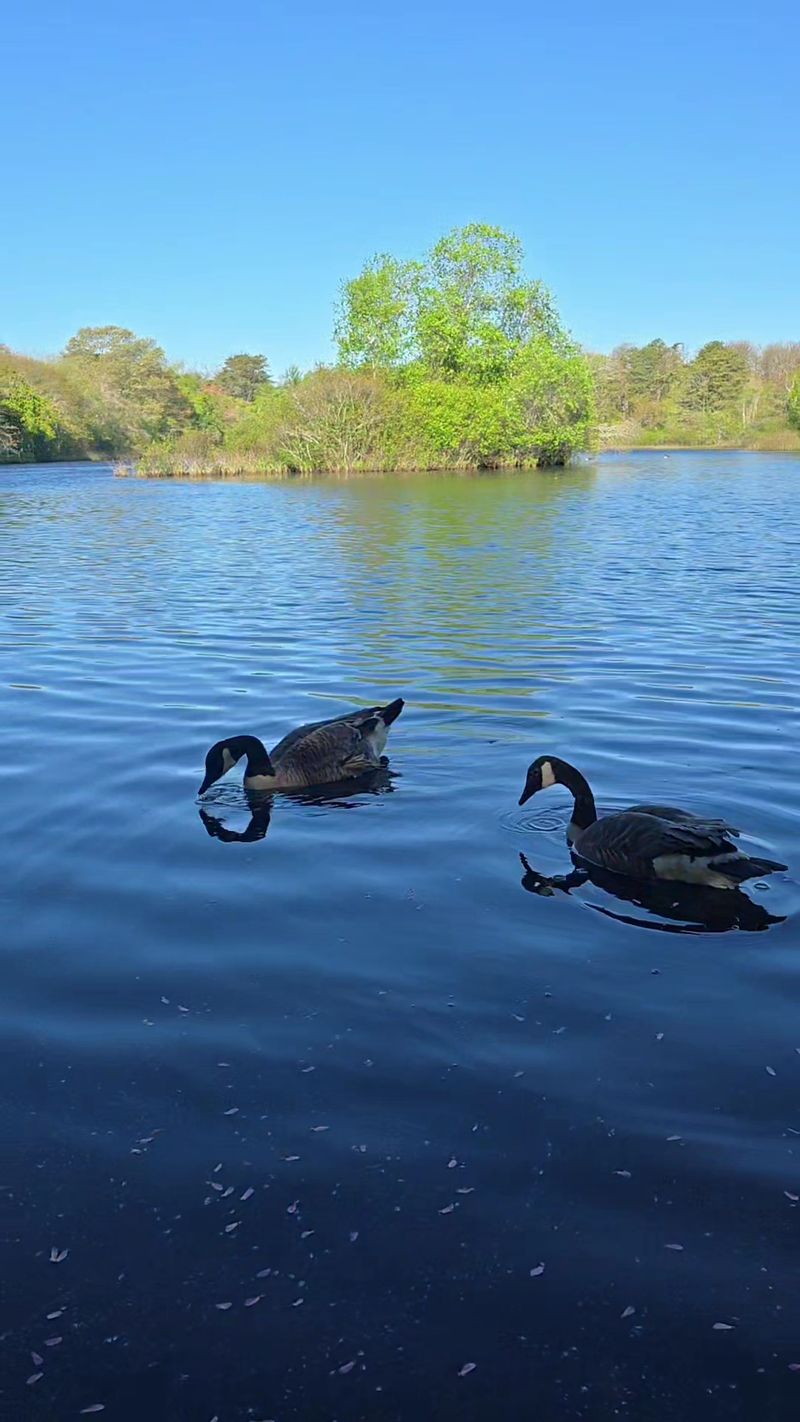
Black duck populations were declining in the early 1930s, and several local residents decided to create a protected place for waterfowl. They established Quogue Wildlife Refuge in 1934.
The Southampton Township Wildfowl Association began with 45 charter members.
They organized habitat protection and care for ducks during difficult winter conditions, eventually earning national recognition for their conservation efforts in 1936.
Land from the ice company became part of the sanctuary, which later grew to 305 acres.
For decades, the association cooperated with the New York State Department of Environmental Conservation to manage the property. Since 2006, the nonprofit association has overseen it directly.
Today its work spans habitat protection, trails, education, and lifelong animal care. It celebrated ninety years in 2024, an impressive stretch for an effort that began with a local concern about ducks.
The next time you spot waterfowl on Old Ice Pond, consider that connection. A familiar bird on the water helped inspire decades of protection for an entire landscape.
A Boardwalk Through The Wetlands Feels Like A Storybook Shortcut
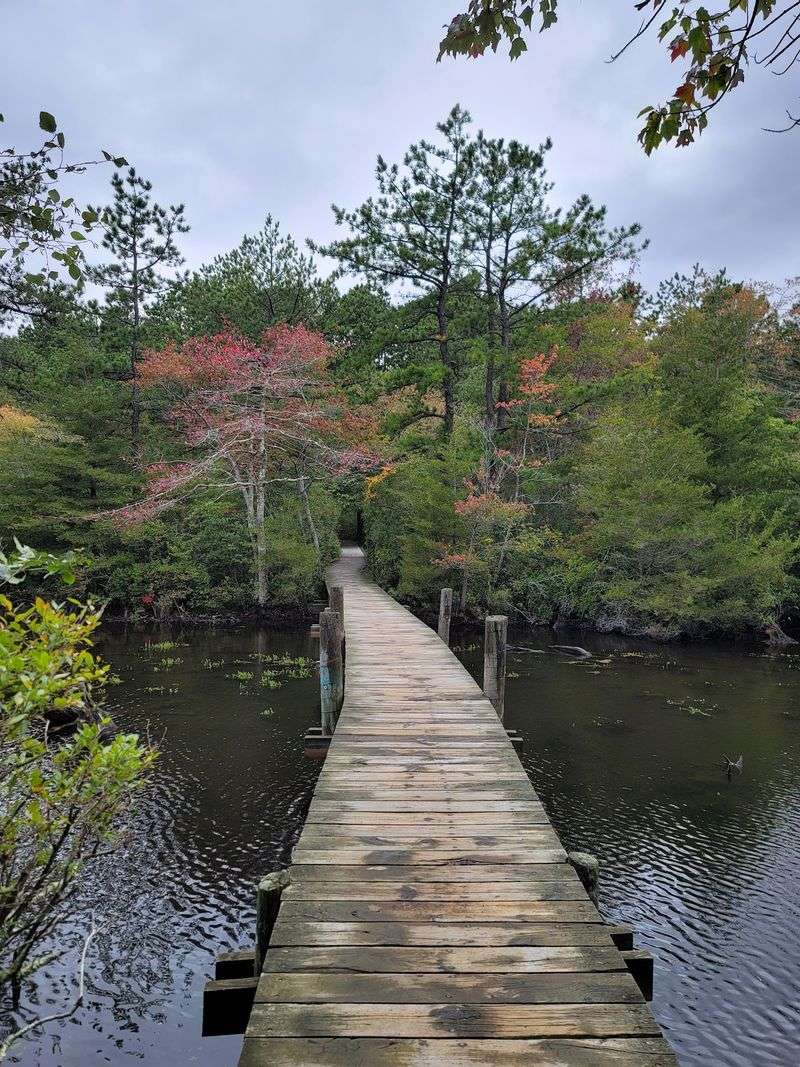
Fairy Dell sounds like something from a bedtime story. It’s actually a 1,500-foot boardwalk through tidal wetlands, with views of the headwaters of Quantuck Creek.
The raised walkway winds through the historic Fairy Dell tract and branches toward three viewing platforms. Birds, reeds, and changing water levels make the scenery different from the pine forests around the main refuge.
First built in 1983–84 and later reconstructed, it features panels about local history and wetland wildlife.
Fairy Dell is a separate part of the sanctuary, reached near Old Main Road and South Country Road rather than directly from the main trail loops. The black entrance gate is near the Old Main Road railroad crossing.
The smooth surface and benches make an easy outing. Binoculars are handy for watching birds. The boardwalk is open from sunrise to sunset.
Dogs and bicycles aren’t permitted here either.
This New York wetland offers a very different perspective on the same refuge: less enclosed woodland, more open sky, and water stretching between the grasses.
Free Admission Makes Adopting An Owl Feel Like A Fair Trade
Here’s the best admission policy in nature: entry to Quogue Wildlife Refuge is free. The trails, Outdoor Wildlife Complex, and outdoor restrooms are available daily from sunrise to sunset throughout the year.
You’ll find the main entrance at 3 Old Country Road, Quogue, a short drive south of Sunrise Highway on eastern Long Island. Since visiting costs nothing, supporting the refuge can feel especially worthwhile.
Its symbolic animal adoption program helps fund food, housing, enrichment, and ongoing care. Adopters receive a certificate, an animal fact sheet, and a photograph, depending on the chosen option.
Imagine explaining that you’ve adopted a peregrine falcon or a red-tailed hawk. It’s a rather memorable gift for someone who loves animals.
The Nature Center is closed for renovations, and some trails have access restrictions. Stick to open paths during daylight.
Bring water and comfortable shoes, check for ticks afterward, and plan meals elsewhere because picnicking isn’t permitted.
In New York, a free outdoor sanctuary with rescued birds, giant tortoises, unusual pines, and a historic pond is quite a combination. Nice still doesn’t cover it.