The Old-Fashioned Nebraska Town That Feels Like the Set of a Holiday Movie
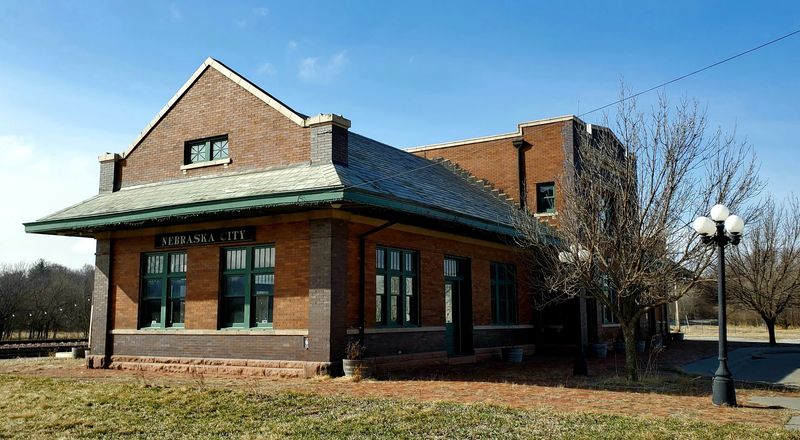
Some drives in Nebraska start out as errands and end up as memories. Head southeast until the flat farmland gives way to river bluffs and orchard hills, and you’ll find a small county seat where the streets narrow, the storefronts still wear their original brick, and the trees arch overhead like a tunnel.
It looks like a place a film crew would build from scratch, except every bit of it has been standing for generations. Here’s what makes this corner of the state worth pointing the car toward.
A River Town in Otoe County
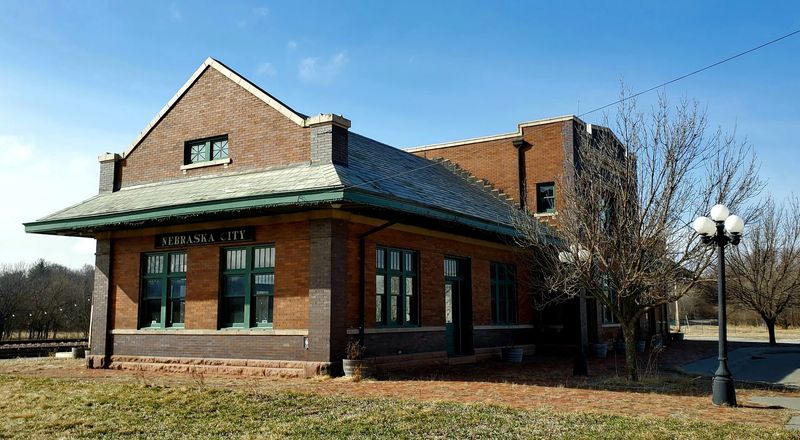
Roughly forty-five minutes south of Omaha, U.S. Highway 75 tips toward the Missouri River and the ground stops behaving like classic Nebraska flatland.
Bluffs rise, hardwoods crowd the shoulder, and church steeples appear above the treeline.
Nebraska City sits right there, county seat of Otoe County, with 7,222 residents counted in the 2020 census. Small enough to cross on foot in an afternoon, large enough to keep a real downtown busy on a Saturday.
Geography wrote the early chapters. The river brought a steamboat landing, the landing brought freight wagons headed west, and when the wagon trade faded, the hills above town filled with apple orchards instead.
What survives is an older street pattern: a courthouse anchoring the grid, tall commercial blocks with glass fronts, neighborhoods of deep porches under enormous trees. Once the season turns cold and strings of lights go up, the whole arrangement starts to look like something assembled for a camera crew.
Except the buildings have stood for well over a century, and the trees were planted on purpose. Nobody staged it, which is exactly why it works.
The Man Who Invented Arbor Day
A newspaper editor named J. Sterling Morton arrived in Nebraska Territory in 1854 and found a landscape almost entirely without trees.
He wrote about planting them, argued for planting them, and eventually proposed setting aside a whole day for the job.
The first Arbor Day took place on April 10, 1872, and an estimated one million trees went into Nebraska soil. The idea spread to other states, then other countries, all from a proposal made by a man living on a hill above the Missouri River.
Morton later served as U.S. Secretary of Agriculture under President Grover Cleveland.
His name still shows up on buildings, roads, and signs around town, and the house he kept expanding became the centerpiece of a state park.
Why does an 1872 tree holiday matter on a December drive? Because generations of planting are the reason these streets feel enclosed and shaded in summer, then lacy and lit up in winter.
Credit a stubborn editor with a shovel and a very long memory for what the prairie used to lack.
Arbor Lodge Dressed for December
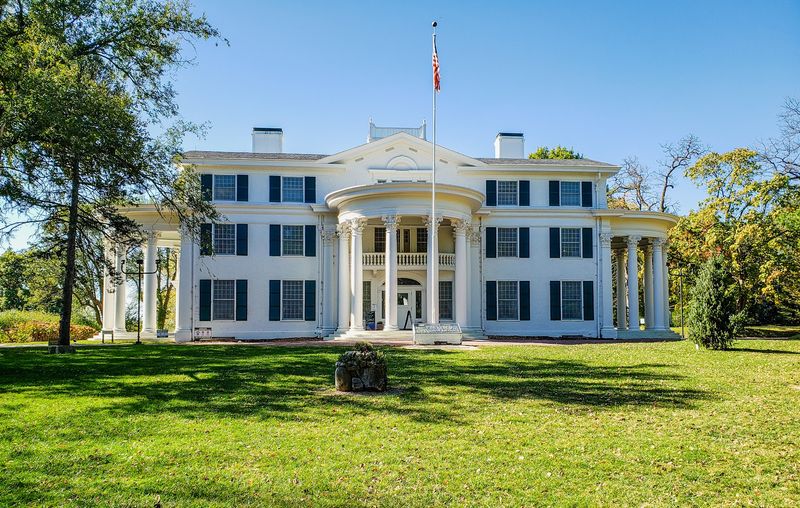
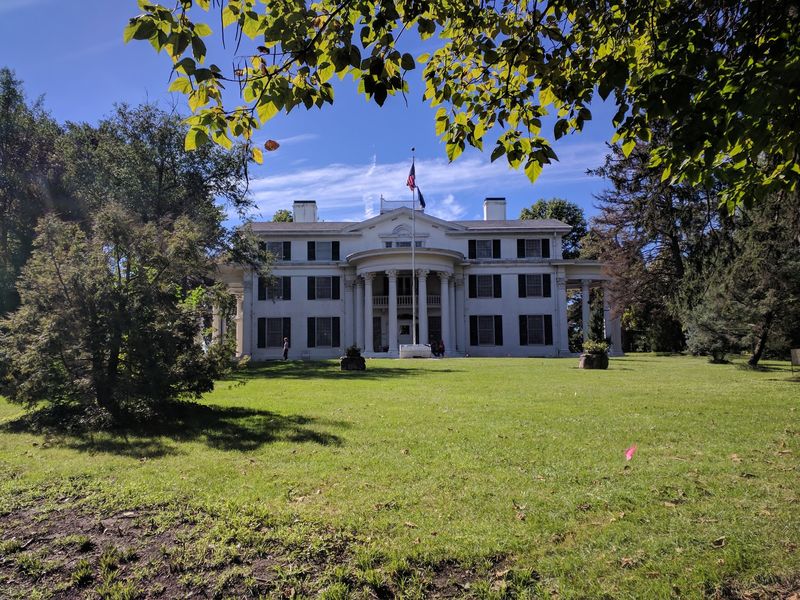
Fifty-two rooms is an enormous amount of house for the plains. Arbor Lodge began in 1855 as a modest frame home and grew, wing by wing, into a white-columned mansion ringed by an arboretum of hundreds of trees.
Nebraska Game and Parks operates the grounds today as Arbor Lodge State Historical Park. The property includes the mansion, a carriage house, formal terraced gardens, and looping paths beneath old hardwoods that turn skeletal and dramatic once the leaves drop.
Through the holiday season, the mansion is generally decorated room by room, with trees, greenery, and evening tours that let people move through parlors and bedrooms after dark. Programming can shift from year to year, so a quick check of the park schedule before loading the car saves disappointment.
A Nebraska state park entry permit is required for vehicles, and the mansion tour carries separate admission. Daily and annual permits are sold at the park and through Game and Parks.
Skip the interior and the grounds still deliver: wide frozen lawns, gravel paths, and a pale mansion glowing at the end of the drive.
Central Avenue and Its Old Brick Storefronts
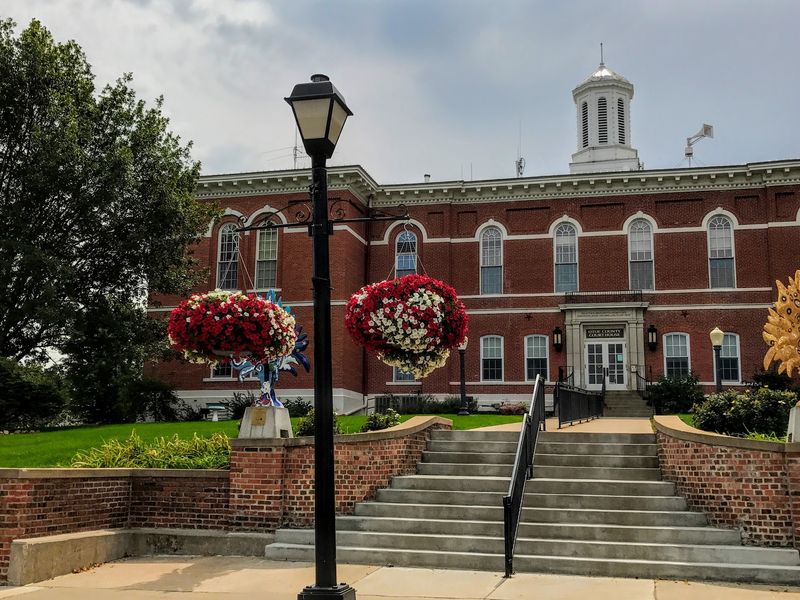
Arched window tops, painted cornices, and transom glass above the doors: the commercial blocks along Central Avenue read like a field guide to late 1800s and early 1900s architecture, still in daily use rather than preserved behind velvet rope.
Shops occupy the ground floors, apartments and offices fill the second stories, and the sidewalks stay narrow the way they were laid out when horses shared the street. Walking the length of it takes maybe fifteen minutes if you don’t stop, and stopping is inevitable.
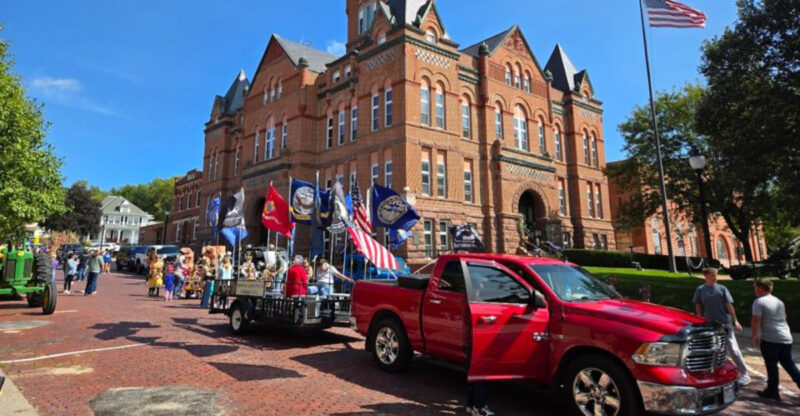
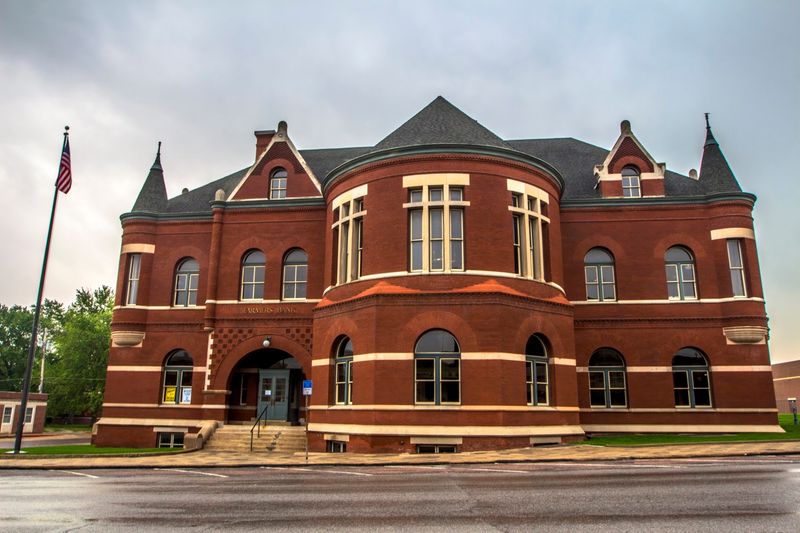
The Otoe County Courthouse holds down its own block nearby, the kind of civic building designed to look permanent. Around it sit the ordinary things that make a downtown function: a coffee counter, a hardware store, a bakery window.
As colder months arrive, decorations typically go up along the avenue, and the older buildings take the lighting well. Brick and bare bulbs have always been a good pairing.
Parking is on-street and rarely a problem, which is one of the quiet advantages of a town this size.
Orchard Hills, Cider, and Apple Season
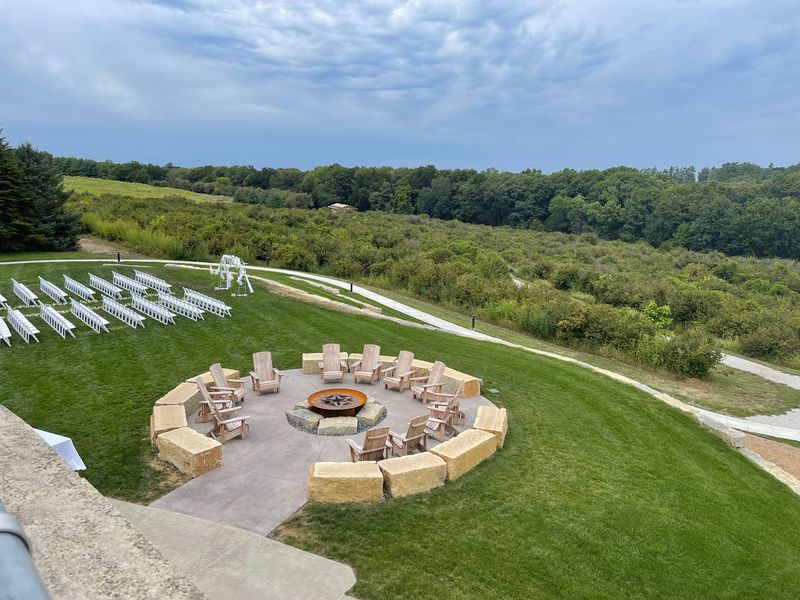
Apples turned out to be the second act after the freight wagons stopped rolling west. The hills around town proved good orchard ground, and fruit has been a working part of the local economy ever since.
Kimmel Orchard sits just outside the city limits with rows of apple trees, a market building, and pick-your-own opportunities when the crop cooperates. Arbor Day Farm runs its own orchard operation alongside the Apple House Market, where cider, pies, and fresh-pressed juice move steadily through fall.
The same property holds the Tree Adventure, a walkable stretch of woods with an elevated canopy walk, a treehouse or two, and trails that suit short legs. It is the rare attraction that entertains a seven-year-old and a grandparent at the same pace.
Each September, an apple festival takes over the town with vendors, food, and traffic that briefly outnumbers the population.
Orchard hours contract as winter sets in, and some outdoor activities pause entirely, so autumn remains the strongest window for the fruit side of a visit.
Small Museums That Fit an Afternoon
Windmill parts still sit where workers left them at the Kregel Windmill Factory Museum, a preserved manufacturing building where the belts, lathes, and patterns remain in place rather than reassembled behind glass. Factories rarely survive intact.
This one did.
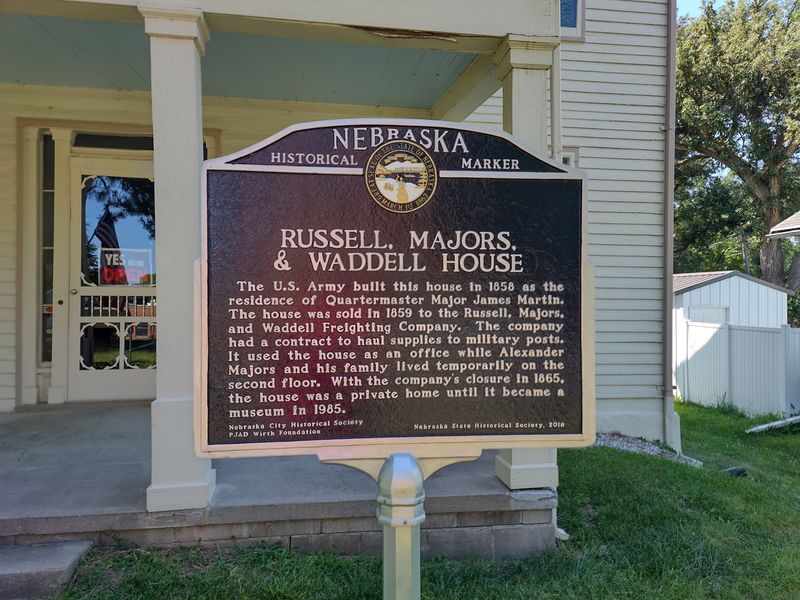
A few minutes away, the Mayhew Cabin preserves a site connected to the Underground Railroad and the abolitionist history of the Missouri River border country. The Old Freighters Museum covers the wagon-freighting business that once made this landing a launching point for goods heading west.
Down by the water, the Lewis and Clark Missouri River Basin Visitor Center handles the expedition story with exhibits geared toward kids who need to touch things. Wildwood Historic Center, an 1869 brick home furnished to period, rounds out the list for anyone who likes rooms more than displays.
Several of these operate on seasonal schedules, with reduced winter hours or appointment-only access, so calling ahead can save a wasted stop.
Admission at the smaller sites tends to stay modest, which makes stringing two or three together an affordable way to fill a day.
Planning the Drive from Omaha or Lincoln
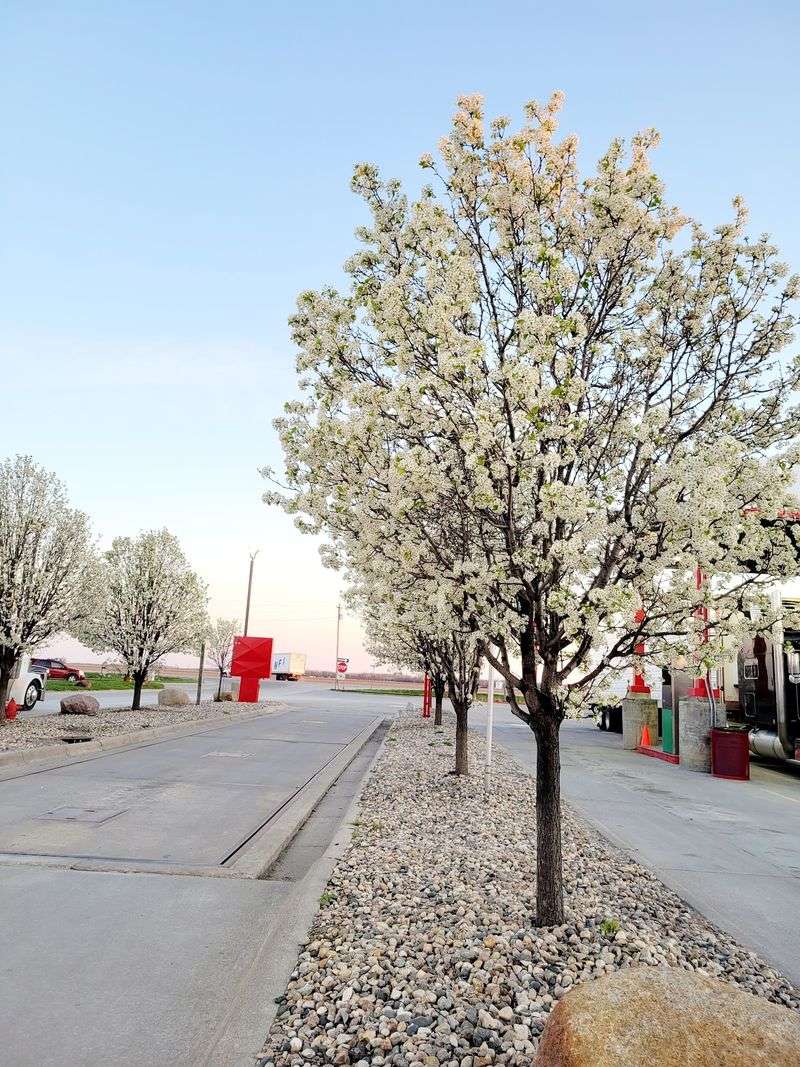
Fifty miles or so separates downtown Omaha from this stretch of the Missouri River bluffs, an easy run south on U.S. Highway 75 that takes under an hour without traffic.
From Lincoln, plan on a similar drive east and south, and from Grand Island or Kearney it becomes a longer but straightforward morning.
Travelers coming from the Iowa side can drop off Interstate 29 and cross the river, which puts the whole trip within reach of a Council Bluffs starting point.
Budget-wise, the free portion of the day is generous: walking the historic streets, browsing storefronts, and looking at seasonal lighting cost nothing at all. Paid stops include the state park permit and mansion admission, plus modest fees at the smaller museums.
Winter shortens hours across the board. Orchard activity winds down, some historic sites close or move to limited schedules, and daylight disappears by late afternoon, which is arguably a feature when the lights are the point.
Dress for wind. The river bluffs do nothing to block it.
Why This Nebraska Town Stays With You
Nothing here shouts. There’s no giant attraction demanding a full weekend, no queue, no gift-shop gauntlet at the exit.
The appeal builds slowly, one block and one old building at a time.
Families with young kids get the most out of the orchard, the canopy walk, and the river center. Retirees and history-minded travelers tend to gravitate toward the mansion, the windmill factory, and the residential streets where the architecture rewards slow driving.
Couples looking for a quiet December evening can park once, walk the avenue while the lights come on, and be home before bedtime.
The movie-set comparison holds up because the ingredients are authentic rather than manufactured: original storefronts, mature trees planted by people who believed in planting them, and a courthouse square that never got torn down for something newer.
Pair it with a stop for pie and you have a complete outing for the price of gas and a couple of admissions. For a state often described as flat and empty, this river-bluff county seat makes a fairly convincing counterargument.