The Overlooked State Park In California You’ve Probably Never Heard Of
Some places stay quiet for so long that they start to feel almost imagined, like the kind of beauty people only mention in passing because they would rather not share it too widely.
A state park in California has that sort of low-profile magic, easy to miss on the map and oddly hard to forget once it gets under your skin.
The appeal is not loud or showy.
It arrives more gently, through the hush of the landscape, the feeling of space opening up around you, and the small surprise of realizing how little attention a place this lovely receives.
For a while, that can feel like a gift. Then comes the urge to tell someone else about it anyway.
It Preserves California’s Largest Hydraulic Gold Mine
Most state parks are remembered for their trees or coastline, but Malakoff Diggins holds a title that sets it apart from nearly every other park in the state.
The site protects what remains of California’s largest hydraulic gold mine, a place where miners once used powerful jets of water to break apart entire hillsides in search of gold.
The scale of what happened here is hard to fully absorb until you are standing in front of the results.
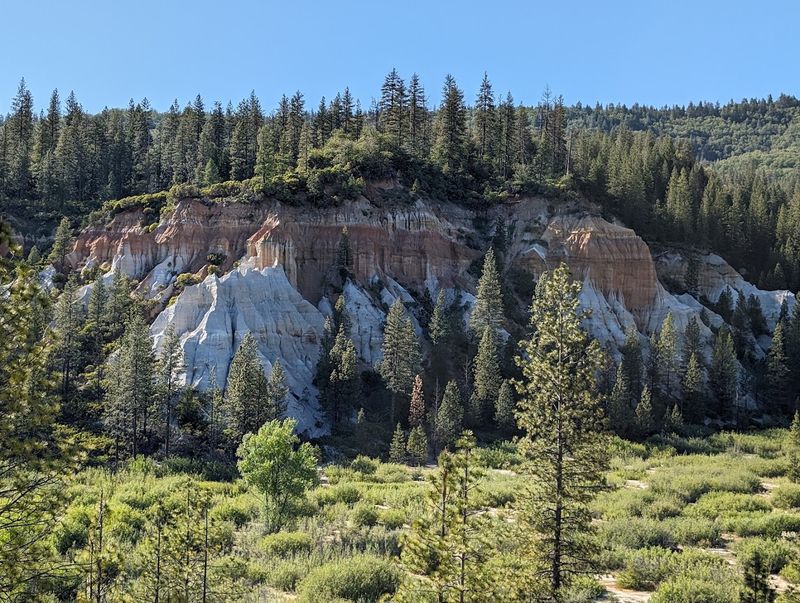
Enormous walls of exposed rock and sediment stretch across the landscape in shades of red, orange, and white, carved not by natural erosion but by human ambition during one of history’s most intense mining periods.
The park was established in 1965 and sits approximately 26 miles northeast of Nevada City at 23579 North Bloomfield Road, Nevada City, CA 95959.
Entry is $10 per vehicle during peak season, and the park is open daily from sunrise to sunset on a self-guided basis.
The Landscape Looks Almost Unreal
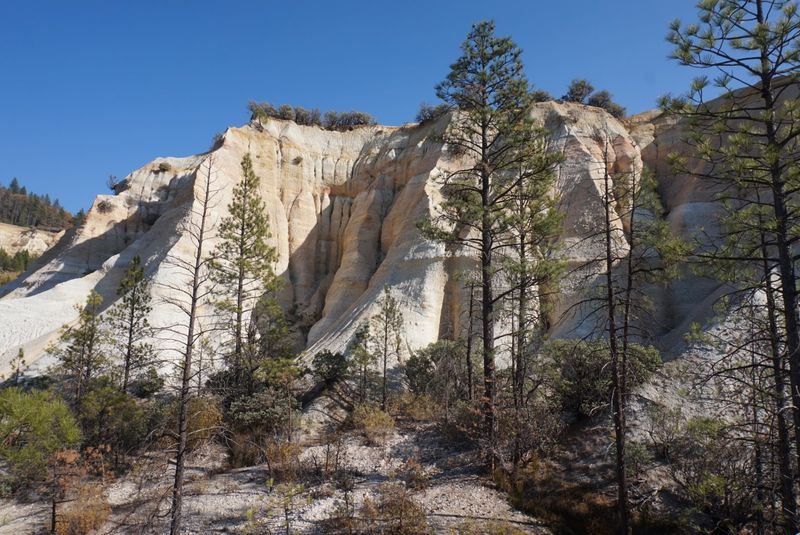
Standing at the edge of the Diggins, the landscape does not look like anything most people expect to find in California.
Massive cliffs tower above the canyon floor, their surfaces streaked with red, yellow, and white mineral deposits that were exposed when high-pressure water cannons stripped away the hillsides during the Gold Rush.
The result is something that feels closer to a desert badlands or an alien terrain than a typical foothill park.
Erosion has continued to shape the walls since mining ended, softening some edges while deepening others, and the whole scene shifts in color and shadow depending on the time of day.
Visitors who come expecting a standard forest hike often leave talking about the visual impact of the Diggins more than anything else.
The Overlook Trail, which is 0.13 miles each way and accessible to those with mobility needs, ends at a viewpoint directly above the escarpment.
That short walk alone is enough to understand why the park earns a second look from anyone who takes the time to find it.
It Tells One Of The Darker Stories Of The Gold Rush
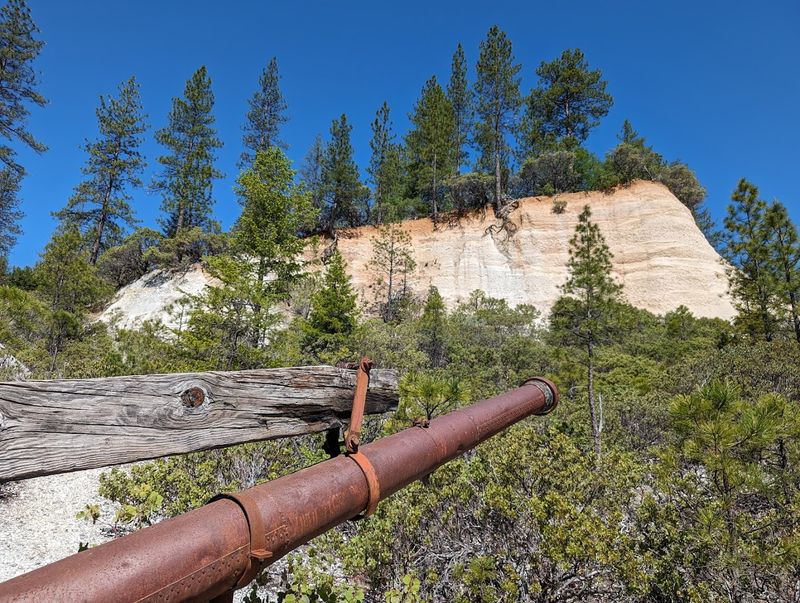
Gold Rush stories often focus on fortune-seekers and boomtowns, but Malakoff Diggins adds a chapter that gets left out of most history lessons.
Hydraulic mining, the technique perfected here, involved blasting hillsides with high-pressure water to release gold-bearing gravel, and the environmental consequences were severe and far-reaching.
Entire hillsides were washed away, and the debris flowed downstream into rivers and valleys, burying farmland and clogging waterways for miles.
The scale of destruction was not a side effect but the very method itself, and the park preserves the physical evidence of that damage in a way no museum exhibit could fully replicate.
Walking through the Diggins gives a grounded sense of what unchecked resource extraction looked like before environmental regulations existed.
The park does not shy away from that history, and the visitor center in North Bloomfield includes exhibits that explain the mining process alongside its consequences.
Its History Helped Shape Early Environmental Law
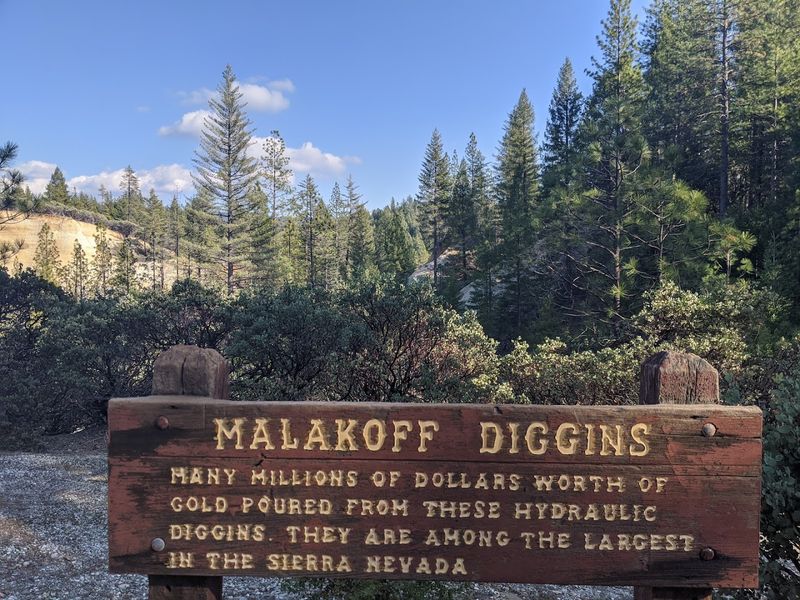
Few state parks can claim a direct connection to landmark environmental legislation, but Malakoff Diggins sits at the center of one of the most consequential legal battles in California’s history.
The destruction caused by hydraulic mining at sites like this one eventually led to the Sawyer Decision of 1884, a federal court ruling that banned the dumping of mining debris into rivers and streams.
That ruling is widely considered one of the earliest examples of environmental law in the United States, and it came directly from the damage that operations like the Malakoff mine caused to downstream communities and farmlands.
The legal fight was driven by farmers whose land was buried under mining sediment, and their victory changed how the country thought about industrial accountability.
Visiting the park with that context in mind adds a layer of meaning to the landscape that goes well beyond scenery.
The Diggins are not just a dramatic geological feature; they are physical proof of why environmental protections became necessary.
North Bloomfield Gives It A Second Attraction In One Stop
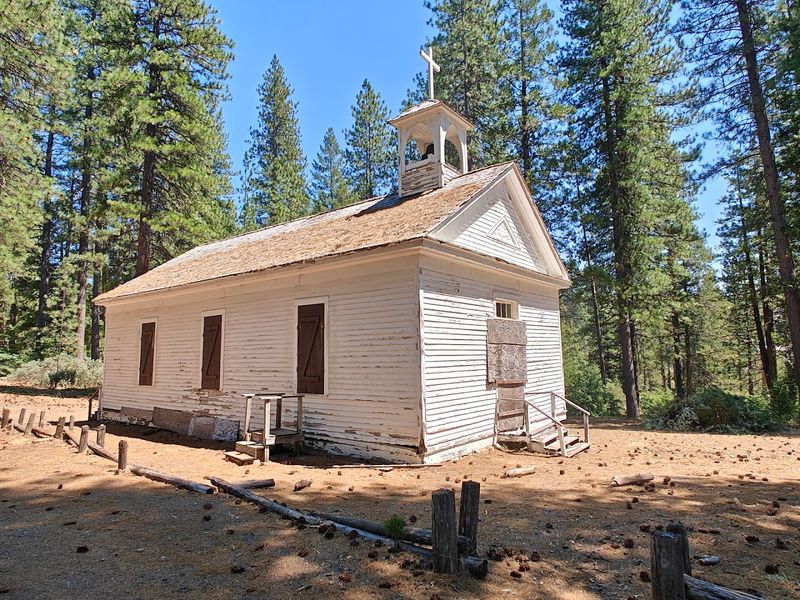
Not every state park can offer both a dramatic geological site and a preserved historic town within the same visit, but Malakoff Diggins delivers both without requiring extra driving.
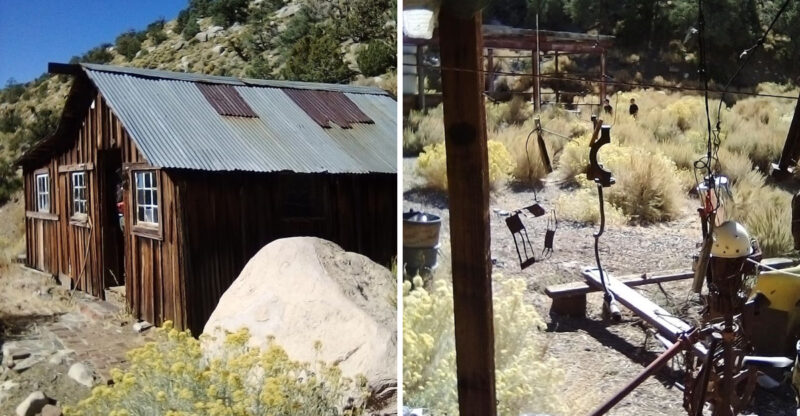
North Bloomfield, once home to over 1,200 people during the mining boom, is now a quiet collection of preserved buildings that give the park a genuine ghost town quality.
Structures including a general store, drugstore, barbershop, church, schoolhouse, and former saloon still stand along the town’s dirt streets, and walking through them feels like moving through a moment that was simply paused.
The buildings are well-maintained and tell the story of what daily life looked like for the people who lived and worked here during the height of the Diggins operation.
The visitor center in North Bloomfield adds another layer with exhibits on mining and pioneer life, along with a short video on hydraulic mining.
Cabins are also available for rent in the historic town area for those who want to extend their stay.
The Park Covers A Surprisingly Large Area
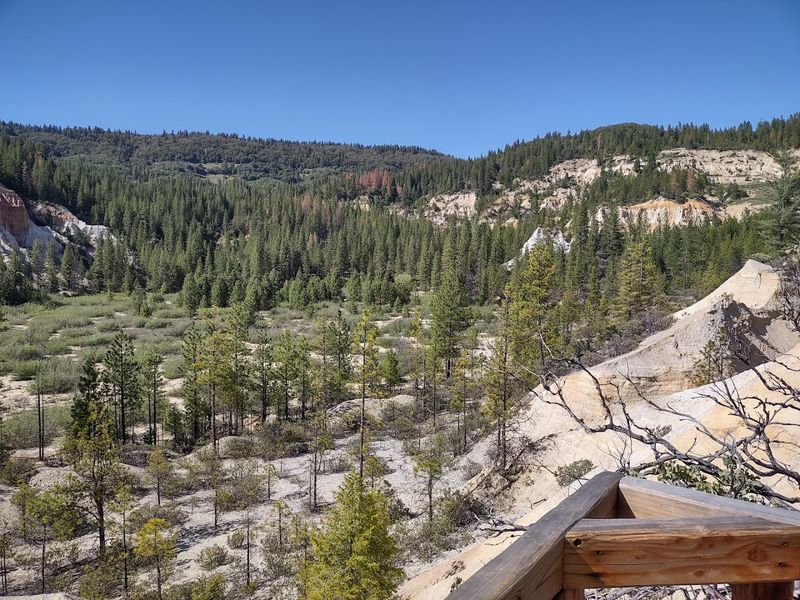
A park that rarely appears in mainstream California travel coverage might be expected to feel small or easy to cover in an hour, but Malakoff Diggins consistently surprises first-time visitors with how much ground it actually holds.
At 3,143 acres, the park spans a wide stretch of Nevada County terrain that includes the Diggins, the historic town, trails, campgrounds, and Blair Lake.
That size means the park rewards visitors who slow down and spend more than a quick afternoon there.
Weekday visits tend to feel especially spacious and quiet, with trails that can go hours without another hiker in sight, which is a genuinely rare experience for a California state park.
The park’s footprint also means that different sections have different characters.
The area around North Bloomfield feels settled and historic, while the trails leading to the Diggins open into wide, eroded terrain that feels remote and almost otherworldly.
Having that range within a single park makes Malakoff Diggins a better value for time than many more famous destinations that cover far less ground and offer far less variety.
There Is More To Do Than Simply Look Around
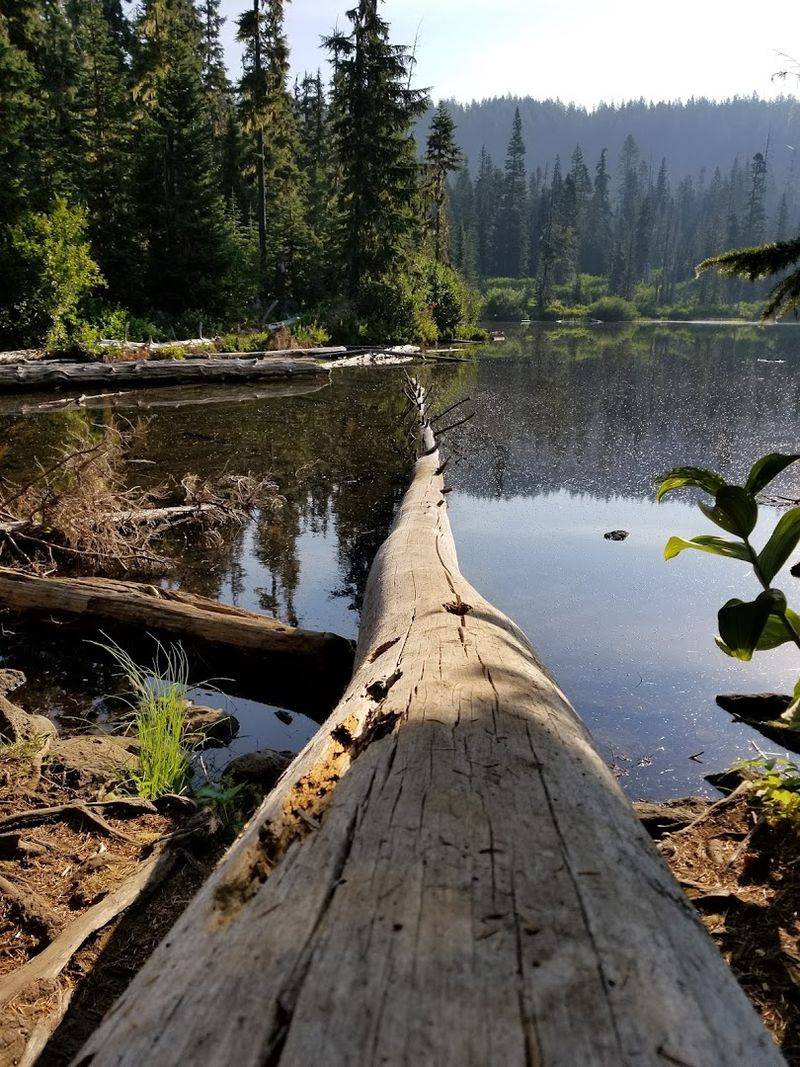
Passive sightseeing is only one option at Malakoff Diggins, and the park offers enough active options to fill a full day or an entire weekend.
Over 20 miles of hiking trails wind through the park, ranging from easy walks along relatively flat terrain to steeper routes with significant elevation changes and broad views across the Sierra foothills.
Blair Lake, which was originally a small hydraulic mine in the 1800s, provides a spot for fishing and swimming during appropriate seasons, and water quality is tested annually to support recreational use.
The Chute Hill Campground offers 30 family campsites with picnic tables, bear-proof food lockers, and fire rings for those who want to stay overnight.
Gold panning is also available for younger visitors, which adds a hands-on educational element that makes the park particularly well-suited for family trips.
The combination of hiking, swimming, camping, and historic exploration means there is enough variety to keep different types of visitors engaged rather than feeling like the park has only one thing to offer.
The Setting Feels Remote In A Good Way
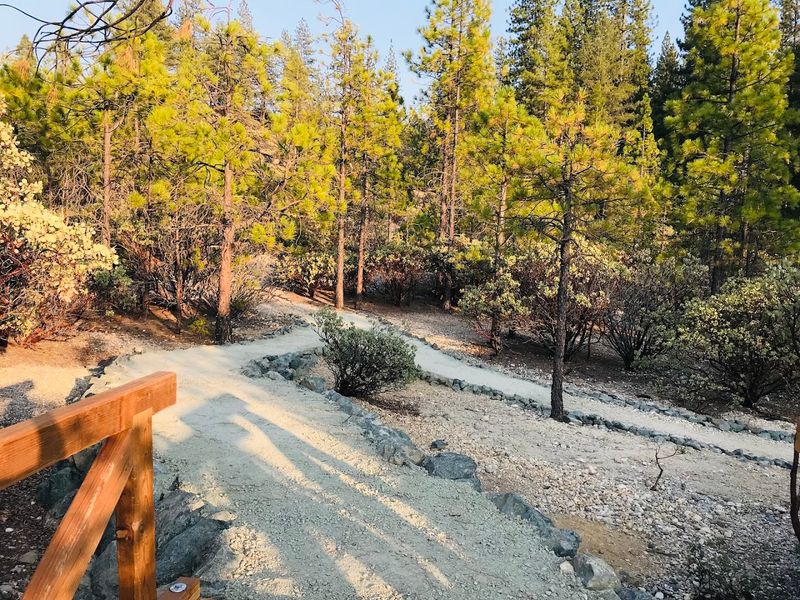
Getting to Malakoff Diggins requires a bit of intention, and that turns out to be one of the park’s most appealing qualities.
Located in Nevada County rather than along one of California’s heavily traveled tourist corridors, the park sits far enough off the main routes that casual visitors rarely stumble upon it by accident.
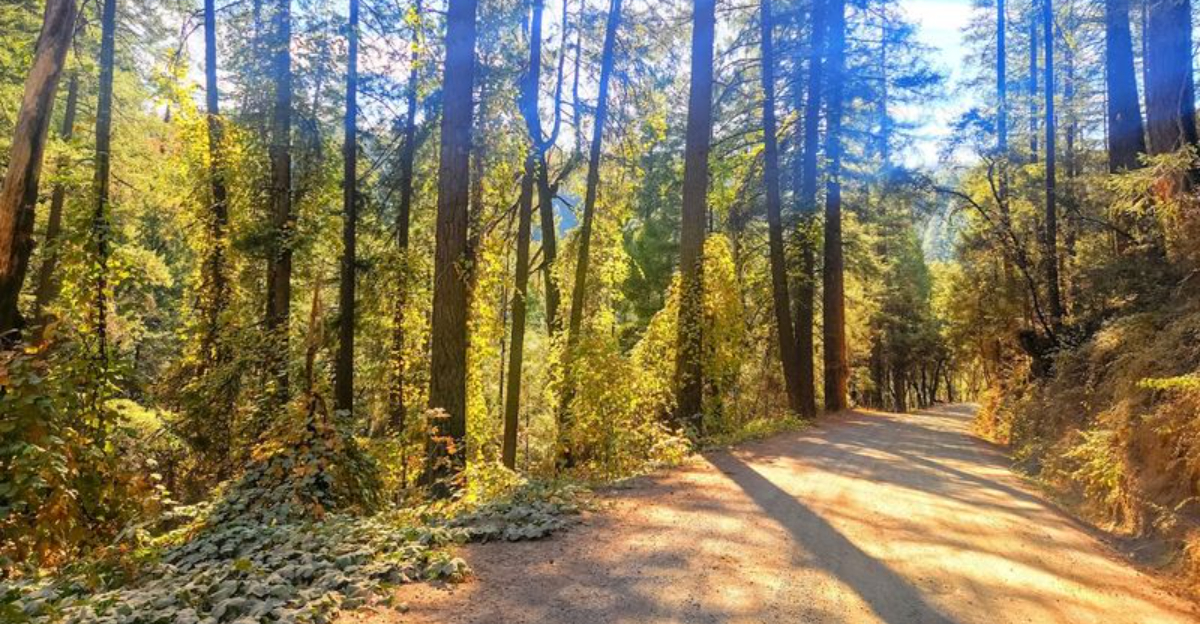
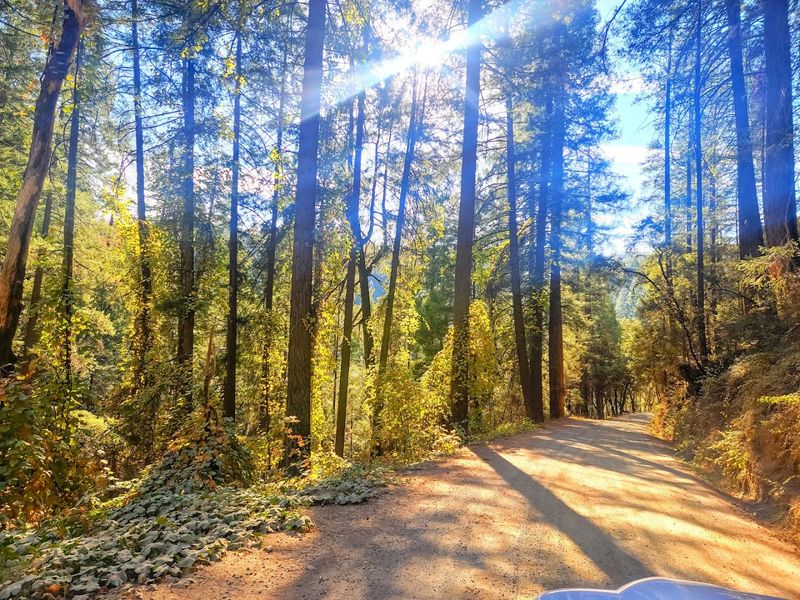
The drive itself sets the tone for the visit. Depending on the approach, the road passes through pine forests and foothill terrain that gradually shifts the atmosphere from busy to genuinely peaceful.
Tyler Foote Road offers a fully paved route to the park, while the North Bloomfield Road approach includes some unpaved sections that can be navigated in a standard sedan during dry conditions.
Once inside the park, the sense of distance from the usual California tourist experience becomes one of its defining features.
Trails can feel entirely private on weekdays, and even on weekends the crowds that define places like Point Lobos or Yosemite simply do not appear here.
The Visitor Center Adds Real Depth To The Experience
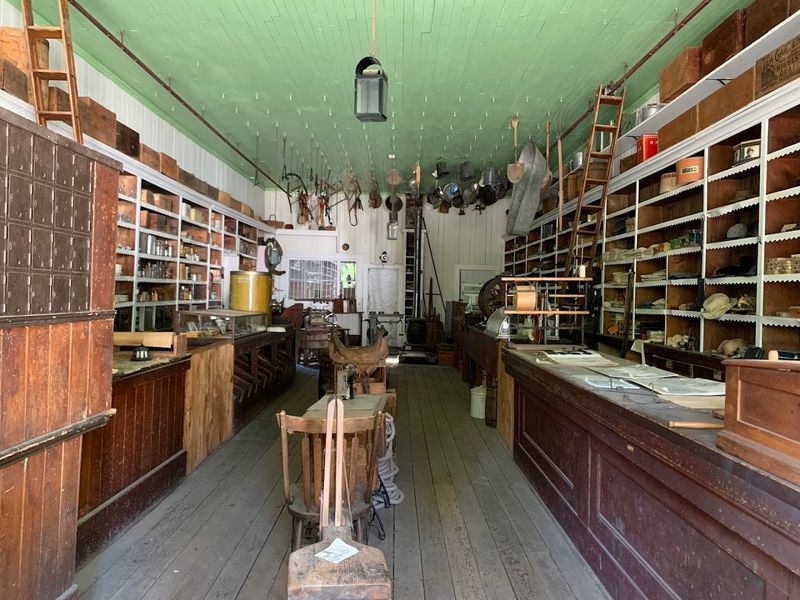
Walking through the Diggins without any background context is still visually striking, but the visitor center in North Bloomfield makes the whole experience significantly richer.
Exhibits inside cover the mechanics of hydraulic mining, the daily rhythms of life in a Gold Rush-era mining town, and the broader environmental and legal consequences that followed the industry’s peak years.
A short video on hydraulic mining plays at the center and gives a clear explanation of how the technology worked and why it was eventually banned.
For visitors who arrive curious but not deeply familiar with the history, that video alone can reframe everything they see on the trails afterward.
Visitor center hours vary seasonally, so checking the latest schedule before arriving is worth the extra step.
Park rangers are available during staffed hours and tend to be knowledgeable and approachable, often pointing out details about the park that are not immediately obvious from trail maps alone.
The combination of well-organized exhibits and informed staff makes the visitor center a genuine starting point rather than an optional add-on to the main attraction.
Wildlife Adds An Unexpected Layer To Every Visit
Between the geology and the history, it is easy to overlook the fact that Malakoff Diggins also sits in active wildlife habitat.
Black bears have been spotted in and around the park with enough regularity that rangers typically brief visitors on bear safety, and the campground uses bear-proof food lockers as a standard feature rather than an optional precaution.
Beyond bears, the park’s foothill environment supports a range of smaller wildlife including lizards, butterflies, and various bird species that move through the mixed terrain of open Diggins and surrounding forest.
The quiet atmosphere of the park, especially on weekdays, means wildlife sightings happen more often than at busier destinations where constant foot traffic keeps animals at a distance.
Visitors who spend time on the trails rather than staying close to the town area tend to report the most interesting encounters with the natural side of the park.
Bringing binoculars and paying attention to the edges of forested sections near the Diggins can reward patience with views that feel genuinely wild.