The Overlooked State Park In Missouri You’ve Probably Never Explored
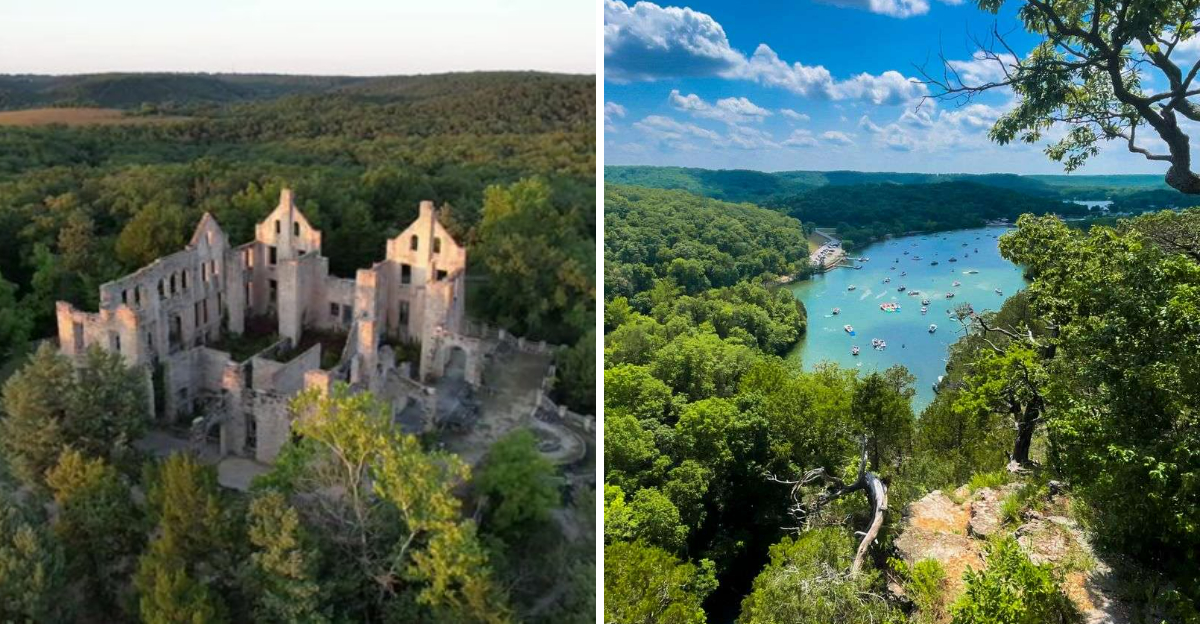
A park ranger once told me this place gets a fraction of the visitors it deserves, and one look around explained why nobody believes him until they see it themselves. Castle ruins rising out of the woods.
A natural bridge wide enough to walk under without ducking. A spring pushing out millions of gallons of water every single day, loud enough to hear before you even see it.
Missouri has plenty of well known parks, but this one gets driven past constantly by people heading somewhere more famous. That is exactly the mistake worth avoiding.
Trails wind past ruins that look pulled from another era entirely, and water features here rival anything found in bigger, more crowded parks. Missouri keeps this one quiet, maybe on purpose, and it rewards anyone willing to actually stop and look.
The Castle Ruins That Defy Expectations
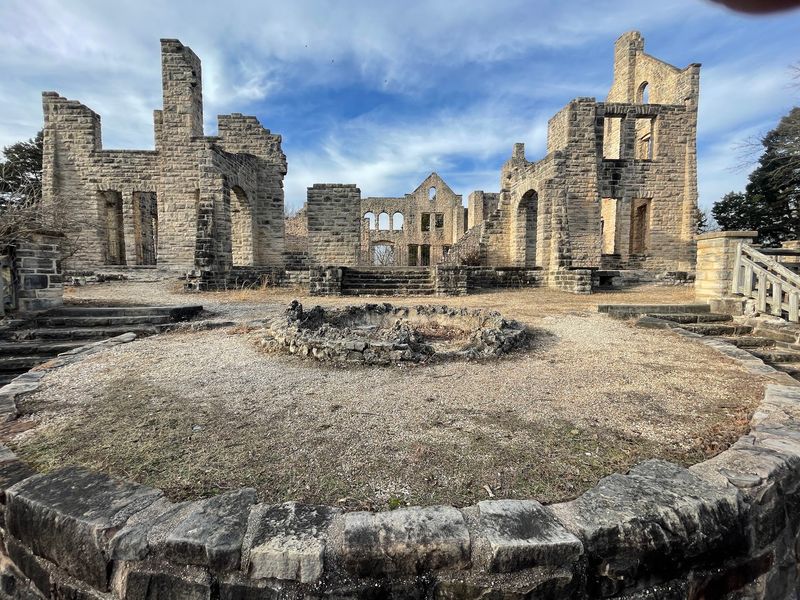
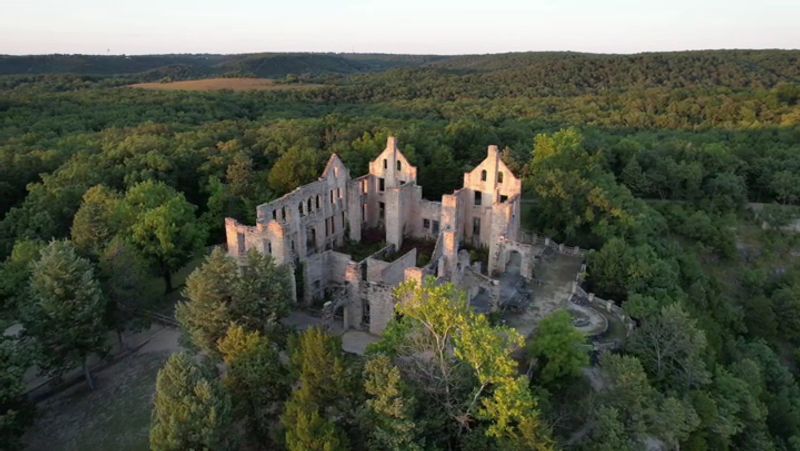
Standing at the base of a crumbling stone tower changes how you think about Missouri entirely. Construction began in 1905 when Kansas City businessman Robert McClure Snyder wanted a grand European-style retreat.
He never got to enjoy it. Snyder passed away in one of Missouri’s earliest automobile accidents in 1906, before the walls were finished.
His sons eventually completed the castle in 1922. A fire gutted the structure in 1942, leaving only the stone skeleton standing.
The nearby water tower was also damaged by fire in 1976, adding another chapter to an already dramatic history.
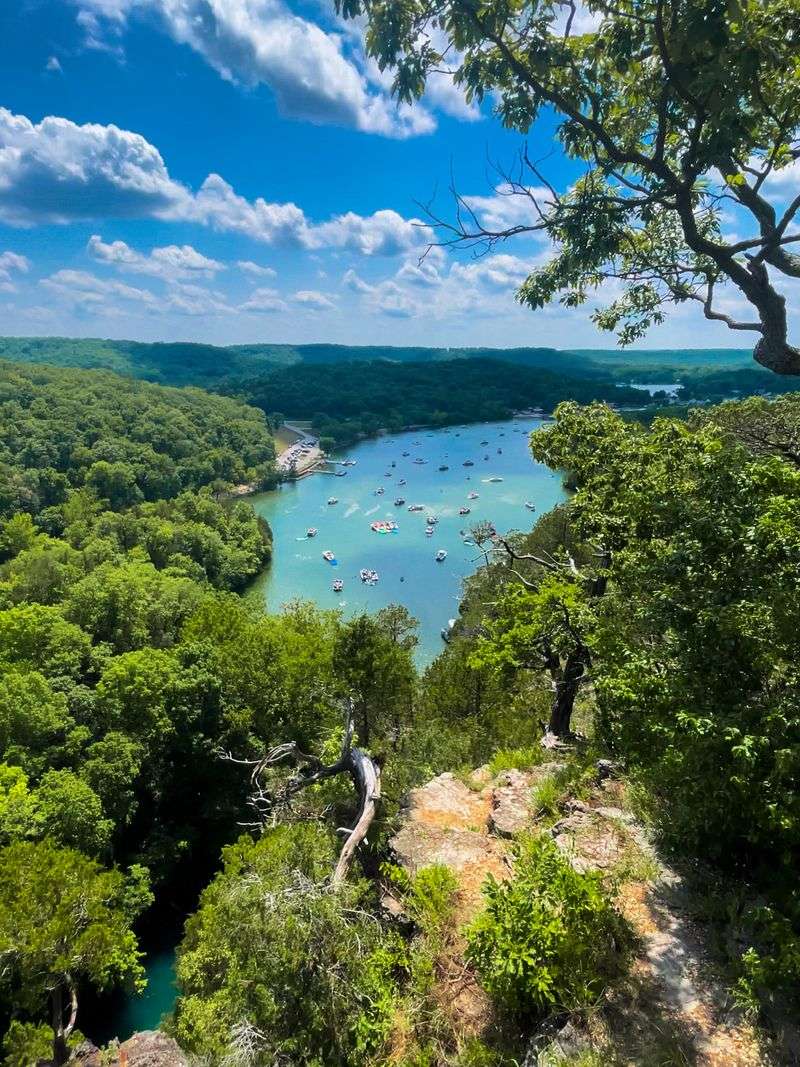
Today, visitors walk a well-maintained path up to the ruins and take in sweeping views of the Lake of the Ozarks below. The stone walls are still standing strong after more than a century.
You can find Ha Ha Tonka State Park at 1491 Missouri D, Camdenton, MO 65020. The castle ruins alone are worth the trip, but the park has so much more waiting beyond that first breathtaking view.
A Natural Bridge That Makes Your Jaw Drop
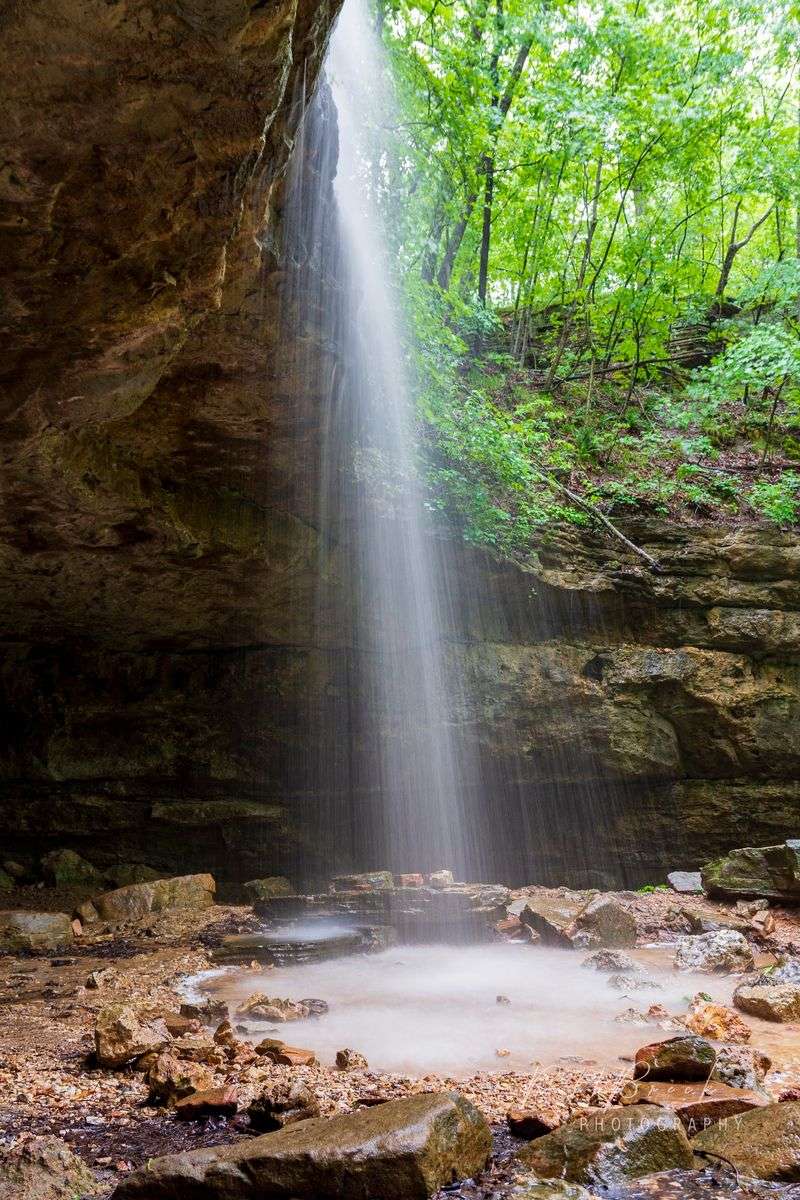
Not every natural wonder needs a sign to announce itself. The natural bridge at this park is 70 feet wide and spans 60 feet, rising over 100 feet into the air.
When you walk under it for the first time, the scale is genuinely hard to process.
Photos simply do not capture how large it actually is. Visitors consistently say it looks much smaller in pictures than it does in person.
The underside is wide enough to comfortably fit a crowd of sightseers without feeling cramped.
A trail also takes you up and over the top of the bridge, giving a completely different perspective. The view from below is far more dramatic, so plan to experience both angles.
The bridge forms the entrance to a canyon area known as the Colosseum, which adds even more geological drama to the scene. This spot rewards curious hikers who take their time and look carefully at every angle.
Few natural formations in Missouri pack this much visual impact into a single short walk from the parking area.
The Colosseum Sinkhole And Its Ancient Legends
Few geological features in Missouri carry as much personality as this one. The Colosseum is a massive sinkhole, nearly 500 feet deep and 300 feet wide, formed by the collapse of a giant underground cavern.
Standing at the rim and looking down feels like peering into a natural theater.
Local legends suggest this striking area may have been used for gatherings by Indigenous peoples, though this has not been historically confirmed. Whether or not those stories are true, the atmosphere makes them easy to believe.
The sheer scale of the space creates a natural echo and a feeling of deep, quiet history.
Karst topography, the geological process that created this formation, works by water slowly dissolving soluble bedrock over thousands of years. The result here is one of the most concentrated collections of karst features in the entire state.
Caves, sinkholes, springs, and underground streams all exist within a single square mile of this park. Geologists and curious visitors alike find the Colosseum endlessly fascinating.
It is the kind of feature that makes you stop mid-sentence and just stare.
Ha Ha Tonka Spring And The Meaning Behind The Name
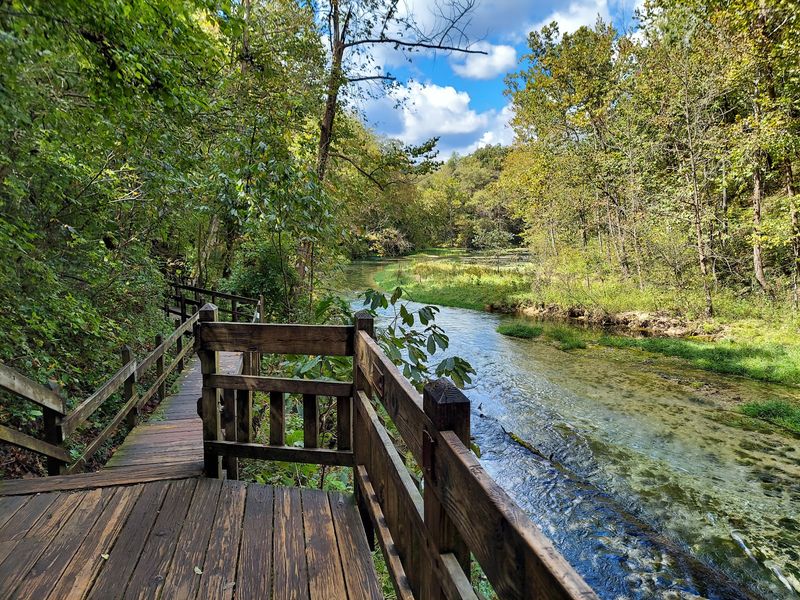
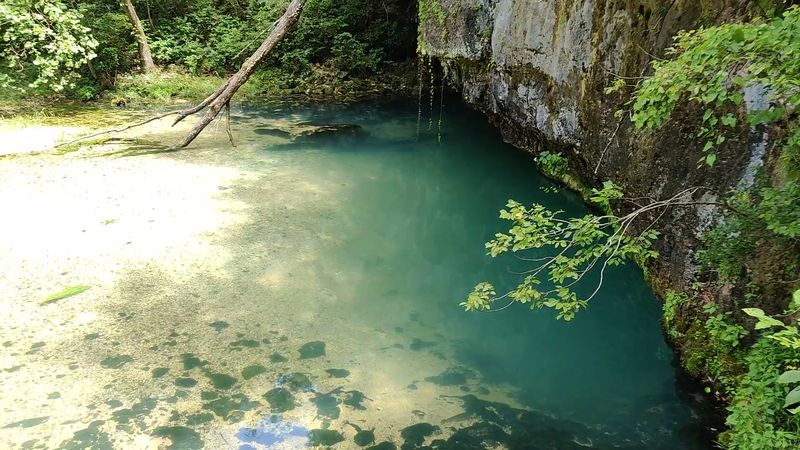
The name Ha Ha Tonka translates to laughing water in the native Osage language. Once you see the spring, the name makes perfect sense.
The water moves with a lively, bubbling energy that genuinely looks like it is having a good time.
Missouri ranks this as its 12th largest spring. It discharges an average of over 48 million gallons of water every single day directly into the Lake of the Ozarks.
That number is hard to imagine until you stand at the edge and watch the volume of water moving past you.
The Spring Trail is one of the most popular routes in the park and for good reason. The trail winds alongside the water, offering clear views of the brilliant blue-green color that makes this spring so visually striking.
Reviewers have compared the reflection on the water to an oil painting. The hike up from the spring to the castle ruins involves some elevation gain, but the views reward every extra step.
This trail alone could anchor an entire visit.
Over 15 Miles Of Trails Through Wild Terrain
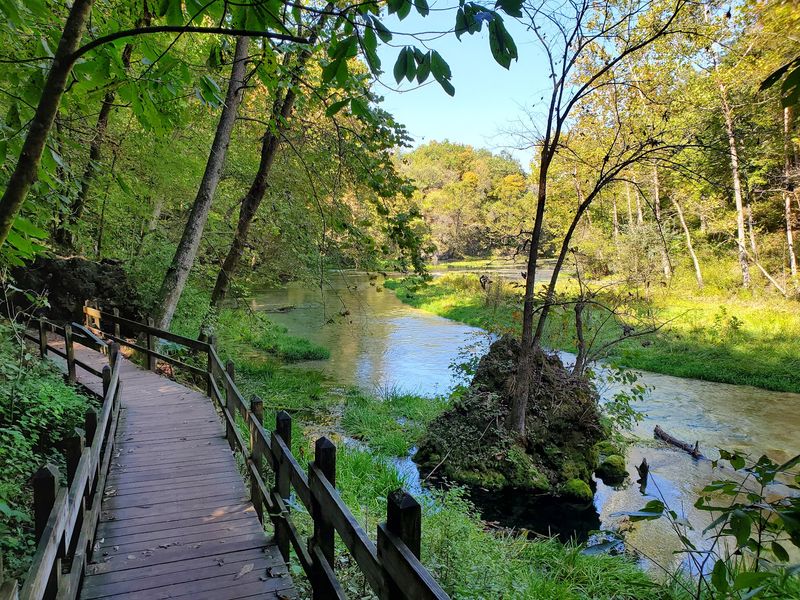
Lacing up your boots here means committing to something genuinely varied and sometimes surprising. The park offers over 15 miles of trails and boardwalks across 3,751 acres.
Popular routes include the Spring Trail, Castle and Quarry Loop Trail, and the Dell Rim Trail.
Some paths are smooth and well-paved. Others are more rugged, with rocky sections, narrow ledges, and steeper terrain that requires extra care.
That variety keeps even experienced hikers fully engaged and alert.
Trails wind through hardwood forests, rocky glades, and past geological formations that appear without warning around every bend. The elevation changes add a real physical challenge to the experience.
Spring hikers enjoy redbud trees blooming along the paths, while fall visitors get stunning foliage framing the ruins and bluffs. Trails are well-marked throughout, making navigation straightforward even for first-time visitors.
The park also has ample parking at multiple trailheads, so you can plan your route in sections and explore at your own pace without feeling rushed.
Caves With Surprisingly Colorful Histories
Not every cave in Missouri has a nickname, but this park has a few that raise an eyebrow. Counterfeiter’s Cave and Robber’s Cave were rumored hideouts for criminals back in the 1830s.
These stories may be part fact and part legend, but they give these formations a layer of intrigue that geology alone cannot provide.
The park’s karst landscape produces caves naturally, as water works through soluble bedrock over long periods of time. Island Cave is one accessible option, available to visitors by permit from June 15 through September 15 each year.
Permits keep the experience controlled and the cave environment protected.
Exploring these spaces puts the park’s geological complexity into sharp focus. The caves connect to a broader underground system of streams and chambers that still shape the landscape above.
Few visitors realize how much activity is happening beneath their feet as they walk the trails. The cave permit process is straightforward and worth arranging before your visit.
Adding a cave stop to a trail day makes the whole trip feel like a proper geological adventure rather than just a scenic walk.
Kayaking And Fishing On The Lake Of The Ozarks
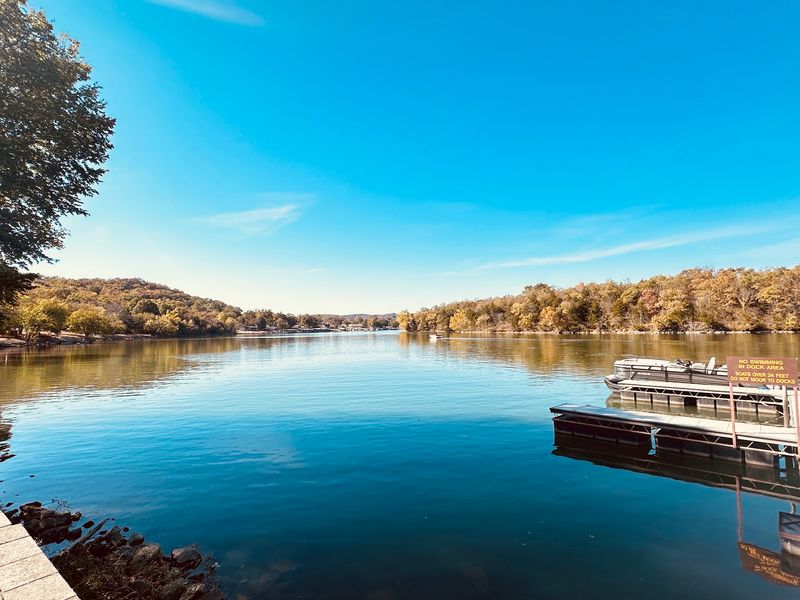
Seeing this park from the water is a completely different experience from any trail. Kayaks can be rented from nearby businesses around the Lake of the Ozarks, giving visitors a fresh angle on the bluffs, the spring outflow, and the surrounding landscape.
Paddling along the Niangua arm of the Lake of the Ozarks puts the scale of the park into a new perspective.
Fishing is also a popular activity here. The lake access and the spring area both attract anglers looking for a relaxing afternoon with a line in the water.
The park has picnic areas nearby, making it easy to turn a fishing morning into a full family day out.
The aquatic side of the park tends to get less attention than the castle ruins and the trails. That makes it a quieter option for visitors who prefer a slower pace.
The water near the spring has a striking blue-green color that photographs beautifully from a kayak. Mornings on the water here are calm and genuinely refreshing.
If you have only visited by trail before, renting a kayak on your next trip will completely change how you see this place.
Picnicking, Camping, And Making A Full Weekend Of It
Rushing through this park in a single afternoon is technically possible, but it does not do the place justice. The park offers picnic areas, fishing spots, and special-use camping for visitors who want to extend their stay.
A full weekend here gives you enough time to cover the major trails and still relax by the water.
The visitor center, when open, provides trail maps and useful information about the park’s geology and history. Staff have been known to spend real time with visitors, explaining everything from the karst formations to the local wildlife.
The visitor center, when open, offers maps and helpful information to help visitors plan their time in the park.
Admission to the park is free, which makes planning a longer stay even easier on the budget. Parking is available at multiple trailheads and fills up around midday on busy weekends, so arriving early is a smart move.
Fall and spring visits tend to offer the most comfortable temperatures and the most dramatic scenery. Families, solo hikers, and photography enthusiasts all find something here that keeps them coming back.
Plan the overnight trip. You will leave wishing you had stayed one more day.