The Sweet Story Of How The Chocolate Chip Cookie Was Born In Massachusetts
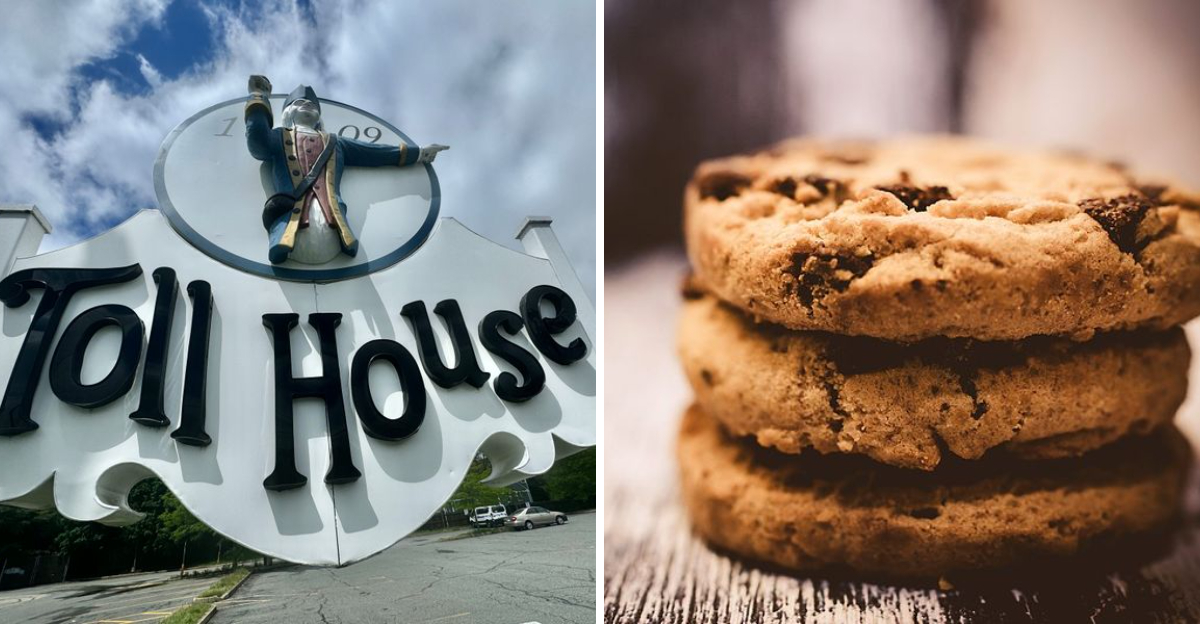
Every bite of a chocolate chip cookie carries a piece of Massachusetts history.
Back in 1938, something magical happened at a cozy inn in Whitman that changed American desserts forever.
Ruth Graves Wakefield created what would become the country’s favorite treat, and it all started with a simple kitchen experiment that didn’t go quite as planned.
A Cozy Massachusetts Inn Where Cookie History Began

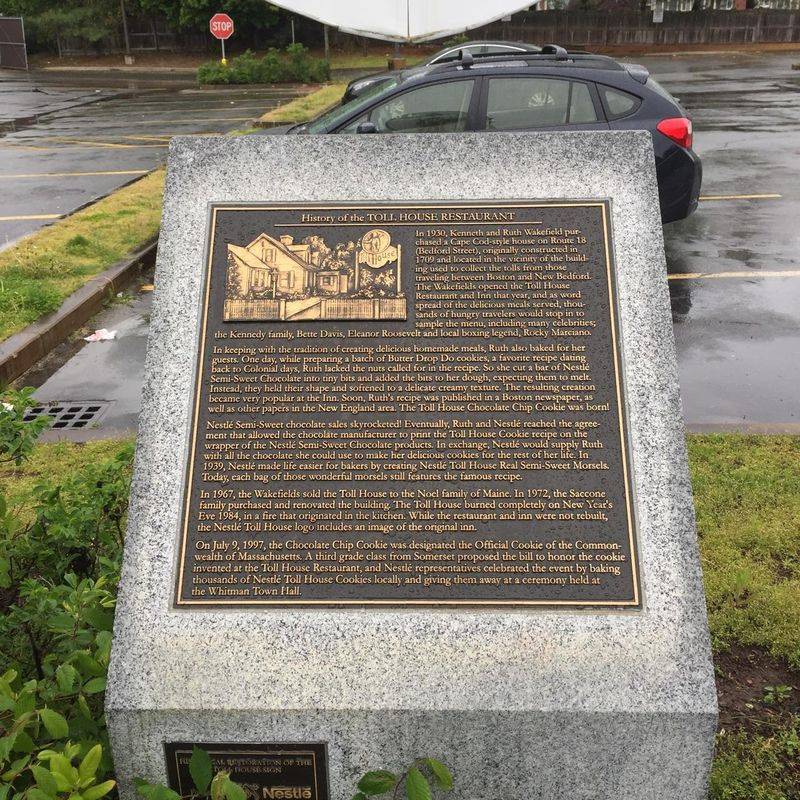
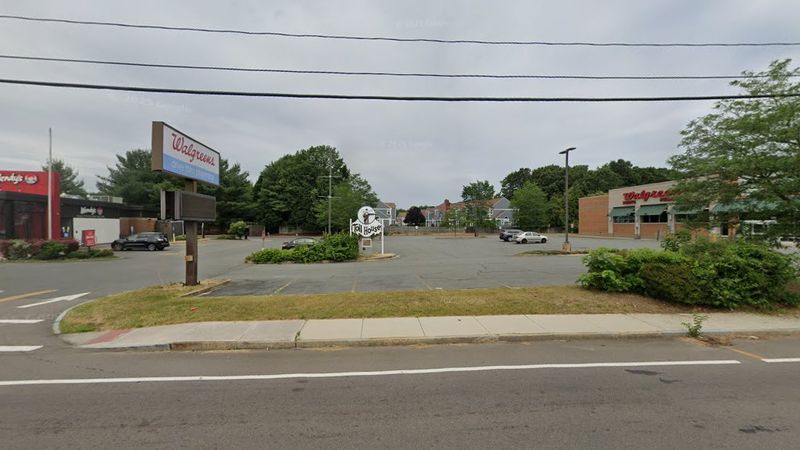
Standing at 370-382 Bedford St, Whitman, MA 02382, a historical marker now honors where sweetness began.
The Toll House Inn opened its doors in 1930, welcoming travelers with homemade meals and comfortable rooms.
Ruth Graves Wakefield and her husband Kenneth, transformed an old tollhouse into a beloved dining destination.
Guests traveled from miles around to taste Ruth’s cooking, which earned a reputation for excellence throughout New England.
The inn’s kitchen became the birthplace of America’s most famous cookie, though nobody knew it at the time.
Colonial charm filled every corner of the building, from the wooden beams to the crackling fireplace.
Ruth’s passion for creating new recipes made the inn special, setting it apart from ordinary roadside stops.
Travelers found more than just food there; they discovered hospitality that felt like home.
The Toll House Inn operated until a devastating fire claimed it on New Year’s Eve in 1984.
The Woman Behind America’s Favorite Cookie
Ruth wasn’t just a cook; she was a trained dietitian with a degree from Framingham State Normal School.
Her education gave her a scientific understanding of food that most home cooks lacked in the 1930s.
Before opening the Toll House Inn, she worked as a dietitian and food lecturer, sharing her knowledge widely.
Ruth loved experimenting in the kitchen, always seeking ways to surprise and delight her guests with new flavors.
She wrote a cookbook called “Tried and True” that featured her favorite recipes from the inn’s kitchen.
Her creative spirit led her to chop up a Nestlé chocolate bar one busy afternoon in 1938.
Ruth expected the chocolate pieces to melt completely into her butter drop dough, creating a chocolate cookie.
Instead, the chunks held their shape, and history was made in that moment of delicious surprise.
Why The Toll House Inn Became A Baking Legend

Word spread faster than butter on hot toast when guests tasted Ruth’s new creation at the inn.
The Toll House Inn already enjoyed popularity for its excellent food, but these cookies elevated its fame entirely.
Travelers began making special trips just to taste the chocolate chip cookies served with vanilla ice cream.
Local newspapers picked up the story, and radio stations talked about the innovative dessert from Whitman.
Ruth’s cookies offered something completely different from the plain butter cookies people knew back then.
Each bite delivered pockets of melted chocolate that contrasted beautifully with the crispy, buttery cookie base.
The texture combination felt revolutionary, exciting taste buds in ways no other cookie had before.
Guests begged Ruth for the recipe, and she generously shared it with anyone who asked for it.
The Happy Kitchen Accident That Changed Dessert Forever
Some of history’s best inventions happen when plans go sideways, and Ruth’s cookie proves that truth perfectly.
She wanted to make chocolate cookies for her guests but realized she was out of baker’s chocolate.
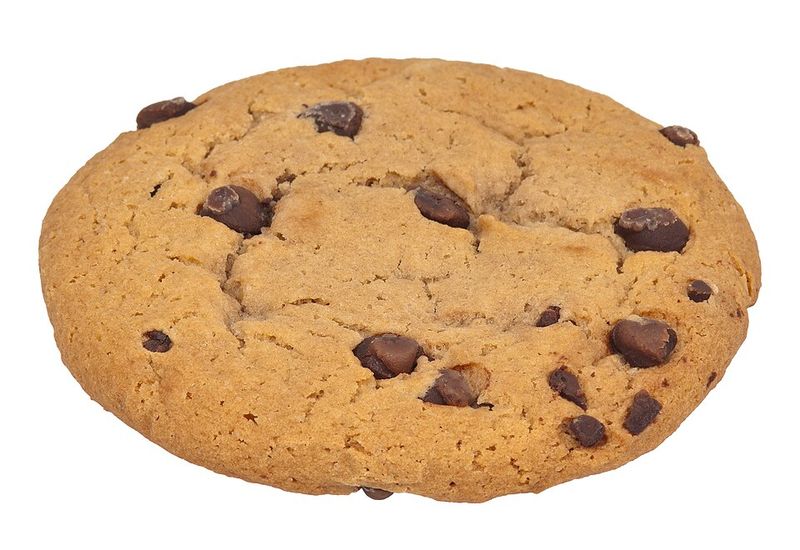
Rather than give up, Ruth grabbed a Nestlé semi-sweet chocolate bar and chopped it into tiny pieces.
She stirred the chocolate chunks into her butter drop dough, thinking they would melt and spread evenly.
The oven’s heat softened the chocolate but didn’t dissolve it completely, creating something entirely unexpected and wonderful.
Ruth pulled out the first batch and saw distinct chocolate pieces studded throughout each golden cookie.
Her guests absolutely loved them, asking for seconds and thirds without hesitation or pause at all.
What started as a substitution became the foundation for a dessert empire that still thrives today.
Why The Chocolate Didn’t Melt And Why That Mattered
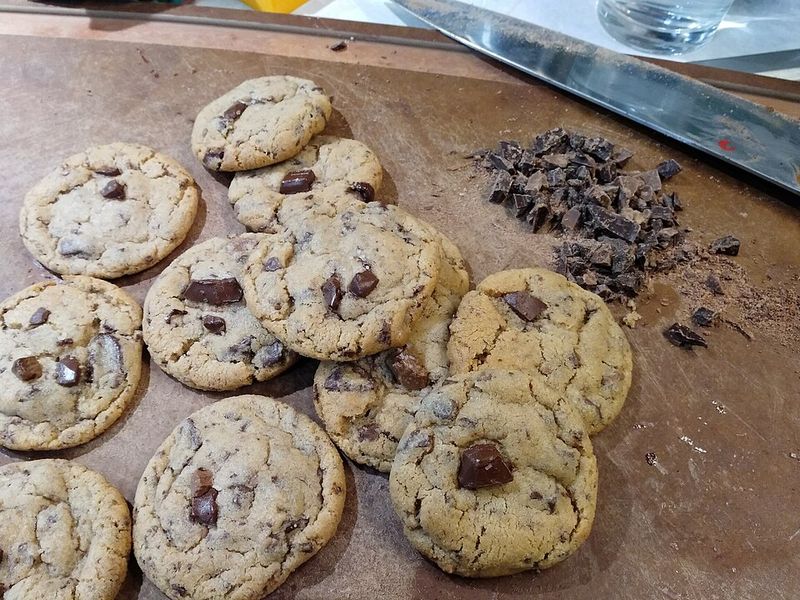
Ruth’s dietitian training helped her understand what happened in that oven, even if it surprised her initially.
Semi-sweet chocolate has a higher melting point than baker’s chocolate, which meant it softened without losing shape.
The small chopped pieces also had less surface area exposed to direct heat than melted chocolate would.
This created pockets of gooey chocolate surrounded by crispy cookie, a texture contrast nobody had experienced before.
Baker’s chocolate would have blended completely into the dough, making a uniform chocolate cookie without any surprise.
The distinct chocolate pieces made each bite different, creating an element of discovery with every mouthful enjoyed.
This texture variation became the signature characteristic that made chocolate chip cookies so addictive and beloved everywhere.
The accident taught bakers that sometimes imperfection creates something far better than the original plan ever could.
From Toll House Chocolate Crunch To A Household Name
Ruth originally called her creation “Toll House Chocolate Crunch Cookies,” a name that captured their delightful texture.
The name honored the inn where they were born while describing the satisfying crunch guests loved so much.
As the recipe spread beyond Whitman, people started calling them simply “chocolate chip cookies” for easier reference.
The shorter name stuck because it perfectly described what made these treats special and different from others.
Newspapers and magazines began featuring the recipe, spreading it across New England and then throughout the entire country.
Home bakers loved how simple the recipe was, requiring ingredients most kitchens already had on hand.
The cookies became a symbol of American home baking, representing warmth, comfort, and delicious simplicity in every batch.
Today, the name “Toll House” still appears on Nestlé products, keeping Ruth’s legacy alive in kitchens everywhere.
How A 1938 Cookbook Introduced The Cookie To The World

Ruth published her famous recipe in the 1938 edition of her cookbook, sharing her creation with home bakers.
The cookbook featured tested recipes from the Toll House Inn’s kitchen, all perfected through years of serving guests.
Her chocolate chip cookie recipe appeared with detailed instructions that anyone could follow, regardless of baking experience.
The book sold steadily as word spread about the amazing cookies that tasted like nothing else available.
Home economists and cooking teachers began including the recipe in their classes, teaching a new generation of bakers.
The cookbook made Ruth’s innovation accessible to families across America who wanted to recreate the magic.
Each published copy carried the recipe further from its birthplace at 370-382 Bedford St, Whitman, MA 02382.
Print media proved powerful in spreading culinary innovations before television cooking shows or internet recipes even existed.
The One-Dollar Deal That Made Nestlé History
In 1939, Ruth made a deal with Nestlé that seemed small but changed American baking history forever.
She sold the rights to her recipe for just one dollar plus a lifetime supply of Nestlé chocolate.
Some might think Ruth got a bad deal, but she gained something more valuable than money alone.
The agreement gave her recipe massive distribution through Nestlé’s marketing power and nationwide chocolate sales reach.
Ruth received all the chocolate she could ever use for baking at the inn, which delighted her.
The deal also meant Nestlé would print her recipe on every chocolate bar wrapper they sold.
This exposure introduced millions of Americans to her creation, spreading it faster than any cookbook ever could.
Ruth’s generosity in sharing her recipe made her a beloved figure rather than just a wealthy one.
Why Massachusetts Still Holds The Sweetest Claim To Cookie Fame
Massachusetts officially designated the chocolate chip cookie as the state cookie on July 9, 1997, with pride.
This recognition honored Ruth Wakefield’s contribution to American culinary history and the state’s baking heritage permanently.
The designation came after a third-grade class from Somerset campaigned to give the cookie official status.
Students researched the cookie’s history and presented their findings to state legislators, who unanimously agreed and voted.
The historical marker at 370-382 Bedford St, Whitman, MA 02382, attracts visitors from around the world today.
People stop to take photos and pay tribute to the spot where sweetness changed American desserts forever.
Massachusetts tourism proudly promotes this delicious piece of history, connecting food lovers to the state’s innovative past.
Few states can claim they invented America’s favorite cookie, making Massachusetts truly special in culinary history books.
The Legacy That Lives On In Every Kitchen Today

Walk into any American home, and you’ll likely find chocolate chips in the pantry waiting patiently.
Ruth’s creation became more than just a recipe; it became a tradition passed through generations with love.
Mothers teach daughters, grandparents bake with grandchildren, and the aroma fills homes with comfort and joy.
The basic recipe remains largely unchanged since 1938, though bakers add their personal touches and creative variations.
Chocolate chip cookies appear at bake sales, birthday parties, holidays, and random Tuesday afternoons without special reason.
They represent home, comfort, childhood memories, and the simple pleasure of something sweet and freshly baked.
The cookies connect us to Ruth’s generous spirit and her willingness to share her creation freely.
Every batch baked honors the legacy that started in a small Massachusetts inn almost a century ago.
Why This Story Matters To Cookie Lovers Everywhere
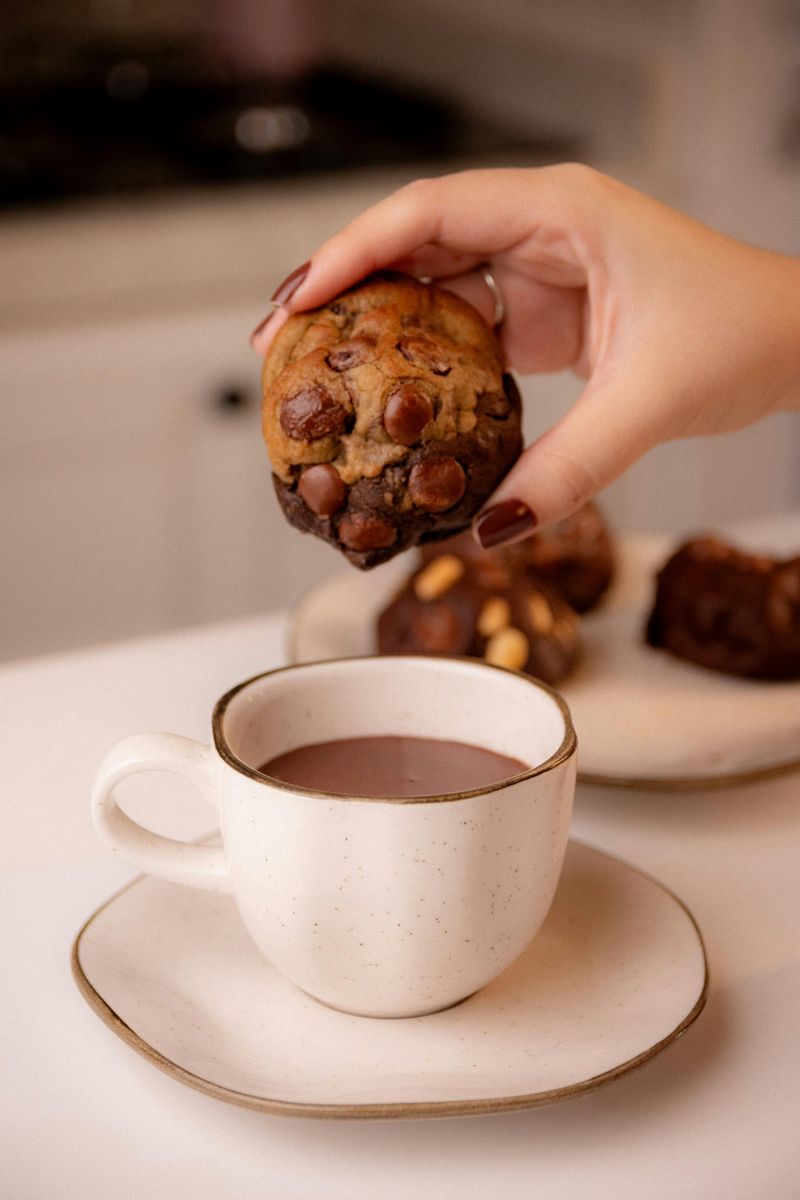
The chocolate chip cookie story reminds us that great things often come from unexpected moments and happy accidents.
Ruth Wakefield didn’t set out to invent America’s favorite cookie; she just wanted to serve something special.
Her willingness to experiment, adapt, and share her success made her creation accessible to everyone who wanted it.
The cookie’s journey from a small inn kitchen to worldwide fame shows how one person’s creativity impacts millions.
Every time you bite into a warm chocolate chip cookie, you’re tasting a piece of Massachusetts history.
The story connects us to simpler times when innovation happened in home kitchens rather than corporate test facilities.
Ruth’s legacy lives on, not in patents or profits but in the joy her cookies bring daily.
That’s the sweetest legacy anyone could hope to leave behind for future generations to enjoy forever.