The Tallest Sand Dune In America Is Right Here In Colorado And It Looks Almost Unreal
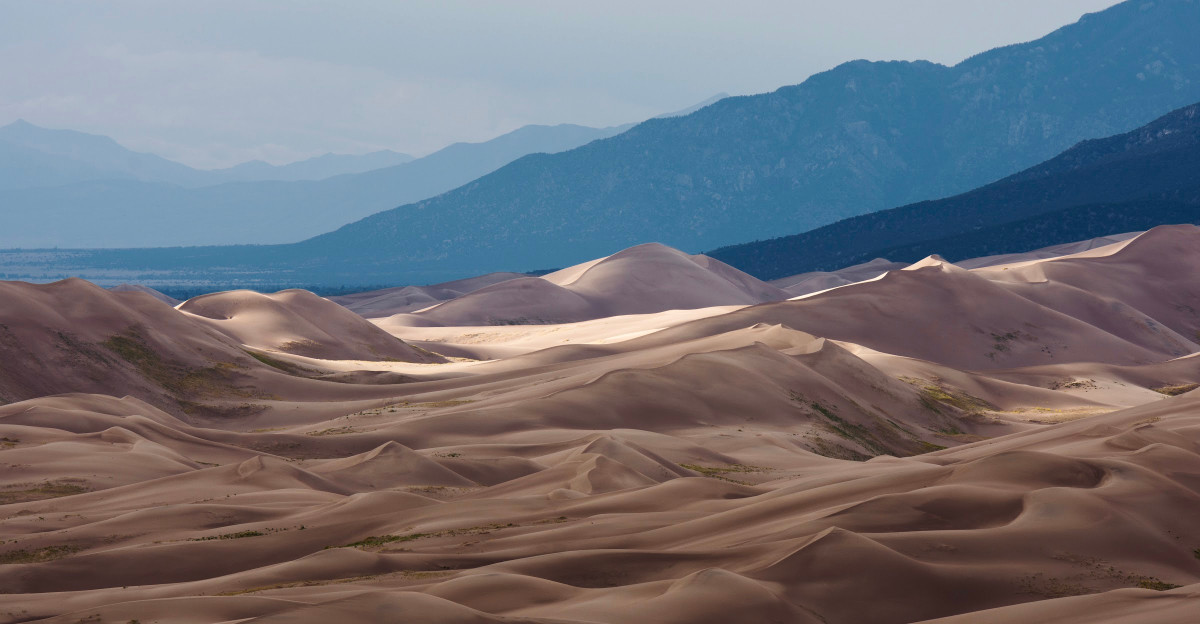
Its height changes depending on the wind. That’s the short version, and it sounds a little made up.
The longer version is much more interesting, because this dune is shaped by winds blowing from several directions.
Those shifting winds pile the sand into a pyramid with ridges reaching out from the top.
The result stands roughly 741 feet from base to summit. That ties it for the tallest dune on the whole continent, which is a lot of sand to keep track of.
Then comes the part that made me laugh. The sand surface can heat up to about 150 degrees in summer, hot enough to burn bare feet.
So the tallest dune around also has rules about when to climb it. See why one sentence wasn’t enough?
Meet The Dune That Wind Built From Every Direction
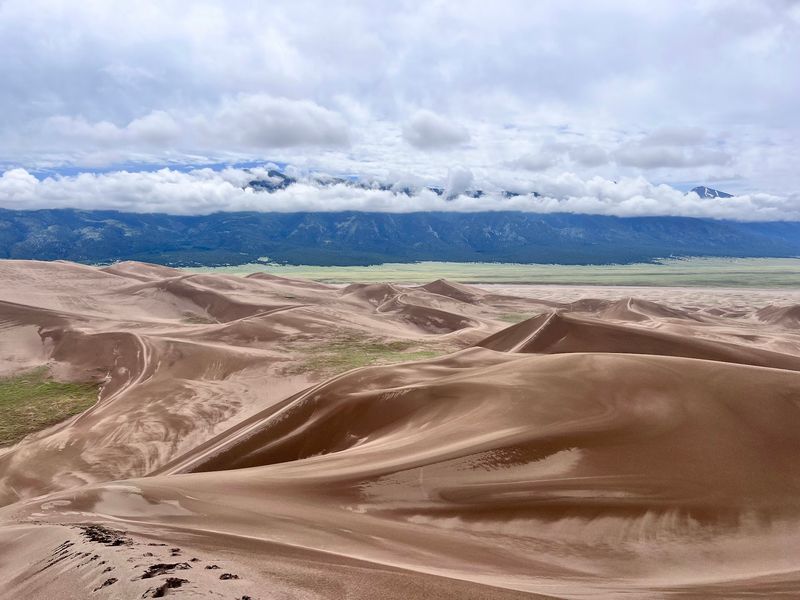
Tall sand piles are not rare in the West. Star Dune, inside Great Sand Dunes National Park and Preserve, is different because wind refuses to pick just one direction here.
Breezes push across the valley from several sides during the year. That shifting pattern stacks sand into a pyramid instead of a long wave.
Look closely and you’ll notice three or more ridges stretching out from the summit. Seen from above, those arms give the dune its starry name.
Size is the headline, though. Star Dune currently rises approximately 736 feet from its base to its crest. The exact measurement can change as gusts remove sand from one ridge and deposit it elsewhere.
Most surrounding dunes form long ridges, making Star Dune particularly distinctive.
Southwesterly winds carry sand toward the Sangre de Cristo Mountains. Gusts from mountain passes push some of it back.
Colorado gets an unusual natural balancing act, with sand constantly moving while the overall dunefield stays largely in place. Even its silhouette can change between visits.
A Neighbor Holds The Tallest-Dune Title
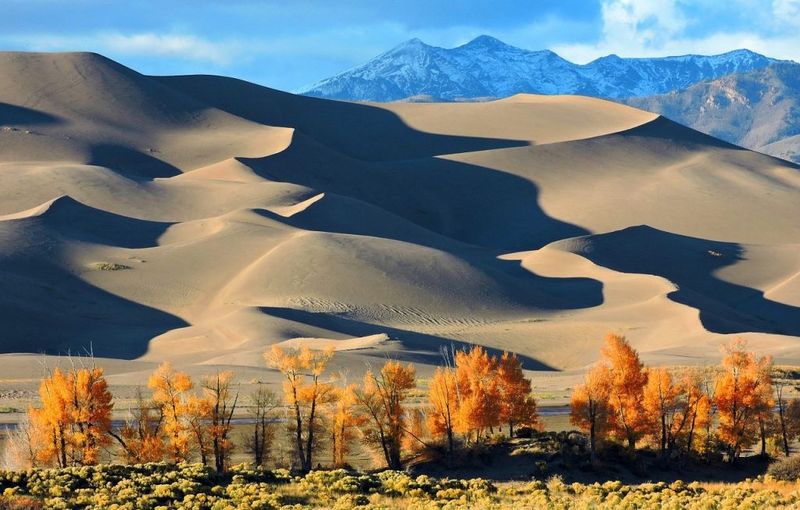
Bragging rights at Great Sand Dunes come with a small asterisk. Hidden Dune currently holds the North American height record, while Star Dune sits close behind.
Hidden Dune measures about 741 feet from base to summit. Star Dune is roughly 736 feet, a difference of just five feet on formations that wind can continually reshape.
Hidden Dune earns its name: its remote summit stays largely out of sight, concealed behind sandy ridges.
Then there’s High Dune on First Ridge, which confuses plenty of first-timers. It sits closer to the main parking area and looks enormous from below. Despite its name, it measures around 688 feet from bottom to crest.
High Dune offers sweeping views on a two-to-four-hour round-trip hike. Hidden Dune, by comparison, requires roughly seven miles of walking through unmarked sand.
Star Dune is still an extraordinary target in Colorado, even without the top ranking. Five feet is hardly the whole story.
The Hike Is Tough, So Plan Like A Pro
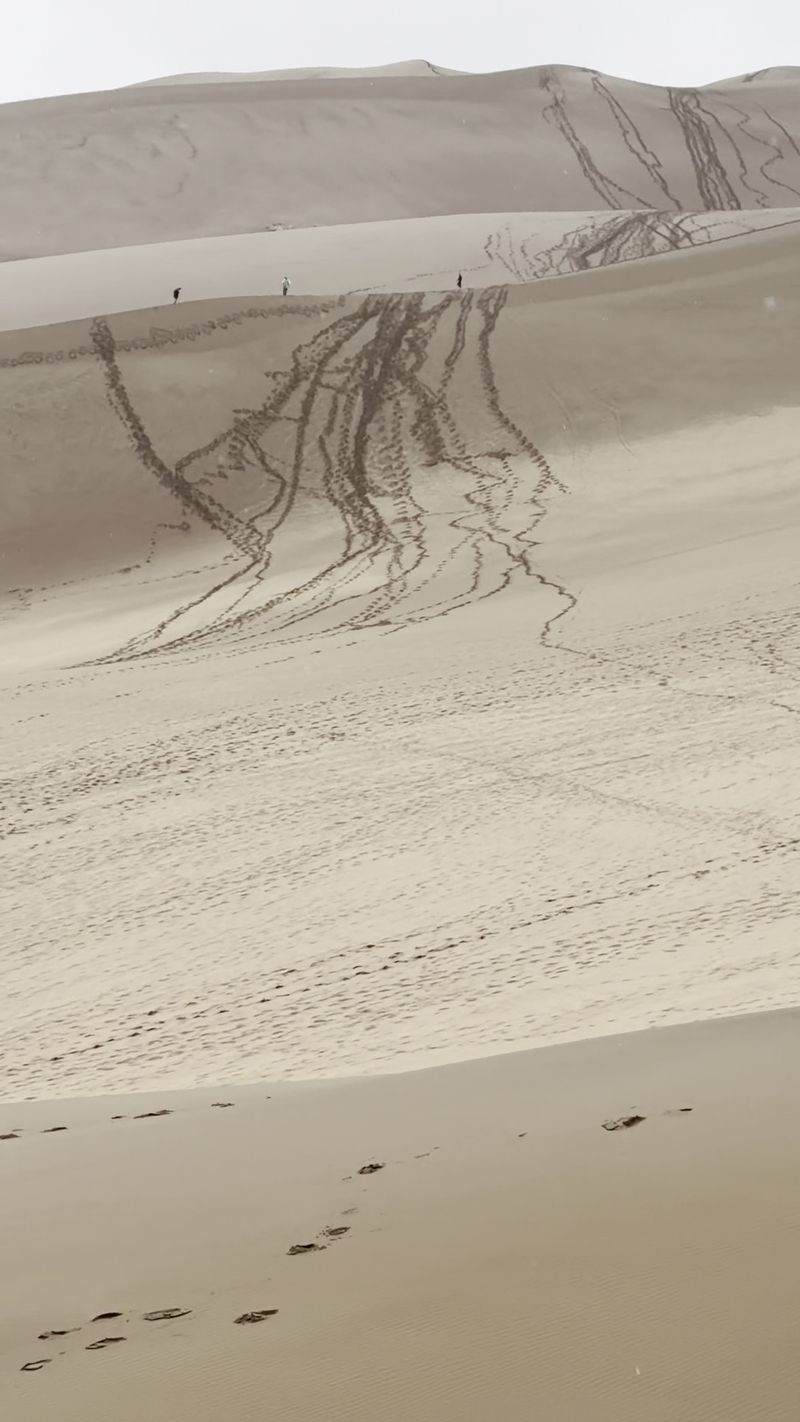
Loose sand turns every step into a negotiation. Reaching Star Dune is a strenuous hike at high elevation, and there are no marked trails to follow.
The usual route covers about six miles round trip from the main Dunes Parking Lot. Allow around six hours, or as long as nine if you’re still adjusting to the altitude.
The visitor center stands around 8,170 feet above sea level. Thin air and deep sand make a pace that feels easy at home surprisingly demanding here.
Take plenty of drinking water, food, sun protection, and footwear that keeps grit out. Gaiters help keep sand out of your shoes.
Navigation matters. Similar-looking ridges and inaccurate hiking apps make a reliable map essential. Track your route out, so finding your way back remains straightforward.
There’s no shade on the main dunes, and conditions can change quickly. Take breaks, check the forecast before setting out, and choose a comfortable turnaround point if your energy starts running low.
Your Route Starts Along A Creek Bed
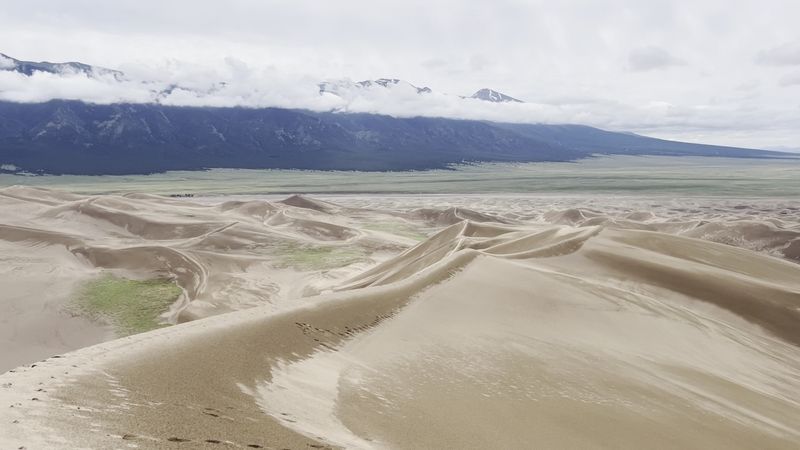
Here’s a route that can start with sand instead of wet ankles. From the Dunes Parking Lot, hikers generally head about two miles south along the Medano Creek bed.
Keep walking until Star Dune’s pyramid shape comes into view. Then choose a ridge and begin climbing toward the summit. This avoids climbing over the first high ridge.
Medano Creek is seasonal, and its flow changes dramatically with the mountain snowpack. In average years, flow peaks in late May or early June.
But 2026 has been exceptionally dry. The creek has not flowed beside the main dunes parking area as it normally does in wetter years.
An autumn visit should be planned as a walk along a mostly dry creek bed, rather than a guaranteed stream crossing.
When enough water runs, Medano Creek sometimes produces surge flow, with small waves traveling over the sandy channel. It depends on sand, slope, and current.
For hikers, the practical lesson is simple: check conditions rather than planning around water that may not be there. Bring your own drinking water.
Hot Sand Is No Joke, So Start Early
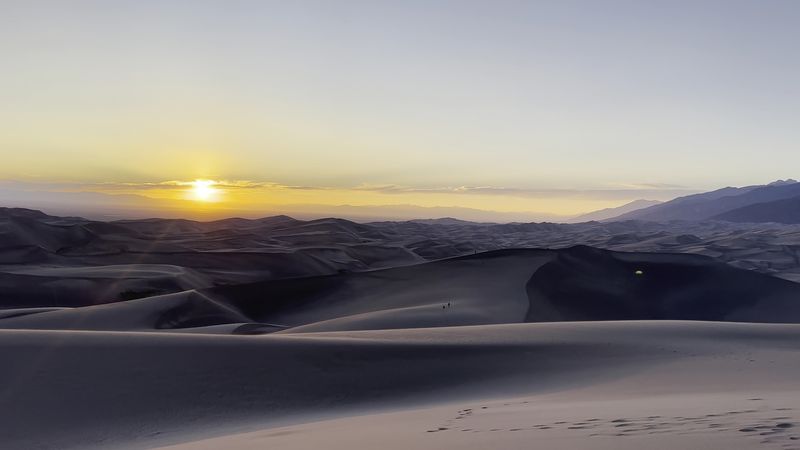
About 150 degrees. That’s how hot the sand surface can get on a warm summer day at Great Sand Dunes.
Barefoot walking isn’t a good idea in those conditions. Closed-toe shoes or boots are much more suitable, and many hikers add gaiters to keep sand out of their socks.
Timing solves a lot of trouble. In warmer months, park staff encourage exploring in the early morning or evening, when the surface is cooler and the light brings out the curves of the ridges.
Afternoon thunderstorms are another reason to start early. With little shelter on the dunes, the best response to approaching lightning is to leave the exposed slopes and return to a building or vehicle.
Wind can arrive in any season, especially near passing weather fronts. Sunglasses help with blowing sand.
Winter offers a different landscape, with patches of snow and very cold temperatures. Layers and suitable boots become essential for exploring in those months.
Colorado sunshine can feel mild even when conditions change fast.
Sledding On Sand Requires The Right Gear
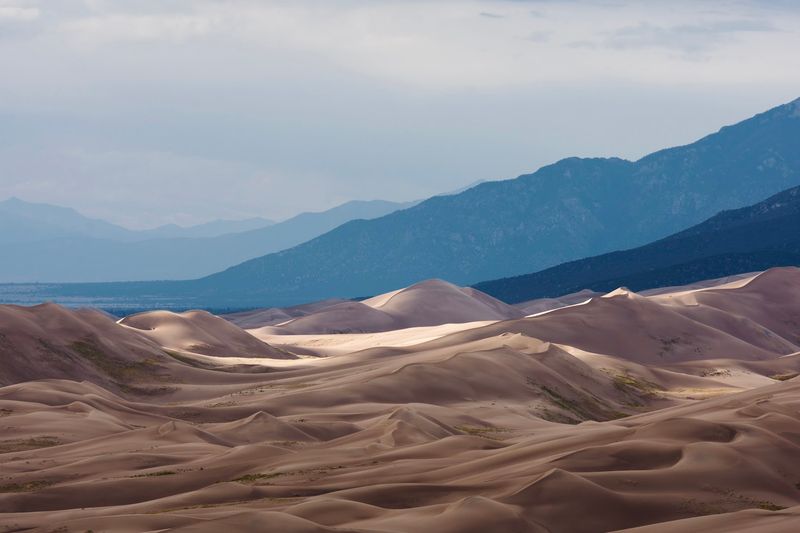
Your snow sled from the garage will probably just sit there. Regular sleds don’t slide well on dry sand, which disappoints a lot of hopeful riders.
Sandboarding and sand sledding are popular at the park. You’ll need equipment with specially designed slick bases and wax to make it work on dry slopes.
Gear isn’t rented inside the park. The Oasis Store near the entrance offers seasonal rentals, while other outfitters in the San Luis Valley provide additional options. Check seasonal availability.
Grab gear before driving toward the dunes. Carrying a board to Star Dune adds weight to an already demanding hike.
Many riders choose smaller slopes near the main parking area instead. Those hills require a shorter hike. Children can start on gentler slopes before trying anything steeper.
Stay clear of vegetated patches and choose slopes with plenty of open room below.
The ride downhill is the reward. Gravity finally does some of the work after all that climbing, and you may want another turn.
The Sand Has A Story Hundreds Of Thousands Of Years Long
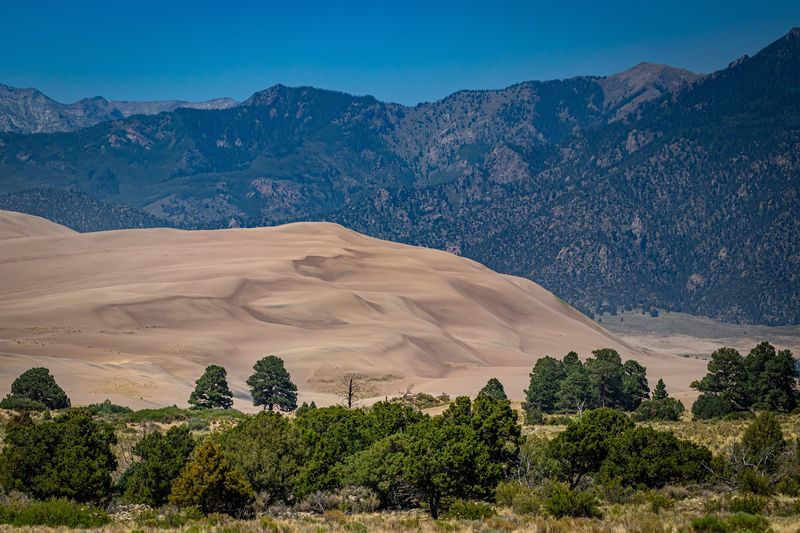
Long before anyone climbed it, enormous lakes shaped this valley. Lake Alamosa covered much of the San Luis Valley floor.
As the ancient lake drained and smaller lakes gradually changed, sediments collected across the basin. Winds carried exposed sand toward the Sangre de Cristo Mountains, while gusts from the mountains pushed it back.
Much of the sand originally came from the San Juan Mountains across the valley. The sand reaches hundreds of feet below today’s surface.
Evidence suggests dunes have existed here for roughly 400,000 years, although the exact age of the formations visible today is still uncertain.
Creeks recycle grains from the dune edges toward the valley floor, where wind can carry them back again. People have known this valley for thousands of years.
Federal protection began in 1932, when President Herbert Hoover established Great Sand Dunes National Monument. Local residents pushed for that protection.
In September 2004, the area became a national park and preserve, expanding protection to important surrounding landscapes and water resources.
Start Your Trip At The Visitor Center First
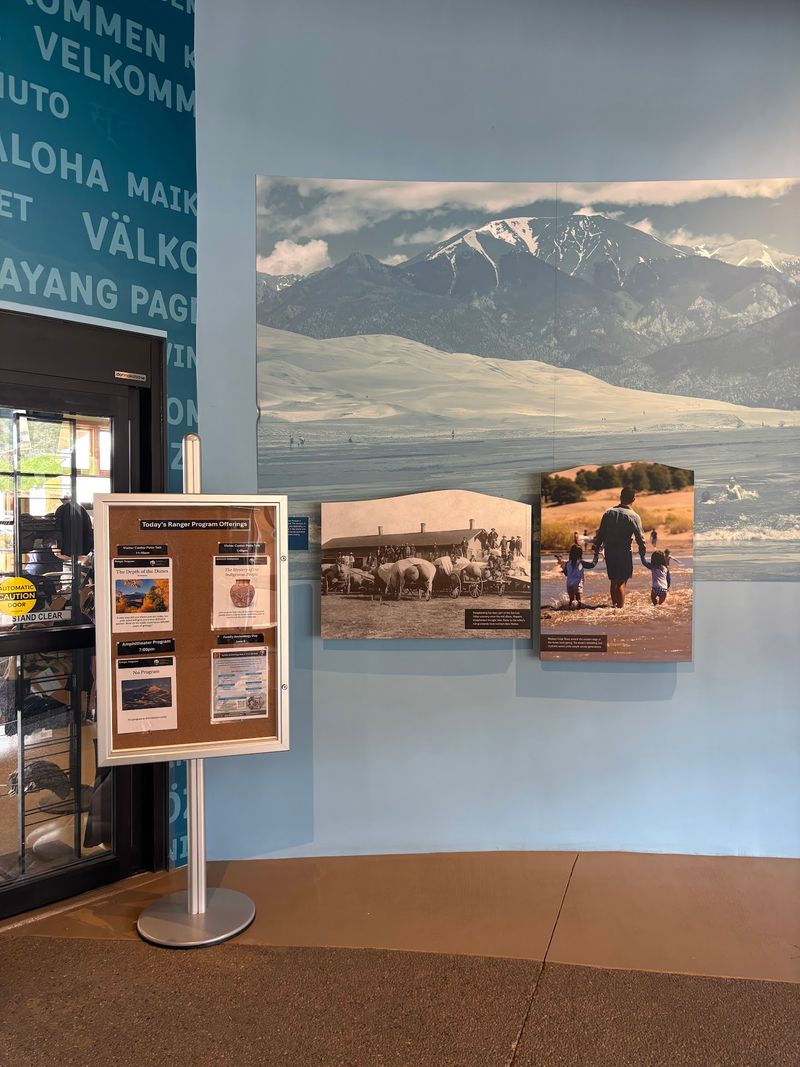
Smart Star Dune trips begin with a stop at the visitor center. Great Sand Dunes National Park and Preserve is reached along State Highway 150, near Mosca in southern Colorado.
The visitor center’s address is 11999 State Highway 150, Mosca, CO 81146. It sits near the western base of the Sangre de Cristo Mountains, with impressive views toward the dunefield.
The center is generally open daily from 9 a.m. to 4:30 p.m., except Thanksgiving, Christmas, and New Year’s Day. The wider park is open day and night throughout the year.
Inside are restrooms, a drinking-water refill station, interactive displays, and a 20-minute film. Rangers can help explain hiking routes, creek conditions, and weather concerns before you begin.
Displays explore geology, cultural history, wildlife, and the night sky.
Beyond Star Dune, the park supports at least seven insect species found nowhere else. Animal tracks and colorful sand grains offer smaller discoveries. Fill your bottles and look toward that enormous pyramid of sand.