The World’s Largest Carousel Is Hiding Inside This Wonderfully Strange Wisconsin Attraction
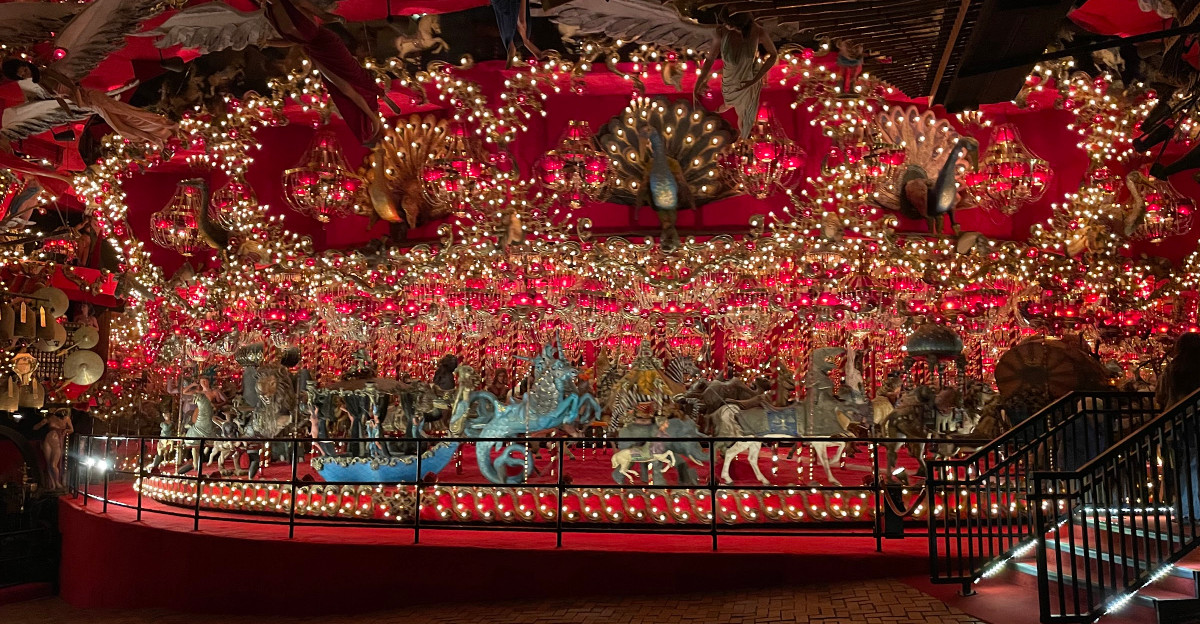
You walk into a room and think: “There is absolutely no way that thing is real.” Oh, it is!
Wisconsin hides the world’s largest carousel inside an attraction already famous for making normal feel boring.
Lights glow everywhere, carved creatures crowd the massive display, and the sheer scale makes standing still almost impossible.
The funniest part? You cannot ride it. Somehow that barely matters.
The spectacle is the point, and it fits perfectly among the other strange surprises waiting nearby.
Just when you think the visit has peaked in weirdness, another room changes your mind. This carousel does not spin visitors around, but it definitely spins heads.
A House With Its Own Rules
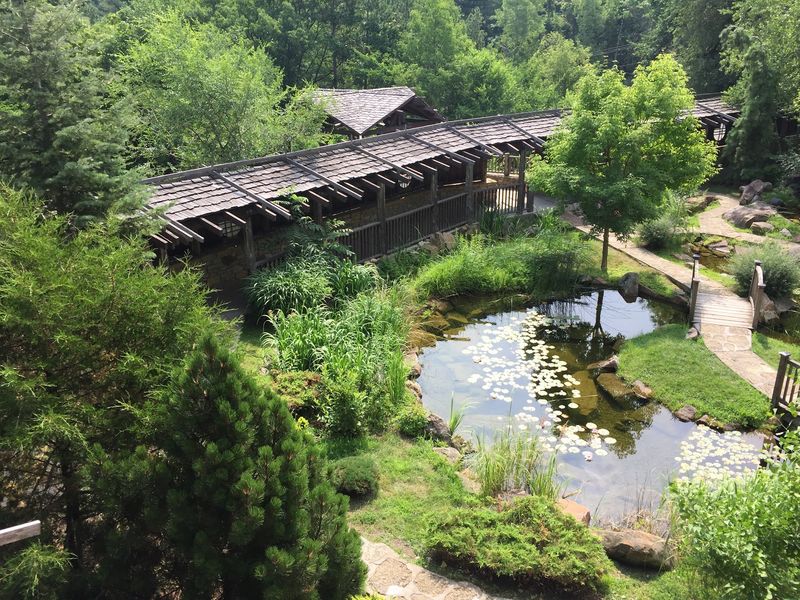
Before reaching the carousel, it helps to understand why this unusual place exists. The House on the Rock began as a personal building project atop a rocky outcrop.
Construction began in 1945, and much of the original retreat took shape directly on a 60-foot chimney of rock. The project kept expanding as new rooms and ideas were added over time.
The building does not follow one tidy style. Low passages, unexpected corners, and changing ceiling heights keep the original house visually unpredictable.
The original house opened to visitors in 1960. Over time, the attraction grew far beyond those first rooms.
The original house works as the beginning of the larger experience. The larger displays came later, so the visit changes character as it continues.
Rather than rushing toward the famous carousel, the early rooms are worth noticing for their compact scale, stonework, and unusual layout.
The attraction’s long-running appeal comes partly from the way one idea seems to lead directly into another. The address is 5754 State Road 23 in Spring Green.
Rooms Shaped Around Rock
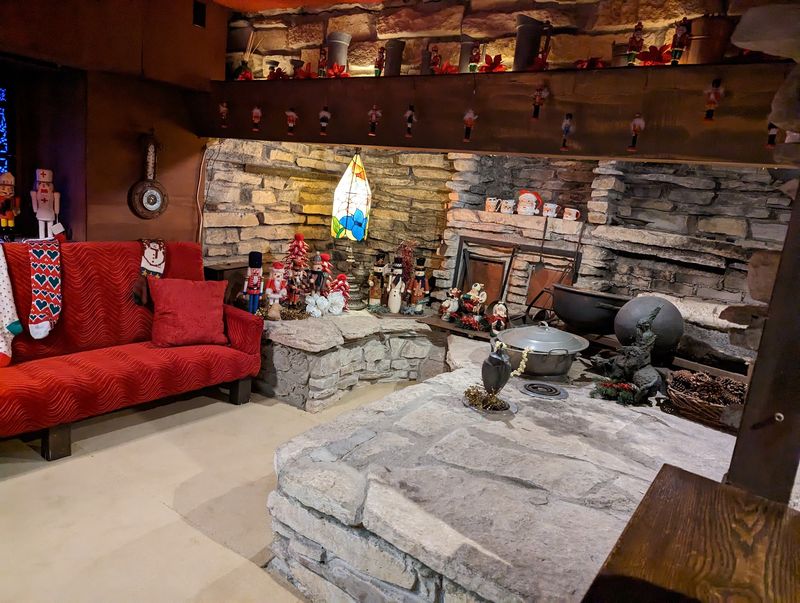
Low ceilings and tight passages make the original house feel very different from the enormous galleries that appear later.
Stone surfaces, dark wood, blue stained glass, and large sandstone hearths give these rooms their strong character. Curved edges and built-in features make the layout feel carefully fitted together.
Windows connect the darker interior with the wooded valley outside. That contrast makes the building’s position on the rock easier to appreciate.
These rooms are not the enormous galleries visitors encounter later. Their smaller scale lets you study surfaces, corners, and changes in light.
Looking up, then looking down, reveals details that can disappear if the route is taken too quickly.
The narrow passages also make patience useful when other visitors stop to look. Leaving space keeps the route easier for everyone.
Visitors with mobility concerns should check current access information before arriving. The Gate House and Original House are not accessible by motorized scooters, wheelchairs, walkers, or strollers, and other areas include ramps and uneven surfaces.
The Carousel Without Horses
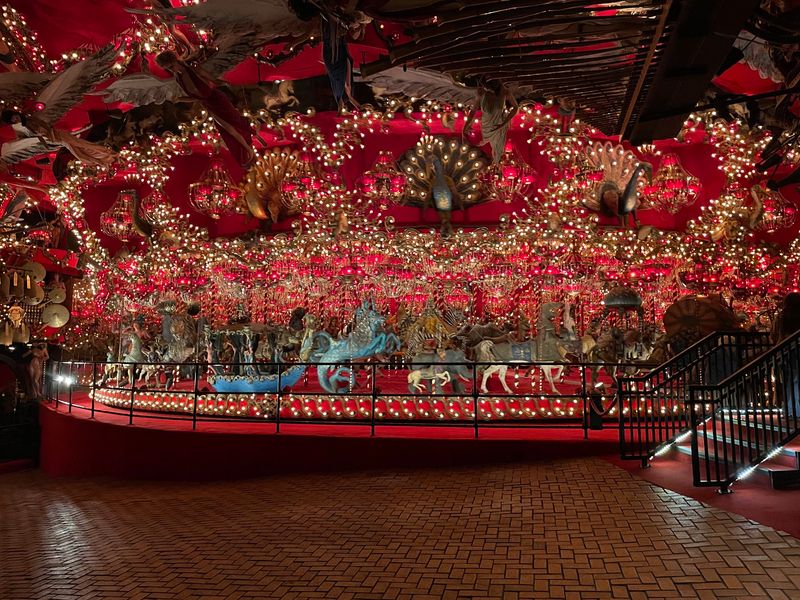
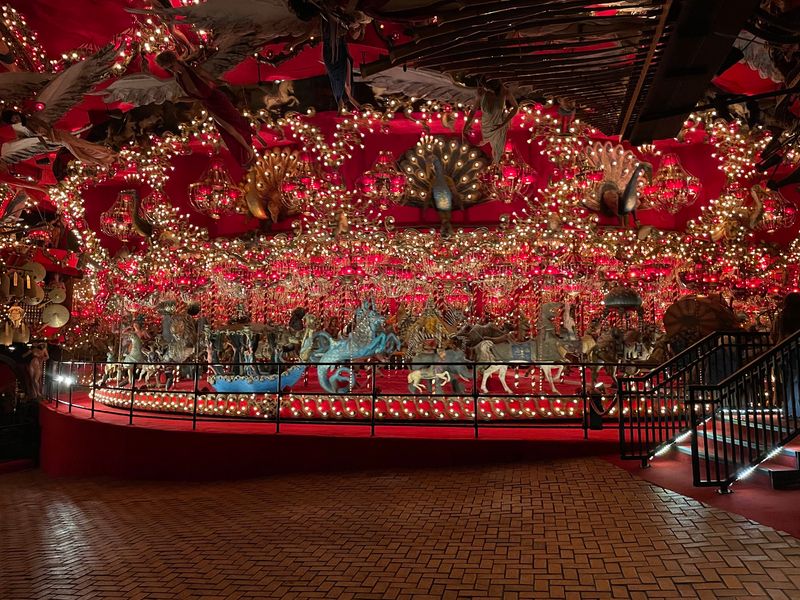
No ordinary carousel horses fill this enormous display. Its 269 figures include fantastic creatures instead of the usual riding animals.
The carousel is displayed as a spectacle, not an attraction visitors can ride. Its scale, lights, and movement are meant to be watched from the surrounding viewing area.
The room glows with 20,000 lights and 182 chandeliers. With so much happening at once, smaller details can be easy to miss.
Published descriptions place the carousel at about 80 feet in diameter and 35 feet high. Those measurements help explain why the display overwhelms the room around it.
The House on the Rock calls it the world’s largest carousel. Travel Wisconsin uses the same description for one of the attraction’s signature displays.
For a better look, it helps to stay long enough to notice the individual figures instead of treating the room as a quick photo stop.
Out Along The Infinity Room
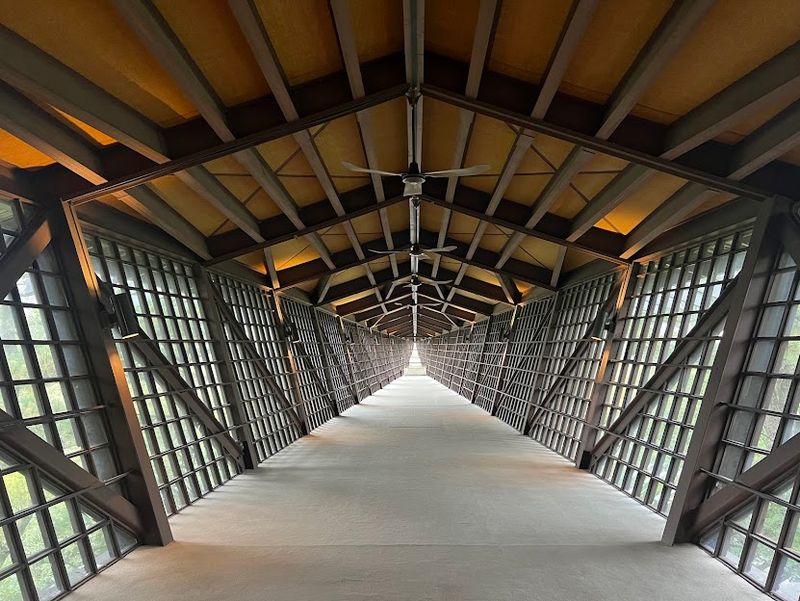
High above the trees, the Infinity Room extends outward over the wooded valley.
Its long, narrowing shape draws the eye toward the far end. More than 3,000 pieces of glass bring the surrounding landscape into view throughout the walk.
The room extends 218 feet beyond the supporting rock. That reach creates the illusion of a structure pushing almost impossibly far into open space.
Nearby treetops help show how far the room projects over the valley. The narrowing shape makes the distance feel even greater toward the tip.
A section of glass flooring offers another view of the space below. Visitors uncomfortable with heights can remain farther back and still see the valley through the surrounding windows.
People uneasy with heights do not need to turn the visit into a test. This Wisconsin attraction itself warns that some areas may be difficult for guests affected by acrophobia or claustrophobia.
The long space also deserves patience when others stop for photographs. Moving slowly gives everyone more room to take in the view.
A Street Kept Indoors
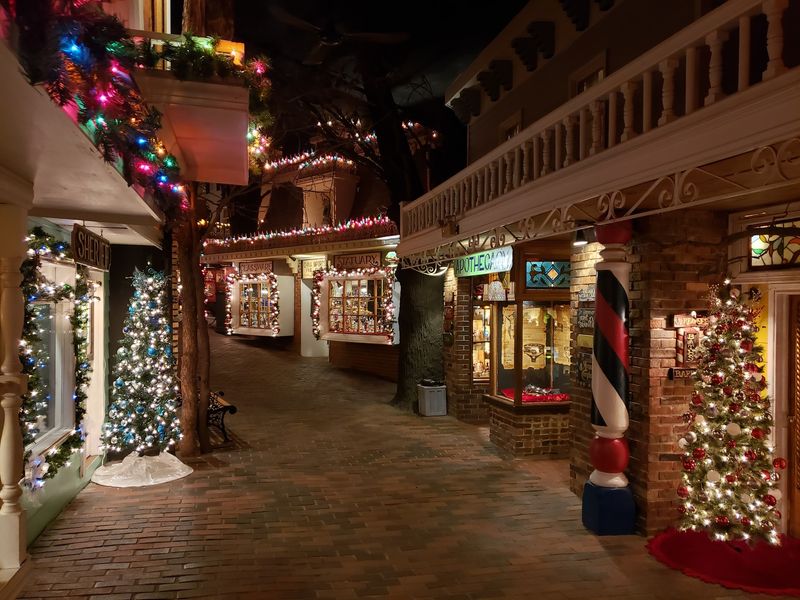
A brick street indoors changes the attraction’s scale again. Streets of Yesterday presents a recreated 19th-century streetscape within Section 2.
Its shopfronts and displays reward close attention. A sheriff’s office, carriage house, and hundreds of antiques fill the red-brick setting.
The display suggests an earlier era of American town life. It is a themed recreation rather than a preserved historic district.
That distinction makes the streetscape easier to understand without assuming every storefront represents one exact place or moment in history.
Choosing one storefront at a time makes the dense display easier to explore. Signs, windows, tools, and decorative objects all compete for attention.
The buildings are constructed at three-quarter scale and kept under low lighting that suggests evening, which is part of why the proportions feel slightly off in a way most visitors notice before they can name it.
Streets of Yesterday opened in 1971, built on techniques developed for the Streets of Old Milwaukee exhibit at the Milwaukee Public Museum.
The indoor street also shows how widely the attraction’s themes can change. A visit here offers more than architecture and carousel lights.
Keeping a steady pace matters because Section 2 still holds several major displays beyond this indoor street.
The Sea Takes Center Stage
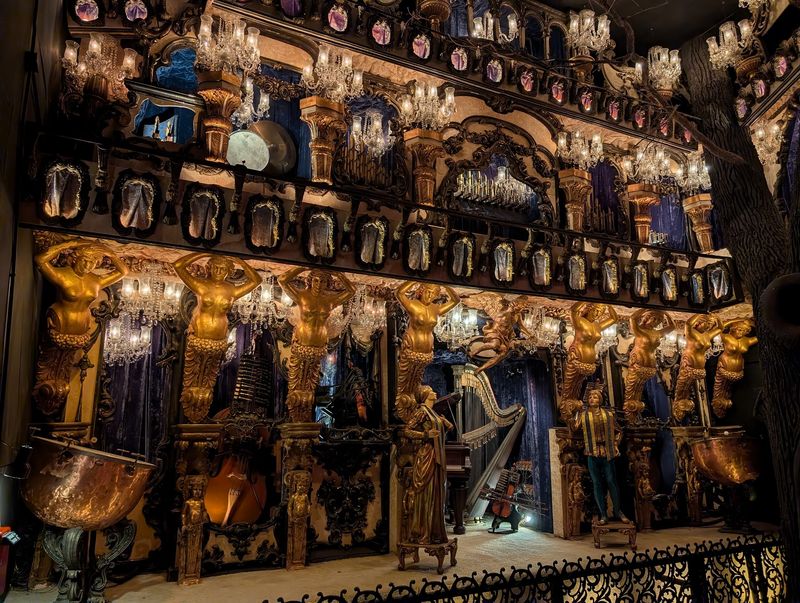
A sea creature this large is difficult to expect inside a hilltop attraction. The Heritage of the Sea gallery makes that surprise impossible to miss.
A 200-foot sea creature dominates the space. More than 200 model-ship displays and a Titanic exhibit surround the oversized centerpiece.
The creature is described by the attraction as being as long as the Statue of Liberty is tall. Its scale becomes clearer as the walkway moves through different levels of the room.
Looking at the display from several positions reveals more of its shape. One viewpoint cannot show every part of such an oversized scene.
The smaller nautical displays deserve attention too. They give the gallery more to offer than its most obvious centerpiece.
This is an imaginative exhibit rather than a natural-history lesson. The theatrical scale is part of the point.
The gallery can feel visually busy, so focusing on a few details can make the room easier to absorb.
Wisconsin families can turn those details into a simple spotting game while staying together along the large indoor route.
Small Worlds, Big Collections
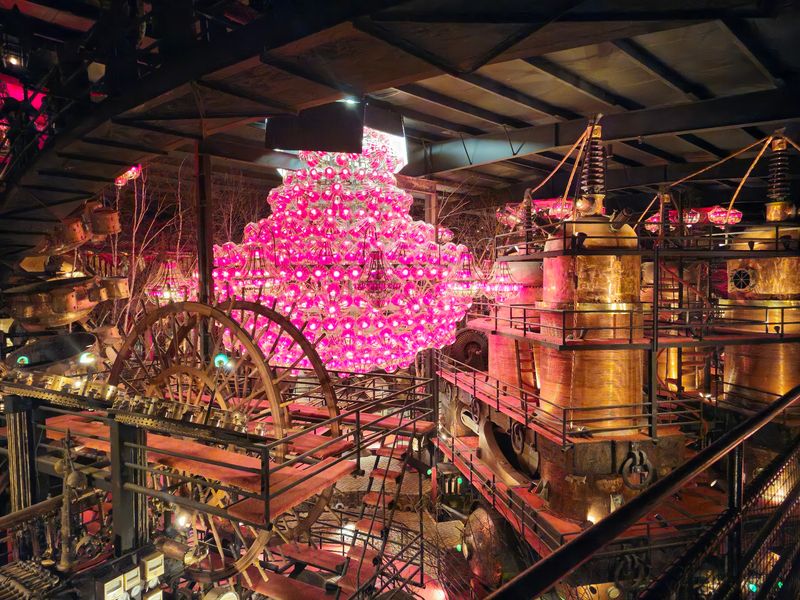
After so many enormous displays, the Doll House Room shifts attention to miniature interiors.
Miniature rooms show careful details that are easy to overlook. Furniture, windows, lighting, and interior layouts reward a closer look.
Several house styles appear across the collection. The attraction describes it as one of the world’s largest collections of miniature dollhouses, with examples ranging from Colonial to Victorian styles.
Nearby galleries contain many other kinds of objects. Taking them one case at a time keeps the amount of material manageable.
That choice matters because the attraction holds an impressive amount of material. Looking closely at fewer displays can be more rewarding than racing past all of them.
Small differences in design give each miniature room its own identity. The shift in scale also provides a break from the oversized displays elsewhere in the complex.
For younger Wisconsin visitors, finding the smallest detail possible can turn the room into an easy observation game.
Short pauses can help when the galleries start to feel visually crowded. The attraction itself describes the overall visit as a strong visual and audio sensory experience.
Plan For The Long Wander
Comfortable shoes matter here. The attraction covers a large area with many connecting rooms, walkways, ramps, and changing surfaces.
Allowing several hours makes more sense than squeezing the visit into one short stop. The House on the Rock currently recommends at least three hours for the full Ultimate Experience.
The route includes stairs, ramps, uneven surfaces, and outdoor sections. Current accessibility guidance is worth checking before choosing which parts of the attraction fit your plans.
Different admission options cover different sections of the attraction. The full regular-season experience includes Sections 1, 2, and 3, while shorter options cover fewer sections.
Some musical displays use tokens to start their performances. Keeping tokens handy avoids having to search for a dispensing machine later.
Those machines add sound to an already busy setting. Visitors sensitive to noise, light, temperature changes, tight spaces, or heights should review the attraction’s guidance before arriving.
Operating days, hours, and seasonal experiences can change. In 2026, the regular season runs from March 12 through November 8, followed by a Christmas Experience beginning November 12.