The World’s Largest Collection Of WWII Aircraft Is Right Here In California And It’s Remarkably Preserved
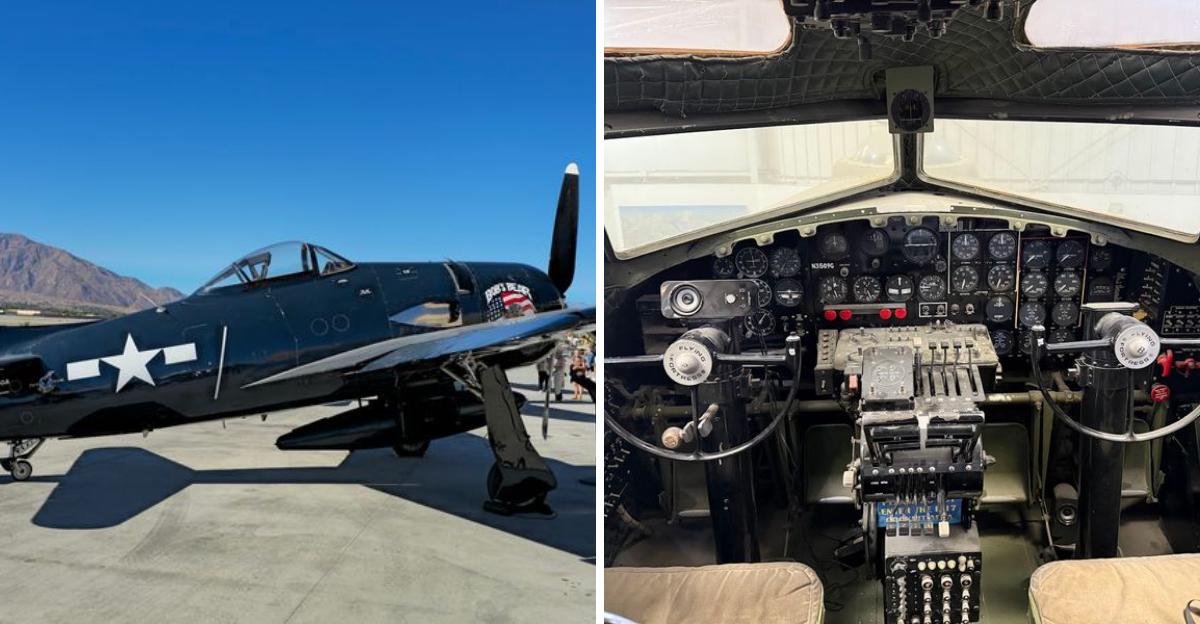
A hangar full of history can make regular museum rules feel too small.
Engines seem louder before they even start. Wings stretch overhead. Old metal suddenly feels alive with stories.
Aviation history hits differently in California when the scale gets this big.
Rows of preserved aircraft turn a simple visit into something much more cinematic.
Every fighter, trainer, and transport carries a piece of a larger story without needing extra drama.
You do not have to be an aviation expert to feel the pull. The size alone grabs attention. The condition keeps it there.
A place like this makes visitors slow down and look closer at the machines that helped shape a generation.
How often does a museum make history feel this massive before you even read the first sign?
The World’s Largest Collection Of Flyable WWII Aircraft
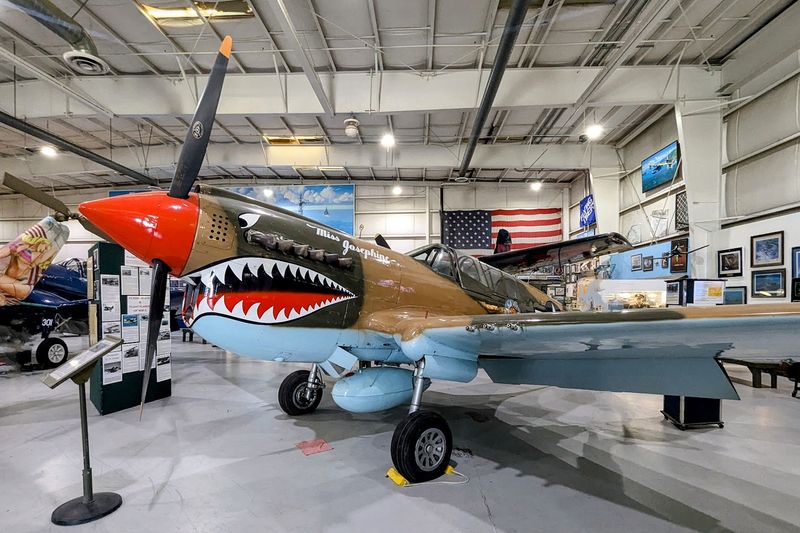
Standing in the middle of a hangar surrounded by more than 75 fully preserved warbirds is the kind of experience that stops people mid-sentence.
The Palm Springs Air Museum at 745 N Gene Autry Trail, Palm Springs, CA 92262 holds the distinction of housing the world’s largest collection of flyable World War II aircraft, a title backed by the sheer number of operational machines on site.
Many of these planes are FAA-approved for flight and still take to the skies during special events.
The collection spans iconic aircraft including the P-51 Mustang, B-17 Flying Fortress, C-47 Skytrain, P-47 Thunderbolt, Corsair, and Supermarine Spitfire.
Each plane carries its own story, and the museum does a thorough job of presenting that context through placards, videos, and knowledgeable docents stationed throughout every hangar.
What makes the scope of this collection especially meaningful is that these are not just static shells.
Certified mechanics work on-site to keep planes in flying condition, and volunteers with restoration expertise handle static exhibition aircraft.
The result is a living collection that feels active and cared for rather than simply archived.
Five Themed Hangars Covering Different Eras Of Aviation History
Organized exploration makes a big difference when a museum houses this many aircraft, and the five-hangar layout at the Palm Springs Air Museum handles that challenge well.
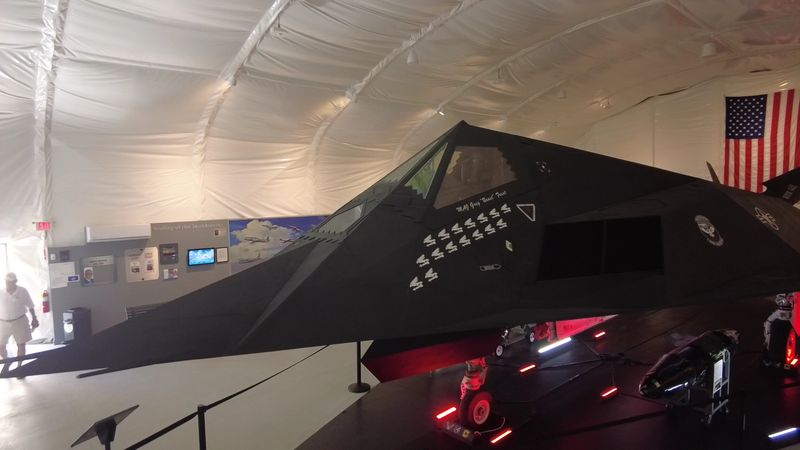
Each hangar is dedicated to a specific theater or era, with sections covering the Pacific Theater, European Theater, a dedicated B-17 hangar, and a Korea/Vietnam/Cold War hangar that also includes the remarkable F-117A Stealth Fighter exhibit.
Moving from one hangar to the next creates a natural sense of progression through aviation history, and the thematic separation helps visitors understand how aircraft design and military strategy evolved across different conflicts.
The European Theater hangar, for example, places its aircraft in context with detailed timelines and artifacts that explain the strategic role of air power over occupied Europe.
All five hangars are air-conditioned, which matters considerably given Palm Springs temperatures during summer months.
The controlled environment also contributes directly to the long-term preservation of the aircraft themselves.
Spending time in each hangar without feeling rushed is entirely possible, and many visitors find that four hours or more passes quickly once they start reading the historical panels and watching the short documentary films.
The B-17 Flying Fortress You Can Walk Through
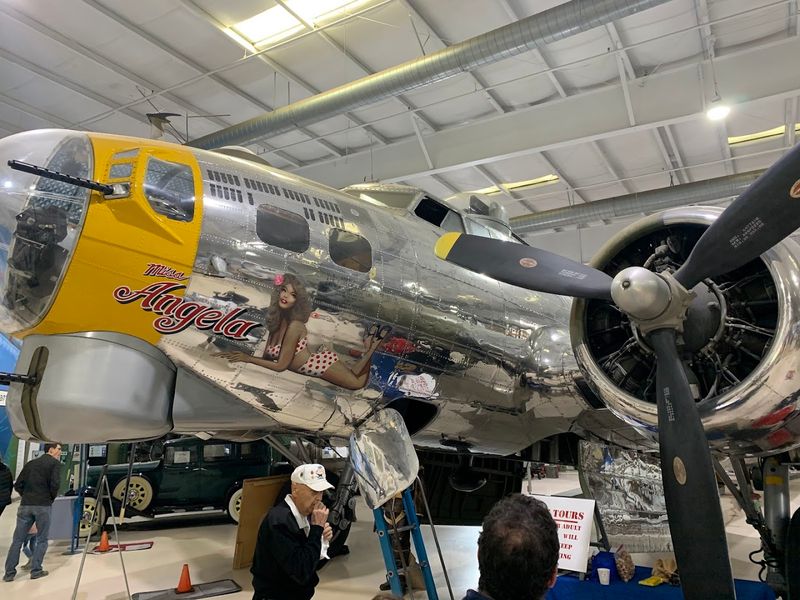
There are few aircraft in WWII history as immediately recognizable as the B-17 Flying Fortress, and the Palm Springs Air Museum gives visitors a rare opportunity to experience one from the inside.
The museum’s B-17, known as Miss Angela, is open for walkthroughs, allowing guests to move through the fuselage and get a physical sense of the demanding conditions crews endured on long-range bombing missions over Europe.
The B-17 hangar also contains ongoing restoration work, including a project to return the “Movie Memphis Belle” B-17 to flight status.
Seeing active restoration in progress adds a layer of authenticity that polished finished displays sometimes lack, and knowledgeable docents in the area are typically ready to explain the restoration process in detail.
Walking through a real B-17 tends to shift a person’s understanding of WWII air combat in a way that photographs simply cannot replicate.
The tight spaces, the gun positions, and the sheer mechanical complexity of the aircraft tell a story about the skill and courage required from every crew member on board.
Few moments in the museum carry as much emotional weight as stepping out of the tail section and back into the present day.
The No-Ropes Policy Changes Everything
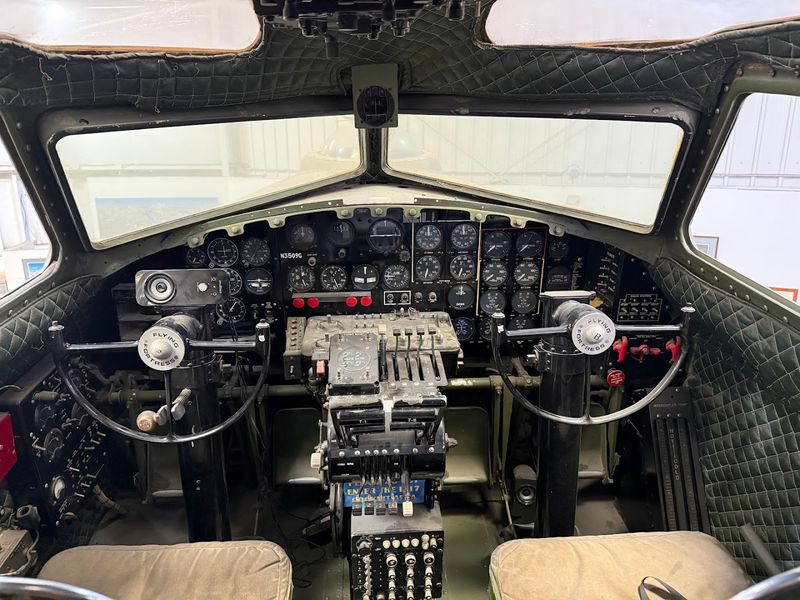
Most aviation museums keep visitors at a careful distance, separated from aircraft by ropes, barriers, or thick glass.
At the Palm Springs Air Museum, that distance largely disappears, and the effect on the overall experience is hard to overstate.
Getting close enough to inspect the rivets on a P-51 Mustang or peer into the cockpit of a WWII fighter feels genuinely different from reading about the same plane in a book.
The no-ropes approach applies to many of the exhibits, and select aircraft even allow visitors to climb aboard or sit in the cockpit.
A small donation is sometimes requested for certain interactive opportunities, such as sitting in the Spitfire for a photograph, but the access itself remains a defining feature of the museum’s philosophy.
For families with younger visitors, this openness tends to create a level of engagement that purely visual displays cannot match.
Kids who might otherwise lose interest in a traditional exhibit setting often find themselves genuinely absorbed when they can stand directly beside a machine that flew combat missions decades ago.
The museum seems to understand that proximity is one of the most powerful teaching tools available.
Veteran Docents Bring History To Life
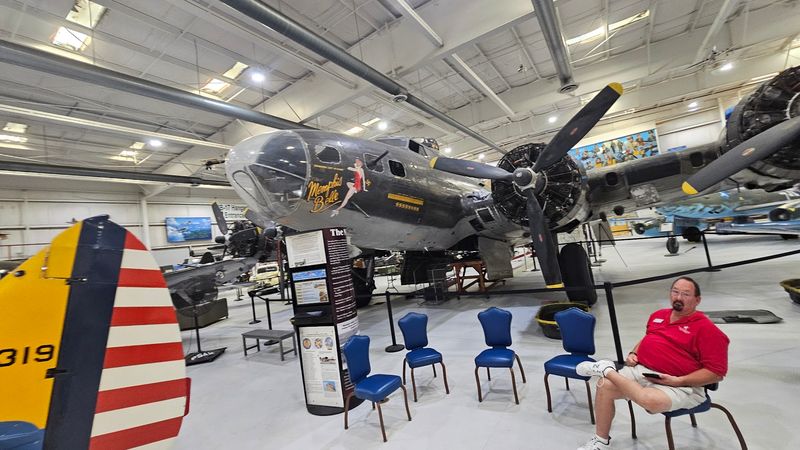
Over 320 docents volunteer at the Palm Springs Air Museum, and a significant number of them are aviators, veterans, or individuals with deep personal connections to the aircraft on display.
The difference between reading a placard and hearing a firsthand account from someone who flew or worked on similar planes is considerable.
Those conversations tend to be the moments visitors remember most clearly long after leaving.
Docents are stationed throughout every hangar and are generally eager to engage with visitors at whatever level of depth feels comfortable.
Some guests prefer a quick overview, while others find themselves in extended conversations that cover specific missions, aircraft mechanics, or personal wartime experiences.
The docents seem to read that dynamic well and adjust accordingly.
The quality of knowledge available through these volunteers elevates the Palm Springs Air Museum beyond what its physical collection alone could achieve.
Historical context, personal anecdote, and technical detail come together in a way that formal exhibit signage rarely manages.
For younger visitors especially, speaking with someone who carries genuine connection to this history tends to leave a lasting impression that no digital display or film can fully replicate.
Warbird Rides In Operational WWII Aircraft
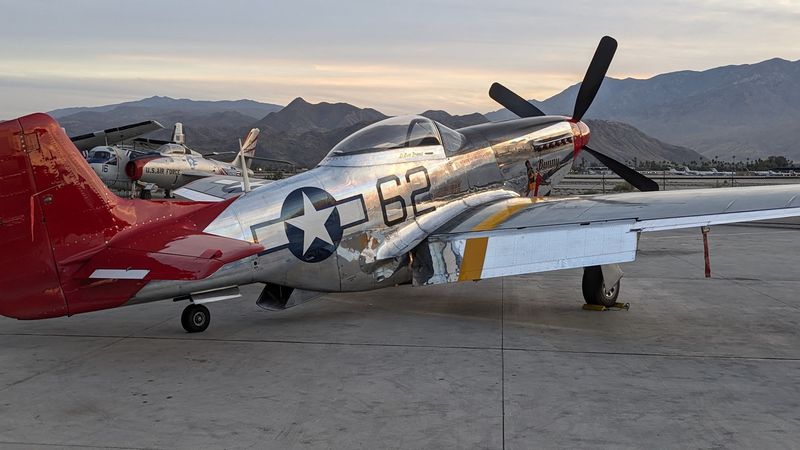
Seeing a WWII aircraft up close is one thing, but actually flying in one is an experience in a category of its own.
The Palm Springs Air Museum offers warbird rides in operational aircraft including the Douglas C-47 Skytrain and the P-51 Mustang.
This gives visitors the chance to experience flight in machines that served during one of history’s most consequential conflicts.
Rides are bookable and vary in format depending on the aircraft available at a given time.
The C-47, known at the museum as “What’s Up Doc?”, can carry multiple passengers, making it an option for small groups.
The P-51 Mustang rides are a more intimate and intense experience given the aircraft’s single-seat fighter origins.
The museum’s location directly beside the International Airport means that takeoffs and landings happen against a backdrop of active modern aviation, creating an interesting contrast between wartime machinery and contemporary air travel.
Warbird rides are a popular offering, so checking availability and booking in advance through the museum’s official website at palmspringsairmuseum.org is a practical step for anyone planning to include this in their visit.
The F-117A Stealth Fighter Exhibit
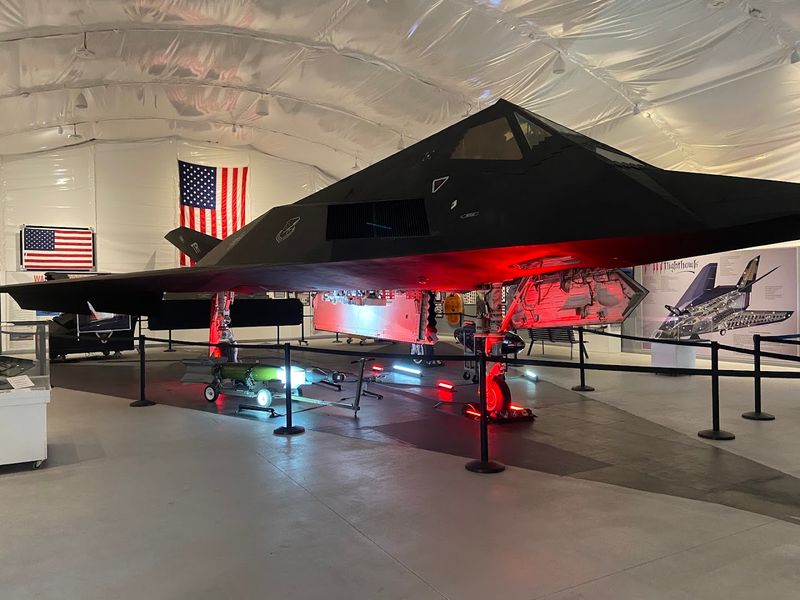
Angular, low-profile, and unlike anything else in the hangars, the F-117A Nighthawk Stealth Fighter is one of the most visually striking aircraft in the entire collection.
The Cold War and modern aviation hangar houses this exhibit, and for many visitors, it becomes an unexpected highlight of the day.
The F-117A’s distinctive faceted shape was designed specifically to deflect radar signals, and seeing that geometry up close makes the engineering philosophy immediately understandable.
The docent typically stationed in this section tends to be particularly well-informed about the aircraft’s history, including its classified development during the Cold War and its operational use during conflicts in the late 20th century.
The conversations available here often extend well beyond what the exhibit panels cover on their own.
For visitors who came primarily for WWII content, the F-117A exhibit tends to be a welcome surprise that broadens the scope of the visit in an interesting direction.
Aviation history did not stop in 1945, and the museum’s commitment to covering the full arc from WWII through the Cold War and beyond gives the collection a depth and range that many single-era aviation museums simply cannot match.
The Desert Climate Preserves These Aircraft Naturally
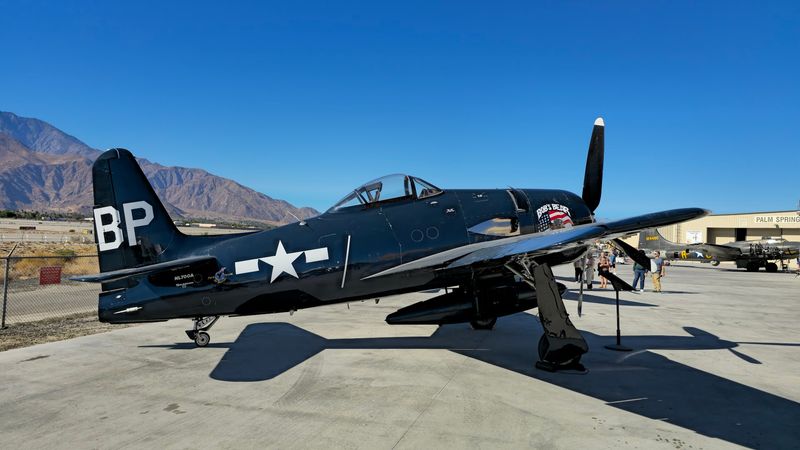
Preservation is one of the biggest challenges in maintaining vintage aircraft, and the Coachella Valley’s dry desert climate gives the Palm Springs Air Museum a significant natural advantage.
Low humidity slows corrosion dramatically, and the consistently warm, dry air reduces the moisture-related deterioration that shortens the lifespan of metal aircraft in more humid environments.
The museum’s founders recognized this advantage early, and the original decision to establish the collection in Palm Springs rather than in a more temperate coastal location was partly driven by climate considerations.
The result is a collection where aircraft surfaces, original paint details, and mechanical components tend to hold up over decades in ways that would be difficult to replicate elsewhere in California.
Even the outdoor display areas benefit from the climate, with aircraft parked on the tarmac beside the hangars showing relatively minimal weathering compared to outdoor exhibits at museums in wetter regions.
The indoor hangars are also air-conditioned, which adds another layer of environmental control for the most historically significant pieces.
Visitors who pay attention to the condition of the aircraft throughout the museum tend to notice just how well the combination of climate and careful maintenance has served this collection over nearly three decades.