These 12 California Detours Sound Questionable At First And Brilliant By The End
A bad detour has consequences. A good one has snacks, unexpected views, and at least one person saying, “Okay, I was wrong.”
That is the sweet spot here.
California has a talent for making the “are we really stopping here?” places look genius by the ride home.
A longer route can reveal a beach nobody mentioned. A stop that looked pointless from the road can become the thing everyone talks about later.
Detours like these work because expectations start low.
People don’t always look for perfection or a polished itinerary.
Sometimes, the only thing needed is enough curiosity to take the slower road or trust the place that sounds a little strange on paper.
By the end, questionable starts looking like genius.
1. Cabazon Dinosaurs, Cabazon
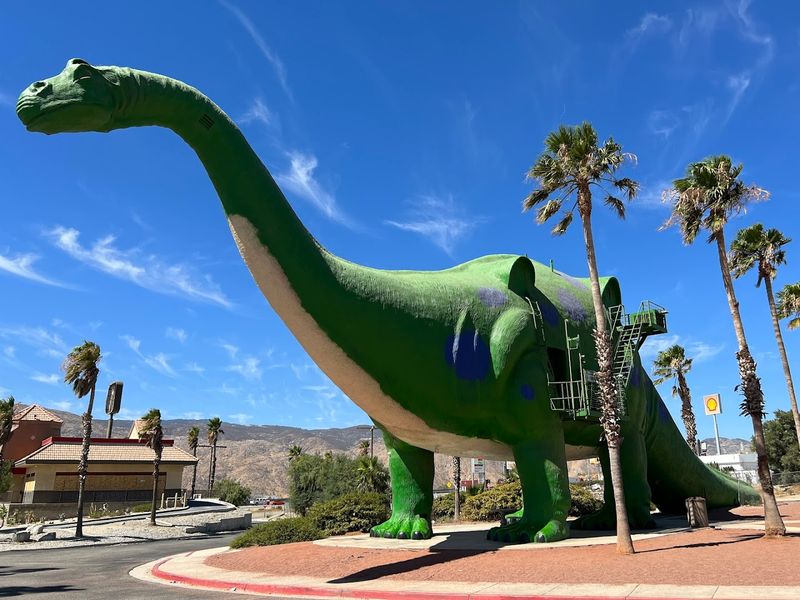
Pulling off the freeway for giant concrete dinosaurs sounds like the kind of decision that needs explaining afterward, but the photos tend to do all the talking.
Located at 50770 Seminole Drive in Cabazon, CA 92230, the attraction sits right alongside the road and is hard to miss even at highway speed.
The two massive sculptures have been standing here since the 1970s, and the sheer scale of them still catches people off guard.
Open daily with posted hours on the official site, the stop works well as a midway break between Los Angeles and Palm Springs.
The area around the dinosaurs includes a gift shop and a small exhibit space inside one of the structures.
Kids tend to react with genuine awe, but adults often find themselves equally entertained by how unexpectedly fun the whole thing feels.
The desert backdrop adds a strange and cinematic quality to the stop that makes photos look almost surreal.
For a roadside detour that costs very little time and delivers a lot of personality, few places along the I-10 corridor compete with the charm of stopping here. The whole visit can wrap up in under an hour.
2. Salvation Mountain, Niland
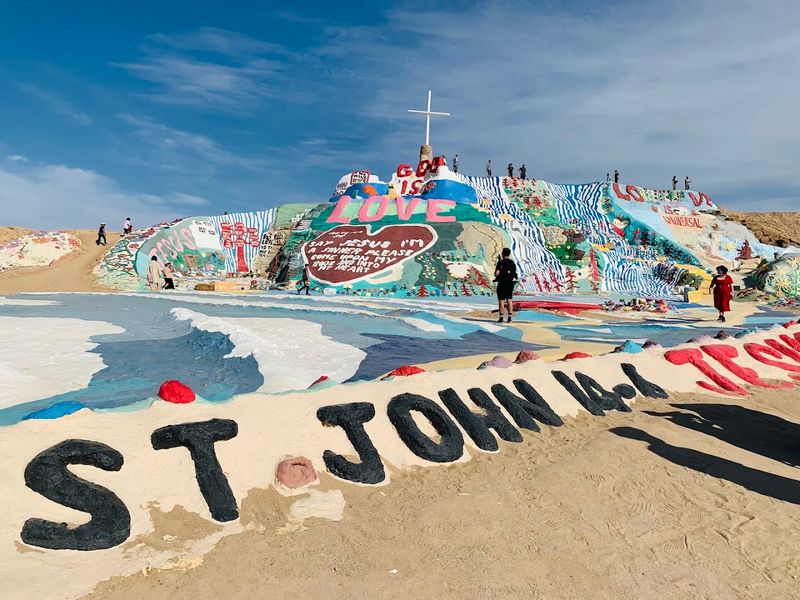
Few detours in California look quite as unexpected as a hillside covered in bright paint, biblical text, and handmade art rising out of the flat desert near the Salton Sea.
Situated on Beal Road in Niland, CA 92257, the site is open from sunrise to sunset every day of the year according to the official visitor page.
Getting there requires a drive through remote terrain, and the surrounding landscape gives almost no hint of what is about to appear.
The mountain itself was built up over many years using adobe, straw, and thousands of gallons of paint, creating a layered and textured surface that holds up surprisingly well in the desert heat.
Up close, the colors are even more vivid than photographs suggest, and the structure has a handmade warmth that larger art installations sometimes lack.
Visiting on a weekday tends to mean fewer people and more time to walk around the base and take in the full effect of the murals.
There is no admission fee, and the open-air setting makes it accessible in a way that feels genuinely welcoming.
For anyone driving through the Imperial Valley, this stop changes the whole tone of the trip in the best possible way.
3. The Mystery Spot, Santa Cruz
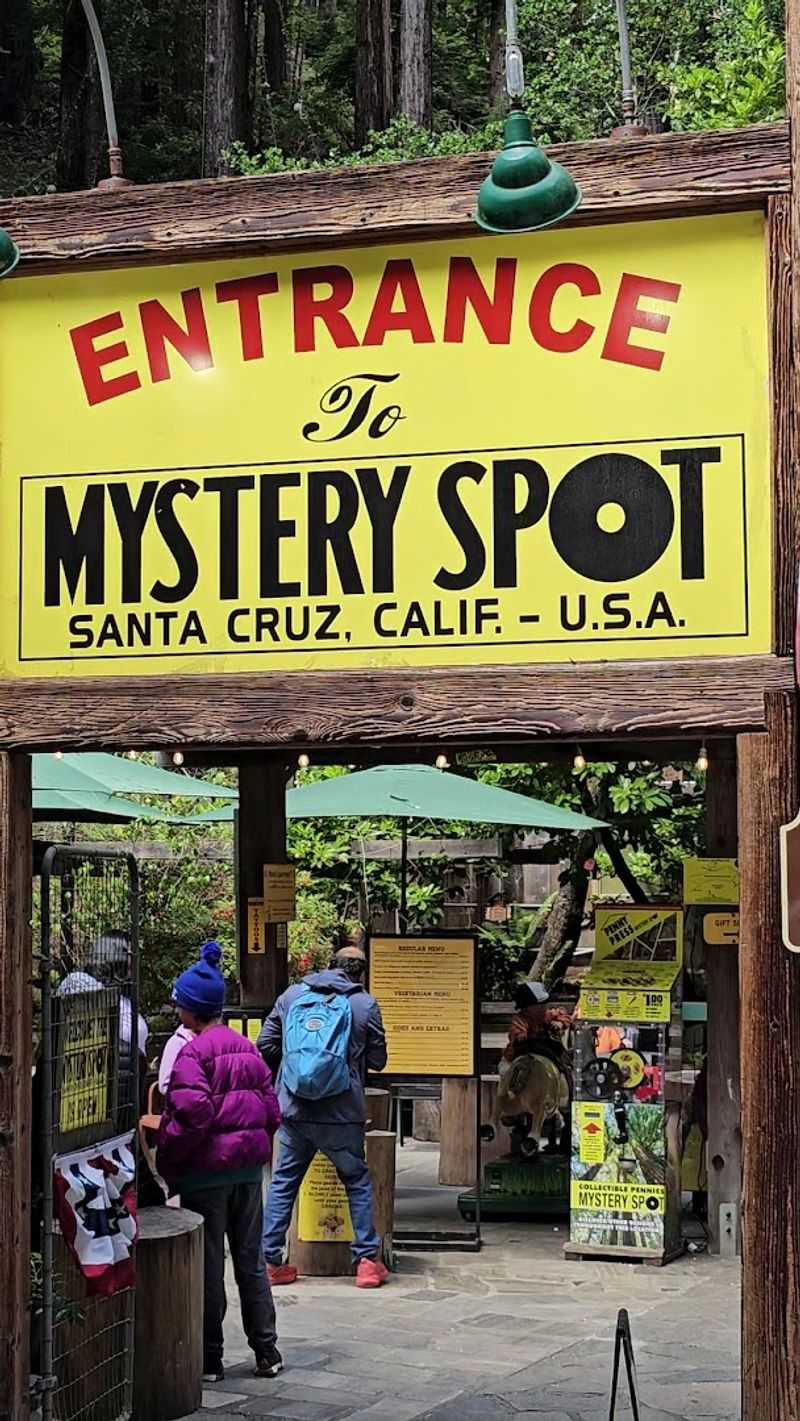
A roadside attraction advertising a gravitational anomaly in the redwoods sounds exactly like the kind of thing that belongs on a list of tourist traps, which is part of why it works so well as a detour.
The Mystery Spot is located at 465 Mystery Spot Road in Santa Cruz, CA 95065, tucked into a forested area just outside the main part of the city.
Tours run regularly throughout the day according to the official site, and the guided format keeps the experience moving at a good pace.
The spot itself is a small area of redwood forest where optical illusions and disorientation create a genuinely confusing experience.
Balls appear to roll uphill, people seem to shrink and grow depending on where they stand, and the tilted buildings on site make even seasoned visitors feel unsteady.
Whether the explanation is geological, optical, or just clever design, the effect is real and hard to shake off.
The surrounding redwood setting adds an extra layer of atmosphere that makes the stop feel more substantial than a typical novelty attraction.
Parking is available on site, and the tour length is manageable for families with younger kids. Coming away with a bumper sticker from the gift shop has been a tradition for California road trippers for decades.
4. Winchester Mystery House, San Jose
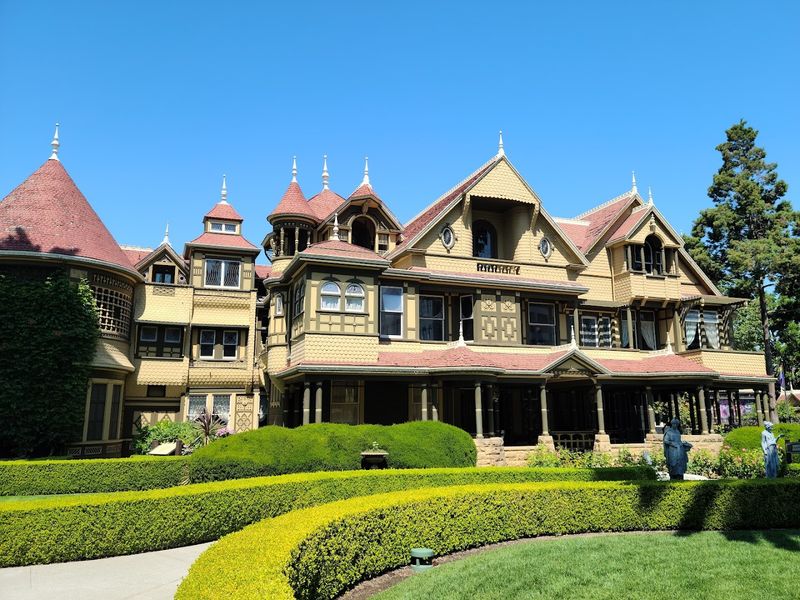
A Victorian mansion full of staircases that lead to ceilings, doors that open onto walls, and rooms designed with no clear logic sounds more like a haunted house setup than a serious attraction, but the story behind it is genuinely fascinating.
The Winchester Mystery House is located at 525 S Winchester Blvd in San Jose, CA 95128, and the guided Mansion Tour covers 110 of the estate’s 160 rooms according to the official site.
The scale of the place only becomes clear once the tour is underway.
Construction on the house continued for decades without stopping, resulting in a sprawling structure that reflects the eccentricities of its original owner rather than any conventional architectural plan.
The hallways shift unexpectedly, the windows are layered in unusual ways, and some spaces feel deliberately disorienting even in broad daylight.
It is the kind of building that rewards slow walkers who pay attention to the details.
The surrounding grounds are also worth time before or after the tour, offering a different perspective on the sheer size of the property.
Tour availability varies by season, so checking the official site before visiting helps with planning.
5. Forestiere Underground Gardens, Fresno
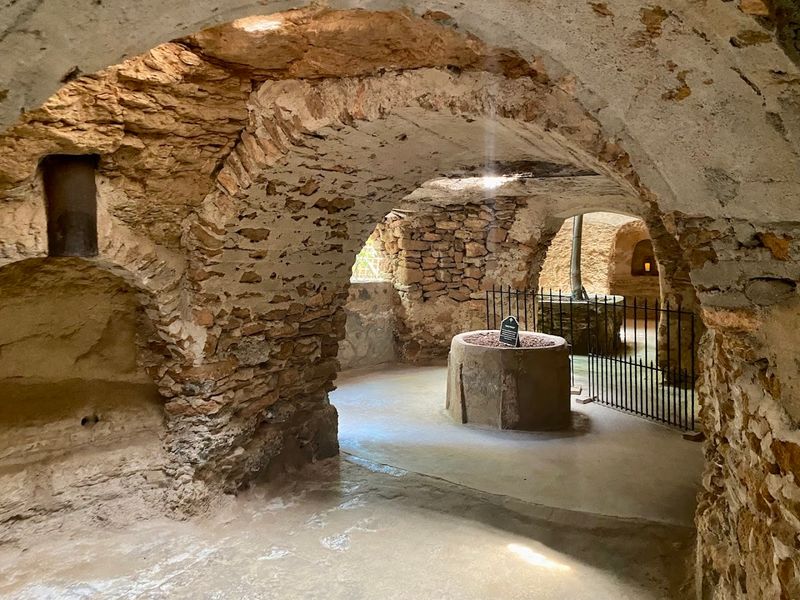
An underground garden built by hand beneath the streets of Fresno sounds like a strange premise for a road trip stop, but the reality of what was accomplished here is genuinely remarkable.
Sitting at 5021 W Shaw Ave in Fresno, CA 93722, the gardens were carved out over several decades by Baldassare Forestiere, who created a network of rooms, courtyards, and passageways entirely by hand.
The official tour page describes the subterranean space as a living environment where citrus trees grow beneath the earth’s surface.
Stepping down into the gardens on a warm Fresno afternoon offers an immediate and noticeable drop in temperature, which makes the whole experience feel like a discovery.
The carved archways and vaulted ceilings have a rustic elegance that photographs rarely capture fully.
Fruit trees grow in open skylight wells, and the overall effect is something between a medieval cellar and a secret orchard.
Tours are guided and run on a schedule, so checking the official site before arriving helps avoid a wasted trip.
The stop pairs well with other Central Valley destinations and breaks up the long stretch of Highway 99 in a way that feels genuinely rewarding.
6. Mono Lake Tufa State Natural Reserve, Lee Vining
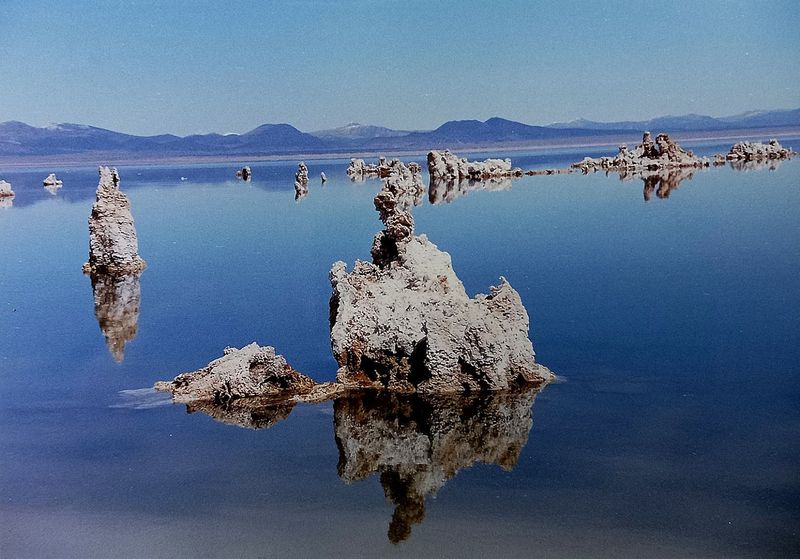
A salty inland lake surrounded by strange limestone towers rising from the water sounds like something out of a science fiction film, but Mono Lake is entirely real and has been forming for over a million years.
Near US-395 in the Lee Vining area of CA 93541, the reserve is managed by California State Parks and is accessible year-round.
The lake is approximately two and a half times saltier than the ocean, which contributes to the otherworldly clarity of the water.
The tufa towers, which are calcium carbonate formations, were created over centuries as freshwater springs bubbled up through the alkaline lake bed.
Many of them are now exposed above the waterline, standing in clusters along the southern shore and creating a landscape that has no real equivalent elsewhere in the state.
Early morning light tends to bring out the textures and color contrasts in the most striking way.
A short trail from the South Tufa parking area leads directly to the formations and offers close-up access without requiring any technical hiking.
Birdwatching is also popular here, as the lake supports large populations of migratory birds during seasonal stops.
The drive along US-395 to reach the reserve is scenic enough on its own to justify the detour before even reaching the lake.
7. Bodie State Historic Park, Bridgeport area
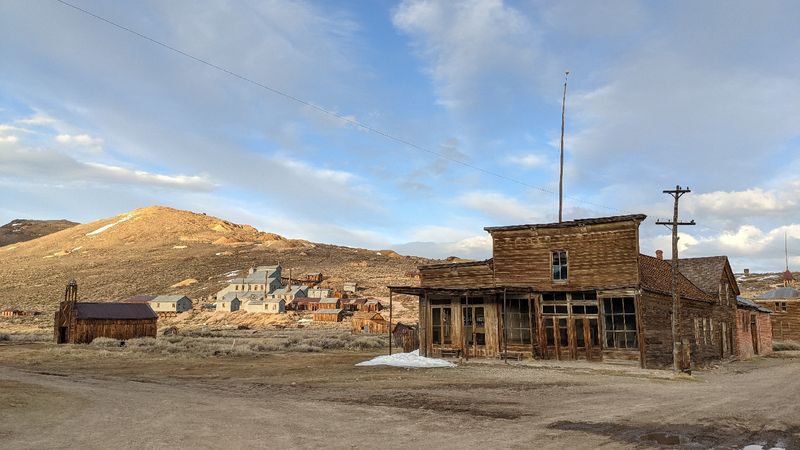
Driving a long stretch of unpaved road to reach a ghost town sounds like a gamble on paper, but Bodie has a way of making that drive feel completely justified by the time the first weathered building comes into view.
Located on Bodie Road, the park is confirmed as a state historic park by California State Parks with day-use entry available.
More than 100 structures remain standing in what the park describes as a state of arrested decay.
The term arrested decay means nothing has been restored or rebuilt, which gives the site a rawness that reconstructed historical towns simply cannot replicate.
Furniture still sits inside some of the old buildings, storefronts still have their signs, and the streets between the structures have a stillness that feels genuinely eerie on quiet weekday mornings.
The Gold Rush atmosphere is not performed here but simply preserved.
Bodie sits at a high elevation, so temperatures can shift quickly and snow is possible even in spring and fall. Checking road conditions before heading out is a practical step, especially after winter.
The park is most accessible between late spring and early fall, and visiting on a weekday typically means fewer people sharing the dusty streets with you.
8. Calico Ghost Town Regional Park, Yermo
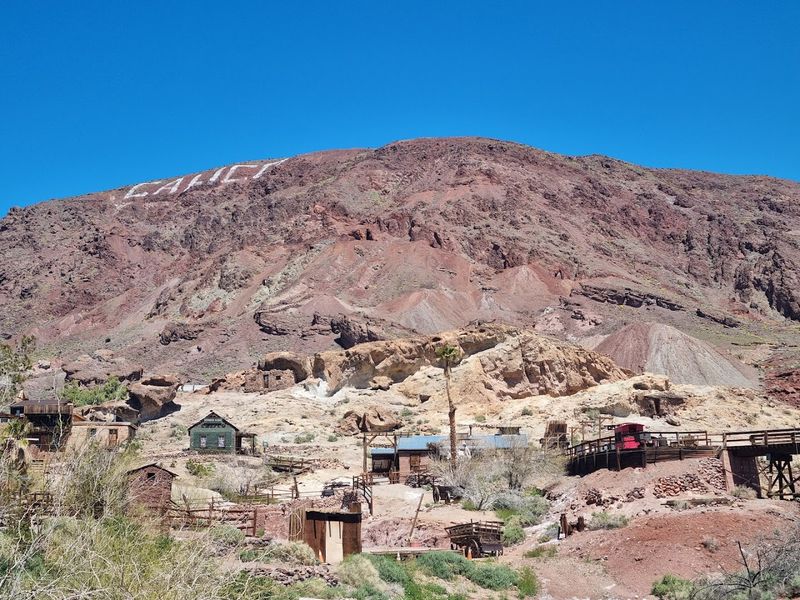
A reconstructed mining-era town near Barstow might not sound like the most compelling detour on a desert drive, but Calico has enough genuine history and visual character to make the stop feel worthwhile.
Tthe park is listed by San Bernardino County as open daily except Christmas Day. The surrounding Mojave Desert landscape gives the whole place a sun-baked atmosphere that fits the frontier setting naturally.
Calico was a working silver mining town in the 1880s, and while parts of it have been rebuilt over the years, the original mine shafts and some period structures still give the site a grounded sense of history.
Walking the main street takes about twenty minutes at a relaxed pace, but the surrounding hills and mine tours add time for those who want a fuller experience.
The color contrast between the painted wooden buildings and the pale desert rock behind them makes for strong photographs at almost any time of day.
Weekends tend to draw more visitors and occasional events, while weekdays offer a quieter and more self-paced experience.
For road trippers heading between Los Angeles and Las Vegas, this stop sits almost directly on the route and adds something genuinely different to an otherwise flat desert stretch.
9. Pioneertown, Pioneertown
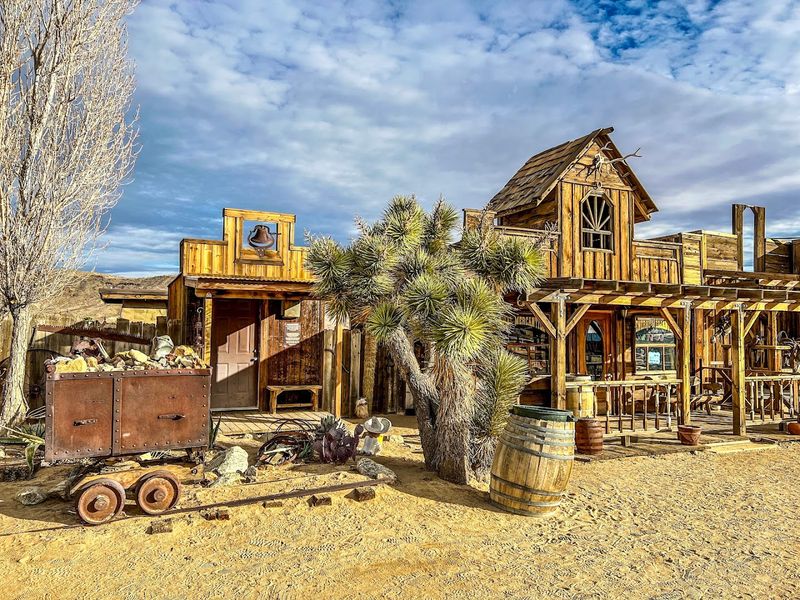
A desert town built as a movie set in the 1940s sounds like exactly the kind of place that should have faded into obscurity, but Mane Street in Pioneertown has held onto its character in a way that makes the detour genuinely satisfying.
The main drag is open to the public year-round with free access and parking according to the official visitor site.
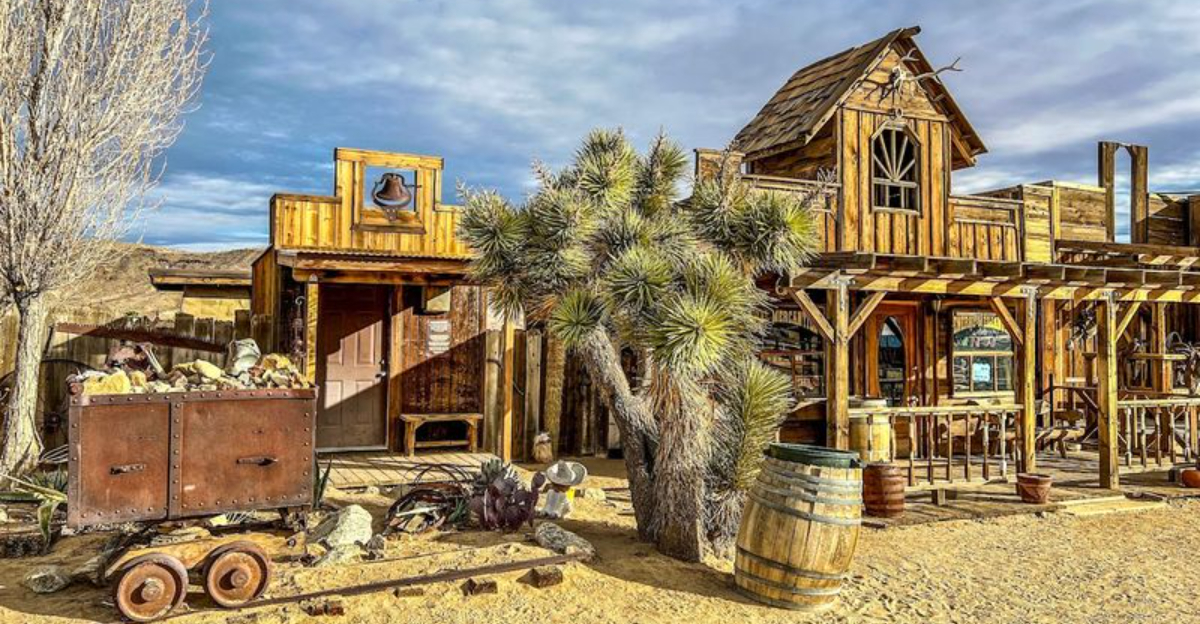
The storefronts along the street were built to serve as functional film backdrops, and many of them still look the part.
Walking down Mane Street on a quiet afternoon has a slightly surreal quality, as the old facades feel both artificial and oddly authentic at the same time.
The surrounding high desert landscape, with Joshua trees and rocky outcroppings visible from the street, adds a natural drama that no film set designer could fully replicate.
The pace here is slow and the atmosphere is relaxed in a way that encourages lingering.
Pioneertown sits close enough to Joshua Tree National Park that combining the two stops into a single day trip makes practical sense.
The area has also developed a small creative community over the years, which gives the town a lived-in energy that goes beyond simple nostalgia.
Arriving in the late afternoon lets the desert light do something genuinely beautiful to the wooden buildings.
10. The Integratron, Landers
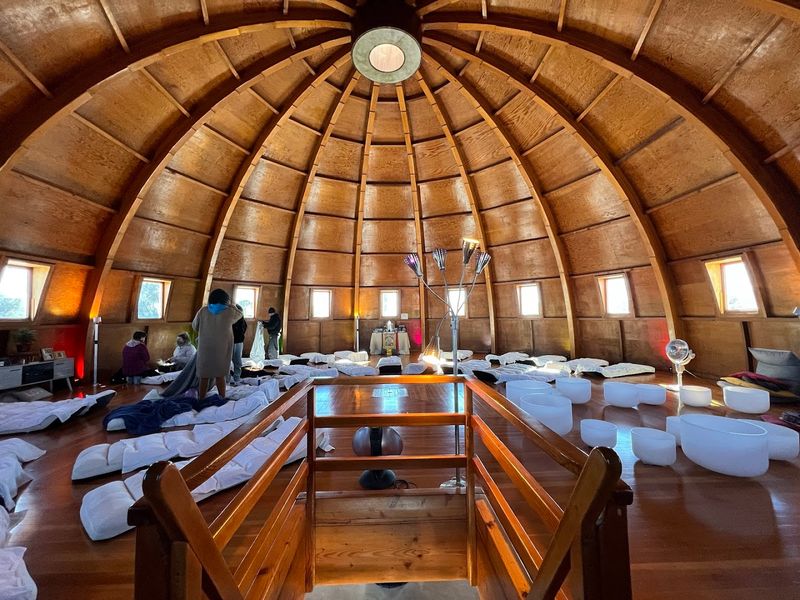
A white dome sitting alone in the Mojave Desert and advertised as a venue for sound baths sounds like the premise of a joke, but the Integratron has developed a loyal following for reasons that become clearer once you are inside.
Found at 2477 Belfield Blvd in Landers, CA 92285, the official site notes that the grounds and gift shop are open on select days while the Integratron itself requires advance reservations.
The structure was built without metal fasteners and is often described as having unusual acoustic properties.
Sound bath sessions inside the dome use large quartz crystal bowls that produce resonant tones which seem to fill the space in a way that is hard to describe without experiencing it firsthand.
The interior is a single circular room with a smooth wooden floor, and the sound behaves differently here than in any conventional building.
Whether or not any metaphysical claims hold up, the acoustic experience is genuinely unusual and surprisingly calming.
The surrounding desert setting adds to the overall strangeness of the stop, with views of open scrubland and the distant mountains giving the place an isolated and contemplative quality.
Booking in advance is essential since sessions fill up, especially on weekends.
11. Chandelier Drive-Thru Tree, Leggett
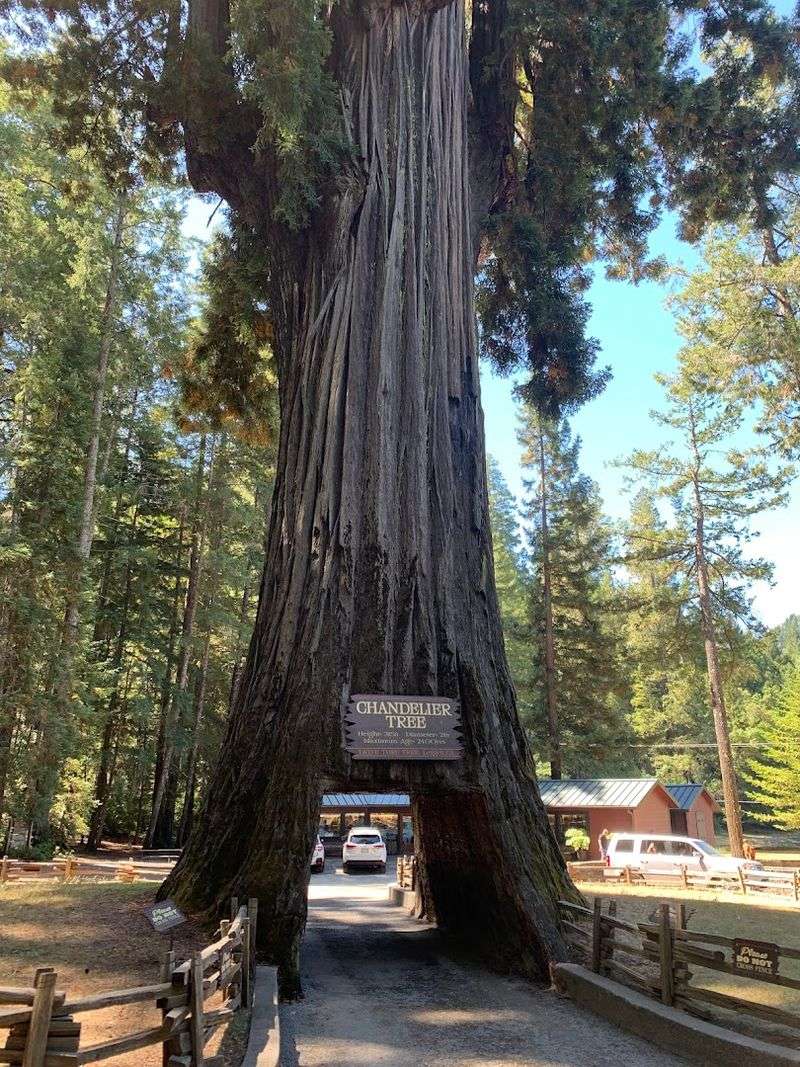
Driving a car through the hollow base of a living redwood tree sounds like something that should not physically work, and yet that is exactly what happens at the Chandelier Drive-Thru Tree in Leggett.
Located at 67402 Drive Thru Tree Road in Leggett, CA 95585, the attraction is listed on the official site as open daily, weather permitting, with hours beginning at 8:30 a.m.
The tree itself stands over 300 feet tall and has been welcoming vehicles through its base for decades.
The opening carved into the trunk is just wide enough to fit a standard vehicle, which means the experience requires a bit of slow maneuvering and produces a genuinely unexpected sense of scale once the car is inside.
The surrounding grove adds depth to the stop, with old-growth redwoods creating a canopy that filters the light into long green shafts.
The whole area has a quiet and ancient atmosphere that feels distinct from the more crowded redwood parks further north.
A small fee is charged for entry, and the site includes a gift shop and picnic area that make it easy to turn the stop into a short break on a longer coastal drive.
Highway 101 runs nearby, so the detour from the main route is minimal. Few roadside stops in Northern California deliver this level of genuine wonder for such a small investment of time.
12. Glass Beach, Fort Bragg
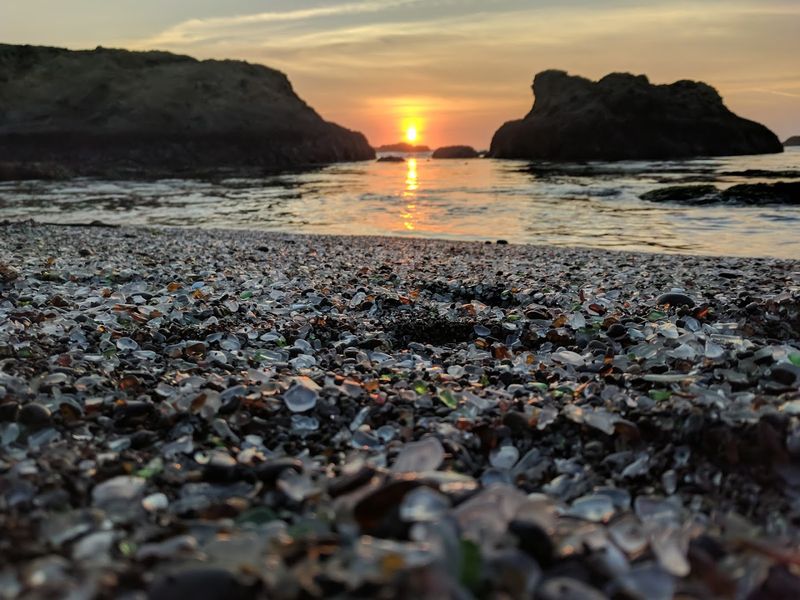
A beach famous for sea glass sounds like it might be overhyped, and in some ways the experience depends entirely on expectations going in.
Glass Beach has become one of the more talked-about coastal stops in Northern California.
California State Parks manages the surrounding area, and recent guidance advises visitors to use caution near unstable coastal sections and to avoid removing sea glass from the beach.
The glass itself is the result of decades of ocean tumbling, which smoothed broken bottles and discarded glass into rounded pieces in shades of green, brown, white, and occasionally blue or red.
Walking the shoreline and scanning the stones for color takes on a meditative quality that most beach visits do not offer.
The coastal setting is dramatic regardless of the glass, with rocky outcroppings and crashing surf creating a backdrop that stands on its own.
Visiting on a weekday morning tends to offer better light and fewer people, which makes the hunting feel more personal and less competitive.
The beach is most rewarding for those who come simply to look rather than collect, since taking glass is discouraged to preserve what remains.
Fort Bragg itself has enough nearby options for food and rest to make the stop feel like a full destination rather than just a quick pull-off.