These 10 Colorado Landscapes Look Like Painted Fantasy Worlds
Colorado has a way of making you question what is real.
Sometimes, when you’re driving through, you have to stop and wonder if you’ve somehow wandered into a painting.
The colors, the shapes, the way the light hits the rocks, it all feels a little unreal.
I’ve seen a lot of places, but there’s something about these landscapes that just doesn’t look like it belongs on this planet.
It’s almost like someone took a brush and made up their own world.
If you’re looking for a bit of magic, these spots are about as close as you’ll get to being a part of a fantasy.
1. Rocky Mountain National Park
There’s a quiet wonder in Colorado that catches you by surprise. Everything here just seems perfectly placed.
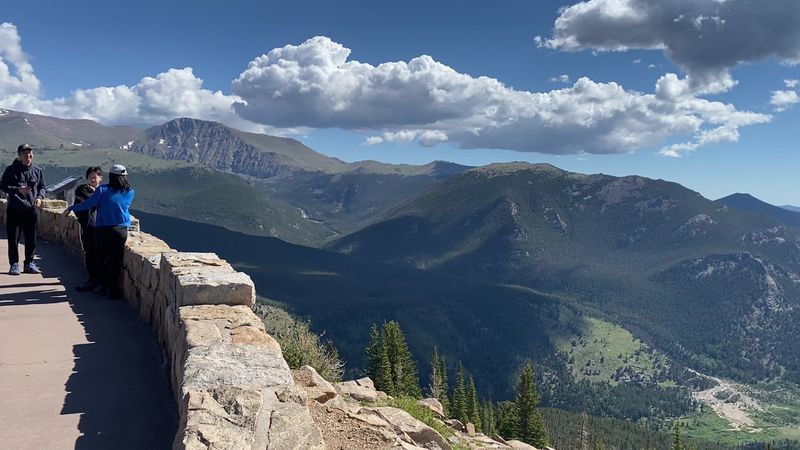
Few locations on Earth hit you with that immediate sense of scale. You will encounter this at Rocky Mountain National Park when you crest a ridge.
This sanctuary is found in north-central Colorado near the town of Estes Park. It covers more than 415 square miles of high-alpine terrain.
Trail Ridge Road cuts across the wilderness at elevations above 12,000 feet. It is the highest continuous paved road in the United States.
The vistas appear borrowed from another planet entirely. Elk graze in the meadows while pikas dart between rocks.
The whole scene appears choreographed for maximum wonder. Bear Lake is one of the most rewarding easy hikes.
It offers mirror-still reflections of peaks on calm mornings. You can see Hallett and Flattop peaks from the water.
Fall brings golden aspen groves that turn the valleys into amber. Summer explodes with wildflowers in every color imaginable.
The park draws nearly 4.5 million visitors each year. Arriving early in the morning is the smartest move for parking.
Timed entry permits are required during peak season. No amount of preparation fully readies you for that view.
2. Great Sand Dunes National Park and Preserve
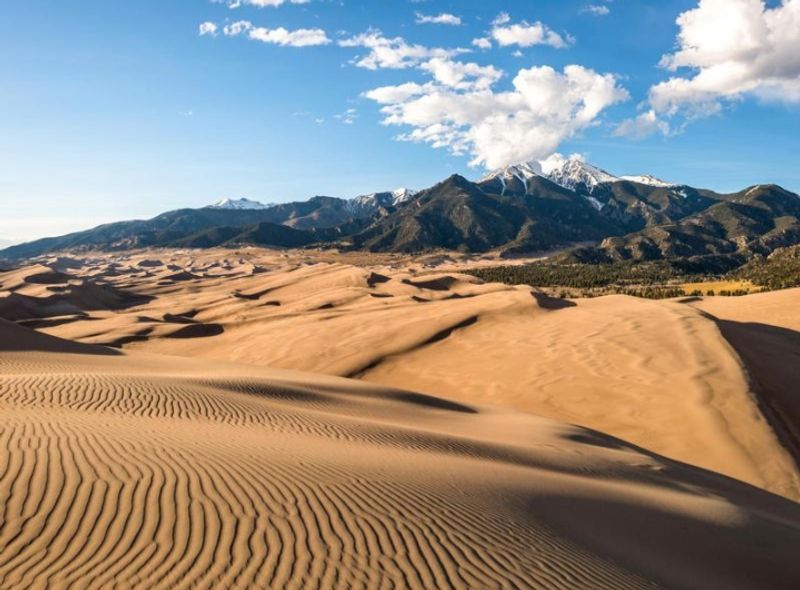
Nothing prepares you for the moment you spot these massive dunes.
The visual contradiction is genuinely hard to process at first. Snow-capped mountains loom directly behind the tallest sand dunes.
Great Sand Dunes National Park and Preserve is in the San Luis Valley. The dunes reach heights of up to 750 feet.
Climbing to the top of Star Dune rewards you with a panorama.
This 360-degree outlook feels both alien and magnificent. Medano Creek flows along the base of the dunes seasonally.
Families wade in shallow streams while riders carry their sandboards. Sandboarding and sand sledding are hugely popular activities.
Rentals are available just outside the park entrance for guests. Turn the dunes into a natural playground for the day.
The best light for photography arrives at golden hour. The low sun carves deep shadows across the rippled sand.
Surface temperatures can exceed 150 degrees Fahrenheit in summer. Visiting in the early morning keeps the experience comfortable.
Stargazing here ranks among the best in Colorado. The area holds an International Dark Sky designation.
3. Garden Of The Gods
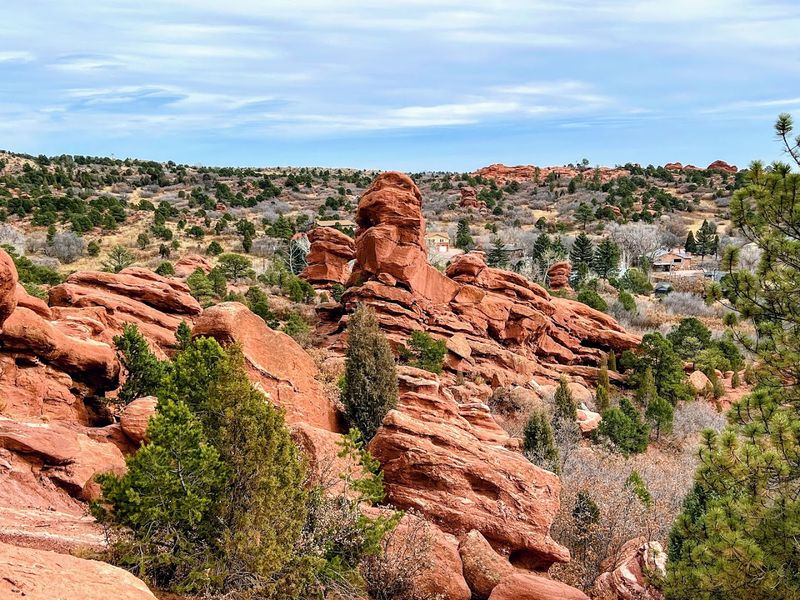
If you thought landscapes couldn’t be magical, these vistas prove otherwise.
Red sandstone fins and spires shoot straight up from the ground. This occurs at Garden of the Gods where the earth looks like a giant explosion.
This free public park is in Colorado Springs at the base of Pikes Peak. It is one of the most dramatic spaces in the country.
The formations are roughly 300 million years old. They were shaped by erosion, tectonic uplift, and time.
The rocks genuinely appear sculpted rather than naturally formed. Balanced Rock is a 700-ton sandstone boulder.
It looks physically impossible yet has been standing for thousands of years. Rock climbing is permitted in certain sections.
The routes range from beginner-friendly to seriously challenging. These formations attract climbers from across the entire country.
The paved Central Garden Trail is an easy loop. It takes you right through the heart of the formations.
Sunrise is the most magical time to visit. The early light turns the red rock a deep orange.
The air is still cool and quiet during the dawn hours. Pikes Peak looms in the background of nearly every shot.
This snow-capped anchor makes compositions look too perfect to be real. Your camera will thank you for showing up early.
4. Hanging Lake
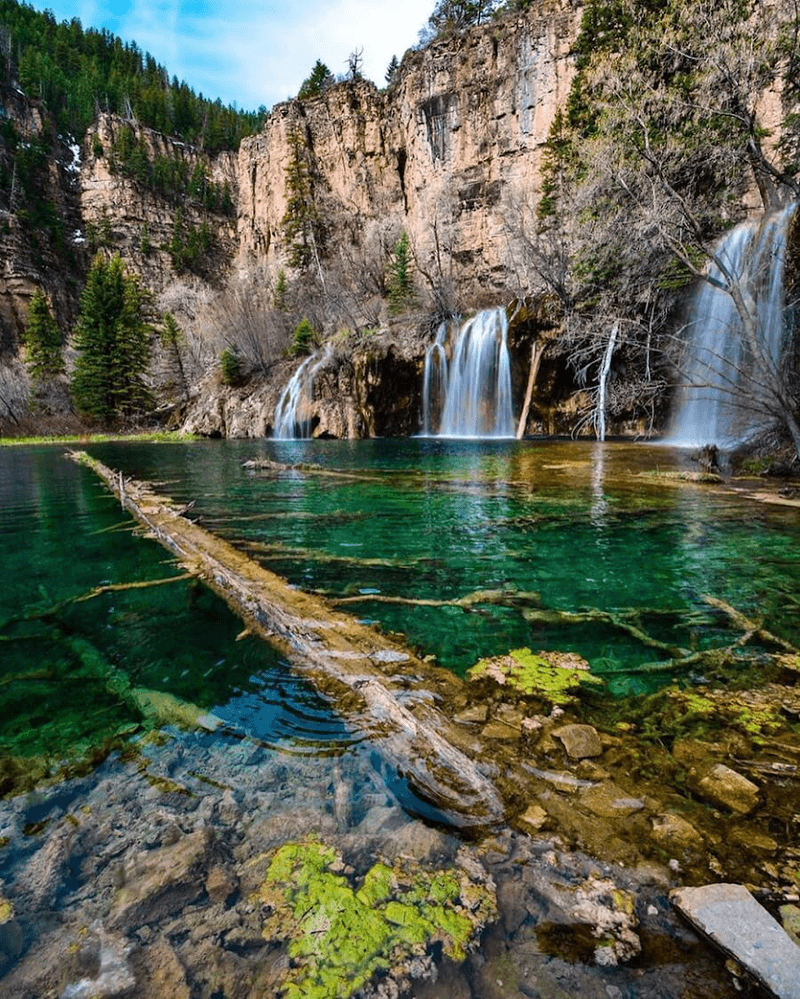
Nature has truly outdone itself in this corner of Colorado. Trust me on this one, and start planning your trip immediately.
Turquoise water so clear you can count the stones sits here. You can locate Hanging Lake inside Glenwood Canyon in western Colorado.
The lake seems to float above the canyon floor. It looks like something straight out of a fairy tale.
Access requires a strenuous 2.4-mile round-trip hike. You will gain about 1,000 feet in elevation on the trail.
The lake sits in a hanging valley. This geological feature formed when a side valley was left elevated.
The water is impossibly blue-green due to high mineral content. Calcium carbonate scatters light in a way that makes it glow.
A mandatory permit system is in place to protect the ecosystem. Reservations fill up fast from May through October.
Keep in mind that dogs, drones, and swimming are all not allowed here. Stay on the boardwalk to protect the delicate moss.
Dead Horse Creek Falls feeds into the lake.
A short additional climb leads to a viewpoint. The entire scene stretches out below you from the ledge.
The hike is demanding but the arrival is worth it. Every uphill step feels like a great investment.
5. Wheeler Geologic Area
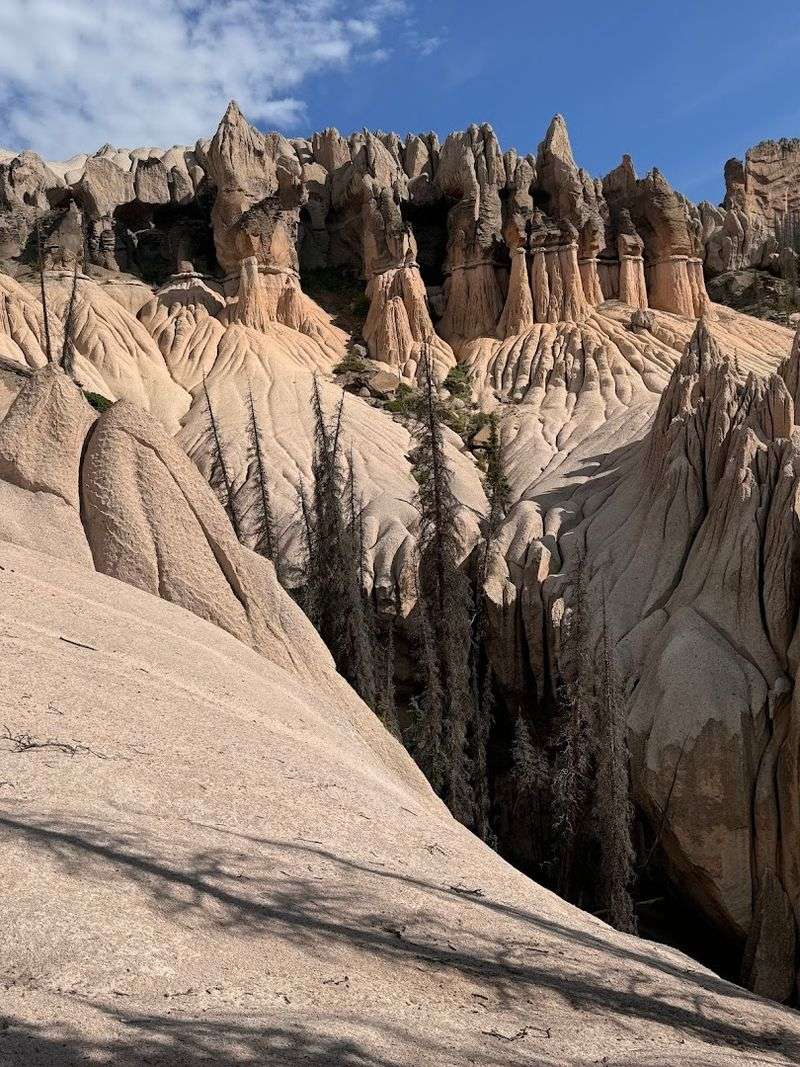
Some scenes are so surreal, you’ll question whether they’re real or imagined. You have to see this place yourself.
Pale volcanic spires twist up from the earth like a film set. You will find Wheeler Geologic Area in the San Juan Mountains.
This is one of Colorado’s most overlooked and otherworldly environments. It is found near the town of Creede in south-central Colorado.
Reaching this remote landscape requires a 14-mile hike. You can also use a high-clearance four-wheel-drive vehicle.
The formations are made from compressed volcanic ash. This tuff was deposited during massive eruptions millions of years ago.
Wind and rain slowly carved the jagged, ghostly shapes. Theodore Roosevelt once designated Wheeler a national monument in 1908.
It was one of the earliest federally protected landscapes. The area was later transferred to the Rio Grande National Forest.
The effort required is part of what makes it special. The remoteness preserves a sense of genuine wilderness discovery.
Camping is allowed in the area for guests. Spending a night surrounded by pale spires is unique.
Afternoon thunderstorms are common in the summer months. Plan to arrive in the morning for your safety.
Wheeler does not hand out its beauty easily. The nature’s gift is a landscape unlike any other.
6. Black Canyon Of The Gunnison National Park
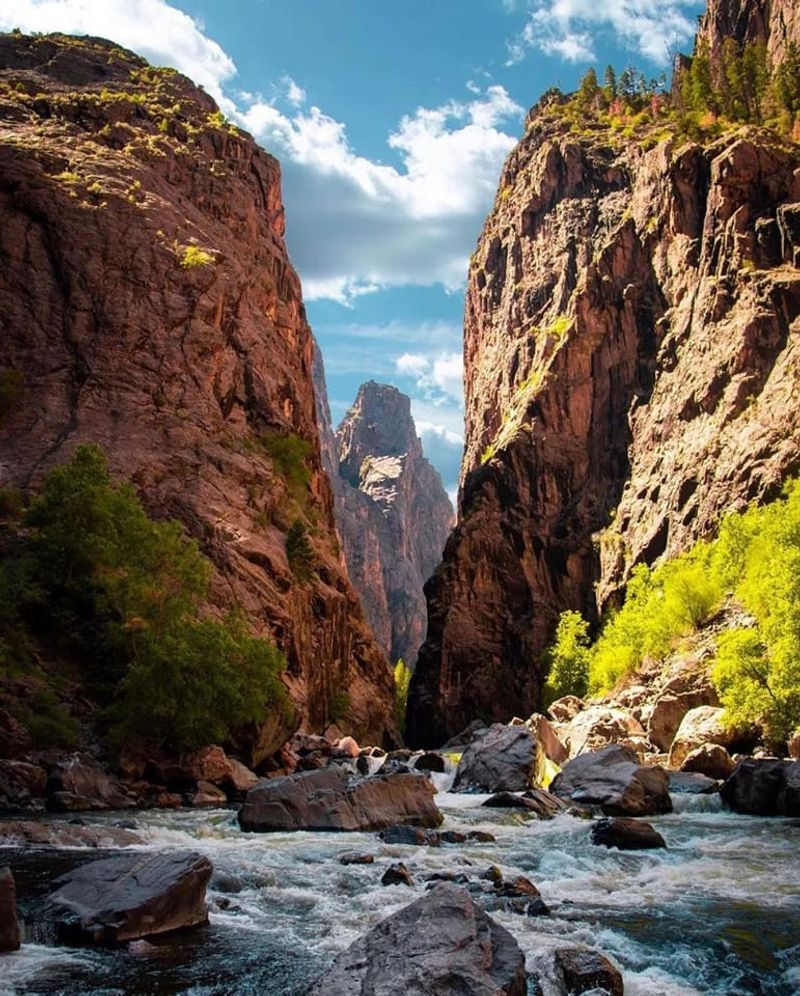
Doesn’t it sound tempting to go somewhere where you’ll feel like you’ve wandered into a living canvas around every bend?
Some canyons are wide and sun-drenched but this is different. Explore the Black Canyon of the Gunnison National Park in western Colorado.
It is a gorge so deep that sunlight is rare. Entire sections of the floor receive less than 33 minutes of light.
The site is situated near the city of Montrose. It preserves a dramatic stretch of the Gunnison River canyon.
The walls of the chasm drop as far as 2,722 feet. The rock exposed in these walls is among the oldest visible.
The stone is between 1.7 and 1.8 billion years old. Pink pegmatite veins make the walls look hand-painted.
The South Rim Drive connects a series of overlooks. Each one reveals a staggering perspective on the canyon.
Painted Wall is the tallest cliff face in the state. You can see it from the Painted Wall View overlook.
The sight makes your brain refuse to accept the scale. Inner canyon routes exist for very experienced hikers.
These are serious undertakings requiring a permit. Solid physical preparation is needed to reach the river.
The North Rim is far less visited than the South Rim. It offers a quieter and more solitary experience.
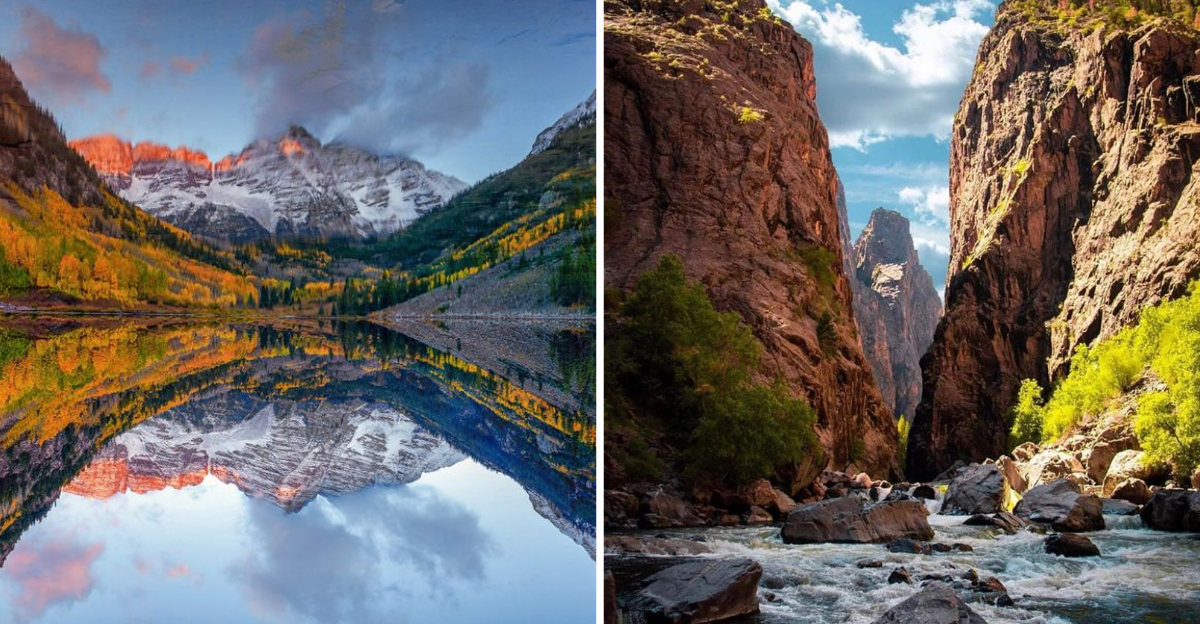
7. Maroon Bells
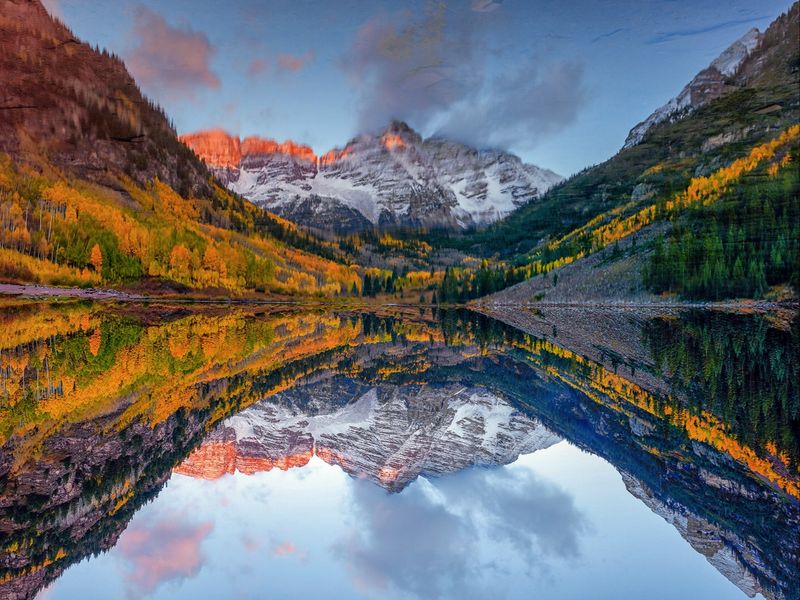
Wouldn’t it be fun to go into a world where every view looks like it was brushed by an artist?
There is a reason this is the most photographed site. Find the Maroon Bells just ten miles outside of Aspen.
Standing at the edge of Maroon Lake is absolutely undeniable. The twin peaks rise to 14,156 feet and 14,014 feet.
They earn their nickname from their deep reddish-maroon coloring. This is caused by iron-rich mudstone and siltstone.
The area is within the White River National Forest. The elevation at the lake is about 9,580 feet.
Fall is undeniably the peak season to visit the peaks. Aspen trees turn brilliant gold and frame the water.
Every photograph looks professionally edited due to the light. A mandatory shuttle system runs from Aspen Highlands.
This keeps the parking area manageable and peaceful. The experience is better than you might expect for its popularity.
Sunrise photographers who take the early shuttle are rewarded. You get perfect reflections on the glassy water surface.
The Maroon-Snowmass Trail system offers many options. You can take easy lakeside strolls or multi-day routes.
Every angle of this place looks perfectly composed. Nature decided to show off just for the cameras here.
8. South Mineral Creek Falls
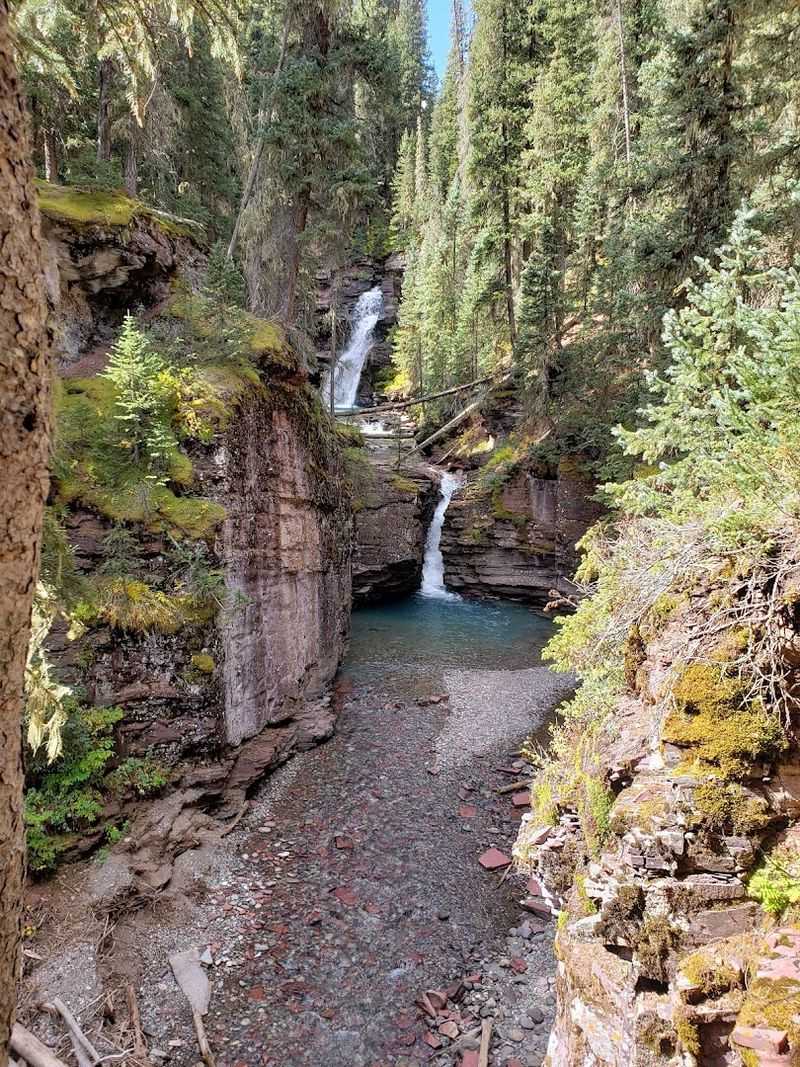
Prepare to be stunned by landscapes that seem too perfect to be true. But they’re definitely real!
This valley surprises visitors with a vivid color palette. Explore South Mineral Creek Falls near Silverton in southwestern Colorado.
The waterfalls tumble down rocky ledges into glowing pools. Mineral-rich snowmelt from the San Juan Mountains feeds the creek.
The area sits along Forest Road 585. This road follows South Mineral Creek west from U.S.
Highway 550.
The drive itself is worth the trip. It winds through dense spruce forest with glimpses of ridgelines.
Getting to the falls does not require a long hike. The waterfalls are within a short walk of the road.
This is an easy stop for families and casual visitors. More adventurous travelers can continue up the trail.
Ice Lake Basin is a celebrated wildflower hike. Alpine tundra blooms in an explosion of color every July.
Photographers love the contrast between red peaks and turquoise water. This color combination is truly striking on camera.
Camping is available at the South Mineral Campground nearby. Catch the falls in the soft golden morning light.
South Mineral Creek Falls is a find worth pulling over for. It rewards curiosity in this rugged corner of the state.
9. Rifle Falls State Park
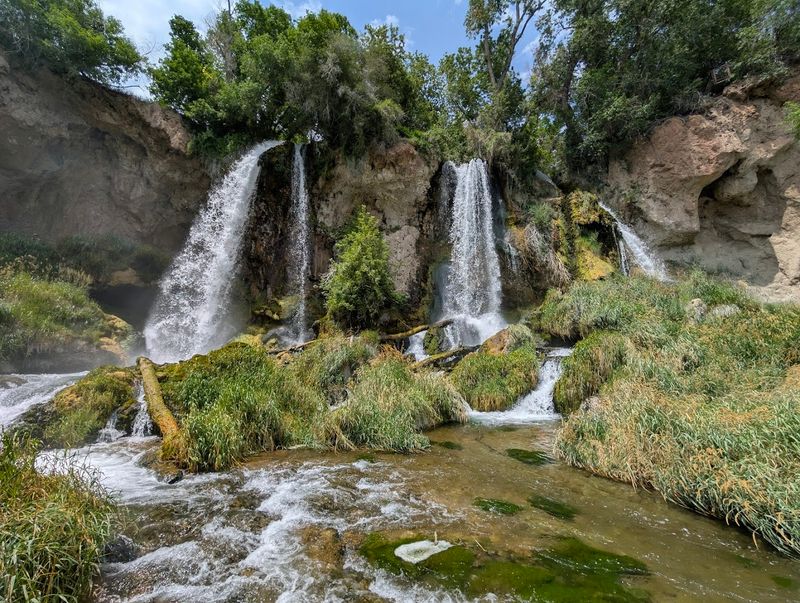
Hidden valleys and dramatic ridges make every stop feel like a fantasy. Sunlight, shadows, and scenery combine here to create picture-perfect moments.
Colorado is not known for lush, moss-covered waterfalls. You will find Rifle Falls State Park in the western part of the state.
This is a delightful and unexpected discovery for travelers. The park is located near the town of Rifle.
It features three separate waterfalls that plunge simultaneously. They drop over a 70-foot limestone cliff side by side.
Travertine formations build up around the base over time. Calcium carbonate deposits create natural stone terraces.
Lush moss and maidenhair ferns coat the surrounding cliffs. The area has a vivid green color that seems out of place.
The semi-arid landscape usually lacks this level of saturation. A short trail system loops through the park.
It passes behind the falls and through small caves. Wooden bridges put you right in the spray zone.
The caves near the falls are home to bat colonies. Watching them emerge at dusk is a memorable experience.
Camping is available at the park’s local campground. Staying overnight means having the falls to yourself.
Rifle Falls earns its reputation as a secret garden. It looks like a landscape from a different world.
10. Lone Eagle Peak
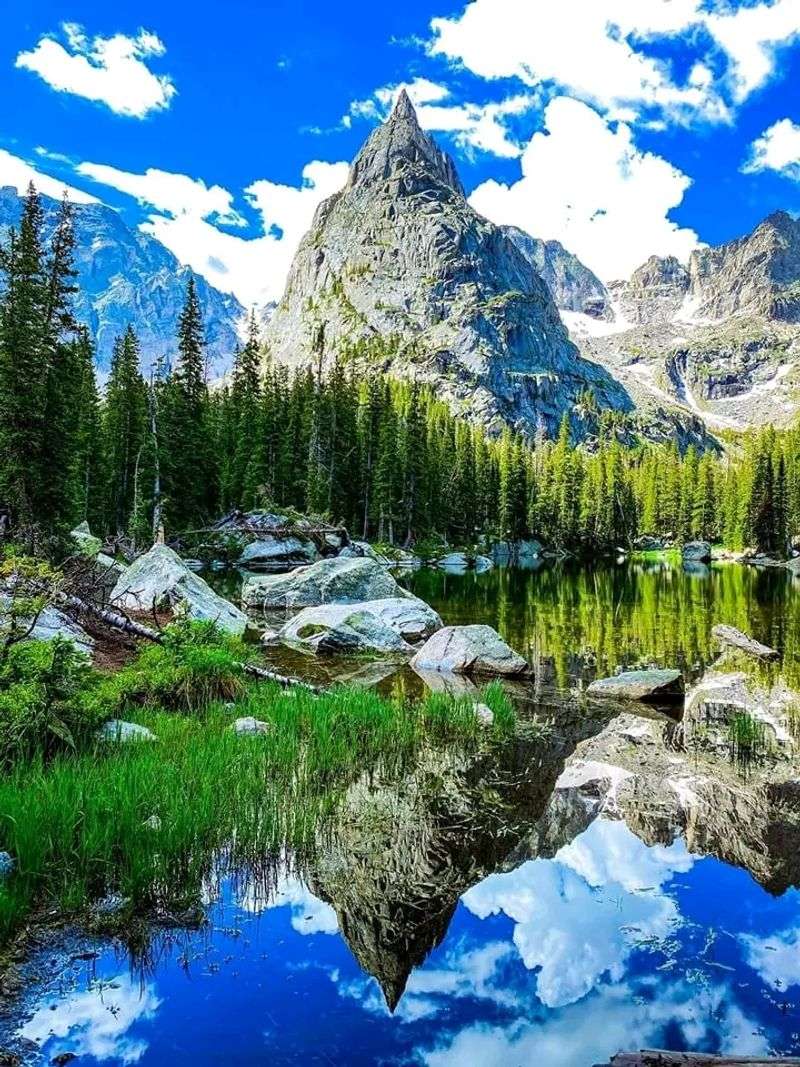
Colorado hides landscapes so otherworldly, you’ll swear you stepped into a storybook. Sunlight, shadows, and scenery combine here to create picture-perfect moments.
Mirror Lake lives up to its name with precision. You will find Lone Eagle Peak in the Indian Peaks Wilderness.
The water reflects the sharp silhouette of the peak perfectly. The image looks doubled in the clear mountain water.
The peak stands at 11,920 feet west of Ward. It is accessible via a challenging around 14-16 miles round-trip depending route.
You will gain over 2,500 feet of elevation on this trail. Dense subalpine forest eventually opens into a high basin.
Wildflowers and rocky tundra reward every uphill mile. Crater Lake sits along the same trail before Mirror Lake.
Hikers get two postcard-worthy water reflections in one day. The wilderness requires a permit for overnight camping.
Day hikers are encouraged to start early to avoid storms. Thunderstorms build quickly over these high mountain peaks.
The distinctive pointed summit is celebrated by photographers. Many come specifically for the mirror reflection shot.
Late September is a spectacular time to visit the lake. Aspen trees turn gold and add a warm foreground.
The phrase “too beautiful to be real” is no exaggeration here. You will agree when you sit at Mirror Lake.