These 12 Free North Carolina Coastal Camping Spots Feel Like Places You Were Never Supposed To Find
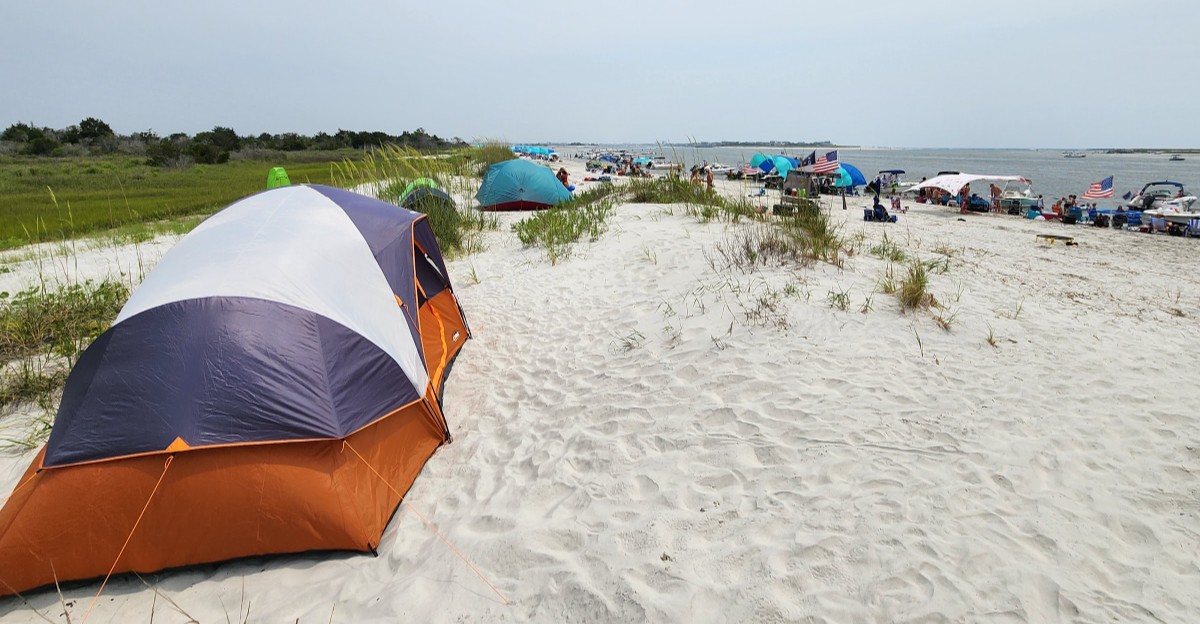
Free camping near the coast sounds like the sort of deal that should come with suspicious fine print.
Sometimes it comes with a ferry ride instead.
Other times, reaching camp means putting a little more effort between you and civilization. That inconvenience is part of the magic.
Along the North Carolina coast, a few secluded-away places still reward campers who do not mind earning the view.
By nightfall, the usual noise feels wonderfully far away.
You start noticing smaller things when there is nothing competing for attention.
Even silence seems louder out here.
Best of all, the price of admission is mostly preparation and a willingness to leave comfort behind for a while.
1. North Core Banks, Cape Lookout National Seashore
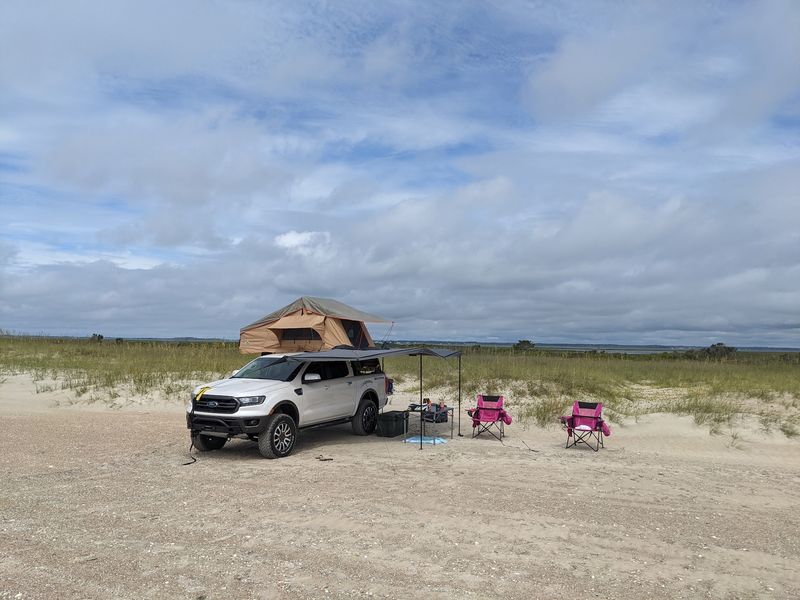
Ferry rides that end where pavement never began set the tone for this place.
Twenty-one miles of undeveloped barrier island stretch out with nothing but sand, sea oats, and sky, and after sunset the loudest sound is usually surf folding over itself.
Camping on North Core Banks is free and open year-round, with tents and four-wheel-drive rigs allowed on the ocean beach seaward of the primary dunes.
Access comes only by boat or ferry, and vehicle ferries sail from Atlantic through Morris Marina Ferry Service, 1000 Morris Marina Road, Atlantic, NC 28511.
Seasonal comforts are few but genuinely useful.
North Core Banks has limited restrooms and outdoor showers, but Long Point Cabin Camp remains closed in 2026 and its bathhouse and dump station are unavailable.
Drinking water does not exist out here, so haul in every gallon you plan to use.
Trash cans are absent too, meaning everything packed in rides home with you.
Shelling after a blow can be remarkable, and surf anglers work the sloughs for whatever the tide delivers.
Stays are capped at 14 consecutive days, and groups of 25 or more need a Special Use Permit before they load the ferry.
2. South Core Banks, Cape Lookout National Seashore
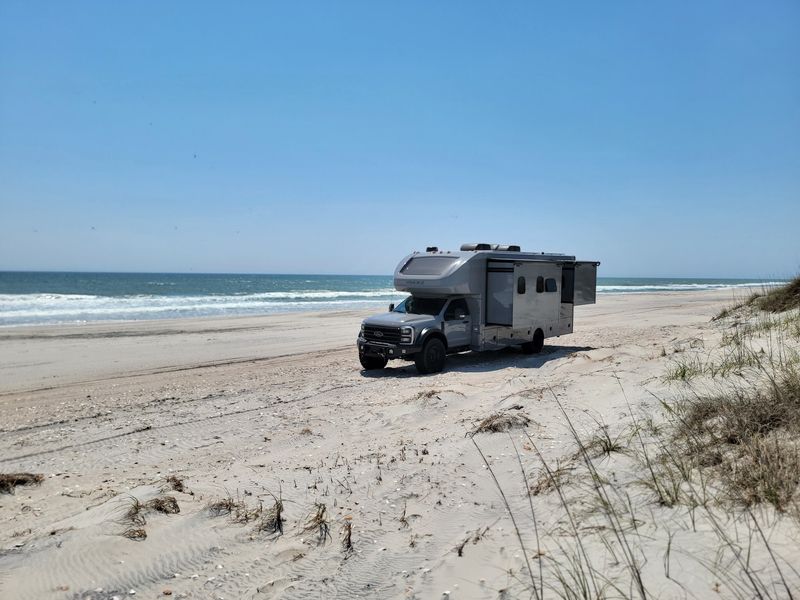
Sunrise breaks over the Atlantic and evening light settles across the sound from the very same campsite, since the island narrows to a slim ribbon in places.
About 24 miles of primitive beach are available for camping along South Core Banks.
Tent campers and vehicle campers both stay free on South Core Banks, though four-wheel drive handles the loose sand far better than anything else.
Vehicle camping belongs on the ocean side, seaward of the primary dunes, and vehicle ferries depart from Davis along Grady Davis Lane. Passenger ferries also run from the Harkers Island Visitor Center and from Beaufort, dropping guests near the lighthouse complex.
Seasonal restrooms, public showers, and drinking water are available by the lighthouse and at the cabin camps.
Shade is scarce, so a sturdy sun shelter earns its space in the boat.
Pack food, water, and every supply you expect to need, then carry out all waste. Days fill up quickly with shelling, swimming, clamming, crabbing, and fishing.
Overnight stays top out at 14 consecutive days, and an Off-Road Vehicle permit is required for anyone bringing a vehicle across.
3. Shackleford Banks, Cape Lookout National Seashore
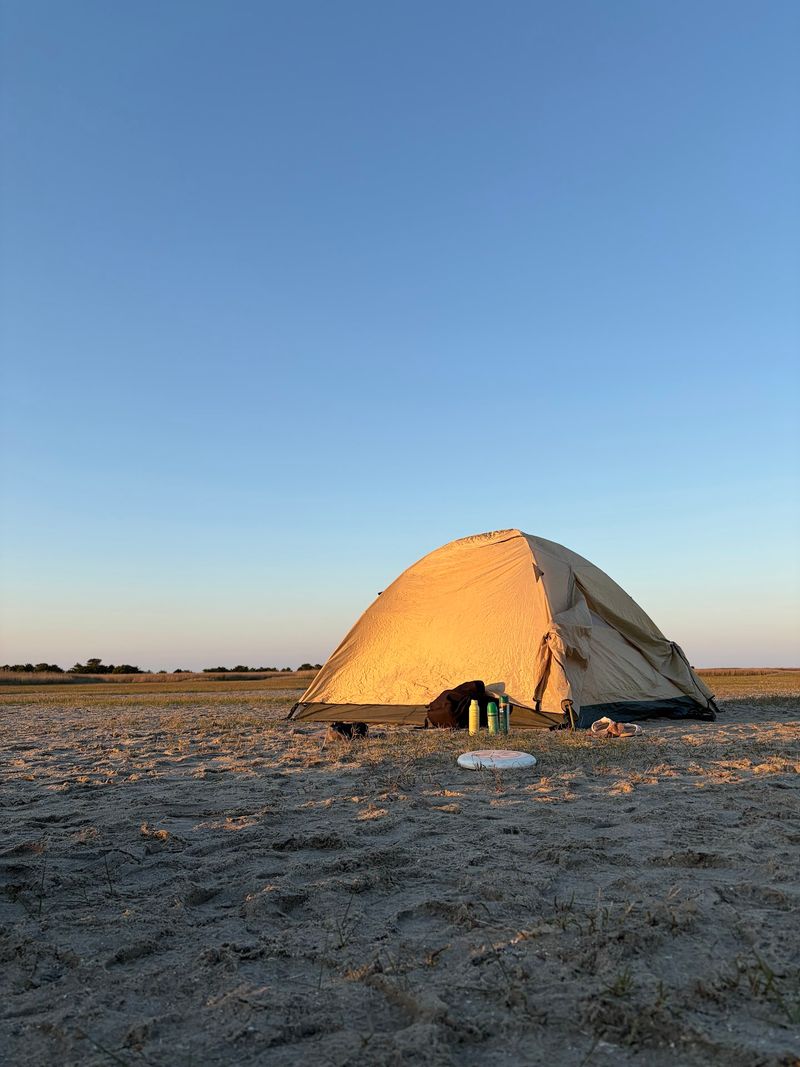
Wild horses have grazed these dunes for generations, and waking to Banker ponies moving along the sound side is the reason many campers keep returning.
Eight miles of undeveloped barrier island stretch from east to west.
Tent camping on Shackleford Banks is free and walk-in only, since vehicles are not permitted anywhere on the island. Boats and passenger ferries make the short crossing, with services such as Island Express Ferry Service running from Beaufort, North Carolina, and Harkers Island.
Seasonal restrooms stand at Wade Shore, but there is no potable water on the island whatsoever.
Every drop arrives in your pack, and the horses are wild and protected, so keep at least 50 feet between you and them at all times.
Clear shallows on the sound side suit wading and paddleboarding, while the ocean side belongs to swimmers and beachcombers.
Birders and photographers can burn through a whole morning without moving far.
Primitive camping generally requires no permit for groups under 25 people, stays are limited to 14 consecutive days, and all trash leaves with you.
4. Masonboro Island Reserve, Near Wilmington
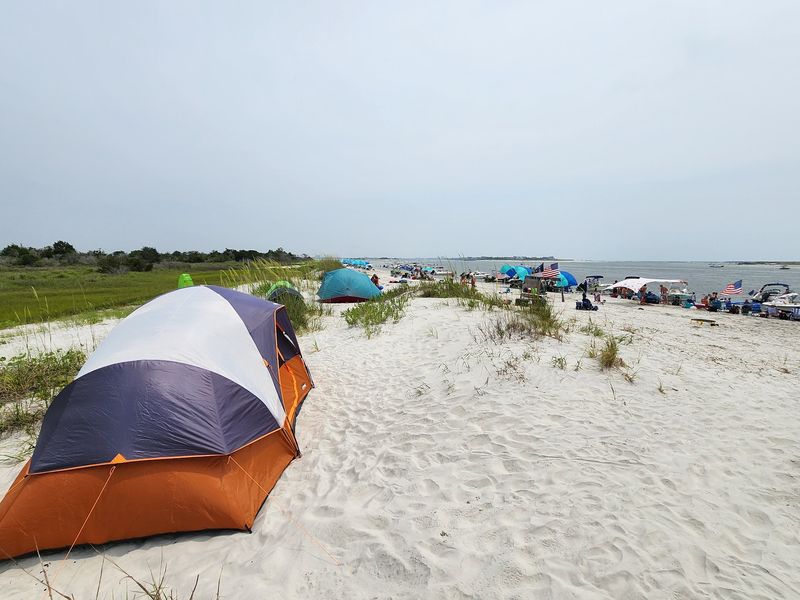
Roughly eight miles of untouched shoreline make this the longest undeveloped barrier island in the southern reach of the state.
Loggerhead turtles nest on the ocean side, and shorebirds crowd the flats when migration hits full stride. Masonboro Island Reserve is reachable only by boat, kayak, or canoe, with public and private ramps in Wrightsville Beach and Carolina Beach serving as launch points.
Fee-based private ferry services also shuttle visitors over from the mainland near Wilmington, North Carolina.
Primitive camping is allowed without developed facilities, but stays are limited to no more than two consecutive nights.
Everything you need rides in your hatch, and leave-no-trace habits are the price of admission.
Plan on at least about one gallon of drinking water per person for each 24 hours, with more needed during hot weather or strenuous activity.
Foot trails cross the island from sound to ocean, and a web of tidal creeks makes for easy paddling at high water.
Spring and fall bring lively bird migration, cooler air, and noticeably fewer mosquitoes.
Shelling turns excellent after storms push hard against the beach, and a headlamp is essential once the island goes properly dark.
5. Long Point, Croatan National Forest
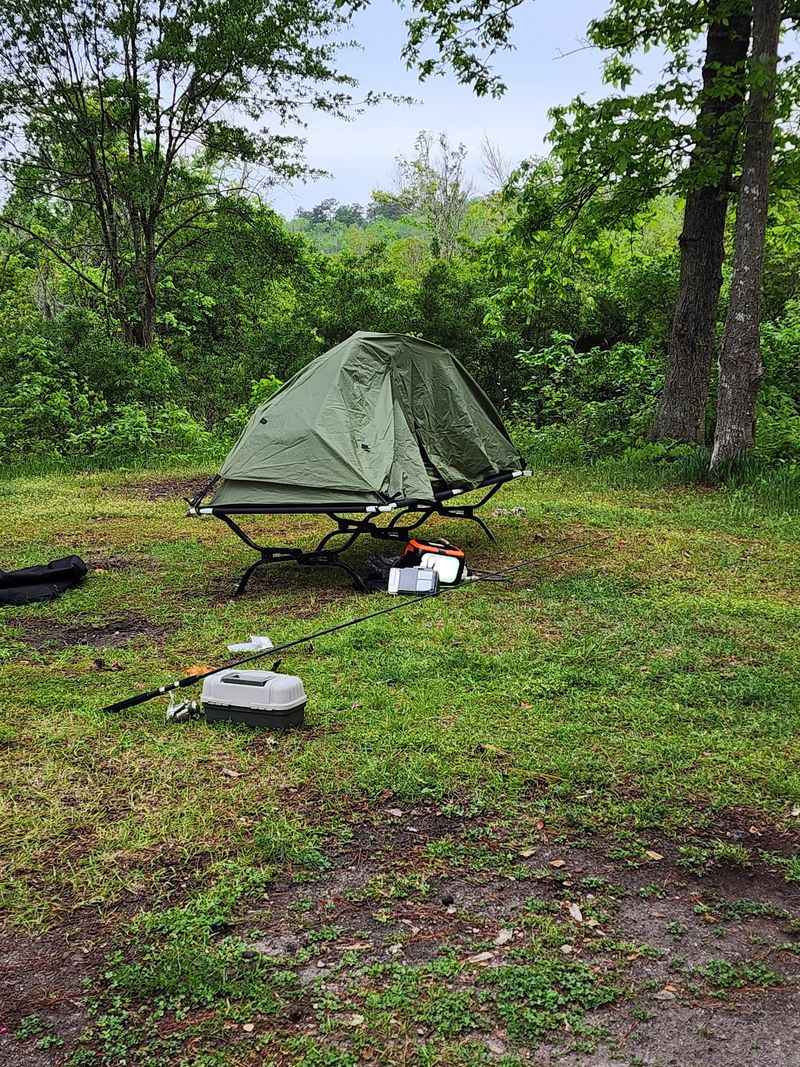
Blackwater slides past cypress knees at the edge of the White Oak River, and the boat launch here doubles as one of the easiest free campsites in the whole forest.
Long Point works for tent campers, car campers, and small RVs, with hard-packed gravel forest roads running straight to the site.
Four-wheel drive and high clearance are rarely needed, though potholes show up after heavy rain, and the dispersed area sits at coordinates 34.7983, -77.1778.
Long Point is primitive, with the current Forest Service listing showing no on-site amenities. No hookups, no spigot, no trash pickup, so water jugs and a sturdy garbage bag belong near the top of your packing list.
Paddlers use the ramp as a launch or takeout for long, lazy river days, and anglers work the tea-colored water for whatever is biting.
Evenings smell like warm pine and river mud, and frogs take over the soundtrack once the light fades.
Forest rules limit camping to 14 days within any 30-day period unless a site posts a different limit.
6. Dixon Field, Croatan National Forest
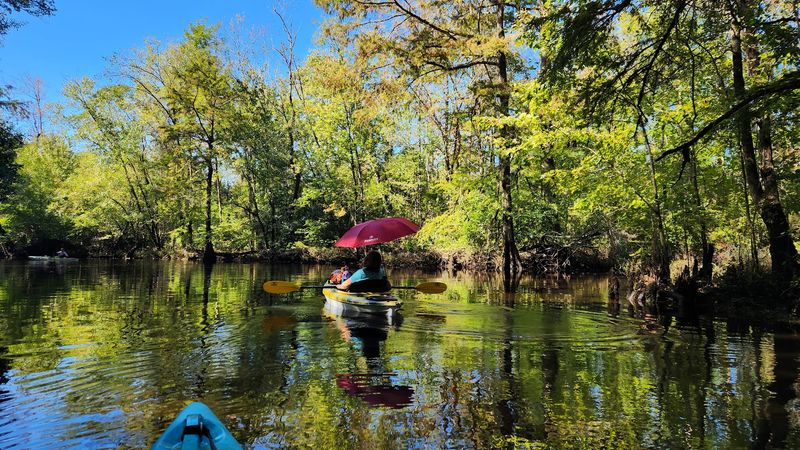
A grassy clearing beside the upper White Oak River, this landing feels more like a friend’s back field than a campground, and that is precisely the appeal.
Dixon Fields Canoe Launch offers primitive dispersed camping along with access to the White Oak River.
Forest roads in are manageable in two-wheel drive if you take the potholes slowly, and the landing sits at coordinates 34.8561, -77.209, near Maysville. Taller rigs should keep an eye out for low limbs leaning over the access road.
A vault toilet near the parking area is the only facility, with no water, no hookups, and no trash service anywhere on site.
Mixed pine and hardwood frame the clearing, and the shallow river practically begs for a kayak at first light.
Birders regularly pick up woodpeckers, warblers, and wading birds working the banks, while anglers cast from shore into slow, dark water.
Camping is limited to 14 days within any 30-day period under the forestwide rule.
7. Catfish Lake, Croatan National Forest
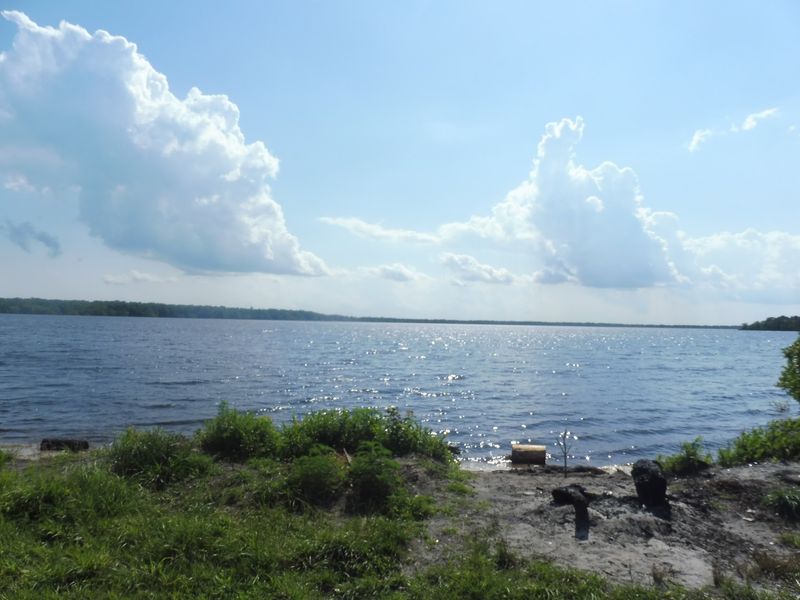
Tea-colored water, a rim of tall pine, and a boat ramp that sees more turtles than traffic.
Quiet arrives here almost immediately. Catfish Lake Boat Launch includes a dispersed camping area beside the shallow lake. The lake lies near Maysville, North Carolina, and is reached by following Catfish Farm Road into the forest.
Shallow and slow, the water favors kayaks, canoes, and small trolling boats over anything with a big motor.
Anglers here catch yellow bullhead, fliers, yellow perch, black crappie, and catfish, often with nothing fancier than a worm and patience.
Amenities amount to the ramp itself, so plan for a genuinely primitive stay with no potable water, no restrooms, and no hookups.
Every scrap of trash goes home in your vehicle.
Camping is generally free, with the forestwide stay limit set at 14 days within any 30-day period.
8. Fishers Landing, Croatan National Forest
Worth knowing before you load the car: this one is a daytime stop, not an overnight base. Plenty of campers learn that the hard way.
Fishers Landing, in the forest south of New Bern along the Neuse River, is a day-use recreation area where overnight camping is not permitted.
The site took heavy damage during Hurricane Florence and has remained closed for repairs, so check current forest updates before making the drive out from US 70.
When open, the landing provides drinking water, picnic tables, and restrooms, plus easy access to a riverfront beach that draws swimmers and shore anglers.
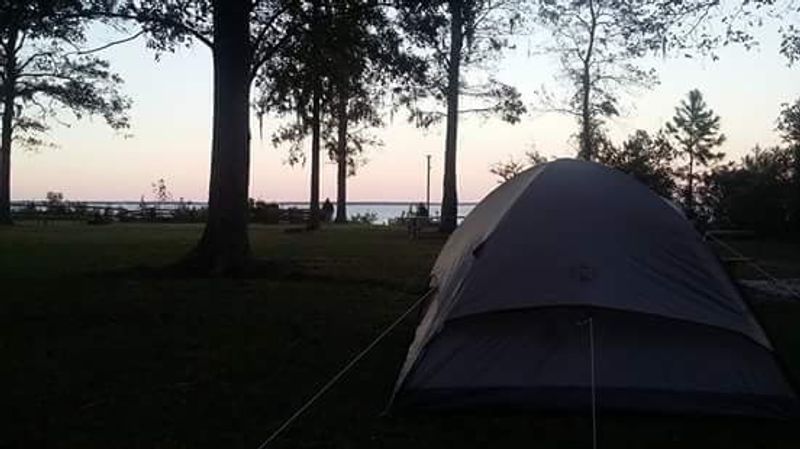
The Neuse looks more like a bay than a river at this point, broad and brown, with wind putting a steady chop on the surface.
The smart move is pairing an afternoon picnic here with a night at a dispersed site deeper in the forest.
Elsewhere in Croatan, dispersed camping is generally allowed in undeveloped, non-fee areas, but not inside developed day-use sites or within 150 feet of a boat launch.
9. Brice Creek Dispersed Camping Area, Croatan National Forest
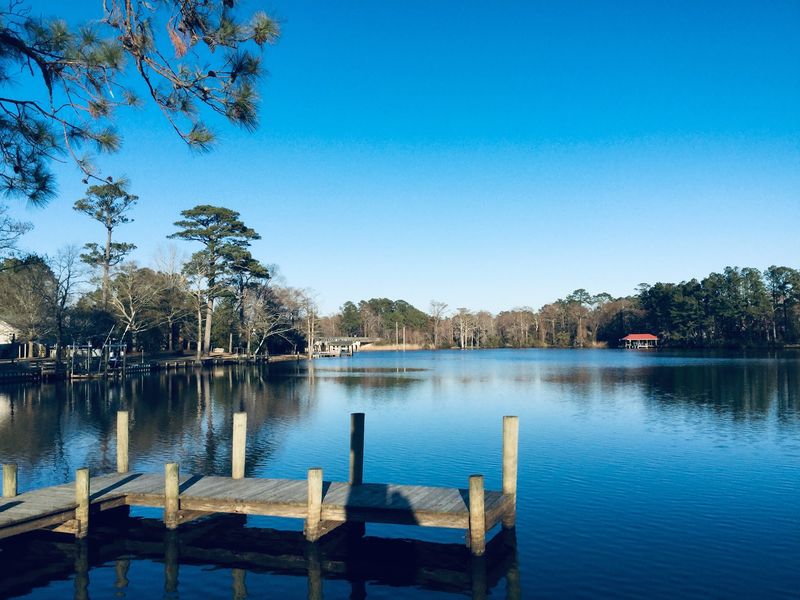
Kayak country, plain and simple. Cypress-lined water, saltwater estuary, bogs, and pocosin fold together along the only saltwater trail inside a national forest, known as the Saltwater Adventure Trail.
Secluded dispersed sites scatter through the woods around Brice Creek near New Bern, and camping there costs nothing wherever the forest permits it.
Directions to the nearby boat launch run south of New Bern on US 70 East, right at the Craven Regional Airport sign, left onto SR 1004 (Madam Moore’s Lane), left onto SR 1143 (Perrytown Road), then left at the Brice’s Creek sign and about a mile of dirt road.
The Brice Creek Boat Launch recreation site offers picnic areas, restrooms, and a ramp suited to kayaks and small boats.
Dispersed sites in the surrounding woods, by contrast, come with nothing at all.
Wildlife watching steals the show: black bears, turkeys, ospreys, wading birds, and alligators all use this creek system.
Venus flytraps and pitcher plants grow in the damp ground along the edges.
Bring insect repellent, and launch at dawn when the creek turns glassy.
10. Catfish Lake South Wilderness, Croatan National Forest
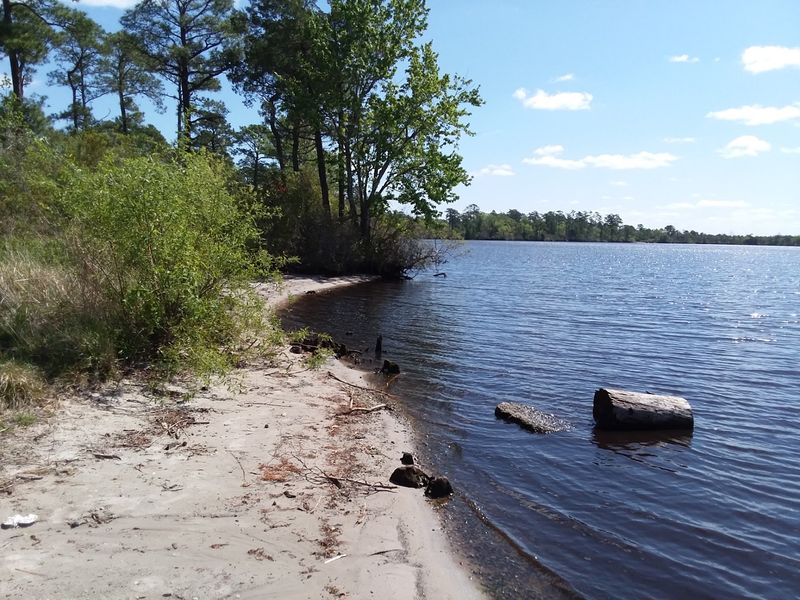
Raised bogland, no trails, no signs, no comforts of any kind.
For experienced backcountry campers, that combination is the entire attraction.
Primitive backcountry camping in Catfish Lake South Wilderness follows standard wilderness expectations: total self-sufficiency and rigorous leave-no-trace practice. Roads border the area, but nothing inside is marked or maintained, and the wilderness spreads southeast of the main lake within the larger forest.
Five genera of insectivorous plants grow here, a rare botanical combination anywhere in the country.
Wildlife documented in the wilderness includes black bears, deer, muskrats, mink, otters, alligators, cottonmouths, and several rattlesnake species.
The lake’s high acidity keeps fishing success modest, and biting insects turn fierce during warm months.
Navigation skill counts far more than gear here, since there are no paths to follow and the vegetation closes in fast.
Cooler seasons make the trip far more pleasant, and anyone heading in should carry a map and compass, plenty of water, and leave a detailed plan with someone back home.
11. Croatan National Forest Dispersed Camping Near Cahooque Creek
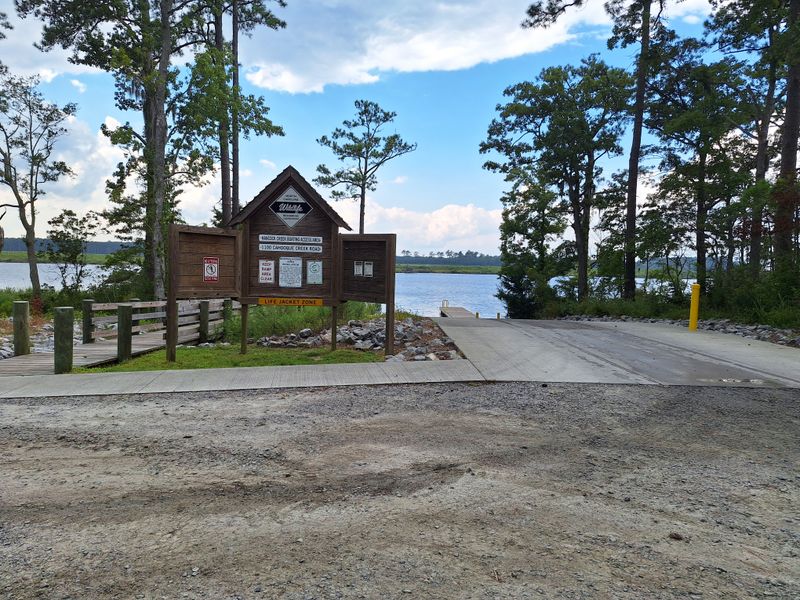
Where Hancock and Cahooque Creeks slide into the wide Neuse, the water turns brackish and the fishing gets genuinely interesting.
Mornings out here start with mist lifting off the creek mouth. Cahooque Creek Boat Launch provides public water access, while overnight dispersed camping must take place outside the developed launch area in portions of the forest where camping is permitted.
Overnight stays happen instead in undeveloped sections of the surrounding forest where no camping signs are posted.
Dispersed sites in that backcountry come with zero facilities, so water, a trowel, and a trash bag are non-negotiable items.
Anglers work the creeks for largemouth bass, redbreast sunfish, bluegill, pickerel, perch, catfish, and flounder, depending on the tide and season.
Migrating birds pass through in waves each spring and fall, and resident alligators sun themselves along far banks where the marsh meets open water.
Venus flytraps and Zenobia shrubs grow in the sandy soil nearby.
Paddle out at first light and the creek holds a mirror finish until the first breeze wrinkles it, which is reason enough to set an early alarm.
12. Croatan National Forest Dispersed Camping Near the White Oak River
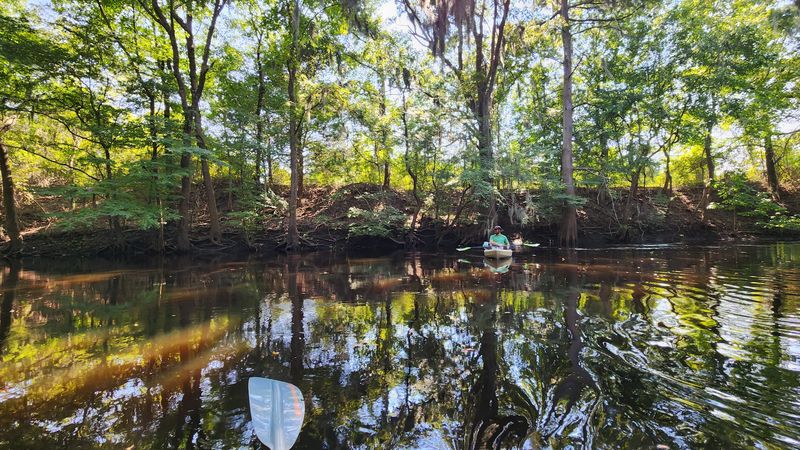
One river, several free places to sleep beside it, and very little between you and the water except pine needles.
Dispersed camping is permitted across much of the undeveloped backcountry near the White Oak River, with Long Point Boat Launch and Dixon Field Landing standing as the two best-known examples.
Established access points include Long Point and Dixon Fields, with additional forest roads subject to current access rules and closures.
Tents, small RVs, and car camping suit most of these clearings, and many access roads require nothing more than careful driving around potholes.
Facilities range from a single vault toilet to absolutely nothing, so arrive fully stocked with water and supplies. Fishing along the river turns up striped mullet, pumpkinseed, chain pickerel, largemouth bass, flounder, redbreast sunfish, and gars.
Paddling the tidal stretches stays calm and scenic beneath mixed pine and hardwood canopy, with osprey overhead most afternoons.
Forestwide rules limit camping to 14 days within any 30-day period unless a location posts a different limit.