These 11 Historic Kentucky Restaurants Still Serve Dishes Passed Down Through Generations
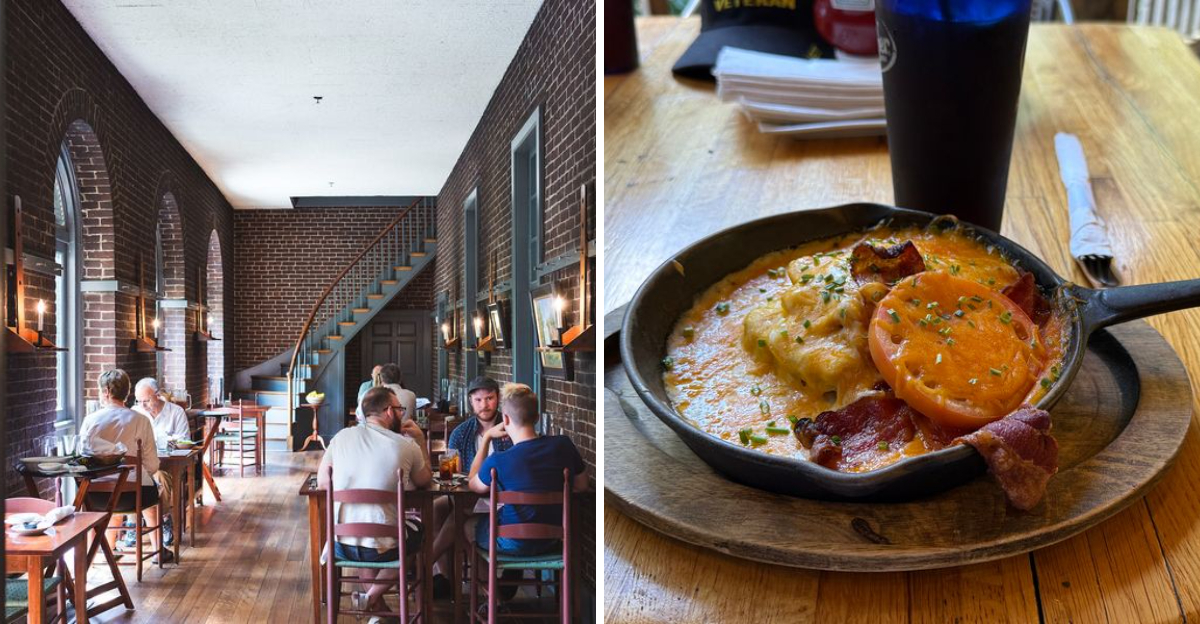
There is a particular kind of restaurant that does not care what you think. You know the type.
The menu has not changed since your mother was young, and nobody there is apologizing. Ask about a substitution and watch what happens.
Kentucky has a stubborn little collection of these places. Somebody’s great-grandmother wrote a recipe down on the back of something, and three generations later they are still following it exactly.
The regulars would notice immediately if it changed, and they would not be quiet about it. These are the dining rooms where the corn pudding is not up for discussion and the fried chicken takes exactly as long as it takes.
You will sit down and order too much. You will leave wondering why anybody bothered inventing fusion cuisine.
Some kitchens chase trends, and these ones decided long ago that they had already gotten it right.
1. The Old Talbott Tavern, Bardstown
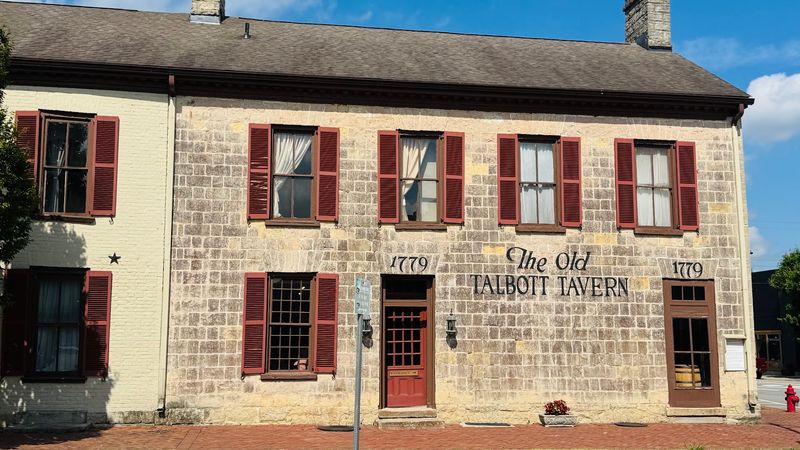
The year was 1779, and this building was already open for business. That fact alone should stop you mid-bite.
The Old Talbott Tavern at 107 West Stephen Foster Avenue, Bardstown, is considered the oldest western stagecoach stop in America, and it has never once closed its doors for good.
Daniel Boone ate here. Andrew Jackson passed through.
A young Abraham Lincoln reportedly sat in these very rooms. Exiled French King Louis Philippe visited too, and his companions painted murals on the walls that survived for over a century.
The menu carries that history with pride. Chicken Phillippe is named directly after the French king.
Kentucky Burgoo, a thick stew of chicken, pork, beef, and vegetables, has warmed guests for generations. Bread pudding with bourbon sauce closes the meal on a note that feels almost ceremonial.
The stone walls are Flemish bond, thick and cool to the touch. Ceiling timbers hang heavy overhead.
Every room is named after a famous visitor, and the creaking floorboards remind you that countless boots walked here before yours. This place does not perform history.
It simply lives it, one plate at a time.
2. Beaumont Inn, Harrodsburg
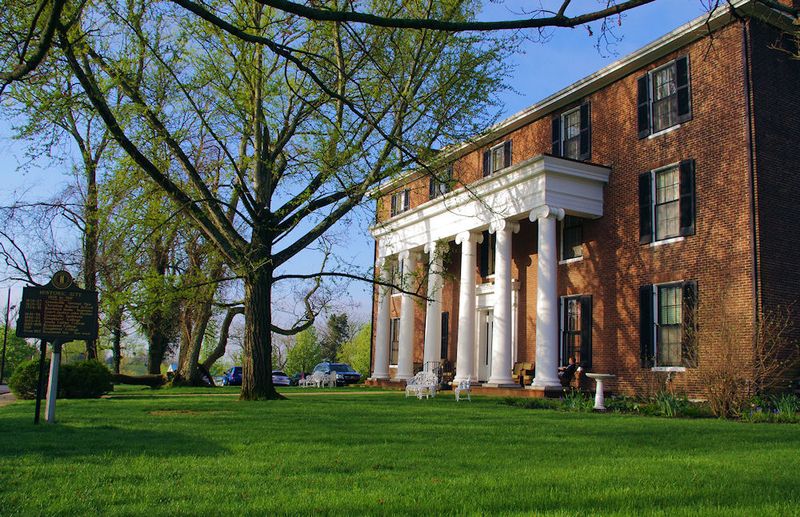
Five generations. One family.
One recipe for fried chicken that has never needed updating. That is the quiet confidence behind Beaumont Inn, and it shows in every single bite.
The building at 638 Beaumont Inn Drive, Harrodsburg, was originally constructed around 1845 as a women’s college. Annie Bell Goddard, an alumna and former instructor, transformed it into an inn in 1919.
It has stayed in the family ever since, earning Kentucky’s title of oldest family-operated country inn.
The James Beard Foundation gave it the America’s Classic Award in 2015. That recognition feels right.
The “Yellow Legged Fried Chicken” recipe is passed down through five generations, crispy and golden in a way that no fast-food chain has ever replicated. Corn pudding, two-year-old country ham, and beaten biscuits round out the Classic Dinner.
The main house is formal and columned, lined with Victorian furnishings and pre-Civil War artifacts. A museum of Kentucky history fills the walls.
Weisenberger meal and Meacham hams, sourced from Kentucky producers, keep every dish grounded in the region. Eating here is not just a meal.
It is a full afternoon well spent.
3. Historic Boone Tavern Hotel And Restaurant, Berea
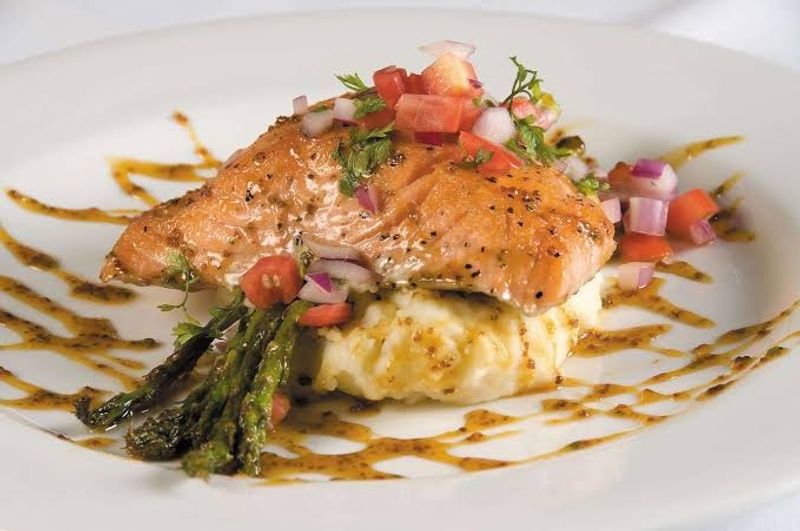
Spoonbread sounds simple until you try the version served at Historic Boone Tavern. Then it becomes the reason you rearrange your whole drive home through Berea.
Opened in 1909 as a guesthouse for Berea College, this restaurant at 100 South Main Street North was built by the college’s own students, who also made the bricks by hand.
Duncan Hines featured it in his Adventures in Good Eating guidebooks back in the 1930s. It is now listed on the National Register of Historic Places.
Spoonbread is served at every single lunch and dinner, a tradition so beloved it inspired a community festival. The Chicken Flakes Elsinore, creamed chicken served in a potato nest, is the kind of dish that sounds fussy but tastes like a Sunday afternoon.
Bourbon bread pudding and spiced blackberry jam cake close things out with Southern authority.
Ingredients come from Berea College’s certified-organic farm and Kentucky Proud partners. The waitstaff are Berea College students, working as part of their tuition program.
Guest rooms feature solid cherry wood furniture crafted by students in the college workshops. The whole experience carries a sense of purpose that goes well beyond the menu.
4. Moonlite Bar-B-Q Inn, Owensboro
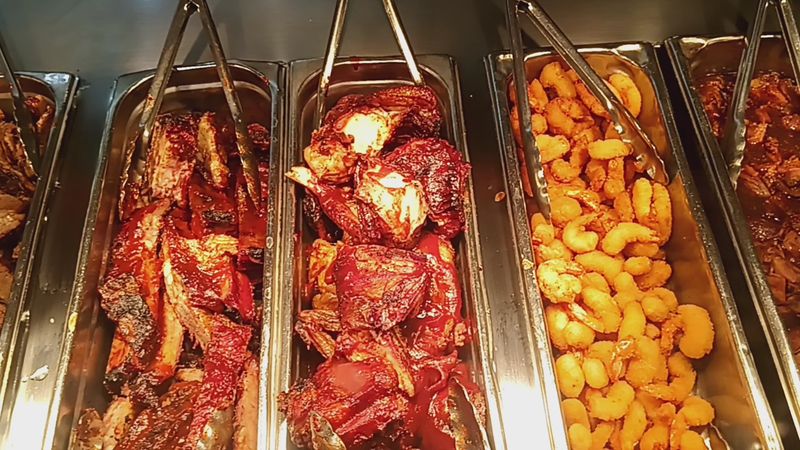
Mutton is not exactly the first word that comes to mind when most people think barbecue. But in Owensboro, it is basically a religion, and Moonlite Bar-B-Q Inn is the cathedral.
Originally a small roadside spot from the 1940s, the restaurant was purchased in 1963 by Hugh “Pappy” and Catherine Bosley. Four generations of the Bosley family have grown it from 30 seats to a 350-seat operation with a catering business attached.
Fox News once called it one of America’s five most iconic buffets.
The mutton is hickory-smoked for 15 hours. Moonlite is reportedly the largest user of mutton in the entire country.
The vinegar-based dipping sauce has a sharp, peppery kick that cuts through the richness perfectly. Burgoo, the traditional Kentucky stew, sits alongside mac and cheese, ham hock-studded beans, corn muffins, and rotating pies.
The 40-foot lunch buffet is legendary. It draws locals, road-trippers, and curious first-timers who all leave with the same expression.
The food here is described simply as real food, made the way grandma used to make it. That phrase gets used a lot, but at 2840 West Parrish Avenue, it actually holds up.
5. Jack Fry’s, Louisville
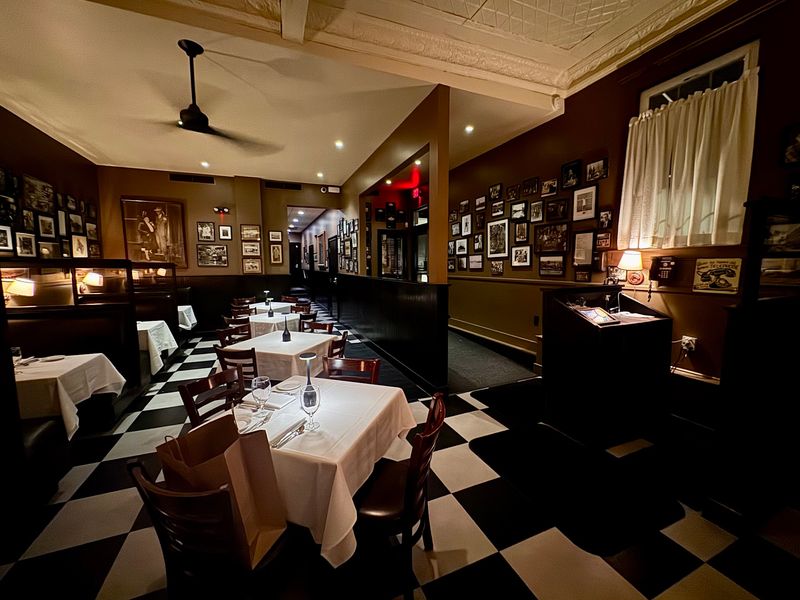
There are restaurants where you eat, and then there are restaurants where you linger. Jack Fry’s on Bardstown Road is firmly in the second category, and the live jazz makes sure of it.
Jack Fry opened his doors in 1933 as a sportsman’s hangout on 1007 Bardstown Road, Louisville. The place closed in 1972 and came back in 1981, eventually becoming a fine dining destination by 1985.
Longtime employee Stephanie Meeks took ownership in 2008 and has kept the spirit intact. The restaurant celebrated its 90th anniversary in 2023.
The shrimp and grits here feature creamy grits, plump shrimp, and red-eye gravy that brings everything together. Panko-breaded deep-fried deviled eggs sound like a gimmick until you eat one.
Fried green tomatoes with pimento cheese and country ham are exactly as good as they sound. Bourbon bread pudding closes the meal with a warm, boozy hug.
Black-and-white photographs line the walls. The antique tin ceiling catches the light just right.
The tile floor, dark walls, and intimate layout give it a speakeasy energy without trying too hard. Jack Fry’s is Southern cuisine with French influence, and somehow that combination feels completely natural here.
6. Check’s, Louisville
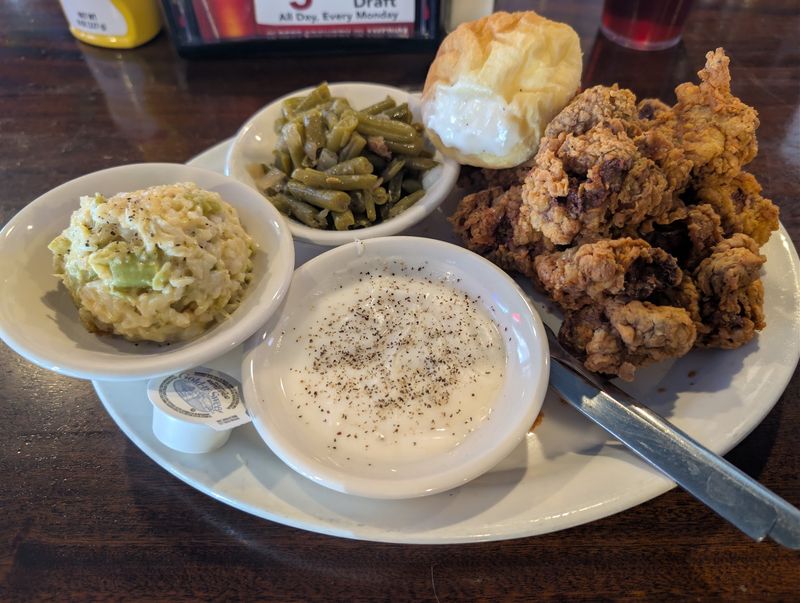
Some menus tell you everything about a neighborhood. Check’s menu, largely unchanged since the 1950s, tells you everything about Germantown, Louisville, and the kind of loyalty that only comes from decades of showing up.
Check Sumpter opened the spot in 1935. Joe Murrow Sr. bought it in 1943, and his grandson John Murrow runs it today.
The hand-painted sign outside still calls it “A Schnitzelburg Tradition,” a nod to the German immigrant community that shaped the area. Find it at 1101 East Burnett Avenue, Louisville.
The chili recipe dates to 1944 and has not changed since. It comes plain or over spaghetti, a Cincinnati-style move that divides first-timers and delights regulars.
Chili cheese fries, Bratwurst sandwiches, Braunschweiger, fried cod, and bean soup round out a menu that feels like a grandmother’s notebook brought to life.
The black-and-white checkered floor, wooden walls covered in photos of athletes and local legends, and the low hum of conversation make this feel like a time capsule. It is spacious inside, despite a humble exterior.
Dishes based on the owner’s grandmother’s recipes have never needed a redesign, and the regulars would never allow one anyway.
7. Wagner’s Pharmacy, Louisville
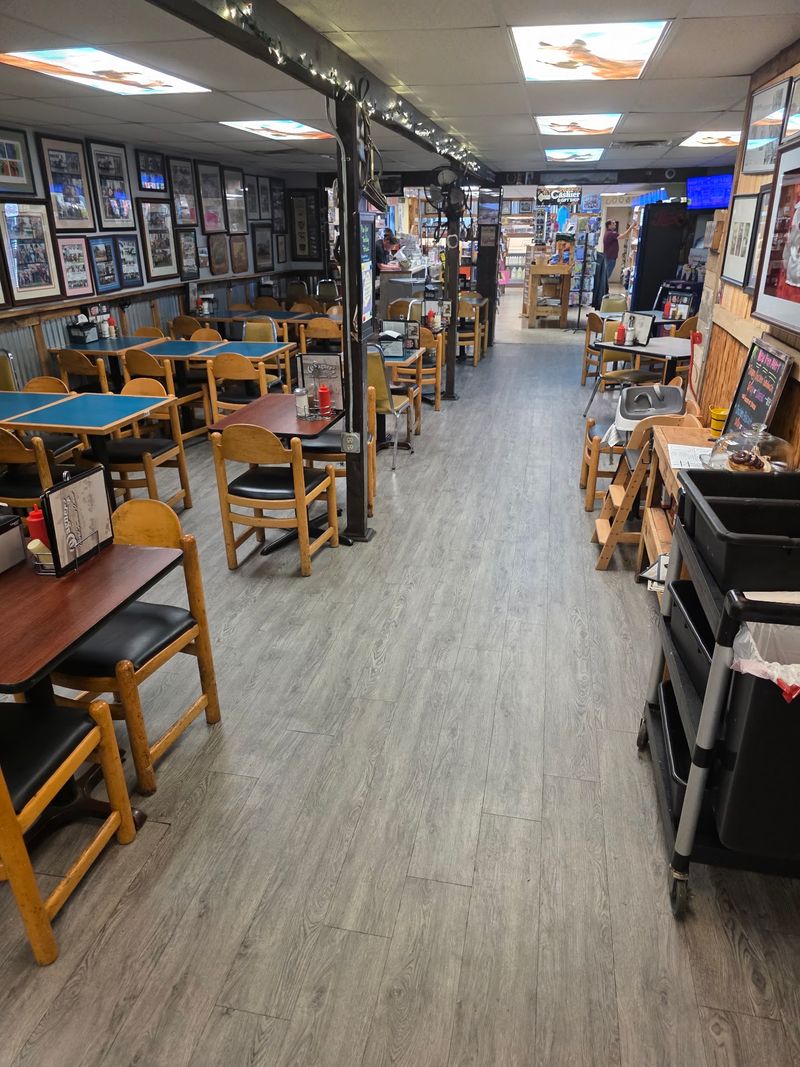
Leo Wagner opened a pharmacy in 1922 and accidentally created one of Louisville’s most beloved dining institutions. The jockeys from Churchill Downs started coming in, and the rest is local legend.
Wagner built loyalty by offering credit to horsemen who needed their daily staples. The nickname “Jockey’s Headquarters” stuck, and the connection to horse racing never left.
When the building relocated one block in 1999, the family replicated the original layout and moved the historic furnishings. The film Secretariat was even shot here.
Now a diner at 3113 South 4th Street, Louisville, Wagner’s serves breakfast and lunch with a Southern lean. The Derby Sandwich is the star, built with hot honey-glazed ham, melted Swiss, and mayo.
The Wagner Burger, Club sandwich on wheat with grilled onions, and vegetable beef soup keep the lunch crowd happy. Chicken fried steak and biscuits with gravy handle the morning crowd with ease.
The walls are a gallery of past Derby winners and racing royalty. The original lunch counter remains, giving the space a museum-like quality that feels earned rather than staged.
This is a working diner with real history behind every stool and every plate, not a recreation of one.
8. Starnes Barbecue, Paducah
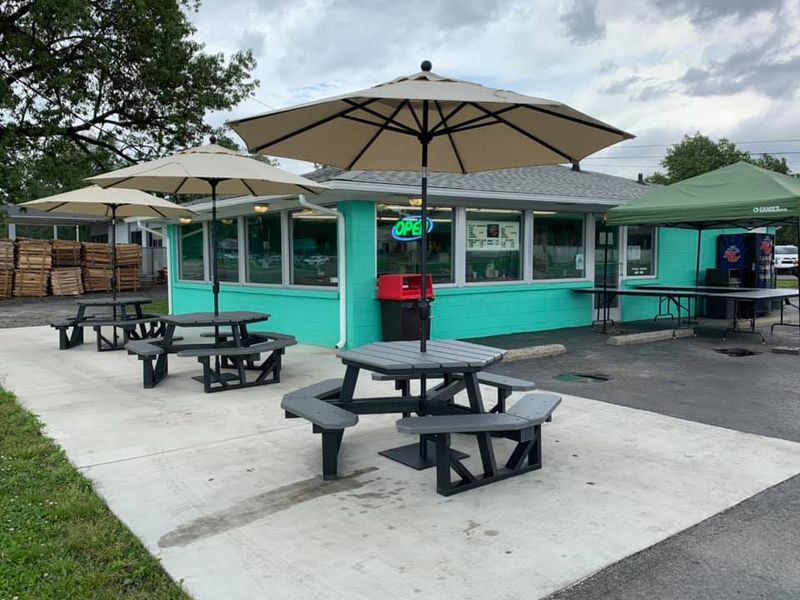
Starnes Barbecue does not need a sign that begs for your attention. The smell from the smokehouse out back handles all the advertising it will ever need.
Family-owned since 1955, this Paducah institution at 1008 Joe Clifton Drive earned its place on Southern Living’s list of the South’s Most Legendary Barbecue Joints.
That recognition comes from nearly seven decades of doing one thing exceptionally well: slow-smoking meat over real wood using old-school pit techniques.
The menu is focused and confident. Sandwiches come on toasted white bread with your choice of pork, beef, ham, turkey, or smoked bologna.
The vinegar-based sauce has a sharp bite from black pepper and cayenne that cuts through the smoke beautifully. Potato salad and coleslaw are the classic sides, and they do not overcomplicate either one.
The building is mint green cinderblock with counter service. There is no frills, no gimmick, and no apology for keeping things simple.
The crowd that fills this place is as diverse as the sandwiches are consistent. Locals, travelers, and food writers all end up at the same counter, eating the same food, and wondering why they waited so long to show up.
9. The Trustees’ Table, Harrodsburg
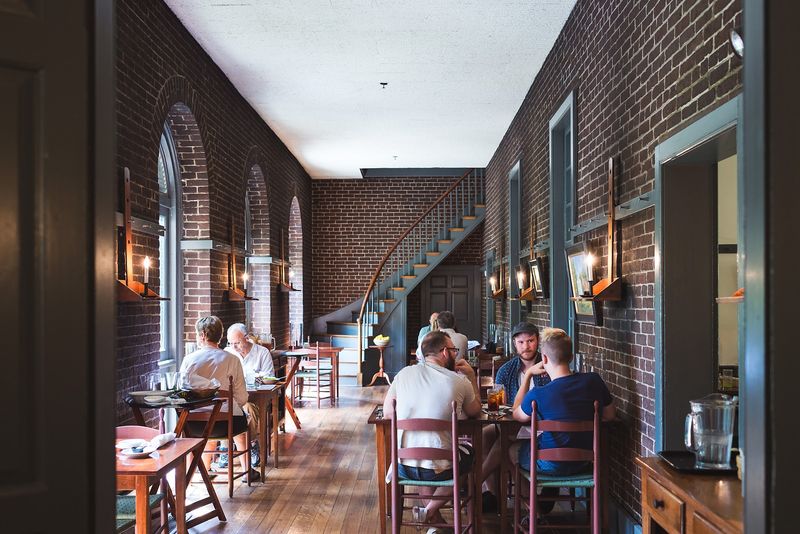
Shaker Lemon Pie uses the entire lemon, rind and all. That single detail tells you something important about the philosophy behind The Trustees’ Table, and about the Shakers who inspired it.
The restaurant sits inside the 1839 Trustees’ Office building at Shaker Village of Pleasant Hill, 3501 Lexington Road, Harrodsburg. The building was completed in 1841 and served as the central hub for Shaker trade and hospitality.
The restaurant opened to the public in April 1968 as part of a non-profit restoration effort that began in the early 1960s.
The Shaker Lemon Pie is the only direct Shaker recipe on the current menu, and it has become an iconic dessert. Everything else follows a seed-to-table approach, with ingredients drawn from the Village’s certified-organic garden and local farm partners.
Fried chicken, catfish, and the Kentucky Hot Brown round out a menu rooted in seasonal honesty.
The building features twin spiral staircases crafted by Shaker brother Micajah Burnett, a detail that stops visitors mid-step. Historically, servers wore period costumes and meals were served family-style.
The Shaker design aesthetic, plain, purposeful, and quietly beautiful, carries through every corner of the dining room. Eating here feels like a conversation with a much older, wiser Kentucky.
10. Hall’s On The River, Winchester
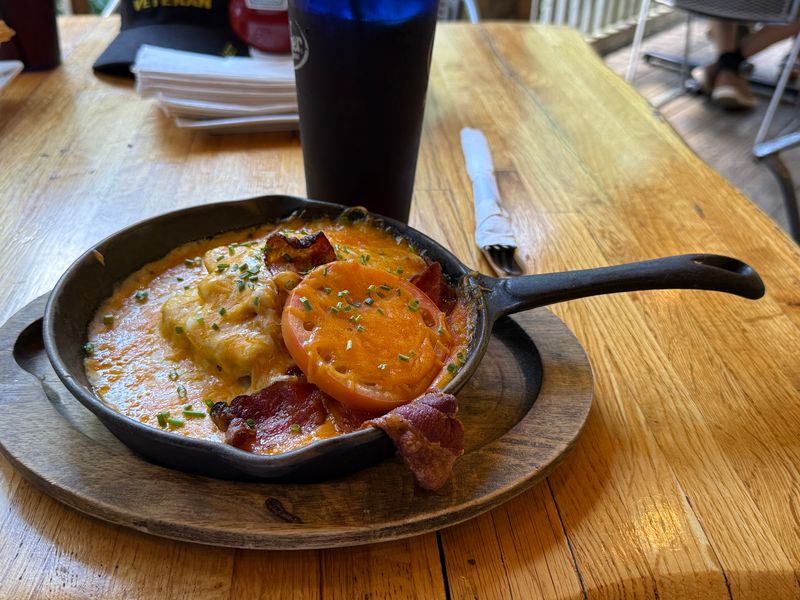
A restaurant that has survived multiple floods and kept serving is not just stubborn. It has earned the right to be called legendary, and Hall’s On The River has earned it repeatedly.
The site at 1225 Athens Boonesboro Road, Winchester, traces its roots to 1781, when Captain John Holder, a contemporary of Daniel Boone, established Holders Tavern here. Holder also ran a boatyard and a river station on the same property.
The Kentucky River has risen and receded around this building many times, and the kitchen has kept going each time.
The menu mixes classic American and Southern comfort with some genuinely unique local offerings. Fried banana peppers are a crowd favorite that you will not find on many other menus.
Hall’s Snappy Beer Cheese is a trademarked original, sharp and addictive in equal measure. Barbecue ribs, fried frog legs, green beans, and Kentucky Hot Browns fill out a menu that covers serious ground.
The riverside setting provides views that shift with the seasons and the water levels. The atmosphere is laid-back and welcoming, drawing locals and visitors who want food with a real story attached.
Few restaurants can claim a history that stretches back to Daniel Boone’s era and still back it up with a genuinely good plate of food.
11. The Whistle Stop, Glendale
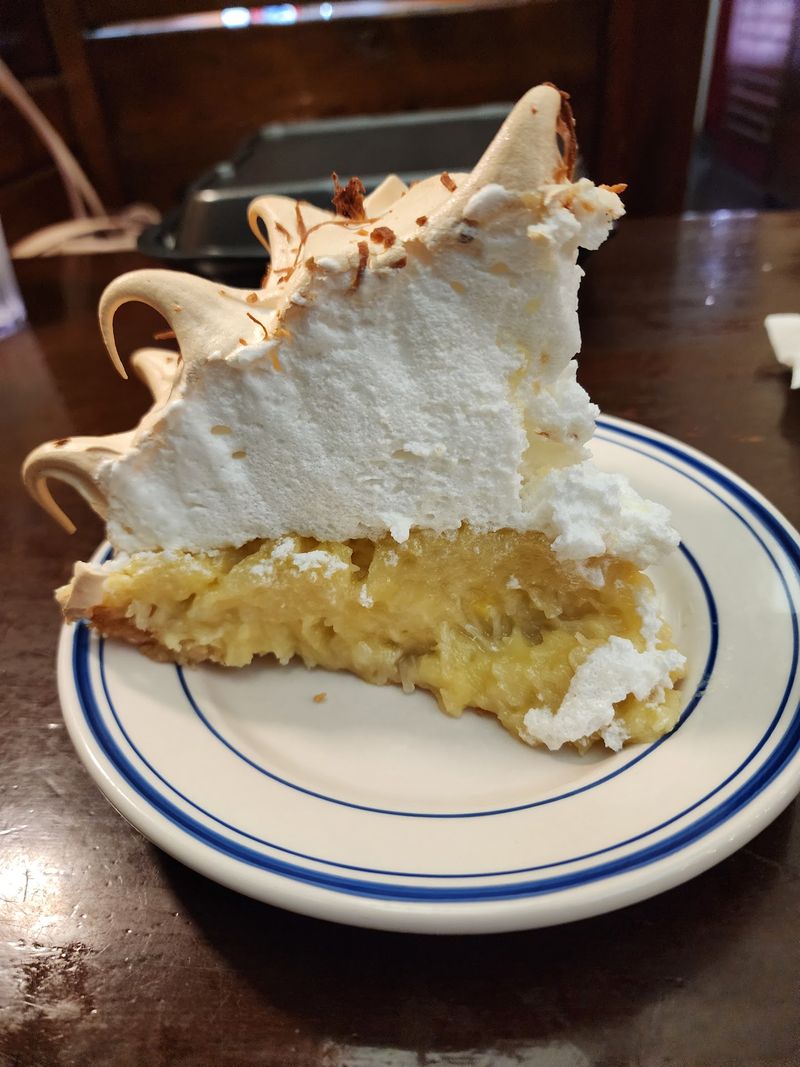
Idell Sego opened The Whistle Stop inside her husband’s hardware store on April 30, 1975, as a sandwich shop. By 1979, the hardware inventory was gone and the food had taken over completely.
That is how you know a recipe works.
James Sego named it after the trains that pass through Glendale daily, blowing their whistles right on schedule. Lynn and Mike Cummins kept the traditions going after taking ownership in 2005.
In April 2021, Mike Frantz purchased the restaurant with a firm commitment to preserving the original recipes and history. Southern Living has featured it multiple times.
The menu is scratch-made Southern comfort, using family recipes passed through generations. Meatloaf, pot roast, fried catfish, fried chicken, and country ham all appear on a menu that reads like a handwritten family cookbook.
The Kentucky Hot Brown is a highlight, and the meringue pies at 216 East Main Street, Glendale, have their own devoted following.
Inside, handmade booths line the walls alongside train memorabilia, old lanterns, and black-and-white photographs. An original log cabin, moved and rebuilt on site, now serves as the gift shop.
When the trains pass and blow their whistles mid-meal, the whole room smiles without anyone saying a word. That moment alone is worth the drive.