These 10 New Mexico Towns Are All About Adobe Living And Green Chile Done Right
There is something about New Mexico that gets under your skin in a way that is genuinely difficult to explain to someone who has never been. It is not one thing.
It is the smell of roasting green chile drifting down a quiet street on a cool morning. It is the way afternoon light turns an adobe wall the color of warm honey.
It is the particular feeling that time has slowed down to a pace that actually makes sense, and nobody here seems the least bit bothered by that.
I took a road trip through the Land of Enchantment not too long ago expecting scenery and came back with something closer to a full personality adjustment.
The towns I found along the way were not trying to impress anyone, which is precisely what made them so impressive.
Adobe architecture, green chile on everything, and a culture so deeply rooted it feels like the land itself grew it. New Mexico does not do ordinary, and these towns prove it completely.
1. Taos
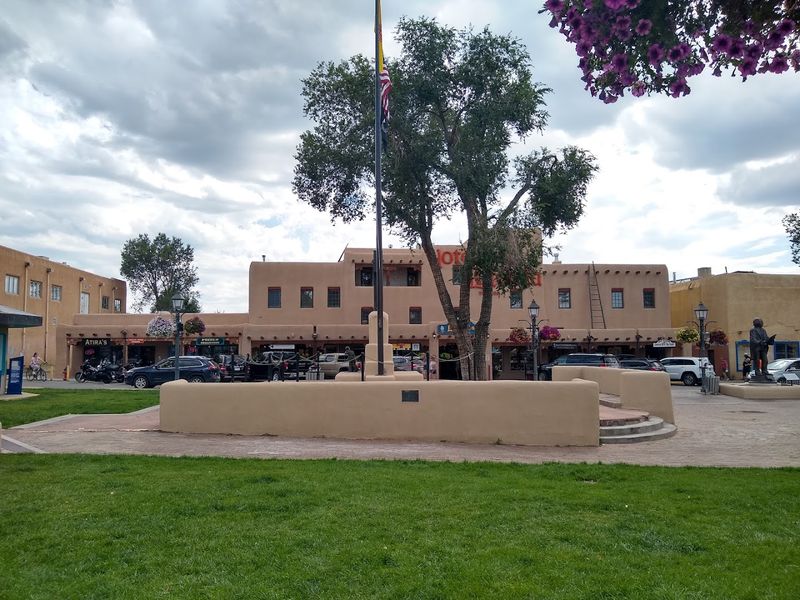
Taos hits you before you even get out of the car. The light is different here, softer somehow, and the mountains behind the pueblo look like they were painted by someone showing off.
Taos Pueblo is one of the oldest continuously inhabited communities in North America, and standing near those multi-story adobe walls, you feel the weight of that history in your chest.
The green chile cheeseburger at the Taos Inn on Paseo del Pueblo Norte is the kind of meal you text people about.
Thick, messy, and loaded with roasted green chile that has actual heat without burning through your good judgment.
The town itself is small enough to walk but packed enough to spend a full day wandering. Art galleries sit next to chile shops, and locals greet strangers like old friends.
The Taos Pueblo market sells fresh oven bread that smells like a memory you did not know you had. Come hungry, stay curious, and bring an extra layer because the evenings cool down fast at over 6,900 feet.
Taos rewards the slow traveler every single time.
2. Santa Fe
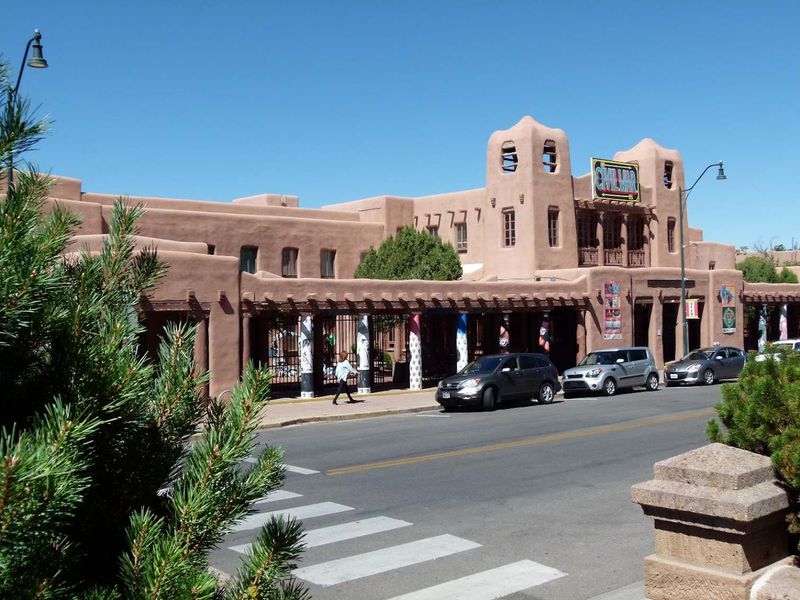
Santa Fe has been the capital of New Mexico since 1610, which makes it older than most American cities by a considerable margin. That age shows up in every sun-baked adobe wall and hand-laid tile floor in town.
The Plaza is the beating heart of it all. Grab a bowl of green chile stew at The Shed on Garcia Street and prepare yourself for something genuinely life-changing.
Their red and green chile have been perfected over decades, and the posole on the side is not optional, it is required. Santa Fe operates on its own schedule, and somehow everything still gets done beautifully.
Canyon Road is a must-walk stretch of galleries, gardens, and studios that shows off the creative soul of the city without trying too hard.
The architecture here is strictly regulated to maintain the traditional Pueblo Revival style, so every building feels intentional and cohesive.
Even the McDonald’s follows the adobe rules, which says everything you need to know about how seriously Santa Fe takes its identity. Go for the food, stay for the art, and do not skip the sopapillas with honey at the end of your meal.
3. Española
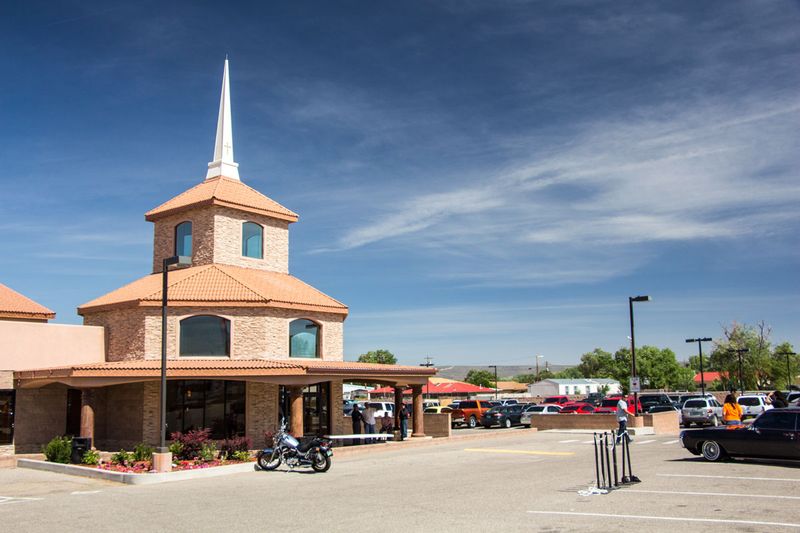
This town does not bother dressing itself up for tourists, and honestly that is why I love it.
Espanola is a working town in the Rio Grande valley where the food is real, the portions are generous, and nobody is performing anything for your Instagram.
The lowrider culture here is legendary. On any given weekend afternoon, you might see gleaming custom cars rolling slowly down Riverside Drive with hydraulics and chrome that would make a grown adult cry with admiration.
Jo Ann’s Ranch O Casados on North Riverside Drive serves some of the most honest New Mexican food you will find anywhere. Their green chile is locally sourced, freshly roasted, and applied to everything with a confident hand.
Española sits at the crossroads of several major northern New Mexico routes, making it a natural pit stop that turns into a full afternoon if you are paying attention.
The town has deep roots in Spanish colonial history and the Tewa-speaking Pueblo communities that have called this valley home for centuries.
The combination of cultures shows up on every menu and in every conversation. Come with an open mind and a big appetite, and Española will absolutely deliver.
4. Chimayó
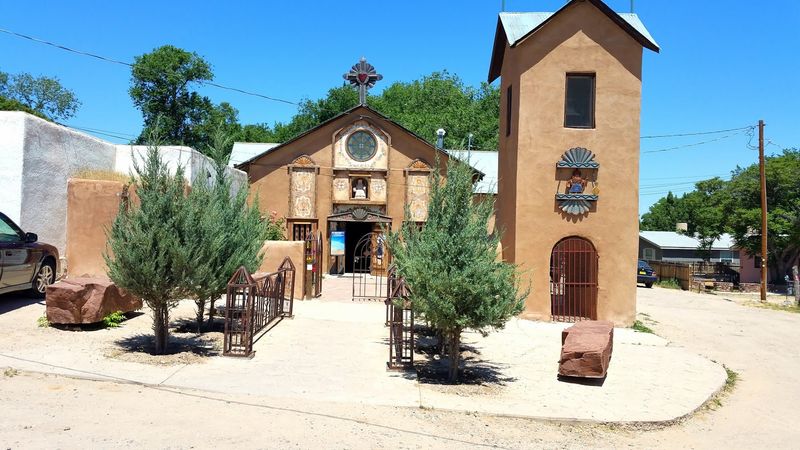
This is the kind of place that makes you go quiet. Not in a sad way, in a this-is-something-special way that you feel before you can explain it.
El Santuario de Chimayó draws thousands of pilgrims every year, particularly during Holy Week, when people walk for miles to reach this small adobe chapel tucked into the Sangre de Cristo foothills.
The sacred soil inside the church is believed by many to have healing properties, and whether or not you share that belief, the atmosphere is genuinely moving.
Right down the road, Rancho de Chimayó on County Road 98 serves traditional New Mexican food in a restored hacienda that has been in the Jaramillo family for generations.
The green chile here is grown locally in the surrounding valleys and carries a distinct flavor that chefs in bigger cities spend years trying to replicate without quite getting there.
The weaving tradition in Chimayó is also world-class. Ortega’s Weaving Shop has been operating since 1900, and the hand-woven textiles carry patterns passed down through eight generations.
Chimayó is small, deeply spiritual, and almost aggressively authentic. A few hours here will recalibrate your entire sense of what matters.
5. Las Vegas (New Mexico)
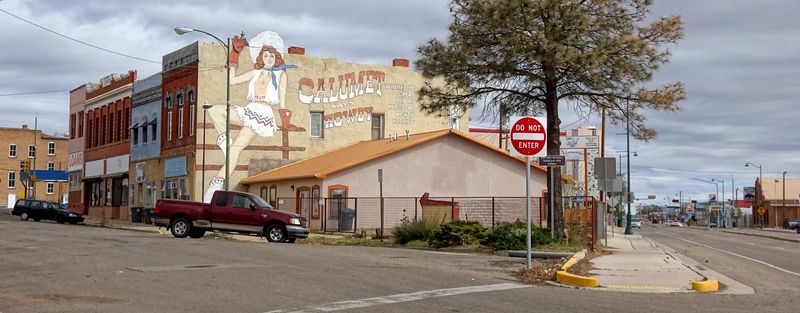
Not the one with the neon signs. Las Vegas, New Mexico is the original, and it has been quietly existing since 1835 with absolutely zero need for your slot machines.
The Plaza Hotel on the Old Town Plaza opened in 1882 and still operates today, offering a glimpse into the Victorian-era boom that hit Las Vegas when the railroad arrived.
What surprises most visitors is the architectural variety here. You get adobe alongside Italianate storefronts, and somehow it all makes sense together.
The Charlie Restaurant inside the Plaza Hotel serves green chile in a setting that feels like a period film set, except the food is completely current and very good.
Las Vegas sits along the Gallinas River and serves as the gateway to the Sangre de Cristo mountains to the west, including the Santa Fe National Forest.
The Carnegie Library building, built in 1904, still stands and still serves the community.
There are over 900 buildings on the National Register of Historic Places in Las Vegas, which is a staggering number for a town of under 15,000 people.
If you appreciate architecture, history, and green chile in roughly equal measure, Las Vegas, New Mexico will feel like it was designed specifically for you.
6. Truchas
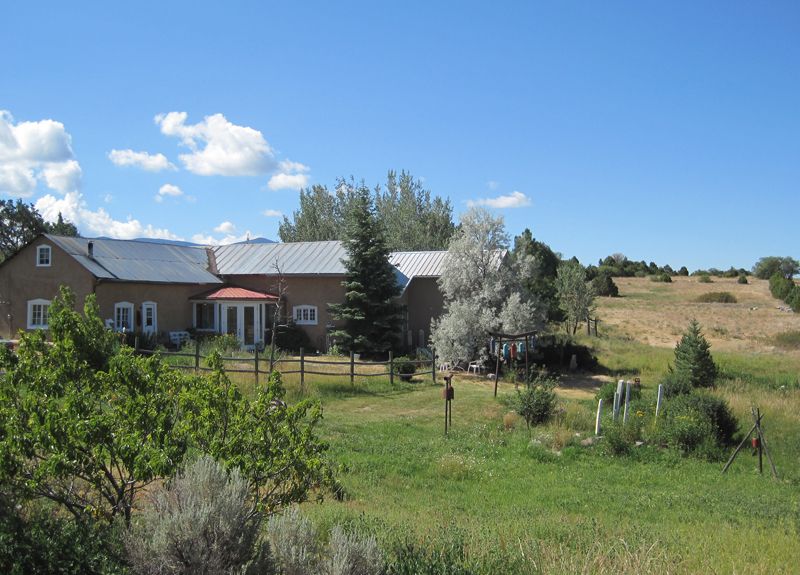
Truchas sits at nearly 8,000 feet on the High Road to Taos, and the view from the main road will stop you mid-sentence no matter what you were saying.
The Sangre de Cristo mountains rise dramatically behind the village, and the old adobe homes line a single ridge road that has changed very little in the last century.
Robert Redford filmed The Milagro Beanfield War here in 1988, and if you have seen that movie, walking through Truchas feels like stepping directly into it.
The village is small, around 1,000 residents, and the community maintains a fierce and admirable pride in its land-grant history and acequia water system.
Truchas is not a food destination in the traditional sense, but the drive through here is essential for understanding what northern New Mexico actually looks like when nobody is staging it for visitors.
Stop at the Truchas Peaks Weavers cooperative to see local artisans working traditional looms.
The landscape around the village is used for dry farming of blue corn and beans, crops that have fed families here for generations.
The green chile connection runs through every kitchen in town, quietly and without ceremony, exactly the way it should be in a place this genuine.
7. Abiquiú
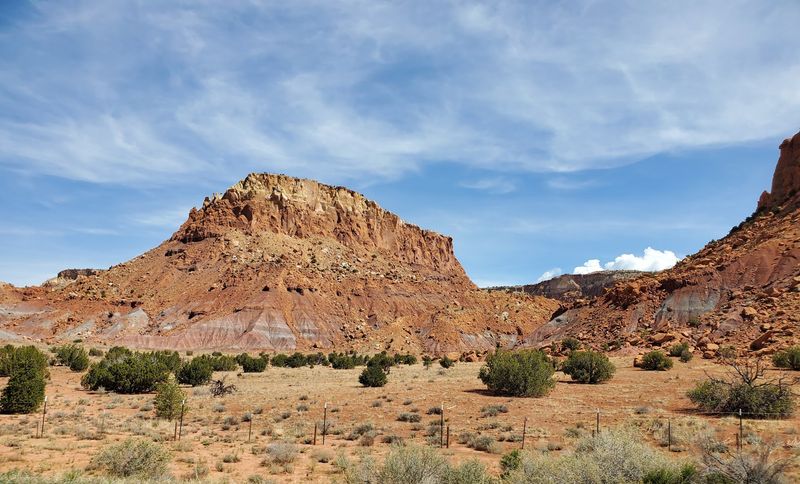
Georgia O’Keeffe saw something in Abiquiú that she could not unsee, so she bought a house there in 1945 and spent the rest of her life painting the landscape.
Standing near the red cliffs of the Piedra Lumbre valley, the decision makes complete sense.
The Georgia O’Keeffe Home and Studio on U.S. Route 84 offers tours that sell out weeks in advance, and they are worth every bit of the planning effort.
The house itself is an adobe structure that O’Keeffe modified over decades, and the garden she maintained is still tended with care.
Abiquiú Lake nearby offers fishing and kayaking against a backdrop so dramatic it feels slightly unreal.
The village of Abiquiú is a land-grant community with roots going back to 1754, and the Dar al Islam mosque, built in adobe style in 1981, is one of the most architecturally interesting structures in northern New Mexico.
The local cooking leans on green chile grown in the nearby Chama River valley, and the flavors carry the mineral richness of volcanic soil.
Abiquiú rewards the traveler who slows down enough to actually look. The landscape does not reveal itself all at once, it earns your attention gradually, and that is the whole point.
8. Socorro
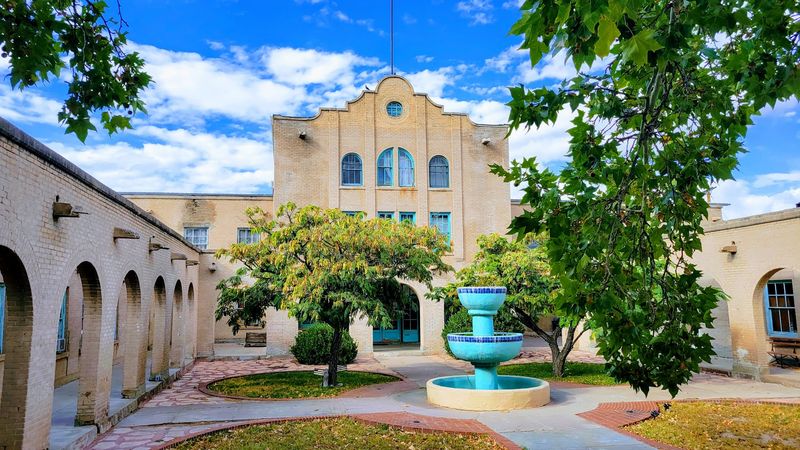
One of those old plazas that makes you want to sit down and stay for an hour longer than you planned is Socorro.
The San Miguel Mission at 403 El Camino Real NW was built in 1615 and is one of the oldest churches in the United States, which is the kind of fact that lands differently when you are actually standing in front of it.
The town sits along the Rio Grande and serves as a base for exploring the Bosque del Apache National Wildlife Refuge, where sandhill cranes arrive by the tens of thousands each winter.
The Socorro Springs Restaurant on Manzanares Avenue is a local favorite that does green chile in the straightforward northern New Mexico style, meaning no shortcuts and no apologies for the heat level.
Socorro is also home to New Mexico Tech, which brings a steady energy to the small downtown and explains the surprisingly good coffee shops and bookstores for a town of around 8,000 people.
The Very Large Array radio telescope is about 50 miles west of town on U.S. Route 60, and visiting it is one of the more genuinely mind-expanding afternoons available in the entire state.
Socorro is unpretentious, useful, and full of more character than its size suggests.
9. Hatch
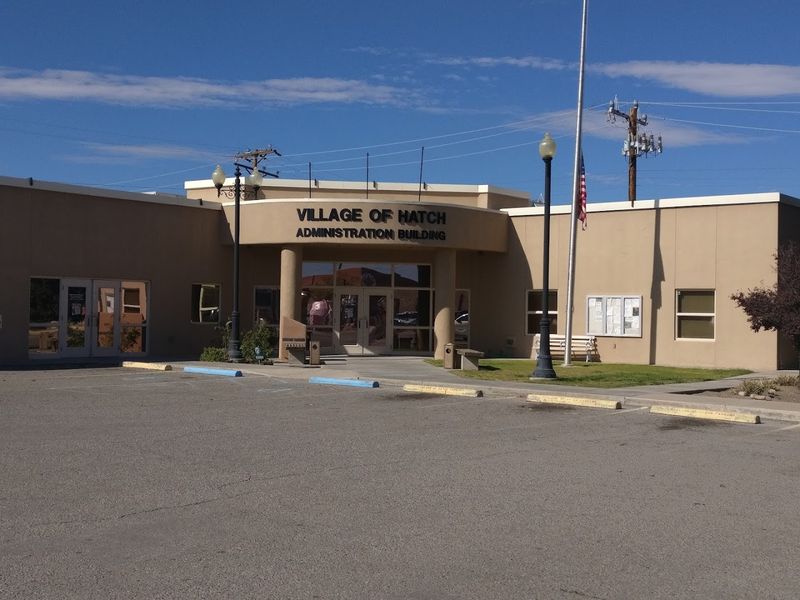
Hatch calls itself the Chile Capital of the World.
After spending a September morning watching roasting drums spin over open flames while the smell of charring green chile fills every inch of air around you, I am not going to argue with that claim.
The Hatch Chile Festival happens every Labor Day weekend and draws over 30,000 visitors to a town of fewer than 2,000 people.
The streets fill with vendors, the air turns smoky and fragrant, and the entire experience borders on a spiritual event for anyone who takes their chile seriously.
Pepper Pot at 303 West Hall Street serves green chile in every form imaginable, from enchiladas to burgers to chile rellenos that are stuffed with cheese and roasted to perfection.
The Hatch Valley sits at around 4,000 feet elevation along the Rio Grande.
The combination of long hot days, cool nights, and mineral-rich soil produces a green chile with a flavor profile that farmers and chefs have been chasing for decades.
You can buy fresh, frozen, or dried Hatch chiles at roadside stands all through harvest season, and shipping boxes home is completely normal behavior here. Hatch is not a town you visit for the architecture.
You come for the chile and you leave planning your return.
10. Mesilla
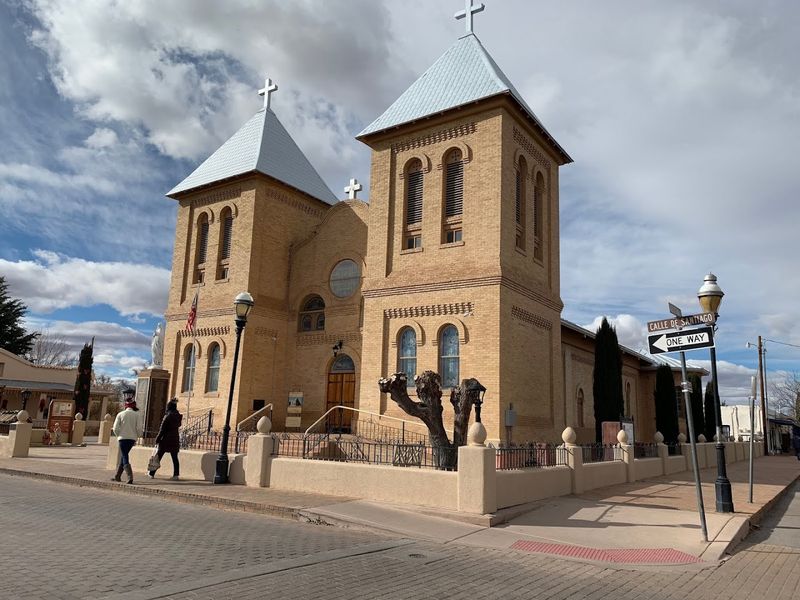
This town feels like someone pressed pause on the 1800s and forgot to press play again.
The plaza at the center of the village is surrounded by original adobe buildings that have housed shops, restaurants, and a church since before the Civil War.
The Basilica of San Albino on the plaza dates to 1851 and anchors the square with a quiet authority.
Billy the Kid was tried and sentenced to hang here in 1881, and a marker near the old courthouse notes the spot with the kind of casual historical nonchalance that only New Mexico can pull off.
Double Eagle at 2355 Calle de Guadalupe is one of the most atmospheric restaurants in the state.
It is operating out of a restored 19th-century hacienda with original adobe walls and period furnishings that make the green chile taste even better somehow.
Mesilla sits just outside Las Cruces in the Mesilla Valley, and the surrounding farmland produces some of the most reliable green chile in the state.
The village is small, walkable, and genuinely photogenic without trying to be. Weekend afternoons bring out local vendors selling everything from pottery to roasted nuts.
Mesilla moves at a pace that feels deliberately chosen, and once you spend an afternoon here, you will understand exactly why nobody seems to be in a hurry.