These 12 North Carolina Historic Homes Are Said To Be Real Paranormal Hotspots
Grab the flashlight, keep the snacks close, and do not let the person in the ascot wander off alone.
North Carolina has historic homes with enough eerie stories to keep an entire mystery-solving gang busy.
Every creaking floorboard suddenly sounds suspicious, and one badly timed shadow can turn a confident visitor into the fastest runner in the group.
Of course, there is probably a perfectly logical explanation. At least, that is what everyone says right before something moves in the next room.
Centuries of history have left these houses surrounded by rumors that refuse to disappear. Visitors continue to report unsettling moments, while old legends keep gaining new chapters.
Perhaps every mystery ends with a loose shutter and a grumpy caretaker wearing a disguise. Perhaps it does not.
Either way, these 12 North Carolina homes are ready for a closer look. Just remember the most important rule of paranormal investigation: never split up.
1. Mordecai House
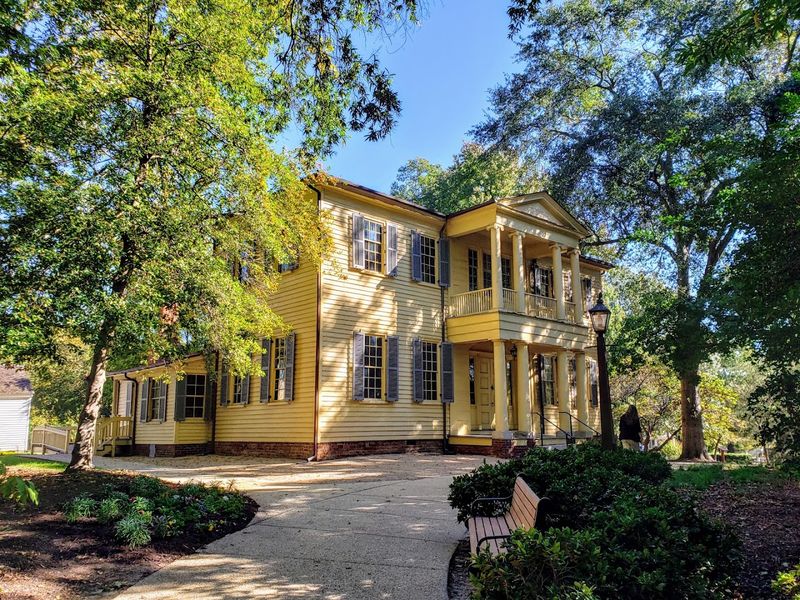
Raleigh’s oldest house still standing in its original location already has enough history to make the rooms feel watchful.
Built in 1785, the Mordecai House once stood at the center of Wake County’s largest plantation. Its history includes the Lane and Mordecai families, enslaved people, and freed African Americans connected to the property from the late 18th century through the 1960s.
At 1 Mimosa Street in Raleigh, the house has also become one of the city’s best-known haunted-history stops.
Local ghost lore often points to Mary Willis Mordecai Turk, a later resident whose spirit is said to appear in old-fashioned clothing or be connected to mysterious piano music.
Strange Carolinas reports that the house appeared on Syfy’s “Ghost Hunters” and has been associated with an official paranormal investigation team. Raleigh museum programming has also explored Mordecai’s haunted history through events presented with The Ghost Guild.
That mix of real age, layered family history, and organized paranormal interest gives the house its reputation.
Visitors do not have to believe every story to understand why the place works so well as a ghostly setting. The rooms are old, the stories are persistent, and the house has been around long enough for silence to feel crowded.
2. Bellamy Mansion Museum
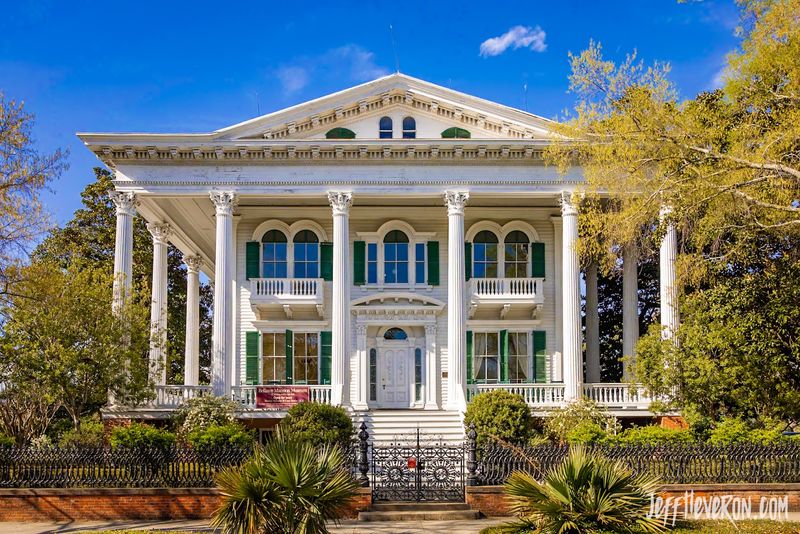
Wilmington’s grand Bellamy Mansion feels dramatic even before the ghost stories arrive.
Built between 1859 and 1861, the 10,000-square-foot mansion at 503 Market Street contains 22 rooms and is considered one of North Carolina’s major architectural treasures.
Skilled enslaved workers and local free Black artisans completed much of the construction for Dr. John D. Bellamy, and Federal troops later used the house as headquarters after Fort Fisher fell in 1865.
Those facts alone give the mansion a heavy historic presence.
Reported noises, sightings, and overnight investigations have contributed to the Bellamy Mansion’s paranormal reputation. Haunted Rooms America has promoted ghost-hunting events at the property, citing claims of unexplained footsteps and a Victorian-era woman appearing on the fourth floor.
Bellamy Mansion’s own blog has acknowledged the public fascination with hauntings, noting that the museum has rented the site to ghost-hunting companies, while also keeping the focus on responsible history. That balance is important.
The mansion is not just a spooky shell. It is a complex historic property with preserved architecture, restored urban slave quarters, family history, military occupation, and community memory.
The ghost stories add atmosphere, but the real power comes from how much documented history still fills the place.
3. Burgwin-Wright House And Gardens
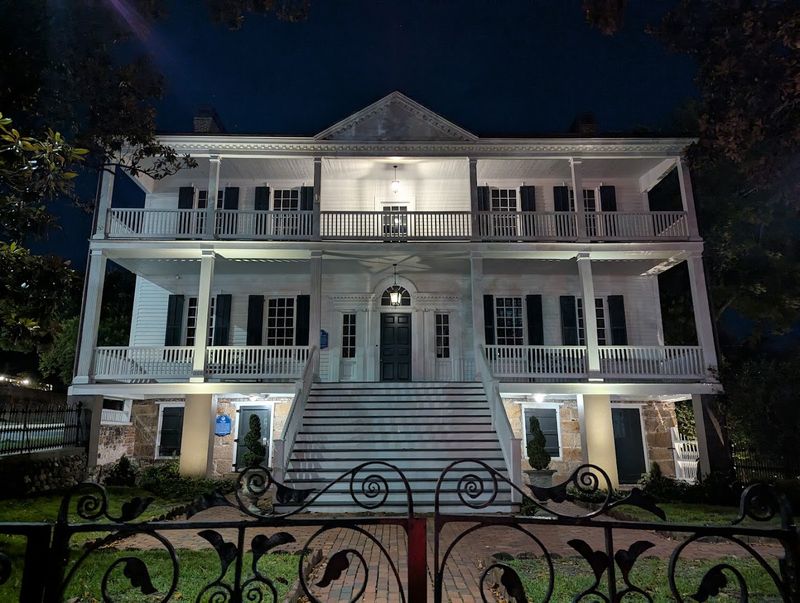
Built around 1770 at 224 Market Street, the Burgwin-Wright House rests on ballast-stone walls from Wilmington’s former city jail and still preserves outdoor and sub-basement cells dating to about 1744.
Reports of cold sensations, unexplained voices, and unsettling encounters in those older jail spaces have helped shape the property’s paranormal reputation.
The house does not need exaggerated horror to feel eerie. A refined Georgian residence built over a colonial jail already creates a strange contrast.
Upstairs, visitors see antiques, architecture, gardens, and carefully preserved domestic history. Downstairs, the older stonework reminds them that the property’s first life was much harsher.
That tension gives Burgwin-Wright its strongest paranormal pull.
4. Historic Rosedale
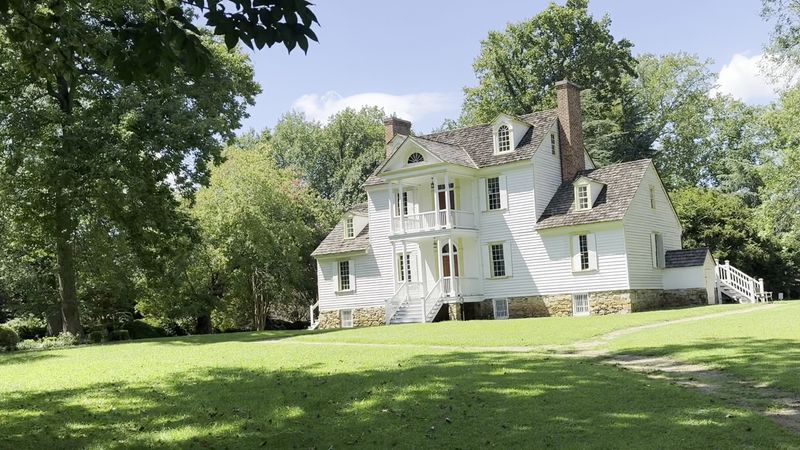
Federal-style calm makes Historic Rosedale’s paranormal reputation even more intriguing. Built in 1815 at 3427 North Tryon Street in Charlotte, the preserved house also features gardens, a reconstructed blacksmith shop, and a long family history.
Historic Rosedale has hosted Haunted History Tours and paranormal investigations with the Charlotte Area Paranormal Society.
Reports have included voices, footsteps, unusual photographs, and sightings connected to former residents, giving visitors an organized way to explore the property’s stories alongside its architecture and preservation.
Charlotte has louder attractions, but Rosedale’s mood is quieter and more patient. It feels like the kind of place where the past does not slam doors.
It waits in the corners.
5. Korner’s Folly
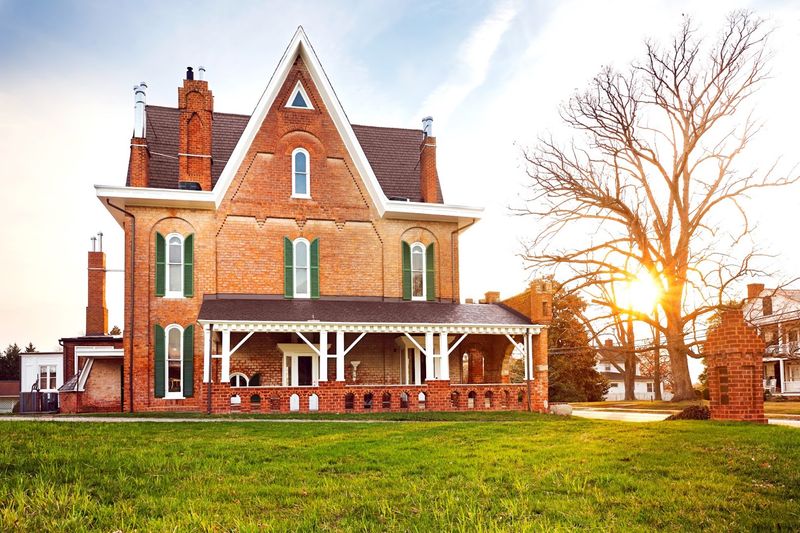
Körner’s Folly feels ready-made for unusual stories, with no two identical doorways or windows, 15 fireplaces, pivoting windows, cubbyholes, trap doors, and ceiling heights ranging from 5.5 to 25 feet.
The house at 413 South Main Street in Kernersville contains 22 rooms across three floors and seven levels, creating an interior that feels more like a puzzle than a typical home.
Its paranormal reputation grew after a 2009 investigation by the Southern Paranormal and Anomaly Research Society. Reports have since included children’s voices, footsteps, moving objects, and unexplained sounds throughout the theatrical rooms.
The home’s own personality makes those stories land differently. This is not a plain old mansion with one creaky staircase.
It is a house full of odd levels, surprise spaces, uneven sightlines, and visual tricks. If any North Carolina historic home were going to make a ghost story feel whimsical instead of purely grim, Körner’s Folly would be the one.
6. North Carolina Executive Mansion
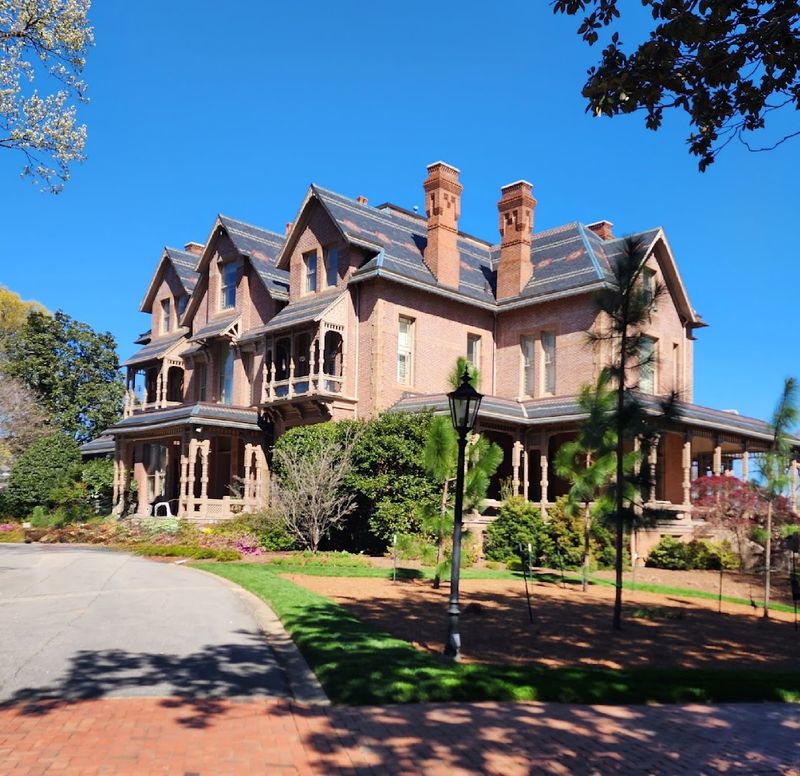
State power does not make a house immune to ghost stories. The North Carolina Executive Mansion at 200 North Blount Street in Raleigh was completed in 1891 as the official residence of the state’s governors, with DNCR noting that architects Samuel Sloan and A.G.
Bauer were involved and that prison labor helped mold bricks from Wake County clay. That official history gives the mansion a serious civic presence, but the haunted tale attached to it is oddly domestic.
Governor Daniel G. Fowle, the first governor to live there, passed away in the mansion in 1891, and later stories connect his spirit to an oversized bed.
Spectrum News reported that the haunting is believed by some to be tied to the bed in which Fowle passed, while other accounts say Governor Bob Scott heard repeated knocking around 10 p.m. after that bed was moved.
Midtown Magazine also notes the popular story that Scott believed the knocking was Fowle’s ghost wanting the bed returned, and that Governor Pat McCrory later joked about saying goodnight to the mansion’s friendly ghost.
The story is charming because it is so specific. Not a vague shadow.
Not a faceless presence. Just a former governor, a missing bed, and knocking that turned the People’s House into one of Raleigh’s strangest addresses.
7. Duke Mansion
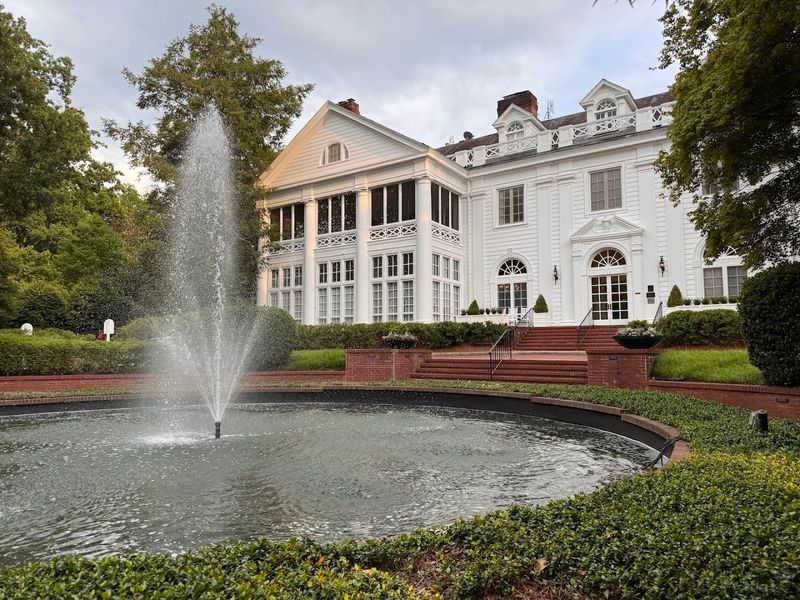
Myers Park elegance gives Duke Mansion a soft glow that makes its ghost story feel more romantic than rattling.
Built in 1915 by Zeb Taylor, the home was purchased by James B. “Buck” Duke in 1919 and later tripled in size. The Charlotte property now operates as a nonprofit historic inn, garden, and meeting space.
At 400 Hermitage Road, the house is better known for Colonial Revival beauty and Duke family history than for horror, but its haunted reputation has followed a very particular legend.
VisitNC’s haunted-trail itinerary retells the story of Jon Avery, a supposed one-time owner who fell in love with a writer and promised to meet her a year later “dead or alive.”
According to the tale, a dark figure appeared at the appointed meeting and mouthed those words before she learned he had already passed away.
The twist is worth handling carefully. Axios Charlotte has noted that records do not support the existence of an owner named Jon Avery, which makes the story folklore rather than documented history.
That does not ruin it. It actually places the tale where it belongs, in the realm of North Carolina haunted romance.
Duke Mansion remains a real historic property with a ghost story that works best as a dramatic local legend.
8. Smith-McDowell House
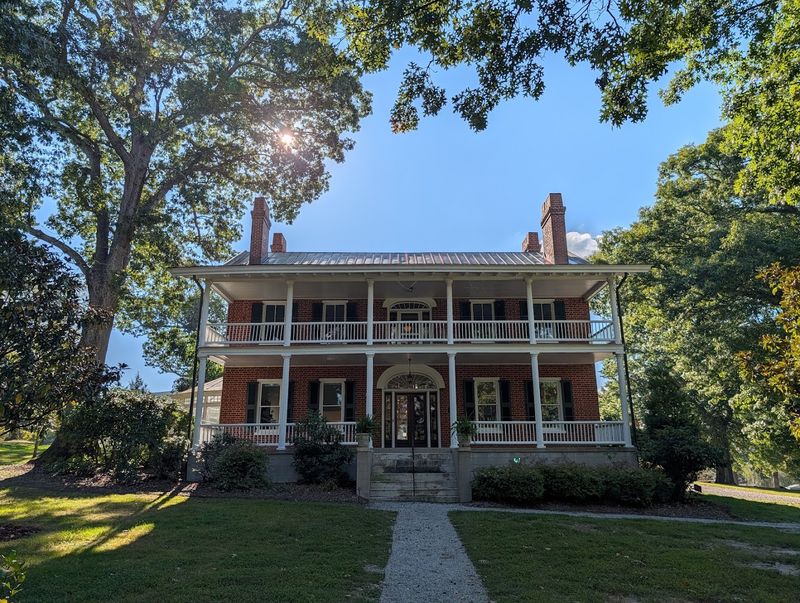
Asheville’s oldest brick home carries enough real history to make its ghost reputation feel heavy. The Asheville Museum of History welcomes visitors to the Historic Smith-McDowell House at 283 Victoria Road, on the campus of Asheville-Buncombe Technical College.
The house is tied to some of the region’s most important families and to the painful history of slavery in western North Carolina, which gives any haunted reading of the site a serious backdrop. The paranormal stories have been part of the public conversation for years.
Asheville.com reported that the Smith-McDowell House Museum partnered with the paranormal investigation team L.E.M.U.R. to examine unusual activity inside the circa 1840 mansion. Investigators concluded that the museum may have at least four resident spirits.
Southern Spirit Guide also notes a 2006 investigation by LEMUR that identified four spirits and two unidentified paranormal entities.
These accounts are paranormal claims, not verified facts, but they help explain why the house appears so often in Asheville ghost discussions. The basement, old service spaces, and layered family history often shape the stories people tell about the property.
What makes Smith-McDowell effective as a haunted stop is not jump-scare energy. It is the feeling of a house holding several versions of Asheville at once: elegant, complicated, sorrowful, preserved, and still not fully quiet.
9. Foscue Plantation House
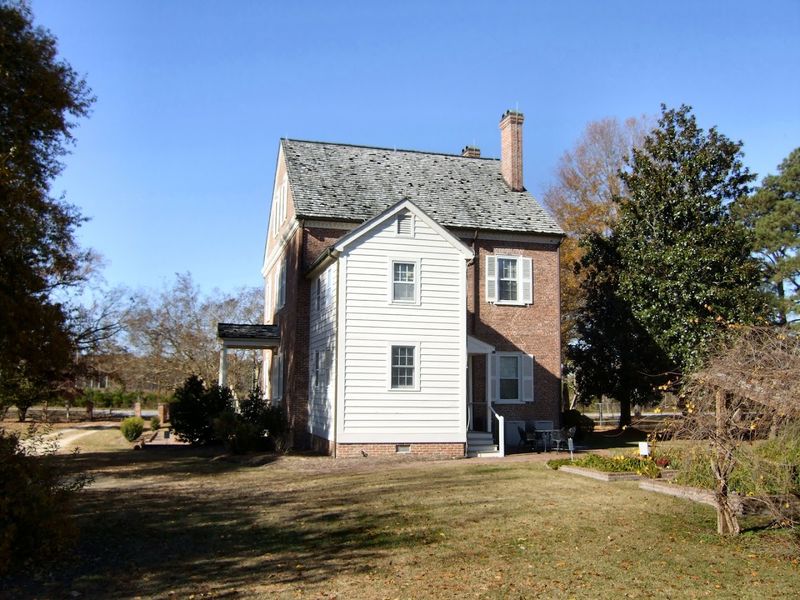
Along U.S. Highway 17 near Pollocksville, Foscue Plantation House brings coastal North Carolina history into a quieter, more isolated setting.
Foscue Plantation was added to the National Register of Historic Places in 1971. The property includes a three-story house, working basement, cemetery, gardens, forested land, former plantation grounds, and the Trent River behind the estate.
The North Carolina Coastal Land Trust says the home was built by Simon Foscue Jr. in 1824, retains many original furnishings, and sits on land tied to long-term conservation work.
The ghost stories here often lean into the plantation’s painful past, with haunted-travel accounts describing reported apparitions, chain sounds, and spirits connected to enslaved people and wartime use of the property. Those claims should be treated as lore, not confirmed history.
They also deserve a careful tone because the real history behind plantation sites involves human suffering, not just spooky atmosphere.
Foscue works as a paranormal stop because the landscape feels still, rural, and full of memory, but the story should not reduce that past to entertainment.
At its strongest, the house asks visitors to hold two truths at once: it is architecturally significant and beautiful, and its history is inseparable from the lives of people who had little choice in being there.
10. Attmore-Oliver House
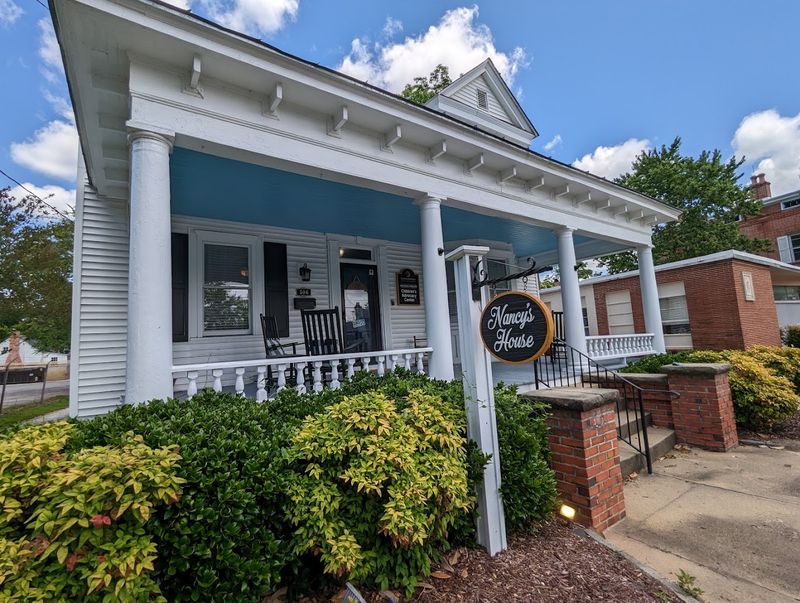
Broad Street gives the Attmore-Oliver House a classic New Bern setting, but the stories inside are not all polished and calm.
The New Bern Historical Society says Mary Taylor Oliver inherited the house in 1908, lived there until her death in 1951, and that her nephews later sold the property to the Historical Society in 1953.
The house at 511 Broad Street now serves as an important base for New Bern historical work, while other regional sources describe it as a 1790 home connected to the city’s historic district.
Paranormal lore around the house often points to former residents, unexplained activity, and stories involving Mary Oliver, who is sometimes said to still feel attached to the property.
NorthCarolinaHauntedHouses.com describes the Attmore-Oliver House as said to be haunted by multiple ghosts, possibly previous residents, with some theories tied to disease-era tragedy in the area.
That kind of story fits New Bern’s wider ghost-tour identity, where historic homes, cemeteries, waterfront streets, and colonial-era buildings all feed into the city’s haunted reputation.
The important thing is not to oversell every claim as fact. The house’s real strength is its age and continuity.
Families lived there, changed it, left it behind, and made it part of New Bern’s public history. The ghost stories simply give that continuity a colder edge.
11. Harvey Mansion / The Harvey
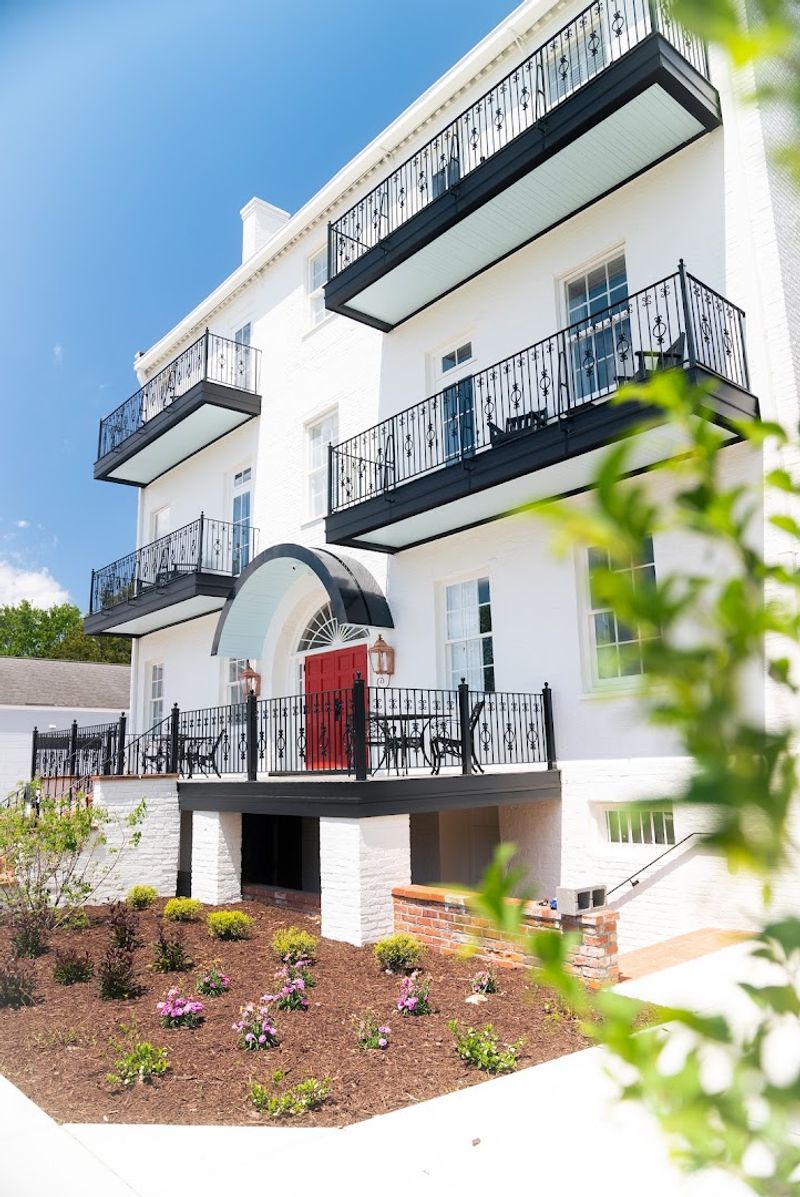
South Front Street has seen the Harvey Mansion change identities more than once, which gives its ghost stories plenty of room to gather.
The Harvey’s official site describes the property at 221 South Front Street in New Bern as a historic boutique hotel, “history reborn” after a careful transformation.
PBS North Carolina has also highlighted The Harvey as a 1790s building turned boutique hotel in New Bern, the state’s first capital. The paranormal reputation comes from a long-running place in local haunted tours.
A Cherry Point Marine Corps photo caption describes the Harvey Mansion as the most haunted stop on the Ghosts of New Bern Tour and notes a 2010 investigation by the Eastern Carolina Paranormal Instigators.
Other reports mention a woman in period clothing on the upper floors, flickering lights, and silverware moving without explanation.
As always, those details belong in the “reported” category. Still, the building’s long public life makes the lore easy to understand.
A property that has served different roles across more than two centuries can feel like it has collected echoes from each chapter.
Today, guests may see a polished boutique hotel, but the haunted-tour crowd sees something else too: a South Front Street landmark where the past keeps checking in.
12. Langdon House
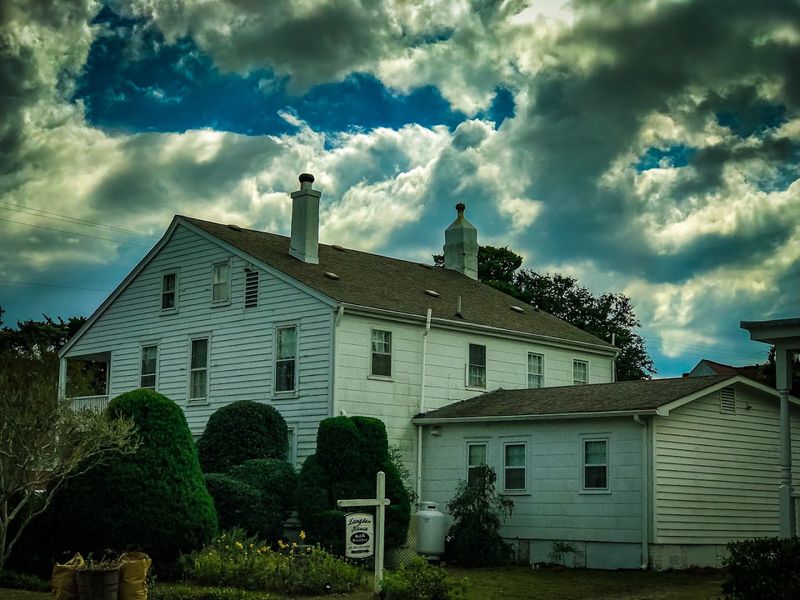
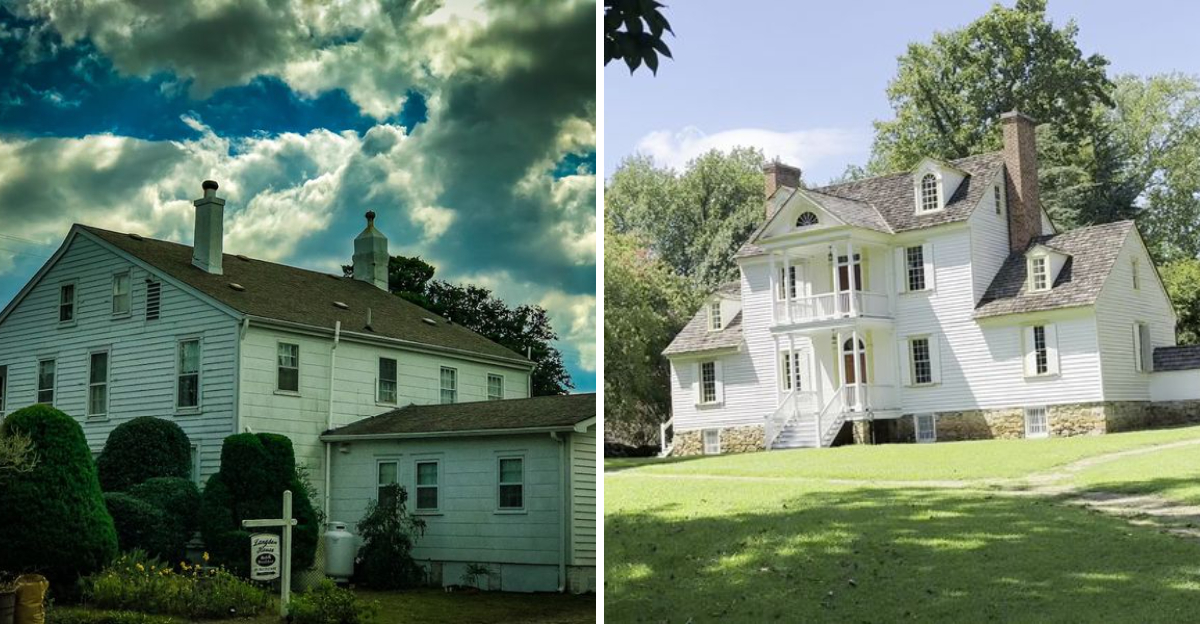
Beaufort’s salt air gives the Langdon House a softer kind of haunted mood. The inn’s official site lists the property at 135 Craven Street, on the corner of Craven and Ann streets, across from the old graveyard and Ann Street Methodist Church.
Crystal Coast tourism describes the Langdon House as furnished with antiques and carrying a sense of the late 18th and early 19th centuries. That setting alone gives the house enough atmosphere for ghost lore to settle in.
The most familiar story is the tale of Charity, a heartbroken young woman said to haunt the house after romantic loss.
Beaufort ghost-tour descriptions call her the ghostly lady of the Langdon House, while other local lore retellings describe her as a mourning figure tied to a tragic love story.
This is exactly the kind of coastal haunting that feels more sorrowful than frightening. No chains, no violent spectacle, no overdone shock.
Just an old home, a graveyard nearby, a historic port town, and a story about longing that refuses to leave. Since the Langdon House operates as lodging rather than a standard museum, visitors should respect guest privacy and experience the lore through stays, public information, or local ghost tours.
The house feels most powerful when treated as both a living inn and a keeper of Beaufort’s haunted storytelling tradition.