These North Carolina Spots Offer Bucket-List Views Anyone Can Hike To
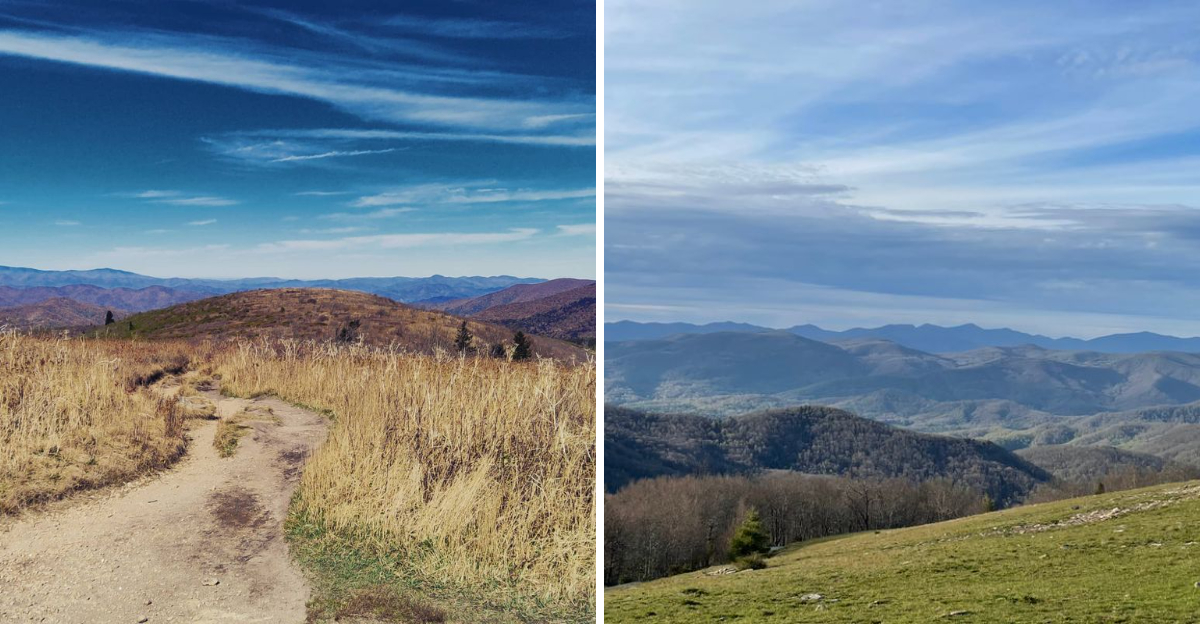
North Carolina mountains and trails hold secrets that make your heart skip beats and cameras work overtime. From waterfall hideaways to fire tower summits, the state serves up panoramic rewards without requiring mountaineering credentials or superhero stamina.
These dozen destinations prove bucket-list scenery doesn’t demand epic fitness levels or wilderness survival skills. Whether you’re chasing sunrise views from grassy balds or cooling off beneath cascading water, accessible adventures await around every ridgeline and river bend.
Pack comfortable shoes, grab plenty of water, and prepare for landscapes that’ll flood your photo library with frame-worthy shots. North Carolina hiking doesn’t get better than this collection of trails where stunning payoffs come with manageable effort.
1. Craggy Pinnacle Trail, Blue Ridge Parkway
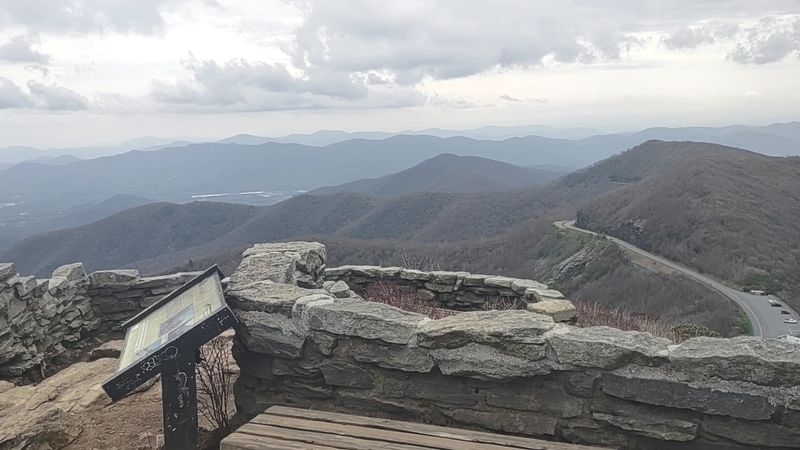
Summertime rhododendron blooms transform the mountainsides into purple wonderlands that photographers dream about all year long. Craggy Pinnacle Trail delivers this floral spectacle alongside sweeping Blue Ridge vistas that stretch toward horizons you can’t quite reach.
Located at 3641 Blue Ridge Pkwy, Barnardsville, this 0.7-mile path climbs steadily but rewards your effort with 360-degree panoramas.
The trail begins at the parking area and wastes no time gaining elevation through rocky terrain. Stone steps assist hikers through the steepest sections, making the ascent manageable for most fitness levels.
Wildflowers line the pathway during warmer months, adding bursts of color to the already scenic journey.
At the summit, exposed rock outcroppings create natural viewing platforms where mountains layer into the distance like watercolor brushstrokes. Early morning fog often fills the valleys below, creating ethereal scenes that feel plucked from fantasy novels.
Sunset visits paint the sky in oranges and pinks that photographers chase relentlessly.
Pack layers regardless of season since mountaintop temperatures drop quickly and winds pick up without warning. The short distance makes this perfect for families with energetic kids who can handle moderate climbs.
Return trips take less time, leaving energy for exploring other Blue Ridge Parkway treasures nearby.
2. Moore Cove Trail, Pisgah National Forest
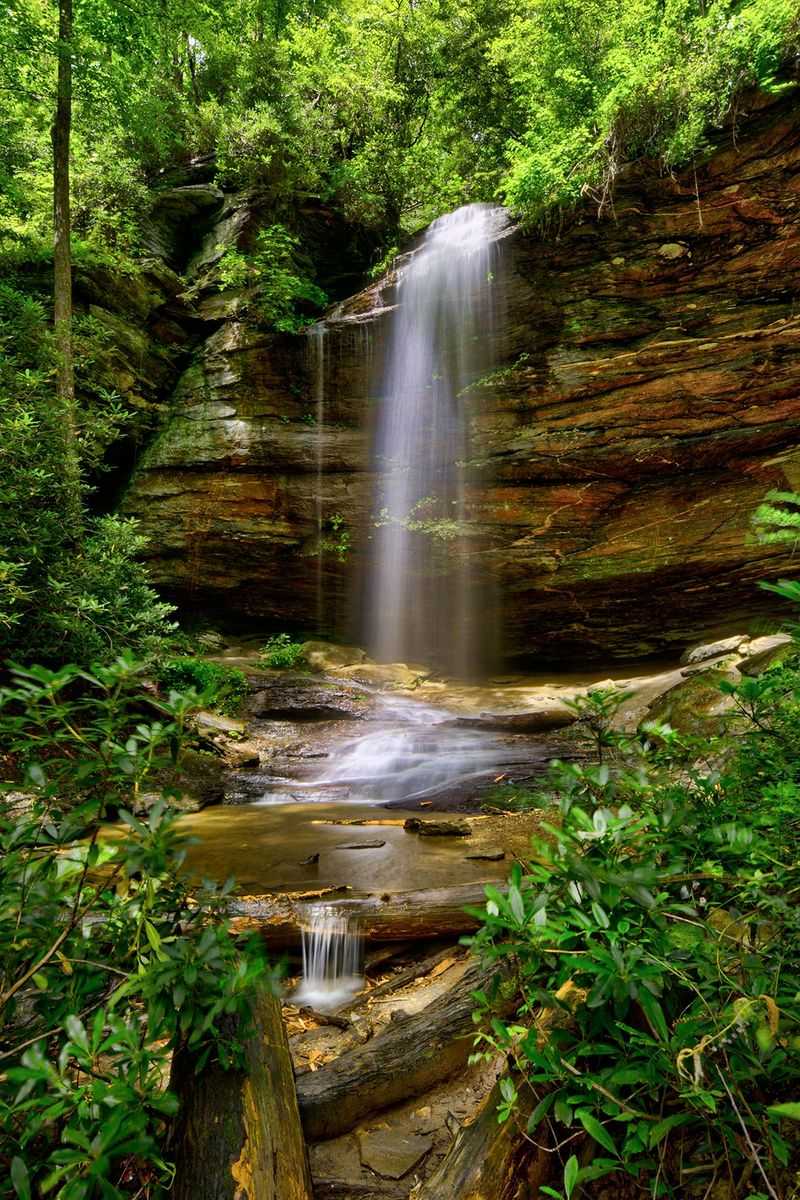
Walking behind waterfalls sounds like bucket-list material reserved for tropical destinations or adventure travel packages. Moore Cove Trail at US-276, Brevard, delivers this experience through a gentle 0.7-mile path that even hiking beginners tackle confidently.
The trail follows a creek through hemlock forests where shade keeps temperatures comfortable during summer months.
Minimal elevation change makes this route accessible for young children and older adults seeking waterfall magic without strenuous climbs. The pathway stays well-maintained with occasional roots and rocks requiring basic attention.
Creek sounds accompany hikers throughout, creating natural soundtracks that drown out everyday worries.
The destination reveals itself as a 50-foot waterfall spilling over a rock overhang into a shallow pool below. During drier seasons, you can walk completely behind the falling water into a cave-like alcove.
Moss-covered rocks and ferns create lush surroundings that feel transported from Pacific Northwest landscapes.
Photographers love the soft light filtering through the falls and the unique perspectives available from behind the water curtain. Mist from the cascade cools the area noticeably, making this a refreshing summer destination.
Visit after rainstorms for maximum water flow, though the trail can become muddy and slippery in wet conditions, requiring extra caution.
3. Toms Creek Falls, Marion
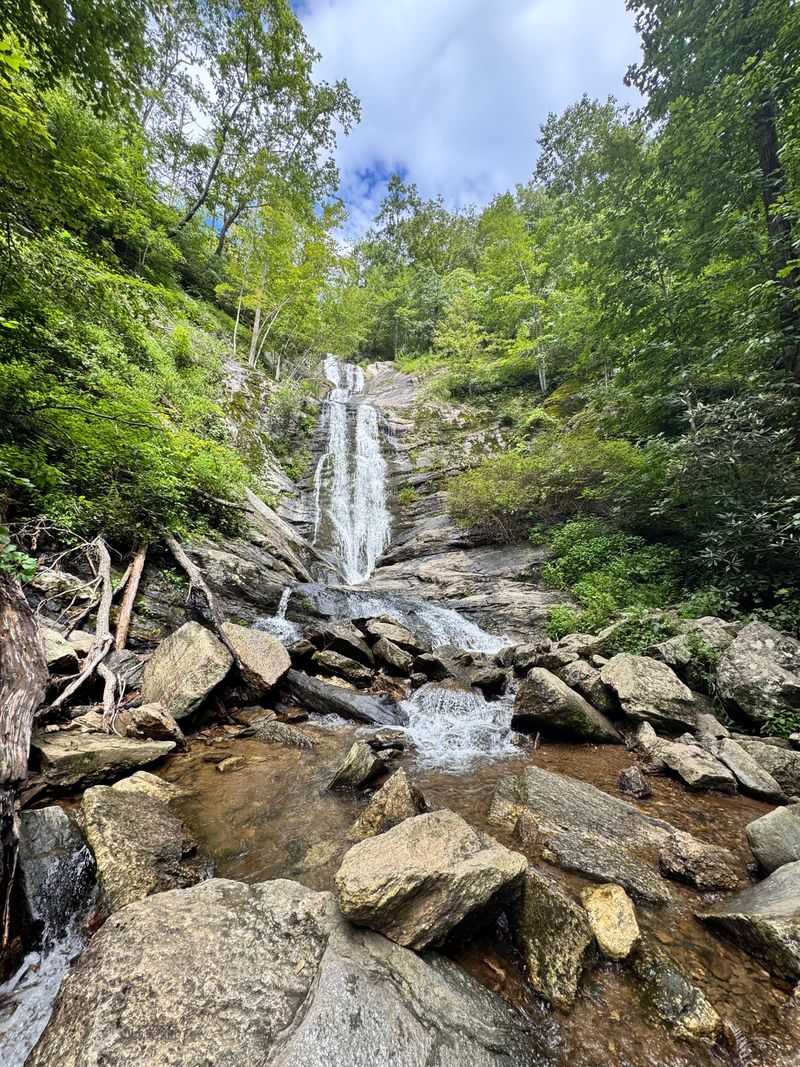
Roadside waterfall access sounds too good to be true until you discover Toms Creek Falls near Marion, at 1250 Huskins Branch Road. This 80-foot cascade tumbles down layered rock faces visible from the parking area, though a short walk gets you closer to the action.
Located off Old NC Highway 105, the falls sit conveniently near the community, making spontaneous visits entirely possible.
The approach trail measures barely 0.1 miles, making this North Carolina’s easiest waterfall hike by considerable margins. Families with strollers and visitors with mobility concerns appreciate the minimal effort required.
Wooden viewing platforms provide stable spots for photos and waterfall admiration without scrambling over rocks.
Multiple tiers create visual interest as water bounces and slides down the mountain face. During spring runoff and after heavy rains, the falls roar impressively and spray mist across the viewing area.
Drier summer months reduce the flow but reveal more of the interesting rock formations underneath.
Surrounding vegetation frames the falls beautifully, with mountain laurel and rhododendron adding seasonal color. The compact nature of this destination makes it perfect for combining with other area attractions during day trips.
Parking accommodates several vehicles but fills quickly on weekends when word spreads about this accessible gem worth every easy step.
4. Log Hollow Falls, Transylvania County
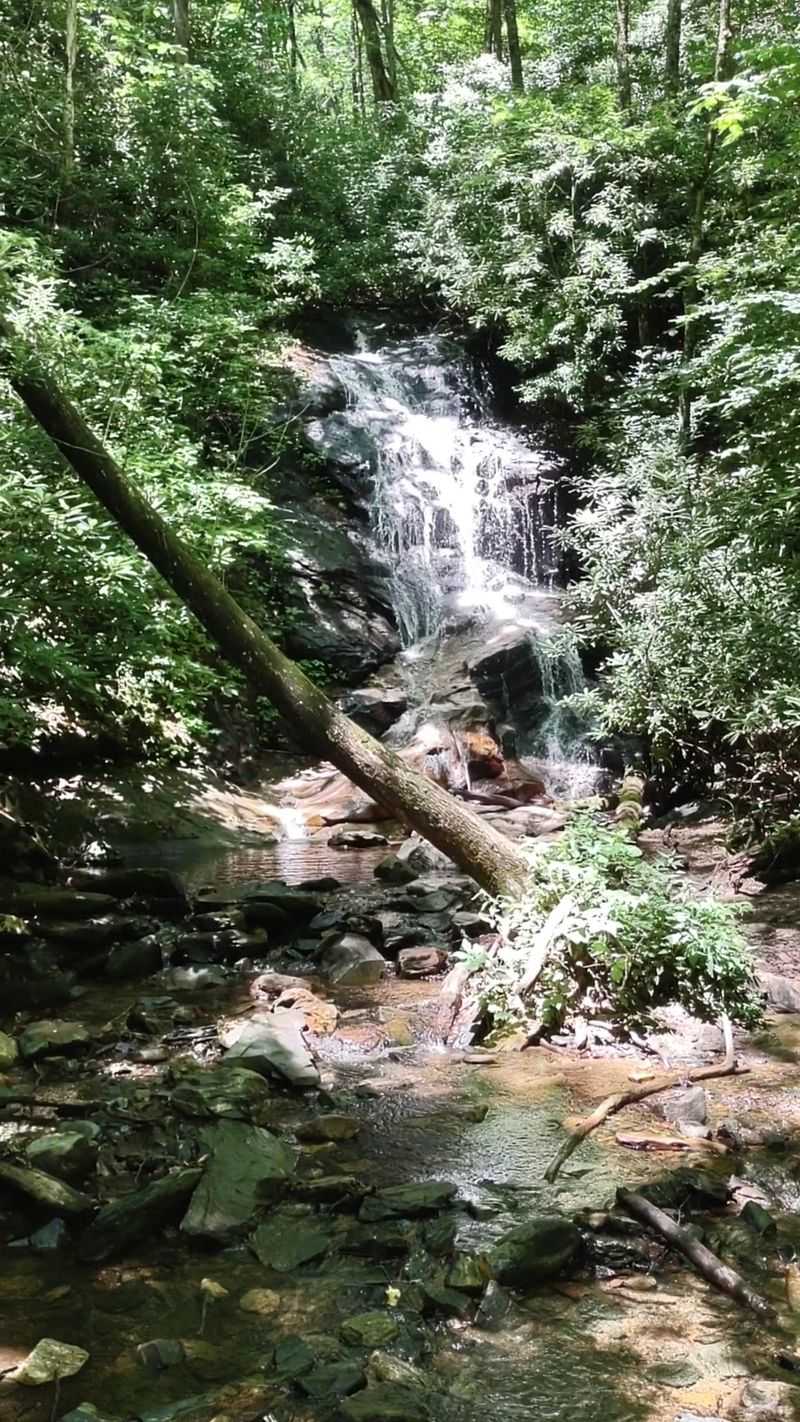
Hidden waterfall treasures reward those willing to venture slightly off beaten paths without committing to wilderness expeditions. Log Hollow Falls at National Forest Rd, Brevard, offers exactly this balance through a 0.8-mile trail that feels adventurous while remaining accessible.
The trailhead sits along Forest Road 475B, requiring careful navigation but delivering solitude many popular waterfalls lack.
The path follows an old logging road initially before narrowing into a traditional forest trail. Gentle downhill grades on the approach mean uphill work awaits on the return, though nothing too demanding.
Creek crossings add minor challenges during high water but typically require simple rock-hopping.
Log Hollow Creek creates a 40-foot waterfall that spills into a deep pool surrounded by boulders and fallen logs. The amphitheater-like setting focuses attention on the falls while providing numerous spots for sitting and soaking in the scene.
Swimming opportunities exist for brave souls willing to test the chilly mountain water temperatures.
Fewer crowds mean more wildlife sightings and peaceful moments that crowded trails never deliver. Salamanders frequent the creek edges while birds flit through the canopy overhead.
The relatively unknown status keeps this waterfall pristine and unspoiled, though responsible visitors always practice leave-no-trace principles to maintain its special character for future explorers.
5. Neuse River Trail, Raleigh to Clayton
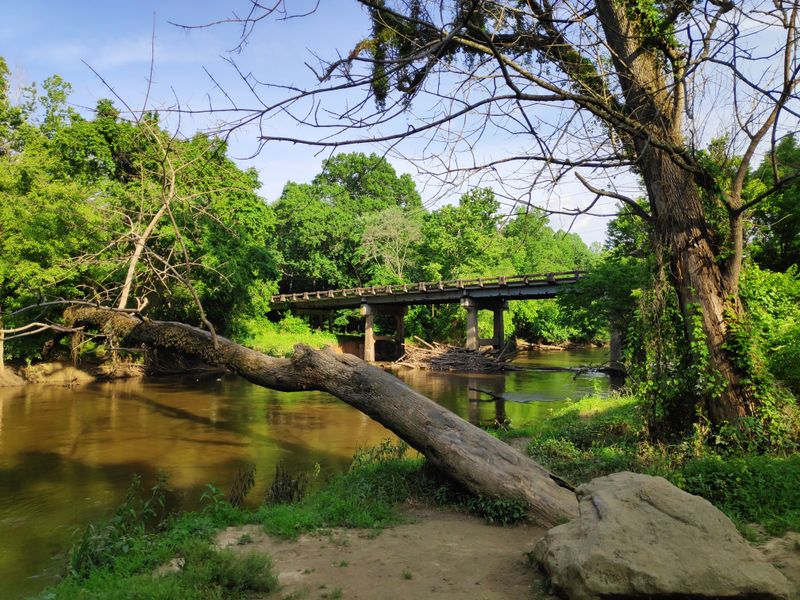
Urban trail systems prove you don’t need mountain elevation to score memorable outdoor experiences and satisfying exercise. The Neuse River Trail stretches 27.5 miles from Raleigh to Clayton, offering paved pathways perfect for walking, running, and cycling.
Starting points include E. Milbrook Road in Raleigh, with multiple access locations allowing customized distance adventures.
The greenway follows the Neuse River through diverse ecosystems ranging from hardwood forests to open meadows. Flat terrain makes this accessible for all fitness levels and abilities, including wheelchair users and families with young children.
Benches and rest areas appear regularly, providing spots for water breaks and river watching.
Wildlife viewing opportunities abound despite the proximity to urban development. Herons stalk fish in shallow waters while turtles sun themselves on logs.
Spring brings migrating birds and blooming wildflowers that add color and interest to every outing.
The trail connects parks, neighborhoods, and nature preserves, creating a green corridor through the Triangle area. Bridges cross tributaries and wetlands, offering elevated perspectives on the river ecosystem.
Morning and evening hours attract the most users, though midday visits provide more solitude for contemplative walks.
Well-maintained surfaces and clear signage make navigation simple even for first-time visitors. Distance markers help track progress while planning turnaround points for out-and-back adventures that match available time and energy levels perfectly.
6. Occoneechee Mountain Loop Trail, Hillsborough
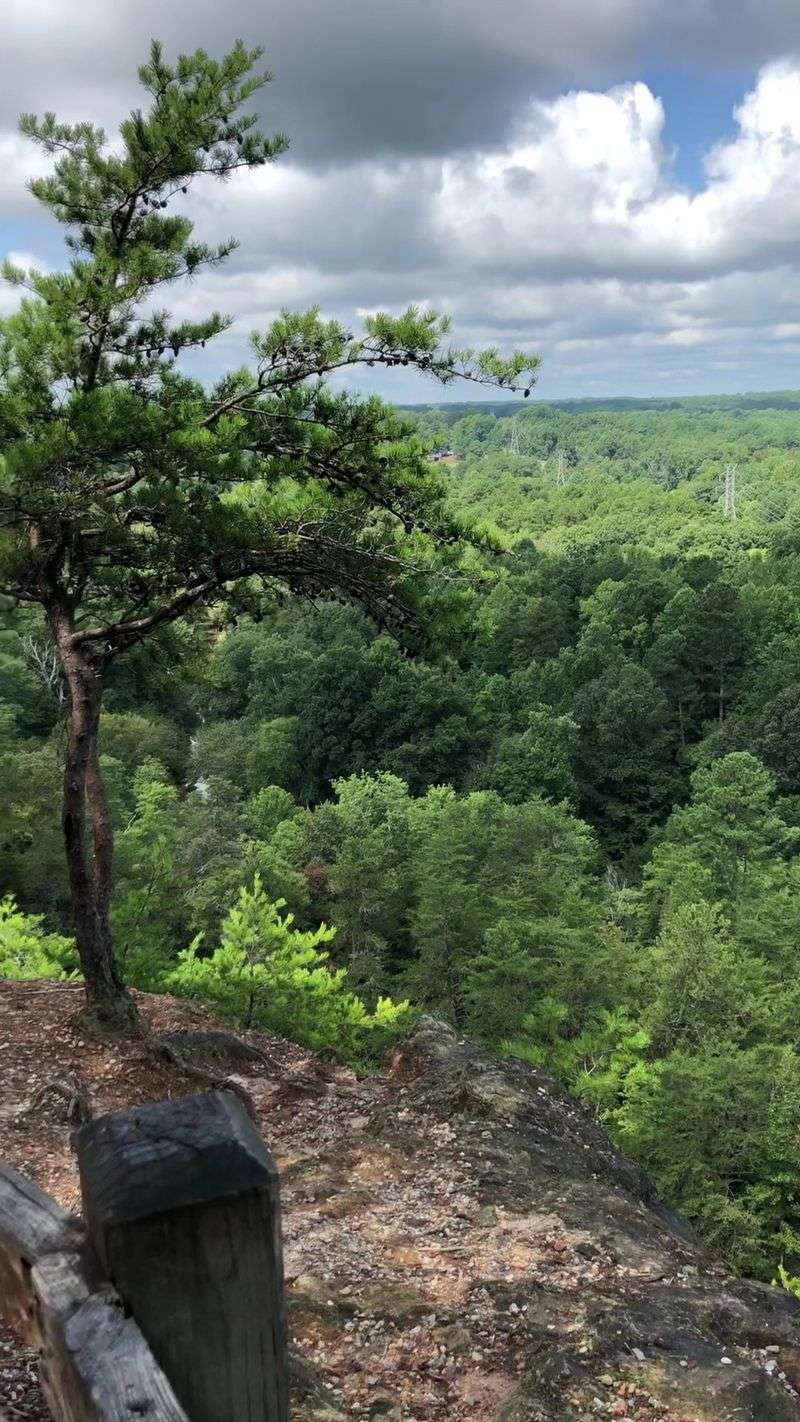
Climbing the highest natural point in Orange County sounds intimidating until you learn the summit sits at just 867 feet. Occoneechee Mountain Loop Trail at 625 Virginia Cates Road in Hillsborough packs impressive views into a 2-mile loop that challenges without overwhelming.
The trail winds through diverse habitats ranging from bottomland forests to rocky ridgetops.
Initial climbing through switchbacks gets hearts pumping but prevents the brutal straight-up slogs that discourage casual hikers. Native wildflowers and interesting rock formations provide excuses for strategic rest stops that double as nature appreciation moments.
The well-marked path prevents wrong turns even when multiple trails intersect.
Summit views stretch across the Piedmont landscape toward distant horizons that surprise first-time visitors expecting limited vistas. Eno River winds through valleys below while development patterns reveal human impacts on the land.
Interpretive signs share information about the mountain’s geological and cultural history, including its significance to indigenous peoples.
The descent follows a different route, creating loop variety that beats retracing steps. Quarry remnants tell stories of the mountain’s industrial past when stone extraction shaped the landscape.
Spring ephemeral wildflowers carpet the forest floor before tree canopy leafs out and blocks sunlight.
This state natural area protects rare plant species and provides important wildlife habitat despite its compact size and proximity to town, proving conservation matters at every scale.
7. Jomeokee Trail, Pilot Mountain State Park, Pinnacle
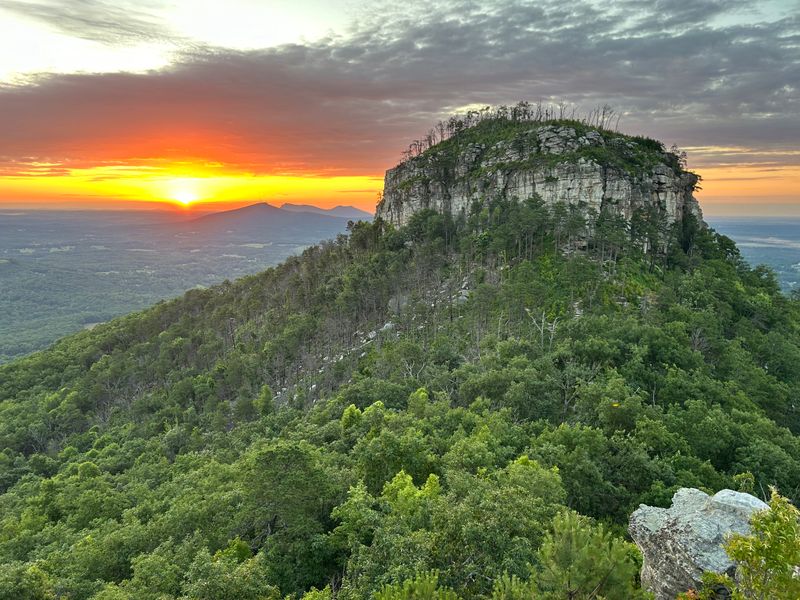
Distinctive rock formations visible for miles around create landmarks that guide travelers and inspire legends across generations. Jomeokee Trail at 1792 Pilot Knob Park Road, Pinnacle, loops around the iconic knob that gives Pilot Mountain its name and navigational significance.
The 0.7-mile path circles the summit area, providing constantly changing perspectives on the distinctive quartzite peak.
Moderate difficulty comes from rocky terrain rather than extreme elevation changes, keeping this accessible for most hikers. The trail passes through mountain laurel thickets that explode with pink blooms during late spring.
Exposed sections offer panoramic views across the Piedmont and toward the Blue Ridge Mountains on clear days.
The Big Pinnacle rises dramatically above the trail, its sheer rock faces attracting rock climbers who appear as tiny dots on the vertical walls. Watching climbers adds entertainment while you catch your breath at scenic overlooks.
The knob’s unique geology creates microclimates supporting plant species uncommon elsewhere in the region.
Native American heritage connects deeply to this mountain, which served as a landmark and gathering place for centuries. The name Jomeokee translates roughly to “great guide” or “pilot,” reflecting its navigational importance.
Sunrise and sunset transform the rock into glowing beacons that photographers and romantics chase relentlessly throughout the year.
Connecting trails allow extended adventures for those wanting more mileage after completing the summit loop around this unforgettable natural landmark.
8. Raven Rock Loop Trail, Lillington
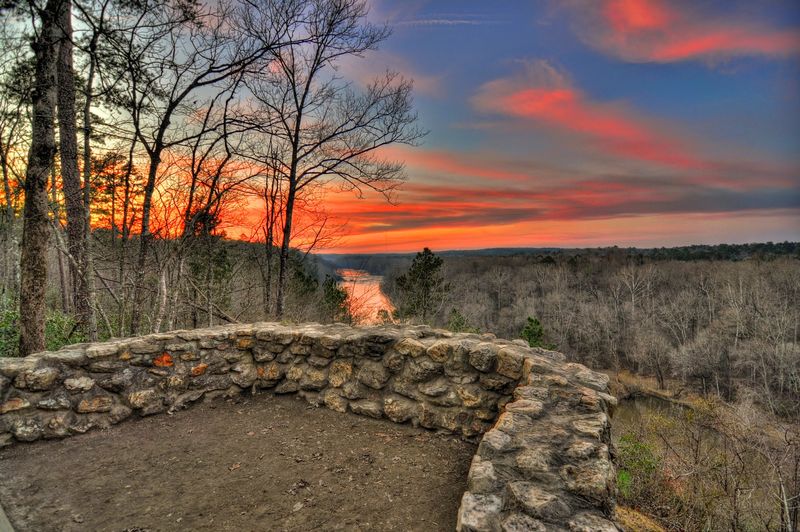
Massive rock outcroppings jutting above rivers create drama that transforms ordinary hikes into memorable adventures worth repeating. Raven Rock Loop Trail at 3009 Raven Rock Road in Lillington showcases a mile-long cliff rising 150 feet above the Cape Fear River.
The 2.6-mile loop combines riverside rambling with rocky scrambles that engage both body and mind.
The trail descends from the parking area through mixed hardwood forests where seasonal changes paint the canopy in ever-shifting colors. Roots and rocks require attention but nothing technical or dangerous for careful hikers.
The path splits with options for different routes, though the main loop provides the best overall experience.
Raven Rock itself commands attention as an imposing geological feature that seems transported from western landscapes. The exposed crystalline rock face towers above the river, creating microclimates where unique plants cling to tiny crevices.
River views from the base of the cliff offer perspectives that make you feel pleasantly small.
Fishing opportunities attract anglers to the Cape Fear’s waters while hikers explore upstream and downstream. Wildflowers bloom in seasonal waves, with spring bringing the most dramatic displays.
The moderate difficulty rating fits most outdoor enthusiasts willing to watch their footing on uneven terrain.
This state park protects important natural communities while providing recreational access that builds appreciation for North Carolina’s diverse landscapes beyond the famous mountains that steal most attention and visitor traffic.
9. West Point on the Eno, Durham
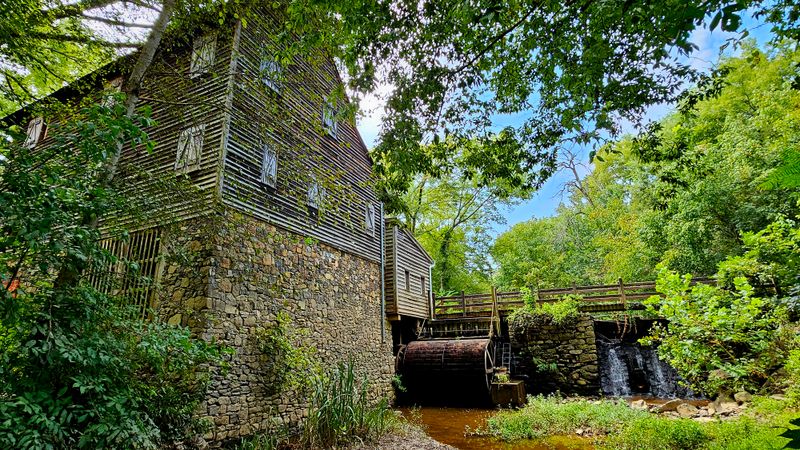
Historic mill sites surrounded by riverside trails create destinations where cultural heritage meets natural beauty in perfect harmony. West Point on the Eno at 5101 North Roxboro Road in Durham preserves a 19th-century mill complex alongside the Eno River.
Multiple trail options ranging from 0.5 to 3 miles accommodate various ambitions and available time.
The river provides constant companionship as trails wind through bottomland forests and across footbridges. Rocky shoals create small rapids that add sound and motion to the peaceful woodland setting.
Fishing spots attract anglers seeking bass and sunfish in the Eno’s clear waters.
The reconstructed mill building and historic structures transport visitors backward in time when water power drove regional economies. Interpretive displays explain milling processes and the site’s significance to local history.
Special events and festivals bring the grounds to life with demonstrations and period activities throughout the year.
Picnic areas near the mill make this perfect for combining hiking with outdoor dining and family gatherings. Children enjoy exploring the grounds and crossing bridges while adults appreciate the well-maintained trails and historical context.
Spring wildflowers and fall foliage create seasonal highlights worth planning visits around.
The compact trail system prevents getting lost while offering enough variety that repeat visits reveal new details and perspectives. This Durham treasure proves cities can protect meaningful green spaces that serve both recreational and educational purposes for diverse communities seeking outdoor connections.
10. Bearwallow Mountain Fire Tower, Gerton
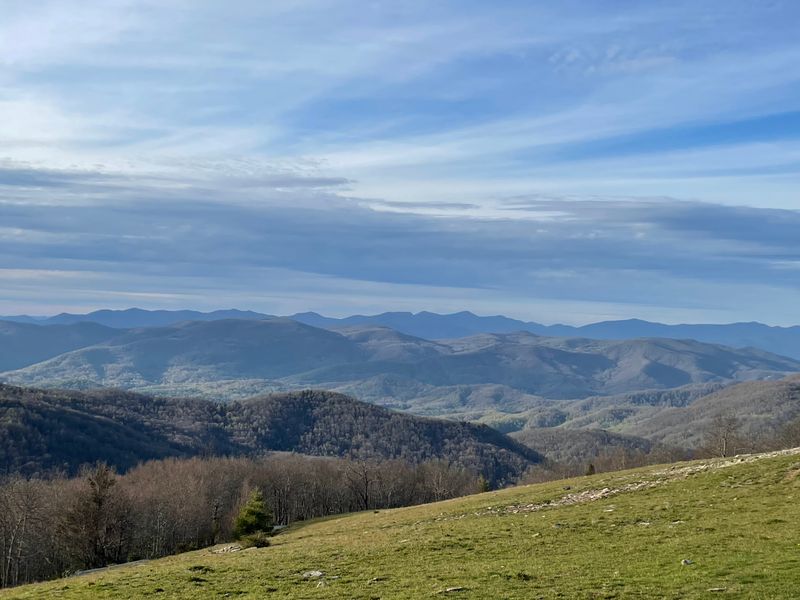
Fire towers transform ordinary summits into extraordinary viewpoints that satisfy the human need to see farther and higher. Bearwallow Mountain at 4854 Bearwallow Mountain Rd, Hendersonville, N features a 2-mile roundtrip trail climbing to a restored fire tower offering 360-degree panoramas.
The grassy bald summit provides stunning views even before climbing the tower stairs.
Moderate elevation gain of about 350 feet keeps this accessible while providing enough workout to feel accomplished. The trail follows an old road grade that maintains reasonable grades throughout.
Open meadows near the summit allow views to unfold gradually rather than appearing suddenly.
The fire tower rises 60 feet above the already elevated summit, lifting visitors into bird’s-eye perspectives. Climbing the stairs requires moderate comfort with heights but rewards brave souls with unobstructed vistas stretching from the Blue Ridge Parkway to downtown Asheville.
On exceptional days, visibility extends 50 miles in multiple directions.
Sunrise visits attract photographers and early risers willing to hike in predawn darkness for golden hour magic. The open summit means exposure to wind and weather, making layers essential regardless of season.
Wildflowers dot the grassy bald during growing season while winter visits offer crisp air and potential snow-dusted landscapes.
The conservation easement protecting this mountain ensures public access continues while preserving the natural character that makes Bearwallow special. This represents community-supported conservation at its finest, benefiting both people and ecosystems.
11. Flat Top Tower Trail, Moses H. Cone Memorial Park
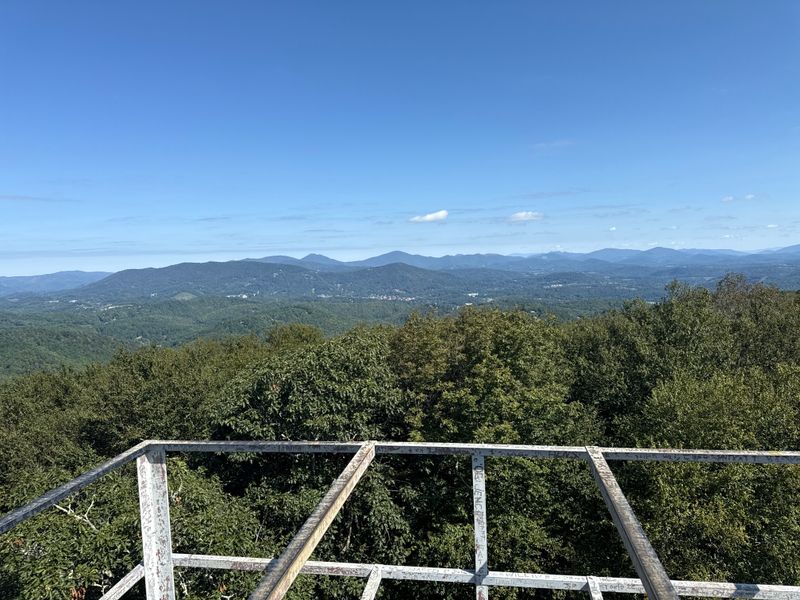
Carriage roads designed for leisurely horse-drawn travel now serve hikers seeking gentler grades and wider paths than traditional trails. Flat Top Tower Trail in Moses H.
Cone Memorial Park at The Flat Top Rd, Blowing Rock, follows these historic routes. The 5.5-mile roundtrip journey climbs gradually to a stone observation tower commanding impressive mountain views.
The wide, well-maintained path makes conversation easy while walking with companions, unlike narrow single-track trails requiring single-file hiking. Gentle grades accommodate varying fitness levels, though the distance requires reasonable endurance.
The carriage road passes through mixed forests and open meadows where wildflowers bloom seasonally.
Flat Top Tower stands as a stone sentinel at 4,558 feet elevation, providing panoramic views that justify every step. The structure’s solid construction has withstood decades of weather while serving generations of visitors.
Climbing the tower stairs adds extra elevation for even more expansive vistas stretching across multiple mountain ranges.
The Cone estate history adds cultural interest to the natural beauty, with the manor house visible from certain trail sections. Moses Cone’s textile fortune funded the estate’s development and the carriage road system that now serves public recreation.
Bass Lake sits near the trailhead, offering additional exploration opportunities before or after tower adventures.
This Blue Ridge Parkway destination combines accessibility with substantial mileage, satisfying hikers wanting meaningful distance without technical challenges or extreme elevation changes that limit participation.
12. Black Balsam Knob Area, Blue Ridge Parkway
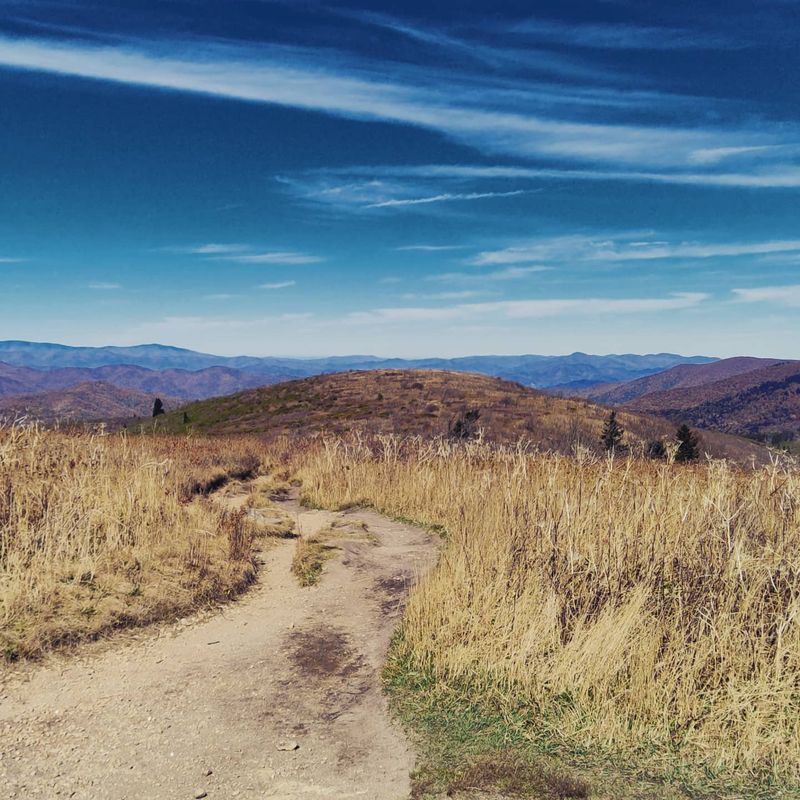
Grassy balds create rare ecosystems where treeless summits offer unobstructed views that mountain lovers crave desperately. Black Balsam Knob area, at Black Balsam Knob Rd, Canton, provides multiple trail options exploring these distinctive landscapes.
The shortest route covers just 0.8 miles to the 6,214-foot summit, while longer loops extend adventures across neighboring balds.
Parking at the Black Balsam trailhead puts you already above 6,000 feet, minimizing elevation gain required to reach stunning viewpoints. The Art Loeb Trail traverses the area, connecting multiple peaks and creating opportunities for customized distances.
Wide-open terrain means few navigational challenges despite the high elevation.
Views extend across endless mountain waves that appear to roll toward distant horizons like frozen ocean swells. Sunrise and sunset paint these landscapes in colors that cameras struggle to capture accurately.
Wildflowers, including flame azalea, create orange explosions across the balds during peak blooming periods.
Wind exposure requires appropriate clothing layers since the weather changes rapidly at this elevation. The lack of tree cover means no shade during the summer months when sun protection becomes essential.
Winter visits demand serious preparation as conditions turn harsh quickly with ice, snow, and dangerous wind chills.
The relatively easy access attracts crowds during peak seasons and ideal weather windows. Weekday visits and shoulder seasons provide more solitude for those seeking peaceful communion with these remarkable high-elevation landscapes that define North Carolina mountain magic perfectly.