These 10 Remote Kentucky Stargazing Spots Have Skies So Dark The Milky Way Steals The Show
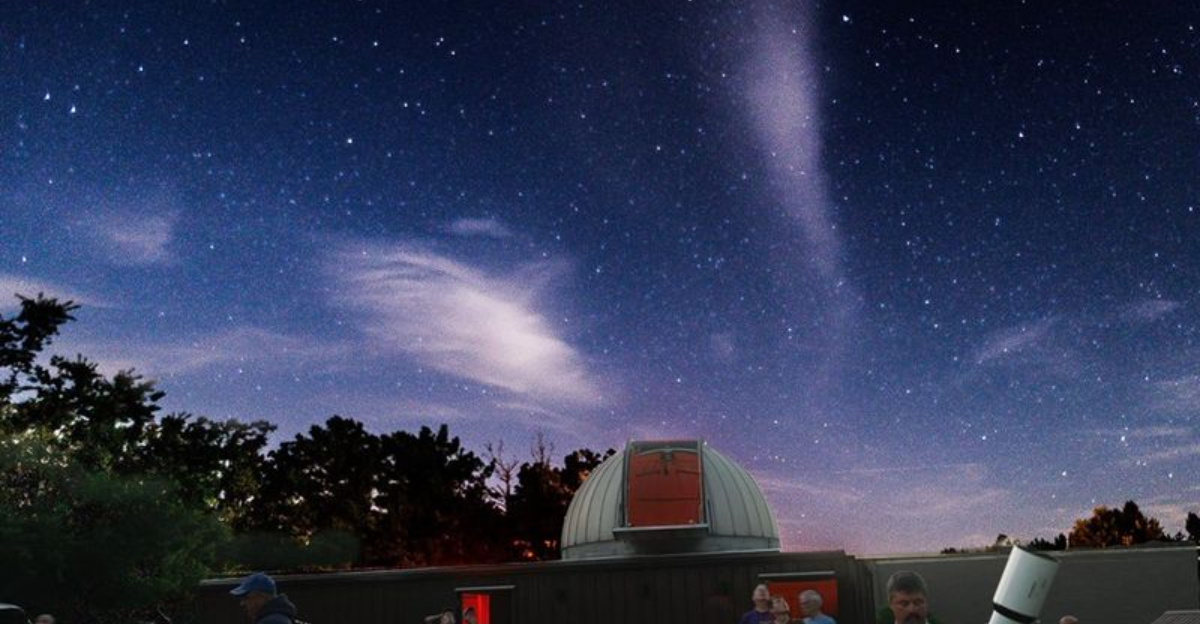
Most of us have never actually seen the night sky, not really. City glow stole it from us so slowly that nobody noticed.
Kentucky kept some places where the darkness survived, and they will ruin you for ordinary stars. Out there, the Milky Way stretches across the sky like spilled sugar.
Your eyes need twenty minutes to adjust, and then the show truly starts. Satellites drift past, meteors streak by, and the sky feels crowded in the best way.
One Kentucky park holds official international dark sky status, a rare honor east of the Mississippi. Other spots sit so deep in the hills that your phone gives up completely.
Honestly, that’s part of the charm. Pack blankets, snacks, and a thermos of something warm.
Let the kids stay up late for this one, because they’ll remember it forever. Ten spots made our list.
The universe handles the rest.
1. Mammoth Cave National Park
Few places in Kentucky earn stargazing bragging rights quite like Mammoth Cave National Park, located at 1 Mammoth Cave Parkway, Mammoth Cave, where the absence of city glow makes the night sky almost supernatural.
The park sits within a certified International Dark Sky Park, which means light pollution is kept genuinely low. On a clear night, the Milky Way arches from horizon to horizon without interruption.
That is not a figure of speech. You will actually see it stretch.
The cave system below ground is world-famous, but the sky above deserves equal billing. Ranger-led astronomy programs run seasonally and give visitors a guided look at constellations and deep-sky objects.
Even without a program, the open meadow near the visitor center makes a solid casual viewing spot.
Bring a red flashlight so you preserve your night vision. Temperatures drop fast after sunset, so layer up even in summer.
A reclining camp chair transforms the experience from neck-straining to genuinely comfortable.
Arrive early to claim a good spot before the parking area fills up. The park is large, so crowds spread out quickly.
Once the lights of the last car disappear, the silence and the stars take over completely.
2. Pennyrile Forest State Resort Park
Pennyrile Forest State Resort Park is the kind of place that rewards people who actually look up from their phones.
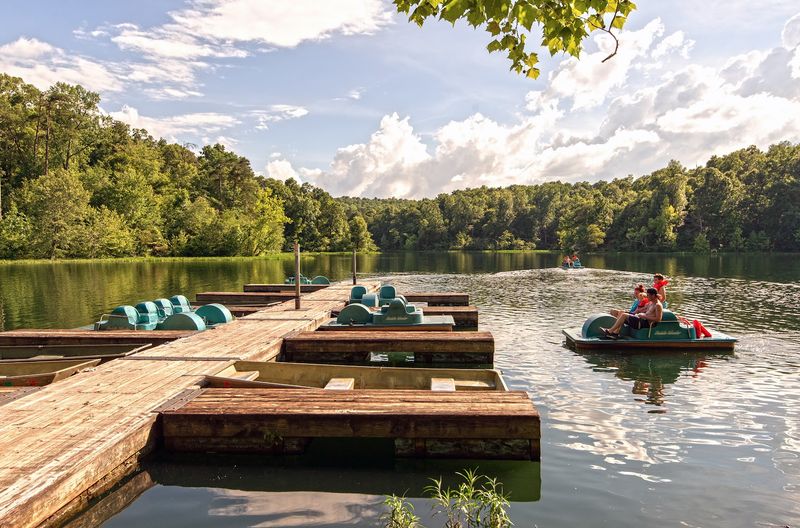
Situated at 20781 Pennyrile Lodge Rd, Dawson Springs, this park combines thick woodland with a quiet lake that doubles as a mirror for the stars above.
The forest canopy blocks ambient light from nearby roads, and the lake opens up the sky so you get a wide, unobstructed view.
On a moonless night, the reflections of stars on the water are genuinely disorienting in the best possible way. You almost forget which direction is up.
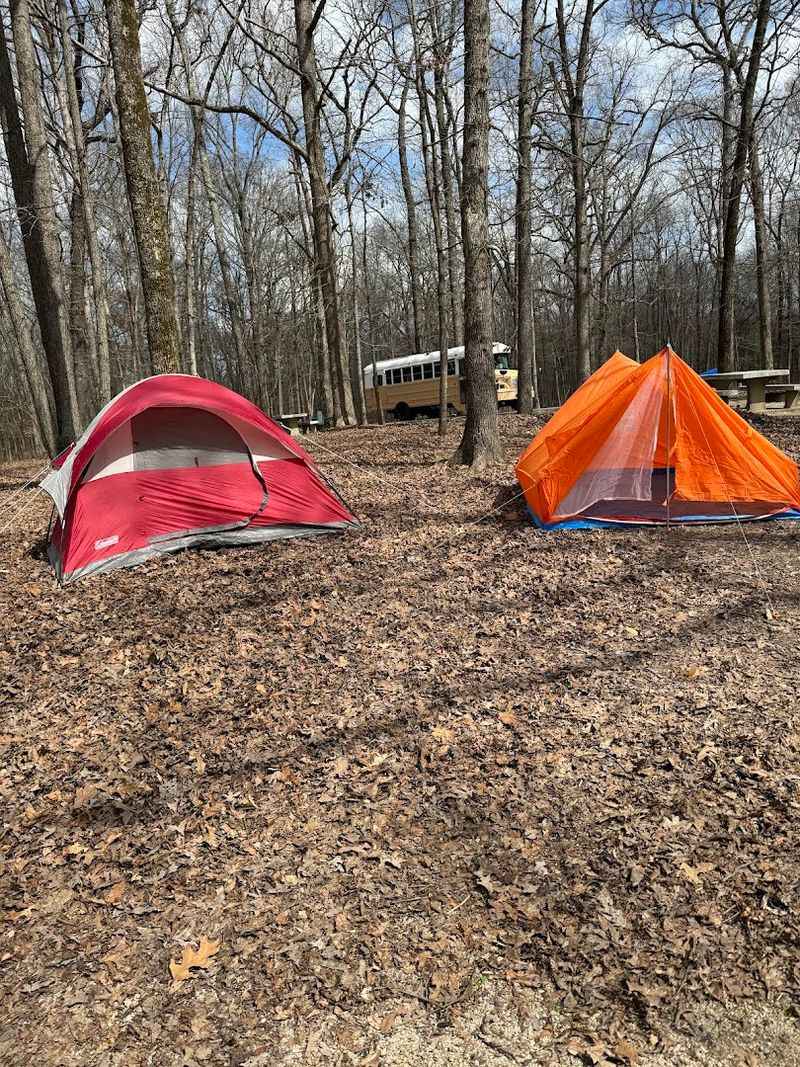
Camping here puts you right inside the experience rather than driving to it. Wake up at 3 a.m. and step outside your tent to catch the pre-dawn sky, which is often the darkest and most star-packed window of the night.
The park offers cabins and a lodge if tent camping is not your style. Either way, you are far enough from Dawson Springs to avoid meaningful light interference.
Bring binoculars at minimum because even modest optics reveal star clusters invisible to the naked eye.
Pennyrile is quiet, uncrowded, and genuinely beautiful after dark. It rewards patience and preparation with a sky worth every mile of the drive.
3. Dale Hollow Lake State Resort Park
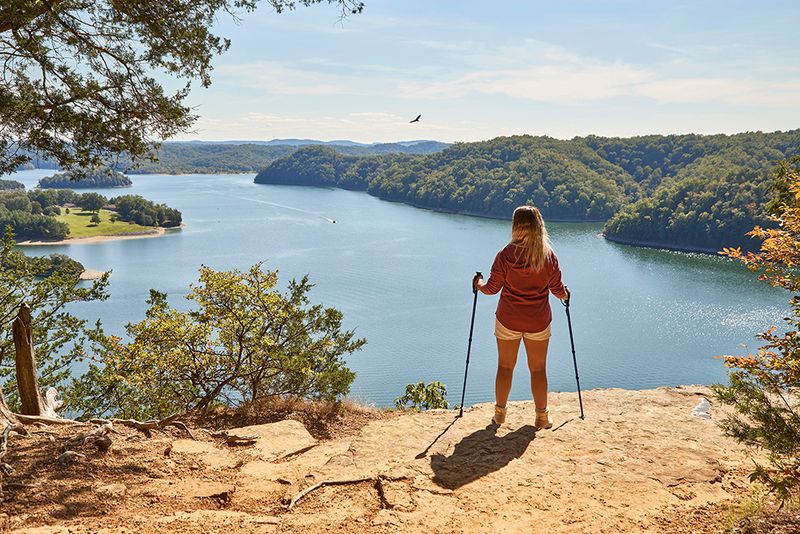
Dale Hollow Lake is already famous for its crystal-clear water, but after sunset it earns a second reputation entirely.
Dale Hollow Lake State Resort Park, at 5970 State Park Road, Burkesville, sits along one of the most remote stretches of Kentucky’s southern border, where the nearest city glow is just a faint suggestion on the horizon.
The lake itself acts like a natural amplifier for the night sky. When conditions are calm, the water reflects the stars so clearly that you end up with a sky above and a sky below.
Standing on the dock at midnight feels like floating in space, which sounds dramatic until you actually do it.
The park’s elevation and distance from major highways reduce both light and noise pollution significantly. Meteor showers look spectacular here because the wide-open lake views give you a full field of sky to watch.
The Perseids in August are a particular highlight.
Book a lakeside cabin well in advance because they fill up fast during summer. The marina area offers open sightlines without trees blocking the view.
A simple folding chair and a thermos of something warm are honestly all the gear you need for a satisfying night.
This spot proves that the best astronomy equipment is sometimes just a dark sky and a quiet place to sit.
4. Cumberland Falls State Resort Park
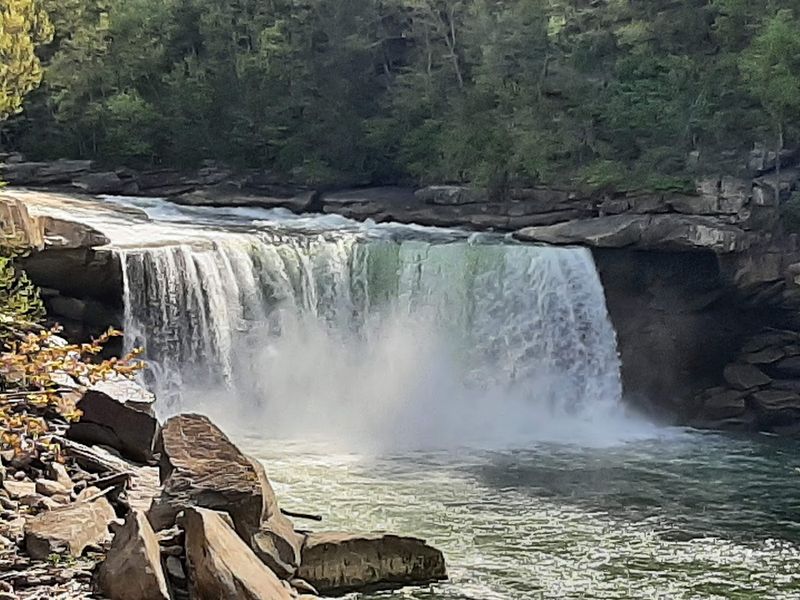
Cumberland Falls State Resort Park has a party trick that almost no other waterfall in the world can claim. On clear nights around the full moon, the mist from the falls creates a moonbow, a rainbow formed entirely by moonlight.
The park is located at 7351 Highway 90, Corbin, deep in the Daniel Boone National Forest.
Even on nights without a moonbow, the sky above Cumberland Falls is strikingly dark.
The surrounding national forest creates a massive buffer against light pollution, and the roar of the falls provides a natural soundtrack that makes the whole experience feel cinematic.
The viewing platform near the falls keeps you close to the spectacle without requiring any technical hiking.
For a more immersive experience, the trail system winds through old-growth forest that opens up at several points for clear sky views away from the mist.
The moonbow schedule is predictable and well-publicized, so check the park website for upcoming dates.
These nights draw more visitors, so arrive early if you want a prime viewing spot. On regular nights, you will likely have the area nearly to yourself.
Cumberland Falls is one of those places that layers its rewards. The waterfall is stunning by day, but the sky it sits under at night is what makes people come back every single year.
5. Natural Arch Scenic Area
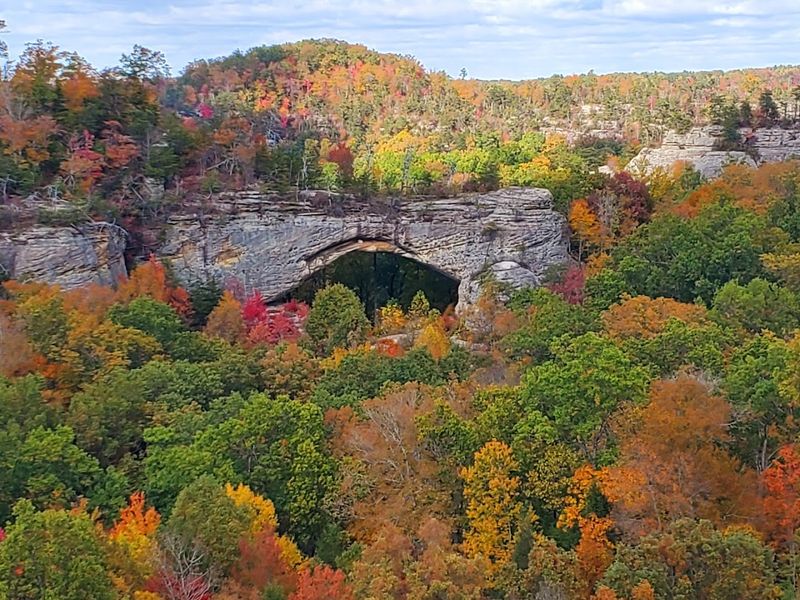
Framing the Milky Way inside a natural stone arch is the kind of photograph that makes people question whether it was edited.
Natural Arch Scenic Area, reached via Highway 927 near Parkers Lake, offers exactly that opportunity on a clear night in the Daniel Boone National Forest.
The arch itself spans over 90 feet and stands about 65 feet tall, creating a dramatic natural window in the sky. Position yourself correctly at the base of the arch after dark and the stars pour through the opening like a painting.
The surrounding forest keeps the horizon dark in every direction.
Getting here requires a short trail hike of less than a mile, which is easy enough for most visitors. The trail is well-marked and manageable with a good headlamp.
Plan to arrive before sunset so you can scout the best viewing angle while there is still light.
There are no facilities at the trailhead, so pack everything you need including water, snacks, and layers. The area gets genuinely cold at night even in late spring.
Cell service is unreliable, so download offline maps before you leave home.
Natural Arch rewards the extra effort with a stargazing composition that feels almost designed by nature specifically for this purpose. It is one of the most visually dramatic spots on this entire list.
6. Devil’s Jump Overlook At Blue Heron
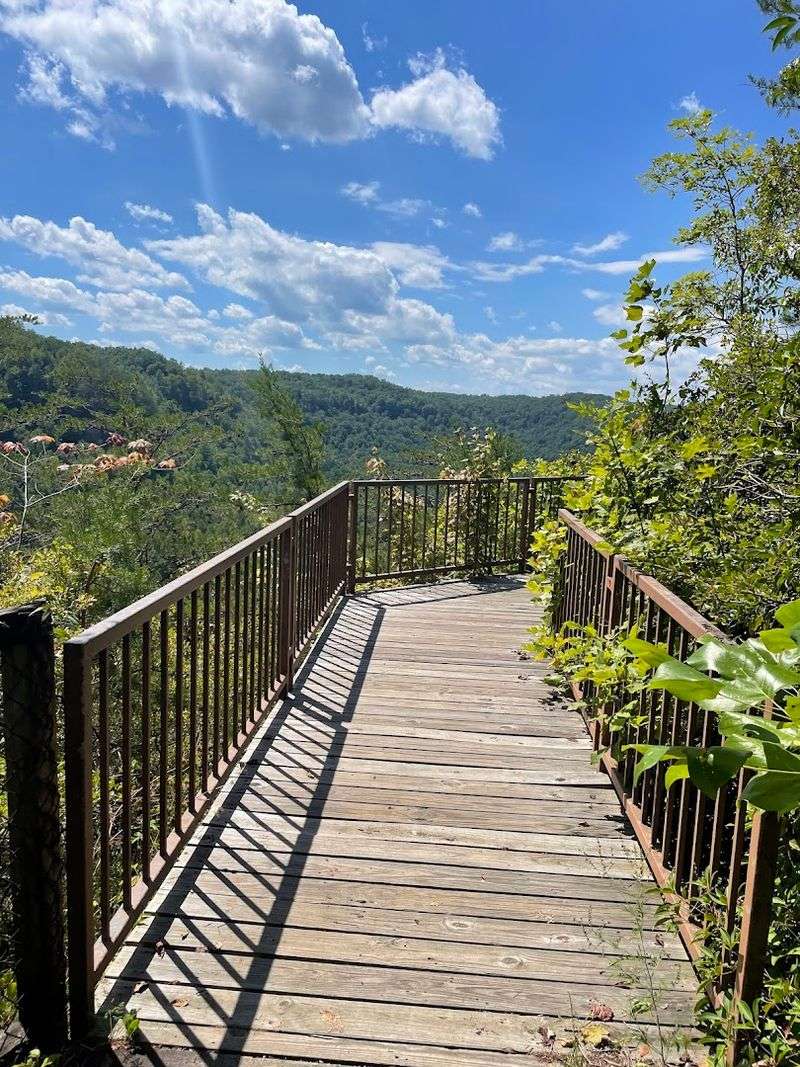
Standing at the edge of a river gorge under a sky full of stars is the kind of experience that recalibrates your sense of scale.
Devil’s Jump Overlook at Blue Heron, located along Blue Heron Road in Stearns, sits inside the Big South Fork National River and Recreation Area, a stretch of southeastern Kentucky that remains beautifully underdeveloped.
The overlook offers a dramatic view of the Big South Fork gorge below, and at night the depth of the canyon adds a layer of darkness that makes the sky above appear even more vivid by contrast.
The lack of artificial lighting in the gorge means your eyes adjust quickly and deeply.
Blue Heron itself is a restored coal mining community that serves as a trailhead and visitor area. The open spaces near the historic structures provide solid viewing platforms without requiring a hike into the woods.
The combination of history and natural beauty gives this spot a personality unlike any other on the list.
Weekday visits are significantly quieter than weekends.
The roads into Blue Heron are well-maintained but winding, so allow extra travel time after dark. A star-tracking app is particularly useful here because the gorge walls can make orientation tricky.
Once you find your footing and look up, the sky at Devil’s Jump delivers in a way that is hard to put into words and impossible to forget.
7. Bad Branch Falls State Nature Preserve
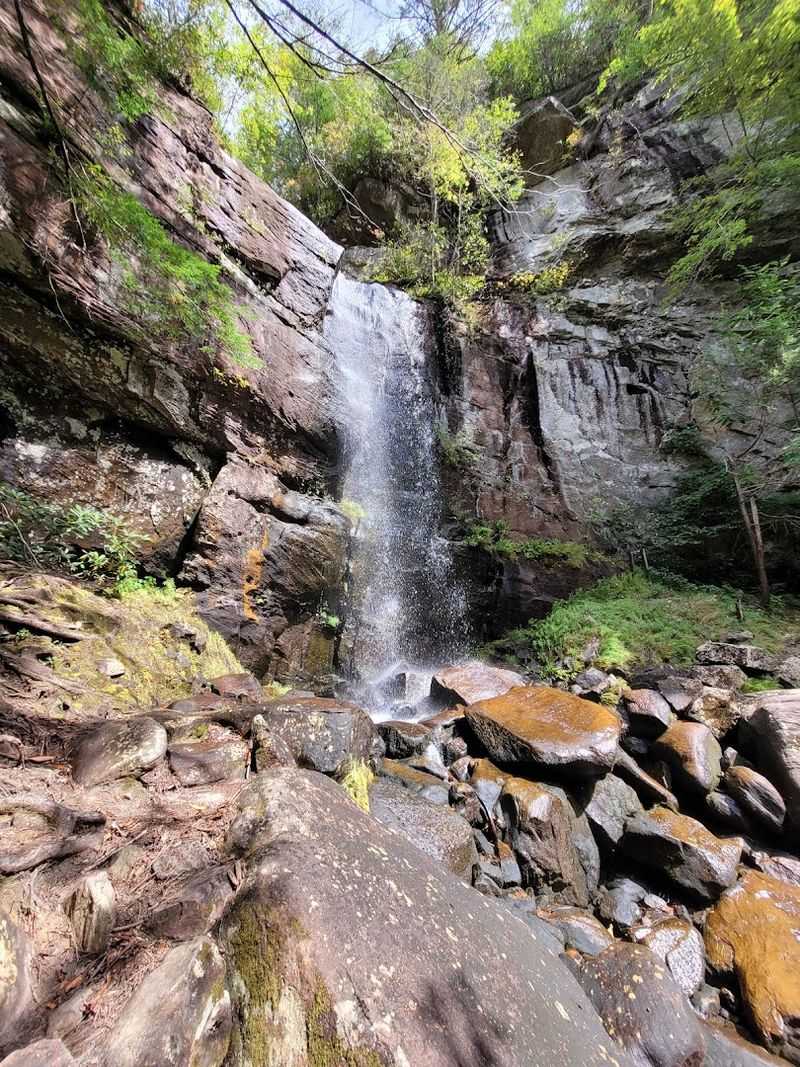
Bad Branch Falls State Nature Preserve is not trying to impress anyone, and that is exactly why it does.
Located off Highway 932 near Eolia in Letcher County, this preserve protects one of the most ecologically significant old-growth forests in Kentucky, and it happens to sit beneath some remarkably dark skies.
The preserve covers over 2,700 acres in the Pine Mountain range, and the surrounding terrain keeps development minimal.
Light from nearby communities barely reaches the ridge tops, making this one of the darker natural areas in eastern Kentucky. The forest canopy creates natural tunnels of darkness that funnel your gaze upward.
The trail to Bad Branch Falls is moderately challenging, covering about four miles round trip. Doing this hike in the evening and camping nearby for a full night of stargazing is the move if you want the complete experience.
The waterfall adds ambient sound that makes the nighttime atmosphere feel remote and immersive.
This is a nature preserve, not a developed park, so expect minimal amenities. Leave no trace principles apply strictly here.
The reward for following the rules is access to a place that feels genuinely untouched.
Eastern Kentucky does not always make the stargazing conversation, but Bad Branch quietly makes a strong case for itself every clear night the clouds stay away.
8. Kingdom Come State Park
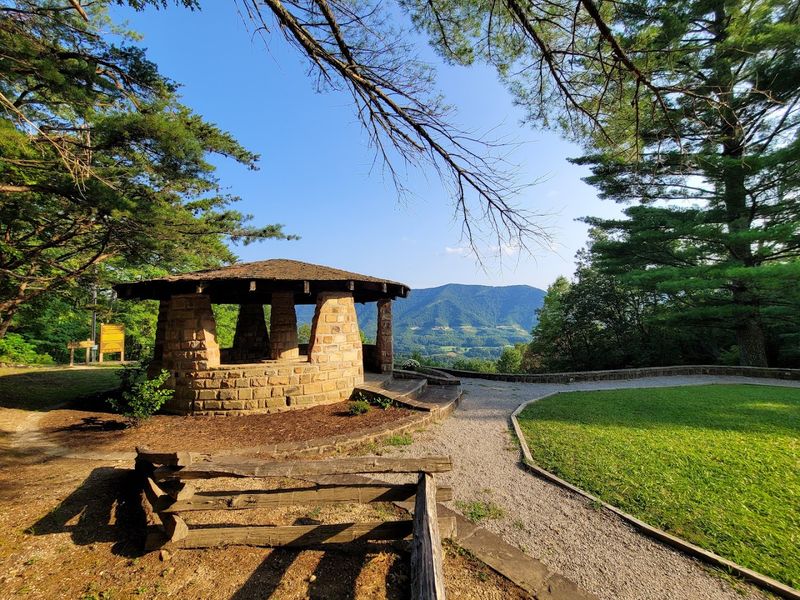
Elevation is a stargazer’s best friend, and Kingdom Come State Park has plenty of it.
Perched near the top of Pine Mountain at 502 Park Road, Cumberland, this park sits at one of the highest elevations of any state park in Kentucky, which puts you above valley haze and closer to a sky that feels genuinely enormous.
The views from Log Rock and Raven Rock overlooks are spectacular by day, but by night they transform into natural observatories.
The surrounding Harlan County terrain is sparsely populated, which keeps the horizon dark in nearly every direction. On the clearest nights, the Milky Way core is visible for a significant portion of the year.
Kingdom Come has a quirky personality to match its dramatic setting. The park is named after the novel “Big Sandy” and carries a distinct Appalachian character that makes it feel like a place with stories.
That atmosphere carries into the night in a way that feels almost storytelling-worthy itself.
The park offers camping that places you directly under those dark skies without any commute after dark. Bring warm layers because the mountain elevation means cooler temperatures than the valleys below.
Wind can pick up significantly at the overlooks, so secure your equipment.
Few spots in the state combine altitude, isolation, and accessible infrastructure as well as Kingdom Come does for serious stargazers.
9. Twin Knobs Recreation Area At Cave Run Lake
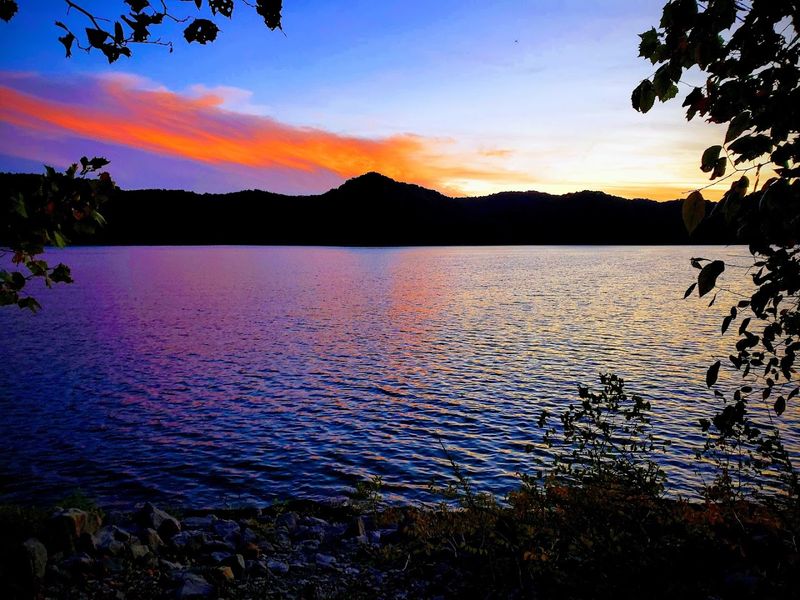
Cave Run Lake is a reservoir with serious stargazing credentials, and Twin Knobs Recreation Area is where those credentials shine brightest.
Located at 5195 Highway 801 in Morehead, this Daniel Boone National Forest campground sits directly on the water with wide open sky views that few lakeside spots can match.
The lake covers over 8,000 acres, which means the water opens up the horizon in a way that dense forest simply cannot.
On a calm night, the surface reflects the stars above so clearly that the boundary between sky and water becomes genuinely ambiguous. It is one of those views that makes you stop talking mid-sentence.
Twin Knobs has developed campgrounds with boat ramps, beach access, and picnic areas, which makes it one of the more comfortable dark sky locations in the state.
You do not have to sacrifice convenience to get a quality night sky experience here. That is a rare combination in truly dark locations.
Summer weekends fill the campground quickly, so reservations are strongly recommended. Arriving mid-week in late summer or early fall gives you both darker skies and fewer neighbors.
The Perseids and Orionids meteor showers are exceptional from the beach area.
Twin Knobs manages to feel like a proper camping destination by day and a legitimate astronomy experience by night. It earns its place on any serious Kentucky stargazing list without needing any extra convincing.
10. Golden Pond Planetarium And Observatory
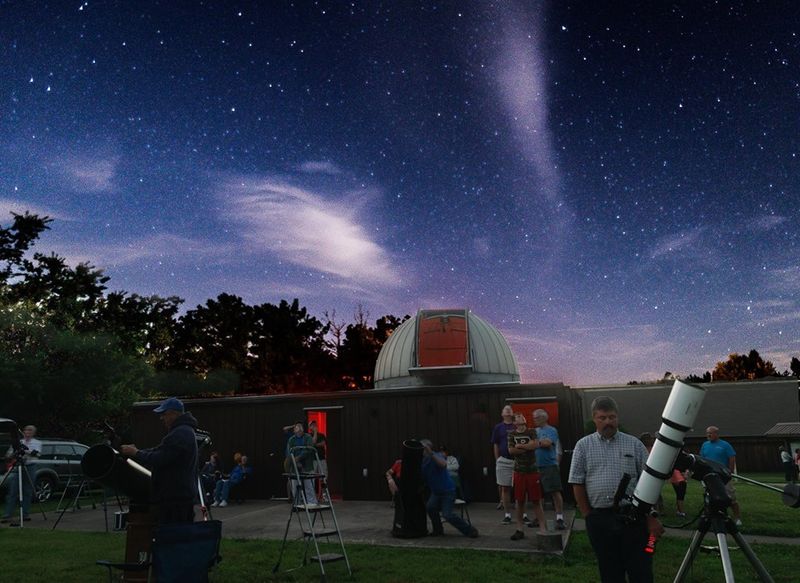
There is something wonderfully nerdy about a place that exists entirely to help you understand what you are looking at overhead.
Golden Pond Planetarium and Observatory, located at 238 Visitor Center Drive, Golden Pond, sits inside the Land Between the Lakes National Recreation Area, one of the darkest regions in the eastern United States.
The planetarium offers regular sky shows inside a domed theater, which is a perfect way to prep before heading outside with a telescope.
The observatory hosts public viewing nights where staff walk you through what is visible that evening. It feels like having a personal astronomer on call.
Land Between the Lakes benefits from being surrounded by water on two sides, which limits development and keeps light pollution remarkably low.
The rural setting means you can walk out of the planetarium and immediately start spotting constellations overhead.
Check the planetarium schedule before you visit because show times vary by season. Weekends fill up faster than you might expect for a spot this far from any major city.
Arriving around dusk gives you time to settle in and let your eyes adjust before full dark.
The combination of education and raw natural darkness makes this one of the most complete stargazing experiences in the entire state.