These Southern California Towns Look Straight Out Of A Dream
Southern California has a reputation for freeways, sunshine, and places that look better on a screen than in real life.
That reputation is not entirely wrong. But tucked between the traffic and the tourist traps are towns so genuinely charming that stumbling onto them feels less like a road trip and more like a plot twist.
I am talking about the kind of places where you pull over for what you think will be ten minutes and end up staying for lunch, dinner, and a conversation with a stranger who tells you to come back in spring.
Mountain villages that feel borrowed from a European postcard. Coastal streets where the light hits differently and everything slows down in the best possible way.
A Danish town in the middle of California that absolutely should not work but somehow absolutely does.
This list is for the Southern California that most people drive straight past. Consider this your reason to finally stop the car, get out, and look around.
You are not going to regret it.
1. Ojai
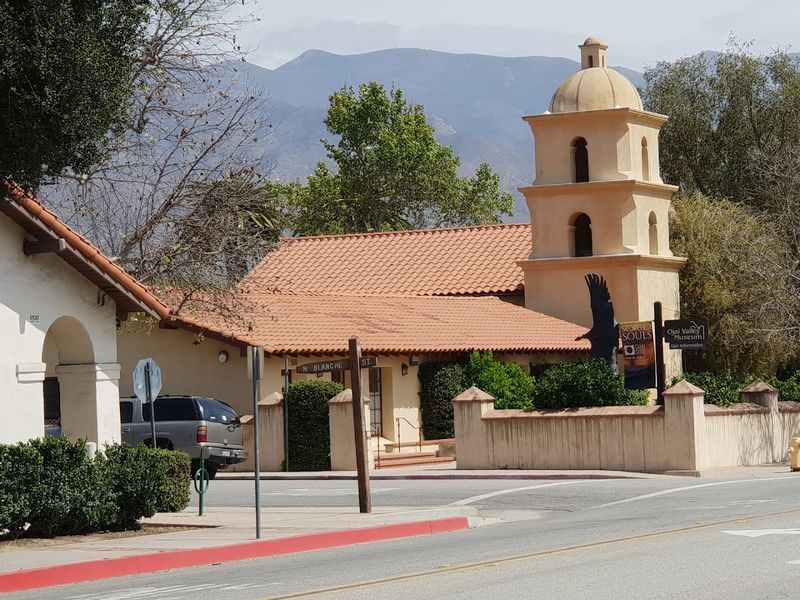
This town makes people cancel their return reservations.
The moment that famous “pink moment” hits, when the Topa Topa Mountains turn a deep rosy orange at sunset, you will understand why artists have been moving here for over a century.
The main street is lined with Spanish-style arcades, bookshops, and farm stands selling local citrus and honey. Nothing feels rushed.
Nothing feels corporate. The town operates on its own quiet frequency, and it is genuinely contagious.
The Ojai Valley Trail is a flat, easy path that winds through oak groves and open fields, great for biking or a long morning walk.
The Sunday farmers market draws locals and visitors alike, with vendors selling everything from fresh lavender to handmade ceramics.
Ojai also hosts the Ojai Music Festival every June, a beloved event that has been running since 1947. The town is small enough to walk everywhere, yet rich enough in personality to fill an entire weekend.
If you want somewhere that slows your heartbeat in the best possible way, this is the place to start.
2. Julian
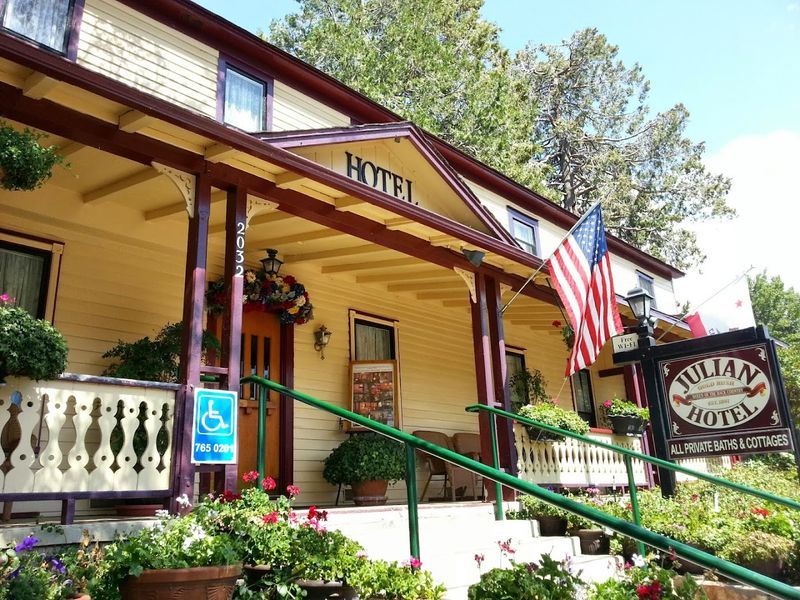
Julian is the kind of town that smells like pie before you even park the car.
Perched at 4,200 feet in the Cuyamaca Mountains east of San Diego, this former gold rush settlement has traded mining for apple orchards and turned that swap into something brilliant.
The main drag, Main Street, is lined with wooden storefronts that have barely changed since the late 1800s.
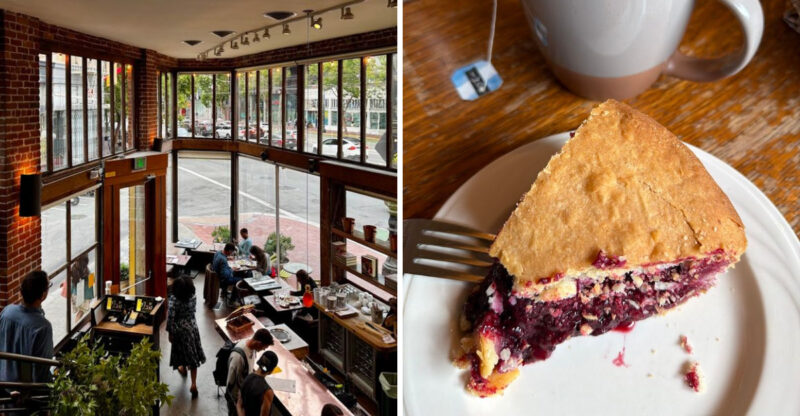
You can tour a working gold mine, browse antique shops, or just sit on a bench and eat a slice of warm apple pie while watching the town go about its day.
Fall is the peak season, when the hills turn amber and gold and apple harvest festivals draw crowds from across the region.
But honestly, Julian is charming in every season. Winter occasionally brings snow, which feels almost surreal for Southern California.
The town also sits near Anza-Borrego Desert State Park, making it a great base for adventurous day trips.
Julian has a genuine, unhurried soul that is rare to find. It does not try to impress you.
It just quietly does, slice by delicious slice.
3. Solvang
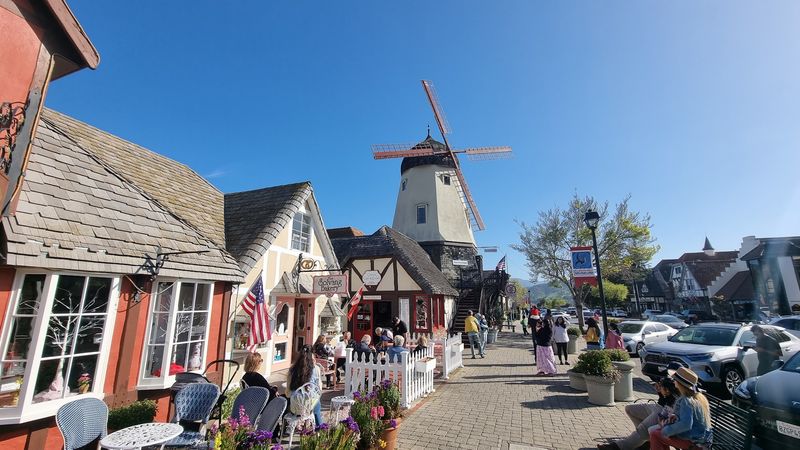
Yes, there is a Danish village in the middle of California, and no, it is not a theme park.
Solvang was founded in 1911 by Danish immigrants who wanted to preserve their culture, and more than a century later the windmills are still spinning and the pastry cases are still dangerously full.
Walking through town, you pass half-timbered buildings, hand-painted signs in Danish, and bakeries where the smell of fresh aebleskiver, those round Danish pancake balls, drifts right out onto the sidewalk.
It is genuinely delightful and just a little bit absurd in the best way.
The Hans Christian Andersen Museum pays tribute to the beloved Danish author, and the town hosts a Danish Days festival every September that draws thousands of visitors.
Beyond the novelty, Solvang sits in the Santa Ynez Valley, surrounded by rolling hills and horse ranches.
There are also excellent local shops selling Scandinavian imports, handmade candles, and traditional folk art.
Solvang is the kind of place that makes you feel like you accidentally boarded the wrong flight and ended up somewhere far more interesting than planned.
4. Idyllwild
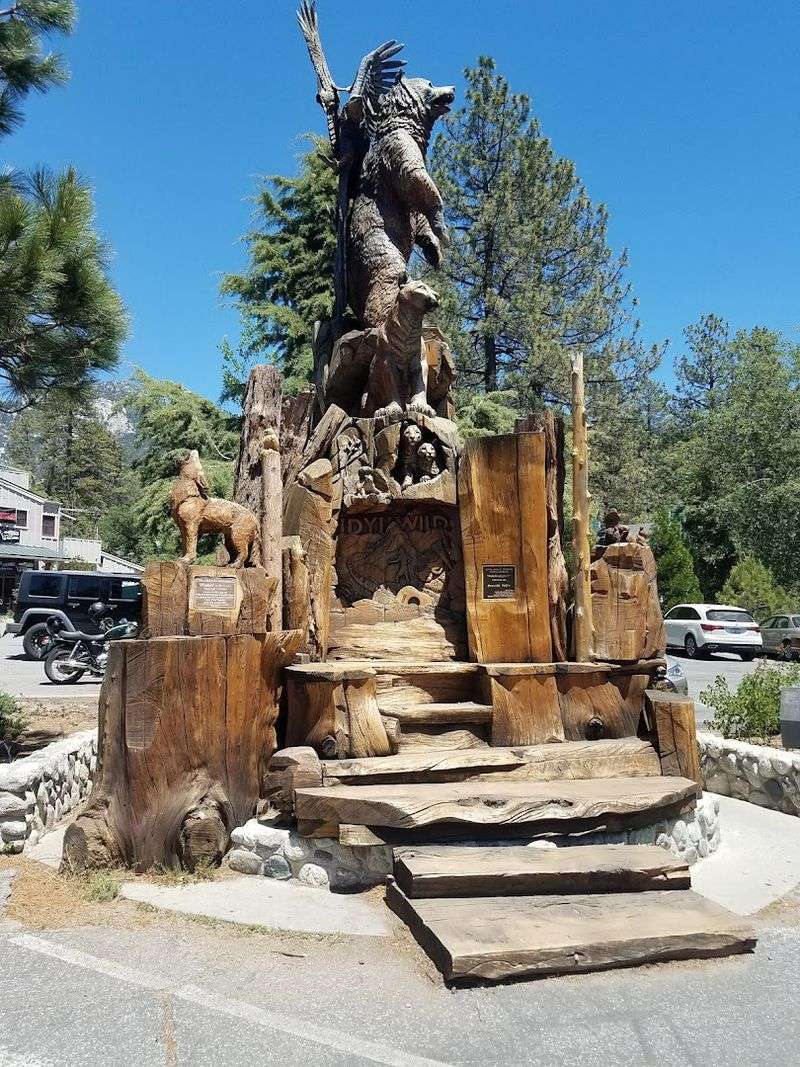
It sits at 5,400 feet in the San Jacinto Mountains and feels like a secret that everyone in Los Angeles is slowly finding out about.
Granite boulders the size of houses jut out from pine forests, and the air smells like something a candle company would spend years trying to replicate but never quite nail.
Idyllwild has a strong arts identity, with galleries, live music venues, and a summer arts festival that has been running for decades.
There are also excellent hiking trails right from the town center, including the climb up Tahquitz Peak, which rewards you with views stretching all the way to the Pacific on a clear day.
Idyllwild has no traffic lights. That detail alone says a lot about the pace of life here.
The main village strip has bookstores, coffee spots, and restaurants with fireplaces that make leaving feel genuinely difficult.
The town even has an official honorary mayor, a golden retriever named Max, a tradition that started in 2012 and has continued ever since.
If that does not convince you this place has character, nothing will. Pack layers, charge your camera, and give yourself at least two full days.
5. Carpinteria
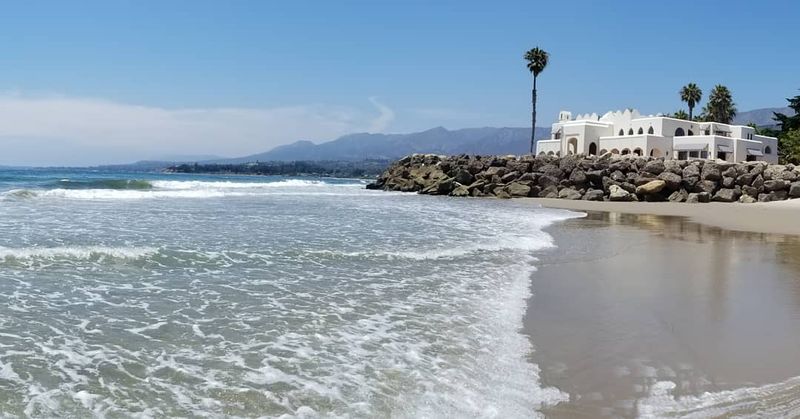
Carpinteria has the calm, reef-protected water and the wide, unhurried shoreline, you will not argue with that claim.
It sits just south of Santa Barbara, and somehow it has managed to stay wonderfully low-key despite being so close to one of California’s most popular cities.
The downtown area is small but full of personality, with a Saturday farmers market, family-owned restaurants, and an avocado festival every October that takes the fruit very seriously.
The town is surrounded by working flower farms, and you can actually see rows of blooming ranunculus and dahlias stretching toward the hills in spring.
Carpinteria State Beach is a favorite for families, snorkelers, and anyone who just wants to sit in the sand without fighting for space. The tide pools at the southern end of the beach are especially rich with marine life.
What makes Carpinteria so appealing is how real it still feels. It has not been polished into a postcard.
The people are friendly, the pace is easy, and the sunsets over the Channel Islands are the kind of thing you end up talking about weeks later.
6. Avalon (Catalina Island)
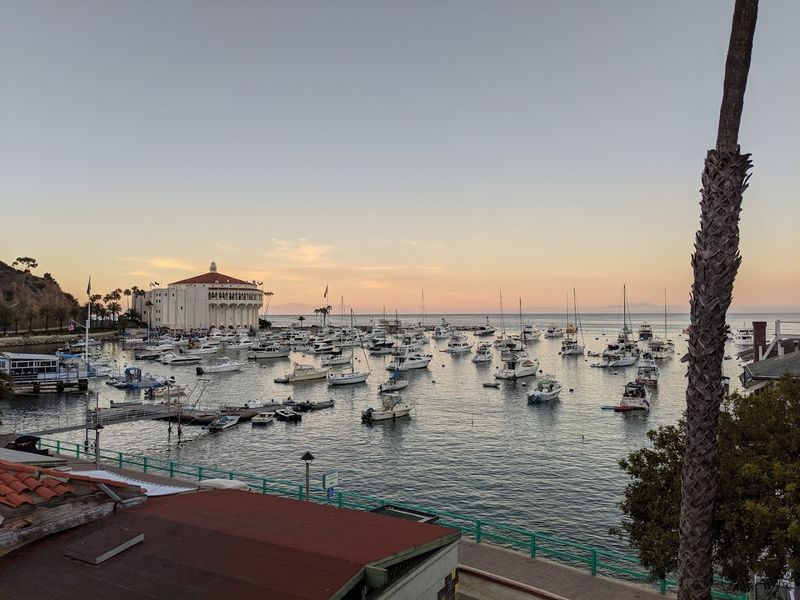
Getting to Avalon requires a ferry ride, and that small inconvenience is exactly what keeps it feeling like another world.
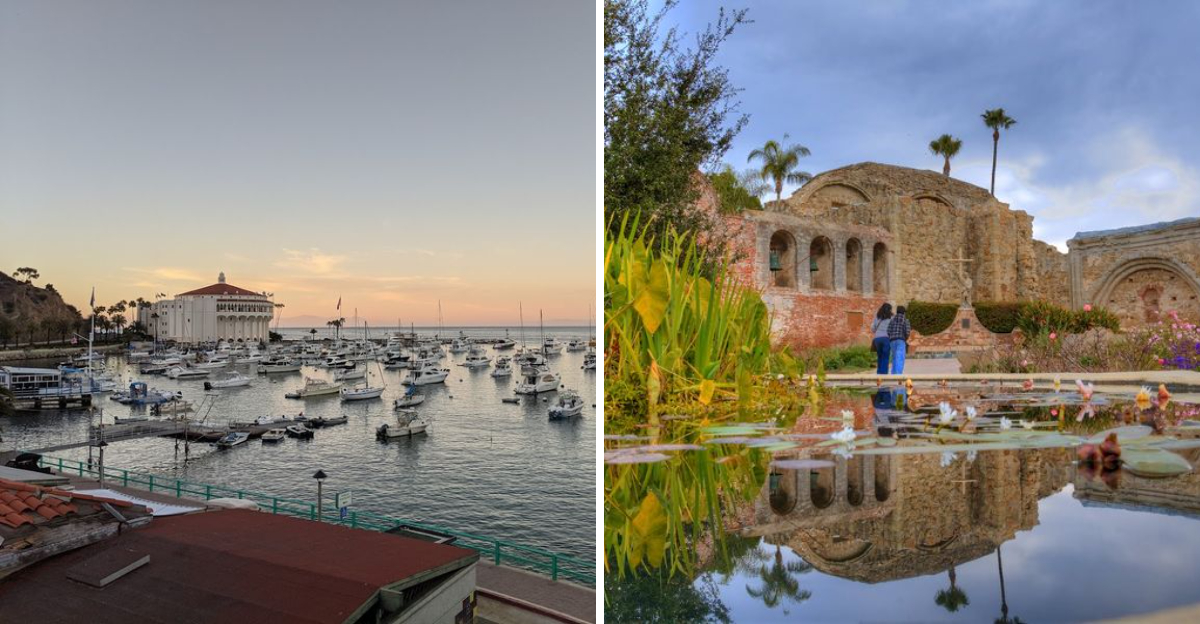
The moment you round the corner into the harbor and see the curved white building reflected in that impossibly blue water, you realize the boat ride was absolutely worth it.
Avalon is the only incorporated city on Catalina Island, and it is tiny by design. Most of the island is protected land managed by the Catalina Island Conservancy, so the town stays compact and walkable.
Golf carts are the preferred method of transport, which adds a charming, slightly silly energy to the whole experience.
The underwater visibility around Catalina is exceptional, making it one of the best snorkeling and scuba spots on the West Coast.
Bright orange garibaldi fish, the California state marine fish, are everywhere. Glass-bottom boat tours offer a view of the kelp forest without getting wet.
Avalon also has a lively waterfront with restaurants, boutiques, and a small casino museum worth exploring. The history of the island, from the Tongva people to the Wrigley family ownership, is genuinely fascinating.
Stay overnight if you can. The town changes completely after the day crowds head back to the mainland.
7. Laguna Beach
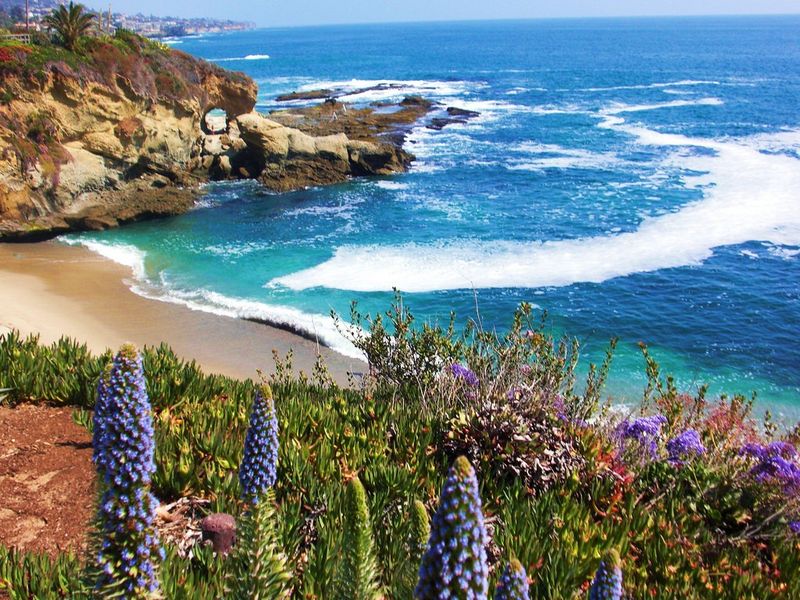
Laguna Beach has been an artist colony since the early 1900s, and that creative energy has never really left.
The town sits along seven miles of dramatic coastline with coves, tide pools, and sea caves that feel almost theatrical in their beauty.
The Pageant of the Masters, held every summer, is one of the most unique events in California.
Real people pose inside elaborate recreations of famous artworks, and the result is something between performance art and pure spectacle. It has been running since 1935 and still sells out every year.
Beyond the art scene, Laguna has some of the best coastal hiking in Southern California. The Laguna Coast Wilderness Park offers miles of trails through chaparral and canyon, with sweeping ocean views that reward every uphill step.
The town itself is a pleasure to walk through, with independent galleries, surf shops, and restaurants perched above the Pacific.
Main Beach is the social hub, where volleyball games and golden retrievers and people watching all happen simultaneously.
Laguna Beach is one of those places that looks best in person. Every photo you take will feel slightly inadequate compared to the real thing, and somehow that makes you want to keep trying.
8. San Juan Capistrano
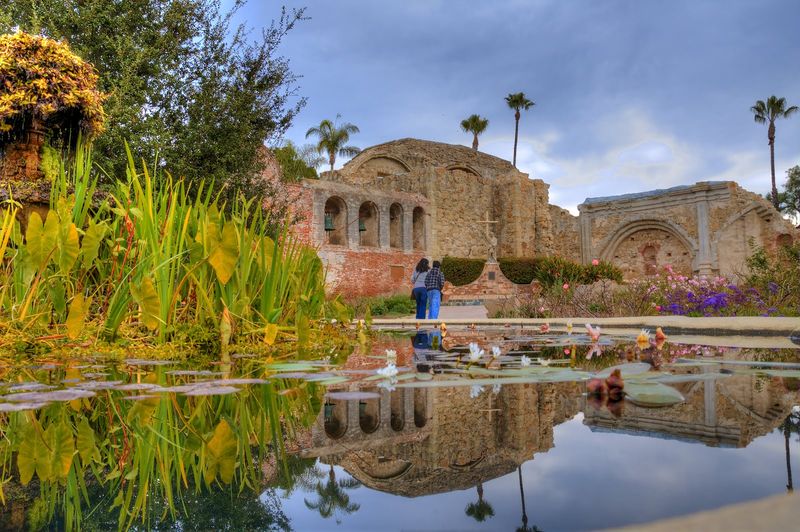
San Juan Capistrano is the kind of place that makes history feel approachable rather than dusty.
The Mission San Juan Capistrano, founded in 1776, is one of the best-preserved Spanish missions in California, and walking through its stone ruins and blooming courtyards feels genuinely transporting.
Every year around March 19th, the cliff swallows return to the mission after wintering in South America.
This migration has been documented for centuries and is celebrated with the Swallows Day Parade and Fiesta, one of the oldest events in Southern California.
The historic Los Rios Street District is worth an afternoon on its own.
It is the oldest neighborhood in California still in continuous use, with adobe homes dating back to the mission era sitting right next to a working Amtrak station. The contrast is oddly wonderful.
The town also has a charming downtown with antique shops, local bakeries, and a Thursday farmers market that draws a lively crowd.
San Juan Capistrano is not trying to compete with flashier coastal towns nearby. It knows exactly what it is, and that quiet confidence is a large part of its appeal.
Come for the history, stay for the tamales.
9. Wrightwood
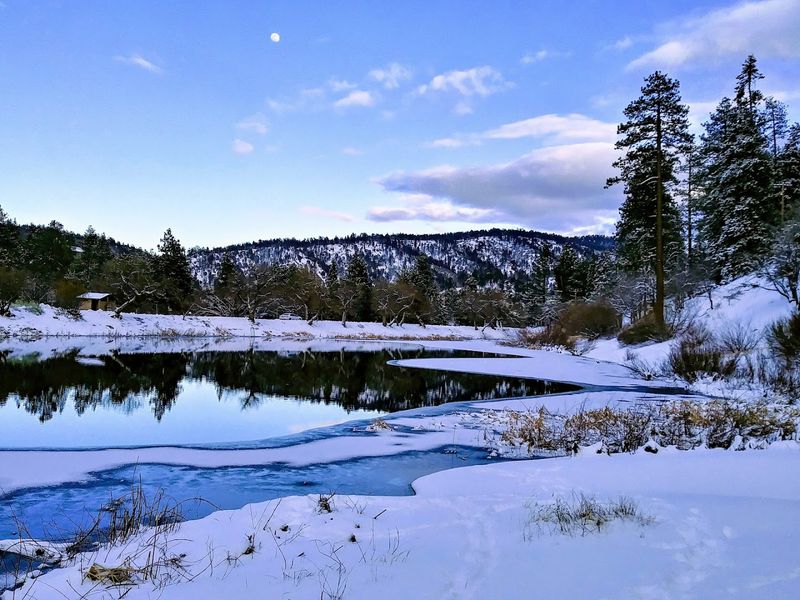
Most people in Los Angeles forget that a proper mountain town is only ninety minutes away.
Wrightwood sits at 6,000 feet in the San Gabriel Mountains, and in winter it gets real snow, the kind you can actually sled and build things with, not the dusting that melts by noon.
Mountain High Resort, just a few miles from the village, is the closest ski area to LA and draws weekend crowds who need a snow fix without the drive to Big Bear. But Wrightwood itself is the real discovery.
The main street has a general store, a handful of restaurants, and a community vibe that feels genuinely close-knit.
In summer, the town transforms into a hiking base. The Pacific Crest Trail passes nearby, and Acorn Trail and Big Pines area offer excellent day hikes with mountain meadows and panoramic views.
The Grassy Hollow Visitor Center, run by the US Forest Service, is a great starting point for first-time visitors.
The Fourth of July parade in Wrightwood is small-town Americana at its most earnest, and it is absolutely worth timing a visit around it.
Wrightwood does not put on a show. It just exists, cheerfully and authentically, at a refreshing altitude.
10. Los Alamos
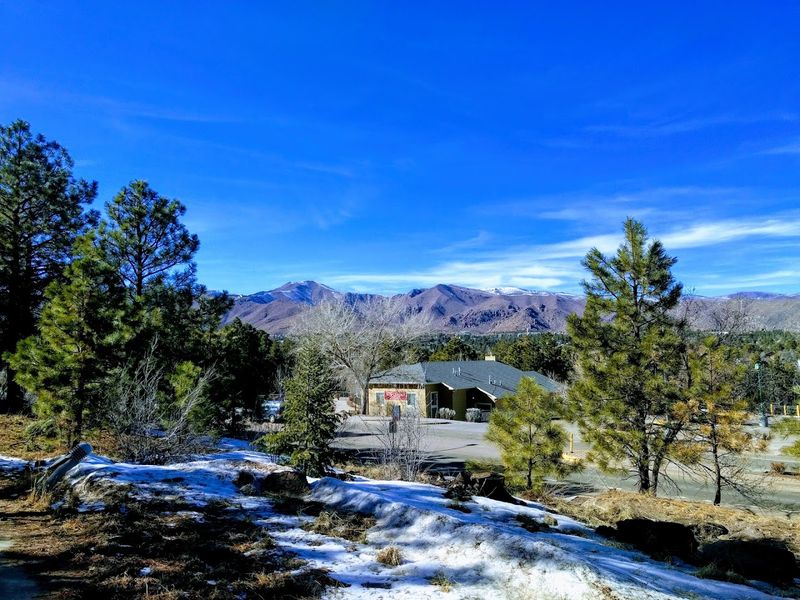
This former stagecoach stop is the kind of town you drive through by accident and end up spending three hours in.
Set in a narrow valley between rolling hills in Santa Barbara County, Los Alamos has quietly reinvented itself as one of the most interesting small towns in Southern California.
Bell Street, the main drag, is lined with antique stores, art galleries, and a handful of restaurants that take their food very seriously.
The town has only about 1,500 residents, yet it punches well above its weight when it comes to culinary ambition and creative energy.
The Union Hotel, a beautifully restored 1880 landmark, anchors the town with a saloon-style dining room and old-fashioned charm that feels like stepping into a period film set.
The hotel has hosted events, private dinners, and gatherings for decades and remains a genuine community centerpiece.
Los Alamos also sits within easy reach of Vandenberg Space Force Base, and on launch days you can sometimes see rockets rising over the hills from downtown.
That combination of pioneer history and rocket launches in the same zip code is, frankly, hard to beat. Los Alamos in California rewards the curious traveler who takes the exit and stays a while.