These Tiny North Carolina Towns Will Make You Forget What Year It Is
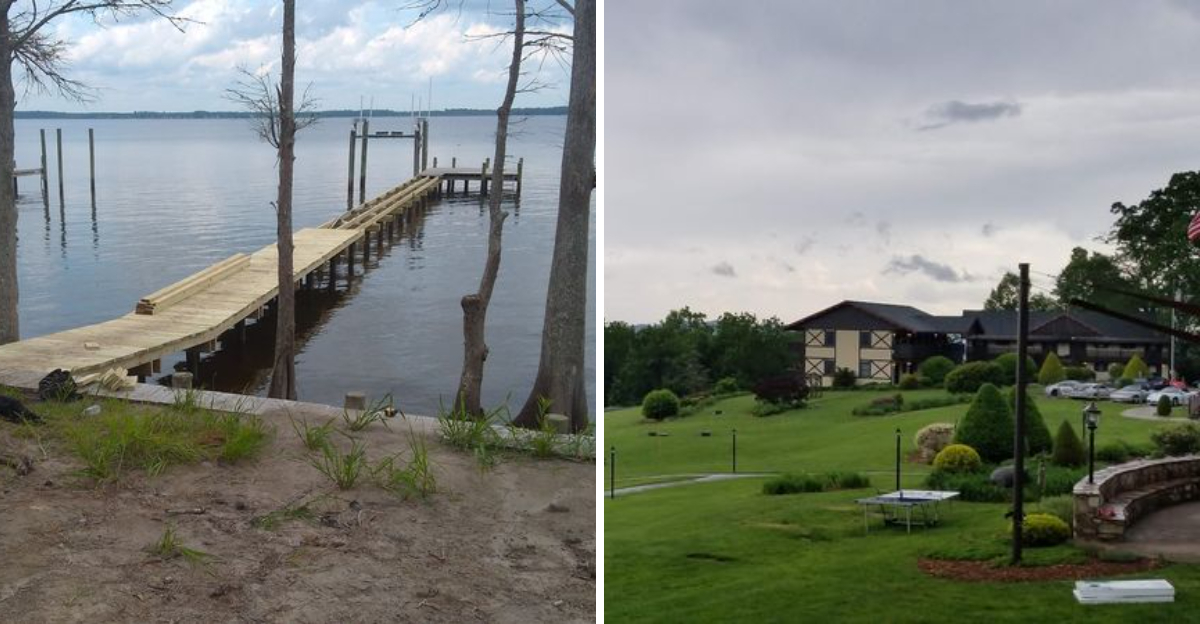
Some places don’t just slow you down, they gently take your sense of time and set it aside.
You arrive in a small North Carolina town expecting a quick stroll, and before you know it, you are wandering past old storefronts, peeking into windows, and wondering why everything feels so effortlessly calm.
It is not just the scenery, though the mountain backdrops and quiet streets certainly help. It is the rhythm.
No one is rushing, no one is glued to a screen, and somehow that feeling becomes contagious.
North Carolina is full of these quietly magical towns, where history lingers in the architecture and everyday life moves at a pace that feels almost unfamiliar now.
They are not trying to impress you, which is exactly why they do. Spend a little time in one, and you may find yourself forgetting what you were in such a hurry to get back to.
1. Bath
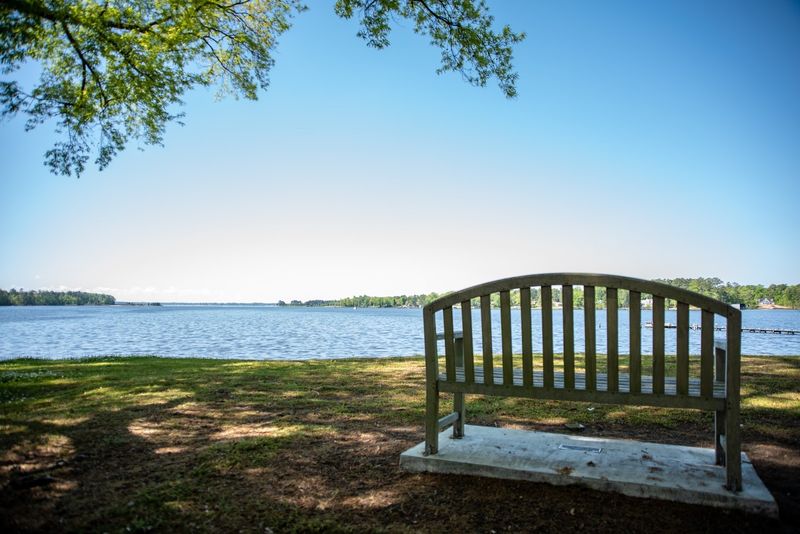
North Carolina’s oldest town doesn’t just feel old. It practically whispers at you from every corner.
Bath was incorporated in 1705, and walking its streets feels less like tourism and more like trespassing through someone’s memory.
The town sits along the Pamlico River, and the water gives everything a still, reflective quality that slows your heartbeat almost immediately.
There are no chain restaurants here, no big box stores, and no traffic lights fighting for your attention. Just old homes, tall trees, and the sound of birds.
The Historic Bath State Historic Site preserves several original structures, including the Palmer-Marsh House, which dates to around 1751.
Rangers lead tours that are genuinely interesting, not the sleepy kind you power-walk through. The Bonner House nearby is another standout, sitting quietly like it has all the patience in the world.
Plan to spend a full afternoon here. The town rewards slow walkers and curious minds equally.
It’s the kind of place that makes you want to write a letter by hand when you get home.
2. Edenton
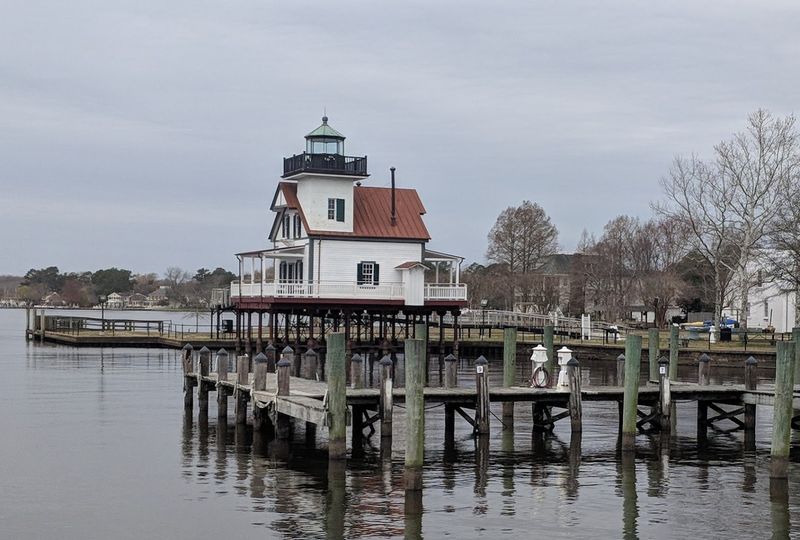
Edenton has the kind of downtown that makes you wonder why anyone ever left. Wide, shaded streets, colonial-era buildings, and a waterfront that hasn’t been overrun by souvenir shops.
It feels genuinely preserved rather than artificially maintained.
Founded in the early 1700s, Edenton served as one of colonial North Carolina’s most important political centers.
The Chowan County Courthouse, built in 1767, is considered one of the finest Georgian courthouses still standing in the American South. That’s not a small claim, and the building absolutely earns it.
The Cupola House, dating to 1758, is another must-see. Its unusual architecture stands out in the best way, drawing architecture fans from across the state.
The waterfront park nearby is a great spot to sit and watch the Albemarle Sound stretch out toward the horizon.
Come hungry because the local eateries here punch well above their weight. Edenton is proof that a town doesn’t need to be loud to leave a lasting impression.
3. Ocracoke
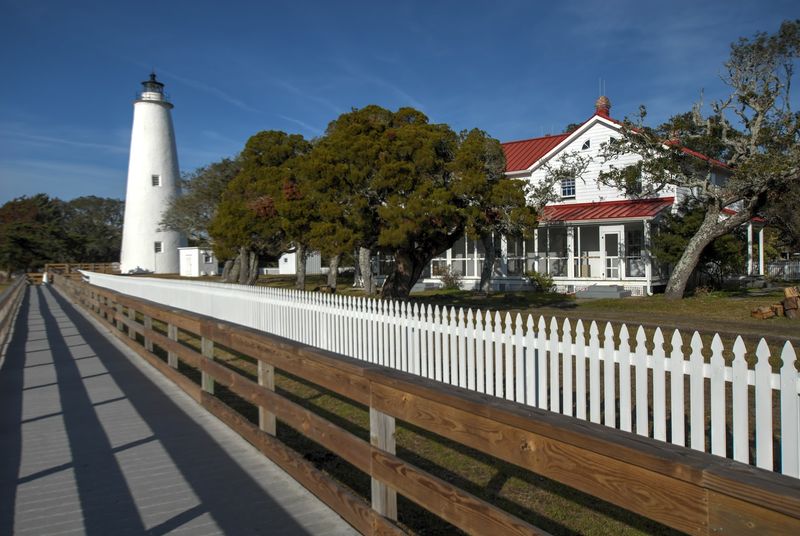
Getting to Ocracoke requires a ferry, and that alone filters out the impatient. The boat ride across the Pamlico Sound is part of the experience, a slow transition from the modern world into something that feels genuinely apart from it.
Ocracoke Island is home to fewer than 1,000 year-round residents, and the village at its southern tip has a personality all its own.
The streets are narrow, many people get around by bicycle, and the pace of life is set by tides rather than calendars.
The famous Ocracoke Lighthouse was built in 1823.
Wild ponies roam a protected area on the northern end of the island, descendants of horses brought by early Spanish explorers.
Seeing them in person is one of those moments that makes you stop mid-sentence and just stare. The beaches here are wide, uncrowded, and strikingly beautiful.
The village center sits near Silver Lake Harbor. The local shops and eateries feel personal and real.
Ocracoke doesn’t perform for tourists. It simply exists, quietly and confidently, exactly as it always has.
4. Valle Crucis
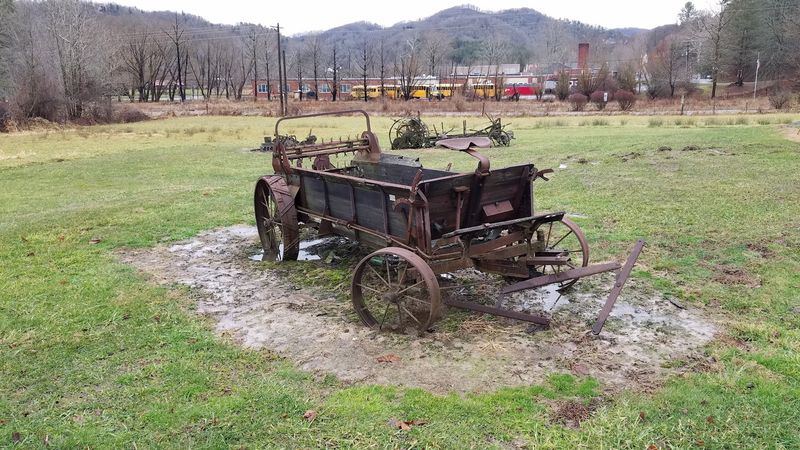
Valle Crucis is the kind of place where the air itself feels different. Cooler, cleaner, and carrying just a hint of wood smoke no matter the season.
Tucked into Watauga County in the Blue Ridge Mountains, this small community runs at its own unhurried rhythm.
The Mast General Store, established in 1883, is the town’s most famous landmark and arguably one of the most charming stores in the entire state.
It still sells old-fashioned candy, cast iron cookware, and hiking boots alongside each other without any sense of irony. The original store building is listed on the National Register of Historic Places.
Valle Crucis is also home to the Valle Crucis Conference Center, and the surrounding farmland looks like something out of a painting during fall foliage season.
The Watauga River runs nearby, and fishing or simply sitting beside it is a perfectly acceptable way to spend an afternoon.
The Mast General Store is located at 3565 Highway 194 South. The drive there through winding mountain roads is half the fun.
Valle Crucis doesn’t try to impress you. It just quietly does, every single time.
5. Saluda
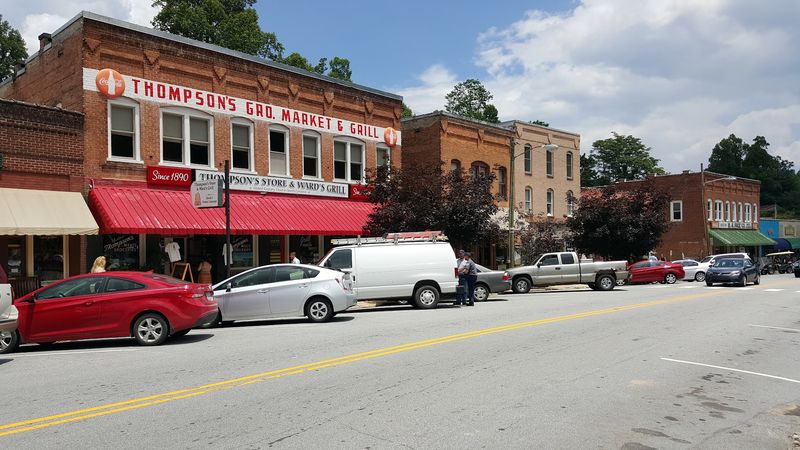
This town sits at the top of what was once considered one of the steepest standard-gauge railroad grades in the United States. That geological drama shaped the town’s personality in ways that are still visible today.
The main street is short, colorful, and completely unpretentious.
What makes Saluda special is how it balances charm with authenticity.
The shops along Main Street are locally owned, the galleries show real working artists, and the whole place has a creative energy that sneaks up on you.
It’s the kind of town where you stop for five minutes and end up staying two hours.
The elevation here sits around 2,100 feet, which means the summers are cooler than the surrounding lowlands and the fall colors arrive earlier and stay longer.
Hikers use Saluda as a base for exploring nearby trails in the Polk County area, and the town rewards that kind of slow, exploratory visit.
The entire downtown is walkable in minutes. But don’t let that fool you into rushing.
Every storefront has a story, and the locals are genuinely happy to tell it. Small doesn’t mean simple here.
6. Little Switzerland
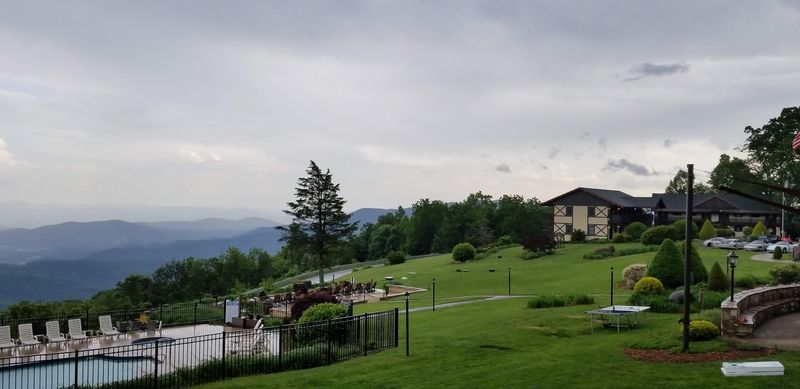
The name alone earns a second look on any map. Little Switzerland sits along the Blue Ridge Parkway in Mitchell County, perched at an elevation that makes the surrounding mountains feel close enough to touch.
On a clear day, the views stretch so far it borders on absurd.
The community grew up around a summer resort culture in the early twentieth century, and that legacy gives it a slightly old-world feel that other mountain towns simply don’t have.
The Switzerland Inn, which has operated in various forms since 1910, anchors the area and draws visitors who appreciate mountain scenery without the crowds of more commercial destinations.
The nearby Emerald Village is a working gem mine where you can dig for rubies, emeralds, and other minerals.
It sounds gimmicky but is genuinely fascinating, especially if you’ve never seen a real mining operation up close.
The North Carolina Mining Museum on the same property adds historical depth to the experience.
The drives in and out of town are scenic enough to justify the trip on their own. This is mountain North Carolina at its most quietly spectacular.
7. Robbinsville
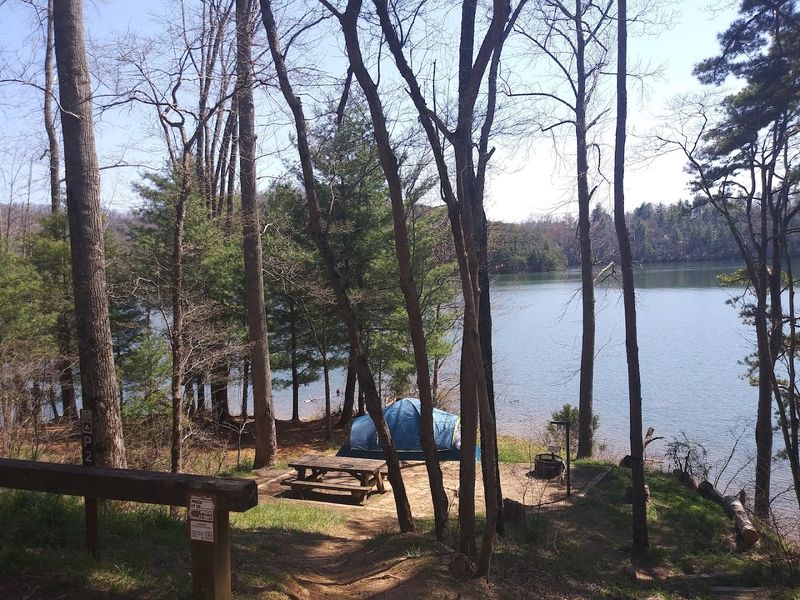
This is the kind of town that motorcycle riders and fly fishermen have known about for years while the rest of the world looked elsewhere.
Sitting in Graham County in far western North Carolina, it’s surrounded by some of the most dramatic national forest scenery the state has to offer.
The town is the gateway to the Cherohala Skyway, a National Scenic Byway that climbs through the Cherokee and Nantahala National Forests with views that rival anything in the Great Smoky Mountains.
The road is less traveled than the Parkway and all the better for it. Fontana Lake sits nearby, massive and gorgeous and rarely overcrowded.
The Joyce Kilmer Memorial Forest, located just outside Robbinsville, contains some of the largest old-growth trees in the eastern United States.
Walking among poplars and sycamores that are hundreds of years old rearranges your sense of scale in a way that’s hard to put into words. It’s humbling in the best possible sense.
The town itself is small and unpretentious, which makes it an honest base camp for serious outdoor exploration. Few places in North Carolina reward the extra drive quite this well.
8. Aurora
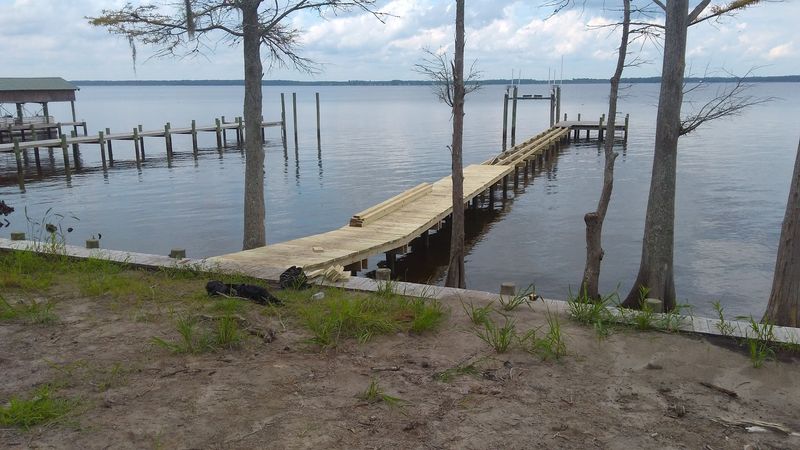
Aurora is one of those towns where the ground itself has something to say.
Located in Beaufort County along the Pamlico River, this small community sits atop one of the most fossil-rich deposits in the eastern United States. Sharks’ teeth millions of years old turn up here with remarkable regularity.
The Aurora Fossil Museum is the town’s centerpiece and one of the most underrated natural history museums in North Carolina.
It houses an impressive collection of marine fossils, megalodon teeth, and prehistoric whale bones, all pulled from the local area.
The museum staff are enthusiastic and knowledgeable in ways that make the exhibits come alive.
Right behind the museum, there’s a free fossil dig area where visitors can search through phosphate material for their own specimens to take home.
Kids absolutely lose their minds over this, and honestly, so do adults. Finding a real fossil with your own hands is a feeling that doesn’t get old.
The town is quiet and unpretentious, and that simplicity makes the museum feel like a genuine discovery rather than a planned attraction. Aurora earns its place on this list through pure, unassuming coolness.
9. Vass
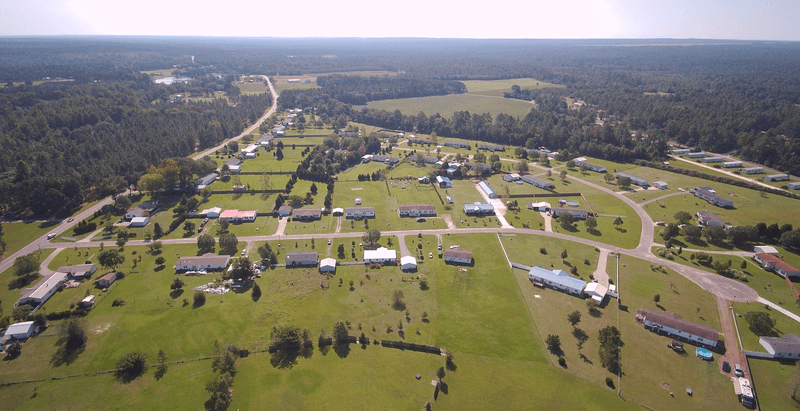
It doesn’t show up on many travel lists, and that’s precisely what makes Vass interesting.
Located in Moore County in the Sandhills region, this small town has a quiet, unhurried character that feels increasingly rare in a state that keeps growing faster than it can keep up with itself.
The surrounding Sandhills landscape is unique in North Carolina, a rolling terrain of longleaf pine forests and sandy soil that gives the region a look and feel unlike the mountains or the coast.
The area around Vass is beloved by birders and nature walkers who appreciate landscapes that don’t announce themselves loudly.
Vass sits near the town of Carthage, and together they anchor a stretch of Moore County that feels genuinely rooted in place.
The local community has a strong sense of its own identity, and that comes through in the small businesses, the community events, and the easy friendliness of the people you meet.
It’s not a destination that hands you a brochure at the door. You have to be curious enough to stop and look around.
Those who do tend to remember it long after flashier places have faded from memory.
10. Yanceyville
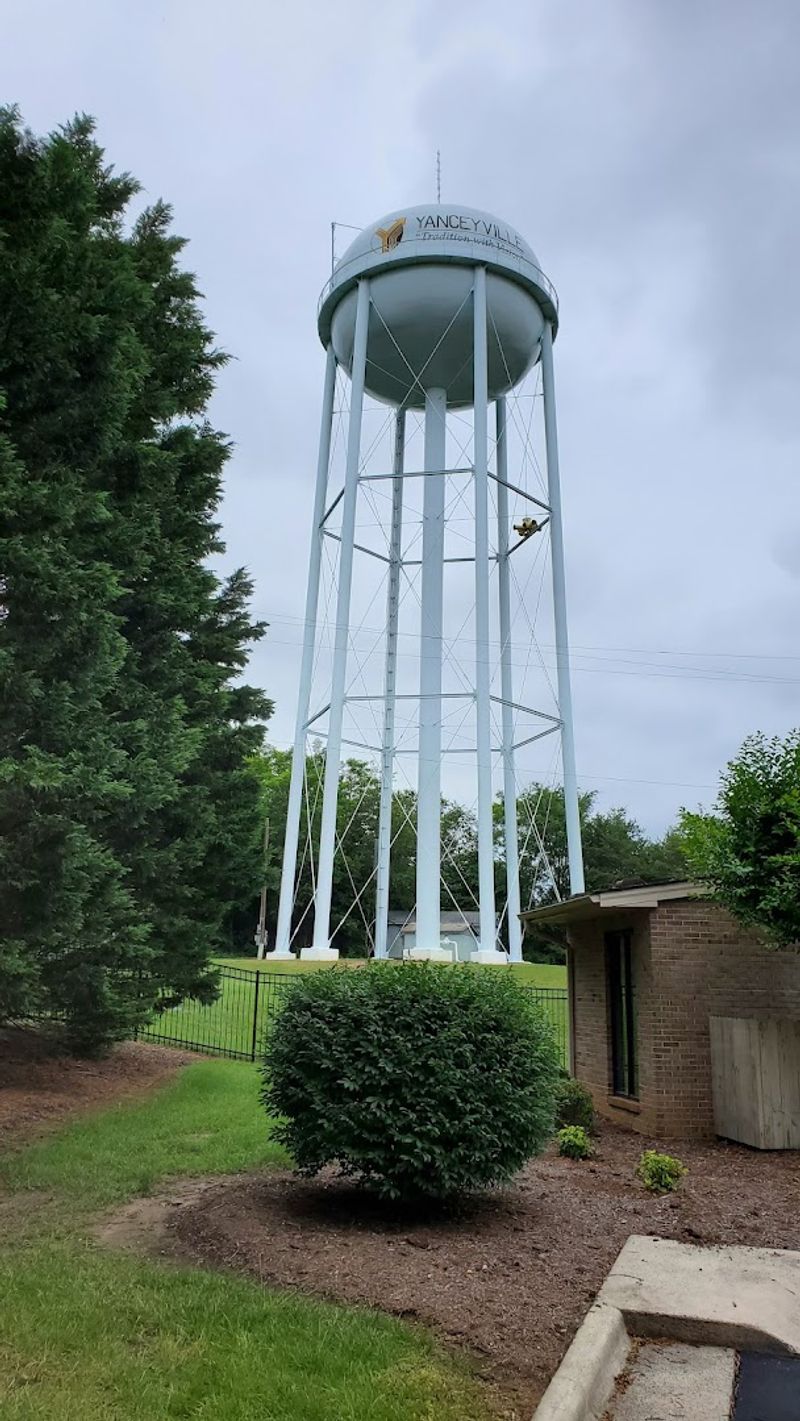
Yanceyville is the seat of Caswell County, and it carries that responsibility with a certain quiet dignity.
The courthouse square has a classic Southern small-town layout that feels like it was designed to slow people down, and it works.
You find yourself standing in the middle of it wondering why you don’t visit places like this more often.
The Caswell County Courthouse, built in 1861, is a striking antebellum structure that dominates the town center in the most elegant way.
The building has been preserved with care, and the surrounding square still functions as a real gathering point for the community rather than a decorative afterthought.
Yanceyville sits in the northern Piedmont, close to the Virginia border, and the surrounding countryside has a pastoral beauty that rewards slow drives on back roads.
Tobacco barns and old farmhouses dot the landscape in ways that feel genuinely historical rather than staged for effect.
The town is the kind of place that rewards patience and genuine curiosity. It’s not trying to be discovered.
It’s simply been here all along, doing its thing, waiting for the right kind of traveler to notice.