These 14 Wonderfully Weird Roadside Attractions In California Feel Too Strange To Be Real
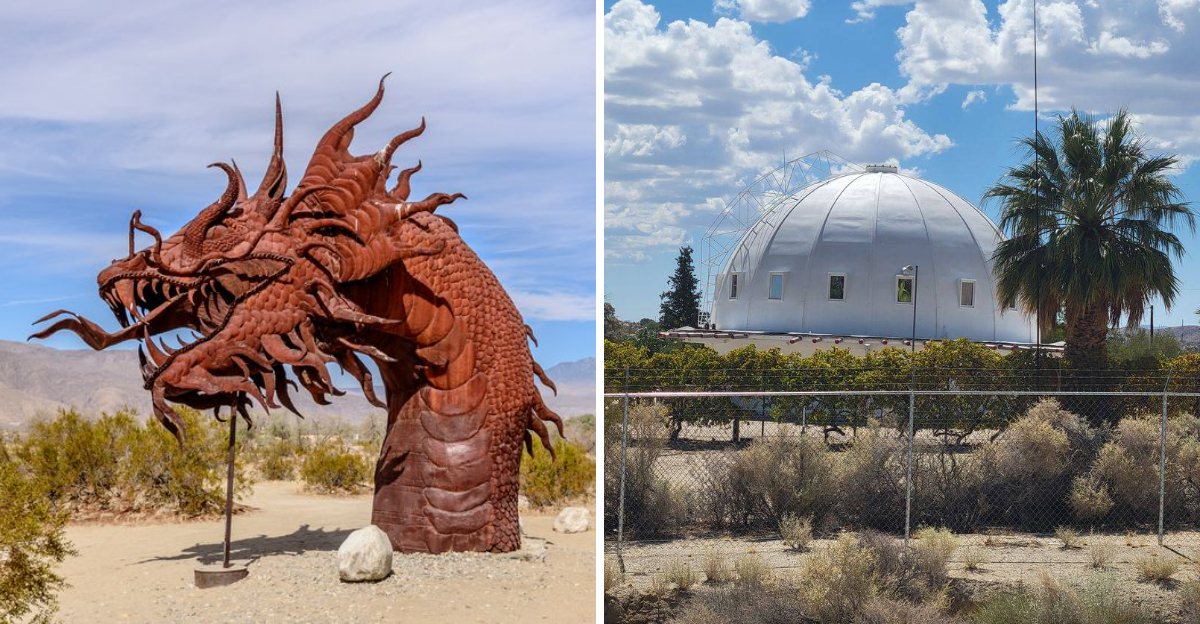
California hides roadside sights so strange they feel pulled straight from a dream. One minute you’re cruising past open desert.
The next, a giant dinosaur rises beside the highway. Turn another corner and technicolor mountains glow with painted messages.
Nothing about these stops feels ordinary. Gravity tilts in the wrong direction in certain forests. Metal sculptures burst from sand like forgotten relics. Bottle-covered trees clink and sing when the wind moves through them.
These places don’t just decorate the roadside. They stop traffic. Cameras come out fast. People step closer just to make sure what they’re seeing is real.
Every landmark carries its own brand of surreal energy. Some lean artistic. Others feel like pure roadside oddity. All of them turn routine drives into something far more unexpected.
Road trips through the Golden State take on a different rhythm when these stops enter the route. Curiosity replaces schedules. Detours become the main event.
Bring a camera. Bring an open mind. California’s strangest roadside attractions reward anyone willing to pull over and experience the wonderfully weird firsthand.
1. Salvation Mountain, Niland
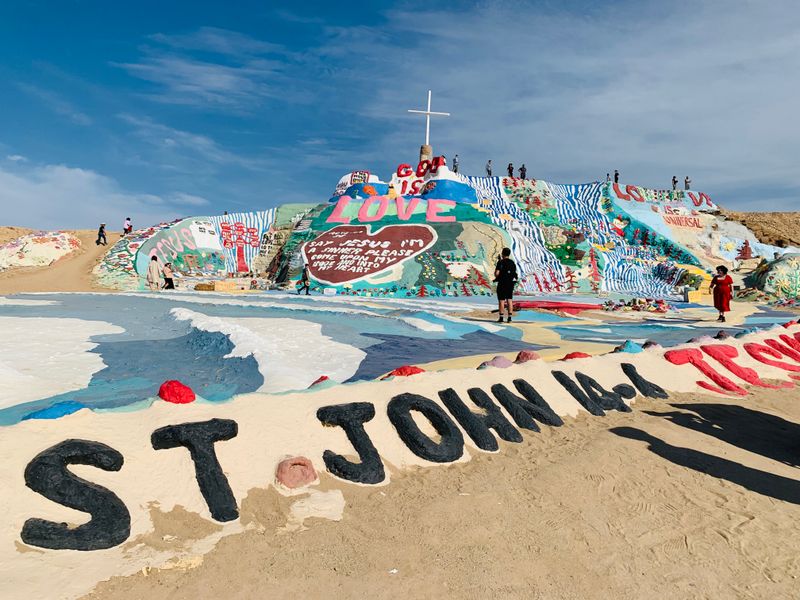
A mountain of adobe clay and paint rises from the desert floor like a fever dream brought to life.
Salvation Mountain stands as a monument to one person’s unwavering dedication and creative spirit near the Salton Sea.
Leonard Knight spent three decades building this 50-foot-tall artwork using donated paint and salvaged materials. The surface explodes with color in every direction visitors look.
Bright yellows blend into deep blues while reds and greens create biblical verses and folk art designs across the slopes.
Visitors can walk along painted pathways that wind through rooms and alcoves built into the structure itself.
The desert heat intensifies the experience of standing before this massive creation. Paint peels slightly in places where the sun beats down most intensely throughout the day.
Photographers arrive early in the morning or late in the afternoon when shadows add depth to the textured surfaces. No admission fee exists for this outdoor gallery open to anyone willing to make the journey.
The remote location means fewer crowds and more time to absorb the scale of what one determined artist accomplished.
Respect for the artwork ensures this fragile landmark survives for future travelers seeking something genuinely extraordinary.
2. Cabazon Dinosaurs, Cabazon
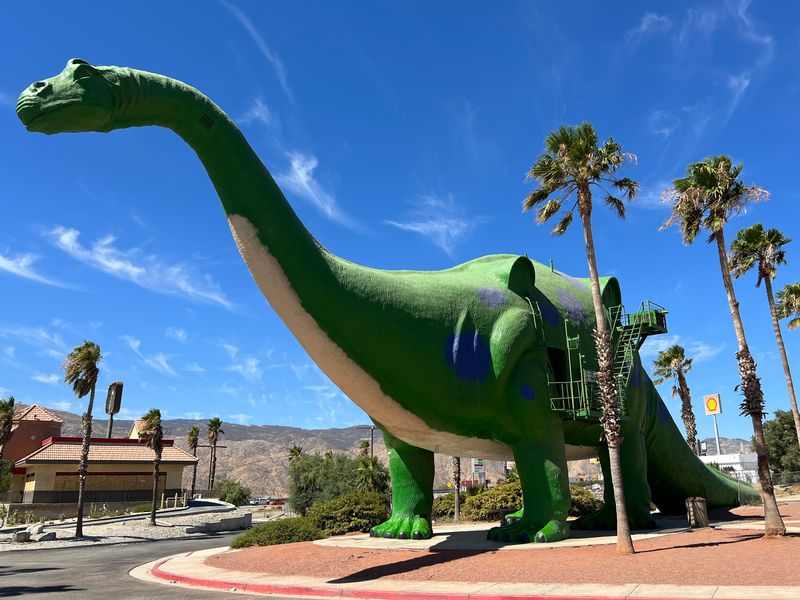
Two enormous concrete creatures guard the desert along Interstate 10 like sentinels from prehistoric times.
Mr. Rex stands 65 feet tall while Dinny stretches 150 feet long, creating an unmistakable landmark visible from the highway.
These dinosaurs have watched over Cabazon since the 1960s and 1970s when they were built to draw travelers to a restaurant.
The location sits at 50770 Seminole Dr, Cabazon, CA 92230, making the attraction easy to find just off the interstate.
Visitors can climb inside Dinny to explore a small museum dedicated to creationist perspectives on dinosaur history.
The gift shop stocks dinosaur-themed souvenirs ranging from postcards to toys for collectors of all ages.
Film buffs recognize these sculptures from their appearance in the 1985 comedy featuring a quirky character’s big adventure.
That movie moment cemented the dinosaurs as cultural icons beyond their original purpose as roadside advertising.
Children press against the fence for photos while adults marvel at the sheer size of the sculptures. The desert sun creates dramatic shadows that shift throughout the day around the dinosaur bases.
Admission fees apply for those wanting to enter the museum inside Dinny and explore the grounds more thoroughly. The parking lot offers ample space for vehicles of all sizes.
3. Bottle Tree Ranch, Oro Grande
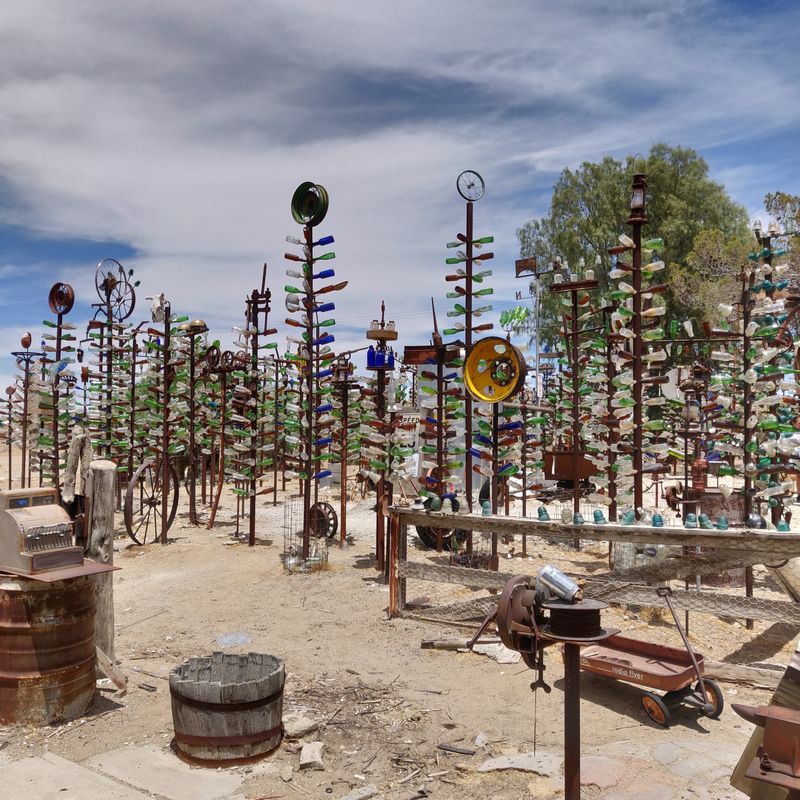
More than 200 metal trees sprout from the desert ground along historic Route 66, each branch holding colorful glass bottles.
Elmer Long created this forest of recycled materials that transforms sunlight into rainbow displays throughout the day. The bottles catch the wind and create gentle clinking sounds that drift across the property.
Route 66 travelers find the ranch at 24266 National Trails Hwy, Oro Grande, CA 92368, positioned perfectly for a memorable stop.
The installation spreads across the landscape in rows and clusters that invite exploration from multiple angles.
Each tree stands unique with different bottle arrangements and color combinations that Elmer carefully selected.
Afternoon light produces the most spectacular visual effects as sun passes through the glass. Blues and greens glow against the tan desert backdrop while reds and ambers add warmth to the scene.
Photographers spend considerable time capturing the interplay between metal, glass, and natural light.
The ranch operates as a free attraction though donations help maintain the property and add new elements. Visitors should respect the artwork by not touching or removing bottles from the trees.
The remote desert setting means limited shade, so planning visits during cooler hours makes the experience more comfortable for extended stays.
4. Glass Beach, Fort Bragg
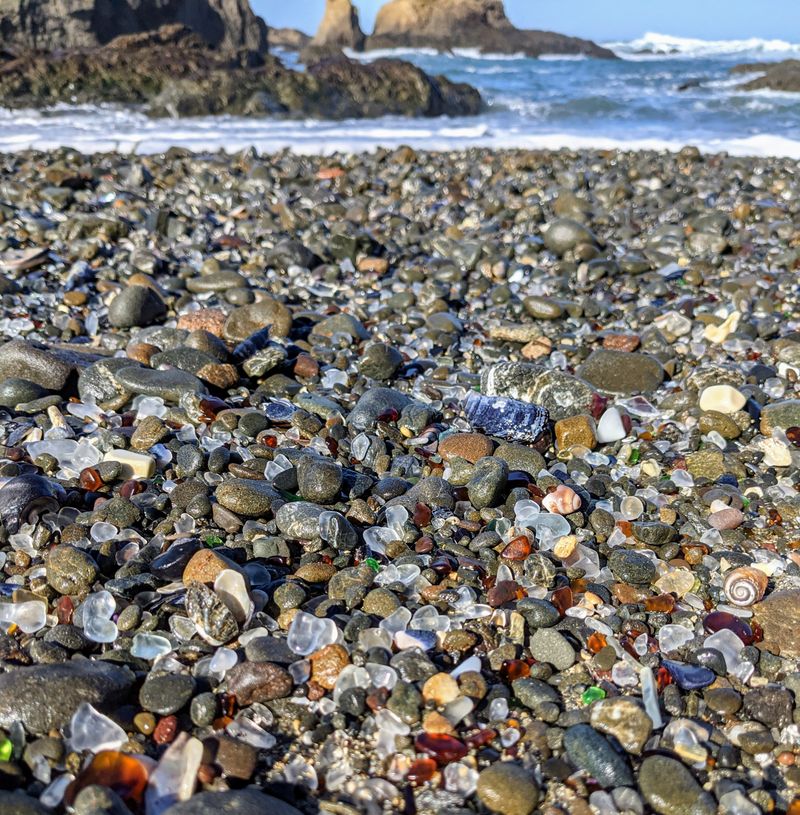
Decades of ocean waves transformed discarded glass into a glittering shoreline unlike any other coastal destination.
Glass Beach earned its name from the countless smooth pebbles that blanket portions of the rocky shore.
What began as a dumping ground from the early 1900s became a natural recycling project completed by the Pacific Ocean.
The beach sits within MacKerricher State Park near the end of Elm Street in Fort Bragg. Visitors walk down a short trail to reach the cove where glass pieces concentrate in certain areas.
Browns and clear glass appear most frequently while blues, greens, and reds create excitement when discovered.
Tide conditions affect how much glass remains visible on any given day. Lower tides expose more of the beach and increase chances of spotting colorful pieces among the rocks.
Collectors once threatened the supply by taking handfuls home, so removing glass is now prohibited to preserve this unique landscape.
The surrounding cliffs provide windbreaks and framing for photographs of the sparkling shore. Sneakers with good traction work better than sandals on the uneven rocky surface.
Morning visits often mean fewer people and better opportunities to search the beach carefully without feeling rushed by crowds.
5. Desert View Tower, Jacumba Hot Springs
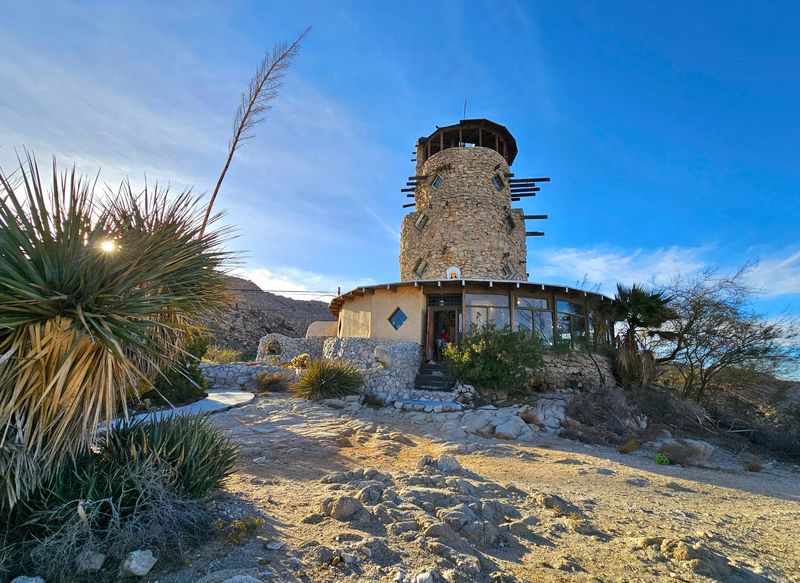
A stone tower rises from the desert landscape offering panoramic views and an eclectic collection of folk art.
Desert View Tower was constructed in 1922 as a monument to pioneers who crossed the harsh terrain below.
The structure combines practical observation deck purposes with the builder’s vision of creating something memorable along the highway.
The tower stands at 01 In-Ko-Pah Park Rd, Jacumba Hot Springs, CA 91934, positioned at a strategic viewpoint overlooking the desert.
Inside and around the building, visitors encounter unusual sculptures and assemblages created from found objects and desert materials. The collection grew over decades as different caretakers added their own artistic contributions.
Climbing the tower requires navigating narrow stone staircases that wind upward through dim interior spaces. The effort rewards visitors with sweeping views that extend into Mexico on clear days.
Wind whips across the top platform, so securing hats and loose items prevents them from sailing into the desert below.
The surrounding grounds contain additional sculptures and oddities worth exploring before or after the tower climb.
A small admission fee supports maintenance of this aging structure and its quirky museum. The remote location means bringing water and preparing for desert conditions regardless of season.
6. Bombay Beach Installations, Bombay Beach
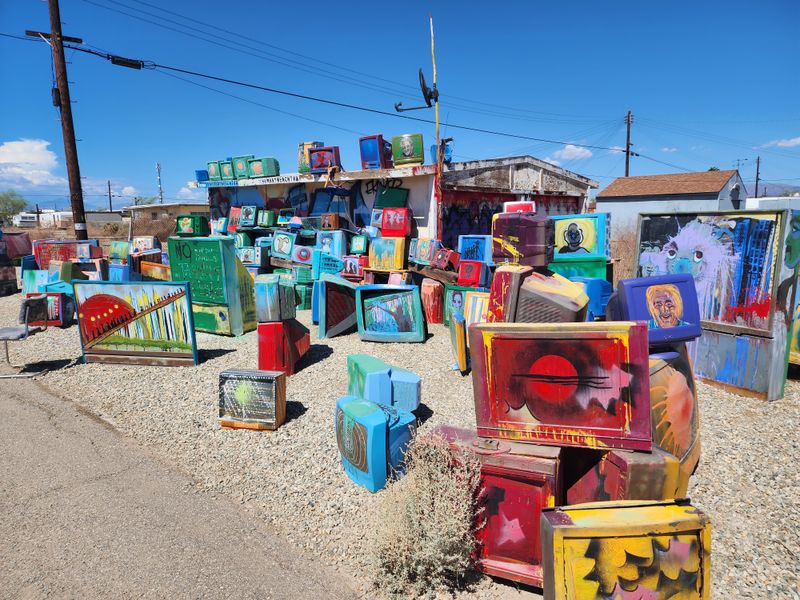
Art emerges from abandonment along the shores of the slowly evaporating Salton Sea.
Bombay Beach transformed from a declining resort town into an unexpected outdoor gallery where artists create installations among empty buildings.
The landscape feels post-apocalyptic yet strangely beautiful as sculptures and murals appear throughout the nearly deserted streets.
The ruins are located at 9576 Avenue G, Niland, CA 92257. No formal address guides visitors because the art spreads throughout the public spaces and abandoned structures.
Painted pianos sit in the desert, figures made from found objects watch the road, and murals cover walls of buildings slowly succumbing to time.
The annual Bombay Beach Biennale brings more artists and installations to the area, though many pieces remain year-round.
Walking the streets feels like exploring a strange alternate reality where nature and human creativity collide.
The salty smell from the sea mixes with desert dust while wind moves through empty window frames.
Summer temperatures soar to dangerous levels, making cooler months the only comfortable time for exploration.
The remote location and lack of services means bringing supplies and respecting both the art and the few remaining residents.
Photographers find endless subjects as light changes throughout the day across this surreal landscape.
7. World Famous Crochet Museum, Joshua Tree
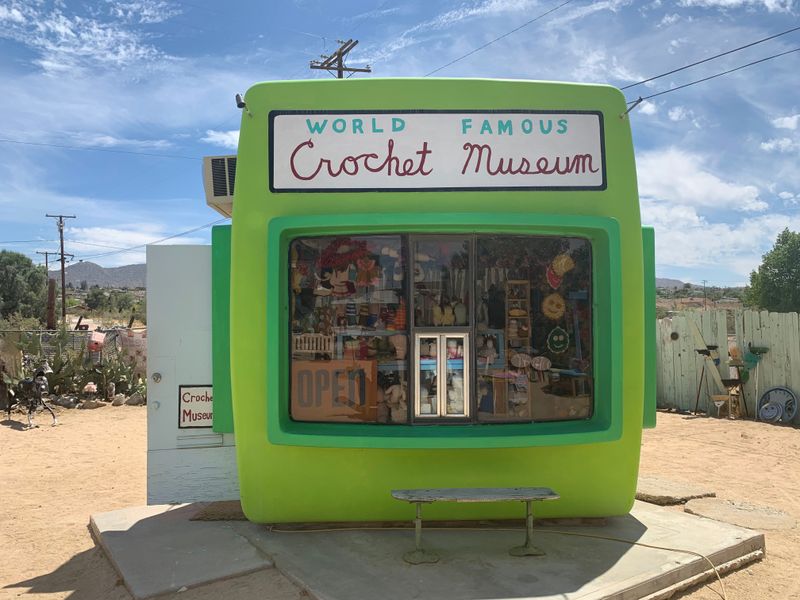
A tiny museum celebrates the humble craft of crochet with an enthusiasm that borders on obsessive.
The World Famous Crochet Museum occupies a small storefront in Joshua Tree, proving that any passion can become a roadside attraction with enough dedication.
Shari Elf founded this collection to showcase crocheted items ranging from practical to bizarre.
The museum operates at 61855 CA-62, Joshua Tree, CA 92252, tucked among other small businesses along the main road.
Inside the compact space, displays feature everything from traditional doilies to crocheted food items and pop culture references. The handmade nature of every piece creates an intimate connection between visitor and artist.
Hours vary seasonally and the museum sometimes closes unexpectedly, so checking ahead prevents disappointment. The small admission fee seems almost too modest given the uniqueness of the collection.
Visitors often finish their tour in under 30 minutes, though crochet enthusiasts linger longer examining techniques and patterns.
The location makes a perfect quirky stop while exploring Joshua Tree National Park and surrounding desert communities. The museum shop sells crocheted items and supplies for those inspired to start their own projects.
Social media has helped this tiny museum gain international recognition despite its humble size and specialized focus.
8. Integratron, Landers
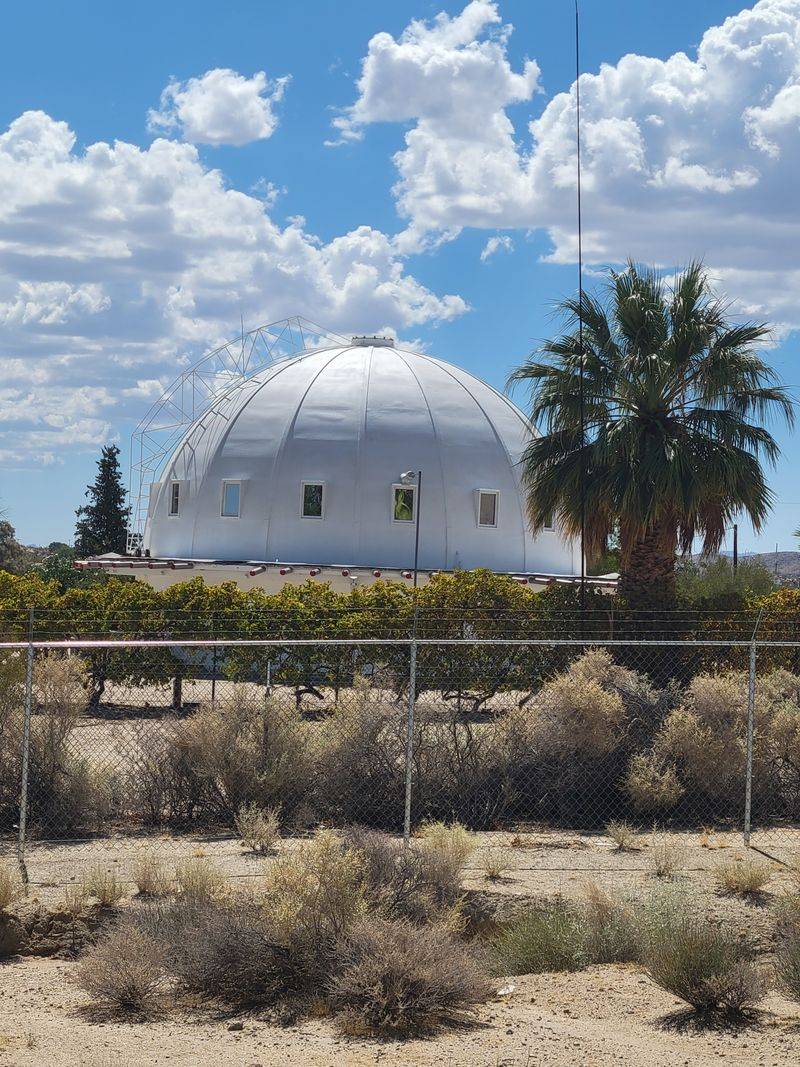
A white dome rises from the Mojave Desert like a spacecraft waiting for departure.
The Integratron was built in the 1950s by George Van Tassel, who claimed the design came from extraterrestrial communication.
The structure was intended as a time machine and rejuvenation device, though today it serves as an acoustic sound bath venue.
The dome sits at 2477 Belfield Blvd, Landers, CA 92285, accessible via dirt roads that add to the remote desert experience.
The building contains no metal fasteners in its construction, creating a resonant chamber with remarkable acoustic properties.
Sound bath sessions use crystal singing bowls to fill the space with harmonic vibrations that participants describe as deeply relaxing.
Reservations are required for sound bath experiences as sessions fill quickly, especially on weekends.
The 25-minute private sound baths or group sessions offer different experiences depending on personal preference.
Visitors lie on mats spread across the floor while sound washes over them in waves. The surrounding property includes a small shop and outdoor spaces for contemplation before or after sessions.
The desert location means extreme temperatures, so dressing in layers helps adjust to indoor and outdoor conditions.
The Integratron attracts both believers in alternative healing and curious skeptics interested in unusual architecture and local legends.
9. Mystery Spot, Santa Cruz
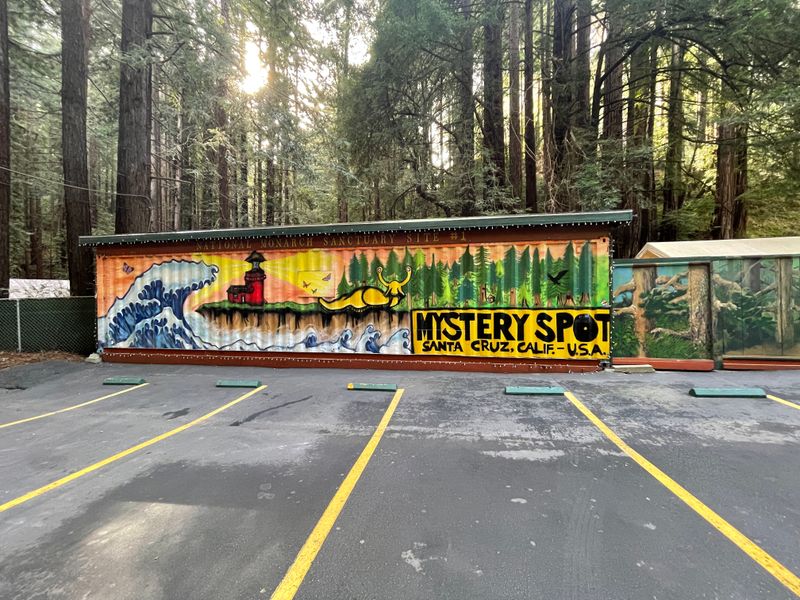
Gravity seems to malfunction inside a small cabin nestled among redwood trees. The Mystery Spot has confused visitors since opening in 1939 with demonstrations that appear to defy physical laws.
Balls roll uphill, people lean at impossible angles without falling, and height differences between individuals appear to shift depending on where they stand.
The attraction operates at 465 Mystery Spot Rd, Santa Cruz, CA 95065, requiring advance ticket purchases during busy periods.
Guided tours lead groups through the gravity house and surrounding property where strange phenomena supposedly occur.
Tour guides demonstrate each effect with practiced showmanship that adds entertainment value to the scientific puzzlement.
Explanations for the effects range from magnetic anomalies to simple optical illusions created by tilted construction. Regardless of the true cause, the demonstrations remain entertaining and photograph well.
Visitors leave either convinced something genuinely strange affects the area or satisfied they experienced a well-executed illusion.
The forest setting provides shade and pleasant surroundings beyond the main attraction. The gift shop sells Mystery Spot merchandise and scientific toys related to perception and gravity.
Tours run approximately 45 minutes, though the entire visit including gift shop browsing extends to about 90 minutes for most groups exploring this longtime Santa Cruz oddity.
10. Giant Rock, Landers
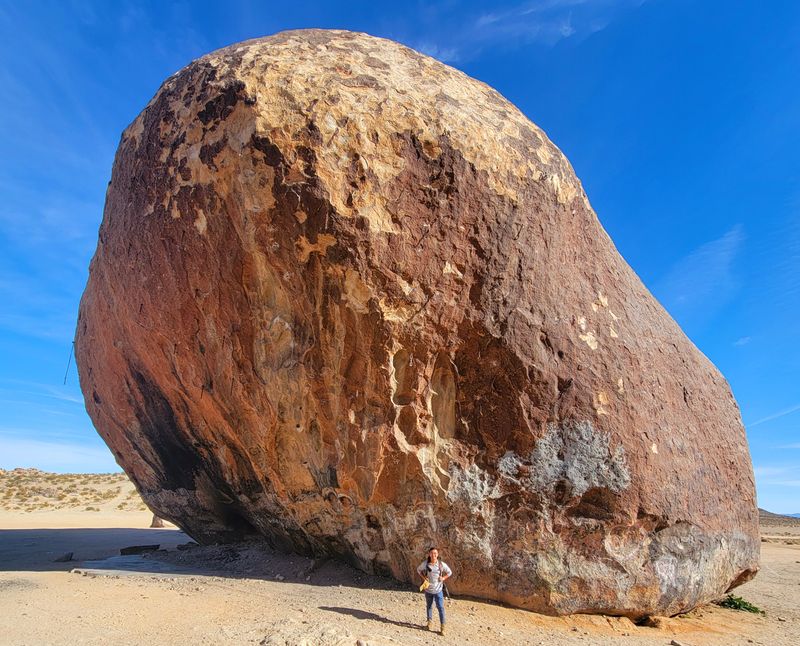
A seven-story boulder sits alone in the desert as one of the largest freestanding rocks in the world.
Giant Rock has served as a landmark, sacred site, and UFO contactee meeting place throughout its long history.
Native American tribes considered the rock spiritually significant long before modern seekers arrived searching for extraterrestrial connections.
The rock sits north of Landers in the Mojave Desert, accessible via dirt roads that require careful navigation.
George Van Tassel held UFO conventions at Giant Rock during the 1950s, attracting thousands of believers to the remote location.
A large crack now splits the boulder, possibly caused by natural weathering or according to some theories, by negative energy from vandalism.
Visitors can walk around the base and touch the ancient stone that radiates stored heat long after sunset.
The remote location means bringing water and preparing for extreme desert conditions year-round. Graffiti unfortunately mars portions of the rock despite its cultural and geological significance.
The area around Giant Rock includes the nearby Integratron and other sites connected to Van Tassel’s work. Sunrise and sunset create dramatic lighting on the boulder’s textured surface.
The rock continues attracting spiritual seekers, curious tourists, and geology enthusiasts who appreciate this massive natural formation standing alone in the vast desert expanse.
11. Borrego Springs Sculptures, Borrego Springs
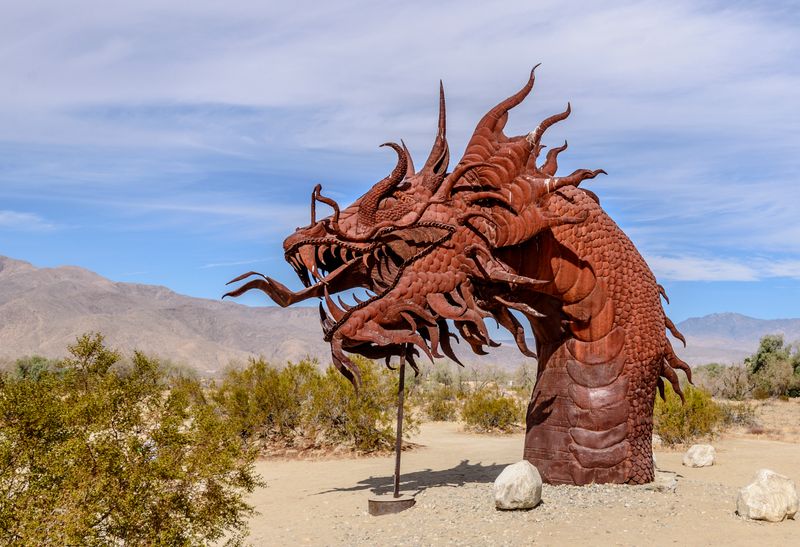
More than 130 massive metal sculptures emerge from the desert floor like a fever dream made solid.
Ricardo Breceda created these artworks for the Galleta Meadows Estate, transforming ordinary desert into an unexpected outdoor gallery.
A 350-foot-long serpent dragon dominates the landscape while dinosaurs, camels, and giant insects appear throughout the area.
The sculptures spread across various locations throughout Borrego Springs with concentrated areas along Borrego Springs Road.
The estate allows free public access to view the artworks scattered across the property. Each sculpture stands large enough to see from a distance, creating a treasure hunt atmosphere as visitors drive or walk between pieces.
The metal artworks withstand harsh desert conditions while developing natural patina that adds character over time.
Families pose for photos climbing on accessible sculptures while respecting signs indicating which pieces allow interaction. The surreal sight of a giant scorpion or prehistoric creature in the desert creates memorable images.
Early morning and late afternoon light creates the most dramatic shadows and highlights on the textured metal surfaces.
The sculptures can be viewed year-round though summer heat makes extended outdoor exploration uncomfortable.
Maps showing sculpture locations help visitors find major pieces, though discovering unexpected artworks while exploring adds to the adventure of experiencing this unique free attraction in the California desert.
12. Confusion Hill, Legget
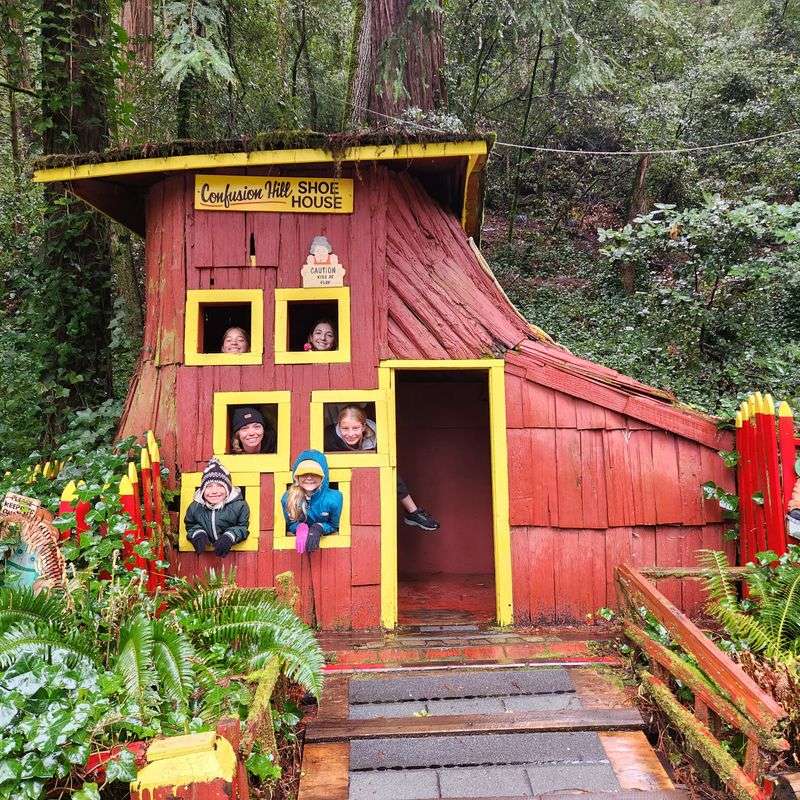
Gravity goes haywire at this Northern California attraction where balls appear to roll uphill and people seem to grow or shrink before your eyes.
The Mystery House sits at a sharp angle that challenges everything you think you know about balance and physics. Inside, water flows the “wrong” direction and brooms stand upright without support.
Floors tilt. Walls lean. Doorways warp depending on where you stand. The effect is playful, disorienting, and surprisingly convincing.
Built in the 1940s, this family-owned roadside stop has puzzled travelers for generations along the Avenue of the Giants.
It’s located at 75001 US-101, Leggett, CA 95585, surrounded by towering redwoods that make the experience feel even more surreal.
A miniature train ride winds through the forest outside, offering a calmer reset before or after exploring the tilted rooms.
Plan about an hour to take in every illusion and snap photos that will look impossible long after you leave.
13. Trees Of Mystery, Klamath
A 49-foot-tall Paul Bunyan greets visitors with a booming recorded voice that carries all the way to the highway. Beside him stands Babe the Blue Ox, painted a brilliant blue and impossible to miss.
These towering figures have welcomed travelers since 1946, turning this redwood stop into one of Northern California’s most recognizable roadside attractions.
The location sits at 15500 US-101, Klamath, CA 95548, right along a stretch of highway famous for its massive trees.
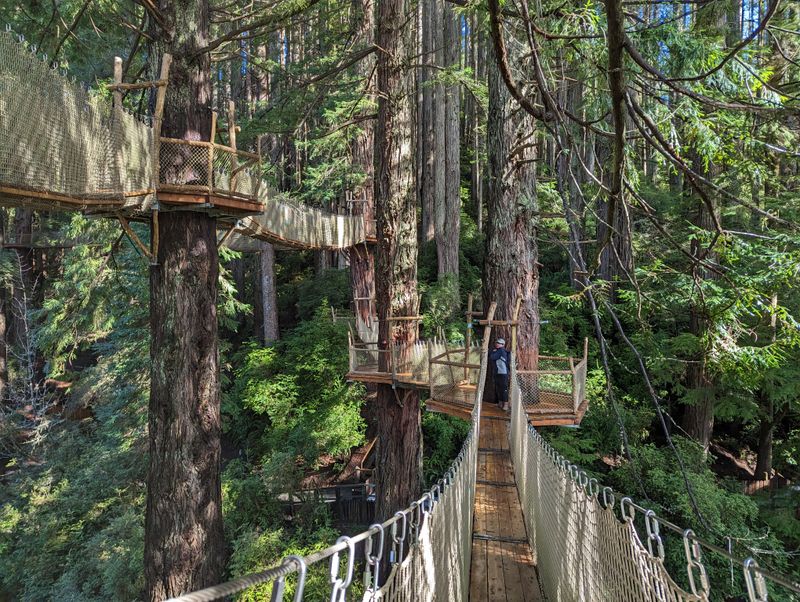
Sky Trail gondolas glide through the canopy, lifting riders above the forest floor for sweeping views of ancient redwoods.
Interpretive trails wind through cathedral-like groves where sunlight filters through branches that soar hundreds of feet overhead.
Inside, a Native American museum showcases an impressive collection of tribal artifacts, adding cultural depth to the experience.
The gift shop, designed like an old logging camp, sells everything from carved wooden bears to jars of huckleberry jam.
Rain or shine, this stop blends roadside kitsch with the grandeur of the redwoods, creating an experience that feels both nostalgic and unforgettable.
14. Chandelier Drive-Thru Tree, Leggett
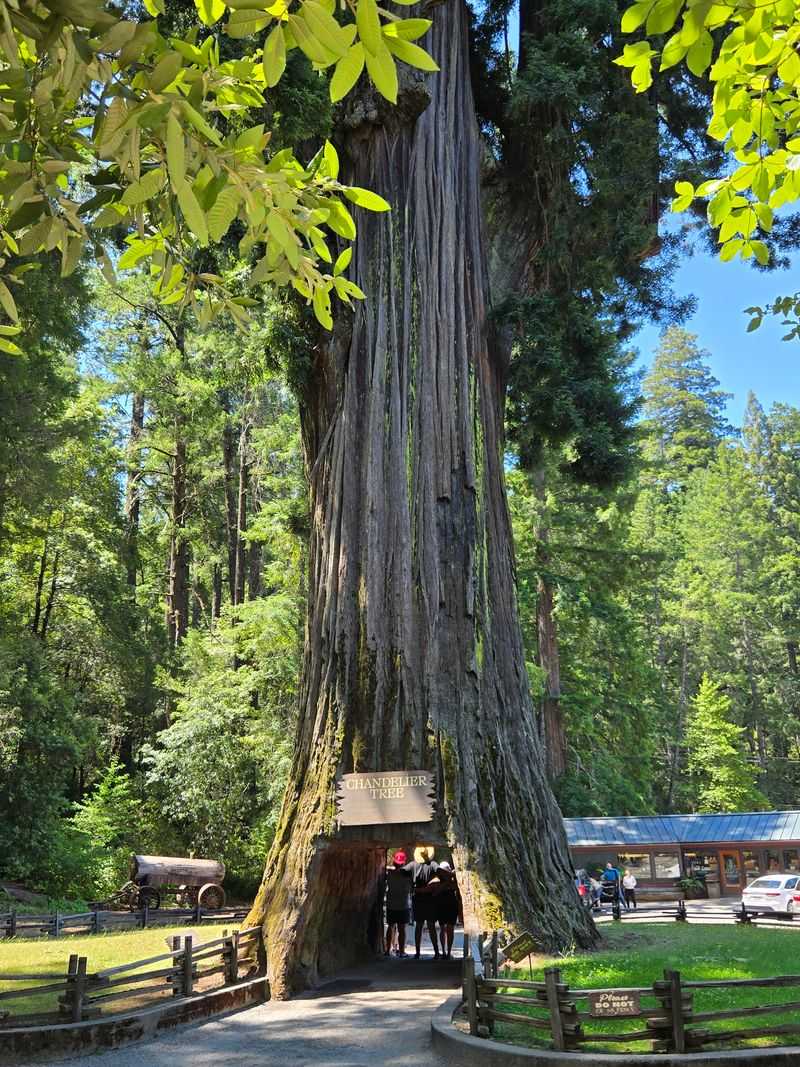
Your car suddenly feels miniature when you steer through the hollow base of a towering coastal redwood. The famous Chandelier Tree rises 315 feet overhead, with a tunnel carved directly through its trunk.
Its name comes from the drooping, chandelier-like branches that hang from above, creating an even more surreal sight once you step back to take it all in.
This living giant has welcomed drivers since 1937, when the six-foot-wide passage was first cut. Located at 67402 Drive Thru Tree Rd, Leggett, CA 95585, the privately owned grove offers more than just the drive-through experience.
Visitors can pull over, walk among ancient redwoods, and picnic beneath trees that have stood for centuries.
Despite decades of traffic passing through its base, the tree continues to thrive, a testament to the resilience of these coastal giants.
Staff at the small gift shop share stories about its history and the surrounding forest. Drivers should measure vehicles ahead of time.
The opening stands about 6 feet wide and 6 feet 9 inches tall, making compact cars the easiest fit while larger vehicles require slow, careful navigation.