10 Things To Do In Naples That Make This Florida City Worth The Trip
Start with a beach morning. Change the plan by noon. That is the kind of day this Florida city can make surprisingly easy.
Gardens, wildlife, museums, shaded walks, and Gulf views give visitors room to switch moods without wasting half the day driving around.
Families can keep things relaxed. Nature fans can stay outside longer. Art lovers have another direction entirely.
Can you believe one short getaway can change pace this easily? The freedom to improvise may be the strongest reason to visit.
A good trip does not always need a packed itinerary when the alternatives keep appearing naturally.
1. Naples Botanical Garden
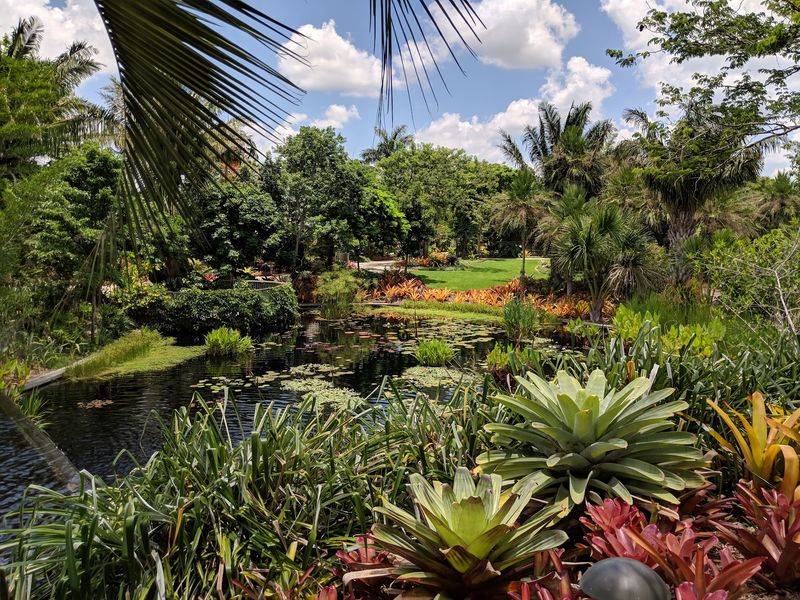
Just imagine for a second a garden so large you need a strategy. Roughly 170 acres hold plants gathered from tropical regions worldwide.
Naples Botanical Garden organizes its collection into themed areas. Each one represents a distinct culture or ecosystem, and each has its own mood.
The Kapnick Brazilian Garden features major collections of South American palms, aroids, bromeliads, and plants associated with Brazilian landscape architect Roberto Burle Marx.
Quiet arrives in the Lea Asian Garden. Bamboo groves and still water features invite slow steps and slower thoughts.
Native Florida species share the Scott Florida Garden with plants from other parts of the world that thrive in Southwest Florida’s climate.
Views open toward surrounding preserve lands full of local wildlife. Birders often linger here longer than planned.
Beyond the pretty views, serious work happens daily. Staff lead plant conservation, habitat restoration, and scientific research programs.
Rare and endangered species are protected on site. Guests learn environmental stewardship without ever feeling lectured.
Families gravitate toward the W.O.N.D.E.R. program. Activity packets encourage observation, exploration, and reading along the trails.
Seasonal events include art shows and plant sales. Check the calendar before choosing your date.
With over 50,000 plants as of 2025, repeat trips reveal new blooms constantly. The address is 4820 Bayshore Dr. Mornings bring softer light and friendlier temperatures for photos.
2. The Baker Museum
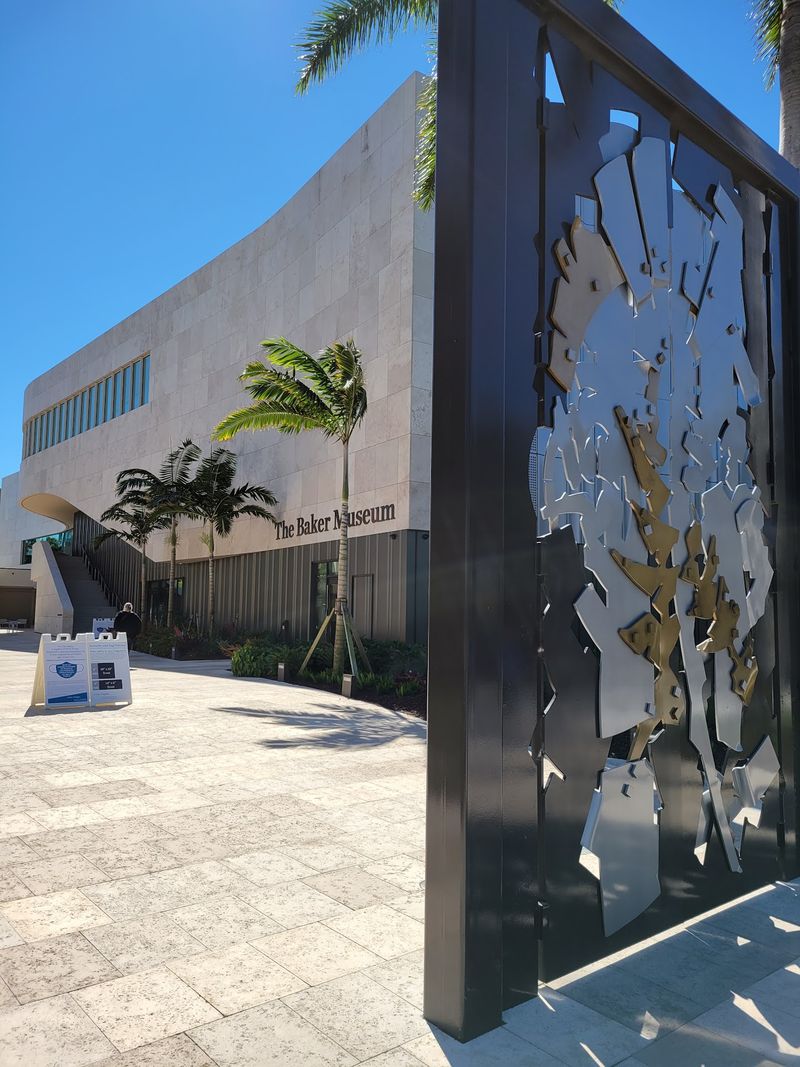
Three stories and roughly 45,000 square feet hold serious fine art.
The Baker Museum opened in 2000 and anchors the visual arts in Southwest Florida. It operates as part of Artis-Naples, a multidisciplinary arts organization.
The permanent collection contains over 3,500 objects. Emphasis falls on 20th and 21st-century American and Mexican modern art.
The Ahmet Ertegün Collection focuses on American modernism, with foundational works dating from roughly 1910 to 1955.
Mexican masters appear in the Harry Pollak Collection. Diego Rivera and Jose Clemente Orozco are among the featured artists.
Sixteen galleries give exhibitions room to breathe. Traveling shows rotate through regularly, so the experience rarely repeats.
Four large-scale glass installations by Dale Chihuly scatter color and light across the building. They stop nearly everyone mid-stride.
A dedicated art library supports scholarly research. Students and curious readers both benefit from the resource.
Air conditioning makes this an excellent afternoon plan when the sun turns punishing. Culture and comfort arrive together.
Allow two hours to see things properly. Rushing here defeats the purpose entirely. Head to 5833 Pelican Bay Blvd and let the galleries slow your pulse.
3. Naples Depot Museum
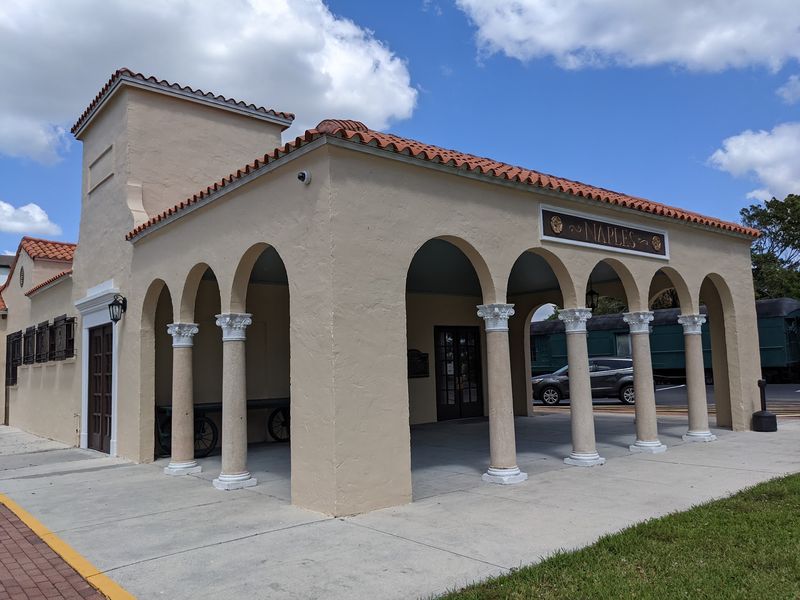
Let’s look at it from this angle: how did a tiny fishing village become a glittering Gulf Coast resort town? Trains had a lot to do with it.
The Naples Depot Museum occupies the restored Seaboard Air Line Railway passenger station. Roaring Twenties railroading transformed the region almost overnight.
Listed on the National Register of Historic Places, the building itself is an artifact. Its architecture nods to the optimism of that boom.
Interactive exhibits trace the city’s growth step by step. Early transportation and technology take center stage.
Seminole dugout canoes sit near a mule wagon. An antique swamp buggy named Tumble Bug steals plenty of attention.
Restored rail cars include a 1947 Budd Tavern Observation Car. Peering inside reveals travel styled with real flair.
The exhibits place rail travel within the broader story of transportation and technology in Southwest Florida.
Exhibits show how generations of Southwest Floridians traveled and adapted to a region that was once difficult to reach and navigate.
Next door, the Naples Lionel Train Museum features an interactive model layout and outdoor ride-on railroad, but it is seasonally closed until October 16, 2026.
Fifth Avenue South sits right outside, so shops and cafes are steps away. Combine the two for an easy afternoon. The address is 1051 Fifth Ave S, and admission to the Naples Depot Museum is free.
4. Naples Art Institute
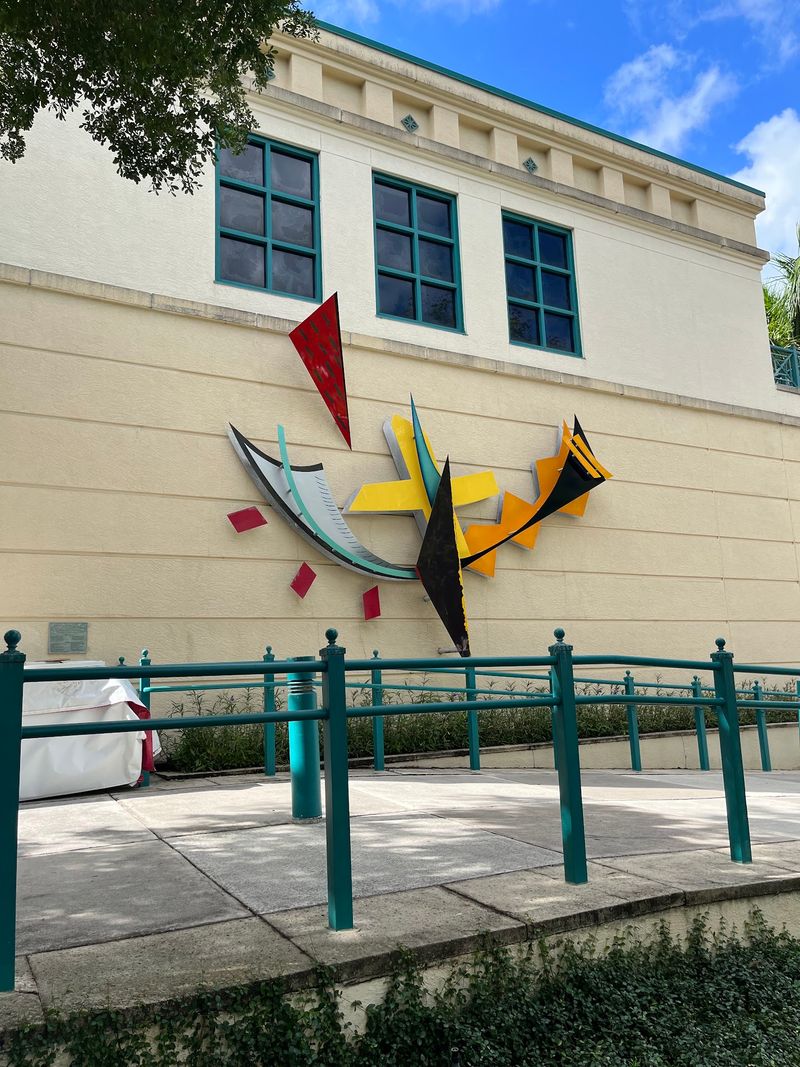
I’m still trying to wrap my head around the caliber of exhibitions booked in a city this size. Creativity clearly runs deep here.
The Naples Art Institute works as a community hub built around visual arts. Engagement and education matter as much as display.
Exhibition schedules mix international names with local talent. Artistic dialogue happens naturally between the two.
An upcoming exhibition, Rembrandt: Masterpieces in Black & White, runs from October 10, 2026, through January 24, 2027, and is scheduled to travel to only three U.S. museums.
Rembrandt reshaped printmaking through intricate line work. Emotion emerges from shadow and scratch rather than color.
Another exhibition, The Power of Photography, displayed iconic 20th-century images. Those photographs function as visual time capsules.
Different eras and human experiences sit side by side on the walls. The institute’s rotating exhibitions span painting, photography, prints, sculpture, and other media.
Classes run for all ages and skill levels throughout the year. Beginners are welcomed rather than intimidated.
Workshops cover painting, drawing, and mixed media. Instructors keep sessions practical and encouraging.
Artistic development within the Southwest Florida community drives the whole mission. That commitment shows in the programming.
You will find it at 585 Park St, close to downtown strolling territory. Check the current exhibition calendar before arriving, since shows change throughout the year.
5. Lowdermilk Park
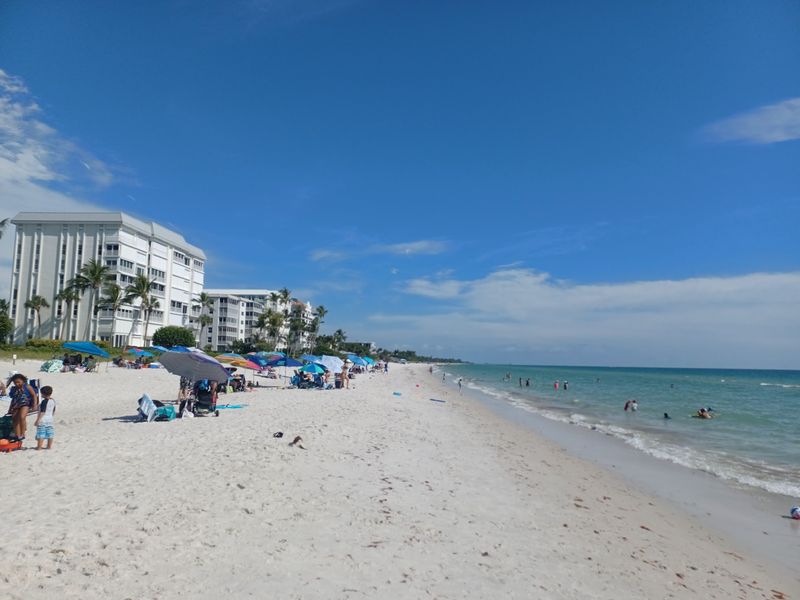
Roughly 1,000 feet of white-sand Gulf shoreline stretches beside this city park. Gulf water laps in gently, warm and remarkably calm.
Lowdermilk Park serves as the beachfront headquarters for families in Naples. Everything needed for a full day sits within a short walk.
Sand volleyball courts and a children’s playground add more options beyond the beach.
Picnic tables dot the grassy areas. Restrooms and outdoor showers mean sandy feet get rinsed before the car ride.
Two gazebos can be rented for larger gatherings. Birthday parties and reunions work beautifully here.
A charming duck pond anchors the inland side. Winding walking paths circle it for a gentle stroll.
Kayaks and stand-up paddleboards are available for rent directly on the sand. Flat morning water makes paddling simple for beginners.
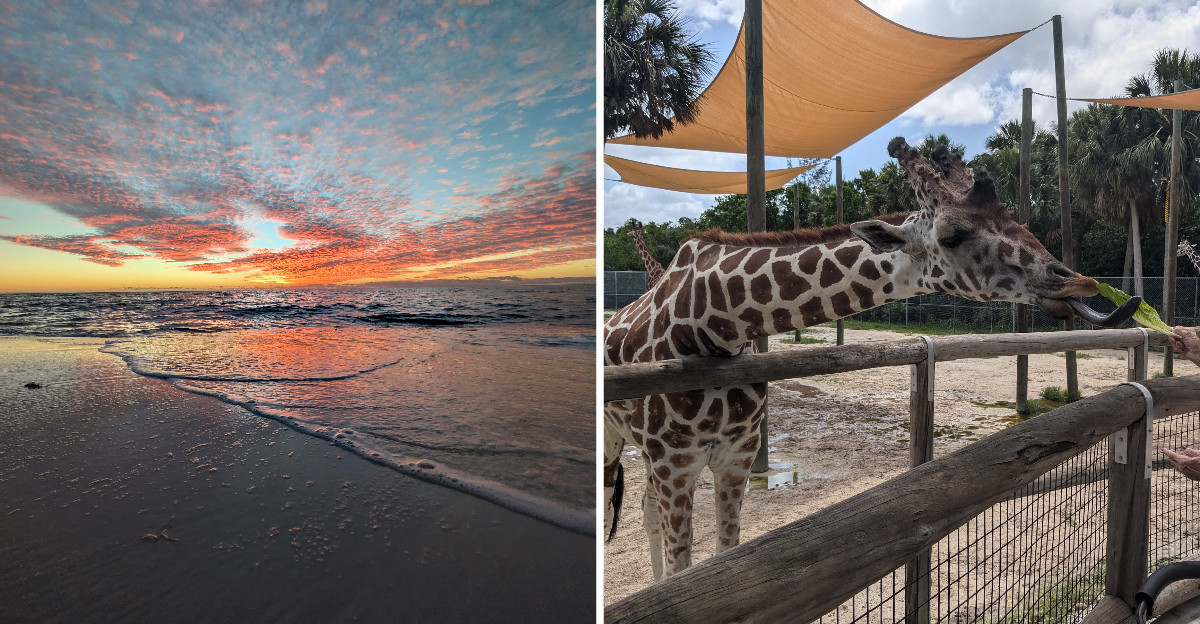
Sunsets steal the show every evening. Unobstructed views across the Gulf of Mexico turn the sky orange and pink.
Arrive about forty minutes before the sun drops. Parking fills quickly during peak season. Shelling improves after a windy night, so early risers get first pick. Bring a mesh bag.
The park sits at 1301 Gulf Shore Blvd N, and honestly, one trip rarely satisfies anyone.
6. Clam Pass Park
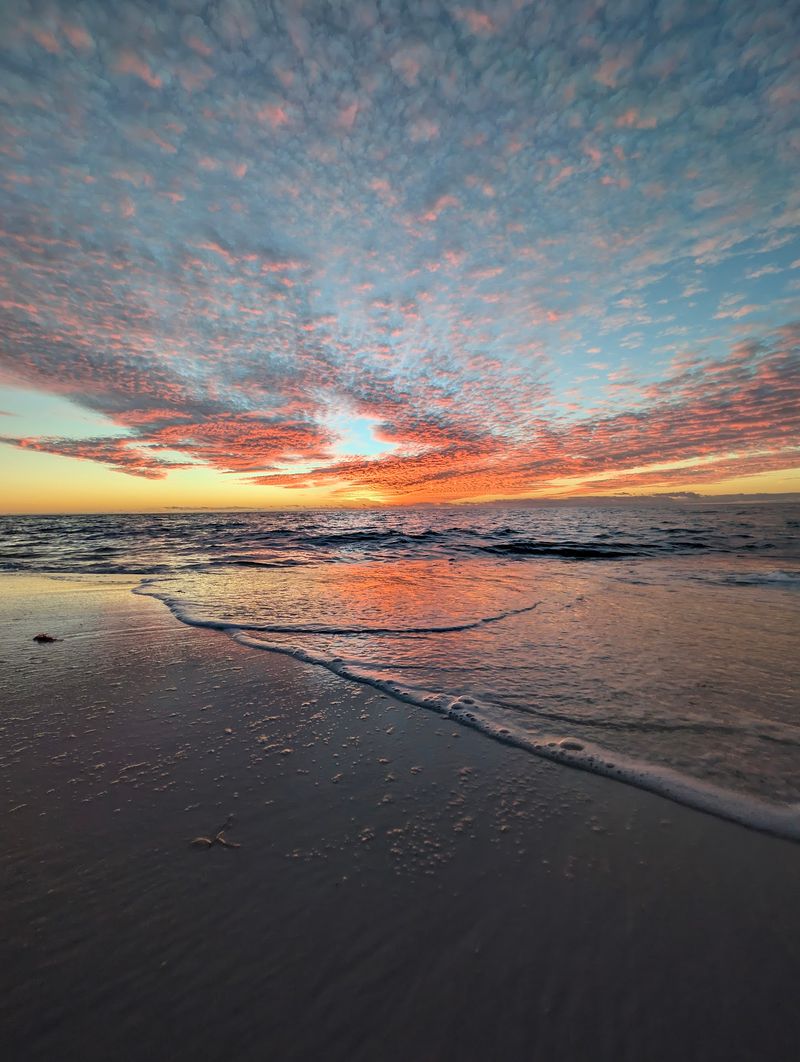
Mangroves arch overhead while crabs scuttle through the roots below.
Clam Pass Park protects 35 acres of coastal habitat in North Naples. A mangrove-fringed lagoon meets clean Gulf sand at the end.
Reaching the beach is half the fun. A three-quarter-mile boardwalk threads through the forest.
Walk it slowly and you will notice marine life in the shallows. Coastal birds and butterflies appear constantly.
A free tram shuttles visitors between the parking area and the beach, providing an alternative to walking the three-quarter-mile boardwalk.
The shallow tidal pass creates a lazy river effect. Gentle paddling and quiet fishing both work well in those calm waters.
Guided nature walks run from December through April, led by the Conservancy of Southwest Florida. Guides explain the plants and wildlife in plain language.
Tidal conditions change the depth and current of the pass throughout the day. Bring water shoes if you plan to wade across sandy flats. Shells hide underfoot.
Sunsets open across the Gulf after the walk or tram ride through the mangroves. Head for 465 Seagate Dr, then let soft sand and gentle waves handle the rest of your afternoon.
7. Gordon River Greenway
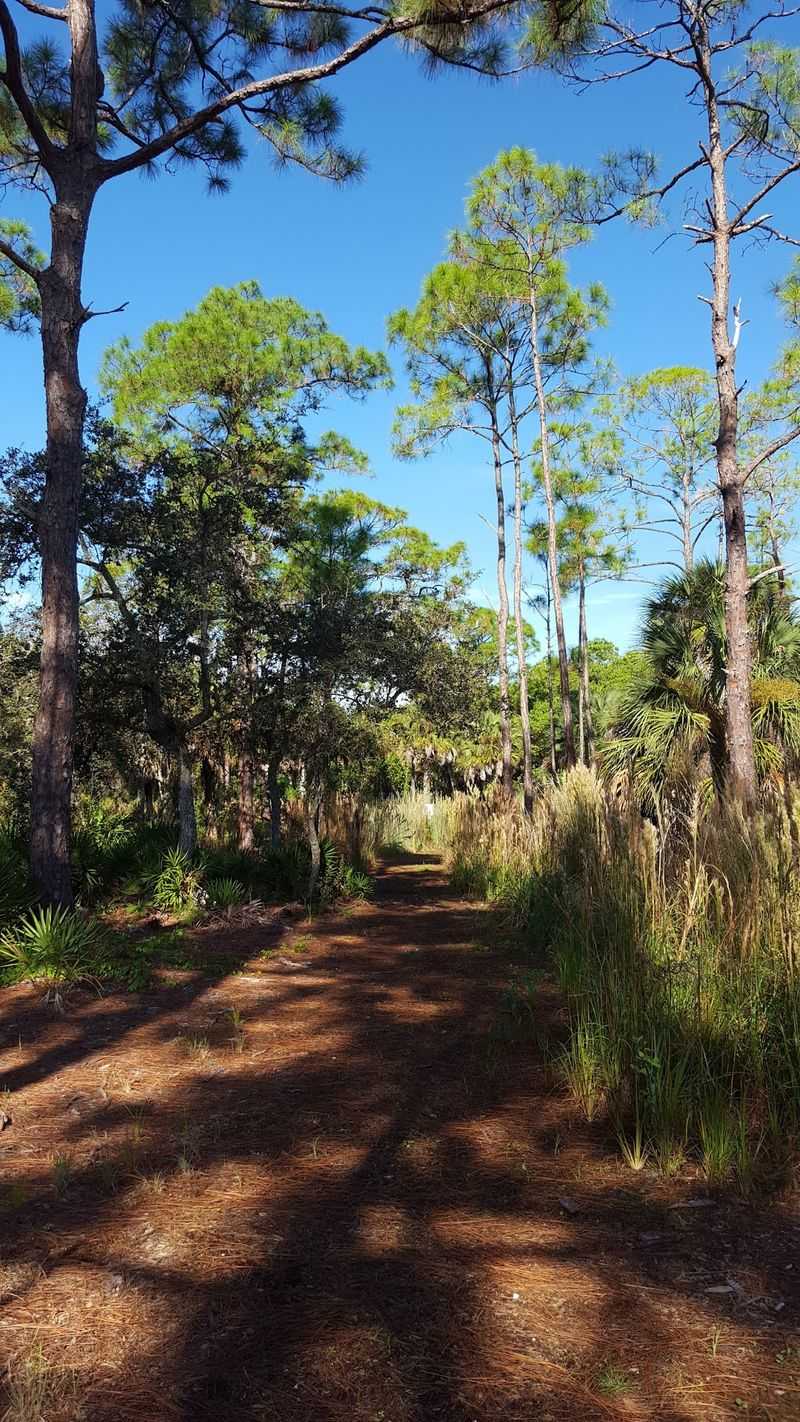
Boardwalks and paved paths wind through mangroves and other native vegetation surprisingly close to central Naples.
The Gordon River Greenway covers roughly 140 acres of protected land. A scenic paved trail follows the river’s curves.
About 2.5 miles of asphalt, mulch, and boardwalk connect the route. Walkers, joggers, cyclists, and rollerbladers all share it comfortably.
Six different native plant communities appear along the way. Signage explains what grows where and why it matters. Wildlife sightings come easily. Turtles sun themselves on logs while wading birds stalk the shallows.
Fishing and lookout piers extend over the water. Early light makes both excellent photography perches.
Paddlers get a dedicated kayak and canoe launch with storage racks. Bike racks sit near the trailheads.
Younger adventurers head straight for the playground with its tree-house structure. Picnic pavilions nearby handle lunch duty. Leashed dogs are welcome throughout. Plenty of shade keeps paws from overheating.
The greenway connects toward the zoo, so pairing both in one day works neatly. Bring bug spray for humid evenings.
Use either the Goodlette Road entrance at 1590 Goodlette-Frank Rd or the Golden Gate Parkway entrance at 1596 Golden Gate Pkwy.
8. Naples Preserve
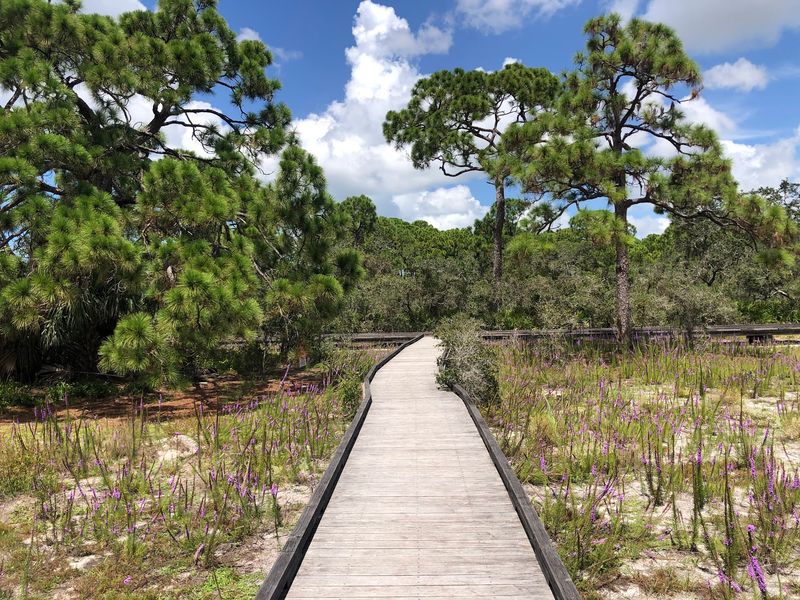
Far be it from me to judge, but a 9.5-acre patch of scrub teaches more ecology than most textbooks. Rare habitat survives right beside a main road.
The Naples Preserve protects pine flatwoods and oak-rosemary scrub within a 9.5-acre urban site.
Scrub habitats rank among Florida’s oldest ecological communities. Very few remain intact anywhere in the state.
An elevated boardwalk runs roughly 0.4 miles through the property. Self-guided touring takes about half an hour.
Raising the walkway keeps native plants and animals undisturbed below. Clever design, quietly effective.
Pine flatwoods and oak-rosemary scrub sit side by side. The contrast between them is easy to spot once explained.
Gopher tortoises are the stars here. As a keystone species, their burrows shelter dozens of other animals. Native birds and butterflies flit among the indigenous vegetation. Patience rewards anyone carrying binoculars.
The Hedges Family Eco-Center shares local history and natural area information. Free nature talks and educational programs run regularly.
Gopher tortoises are active year-round in Florida, but their activity outside burrows typically peaks from May through August.
Parking is simple at 1690 Tamiami Trail N, making this an easy stop between errands. Small acreage, big lesson, and the entry fee stays wonderfully nonexistent.
9. Sugden Regional Park
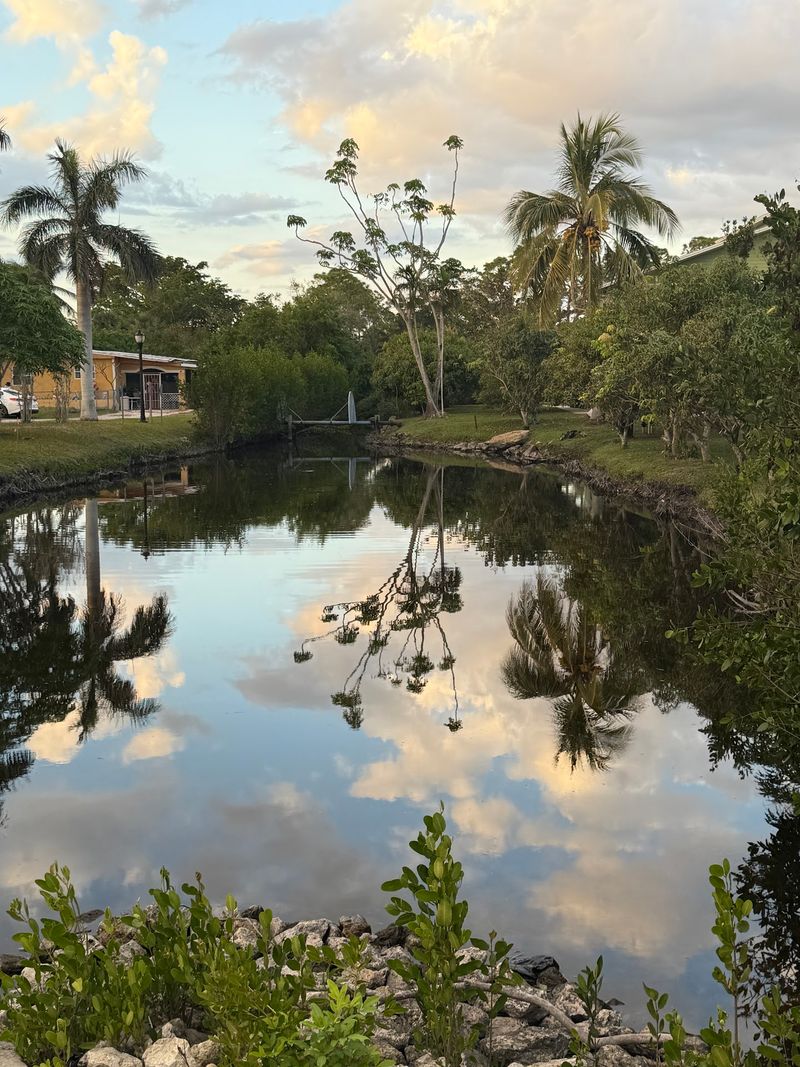
Sounds too good to be true, but Naples hides a freshwater lake beach away from the Gulf entirely. Waterskiing happens here, which surprises almost everyone.
Sugden Regional Park surrounds 60-acre Lake Avalon, which has one of Collier County’s only public freshwater beaches.
Swimming, paddleboarding, sailing, and kayaking all share the water. Waterskiing rounds out the lineup on designated areas.
On-site rentals can provide equipment for several lake activities, although availability should be checked before arriving.
Water-skiing and sailing classes for able-bodied participants and people with special needs are offered throughout the year.
A paved fitness trail loops around the shoreline. Walkers, joggers, and cyclists all use it throughout the day.
A sailing center and skiing center support the park’s organized water-sports programs on Lake Avalon.
Children claim the playground quickly. Picnic areas and pavilions handle family gatherings without stress.
A butterfly garden adds another quiet stop near the park’s pathways, with the species present varying by season.
Shade trees make midday bearable in summer. Pavilions can be reserved for larger groups ahead of time.
Point your GPS toward 4284 Avalon Dr for a lake day that balances activity and calm in equal measure.
10. Naples Zoo At Caribbean Gardens
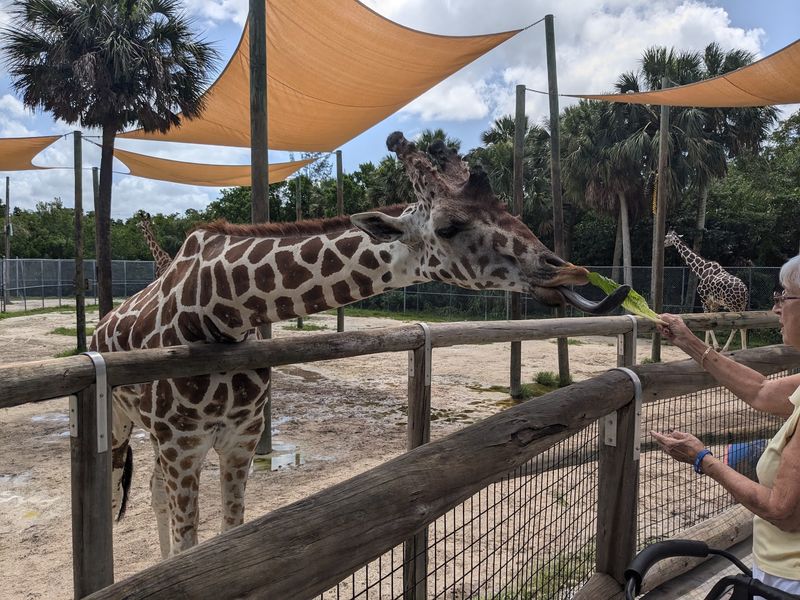
Feeding lettuce to a giraffe counts as breakfast entertainment. This nationally accredited zoo sits on 44 lush acres of historic garden.
Naples Zoo at Caribbean Gardens grew from a botanical garden planted in 1919 by botanist Dr. Henry Nehrling. Animal habitats were built around those original tropical plants, not over them.
A paved path nearly a mile long winds past lions, black bears, giraffes, primates, and an array of rarer species throughout the historic tropical garden.
Clouded leopards lounge in thoughtfully designed enclosures. Giant ficus canopies keep much of the route shaded, which matters in July.
The Primate Expedition Cruise is the headline act. Boats glide across Lake Victoria while monkeys, lemurs, and apes hold court on private islands.
Guides share facts about each troop as you drift past. Kids usually spot something first and announce it loudly.
Conservation sits at the center of everything. Daily presentations explain how the zoo supports wildlife protection around the world.
Younger explorers can join Safari Squad, while children ages 5 to 10 can participate in Camp WILD, which combines animal encounters, zoo exploration, games, science, art, and hands-on learning.
Arrive early for cooler temperatures and more active animals. Midday brings naps, for the wildlife and the humans.
Find it at 1590 Goodlette-Frank Rd. History, horticulture, and habitats rarely share an address this gracefully.