20 Things To Do In New Orleans, Louisiana Without Spending A Dime
Most people leave New Orleans having spent more than they planned.
What you do not realize until you slow down is that the best parts of this city have always been free.
The music drifting out of open doors. The architecture that stops you mid-step. The neighborhoods that tell stories nobody is charging you to hear.
New Orleans is one of the most visually, culturally, and historically rich cities in the country, and a surprising amount of it asks absolutely nothing from your wallet.
You do not need a reservation, a ticket, or a carefully planned budget to have a genuinely extraordinary day here. You just need to know where to look, and I’m here to help you out.
1. Walk The French Quarter
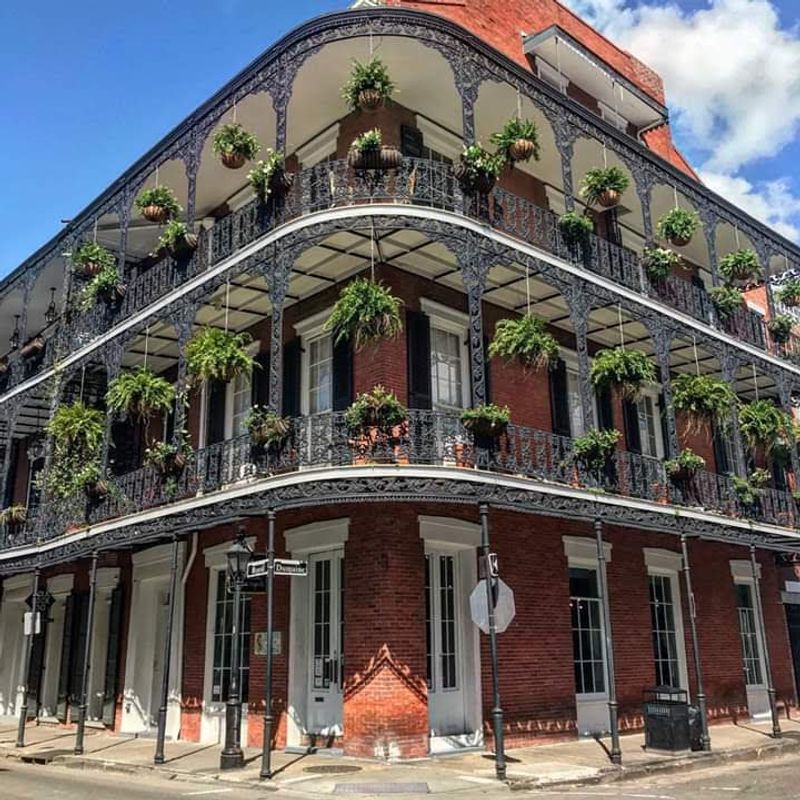
Every city has a historic district, but very few have one where the architecture itself feels like it is still trying to tell you something.
The ironwork up above tells a story that no tour guide could ever fully explain. Every balcony on these blocks was forged by hand, and some of them have been hanging there since the early 1800s.
New Orleans is home to one of the most intact historic neighborhoods in North America. The French Quarter covers about 78 square blocks, and every single one rewards a slow, curious walk.
I like to start on Chartres Street and weave my way toward Decatur, pausing at every alley and courtyard gate I can find. The buildings shift from Spanish Colonial to Creole Cottage to Federal style within a single block.
You do not need a plan, just comfortable shoes and a willingness to look up often.
2. Watch Street Performers On Royal Street
Talent this concentrated on a single stretch of pavement should probably cost something, but here it does not.
A man painted entirely in gold stands absolutely still on a wooden box, and the crowd around him barely breathes. That is Royal Street on any given afternoon.
The performers here are not amateurs passing a hat on a slow day. Many of them are classically trained musicians who chose the street over the concert hall, and it shows in every note they play.
Magicians, living statues, jazz trios, and one-man-bands rotate through this stretch of pavement daily. The best window for catching the most acts runs from around noon to five in the evening.
I once stood for forty minutes listening to a teenage saxophone player who had more soul than most professionals twice his age.
No ticket, no reservation, no cover charge required. Royal Street performs for everyone, and it does so with remarkable generosity every single day of the week.
3. Sydney And Walda Besthoff Sculpture Garden
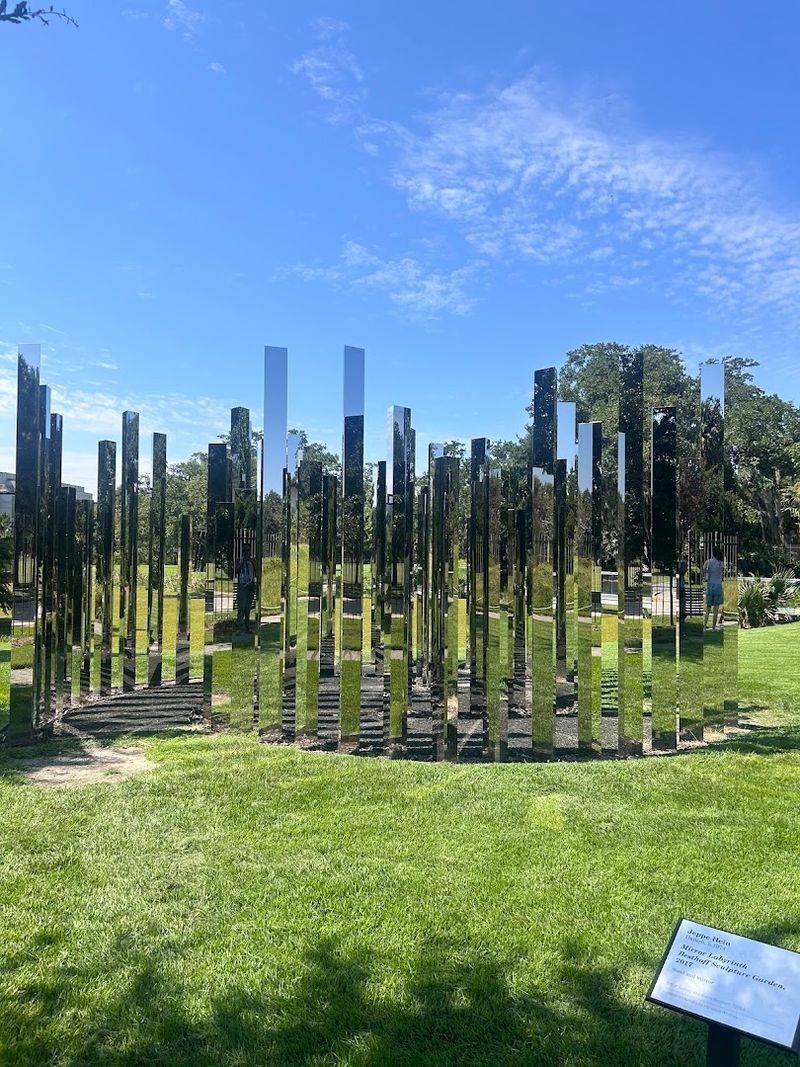
Can you believe that ninety sculptures are scattered across five acres of moss-draped oaks and mirror-still lagoons? Not one of them costs a cent to stand beside? Amazing!
This garden inside New Orleans City Park is the kind of reward that makes you feel like you found a secret.
The Sydney and Walda Besthoff Sculpture Garden, at 1 Collins Diboll Cir, opened in 2003 and has since expanded to include works by internationally recognized artists. Pieces by Yoko Ono, George Segal, and Henry Moore sit quietly among the trees.
Pathways wind across small bridges and past reflecting pools, making the walk itself feel like part of the art. The garden is open daily from 10am to 5pm and admission is completely free for everyone.
The combination of natural Louisiana landscape and bold contemporary sculpture creates a mood that is hard to find anywhere else in the country.
4. The Historic New Orleans Collection
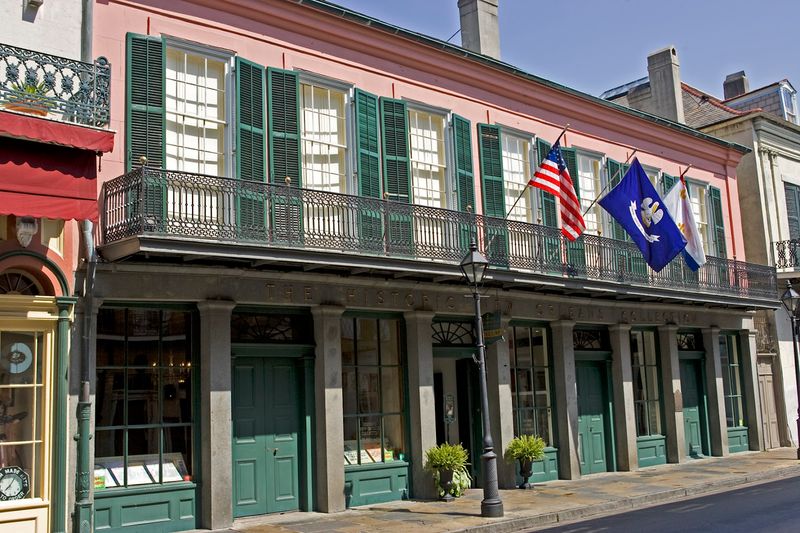
Who would’ve thought that behind an unassuming facade on Royal Street hides one of the most thorough archives of Louisiana history in existence?
Maps, photographs, rare manuscripts, and artifacts fill a series of elegant galleries that most tourists walk right past.
The Historic New Orleans Collection at 520 Royal St is free to enter Tuesday through Sunday. It was founded in 1974 by General L.
Kemper Williams and his wife Leila Moore Williams.
The collection spans over 30,000 items and covers everything from colonial-era land grants to 20th-century jazz photography. Rotating exhibitions keep the experience fresh even for repeat visitors.
I spent two hours in here on a rainy afternoon and walked out feeling like I understood the city on a completely different level.
The research center is open to the public, and the staff genuinely seem excited to help you dig into whatever corner of New Orleans history catches your curiosity.
5. Frenchmen Art Bazaar
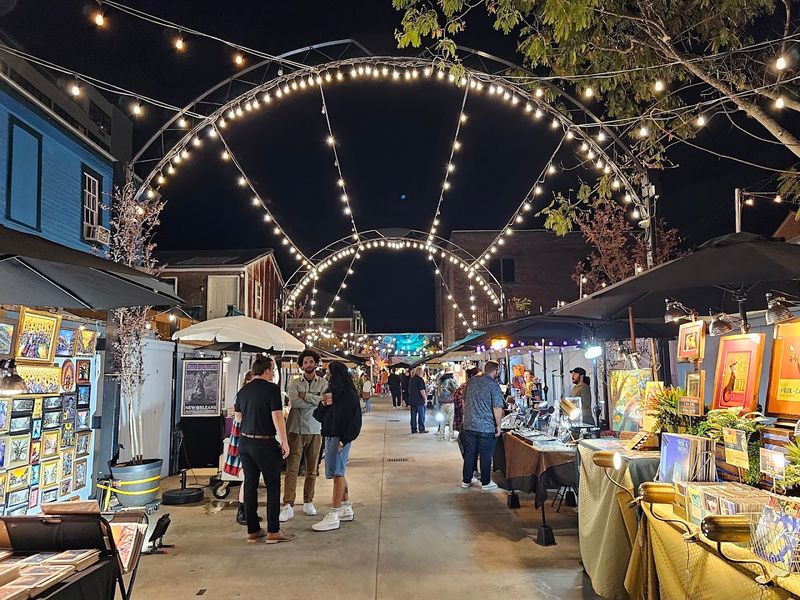
After dark, this street transforms into something that feels less like a market and more like a neighborhood showing you exactly who it is.
This nightly market on Frenchmen Street is one of the most genuinely local shopping experiences.
The Frenchmen Art Bazaar at 619 Frenchmen St runs nightly from 6pm to midnight and is completely free to browse. Artists, jewelers, printmakers, and photographers all set up here regularly.
The Marigny neighborhood that surrounds this market has its own creative energy that feels distinct from the French Quarter nearby. Shotgun houses painted in bold colors line the surrounding blocks, and the whole area pulses with artistic life after dark.
I have picked up hand-painted postcards, local zines, and handmade earrings here without spending a dollar just looking.
The artists are friendly and genuinely happy to talk about their work. Browsing here is a full experience all on its own, even if your pockets stay empty.
6. Hurricane Katrina Memorial
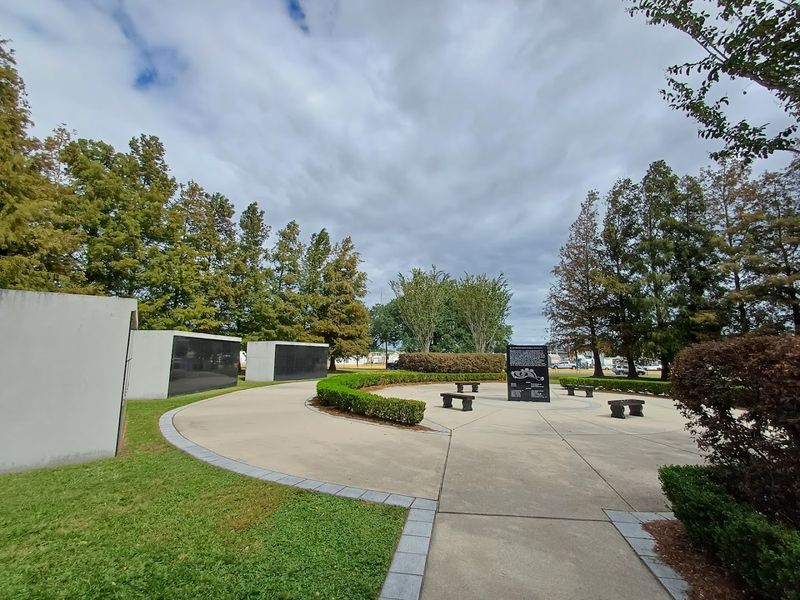
Some places carry a weight that changes how quietly you move through them, and this is one of those places. The story told here is not one of defeat but of extraordinary human stubbornness.
The Hurricane Katrina Memorial at 5056 Canal St honors those who were lost when the storm and subsequent flooding devastated the city in August 2005.
The memorial is located near the site of a former cemetery and serves as a place of reflection for both residents and people arriving from across the country. Informational markers provide context about the scale of the disaster and the recovery effort.
I visited on a quiet morning and was struck by how many local residents stopped by simply to stand for a moment.
This is not a tourist attraction in the traditional sense. It is a living part of the neighborhood, and approaching it with that understanding makes the experience far more meaningful.
7. French Market
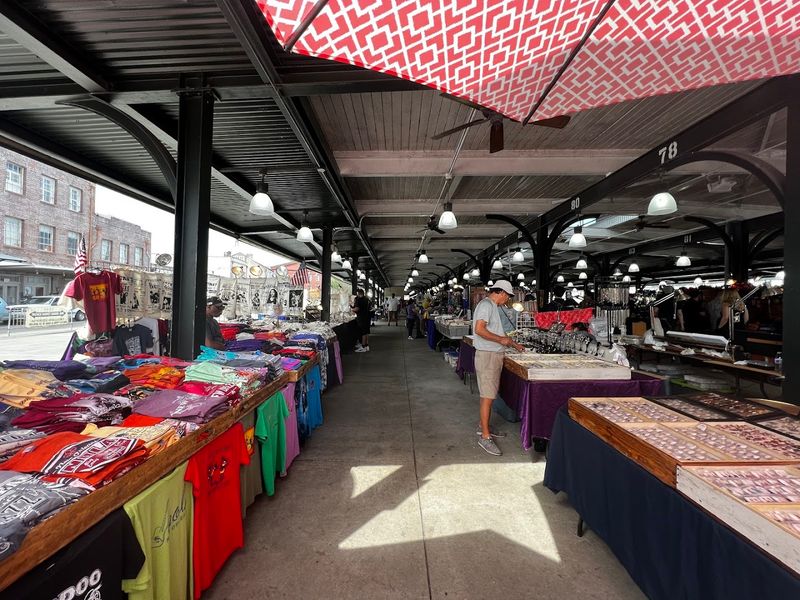
This market has been operating in some form since 1791, making it one of the oldest public markets in the country. Sounds unbelievable, right?
The covered arcade stretches along several blocks near the river, and vendors fill every stall with things that smell, look, or taste distinctly like Louisiana.
The French Market at 1008 N Peters St is free to wander daily from 10am to 5pm. The mix of local produce, handmade crafts, hot sauce, and Creole spices makes even a slow walk through the stalls genuinely entertaining.
Locals shop here alongside tourists, which gives the market a grounded energy. You can find Creole seasoning blends, hand-woven baskets, vintage jewelry, and Louisiana-grown pecans all within a short walk.
8. Jackson Square
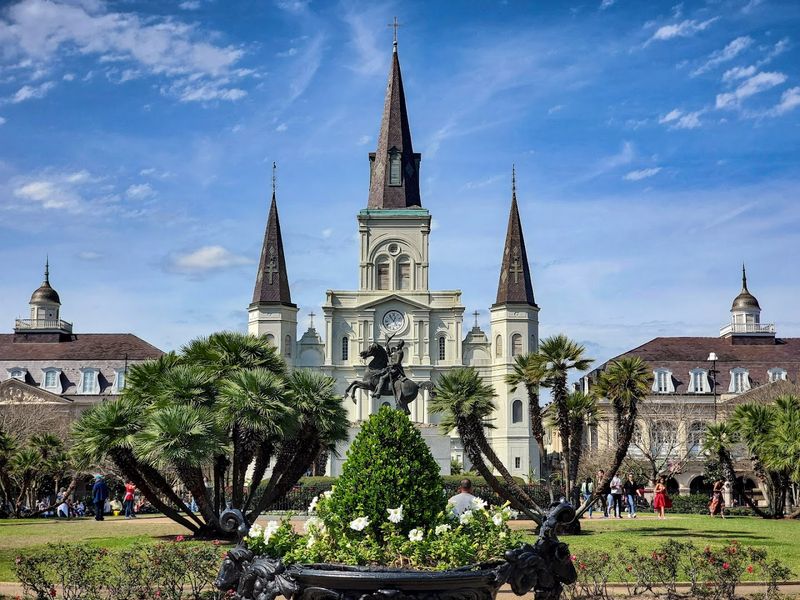
No cover, no minimum, no reservation needed. Jackson Square performs for anyone willing to stop and pay attention.
Artists line the iron fence with oil paintings, watercolors, and charcoal portraits, and tarot readers set up their folding tables with the cathedral rising behind them like a painted backdrop. Jackson Square is a daily open-air performance of the city itself.
The square is open daily from 8am to 6pm and costs nothing to enter. It sits at the heart of the French Quarter and has served as a public gathering space since the French colonial period in the 18th century.
Jugglers, jazz musicians, brass bands, and portrait painters all share the flagstone plaza on any given afternoon. The surrounding Pontalba Buildings, built in the 1840s, are the oldest apartment buildings in the United States.
9. Musical Legends Park
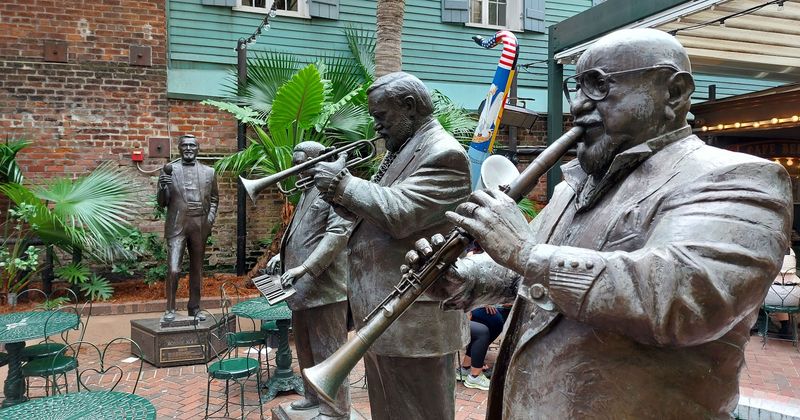
Bronze figures of jazz icons stand life-size along the walkway, and a live band plays on the outdoor stage just a few feet away from them. The whole setup feels like a tribute that never stops giving.
You should seriously add this destination to your list!
Musical Legends Park at 311 Bourbon St offers free outdoor live music on Thursdays, Fridays, Saturdays, Sundays, and Mondays. The park honors New Orleans musicians who shaped American music history.
Bronze statues of Fats Domino, Al Hirt, Irma Thomas, Pete Fountain, and other local legends are installed throughout the park. Each statue is paired with information about the musician it represents.
The park is small enough that you can stand close to the performers no matter where you position yourself. For a free show in the heart of the French Quarter, the quality here consistently punches above expectations.
10. French Quarter Visitor Center
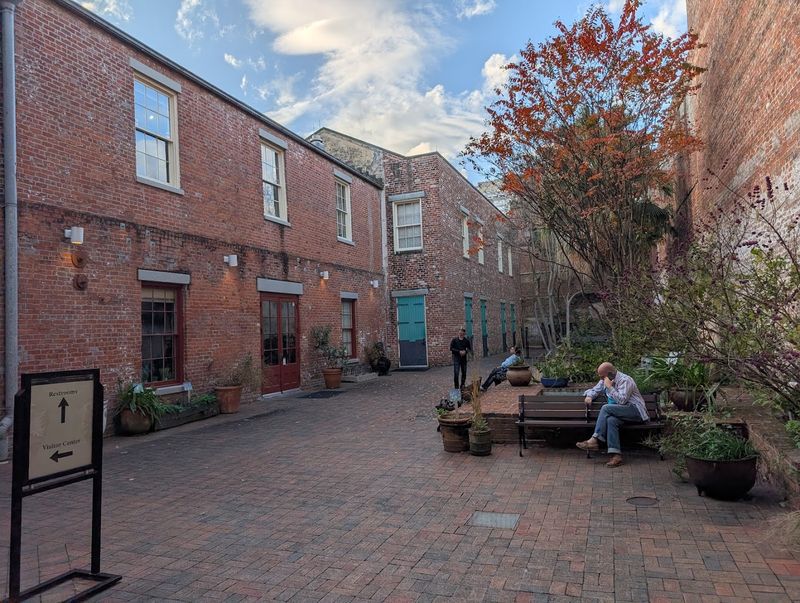
A National Park Service ranger is mid-sentence about the history of the Creole cottage when I slip into the back row. Within two minutes I am completely absorbed.
This free resource in the heart of the French Quarter is criminally underused by most people walking past it.
The French Quarter Visitor Center at 419 Decatur St is open Tuesday through Saturday from 9:30am to 4:30pm.
It is closed on Mondays and Sundays, so schedule accordingly. Free ranger-led talks cover architecture, cultural history, and the development of New Orleans as a port city.
Free concerts also take place in the courtyard on a rotating schedule throughout the week.
The building itself is historically significant, and the exhibits inside are well-curated and genuinely informative.
11. Walk Frenchmen Street
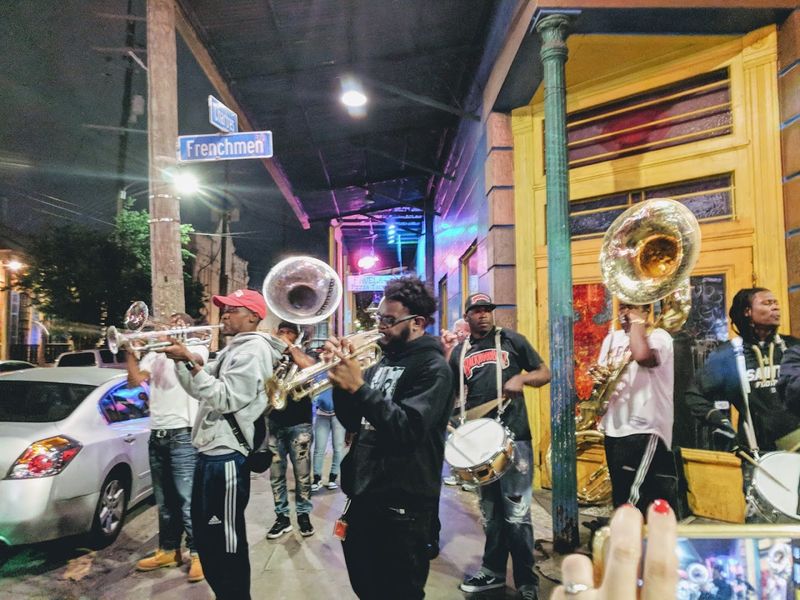
Even standing on the sidewalk, the music finds you. Bass lines and trumpet riffs pour out of open doorways and float down the block, creating a free soundtrack that moves with you as you walk.
Frenchmen Street in the Marigny neighborhood of New Orleans is one of the most musically rich streets in the country. The indoor clubs along this stretch typically charge a small cover of a few dollars, but the street itself is completely free to walk.
The Marigny neighborhood developed in the early 19th century and was originally home to free people of color, making it one of the most culturally layered communities in the city. That history still shows in the architecture and the art on the surrounding buildings.
12. St. Louis Cathedral
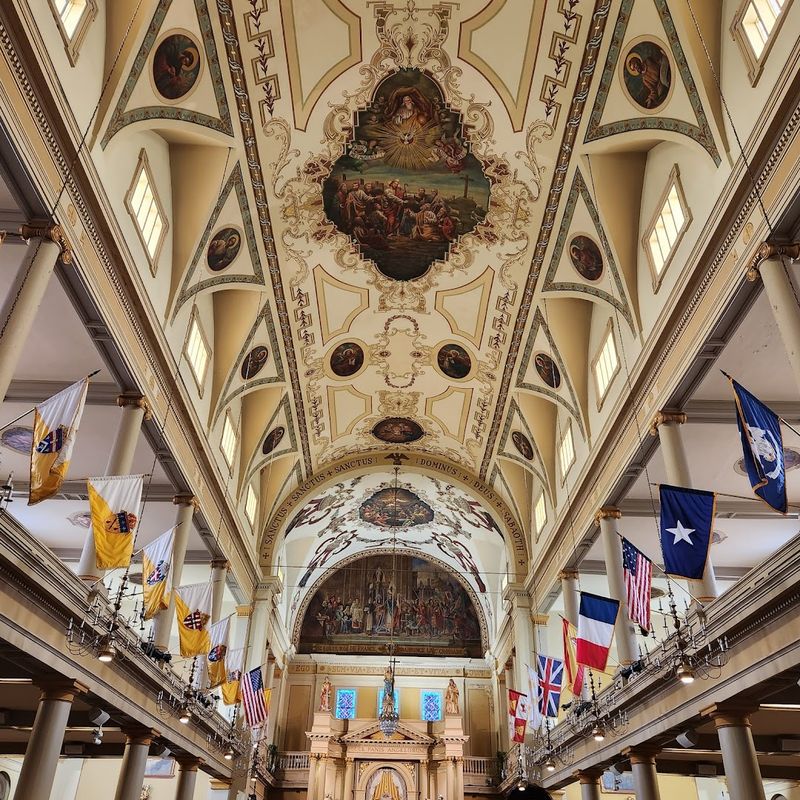
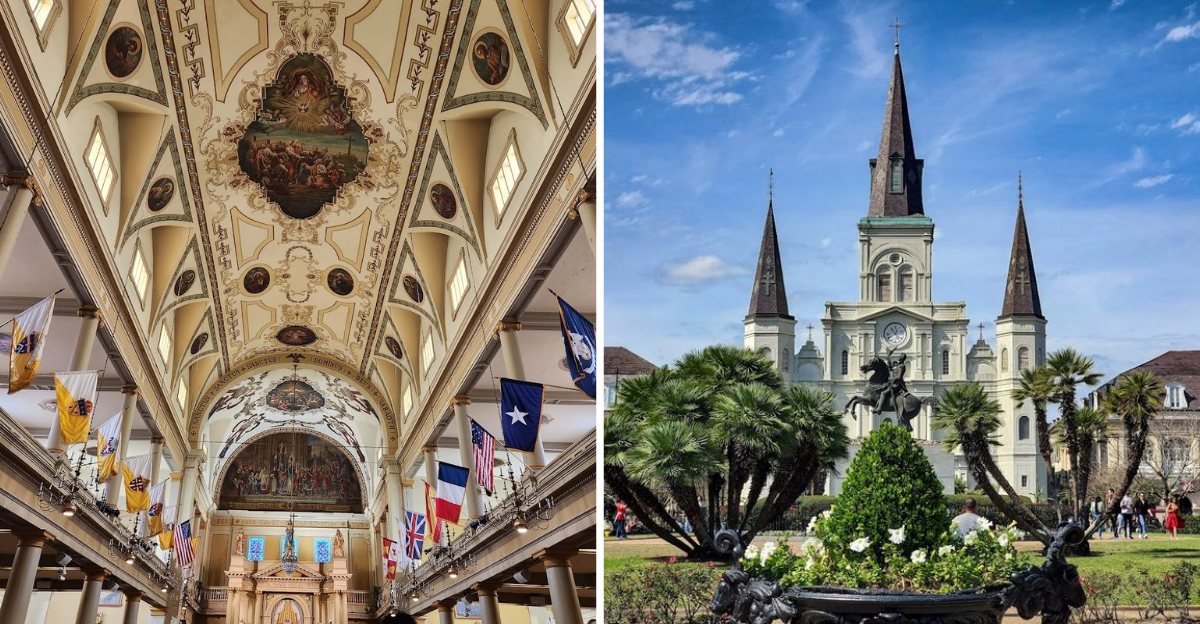
I can’t say that I’ve seen many interiors in Louisiana that can match what is waiting inside this building.
The painted ceiling above the nave stretches upward in deep blues and golds, and the stained glass throws color across the pews in patterns that shift as the sun moves.
St. Louis Cathedral at 615 Pere Antoine Alley is the oldest continuously operating cathedral in the United States. It is free to enter daily from 9:30am to 4pm, and on Sundays doors open at 9am.
The current structure was completed in 1794, though earlier versions of the church stood on the same site dating back to 1718. The cathedral faces Jackson Square, and the walk from the square to the front doors takes less than ten minutes.
The painted murals above the altar are enormous and detailed in ways that take several passes to fully absorb. This is a genuine architectural treasure and costs absolutely nothing to experience.
13. Levee Walk Along The Mississippi
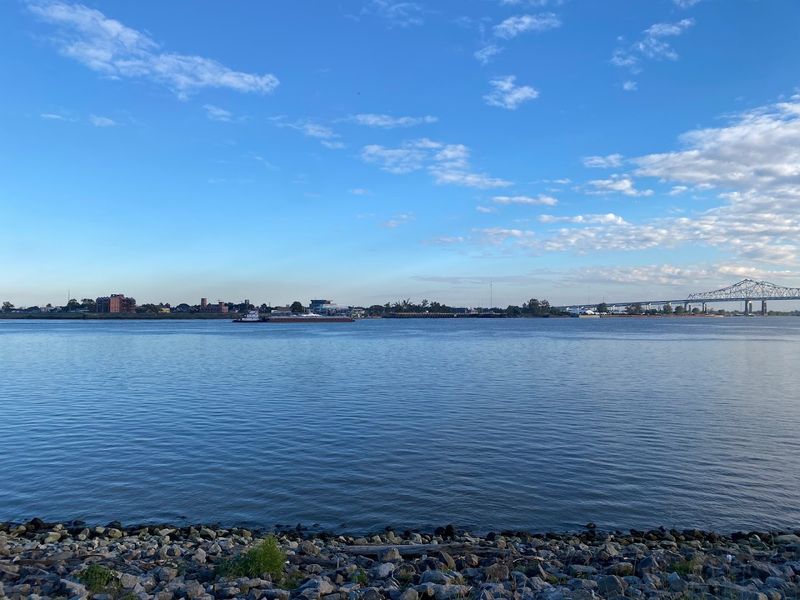
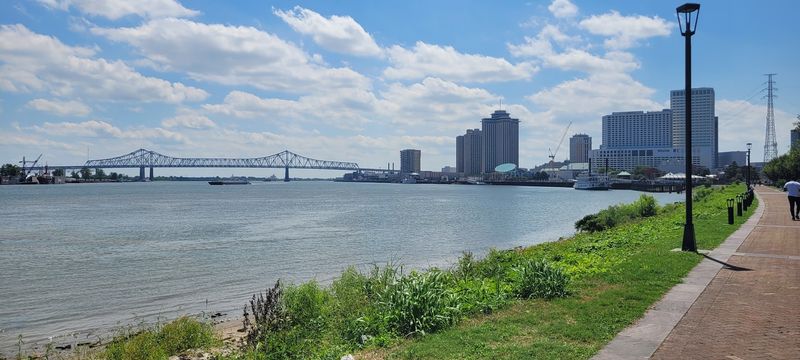
A barge the length of a city block slides silently past, and from the top of the levee you can see it clearly from end to end. The Mississippi River is one of the busiest commercial waterways in the world, and watching it from the levee is completely free.
The levee system runs along both sides of the river through the city, and you can climb up at nearly any accessible point along the route. The grass-covered embankments offer clear sightlines across the water in both directions.
The river here is notably wide, and the opposite bank in Algiers looks deceptively close. Tugboats, container ships, and old-fashioned paddle wheelers all share the channel throughout the day.
I walked a long stretch of the levee on a breezy afternoon and counted eleven different vessels on the water at once.
The wind coming off the river keeps the temperature cooler than the streets below, which makes this a particularly smart choice on a hot Louisiana afternoon.
14. Magazine Street Stroll
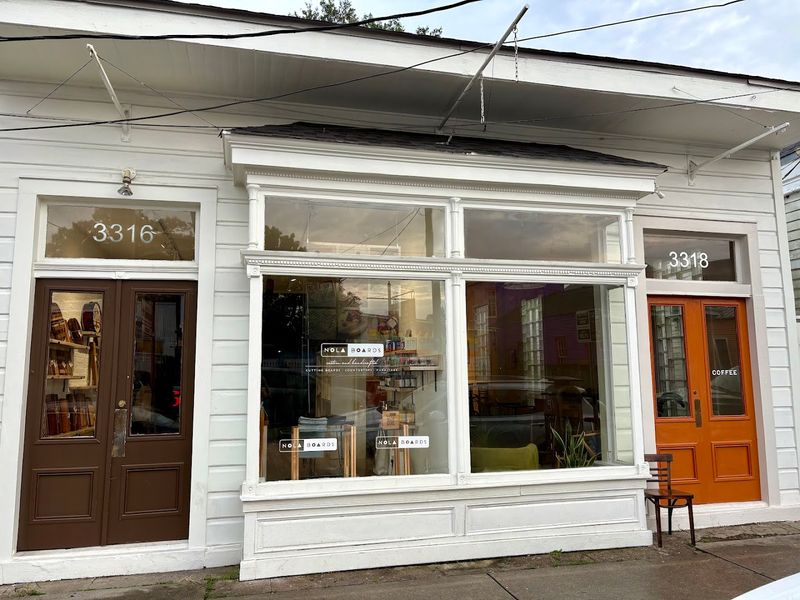
Six miles of painted storefronts, outdoor murals, and gallery windows stretch through some of the most architecturally varied neighborhoods in the city.
Magazine Street in New Orleans rewards a long, unhurried walk more than almost any other stretch of pavement in Louisiana.
The street runs from the Warehouse District through the Garden District and into Uptown, passing through several distinct neighborhood personalities along the way.
Architecture shifts from converted warehouses to Victorian cottages to mid-century commercial buildings within just a few blocks.
Galleries display work by local painters and sculptors in windows you can peer through freely. Murals commissioned by neighborhood organizations cover entire building sides with imagery rooted in New Orleans culture and history.
The mural density runs between Louisiana Avenue and Napoleon Avenue, and the gallery windows around the 3000 block are particularly worth slowing down for. Comfortable shoes and a full water bottle are your only required equipment.
15. Newcomb Art Museum Of Tulane
Tiffany stained glass panels glow in the hallway just outside the main gallery. Most people walk right past them on their way to the rotating exhibitions inside.
That hallway alone is worth the trip to the Tulane campus.
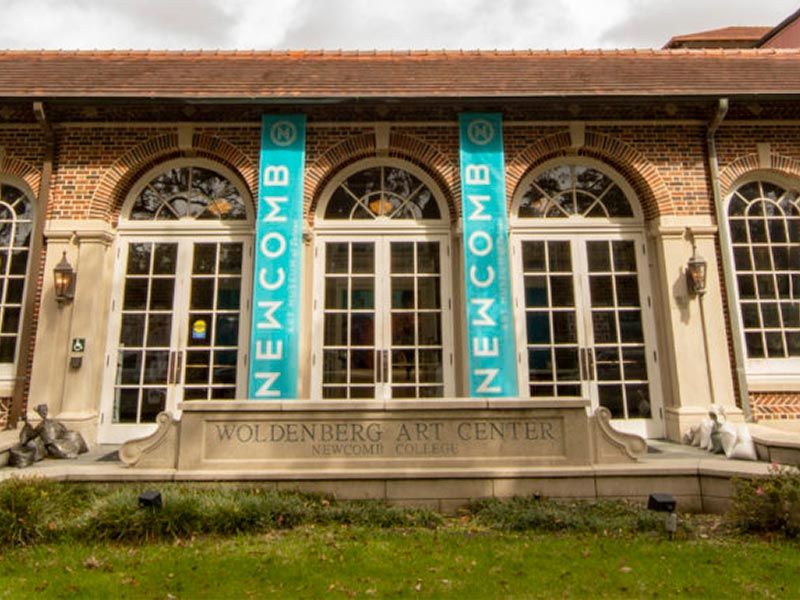
The Newcomb Art Museum at 50 Newcomb Pl is free for everyone and open Monday through Friday from 10am to 5pm and Saturdays from 11am to 4pm. It sits inside the Woldenberg Art Center on the Tulane University campus.
Newcomb College, which merged with Tulane in 2006, had a famous pottery and arts program dating back to the 1890s. The Newcomb Pottery pieces produced there are now highly collectible, and the museum holds an important collection of them.
I found the rotating exhibitions here consistently stronger than I expected from a university museum. The curatorial choices tend toward work that connects to Southern history and contemporary Louisiana culture.
16. Clouet Gardens
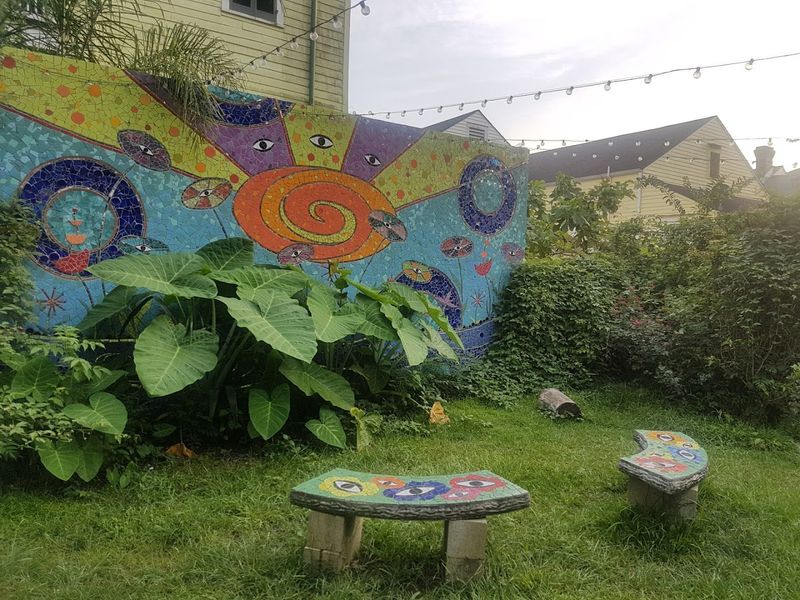
Mosaic sculptures peek out from behind banana plants, and hand-painted signs written in multiple languages mark the garden beds that neighbors maintain together.
Clouet Gardens at 710 Clouet St is one of the most genuinely community-made spaces in the city.
The garden is free and open daily from 6am to 9:30pm. It sits in the Bywater neighborhood, one of the most creatively active areas of New Orleans in recent decades.
Local artists contributed mosaic work, painted installations, and sculptural elements throughout the garden over many years.
The result is a layered, evolving outdoor gallery that reflects the personality of the surrounding neighborhood rather than any single curatorial vision.
The garden is small enough to walk in ten minutes but dense enough to reward a much longer stay if you slow down and look carefully at everything around you.
17. Explore Bywater And Marigny
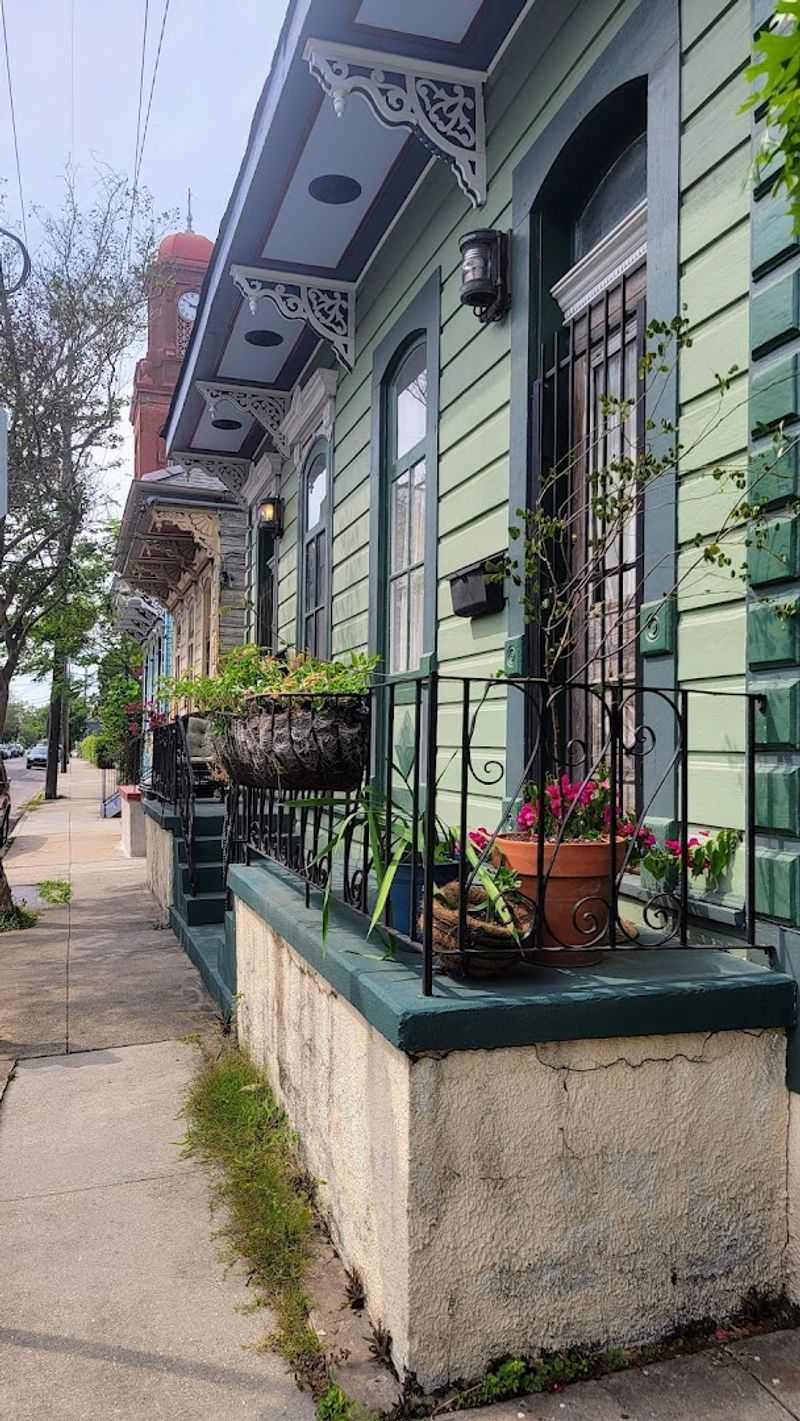
The Bywater and Marigny neighborhoods are the most visually dense areas in the city for street art.
Both neighborhoods developed in the early 19th century and were historically home to working-class Creole and immigrant communities.
The architectural vernacular here, particularly the narrow shotgun house form, has roots in West African and Caribbean building traditions.
Artists began moving into Bywater in large numbers in the 1990s, drawn by low rents and generous wall space. The murals that resulted range from hyper-detailed portraits to abstract geometric work covering entire building facades.
I spent a full morning wandering both neighborhoods with no map and no agenda, turning down whatever block looked most colorful.
18. Watch The St. Charles Streetcar
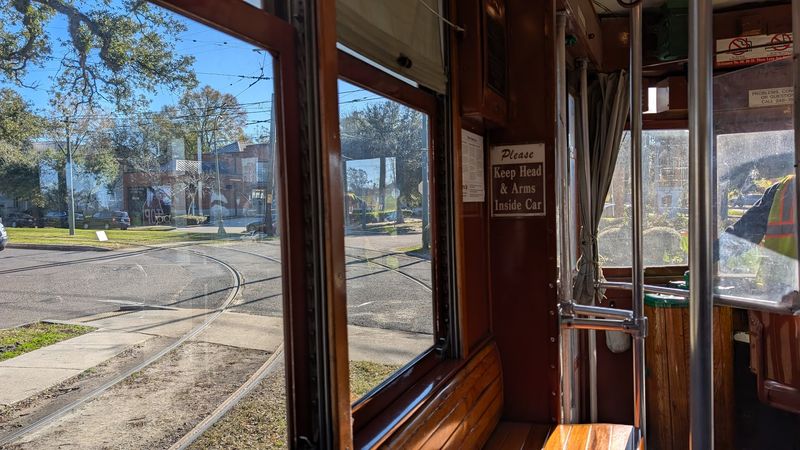
The green car rounds the corner under a canopy of oaks so dense that the light comes through in broken pieces. The whole scene looks like something painted rather than something real.
Watching the St. Charles streetcar from the sidewalk is one of the most photogenic free moments the city offers.
The St. Charles line is the oldest continuously operating streetcar line in the world, having run since 1835. Riding it costs around $1.25, but watching it roll through the oak tunnel on St. Charles Avenue costs absolutely nothing.
The best sidewalk viewing runs between Louisiana Avenue and Napoleon Avenue, where the oaks are oldest and the tree canopy is thickest. The cars run frequently throughout the day, so you rarely wait more than ten minutes between sightings.
I sat on a bench near the Touro Street stop on a Saturday afternoon and watched six cars pass in one hour. Each one carried a different mix of passengers, and each one looked equally cinematic moving through the dappled light beneath those ancient trees.
19. Second Line Parades
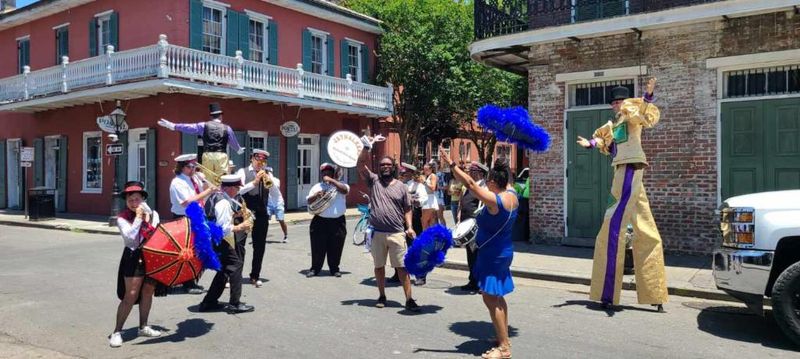
By the time I caught up with the parade, I was already dancing, which is, I am told, exactly the correct response.
A brass band turns the corner and suddenly the entire street is moving. Strangers fall into step behind the musicians, handkerchiefs waving, feet hitting the pavement in a rhythm that feels ancient.
New Orleans second line parades are unlike anything else in American culture.
They are organized by Social Aid and Pleasure Clubs, community organizations with roots going back to the mutual aid societies of the 19th century.
The routes wind through residential neighborhoods, usually starting and ending at a club hall. Each parade features a different club, and the costumes, themes, and musical choices vary significantly from week to week.
I joined my first second line completely by accident, hearing the brass from two blocks away and following the sound.
20. Moon Walk Riverfront Park
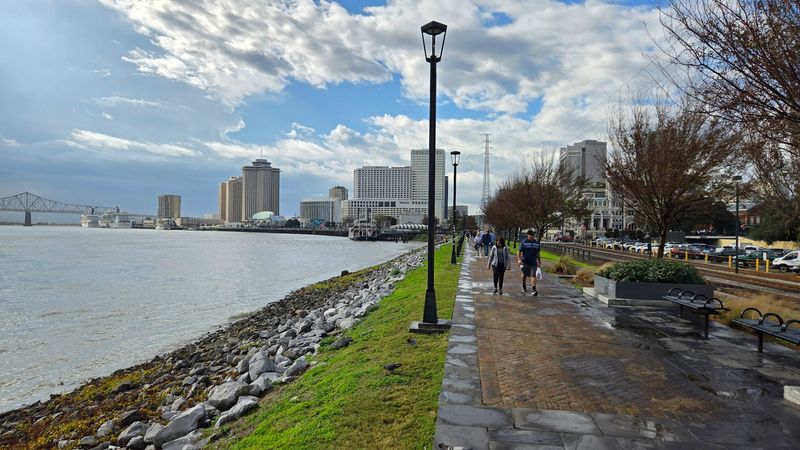
The river moves fast here, much faster than it looks from a distance. Sitting on one of the wooden benches along this promenade you can feel the energy of the current even from the bank.
Moon Walk Riverfront Park delivers one of the best free views in the entire city. The park runs along the Mississippi River adjacent to the French Quarter and is open daily from 6am to 10pm with no admission charge.
It was named after former Mayor Moon Landrieu, who helped develop the riverfront as public green space in the 1970s.
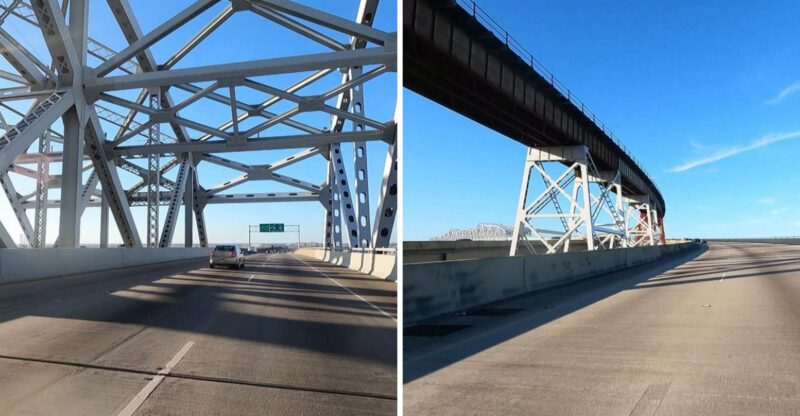
The promenade offers unobstructed views of the river, the Crescent City Connection bridge, and the busy shipping channel. Benches line the walkway, and the breeze coming off the water makes this one of the cooler spots in the city on a hot afternoon.