This 2-Hour Pennsylvania Train Ride Through The Secret Valley Is An Unforgettable Way To See Fall
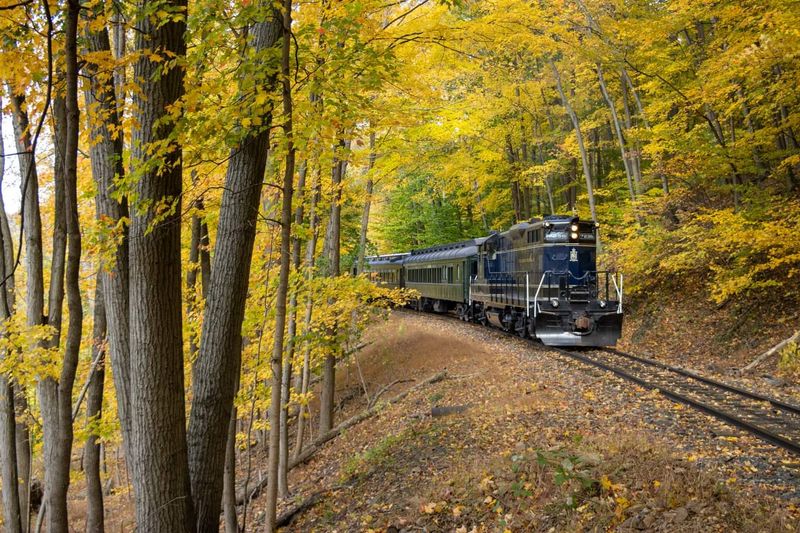
I expected a short, sleepy train ride and maybe a few orange leaves out the window. Two hours later, I was stepping off a restored coach in Pennsylvania with a head full of colonial iron history, a camera roll packed with gold and crimson hillsides, and a strong urge to book again.
Some autumn outings fade from memory by Thanksgiving, but this one sticks. Here is why a slow rumble through a valley most roads never reach might be the best way to spend a fall afternoon.
A Heritage Line Starting in Boyertown
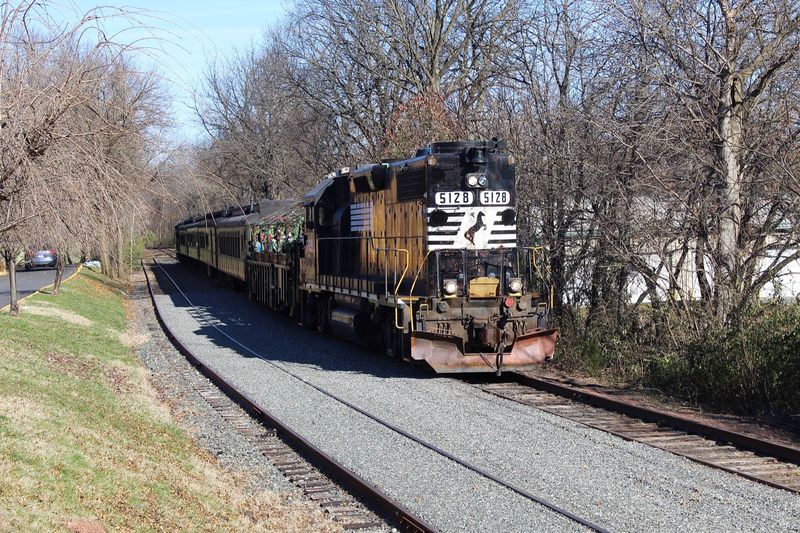
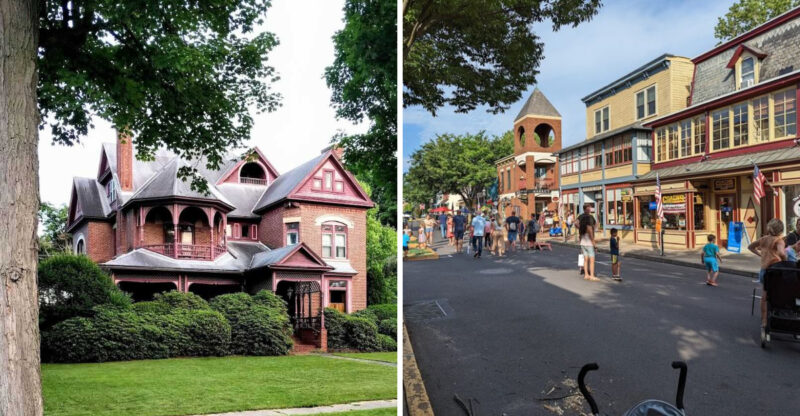
Picture a small Berks County borough with a station yard that looks borrowed from another century. That is where the Colebrookdale Railroad begins, at 64 S Washington St in Boyertown, a short drive from both the Reading and Philadelphia areas.
The railroad is a heritage line, meaning its purpose today is preservation and storytelling rather than freight hauling. Its tracks run between Boyertown in Berks County and Pottstown in Montgomery County, and most excursions depart from the Boyertown end.
The operation calls this stretch the Secret Valley Line, and the name fits once the train rolls away from the streets and into the trees.
Themed trips fill the calendar across the year. There are history tours, fall foliage runs, dining excursions, brunches, and Santa trains during the holiday season, so the railroad is not a one-season attraction.
Autumn, though, is when the scenery does the heaviest lifting.
So what makes a two-hour ride on an old branch line feel special? Part of it is the equipment, part is the food, and a big part is the landscape itself.
Each of those gets its own look below, starting with the story of how this line came to be.
Iron, Civil War Builders, and a Revived Railroad
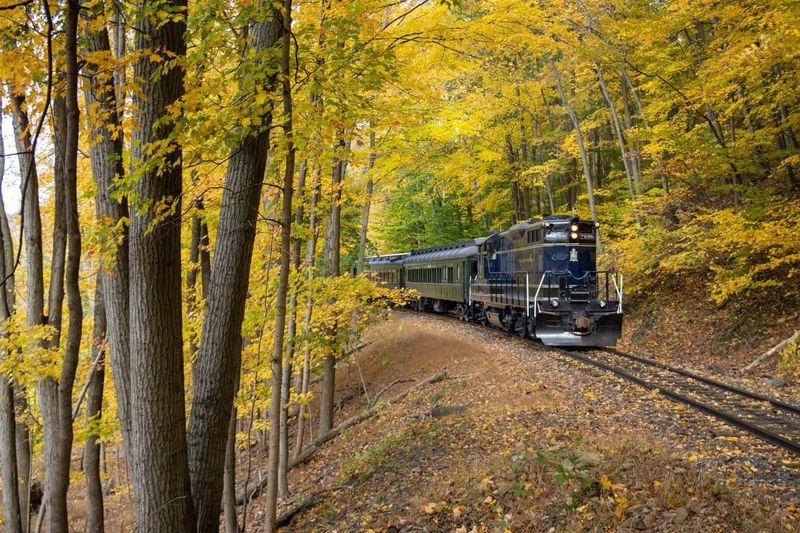
Few rail corridors in America can claim roots this deep. The Secret Valley links sites tied to some of the earliest iron-making in colonial America, including the location of the nation’s first blast furnace and refinery forge.
William Penn and George Washington both looked to this region for iron. Much later, Thomas Edison came through the valley while chasing an invention of his own.
That is a lot of famous footprints for such a quiet stretch of woods.
The railroad arrived in 1869. Many of the men who built it were soldiers home from the Civil War, trading uniforms for picks and shovels to lay track through rock and forest.
For decades, the line served the communities and industries along the creeks.
Then came a long lull. Tourist excursions returned in 2014, when the Colebrookdale Railroad began running passenger trips and bringing new attention to the corridor.
Restoration work on the cars and the right-of-way has continued since, and one car, the Valhalla, has carried passengers while still showing its interior mid-restoration.
Knowing all this before boarding changes the ride. Each rock cut and creek crossing starts to feel like a page from an old ledger instead of just pretty scenery.
Where Roads Don’t Go
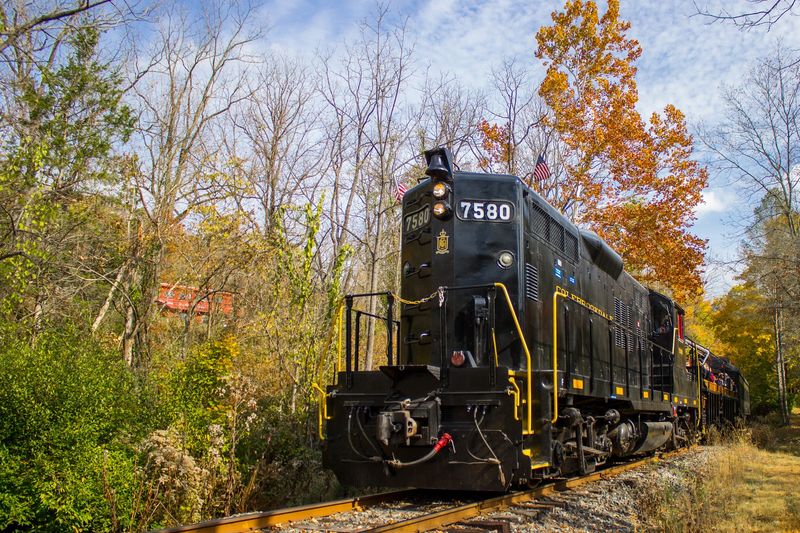
Crunchy leaves, cool air, and the steady clack of wheels set the mood as the train slips away from town. The route covers 8.6 miles, and much of it runs through land that ordinary roads simply skip.
Dense woodlands close in around the tracks. Dramatic rock cuts rise on either side at points, and the line follows peaceful waterways, including the Manatawny and Ironstone Creeks.
Farms and timbered slopes open up now and then, giving the eye a break from the tunnel of branches.
Distance is modest, and the train moves slowly the whole way. That pace is the point.
The ride heads out for about an hour, then reverses and returns, so both directions offer a fresh angle on the same valley.
Compare that to seeing fall color from a highway, where a blur of trees passes at speed and the best views sit behind guardrails. Here, the forest comes right up to the window.
There is no traffic, no hunting for a pull-off, and no need to keep eyes on the road.
A pre-recorded narration explains the history and landmarks along the way, though it can be hard to hear in some cars.
Peak Color, Timed Right
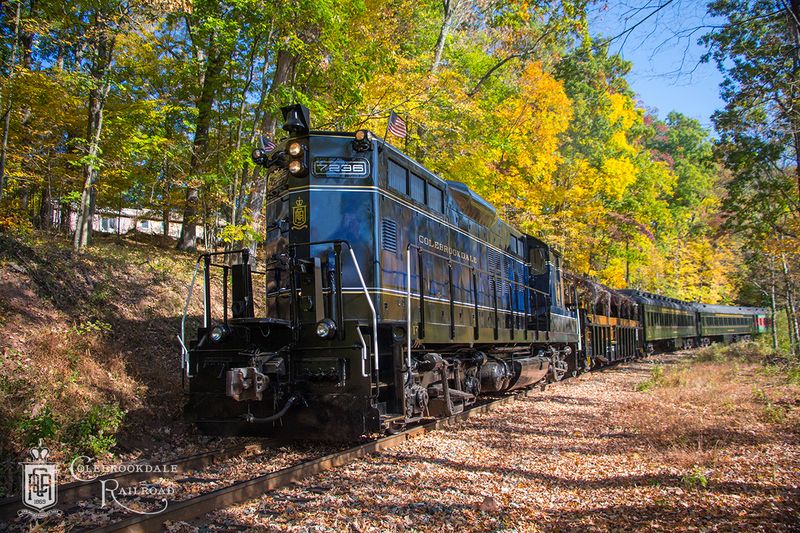
Mid-to-late October is often the sweet spot. That is when the maples and oaks lining the Secret Valley usually hit their brightest reds, oranges, and golds, set against farm fields and wooded hillsides.
Fall foliage runs are among the railroad’s themed excursions, and they tend to fill up once the leaves start turning. Booking ahead is a smart move for anyone set on a particular weekend.
Foliage timing shifts from year to year with weather, so a little flexibility helps.
Why does the valley glow so well in autumn? The mix of hardwoods, open farmland, and creek bottoms creates layers of color at different heights and distances.
Water catches reflections, and rock cuts frame the trees like a picture border.
Time of day matters too. An earlier departure can offer better light for views and photos, while later trips may catch softer evening tones as the sun drops.
On shorter autumn days, the last runs can get dim before returning.
For the full effect, grab a window seat and keep a camera handy. The slow pace gives plenty of chances to catch a stand of scarlet maples before it slides out of view.
Stained Glass, Brass, and Velvet Seats
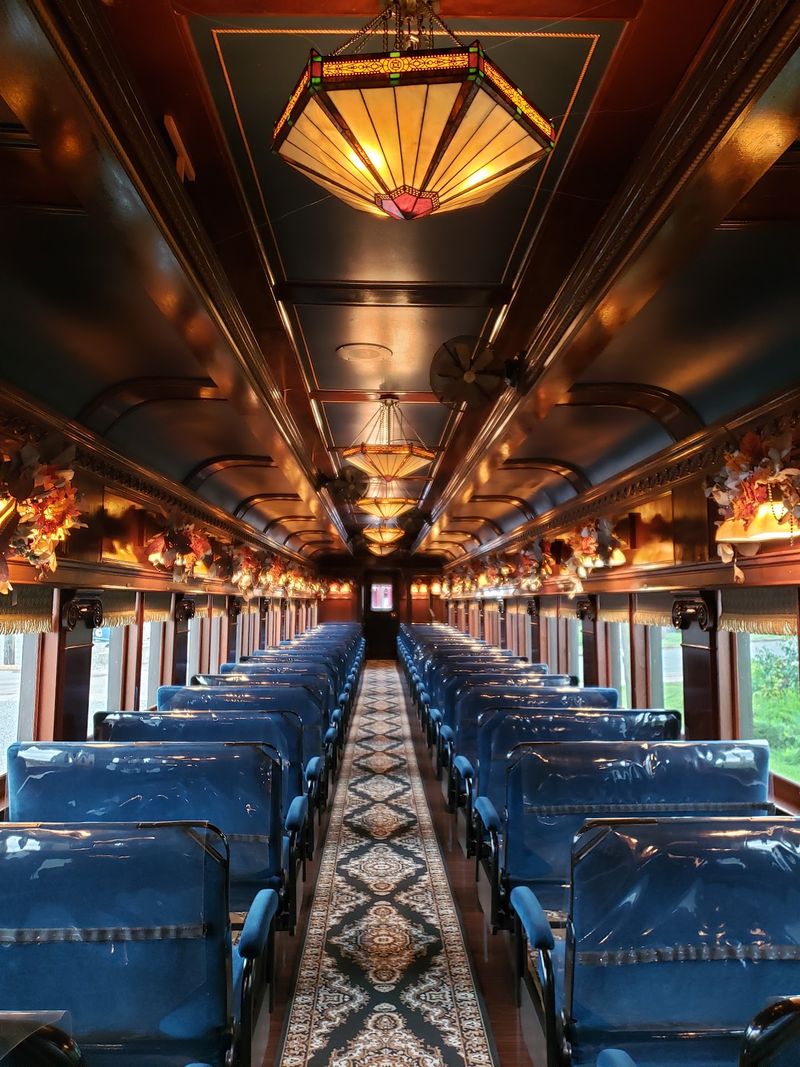
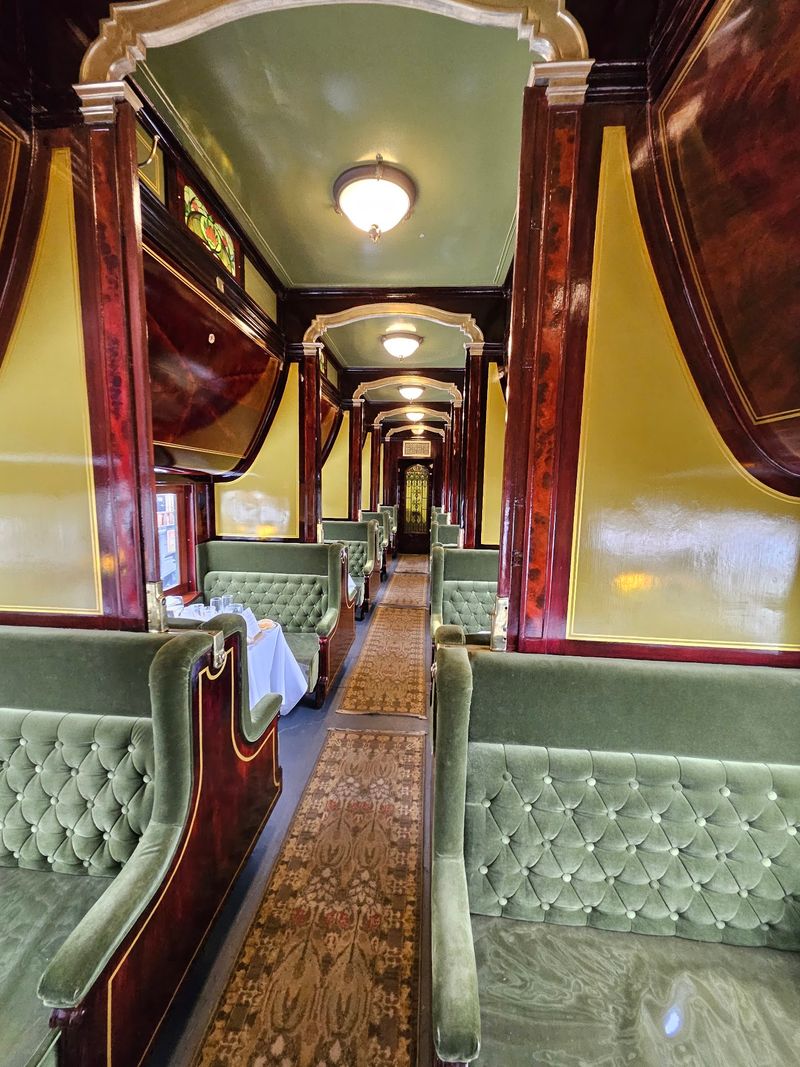
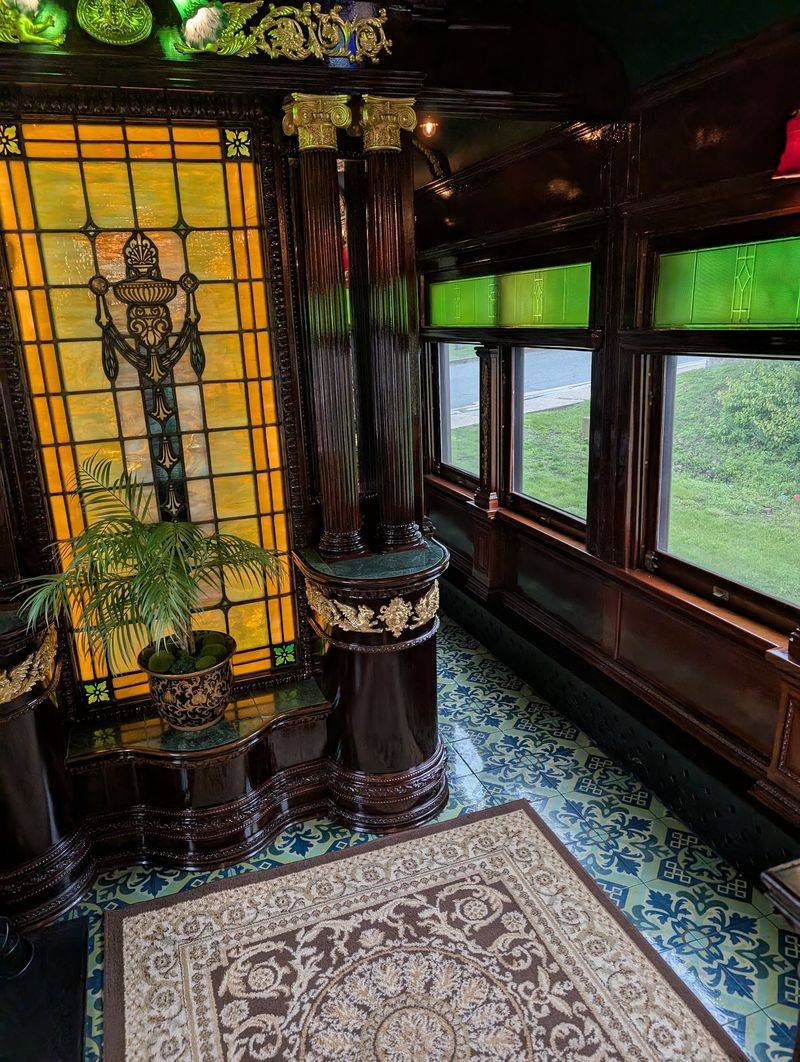
Step inside the Beaver car and the first thing to notice is green velvet. Benches, dividers, tiny lights, fresh flowers, and polished silverware fill the space, and meals arrive on Noritake porcelain.
The fleet leans hard into early 20th-century style. Stained glass tops the windows, paint jobs match across cars, and brass accents shine throughout.
Interiors have been restored with care, and the cars are kept spotless down to the glasses and cutlery.
Seating choices range widely:
Deluxe coach suits a straightforward ride. Parlor and lounge cars bring more polish, with the Maine Central lounge car standing out for its elegant finish.
Dining cars and the Beaver car handle the plated meal trips, while the Valhalla car uses tables for four.
Comfort gets attention as well. Cars are air-conditioned in summer and heated in winter, though on bitterly cold days some interiors can still run a little chilly.
Here is a fun contrast: the railroad was laid by Civil War veterans with raw muscle, yet its passenger cars now look ready for a society gala. That blend of rugged roots and refined detail gives the whole experience its character.
The Open-Air Car on a Crisp Afternoon
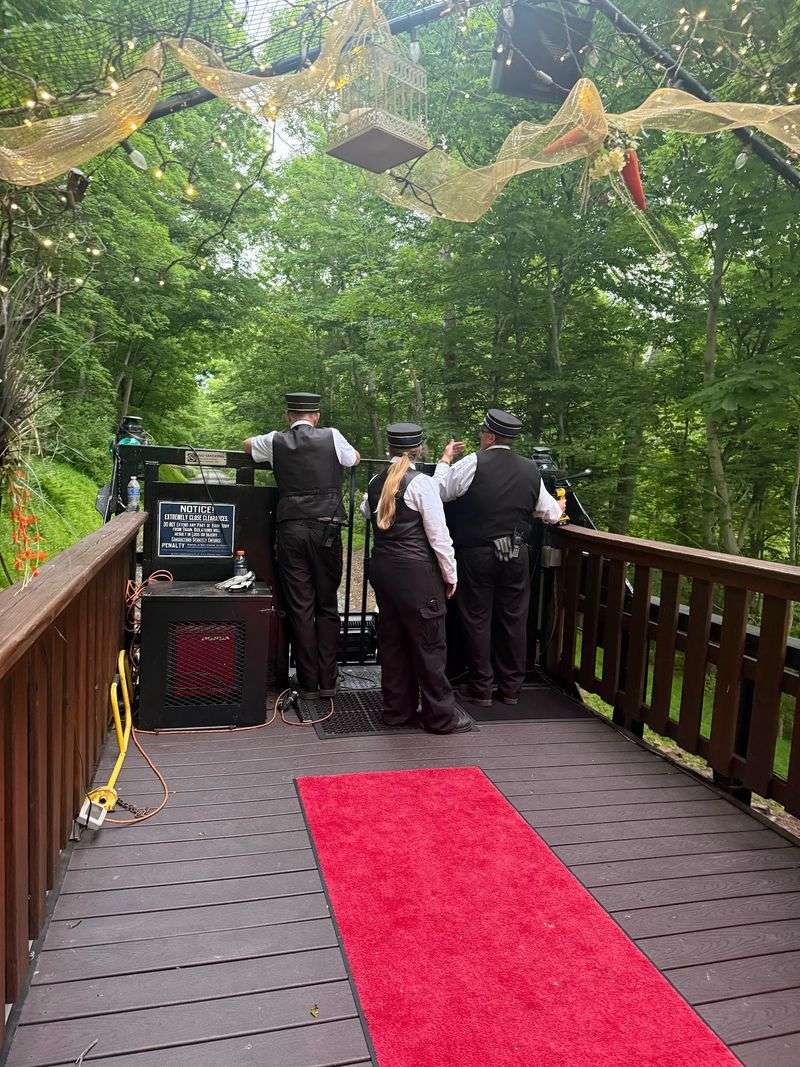
Want the best seat on the train? Chances are it is not a seat at all, but a spot at the rail of the open-air car.
With no glass in the way, views stretch across the whole valley. Leaves drift past, cool air carries the scent of the woods, and the creeks glitter below.
Photographers get clean, unobstructed shots, which matters when the foliage is at its peak.
Mild, dry days work best for this car. On a chilly October afternoon, layers and a hat make a huge difference, and rainy weather may limit its use.
Passengers seated elsewhere can generally wander back to it, so a dining reservation does not mean missing out.
Wildlife sightings add another layer. The corridor is habitat for white-tailed deer, great blue herons, and bald eagles.
An eagle perched above a creek is exactly the kind of moment that feels bigger outdoors than behind a window.
The slow pace helps here too. At walking-bike speed, it is easy to scan the treeline, point out a heron standing in the shallows, and still have time to snap a picture before the train rounds the next bend.
Autumn Splendor Dinners and Brunch Rides
Garlic rolls topped with butter, Parmesan, and oregano wait at the table on many dining trips. After that comes a small salad, a main course, and dessert, all served while the valley rolls by.
Select two-hour Autumn Splendor excursions include dinner service in the dining cars, lounge cars, and Beaver car. Entrees have included Chicken Marsala, fettuccine Alfredo with chicken and broccoli, baked ziti with meatballs, and chicken with mashed potatoes.
A kids’ option of chicken nuggets with macaroni and cheese has appeared too. Dessert choices have included chocolate mousse, cheesecake, and carrot cake.
Water, coffee, and hot tea come with meals. Special dietary needs can be handled when requested at booking, such as a fresh fruit plate in place of dessert.
Brunch runs follow a similar setup, like the Secret Valley Expedition Brunch, with classic breakfast fare. Portions and menus vary by event, and holiday brunches may feel lighter than dinner trips, so checking details before booking helps set expectations.
Not hungry for a full meal? Regular excursions offer lighter snacks, hot chocolate, and beverages for purchase.
After eating, passengers are welcome to explore other cars.
Violins, Period Music, and a Theatrical Station
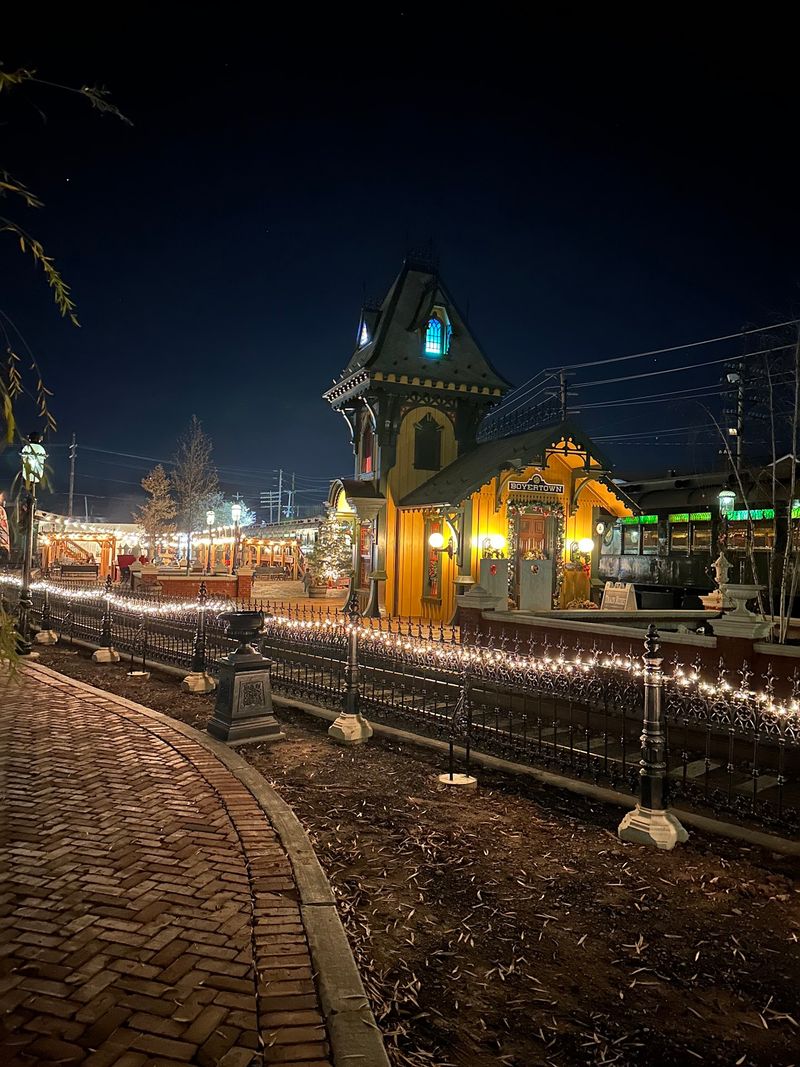
Gas lantern streetlights, statuary, and period music greet arrivals before anyone boards. The station yard is themed from end to end, and holiday decorations can linger into winter for extra charm.
On board, the mood continues. Live violin music has been part of several excursions, with a young violinist moving between cars, and old-time music plays through the trip.
Some passengers even arrive dressed in vintage clothing, which fits right in.
Staff set the tone early with a preboarding announcement at the station, then conductors guide each party to the right car. Servers on dining trips handle multiple tables with warmth, and a loudspeaker system on the well-kept platform keeps updates easy to follow.
Kids get small touches too, like a free coloring book and crayons. Little extras show up on themed rides, such as carnations handed out after a Valentine brunch or a gift from Santa during the holidays.
That mix makes the ride suitable for a wide range of outings. Date nights, birthdays, grandparents with grandkids, and train enthusiasts all find something here.
It is theatrical without being cheesy, and the scenery keeps it grounded.
Planning Your Pennsylvania Rail Outing
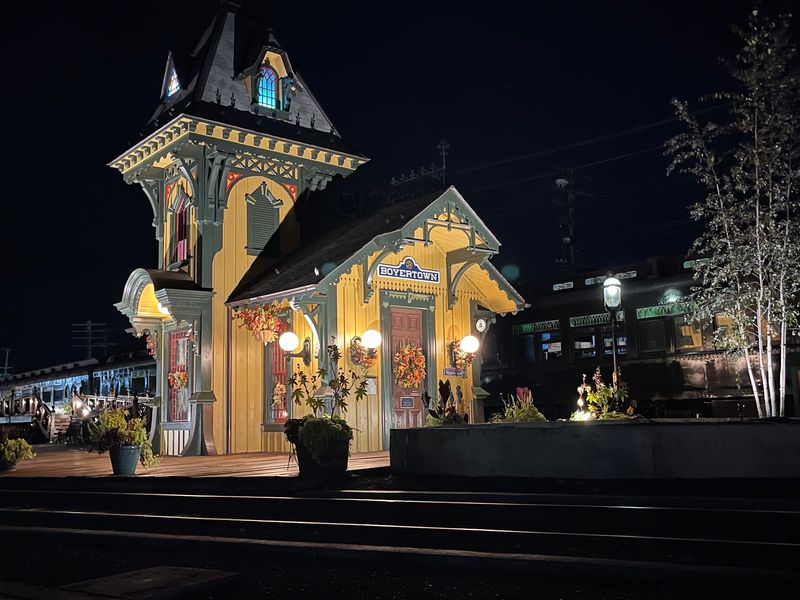
Arrive roughly 30 minutes before departure, since boarding follows a set process. The station sits at 64 S Washington St, Boyertown, PA 19512, and the phone number is 610-367-0200.
Tickets and schedules are listed at colebrookdalerailroad.com, which is the best place to confirm current departure times, seat types, and pricing. Rates vary by car and excursion, and dining trips cost more than basic coach rides.
Food and drinks bought on board can run a bit high.
Parking can be tight, and the lot is unpaved, so it may turn muddy after rain. Waiting areas are outdoors, which means cold-weather trips call for warm coats.
Restrooms deserve a quick plan. Only some cars have them, and on freezing days onboard toilets may be unavailable, with station facilities outside the train.
Using them before boarding is wise.
A small gift shop and snack selection are available at the station. The railroad runs year-round, so a fall trip can easily become a winter or spring repeat.
Tipping dining staff is optional. Onboard musicians appreciate a little cash on the way out, so bringing a few bills is handy.
Why the Slow Way Wins
Two hours is not much time. Yet on the Secret Valley Line, it holds colonial iron history, Civil War-era engineering, restored cars that gleam with brass, and a forest that turns fiery every October.
Plenty of fall outings involve crowded overlooks and long drives. This one hands over the wheel, sets out a warm roll, and lets the landscape move past at a pace that invites noticing things.
A heron in the creek. A rock cut carved by hand.
Sunlight catching stained glass.
Is it perfect? Parking and restroom logistics take a little planning, and some themed events vary in how much food they serve.
None of that outweighs the core experience, which is simply lovely.
Pick the car that matches the mood. Open-air for photos, the Beaver car for a candlelit-feeling dinner, a coach seat for an easy family ride.
Then aim for mid-to-late October and book early.
Most autumn memories blur together over the years. A slow train through a valley that roads cannot reach, framed by red maples and old iron country, has a way of staying sharp long after the leaves drop.