This 300-Year-Old North Carolina Cemetery Is Filled With Graves And Legends You Would Never Expect
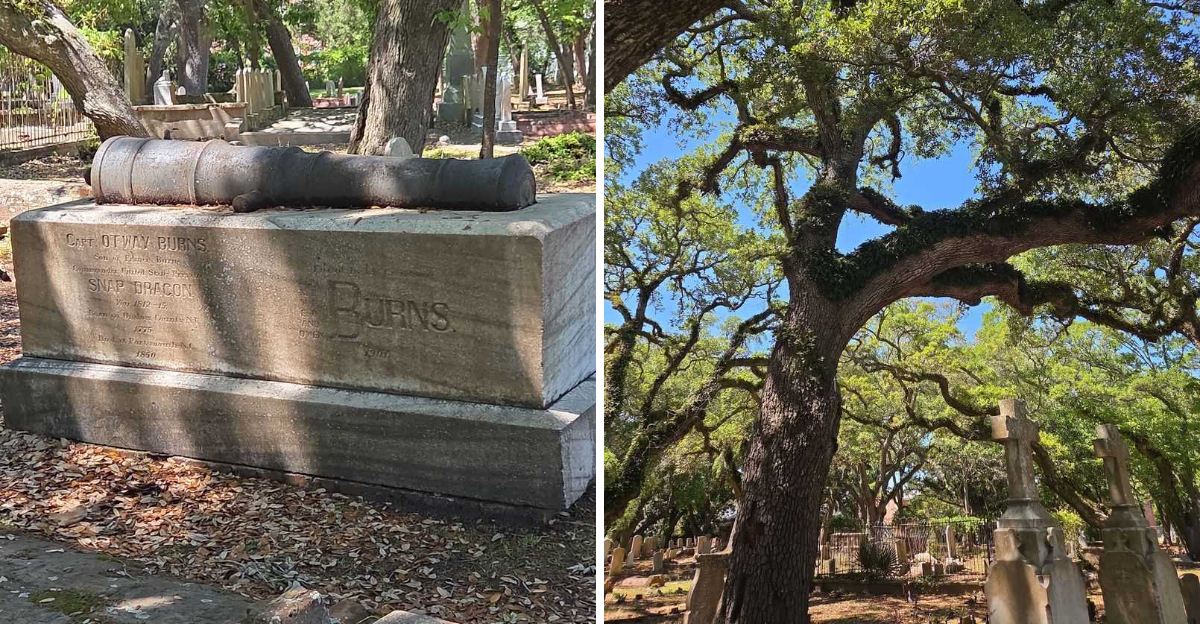
The quiet is what gets you first. Then you start reading the markers.
Suddenly, this peaceful corner of North Carolina feels less like an old cemetery and more like a collection of stories that somehow survived for centuries.
Some are tied to war. Others are wrapped in local legend.
A few are so strange that they sound invented until you realize people have been repeating them for generations.
That is what makes this place so compelling.
You do not need to be obsessed with history to get pulled in. One unusual grave can send you looking for another, and before long, the whole visit turns into a kind of outdoor mystery.
The grounds date back to the early 1700s, but nothing about the experience feels distant once the names and stories start connecting.
By the time you leave, the silence feels different.
You came expecting old stones. You found a place full of voices.
Enter Beneath The Live Oaks And Step Into Nearly Three Centuries Of Beaufort History
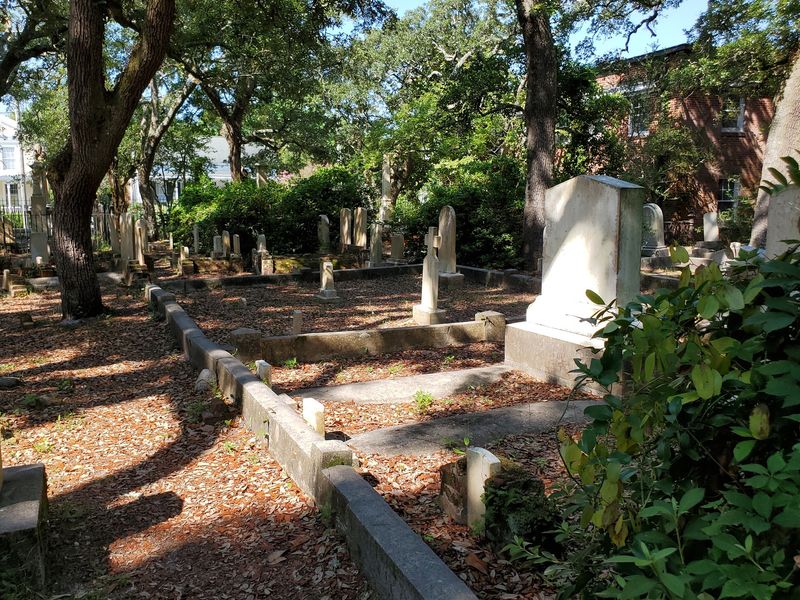
Live oaks immediately change the atmosphere once you enter the Old Burying Ground. Their branches shade a cemetery established in the early 1700s, long before Beaufort developed into the coastal town visitors know today.
The property was associated with Anglican services at nearby St. John’s Parish before Nathaniel Taylor deeded it to the town in 1731 following Beaufort’s first survey. That date gives the site nearly three centuries of documented municipal history.
Even older evidence lies beneath the surface. An archaeological survey conducted in 1992 confirmed that the seemingly open northwest corner contains unmarked burials from the early 18th century.
Beaufort Historical Association materials connect some of those graves with a turbulent period in the region’s earliest history, although precise identities are unknown. The oldest legible date highlighted on the cemetery tour is 1756, not necessarily the oldest burial.
Many earlier markers may simply have disappeared. Today, the town owns and maintains the burial ground, while the Beaufort Historical Association interprets its stories.
The result is not a reconstructed historic attraction. These are the actual grounds where generations of Beaufort history accumulated naturally.
Read Weathered Markers That Tell Stories From The Town’s Earliest Years
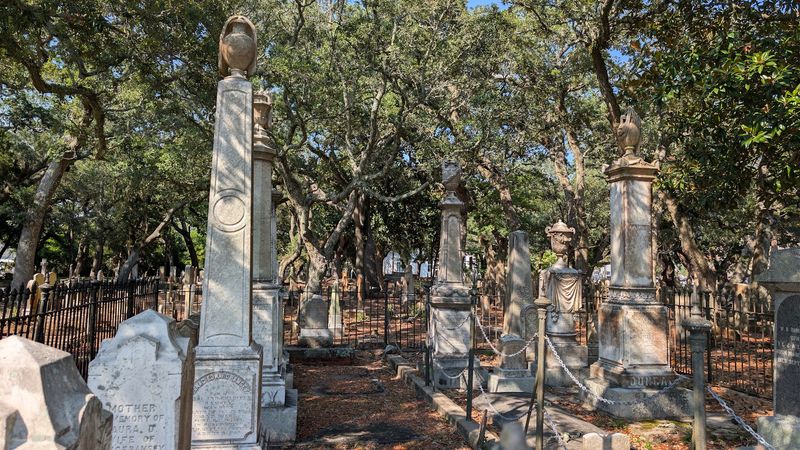
Names carved into the stones make Beaufort’s larger history surprisingly personal. Colonel William Thomson, who died in 1802, is identified by the Beaufort Historical Association as the highest-ranking Beaufort officer to serve during the American Revolution.
His grave is marked simply despite a public career that included service in provincial and state affairs. Sergeant George Johnson represents another chapter.
He served with the 35th United States Colored Infantry and survived his military service before eventually being buried here. Other markers belong to sailors, physicians, merchants, families, and residents whose stories unfolded far from nationally famous events.
The grave designs themselves add another layer. Some markers are traditional carved stones, while others use materials that reflect the practical challenges of an early coastal community.
Wooden slabs, brick, and shells were all used because stone had to be transported from elsewhere by sailing vessel. The result is a cemetery where no single monument style dominates.
Reading slowly matters here. A modest marker can belong to someone with an unexpectedly complicated story, while an elaborate monument may reveal only a few surviving facts.
That unevenness is part of what makes the grounds feel genuinely historical rather than carefully arranged for visitors.
Find The Grave Linked To Beaufort’s Famous Girl In A Rum Barrel Legend

One grave carries a story so unusual that it has become inseparable from the Old Burying Ground. According to the traditional account preserved by the Beaufort Historical Association, a young girl from a family with English roots wanted to visit England.
Her father eventually accompanied her overseas after promising her mother he would return the child safely to Beaufort. The girl reportedly died during the voyage home.
Rather than have her buried at sea, the story says her father obtained a barrel of rum, placed her remains inside, and completed the journey so she could be buried at home. Historical documentation for every detail is limited, which is why the account is best treated as a longstanding Beaufort legend rather than proven fact.
The burial itself nevertheless appears on the official walking-tour map as the “Girl in Barrel of Rum.” That distinction makes the story more interesting, not less. Old communities often preserve memories through a mixture of records and oral tradition.
Here, the line between the two has been repeated for generations. Visitors can find the grave on the self-guided route without turning a child’s story into something overly dramatic or sensational.
Look For Captain Otway Burns Among The Cemetery’s Best-Known Burials
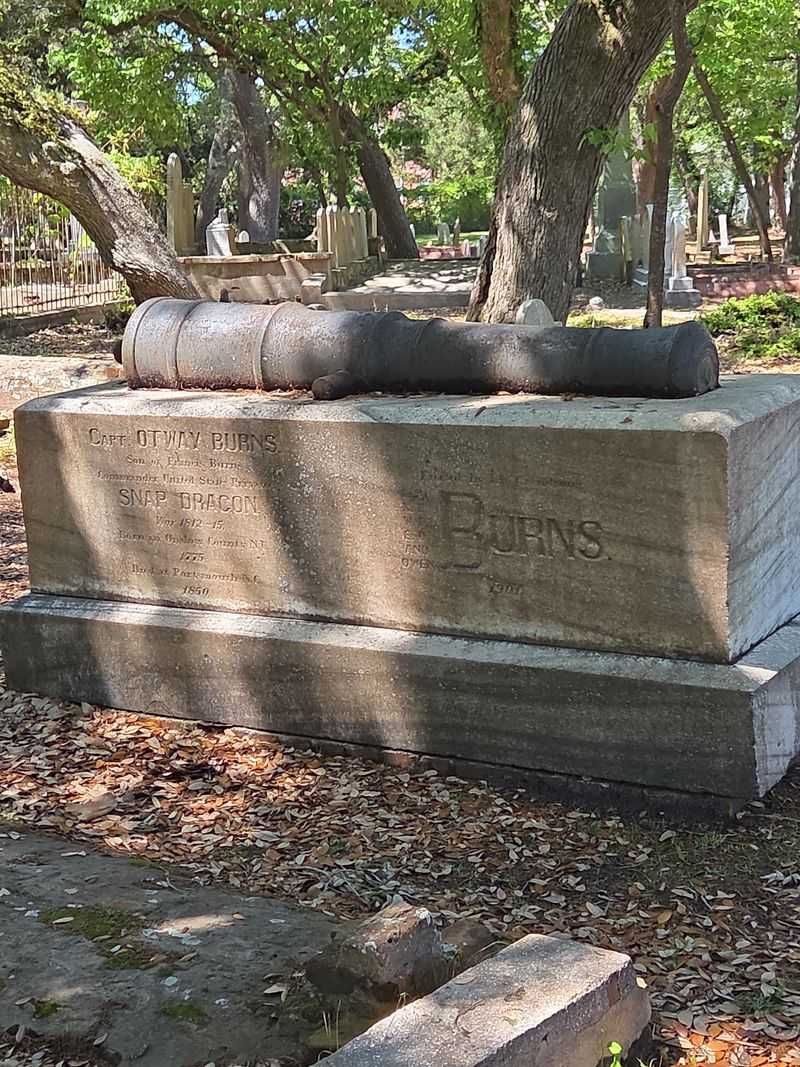
A cannon resting above a grave is difficult to overlook, and that unusual monument belongs to Captain Otway Burns. Born in 1775, Burns became one of North Carolina’s best-known privateers during the War of 1812.
The Beaufort Historical Association describes him as one of the state’s notable naval figures from that period. His vessel, the Snapdragon, operated against British shipping under government-issued authorization.
Burns later moved into public life and served in the North Carolina legislature before becoming a lightship keeper near Portsmouth. When he died in 1850, his remains were brought to Beaufort for burial.
The feature that makes his monument immediately recognizable is the cannon mounted above it. According to the official cemetery tour guide, the cannon came from the Snapdragon.
His legacy reached well beyond Beaufort as well. Burnsville, in western North Carolina, was named in his honor, and a statue of Burns stands there today.
His documented biography is interesting enough. Few cemetery markers connect coastal North Carolina, early maritime commerce, state government, and a mountain town hundreds of miles away quite as neatly as this one.
Notice The Unusual Shell-Covered Graves Scattered Through The Grounds
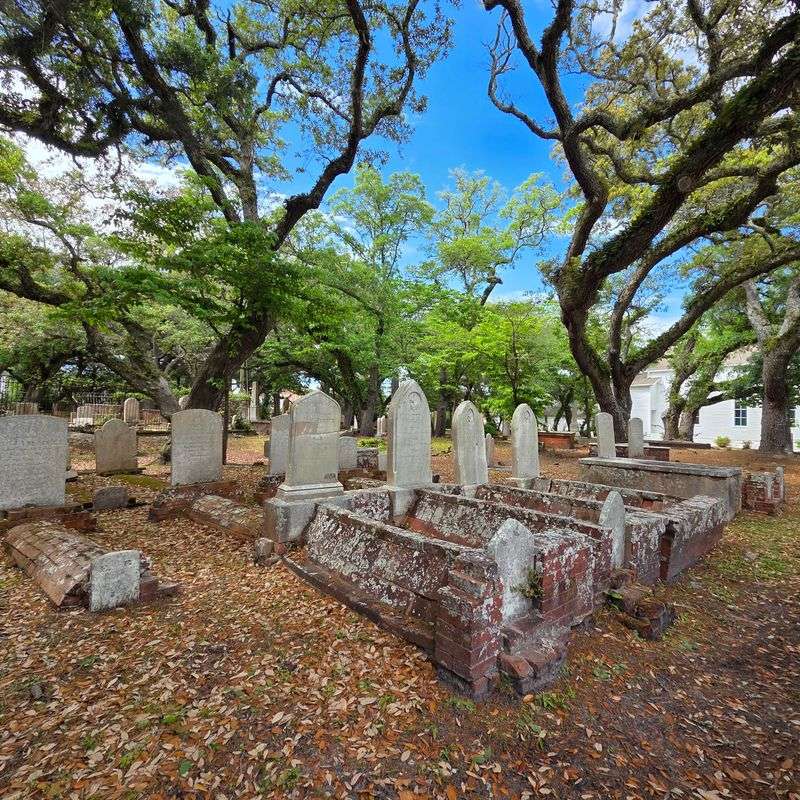
Shells scattered across old burial markers are not simply decorative touches added for coastal atmosphere. They reflect the practical realities of Beaufort’s early years.
The Beaufort Historical Association explains that stone grave markers had to be transported from distant sources by sailing vessel, making them difficult and expensive to obtain. Families therefore used materials already available to them.
Shells, brick, and wooden slabs became alternatives, leaving the cemetery with a distinctive collection of marker types. Raised brick vaults provide another unusual feature.
Those structures helped protect graves from high water and animals and were characteristic of some historic seaport communities. Their shapes vary, and age has softened many of their edges.
Together, those markers reveal something easy to miss when focusing only on famous names. Burial customs were shaped by geography, transportation, available materials, and coastal conditions.
Beaufort’s relationship with the water therefore appears even in the way residents marked graves. The result is visually different from many inland cemeteries.
These forms had practical reasons behind them. Once you know why they are there, shells and brick become another record of how earlier Beaufort residents adapted to life along the coast.
Follow The Narrow Paths Between Fenced Family Plots And Leaning Stones
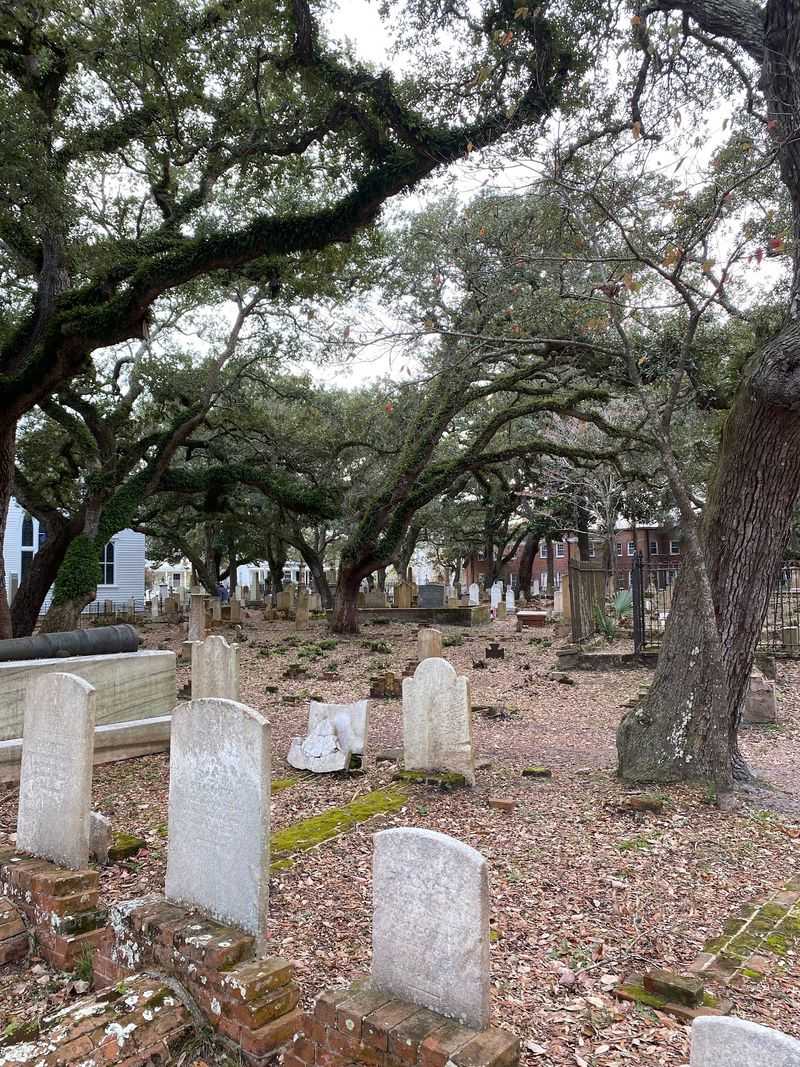
Slow walking suits the Old Burying Ground better than trying to hurry from one famous grave to another. Live oaks shade much of the cemetery, while old stones, brick vaults, family plots, and natural ground create a landscape that has developed across generations rather than according to a modern visitor plan.
Some markers lean noticeably with age. Others sit low to the earth or blend into the vegetation until you are nearly beside them.
Shell-covered graves add texture, and fences surrounding individual plots create small boundaries within the larger cemetery. The Beaufort Historical Association’s walking brochure is especially helpful because dozens of significant burials would otherwise be easy to miss.
Self-guided maps are available inside the cemetery gates and at the Welcome Center on Turner Street. Visitors can also download the route before arriving.
Comfortable footwear is sensible because the site is historic and the ground is not designed like a newly built paved attraction. That slower pace has another benefit.
Details that initially look decorative often have stories behind them. A broken-looking monument, an unusual inscription, or a different style of marker can lead into an entirely separate piece of Beaufort history.
The cemetery rewards attention much more than speed.
Listen For The Maritime Legends That Have Surrounded These Graves For Generations
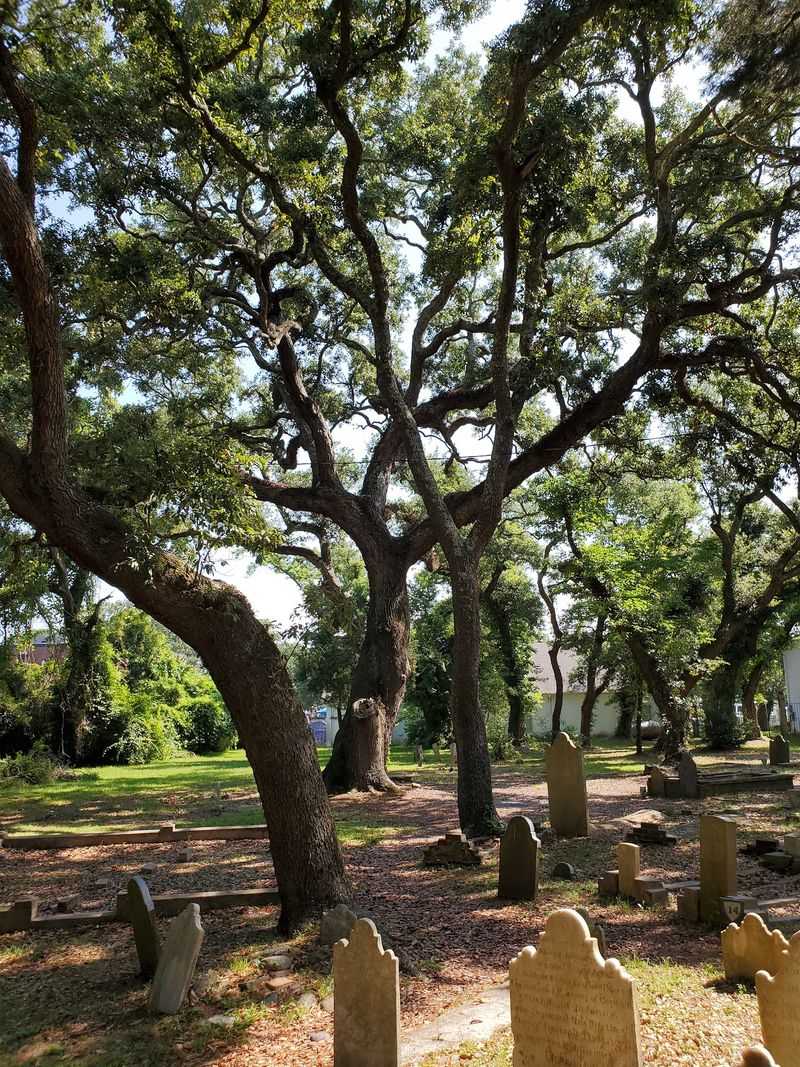
Not every story here can be separated cleanly into fact or folklore, and the official tour makes that distinction part of the experience. One longstanding tale concerns an unidentified British naval officer from the 1700s.
Local tradition says he requested burial in full uniform and was placed upright rather than lying flat. His name has been lost, leaving the unusual account attached to an anonymous grave.
Another maritime story is much better anchored in the historical record. Members of the Crissie Wright crew are buried together after the schooner went aground at Shackleford Banks during a January storm in 1886.
Beaufort tradition further holds that the incident helped spur establishment of the Cape Lookout Life-Saving Station the following year. The girl-in-a-rum-barrel story belongs to this same collection of coastal memory, while Otway Burns provides a thoroughly documented maritime figure nearby.
Together, these accounts explain why water seems present even when you cannot see the waterfront from every corner of the cemetery. Beaufort developed as a seaport, and ships shaped the lives of many people buried here.
A guided Old Burying Ground tour can provide additional context, with tours offered year-round by advance arrangement when weather allows.
Leave With A Very Different Picture Of Beaufort’s Past
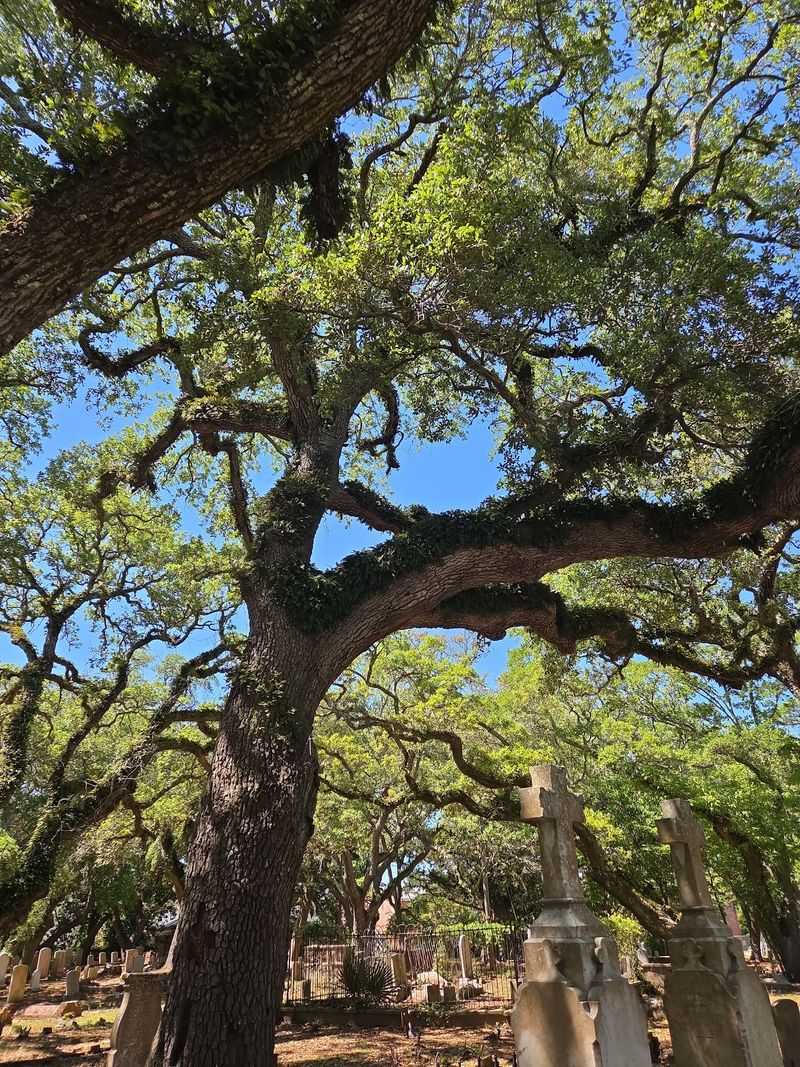
By the end of the walk, Beaufort looks less like a collection of pretty waterfront streets and more like a town shaped by centuries of families, seafaring, commerce, changing customs, and stories that survived in unusual ways. The Old Burying Ground remains owned and maintained by the Town of Beaufort, while the Beaufort Historical Association helps visitors understand it through guided tours and self-guided materials.
The cemetery is found on the 400 block of Ann Street, rather than at a universally designated 411 Ann Street address. From April through December, the grounds are open Monday through Saturday from 9:30 a.m. to 5 p.m.
From January through March, hours are Monday through Saturday from 10 a.m. to 4 p.m. Guided cemetery tours are available year-round, weather permitting, with advance notice requested.
Self-guided maps can be picked up inside the gates or at the Welcome Center. That makes exploring simple without turning the cemetery into an amusement-style attraction.
Visit respectfully, read beyond the famous legends, and the quieter graves may end up telling some of the most interesting stories of all.