This 60-Story Skyscraper Is The Tallest Tower In North Carolina

Skyscrapers usually try to look important, but this one shows up like it owns the skyline and has the paperwork to prove it.
In North Carolina, the tallest building rises 60 stories over Uptown Charlotte with the calm confidence of someone who never has to ask for a better view.
César Pelli’s 1992 tower still feels bold without needing to shout.
Its crown catches the eye fast, especially when the city lights start doing their evening routine.
Street-level life moves below, but the building keeps pulling attention upward.
Plenty of landmarks blend into a city after a while.
This one still makes people look up.
A Skyline-Defining Height
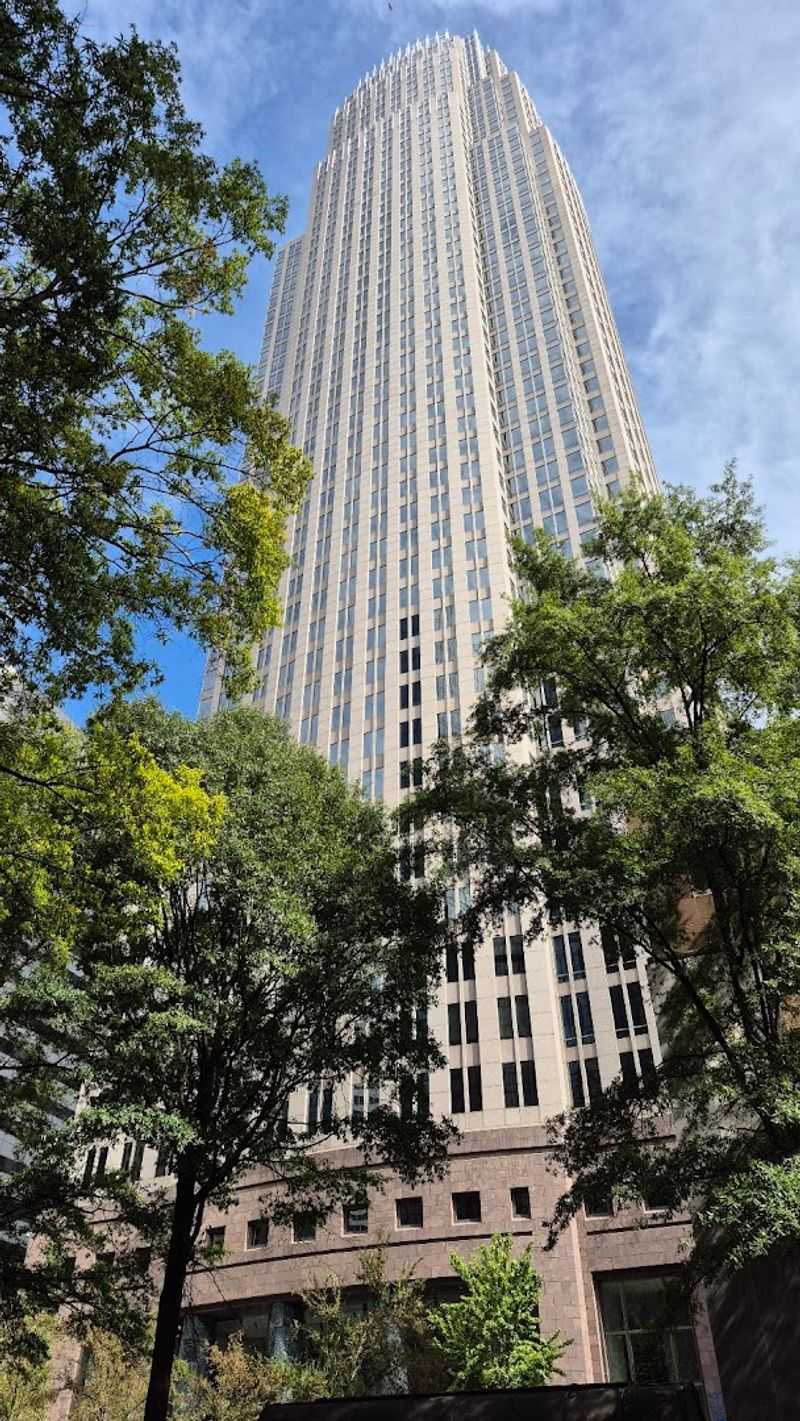
Height gives this tower its first and loudest claim to fame. The Bank of America Corporate Center reaches 871 feet and 60 stories at 100 N Tryon Street, Charlotte, NC 28202, which makes it the tallest building in North Carolina.
CTBUH’s Skyscraper Center lists the tower at 265.5 meters, or 871 feet, with 60 floors, confirming the numbers behind its skyline dominance. Standing near the base gives visitors a different sense of scale than seeing it in photos.
The crown seems to pull the eye upward, while nearby buildings suddenly feel smaller than expected. Charlotte has grown into a major Southern skyline, yet this tower remains the one people use to orient themselves downtown.
Its height is not just a statistic. It shapes how Uptown looks from highways, rooftops, sidewalks, and hotel windows.
North Carolina has other tall buildings, but none match this one’s vertical presence. For architecture fans and casual visitors alike, the tower works as a simple visual landmark: find the crown, and you have found the center of Charlotte’s skyline.
César Pelli’s Architectural Vision

Design matters almost as much as height here. César Pelli, working with HKS Architects, gave Charlotte a tower that feels bold without becoming clumsy.
The Bank of America Corporate Center combines granite and glass with a crown-like top that makes it instantly recognizable instead of just tall. Walter P Moore describes the project as a 60-story tower of granite and glass, while CTBUH confirms the César Pelli and HKS design credit.
Pelli’s work often balanced drama with elegance, and this building shows that approach clearly. The setbacks, vertical lines, reflective surfaces, and illuminated crown help the skyscraper feel sculpted rather than plain.
Its form also responds well to Uptown Charlotte, where the tower serves as both corporate headquarters and civic symbol. Some skyscrapers disappear into a crowd of rectangles, but this one has a silhouette people remember.
Standing at 100 N Tryon Street, it does more than house offices. It gives Charlotte an architectural signature with enough presence to keep earning attention decades after opening.
Opening Day In 1992

Charlotte’s skyline changed permanently when this tower opened in 1992. The Museum of the New South notes that construction started in 1989 and the skyscraper opened in 1992, marking a major moment in the city’s rise as a financial center.
At the time, the tower represented ambition on a scale North Carolina had not seen before. The address, 100 N Tryon Street, quickly became one of the most recognizable business locations in the Southeast.
More than 30 years later, the building still carries that sense of arrival. Its completion helped signal Charlotte’s transformation from a growing Southern city into a banking powerhouse with national reach.
Opening a skyscraper of this size is never just about adding office space. It changes how a city sees itself and how outsiders read its skyline.
The Bank of America Corporate Center became a visible statement of confidence, and that message has not faded. In many ways, modern Uptown Charlotte still organizes itself around the vertical statement made in 1992.
Uptown Charlotte’s Financial Heart
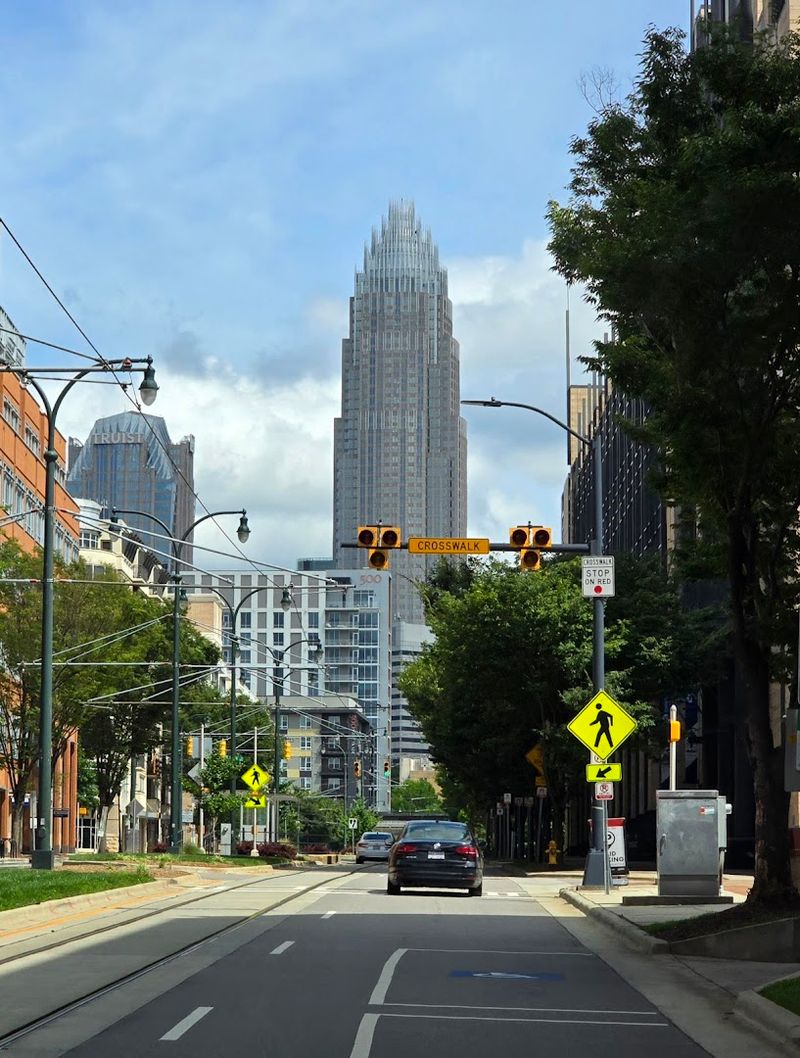
Financial identity runs straight through this tower. The Bank of America Corporate Center stands at 100 N Tryon Street in Uptown Charlotte, a district packed with offices, hotels, restaurants, cultural venues, and banking history.
Bank of America’s own locator lists a financial center and walk-up ATM at 100 N Tryon Street, Suite 170, while broader building references identify the skyscraper as Bank of America’s headquarters tower. That connection matters because Charlotte is one of the country’s major banking centers, and this building is the most visible symbol of that role.
Weekday energy around the tower feels fast, polished, and business-heavy, with professionals moving through nearby streets, lobbies, restaurants, and plazas. Visitors also benefit from the central location because major Uptown attractions sit nearby.
The tower is not only an office address. It is an anchor point for how Charlotte presents itself to the world: financially powerful, architecturally confident, and still growing upward.
Few buildings express a city’s economic identity as clearly as this one does.
Granite And Glass Exterior

Material choice gives the tower a richer presence than a simple glass box. Walter P Moore describes the Bank of America Corporate Center as a tower of granite and glass, and older design descriptions note its rosy beige granite and silver glass facade.
That combination lets the building shift with the light throughout the day. Morning reflections make the glass feel crisp and bright, while afternoon sun brings warmth out of the stone.
The crown adds another layer, especially after dark when illumination gives the top a more dramatic skyline role. At street level, the scale can feel almost overwhelming, but the materials keep the tower from reading as cold or anonymous.
Granite gives it weight, while glass keeps it connected to the changing city around it. The building’s exterior also helps explain why it still feels recognizable after decades of Charlotte growth.
Newer towers may rise nearby, but this one has a texture, color, and silhouette that remain unmistakable. Its finish supports the height instead of letting the height do all the work.
Record-Breaking Status In The State

Record status gives this skyscraper lasting significance beyond Charlotte. Since its completion in 1992, the Bank of America Corporate Center has remained the tallest building in North Carolina, with CTBUH listing it at 871 feet and 60 floors.
Walter P Moore also notes that it remains the tallest building in the state today. Holding that title for more than three decades is impressive, especially in a city where the skyline has continued to expand.
Tall buildings often inspire competition, but no North Carolina tower has surpassed this one yet. That makes a visit feel more meaningful for anyone who enjoys architecture, engineering, or skyline trivia.
Standing near 100 N Tryon Street means standing beside the highest occupied building in the state, not simply another office tower. The record also shows how ambitious the project was when it topped out and opened.
Many skyscrapers become outdated as cities grow around them. This one still leads the list, which says plenty about the scale of the original vision.
Art And Culture Inside The Tower

Public space helps the tower feel less sealed off than many corporate skyscrapers. The Bank of America Corporate Center complex includes Founders Hall, and commercial property listings describe the complex as consisting of the office tower, Founders Hall, and a parking garage.
Founders Hall gives visitors a more accessible way to experience the building beyond simply photographing it from the sidewalk. Atrium spaces, retail activity, public movement, and corporate architecture all meet there, creating a connection between Uptown street life and the tower above.
Office buildings can feel distant from ordinary visitors, but this complex has long been part of Charlotte’s downtown rhythm. People pass through for work, meetings, lunch, events, errands, and sightseeing.
The building’s interior and surrounding public areas help soften the boundary between landmark and workplace. Visitors should remember that access can vary because it is an active corporate office complex, but the public-facing areas still add useful texture to the experience.
The tower is not only something to look at from far away. Parts of its base connect directly to Uptown life.
Visiting Charlotte’s Most Famous Tower
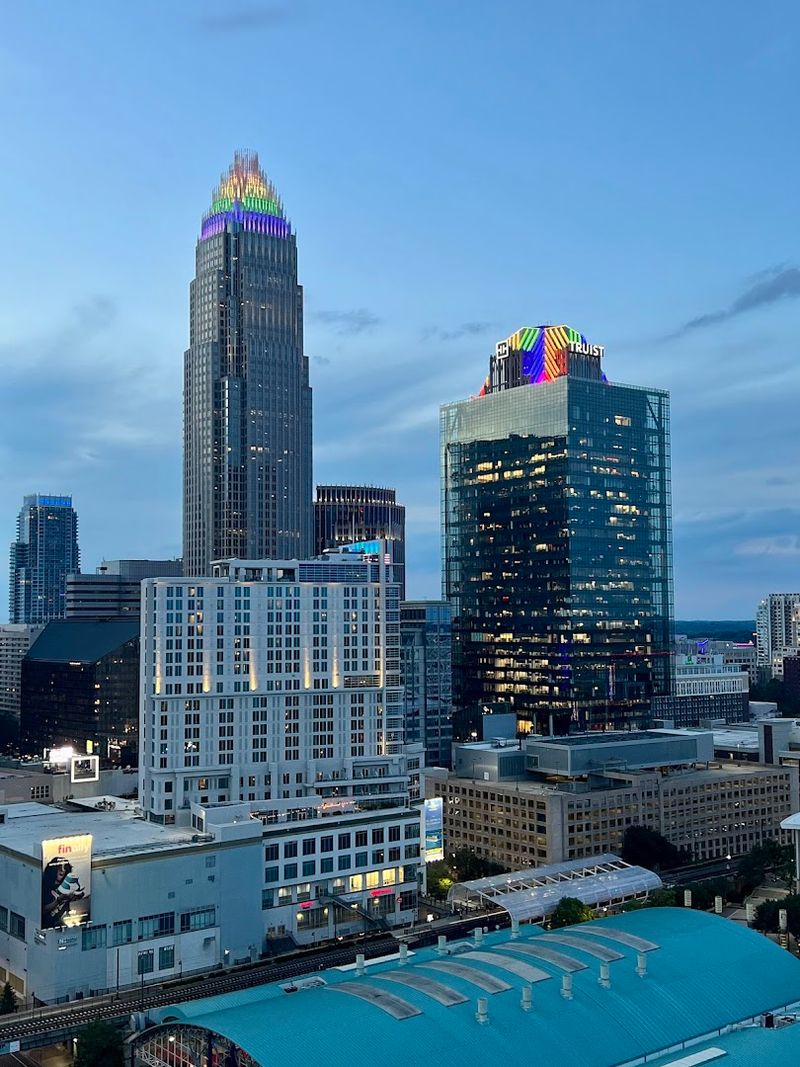
Easy access makes this skyline landmark simple to add to an Uptown Charlotte visit. The Bank of America Corporate Center stands at 100 N Tryon Street, Charlotte, NC 28202, close to restaurants, hotels, museums, public transit, and other downtown attractions.
Visitors cannot treat it like an observation deck, since it is primarily an active office tower, but the exterior is easy to admire from nearby sidewalks, plazas, and surrounding streets. The best views often come from stepping back a few blocks, where the full crown and height can fit into a photo.
Evening is especially rewarding because the illuminated top becomes one of the most recognizable features in the city. Pairing the stop with a walk through Uptown makes sense, especially for travelers already visiting the Levine Center for the Arts, nearby restaurants, or sports and entertainment venues.
The tower works as a visual anchor for the whole district. Even without going upstairs, visitors can appreciate its scale, materials, and record-holding status from street level.
Few North Carolina landmarks make such an immediate vertical impression.