This 26-Acre California Botanical Garden Has Plants From Around The World And No Admission Fee
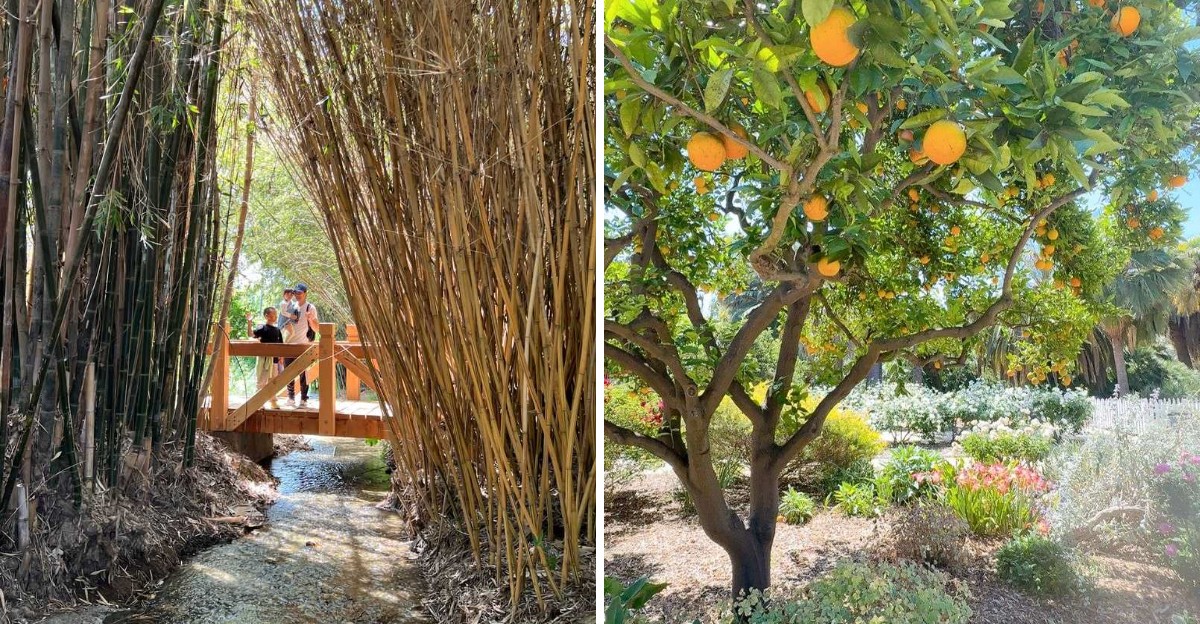
Twenty-six acres can hold a surprising amount of the world.
One path may feel lush and tropical, while the next turns toward plants adapted to much drier conditions.
Keep walking and the scenery shifts again, which makes the garden feel less like one landscape and more like a collection of them.
This California botanical garden brings together plant life from many regions without charging visitors to explore it. That makes wandering especially easy.
There is no pressure to rush through the grounds or squeeze value out of the visit.
You can follow whichever path looks interesting, stop when something unfamiliar catches your eye, and let curiosity set the pace.
The variety is what keeps the walk interesting.
Start With 26 Acres Of Botanical Collections
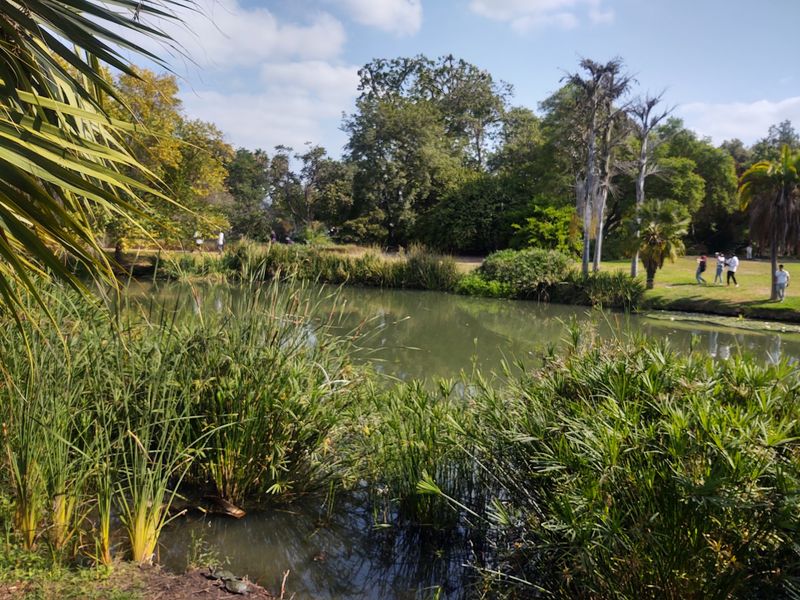
Twenty-six acres sounds enormous on paper, but the layout here keeps things manageable for almost any pace.
The Arboretum and Botanical Garden at Cal State Fullerton occupies the northeast corner of the California State University, Fullerton campus, and the property address is 1900 Associated Rd, Fullerton, CA 92831.
Gates currently open at 9 AM and close at 4 PM daily, which gives visitors a full stretch of daylight to work with.
Paths connect the different collections in loops rather than one long straight line, so backtracking is rarely necessary.
Most walkways are flat and packed firm, and past visitors using wheelchairs have reported getting around the main trails without much trouble.
A relaxed walk through the whole property takes somewhere between one and two hours.
People who stop to read plant labels or sit on benches often stay considerably longer, and a few have spent close to three hours here.
Benches appear regularly along the routes, which makes the garden friendly for older visitors and families with small children.
Shade comes and goes depending on the section, so a hat and water bottle are sensible in warmer months.
Construction projects have occasionally closed portions of the grounds, so checking the official website before driving over saves disappointment.
Explore Plants From Around The World
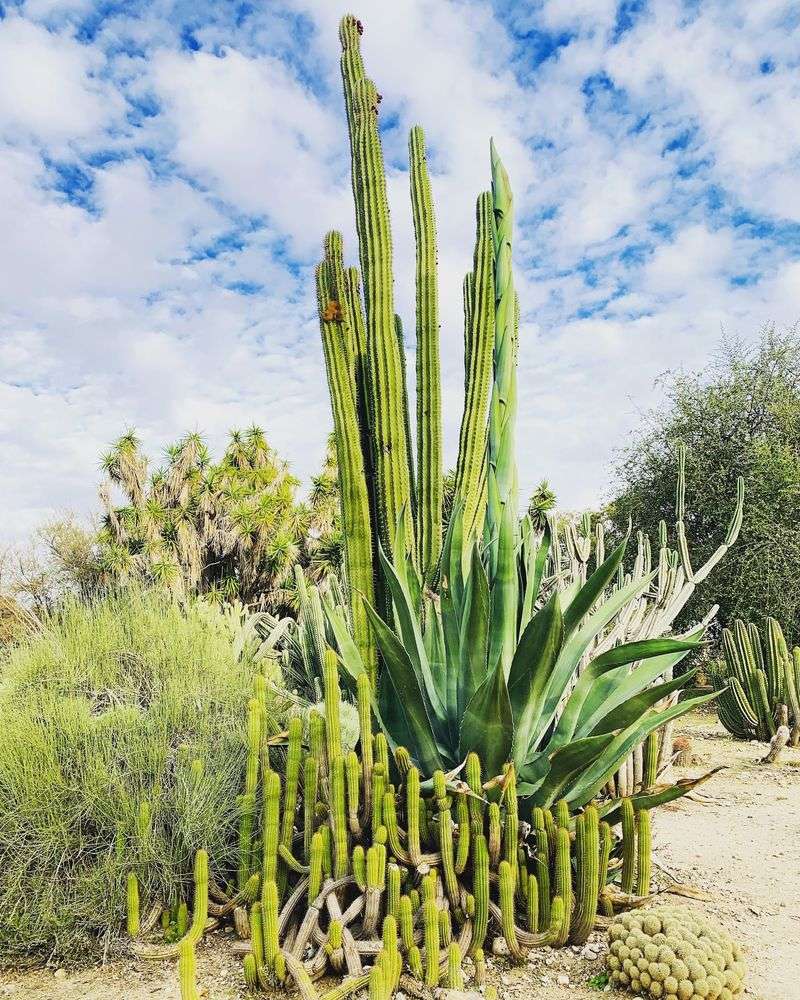
More than 4,000 unique plant species grow across these grounds, which puts the collection in living museum territory rather than simple landscaping.
Sections are organized into Cultivated, Woodlands, Mediterranean, and Desert areas, with a Subtropical collection adding another layer of variety.
Walking from one to the next feels a little like stepping between climates without leaving Orange County.
Desert beds hold cacti and succulents with spines, ribs, and waxy skins built for dry heat. Woodland areas swap that openness for tall canopies, deeper shade, and cooler air underfoot.
The Mediterranean section gathers plants suited to dry summers and mild winters, a climate pattern shared by parts of California, southern Europe, and other scattered regions.
Subtropical plantings bring broader leaves and denser growth into the mix.
Labels throughout the property name many of the specimens, which turns a casual stroll into a low-pressure learning walk.
Anyone curious about a plant can look up the name later and remember exactly where it stood.
Because the sections differ so clearly, the garden rewards slow movement more than fast covering of ground.
Sitting for a few minutes in one collection before moving to the next makes the contrasts easier to notice and far more memorable.
See A Nationally Recognized Citrus Collection
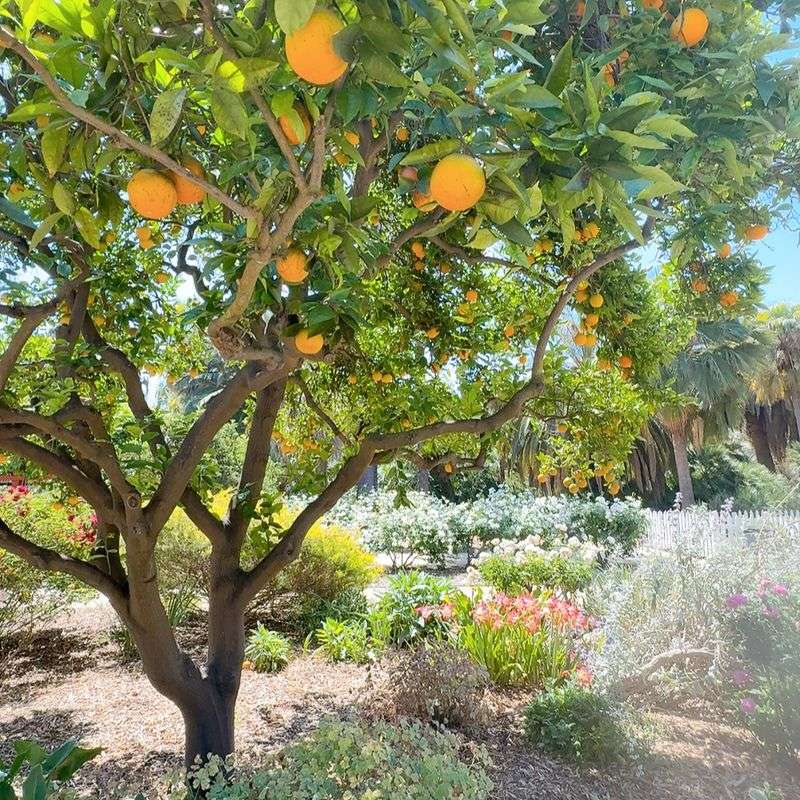
Citrus turns out to be one of the standout specialties on the property, and the recognition behind it goes well past local interest.
The collection was accepted into the Plant Collections Network in 2000, which places it among nationally significant holdings of its kind.
Included in the group are historically important cultivated varieties, not just familiar supermarket types.
Historic citrus and avocado trees also grow here, tying the garden directly to the agricultural past of the surrounding area.
Walking the rows gives a sense of how many shapes, sizes, and skin textures citrus actually comes in.
Fragrance is part of the appeal during bloom periods, when citrus blossoms carry a sweet scent through that part of the grounds.
Fruit set varies by variety and season, so what hangs on the branches changes across the year.
Visitors should not pick fruit, since the trees are part of a documented collection. Fruit grown on site has sometimes been offered for sale instead, which is a better way to take something home.
Labels help sort out which tree is which, and comparing two similar-looking varieties side by side is oddly satisfying. Citrus fans could easily spend a good portion of a visit in this one section.
Follow The Paths Toward The Waterfall
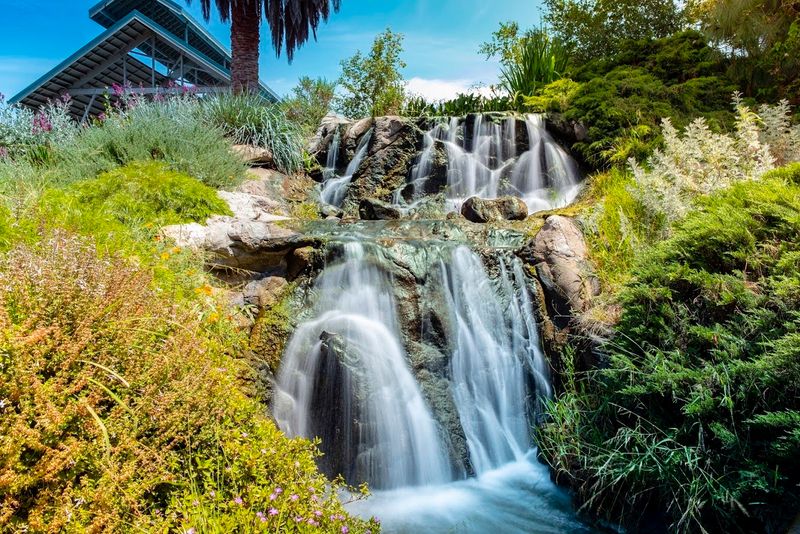
Water greets visitors early, and the sound arrives before the view does.
A waterfall is built into the grounds near the entrance area, and it changes the feel of the garden right from the start. Instead of opening onto flat planting beds, the walk begins with moving water, rock, and cool air.
The drop is modest rather than dramatic, which suits the setting. Splashing water masks traffic noise from beyond the campus edge and makes the first few minutes noticeably quieter than the parking area.
Plants around the falls lean toward moisture-loving species, so the greenery reads denser and softer here than in the desert section. Damp stone and shade keep the temperature down on hot afternoons.
Photos come out best when light is indirect, meaning earlier in the morning or later in the day. Harsh midday sun tends to wash out the contrast between water and rock.
Footing near water features can be slick, so shoes with decent grip help. Standing still for a minute or two is worth the pause, especially with children who like watching water move.
From the falls, connecting paths lead deeper into the collections, making this a natural starting point for a loop.
Wander Along Streams Through The Garden
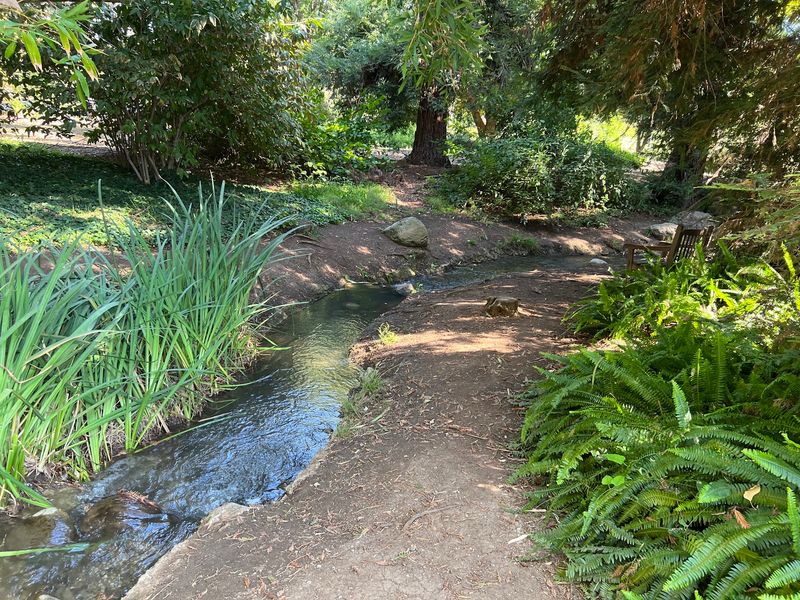
Narrow channels of water thread through several portions of the property, and they do real work beyond looking pleasant.
Streams help create different growing conditions across the grounds, supporting plants that need consistent moisture near their roots.
Habitat variety increases as a result, which draws in more birds and small wildlife.
Wooden bridges cross the water at points along the trails, and crossing them gives a nice change of texture underfoot. Kids tend to slow down here on their own, peering over railings to look for movement below.
Sound plays a part too. Trickling water travels farther than expected and softens the edges of a walk, especially in sections where trees block campus views entirely.
Birdlife along the water has included northern mockingbirds, California towhees, American robins, and red-shouldered hawks overhead. Binoculars are a reasonable thing to bring for anyone interested in spotting more.
Lizards dart across sunny stretches of path near the streams, harmless but quick enough to startle unprepared walkers. Their presence is a decent sign of a healthy, functioning landscape.
Early morning visits generally offer the most bird activity and the coolest air. Weekday mornings also tend to be quieter, since the grounds have often felt peaceful during the workweek.
Find The Bamboo Forest Near South Pond
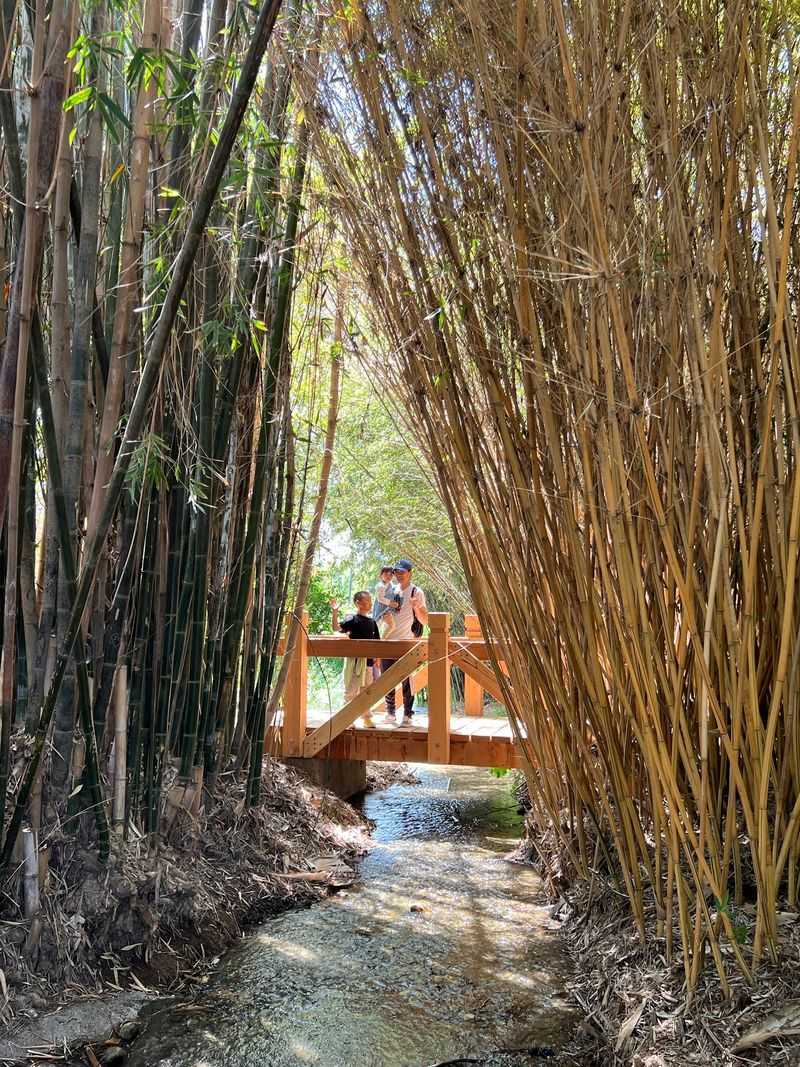
Stepping into the bamboo changes the light almost instantly.
Tall canes grow densely in this part of the Arboretum, and the path through them feels enclosed in a way no other section does.
Some visitors have nicknamed it a bamboo maze, which gives a fair sense of the experience.
Sound behaves differently among the canes. Wind moves through the stalks with a dry clicking rustle, and voices from elsewhere in the garden fade out quickly.
The grove sits near the South Pond area, so a walk through the bamboo often opens onto water and basking turtles at the far end.
That contrast between shade and open pond is one of the nicer transitions on the property.
Shade here is genuinely useful in summer, making this a good midpoint rest stop on a warm afternoon. Cooler air lingers between the canes even when the rest of the grounds feel hot.
Guided mindfulness walks offered by the Arboretum have highlighted this area on their route toward South Pond. Anyone walking on their own can borrow the idea and simply slow down here.
Bamboo grows fast, so the look of the grove shifts over time. Repeat visitors often notice the difference between seasons.
Explore At Your Own Pace Without Making A Reservation
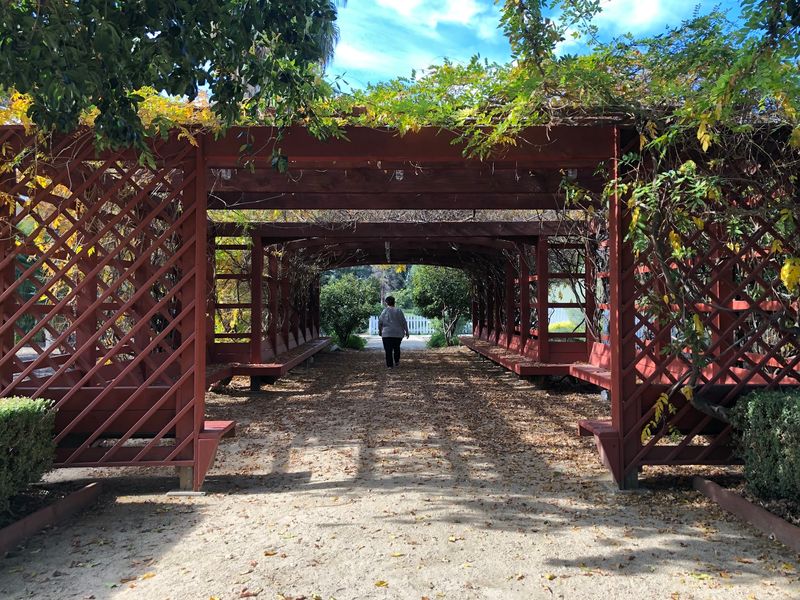
Spontaneous visits work here, which is rarer than it should be at gardens of this size.
Individual visitors can take a self-guided tour without reserving ahead of time, so a free afternoon is all that is really needed. Gates operate from 9 AM to 4 PM daily under current hours.
Freedom to set the pace changes the experience considerably. Some people cover the loops in under an hour, while others settle onto benches, read labels, and stretch a visit past two or three hours.
Students on campus have been seen sitting under trees reading, listening to music, or doing yoga on the lawn. That casual, unstructured atmosphere carries over to outside visitors too.
Weekdays during working hours have often felt especially quiet, with few people on the paths. Weekends bring more visitors, though the grounds are large enough to spread crowds out.
Restrooms on site are marked as accessible and include emergency call buttons. Shaded seating areas and grassy spots give families flexible places to regroup or take a break.
Guided programs, including mindfulness walks, are offered separately for those who prefer structure. Anyone interested in a guided or group experience should check current offerings and any reservation requirements on the official website before arriving.
Visit Without Paying A Required Admission Fee
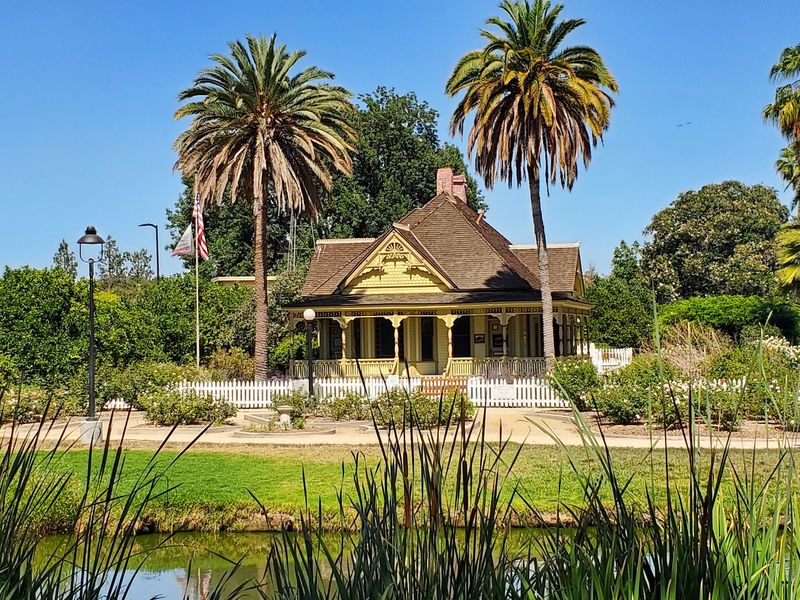
Free entry is the detail that surprises first-time visitors most, and it holds up.
No mandatory admission fee applies at the Arboretum and Botanical Garden at Cal State Fullerton, located at 1900 Associated Rd, Fullerton, CA 92831.
A suggested donation of $5 per person is requested instead, and those contributions help maintain the collections.
Donations can be made at the front kiosk, where staff greet arrivals and answer questions. Many visitors choose to give the suggested amount given the size and condition of the grounds.
Parking is handled separately from admission and does involve cost on weekdays. Hourly campus rates currently run $4 per hour through the ParkMobile app, with a daily option also available.
Weekends are the budget-friendly choice, since campus parking is currently free on Saturdays and Sundays. Rates and policies can change, so confirming before arrival is smart.
Downloading the parking app ahead of time avoids fumbling with a phone in the lot. Buying enough time up front also prevents a rushed walk.
For a property with more than 4,000 plant types, water features, historic trees, and an accredited conservation program, the total cost of a visit stays remarkably low. Few gardens of this caliber ask so little at the gate.