This Aerial Tram Ride Above California’s Coachella Valley Is A Must-See
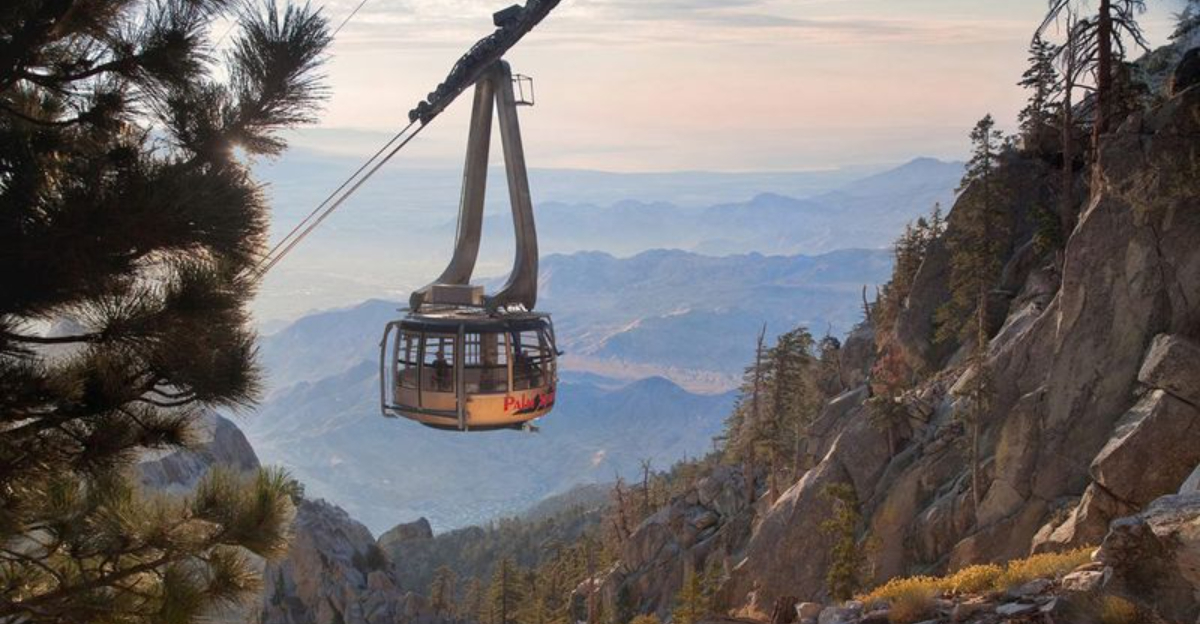
Few attractions in California pack as much visual drama into a single experience as this one, and it hits fast. You step in expecting a view. You step out in a completely different landscape.
The shift happens in minutes. Desert heat fades. Air cools. The scenery changes with every second of the ride.
It does not feel gradual. It feels like crossing into another season. One moment is all sun and sand. The next brings tall pines and crisp mountain air.
Rides like this are why California keeps surprising people, with landscapes that change faster than you expect and views that stay with you.
The experience is not just about getting to the top. The journey itself does most of the work. Every turn reveals something new.
Just outside Palm Springs, this aerial tramway delivers a ride that feels simple at first but ends up being one of the most memorable ways to see the state from a completely different angle.
The Ten-Minute Ride That Feels Like Traveling Between Worlds
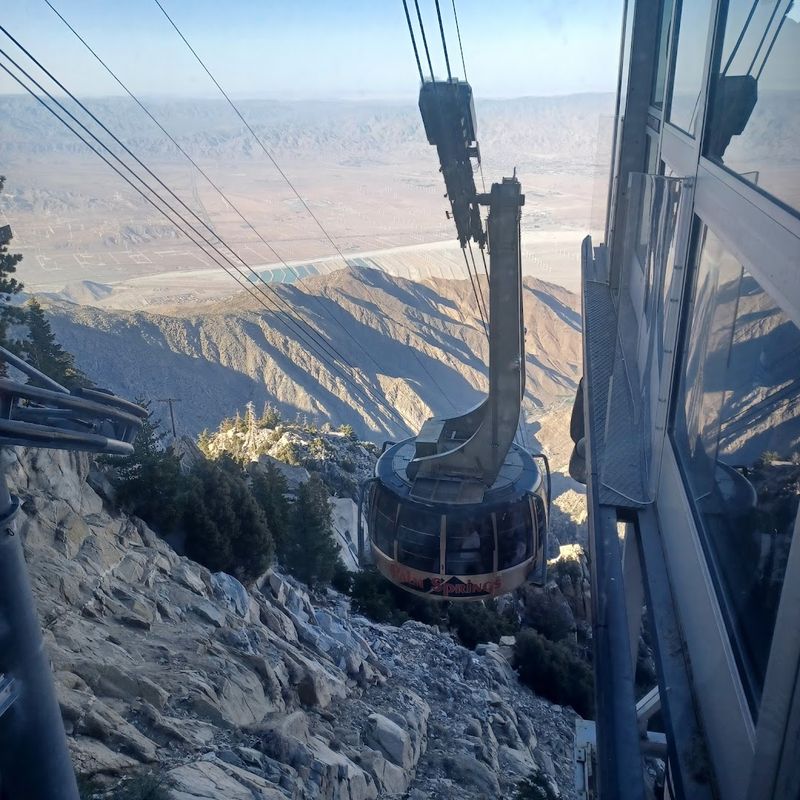
Few transitions in nature feel as dramatic as the one experienced aboard the Palm Springs Aerial Tramway.
Within minutes of leaving the Valley Station, the landscape outside the tram car windows shifts from sun-scorched desert rock to shaded canyon walls draped in shadow and texture.
The ride covers 2.5 miles of cable and climbs 5,873 feet in elevation, making it one of the most significant vertical ascents on any tram system in the world.
The pace feels steady rather than rushed, giving riders enough time to absorb the scenery without the moment passing too quickly.
Temperatures begin dropping noticeably before the tram even reaches the halfway point.
The air coming through the ventilation feels cooler and carries a faint smell of pine that grows stronger as the car continues upward.
By the time the Mountain Station comes into view, the desert below looks like a different planet entirely.
For anyone who has never experienced a rapid change in both elevation and ecosystem, the sensation is genuinely hard to prepare for.
Boarding At Desert Level And What Sets This Apart Immediately
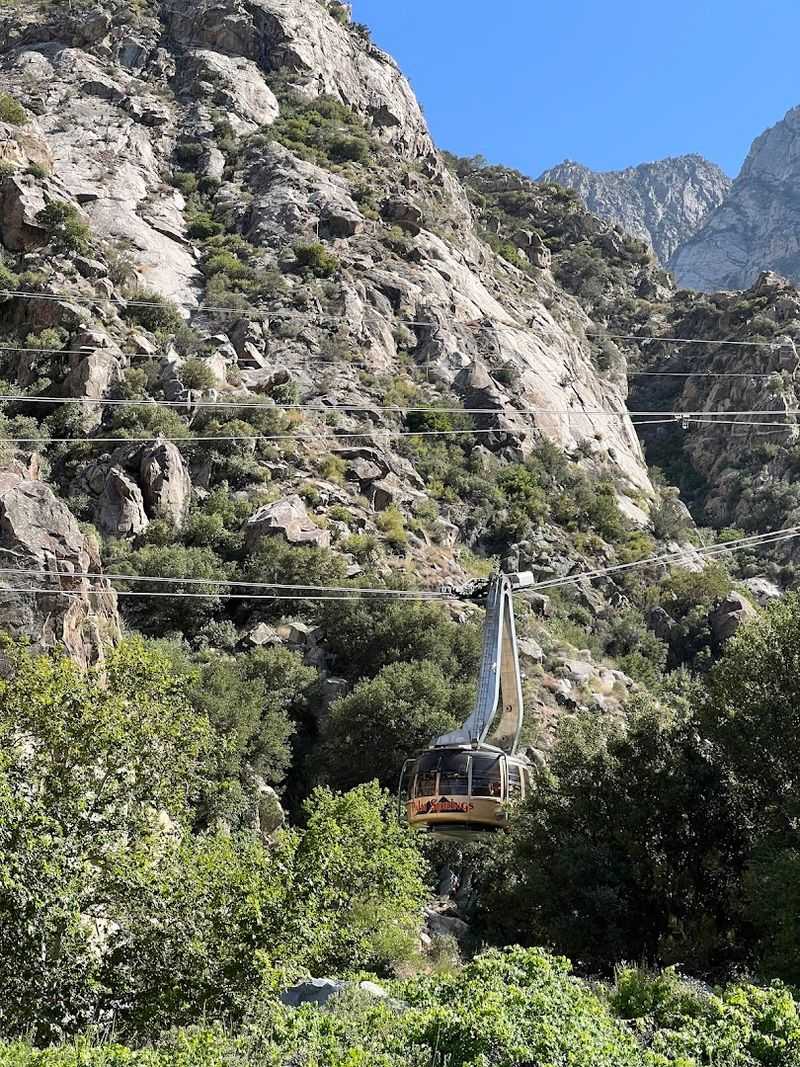
The Valley Station sits at 2,643 feet above sea level, and the landscape surrounding it already hints at the dramatic terrain ahead.
Located at 1 Tramway Rd, Palm Springs, CA 92262, the base station is tucked at the mouth of Chino Canyon, where towering granite walls rise sharply on either side and the desert stretches out behind you in every direction.
Before boarding, there is a small historical exhibit area where visitors can learn about the engineering challenges that went into building the tramway in the early 1960s.
Construction crews used helicopters to deliver materials to the steep canyon walls, and the project took years of planning before the first car ever made the trip.
The boarding process itself is organized and relatively smooth, though wait times can stretch longer on weekends and during peak season.
Buying tickets online in advance is a practical move, especially if a specific departure time matters.
The platform area gives a clear view of the cable towers disappearing up the canyon, and that first glimpse of the ride ahead tends to build genuine anticipation even before stepping onto the car.
Inside The Slowly Spinning Tram Car Experience
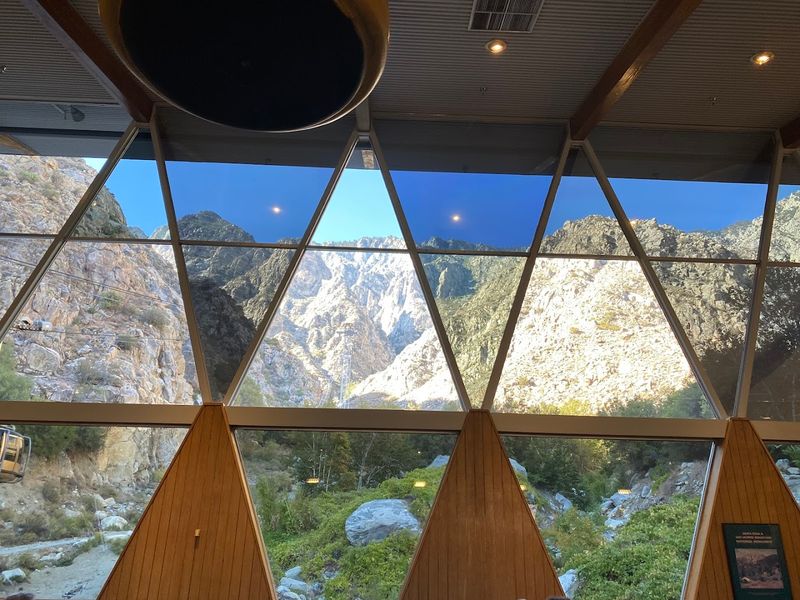
Stepping inside the tram car for the first time, the scale of it is immediately noticeable.
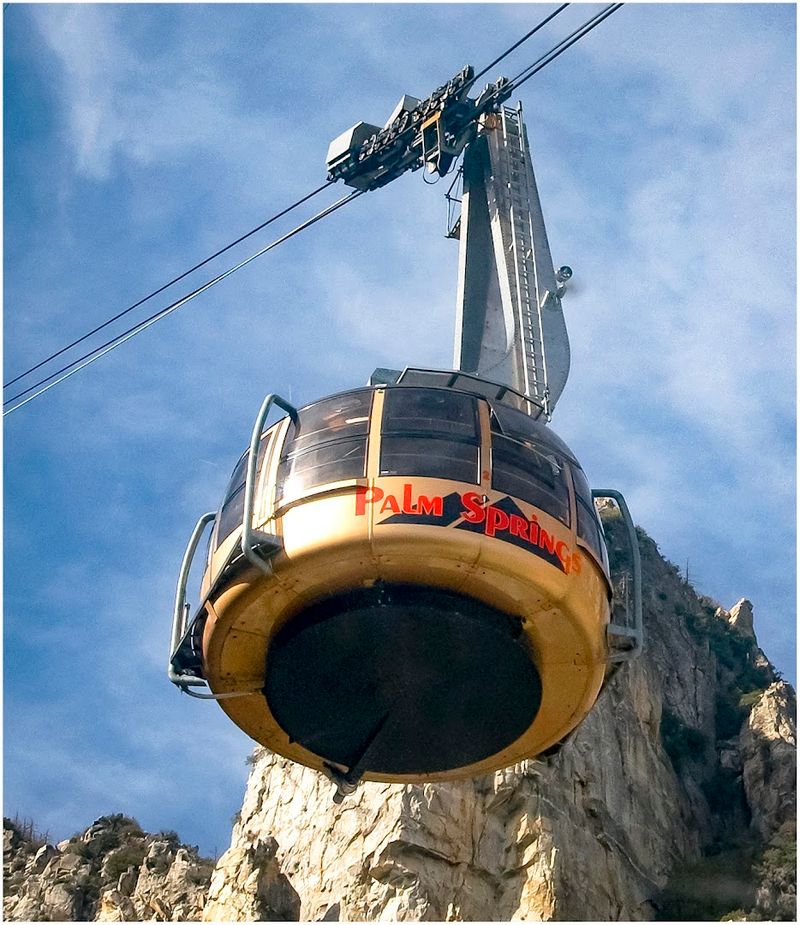
Each car holds approximately 80 passengers and features a slowly rotating floor that completes a full 360-degree turn during the ascent, meaning every rider gets a complete view of the surrounding canyon without needing to reposition or push toward a window.
The rotation is gentle enough that most people barely register the movement underfoot. It tends to feel more like standing on a very slow carousel than anything disorienting.
The large windows wrap around the car and offer unobstructed sightlines to the canyon walls, the valley below, and the rocky terrain climbing toward the mountain above.
Sound inside the car is a mix of the hum of the cable mechanism and the ambient noise of fellow passengers reacting to the views.
The lighting shifts naturally as the car moves through areas of shadow and open sky.
Staff members occasionally share information about the journey over a speaker system, pointing out notable landmarks or explaining the five distinct life zones the tram passes through on its way to the summit.
Watching The Valley Floor Shrink Beneath You
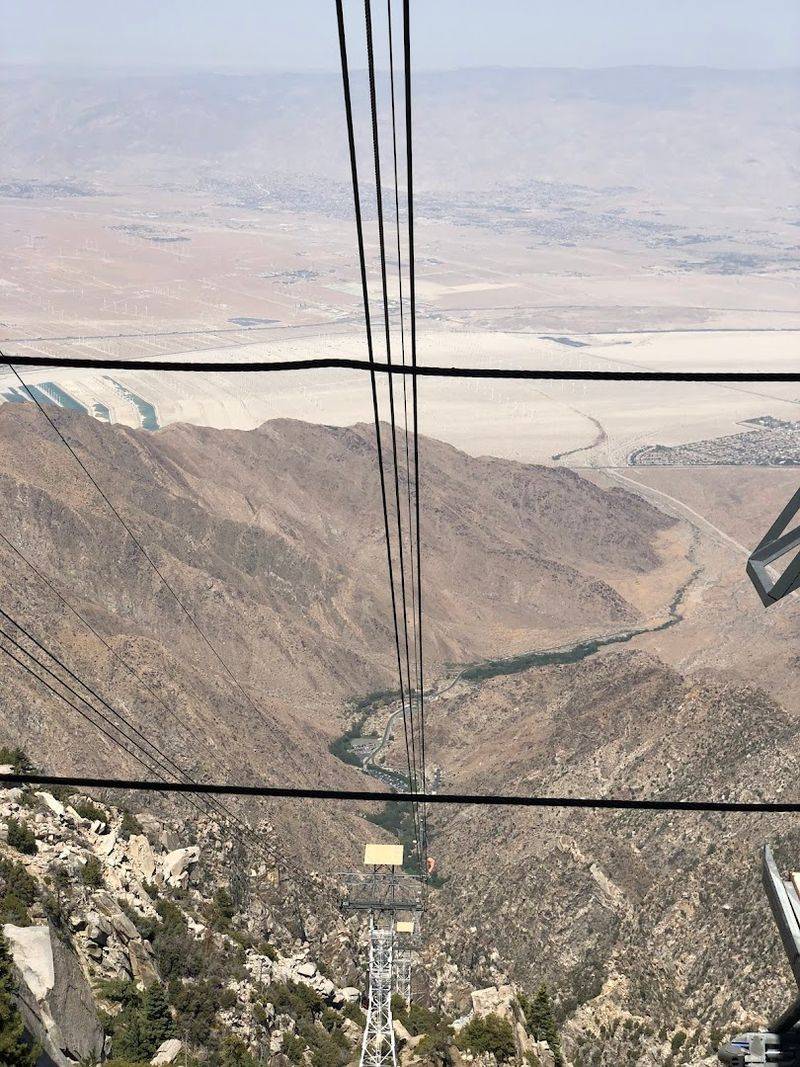
Around two to three minutes into the ascent, the valley floor starts to pull away in a way that feels almost cinematic.
The grid of Palm Springs roads, rooftops, and palm-lined streets becomes a miniature version of itself, flattening out as the elevation climbs and the canyon walls grow taller on either side.
On clear days, the view extends far across the Coachella Valley and reaches toward the Salton Sea in the distance.
The scale of the desert basin becomes easier to appreciate from above than it ever could be from ground level, where the heat haze and flat terrain make distances hard to judge.
The sensation of height builds gradually rather than all at once, which tends to make the experience more manageable for riders who are cautious about heights.
There is no sudden drop or sharp incline, just a steady upward climb that keeps pulling the desert landscape further and further below.
By the midpoint of the ride, the valley looks almost impossibly wide, and the contrast between the warm desert tones below and the cooler rocky terrain above creates a visual split that stays with most visitors long after the ride ends.
Climbing Into Cooler Air And Pine Forests Above
Something shifts in the air quality around the upper third of the ascent.
The dry, warm desert air gives way to something noticeably cooler and more textured, carrying traces of pine resin and damp rock that feel almost refreshing after the heat at the base.
The tramway passes through five distinct ecological life zones during the climb, transitioning from the sparse vegetation of the Colorado Desert at the bottom to a full alpine forest near the summit.
Jeffrey pines, white firs, and other high-elevation trees begin appearing on the canyon walls before the Mountain Station even comes into view.
By the time the tram car levels off near the top, the temperature difference from the valley can range anywhere from 30 to 40 degrees Fahrenheit cooler.
During the hottest months of summer, visitors who stepped onto the car in 100-degree heat may find themselves standing in temperatures in the 60s or even cooler once they reach the Mountain Station at 8,516 feet.
Bringing a light jacket is strongly recommended regardless of what the weather looks like at the base, since the alpine environment operates on its own schedule entirely separate from the desert below.
The Moment You Step Out At 8,500 Feet
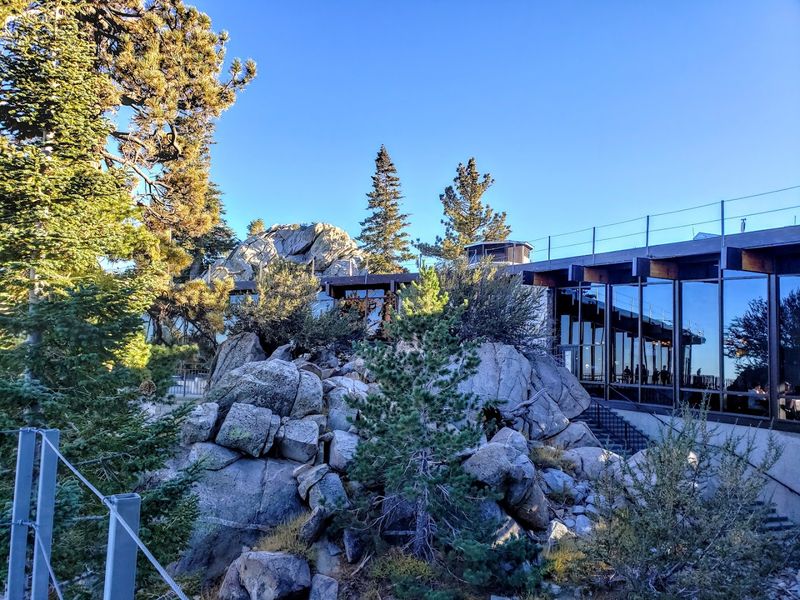
Stepping off the tram car at the Mountain Station produces a sensory reset that most visitors are not fully prepared for.
The air is noticeably thinner at 8,516 feet, and a few deep breaths feel different from what the lungs expect after spending time at desert level.
The Mountain Station itself is a structure with genuine architectural character. Its design draws on Swiss chalet influences and is listed on the National Register of Historic Places, making it more than just a transit stop at the top of a cable line.
Inside, there is a free natural history museum, a gift shop, two dining options, and an observation deck that opens to sweeping views of the valley below.
The shift from the tram car to the outdoor mountain environment can feel abrupt in the best possible way.
The smell of pine is stronger here, the ground is covered in a mix of packed dirt and exposed granite, and the soundscape changes completely from the urban noise of the valley.
First-time visitors often pause for a moment just outside the station doors, adjusting to the altitude, the temperature, and the unexpected quiet of being surrounded by a forest that feels genuinely wild.
Quiet Forest Trails That Start Right At The Station
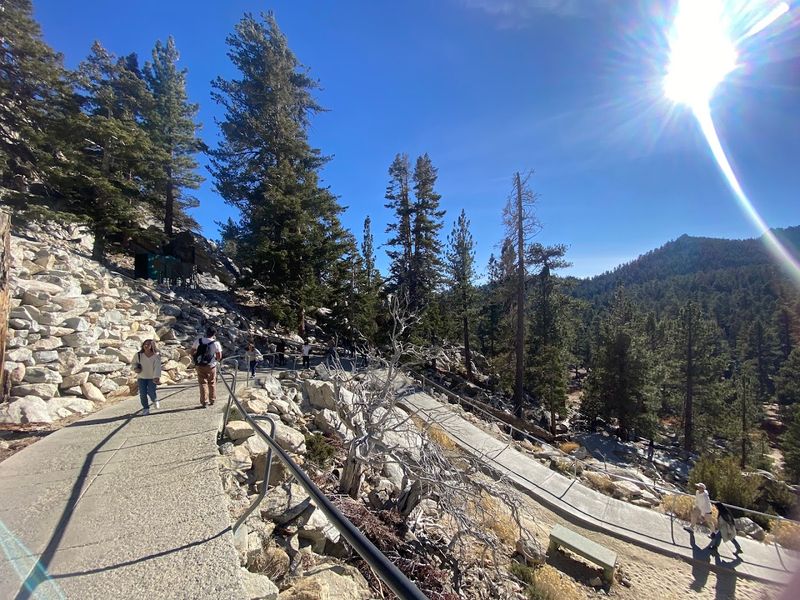
One of the most underappreciated aspects of the tramway experience is how quickly the hiking begins once the station doors open.
Trails fan out directly from the Mountain Station into Mount San Jacinto State Park, and even a short 15-minute walk along one of the easier paths leads into forest that feels genuinely remote.
More than 50 miles of trails are accessible from the top, ranging from flat, paved loops near the station to challenging backcountry routes that require permits and serious preparation.
Casual visitors who just want a taste of the alpine environment can stick to the well-marked paths near the station without needing any special gear beyond comfortable shoes.
The forest floor here is covered in pine needles, loose granite gravel, and occasional patches of shade so thick the light barely reaches the ground.
Marmots, deer, and various bird species have been spotted along the trails, though wildlife sightings are never guaranteed.
The trails stay relatively quiet on weekday mornings, offering a noticeably more peaceful experience compared to weekend afternoons when visitor volume tends to be higher.
Carrying water and wearing layers is practical advice for any trail length attempted at this elevation.
Snow In Winter And Shade In Summer, A Rare Contrast
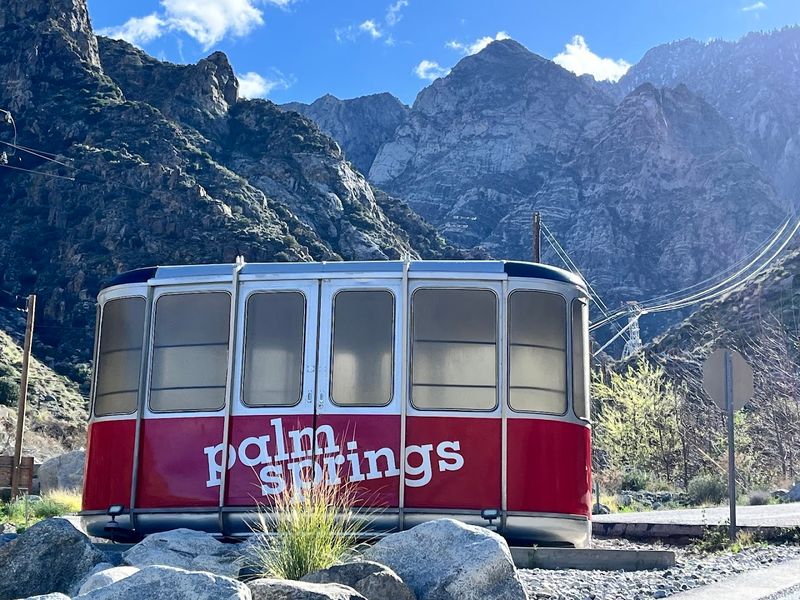
One of the most striking things about the tramway is how completely it changes character depending on the season.
During summer months, when the Coachella Valley bakes under triple-digit temperatures, the Mountain Station sits in cool shade surrounded by green pines, offering a genuine escape that feels almost surreal given how close it is to the desert below.
Winter brings an entirely different scene. Snow accumulates at the upper station and along the trails, sometimes reaching several feet in depth after heavy storms.
Visitors can rent snowshoes near the station and explore the snow-covered forest, which transforms the landscape into something that looks more like the Sierra Nevada than the Southern California desert most people associate with the region.
The temperature contrast between the valley floor and the mountain top can be extreme in both seasons.
A December day might see 50-degree weather at the base while the summit sits at 24 degrees with active snowfall.
A July afternoon can swing from 105 degrees at the valley station to a breezy 65 degrees at the top.
Checking the tramway’s website or social media channels before visiting is a reliable way to get current summit conditions, since mountain weather shifts faster than valley forecasts suggest.
The Observation Deck Views You Won’t Forget
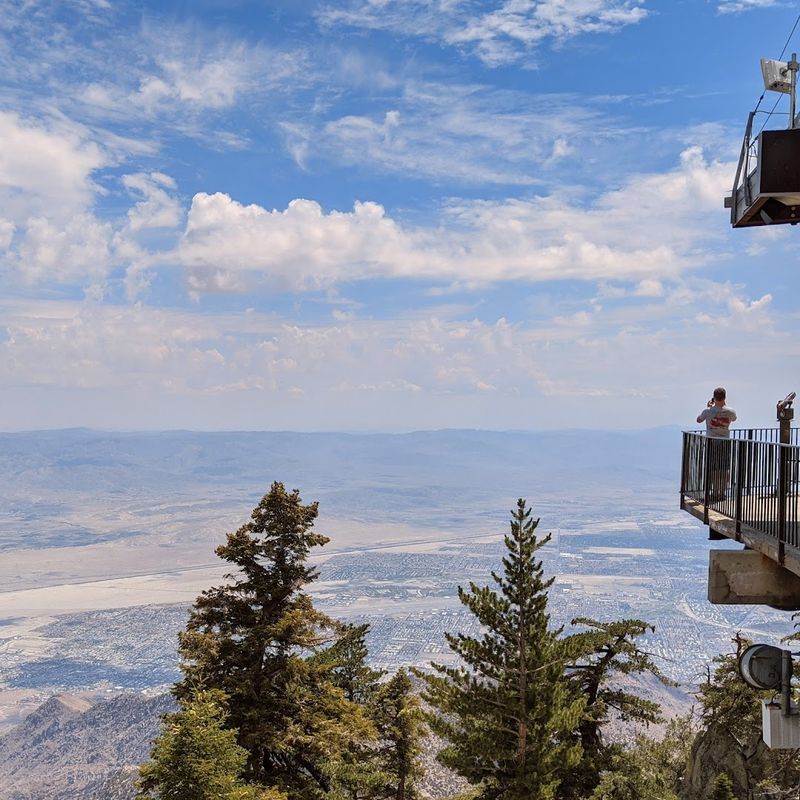
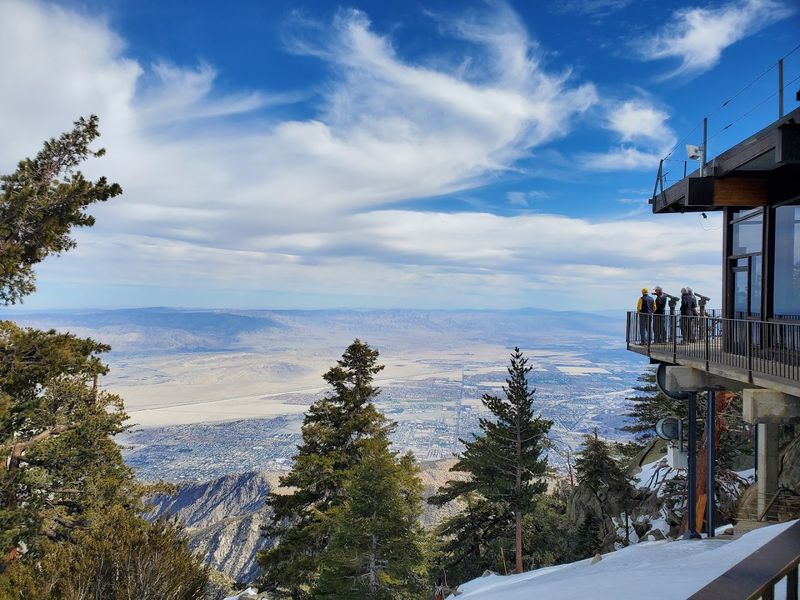
Standing on the observation deck at the Mountain Station puts the entire Coachella Valley on display in a way that ground-level vantage points simply cannot replicate.
The valley stretches out below in a wide, flat expanse that reaches toward the horizon, with the distinct outlines of Palm Springs, Cathedral City, and Rancho Mirage visible on clear days.
The deck is positioned to offer unobstructed views to the south and west, and on days with exceptional visibility the Salton Sea glimmers in the distance like a silver sheet laid across the desert floor.
The perspective from this height makes the scale of the desert basin feel almost abstract, more like looking at a topographic map than a place where people live and work.
Morning visits tend to offer the clearest sightlines before afternoon haze builds up over the valley.
The light in the early hours is also softer and more directional, casting long shadows across the mountain terrain that add depth and texture to photographs.
The deck itself is accessible to wheelchair users, and the railing height is designed to accommodate visitors of varying heights comfortably.
Spending time here before heading out on the trails is a natural way to orient to the landscape.
How This Ride Changes With The Seasons
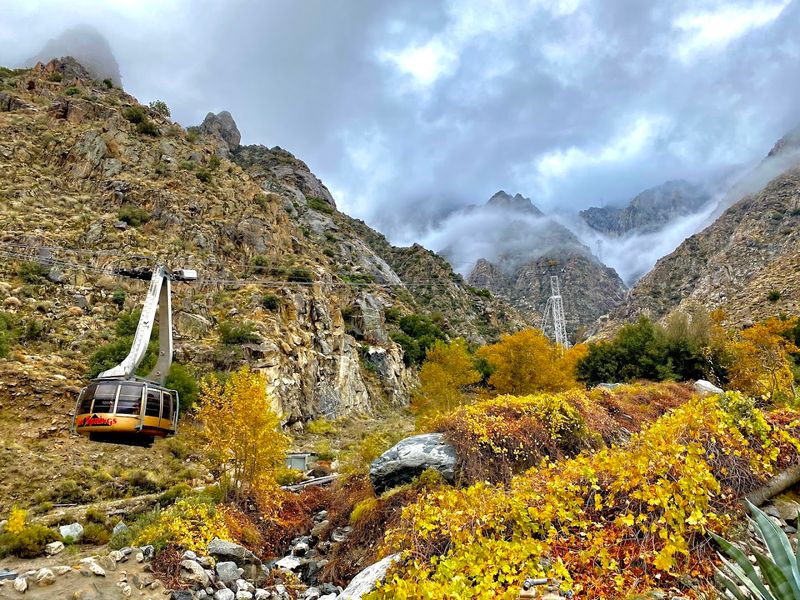
Returning visitors often say the tramway feels like a completely different attraction depending on the time of year.
Spring brings wildflowers along the lower trail sections and a freshness to the mountain air that makes the forest feel particularly alive after the winter snowmelt.
Fall is considered by many regulars to be one of the more pleasant seasons to visit.
Crowds tend to be lighter than summer, the air carries a crispness that makes hiking comfortable, and the angle of the autumn light gives the canyon walls a warm amber tone during the afternoon descent.
The valley below takes on a slightly hazy golden quality in October and November that photographs particularly well from the observation deck.
Summer draws the largest crowds largely because escaping the desert heat is such a compelling reason to make the trip.
Arriving early on summer weekends, when the tramway opens at 8 AM, helps avoid the longest wait times.
The tramway typically closes for annual maintenance in September, so checking the official schedule at pstramway.com before planning a fall visit is a practical step.
Each season brings a genuinely different version of the same journey, which is part of what keeps locals coming back year after year.
What Most First-Time Visitors Don’t Expect
Most first-time visitors arrive thinking of the tramway as a scenic ride with a nice view at the top.
What tends to catch people off guard is how much there actually is to do once the car docks at the Mountain Station, and how long a satisfying visit can comfortably last.
The free natural history museum inside the station covers the geology, wildlife, and human history of the San Jacinto Mountains in a way that holds attention without feeling overwhelming.
The gift shop carries a solid range of souvenirs, snacks, and practical cold-weather gear for those who underestimated the summit temperature.
Two dining options are available, with Peaks Restaurant offering a sit-down experience and Pines Cafe operating as a more casual cafeteria-style stop for those who want a quick meal before heading out on the trails.
Another surprise for many visitors is the sheer quietness of the mountain environment compared to the busy valley below.
The ambient noise drops sharply once away from the station building, replaced by wind through the pines and the occasional call of a bird overhead.
Staying for two to three hours is entirely reasonable, and some visitors find themselves wishing they had budgeted even more time before the last tram of the evening heads back down.
Planning Around Weather And Visibility For The Best Experience
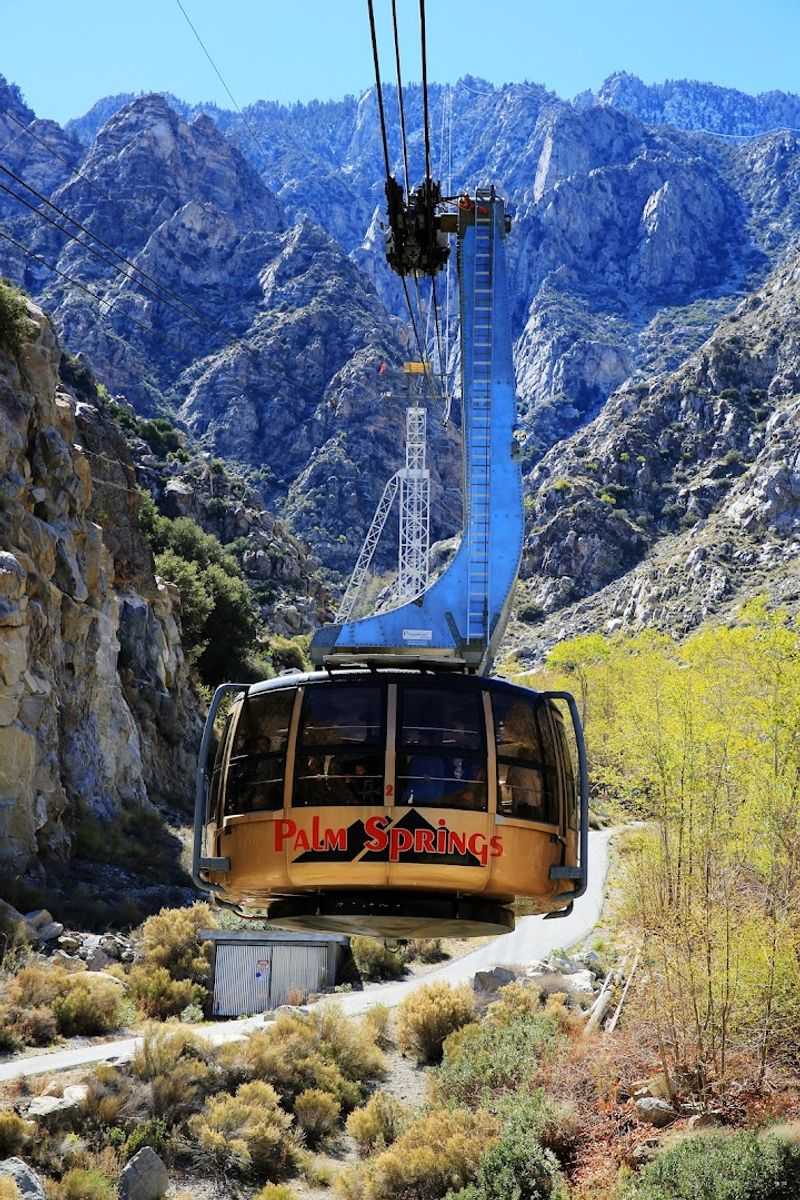
Weather at 8,500 feet behaves differently from weather in the valley, and planning a visit without checking summit conditions ahead of time can lead to a trip that falls short of expectations.
High winds, fog, or low cloud cover can significantly reduce visibility from the observation deck and make trail conditions less comfortable than anticipated.
The tramway’s official website and social media accounts are updated regularly with current mountain conditions, including temperature, visibility, and any weather-related closures.
Following the tramway on Instagram is a practical way to get real-time updates, since the team posts frequently about summit conditions, especially during winter storms or periods of high wind.
Weekday visits generally offer shorter wait times and a quieter experience overall.
Arriving early on any day helps, particularly on weekends when the first cars of the morning fill quickly.
The tramway operates Monday through Friday from 10 AM to 8 PM and on weekends from 8 AM to 8 PM. Parking costs $15 per vehicle at the Valley Station lot.
Tickets can be purchased online in advance or at the base station on the day of the visit, though advance booking is recommended during busy periods to avoid waits of up to two hours.
Why This Is One Of California’s Most Underrated Experiences
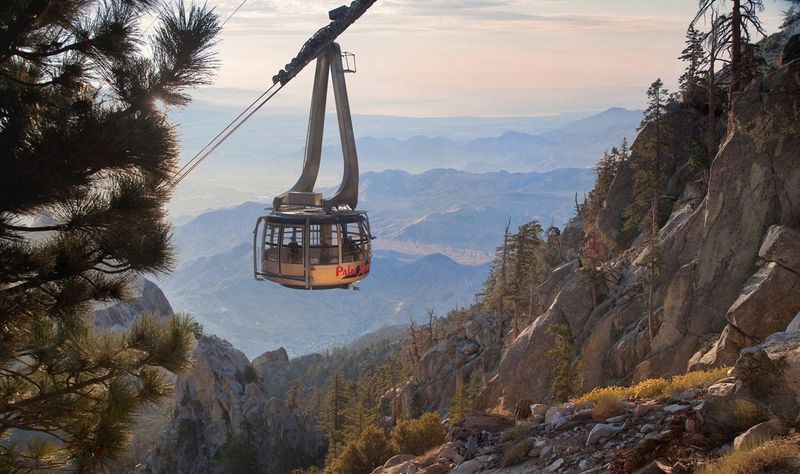
For an attraction that packs a desert landscape, a rotating cable car, an alpine forest, mountain hiking, and panoramic valley views into a single outing, the Palm Springs Aerial Tramway remains surprisingly off the radar for many California travelers.
Visitors who have made the trip consistently describe it as one of those rare experiences that delivers more than expected rather than less.
The accessibility of the experience is part of what makes it stand out. Guests who are not hikers can enjoy the museum, the observation deck, and a meal at the Mountain Station without setting foot on a trail.
Those who do want to explore on foot have access to everything from short paved loops to multi-day backcountry routes within Mount San Jacinto State Park.
The tramway can be reached by calling (888) 515-8726 or visiting pstramway.com for current schedules and ticket options.
The combination of effortless access to a high-alpine environment, the drama of the rotating tram car, and the sheer visual contrast between desert and mountain makes this one of those California experiences that tends to leave a lasting impression long after the ride back down to the valley floor.