This Ancient Georgia Site Preserves A Native American City Few Travelers Know About
I almost skipped this stop for a fast food break instead. Something made me keep driving those extra ten minutes, and I am still grateful for it.
The parking lot gave nothing away, just grass and a small sign. Then I walked past the first mound and stopped completely still.
Earthen pyramids rose out of the ground, built by hand centuries before anyone here spoke English. A guide mentioned thousands once lived on this exact ground, trading goods and holding ceremonies where I now stood taking photos.
The river beside the site still holds traces of an ancient fish trap, still visible after all this time. I felt small in the best possible way, standing where so much history quietly unfolded.
Georgia rarely gets credit for holding secrets this old. This particular stretch of Georgia keeps one of its biggest stories hidden in plain sight.
A City Built By Hand, Basket By Basket
Picture several thousand people living together in Georgia around the year 1300. That was reality here, long before any European ship reached the coast.
The Mississippian people carried soil in woven baskets to build these mounds. No wheels, no carts, no machines, just steady work over generations.
Archaeologists call this the largest Mississippian settlement in the Etowah Valley. It is also considered the most intact site of its kind anywhere in the Southeast.
The community occupied the land in three separate phases, roughly between 1000 and 1550 CE. Its strongest years fell between about 1325 and 1375 CE.
Those residents are recognized as ancestors of the Muscogee Creek people. Their language belonged to the Muskogean family, and their descendants are still here today.
What struck me most was the scale. Fifty-four acres of open ground, mounds, plazas, and river frontage all belonged to one organized society.
You get political power, religion, farming, and long-distance trade in a single place. That combination is rare in American archaeology.
Plan your visit to Etowah Indian Mounds State Historic Site, located at 813 Indian Mound Rd SE, Cartersville, GA 30120, and give yourself real time to absorb it.
Climbing Mound A, The Great Temple Mound
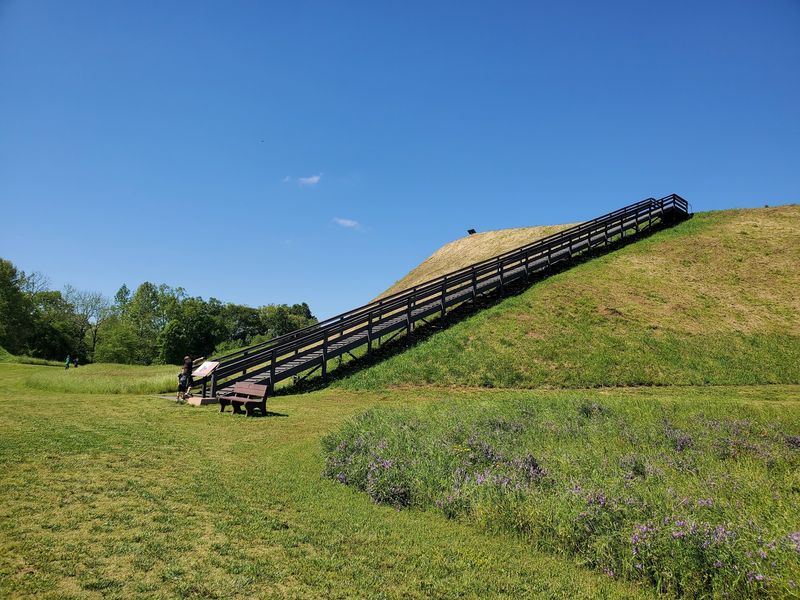
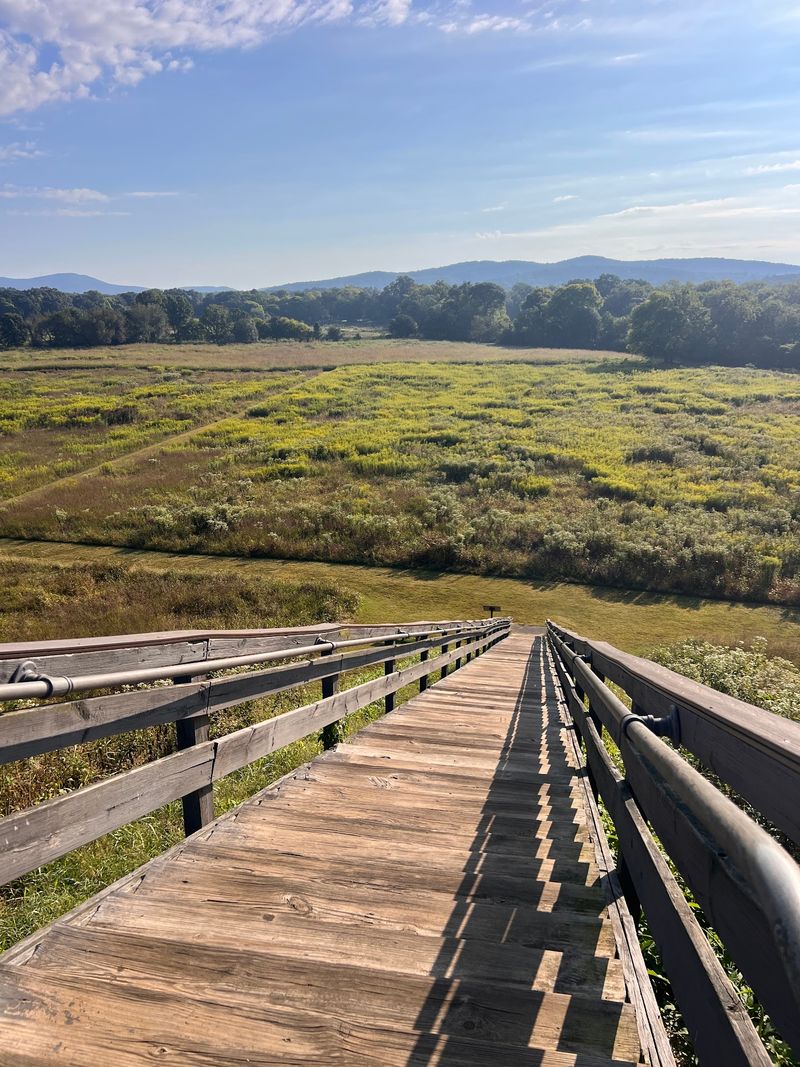
Sixty-three feet does not sound tall until you are standing at the bottom. Then the staircase looks a lot longer than expected.
Mound A is the giant of the site, covering roughly three acres at its base. It ranks as the second tallest Mississippian mound in the world.
Researchers believe a powerful priest-chief lived on top, or that a major temple stood there. Either way, whoever climbed those steps held serious authority.
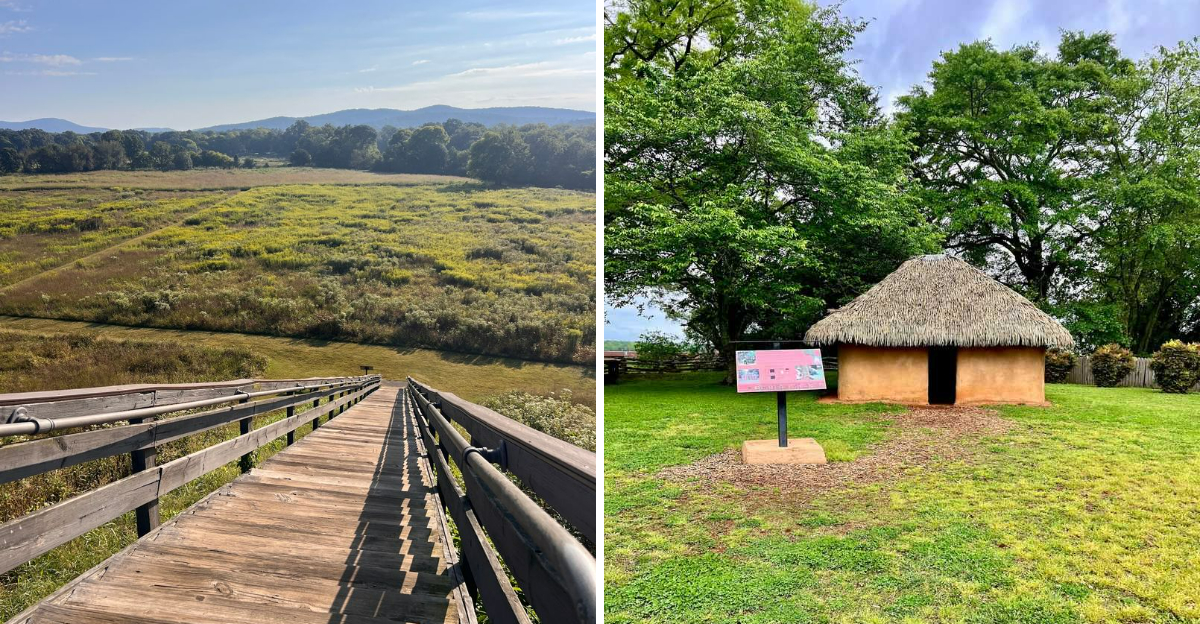
The view rewards every breath you spend getting up. You see the river valley, the surrounding fields, and distant ridgelines stacked in soft blue.
Take the climb slowly and pause on the landings. The steps are manageable for most visitors, and the summit is wide and flat.
Standing there, the idea of a chief speaking to a crowd below stops feeling abstract. The geography does the explaining for you.
Morning light works well for photos, and the site opens at 9 AM daily. Crowds tend to be thinnest right after opening.
Bring water, especially in summer. The mound offers almost no shade at the top.
Mound B And The Council House Theory
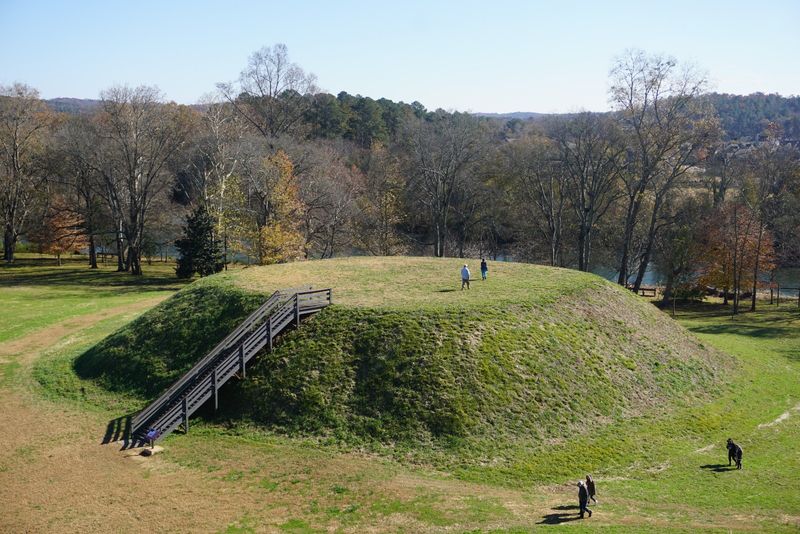
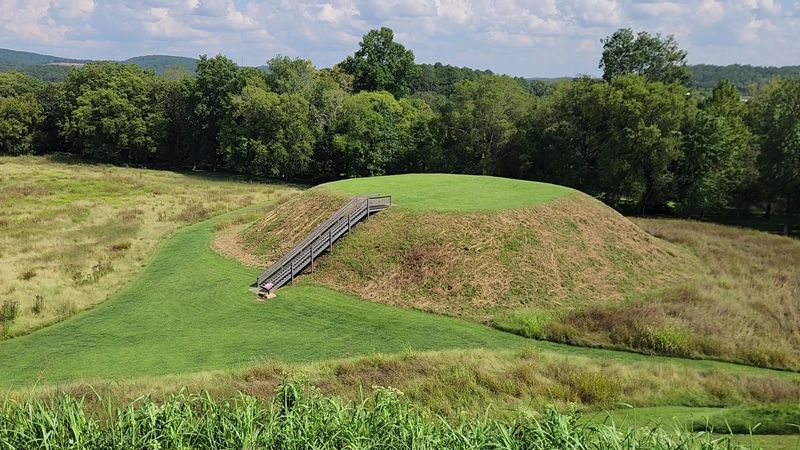
Not every mound needed to be enormous to matter. Mound B stands 25 feet high and sits right beside its towering neighbor.
Archaeologists think priests or government officials gathered here regularly. A town council house or another ceremonial building likely stood on the flat summit.
Think of it as the meeting hall of the ancient city. Decisions, rituals, and community business all had a home.
The climb is far shorter than Mound A, which makes it friendly for younger kids and anyone taking it easy. The payoff is still excellent.
From the top you look across meadows that fill with purple wildflowers in May. The river glints below, and butterflies drift through the grass.
I found this spot better for quiet observation than the tallest mound. Fewer people linger, and the angle shows the plaza layout clearly.
Try standing here first, then climbing the big one. The comparison helps your brain map how the whole city fit together.
Interpretive markers nearby explain the arrangement. Read them before you climb for extra context.
Mound C And The Marble Statues Found Inside
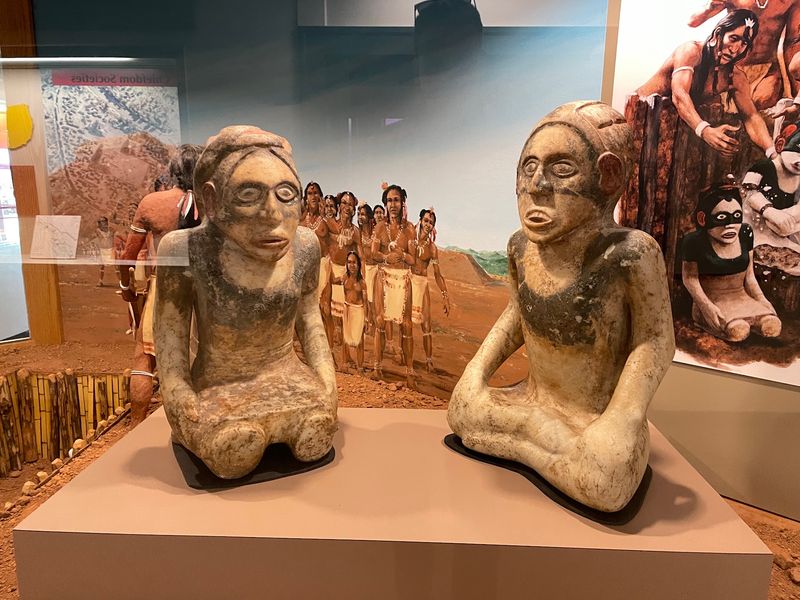
The smallest mound produced the biggest surprises. Mound C served mainly as a burial mound, and excavations there changed what people knew about Mississippian art.
Two marble figures came out of it, depicting a seated man and a seated woman. Each stands around two feet tall.
Their faces show distinct features, which has led researchers to suspect they represent specific individuals. That detail gives them an unusual emotional weight.
Experts date the carvings somewhere between 1250 and 1375 CE. They rank among the finest examples of prehistoric sculpture found in North America.
The statues also preserve clues about clothing and hairstyles from that era. Stone became an accidental time capsule.
Pottery, monolithic stone axes, copper jewelry, shell gorgets, and thousands of pearl beads also came from the site. The craftsmanship level is genuinely impressive.
Georgia officials began the process of repatriating ancestral remains and funerary objects in consultation with the Muscogee Nation in 2022. That repatriation matters, and the site handles the subject respectfully.
Read the exhibit panels carefully. They explain why certain objects are no longer displayed.
The Rogan Plates And Their Dancing Bird-Man
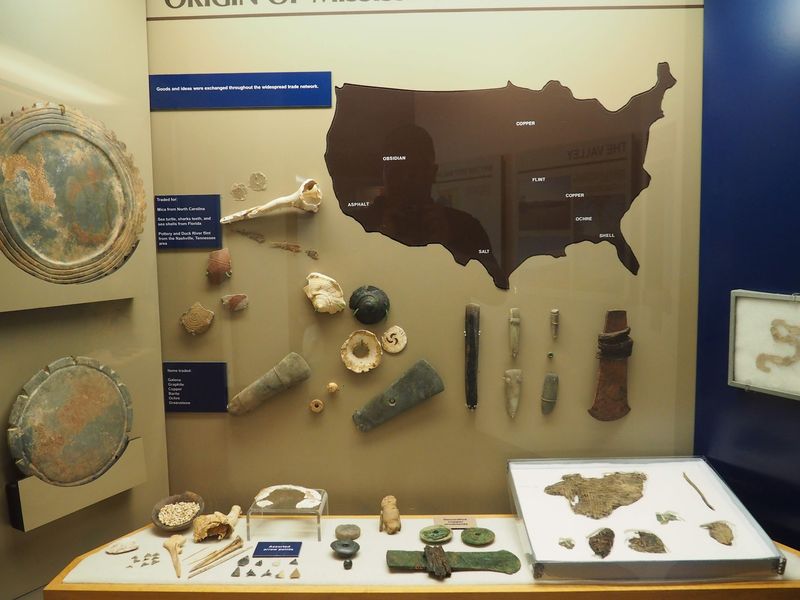
Copper does not usually survive centuries underground in good shape. The Rogan Plates did, and they are stunning.
Each plate shows a dancing figure that blends human and bird features. The figure holds a mace in one hand and a severed head in the other.
The imagery dates to around 1300 CE. It connects this settlement directly to the Southeastern Ceremonial Complex, a shared religious and artistic system across the region.
Repousse is the technique used, meaning the design was hammered out from behind. The result has depth and motion you can see clearly.
What fascinates me is the network implied. Symbols like this appear at sites hundreds of miles away.
That tells us the people here were not isolated farmers. They participated in a wide cultural conversation stretching across the Southeast.
The museum explains the iconography without overwhelming you. Even kids catch the bird-man idea quickly.
Spend a few minutes with the panels before heading outside. The mounds mean more once you understand the beliefs behind them.
The V-Shaped Fish Weir Still Sitting In The River
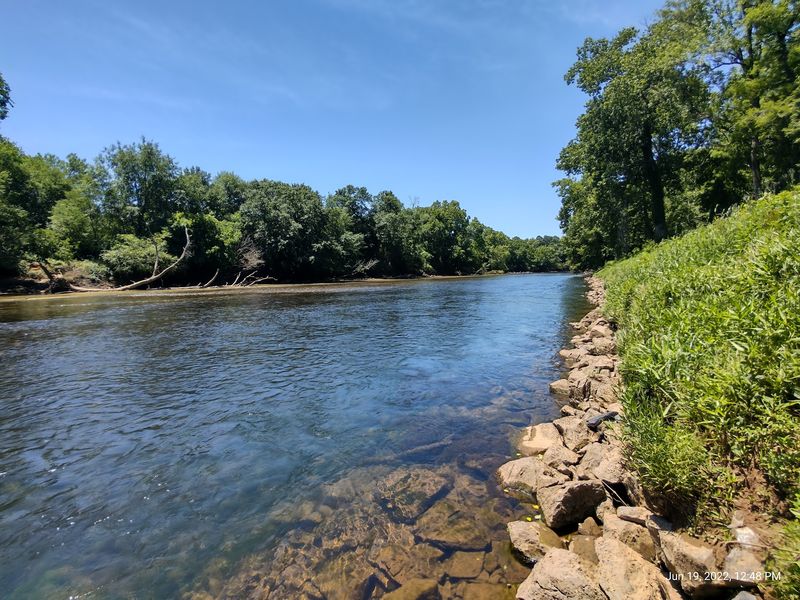
Ancient engineering usually needs a shovel to find. Not here.
A V-shaped fish trap built by the original residents is still visible in the Etowah River. You can spot it from the bank on a clear day.
The design funneled fish toward a narrow point, making harvests reliable. Simple physics, enormous payoff.
River access sits at the far end of the walking area, and benches line the bank. It is easily the calmest corner of the property.
Sitting there, you hear water moving and birds calling and very little else. The sound alone slows your pulse.
Control of this river also gave the community power over trade routes. Goods moved by water, and whoever held the crossing held influence.
Bring a camera with a bit of zoom if you want a good weir photo. Water levels affect visibility, so lower water helps.
Do not skip this walk because it sits past the mounds. It completes the story of how people actually ate here.
Inside The Museum And That Fifteen-Minute Film
Entry runs through a small museum, which turns out to be the right order. You learn the framework before you see the earth.
A film of about fifteen minutes covers the culture, the mounds, and the timeline. It is worth sitting down for.
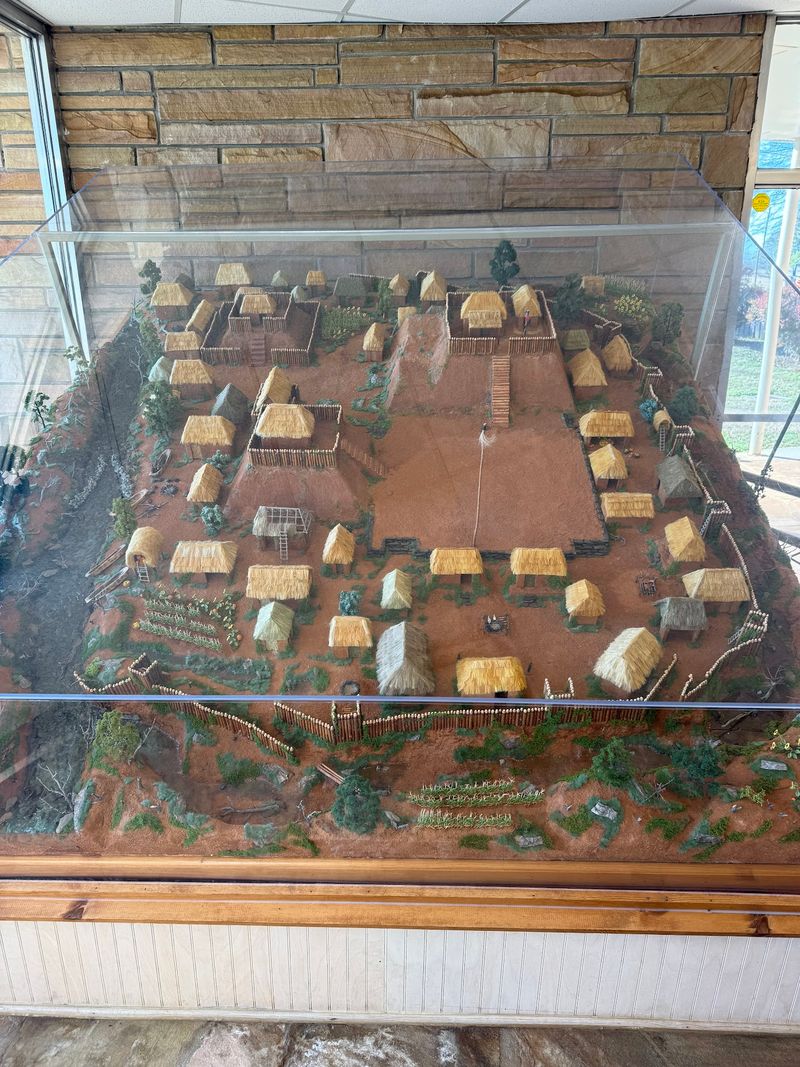
A detailed model shows how the city likely looked, complete with houses, plazas, and the stockade. Kids tend to gravitate straight to it.
Display cases hold Mississippian pottery, stone tools, and ornaments. The collection is modest in size but well explained.
Staff members here know their material and answer questions patiently. Programs like pottery demonstrations sometimes run for visiting groups.
A gift shop sits near the entrance with books, magnets, and small souvenirs. Purchases support the site.
Restrooms are clean and the building is comfortable, which matters before a long outdoor loop. Picnic tables wait near the parking area under good shade.
Admission currently ranges from two to six dollars, depending on the visitor’s age. Some Georgia libraries lend park passes if you plan ahead.
The Nature Trail Along The Etowah River
Green space wraps the whole property, and the trail makes good use of it. A path winds along the river with interpretive signs spaced out along the way.
Those signs explain how early people used native trees for food and medicine. It turns an ordinary walk into a lesson in practical botany.
The air feels noticeably clean through this stretch. Tall hardwoods keep much of the route shaded, which helps in warm months.
Wildlife shows up often. Birds, butterflies, and the occasional turtle near the water keep kids scanning ahead.
The full loop around the site takes a couple of hours if you read everything. You can trim it to an hour if time is short.
Wear comfortable shoes because grass and gravel dominate. Nothing here is technical, but the ground can be soft after rain.
Leashed dogs are currently allowed on the historic site trails but not inside buildings. Policies can change.
Late afternoon light along the water is especially pretty. Photographers should save this section for last.
Planning A Visit That Actually Does It Justice
Rushing this place would be a mistake. Two to three hours lets you see the museum, climb the mounds, and reach the river without hurrying.
The site is generally open from 9 AM to 5 PM, while the mound area closes at 4:30 PM. Arriving early means cooler air and emptier stairs.
Parking is free and plentiful, so there is no reason to cut the visit short.
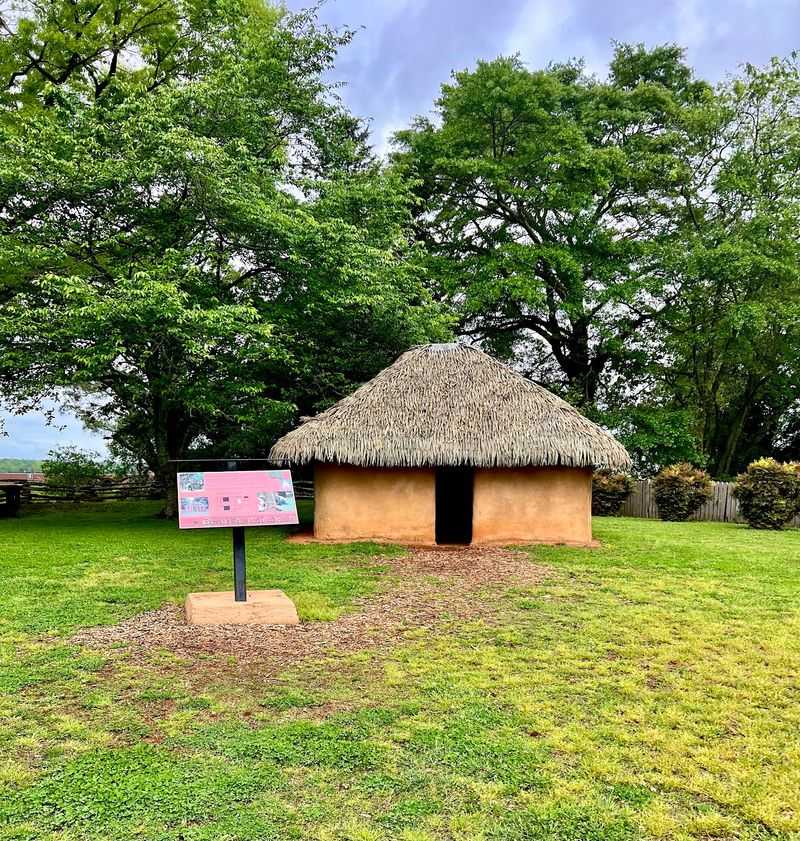
A reconstructed wattle-and-daub hut stands outside, showing how homes were built from woven sticks and packed clay. Kids love peeking inside.
Look for the defensive ditch, the borrow pits, and the two plazas as you walk. Once you spot them, the city layout clicks.
Scheduled events add demonstrations and deeper programming, so check the calendar before choosing a date. Field trips and workshops happen regularly.
The 54-acre location is designated a National Historic Landmark and managed as a Georgia State Historic Site.