This Beautiful Maine Restaurant Looks Almost Too Good To Be Real
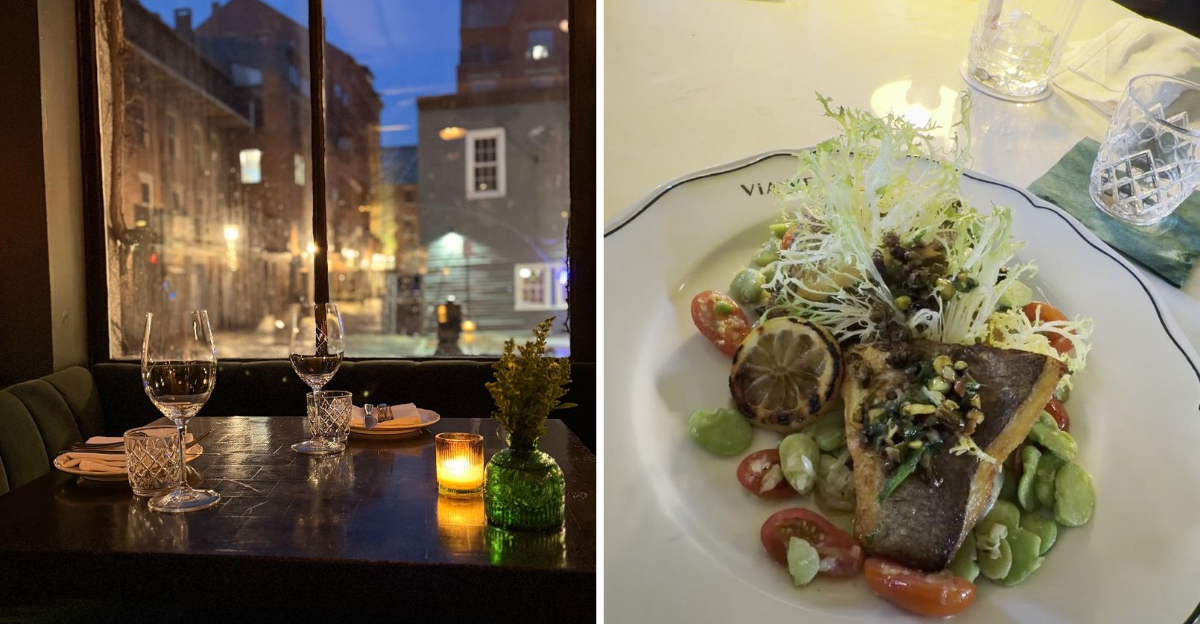
I am all for great food, but sometimes the room makes you want the reservation before you even read the menu.
Maine has an Italian restaurant where dramatic design and handmade pasta turn dinner into something that feels genuinely special.
The setting brings plenty of personality, but the kitchen keeps the experience grounded with small plates, seasonal ingredients, and carefully prepared pasta.
That balance is what makes it interesting!
You can admire the details without forgetting why you came. The food still gets to be the main event.
I would book a table, leave extra time, and make sure dessert is part of the plan rather than an afterthought.
Ivy Wrapped First Glance
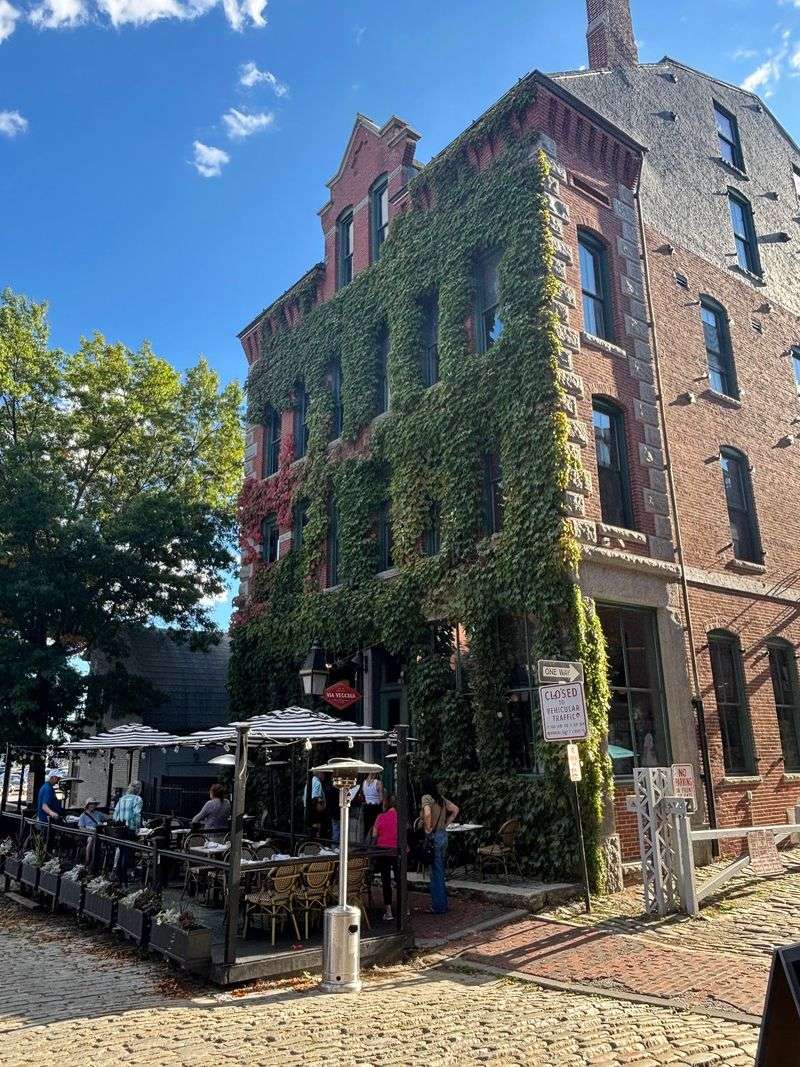
Certain buildings stop you mid stride, and this one does it with vines. The brick facade of ViA VECCHiA disappears under a thick curtain of ivy that shifts color with the seasons.
Evening lighting washes the greenery in gold. From across the cobblestones, the whole scene looks like a European postcard someone dropped in coastal Maine.
The structure carries real history behind all that leafy drama. Known as the Chase Leavitt Building, it went up in 1879 and came from the drafting table of Maine architect Francis H. Fassett.
Brick and granite hold the shape of an era when the Old Port ran on shipping. Small detail I noticed: people slow down without meaning to. Phones come out, someone laughs about needing a photo, and then they head inside.
The sidewalk holds a couple of tiny tables that catch the street energy. Sitting there feels a bit like watching a play from the front row.
You can spot the address plainly at 10 Dana St in Portland, though honestly the ivy gives it away first.
Velvet, Brass, And Emerald
My first look inside came with an involuntary pause. The front room glows, and it takes a second to sort out where to look first.
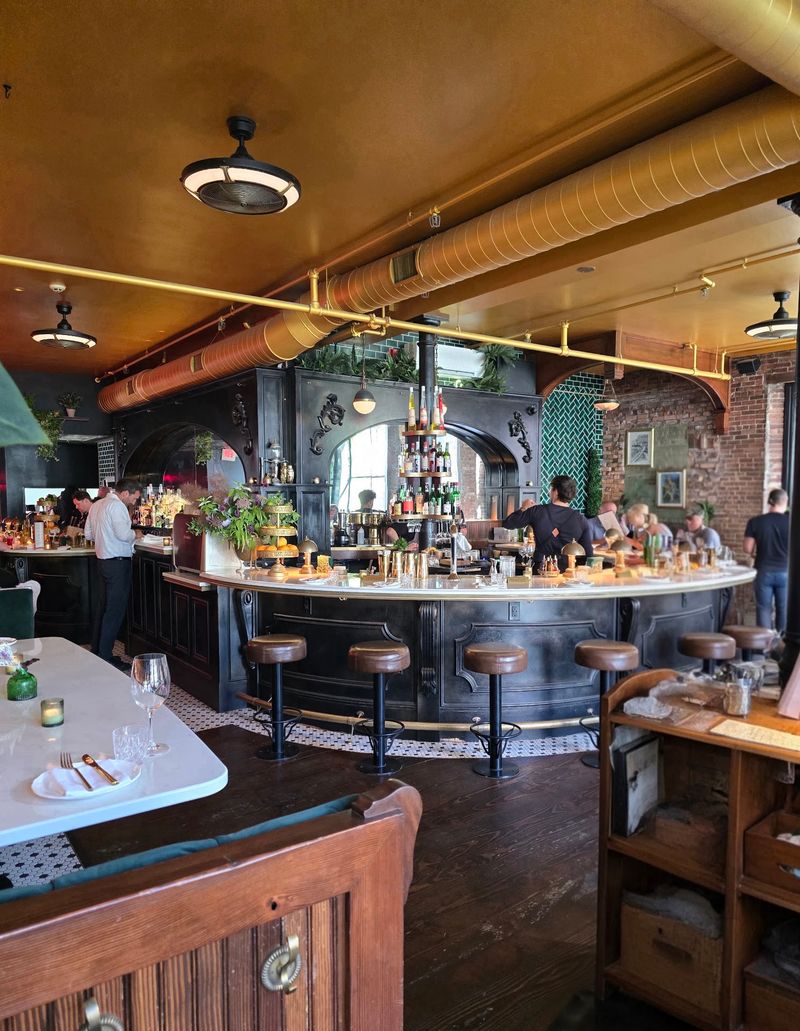
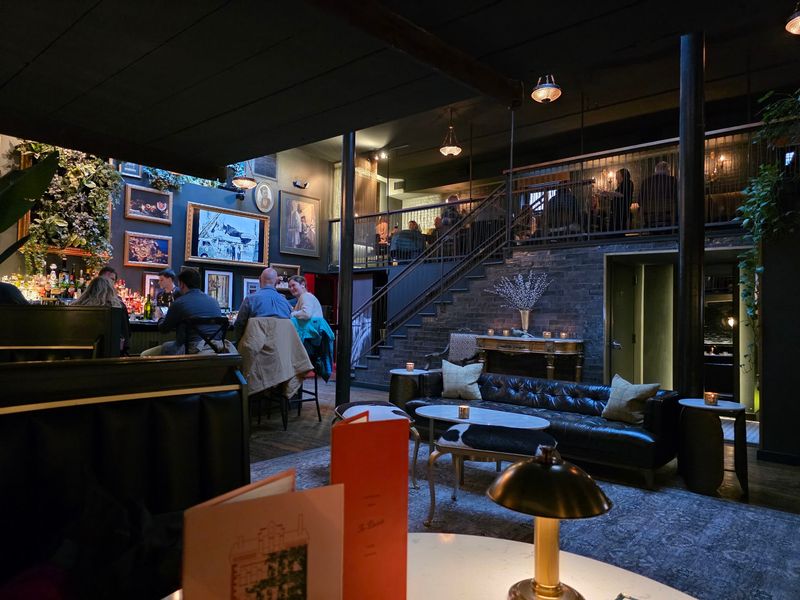
Emerald subway tile climbs the walls in deep, jewel toned stripes. Velvet booths hug the edges of the room in soft, generous curves.
Gilded mirrors do clever work here. They bounce light around, stretch the space, and make the chandeliers look like they multiply.
Speaking of those chandeliers, several were salvaged from landmark buildings including the Waldorf Astoria and the Palace Theater in New York. Old crystal carries a different kind of sparkle than new crystal, and you notice.
Gold and brass repeat everywhere once you start hunting for it. Mirror frames, bar hardware, even the flatware joins the theme.
Floors mix black and white penny tile with dark wood. Wrought iron lamps lean into the bistro fantasy without tipping into costume.
The wrap around bar seats roughly twenty and hums with easy conversation. Sitting there gives you a front row view of the whole choreography.
The Back Room Surprise
Nobody warns you about the back. That is half the fun.
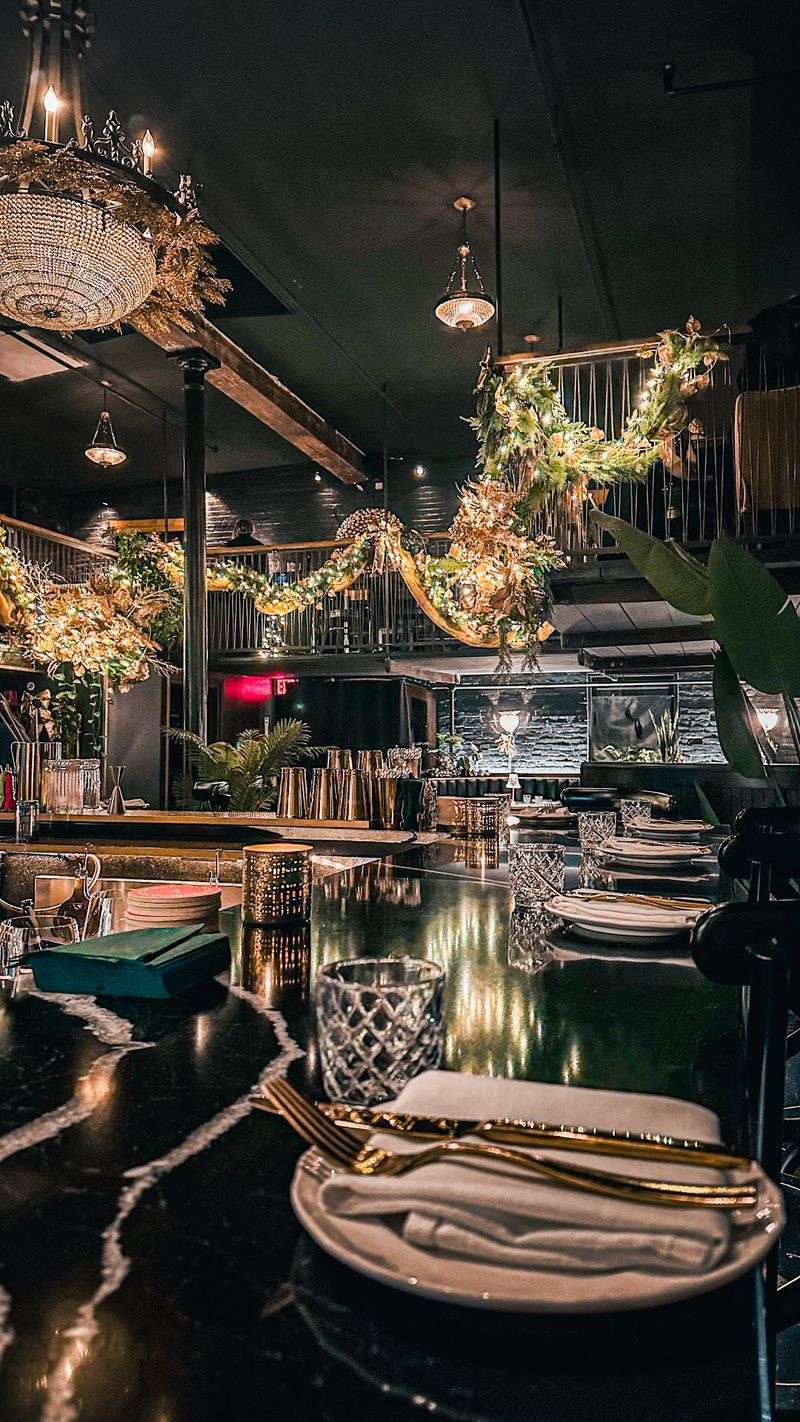
Guests get led past the bright front room and into something dimmer, larger, and quietly theatrical. The space runs roughly four times the size of the front, with seating both downstairs and up on a mezzanine.
A massive marble and granite bar anchors the room. Behind it, an illuminated tower of Italian bottles glows like stained glass.
Settees and divans replace standard chairs in a few corners. The vibe lands somewhere between a Left Bank salon and a very stylish living room.
Candelabras drip wax in slow, uneven layers. Flames wobble, shadows move, and the whole room softens.
Up on the mezzanine there is a living wall packed with exotic plants. Green cascades down over polished surfaces, which sounds odd and works beautifully.
I watched a couple round the corner and both stop talking for a beat. Then came the grin, the head shake, the whispered wow.
Acoustics here stay generous, so conversation carries across a table without shouting. That is harder to pull off than it sounds.
Small Plates, Big Flavor
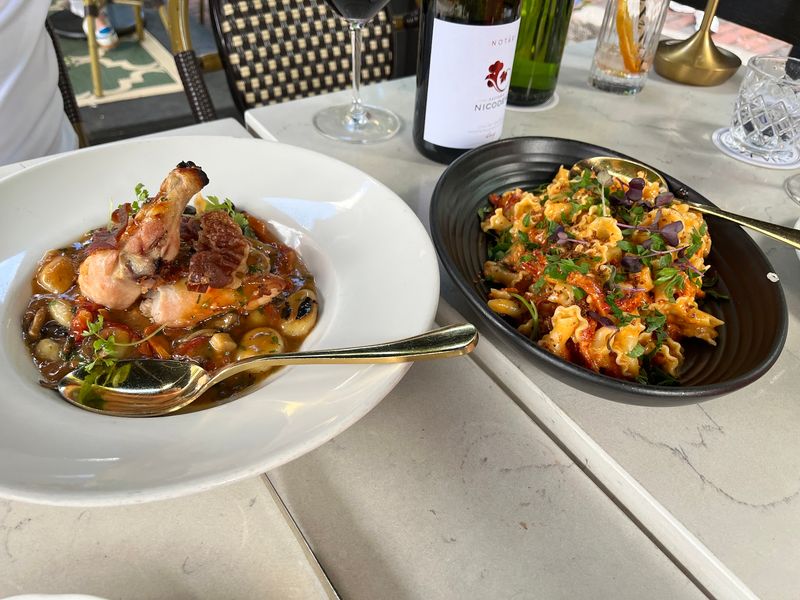
Ordering here works best as a group sport. The menu leans into small plates, so grabbing several and sharing beats picking one safe entree.
Whipped ricotta shows up constantly, and for good reason. Silky, cool, and served with crisp sesame sticks that vanish during conversation.
Handmade pasta forms the backbone of the kitchen. Shapes like radiatori, lumache, campanelle, and agnolotti rotate through, each one built to catch sauce in its own way.
The vodka sauce carries bright tomato acidity with a little Calabrian warmth. Ricotta spooned on top cools it right back down.
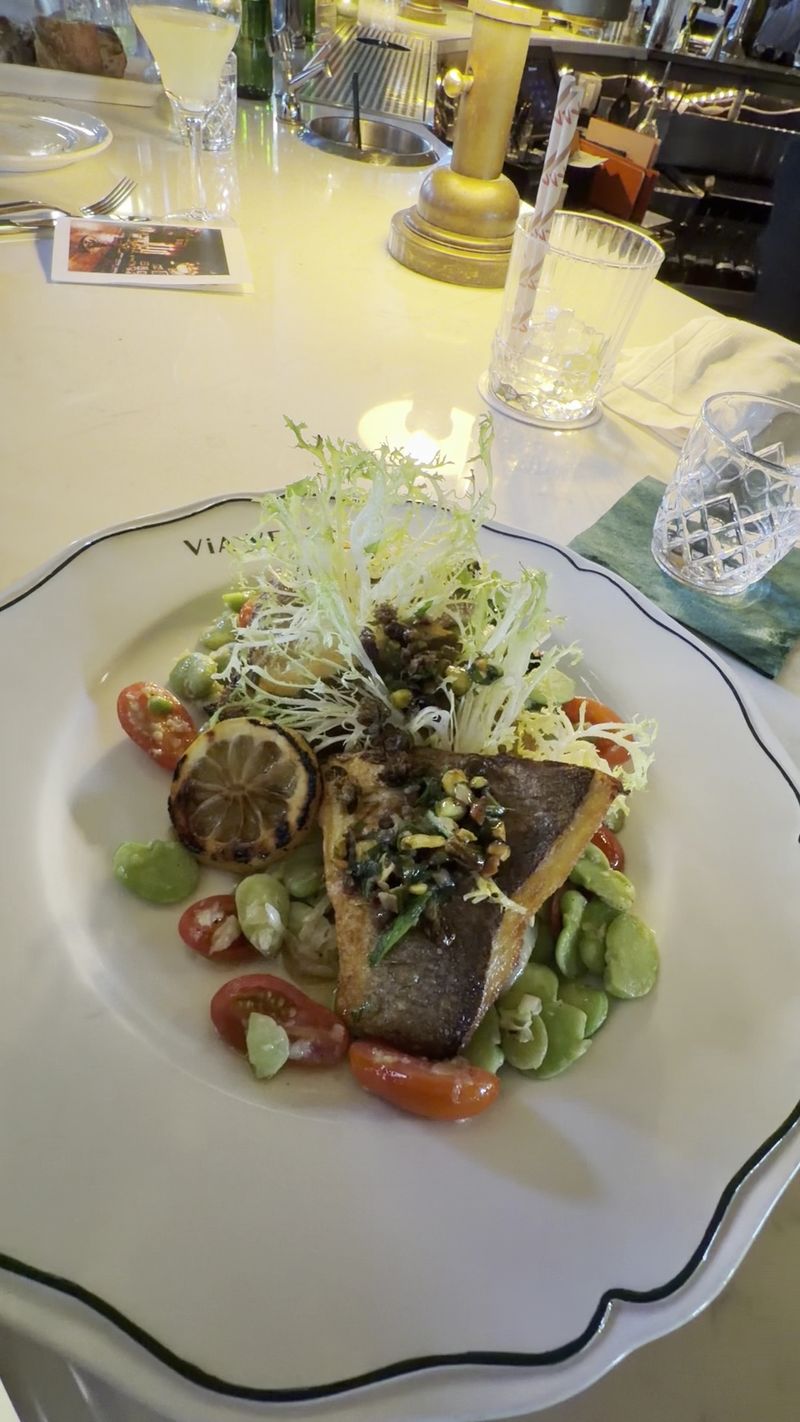
Seafood gets serious attention too. Mussels and charred octopus turn up often, which makes sense given where this restaurant sits.
Starters fall under a cicchetti section, that Italian tradition of tiny snacks. Fried artichokes and warm olives set the tempo before heavier dishes arrive.
Dessert deserves a strategy of its own. Tiramisu appears in playful versions, and a blood orange sorbet cuts through a rich meal nicely.
Portions run modest, which is the point of the format. Order boldly, taste widely, and let the table fill up.
Farm Fresh Coastal Roots
Fresh here is not a buzzword tossed on a chalkboard. Roughly a quarter of the fruits, vegetables, and herbs come straight from a historic farm owned by the same people behind the restaurant.
That shortens the distance between soil and plate considerably. You taste it in a tomato sauce that actually tastes like tomatoes.
Everything else leans local as well. Fishermen, farmers, and cheesemongers around Maine supply the rest.
Executive chef Lee Skawinski builds traditional Italian plates around whatever the season hands over. Menus shift as crops rotate, so a spring visit reads differently than an autumn one.
Dough for the pizzettes gets mixed by hand daily. Toppings follow the harvest rather than a fixed script.
Bread arrives warm and pairs dangerously well with any sauce left in a bowl. Sourdough and focaccia both make regular appearances.
Cooking here stays confident without turning into a performance. No smoke, no tweezers theater, just careful technique and good raw material.
One nice touch: the kitchen handles dietary requests without drama, including gluten free pasta options.
Old Port Cobblestone Magic
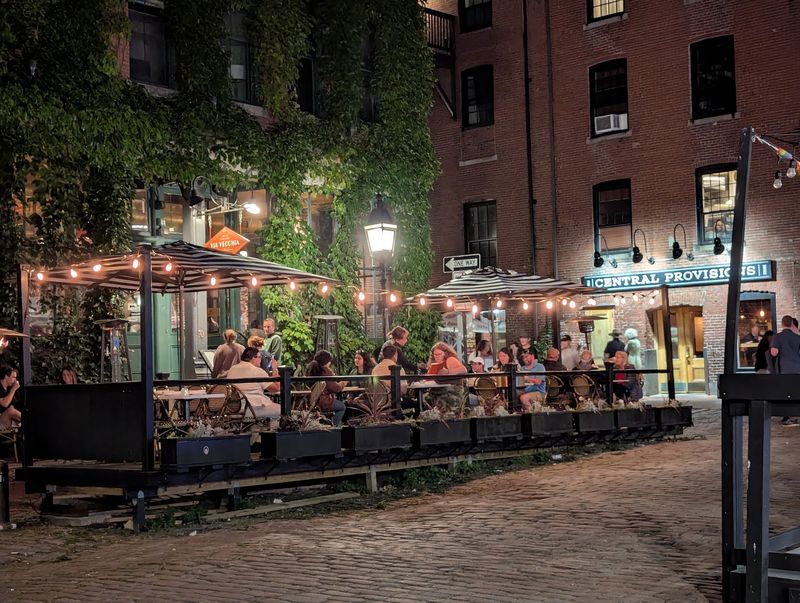
Location matters, and this one earns its keep. Dana Street sits deep in Portland’s Old Port, where cobblestones ripple underfoot and brick warehouses lean into each other.
Evening turns the district golden. Windows glow, lamps flicker on, and the neighborhood shifts into its best self.
Walking here before dinner counts as part of the experience. Shops, galleries, and the working waterfront sit within a few easy blocks.
The harbor is close enough that gulls occasionally photobomb your stroll. Salt hangs in the air, especially in cooler months.
Nineteenth century buildings line the streets in tight rows. Their scale keeps everything walkable and human sized.
Parking takes patience, so arriving early pays off. Many visitors leave the car at a garage and wander in on foot.
Reservations help a great deal, particularly for the front room. That said, showing up early on a weekday sometimes lands you a bar seat without a wait.
Doors open at four every day, running later on Friday and Saturday nights. Golden hour and dinner overlap beautifully in summer.
History Baked Into Brick
The name translates loosely to the old way, and that phrase does heavy lifting. Everything about the place nods backward while staying firmly current.
Construction finished in 1879 under architect Francis H. Fassett, a major name in Maine building history. Brick and granite have held the corner ever since.
Earlier restaurants occupied the same rooms, including Vignola and Cinque Terre. Layers of dining history sit under the current floors.
A full reimagining arrived in 2020, led by restaurateur Joshua Miranda, also known for Blyth & Burrows. Designers pulled inspiration from pre war European bistros rather than chasing trends.
Renovations in 2003 updated the practical bones. A glass enclosed staircase added around 2018 links floors without bullying the old architecture.
The building itself changed hands in 2021, purchased by Ivy Holdings LLC for $3.6 million, and stayed protected. Preservation and reinvention rarely cooperate this smoothly.
Look closely at the trim work and you can spot where old meets new. Original masonry sits beside modern lighting without arguing.
What strikes me most is the restraint. Plenty of historic spaces get scrubbed into blandness or stuffed with fake antiques.
An Evening You Remember
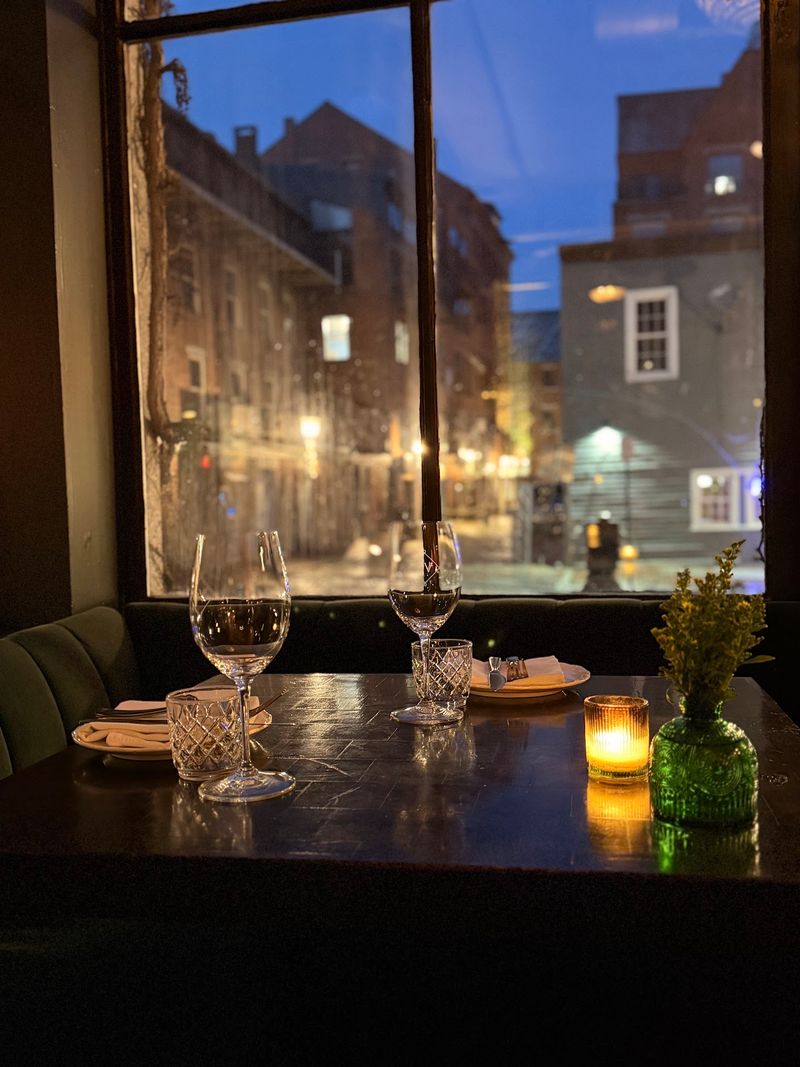
Long after the plates clear, the room stays with you. That is the strange power of this place.
Time stretches oddly here. A quick bite turns into three hours without anyone noticing the clock.
Sound plays a role. Glassware clinks softly, Italian melodies drift under conversation, and the general hum stays warm rather than loud.
Lighting deserves credit too. Everything sits at a flattering level, low enough for atmosphere and bright enough to read a menu.
Small artisan touches keep appearing. Carved ice cubes stamped with a VV seal, crisply folded napkins, polished glasses catching chandelier light.
Winter visits hit differently. Holiday decorations transform the front room, and cold streets outside make the glow inside feel earned.
Special occasions suit the space perfectly, though a regular Tuesday works fine too. Anniversaries, birthdays, or simply a night that deserves better than takeout.
Espresso and cappuccino close things out nicely. Ordering one buys a few extra minutes in a room you will not want to leave. Maine holds plenty of memorable restaurants, yet this one lingers longer than most.