This Breathtaking Nebraska Church Hides Masterpiece Art Sourced From The Vatican
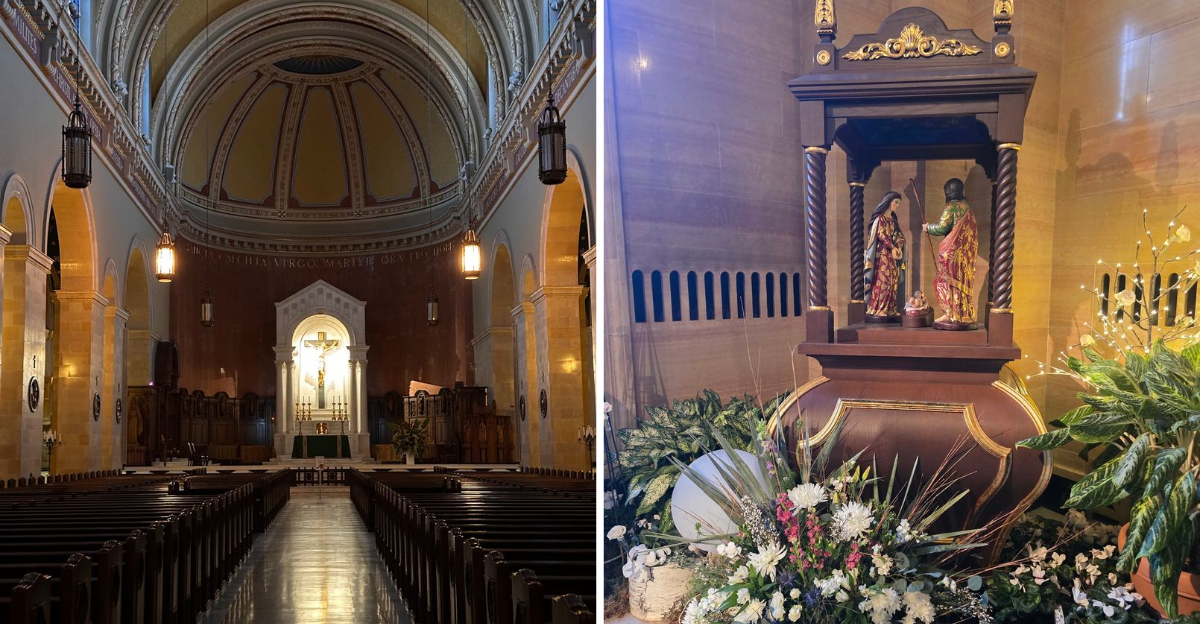
Look up, then look again, because the first glance probably missed something.
Nebraska holds an Omaha church filled with remarkable art and architectural details that reward anyone willing to slow down.
Towering exterior features introduce the scale, but the real treasure hunt continues indoors.
Historic glass, marble pieces, bronze artwork, paintings, and an enormous pipe organ compete gently for attention.
Some details reveal themselves immediately. Others require wandering closer.
That makes the visit especially engaging for architecture and art lovers who enjoy discovering rather than simply observing.
Give the building more than a quick lap. Every extra minute creates another opportunity to spot something fascinating hiding in plain sight.
Spanish Renaissance Rising Over Omaha
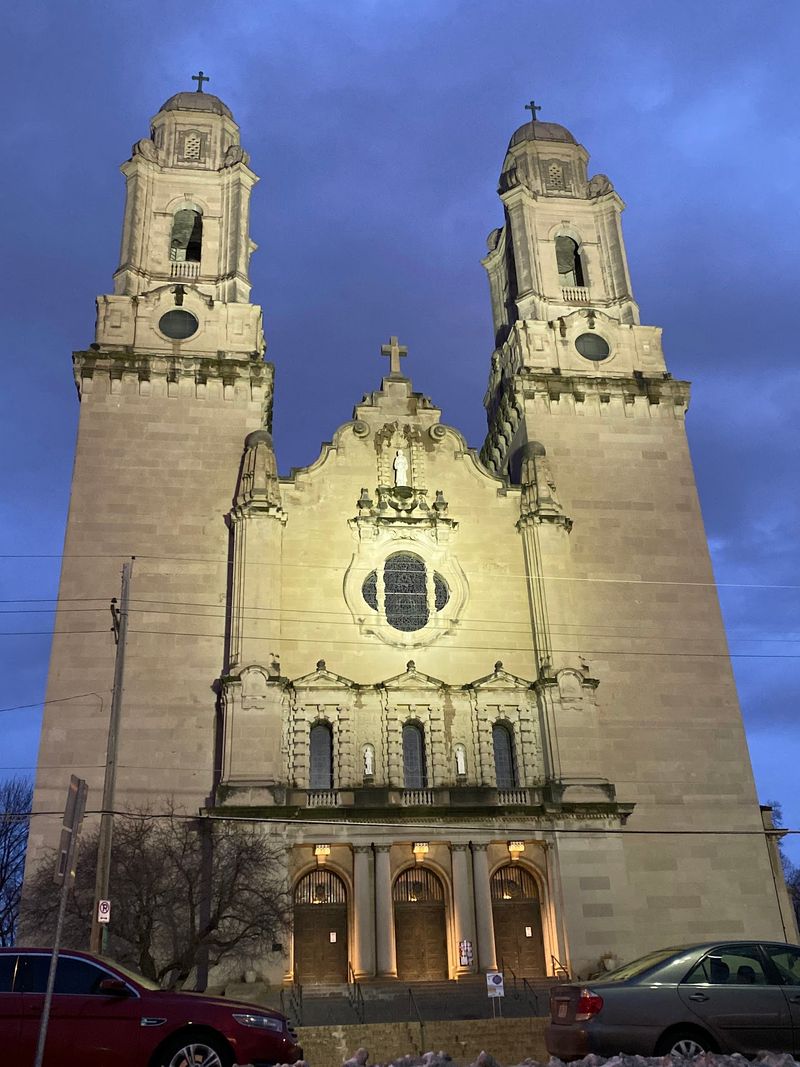
Twin towers hit me first, rising 222 feet with domed cupolas that catch the afternoon light. Architect Thomas Rogers Kimball chose Spanish Renaissance Revival at a time when Gothic ruled American church design.
That choice put the building nearly a decade ahead of a style revival that later swept the southwestern states. The exterior uses off-white Indiana Bedford limestone, which glows warm at sunset and cool at dawn.
Underneath sits a foundation holding over a million pounds of concrete. Walls are solid masonry, built to resist fire and to last generations.
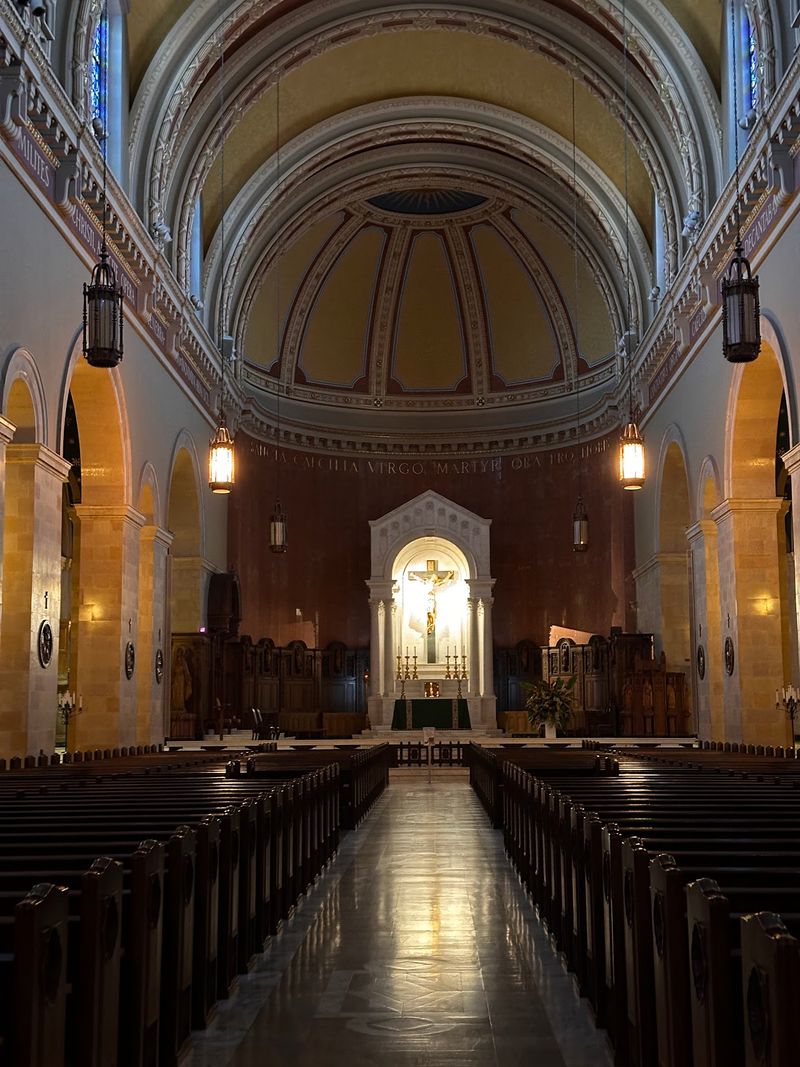
Inside, a barrel-vaulted ceiling stretches overhead with molded ribs running its length. The space feels enormous without feeling cold, and voices drop naturally to a whisper.
When construction finally wrapped in 1959, it ranked among the ten largest cathedrals in the country. I spent a full ten minutes just standing near the entrance, looking up.
The proportions do something to your sense of scale that photographs never capture. You can find Saint Cecilia Cathedral at 701 N 40th St in Omaha, tucked into the Gold Coast Historic District.
Carrara Marble Saints Watching Over
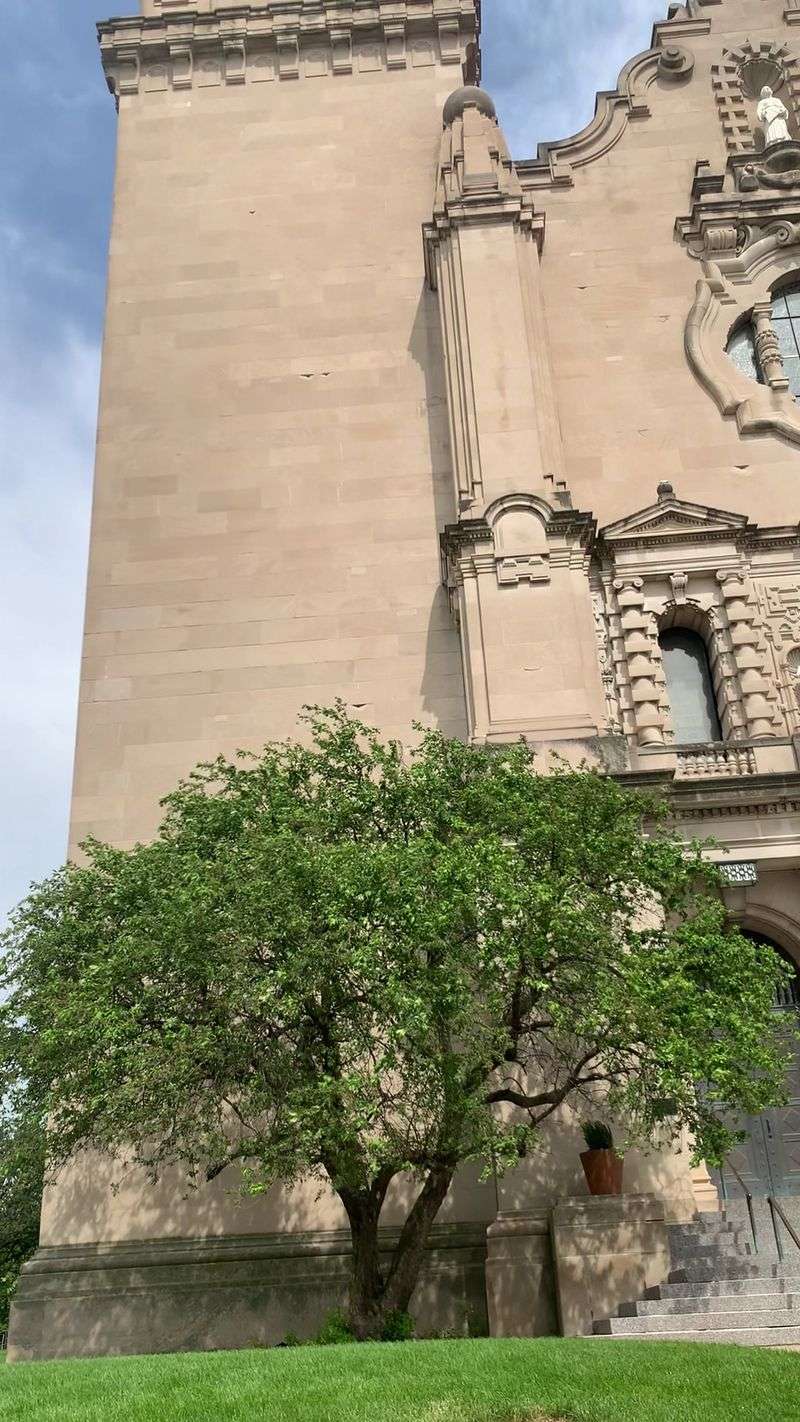
Eighty-five feet above the sidewalk, a marble figure keeps watch over everyone who approaches. The eight-foot statue of Saint Cecilia was carved in Italy from Carrara marble, the same stone Renaissance masters favored.
Three additional saints share the facade, each shaped by Italian hands before crossing the ocean. The stone came from Pietrasanta, a town in Tuscany known for its carving workshops.
Her face tilts upward, hair unbound, robe falling in soft folds. Bright sun makes the marble almost luminous, and I kept circling the lawn to catch different angles.
The Italian connection continues indoors. An altar rail cut from the same Carrara marble runs across the sanctuary, cool and smooth under your fingertips.
Marble like this does not arrive by accident. Someone made a deliberate decision to bring European craftsmanship into the middle of Nebraska, and the effort shows in every carved edge.
Bring a zoom lens if you have one, because the facade details reward close inspection. Morning light works best for the entrance sculptures.
Sixteenth Century Glass From Pamplona
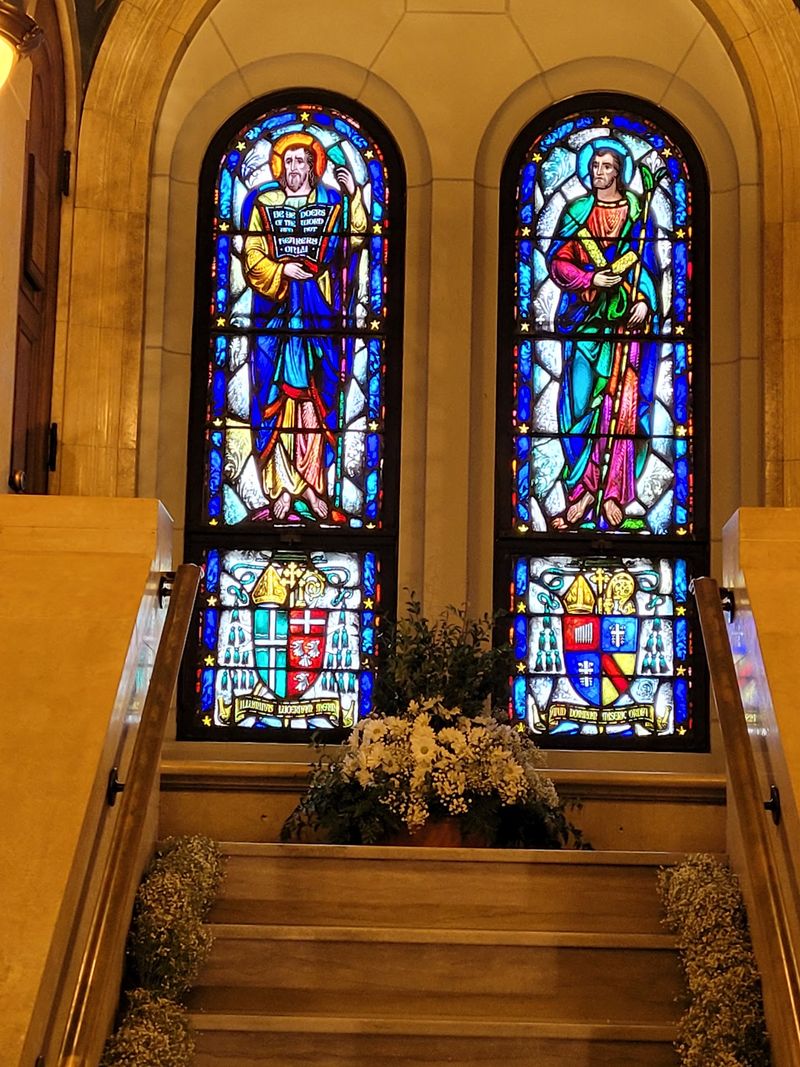
Three windows in the Our Lady of Nebraska Chapel date back to the 1500s. They came from a cathedral in Pamplona, Spain, and were carefully reassembled inside this newer building.
Touching them is out of the question, but standing near them feels like a small privilege. Colored light spills across the stone floor and shifts as clouds move outside.
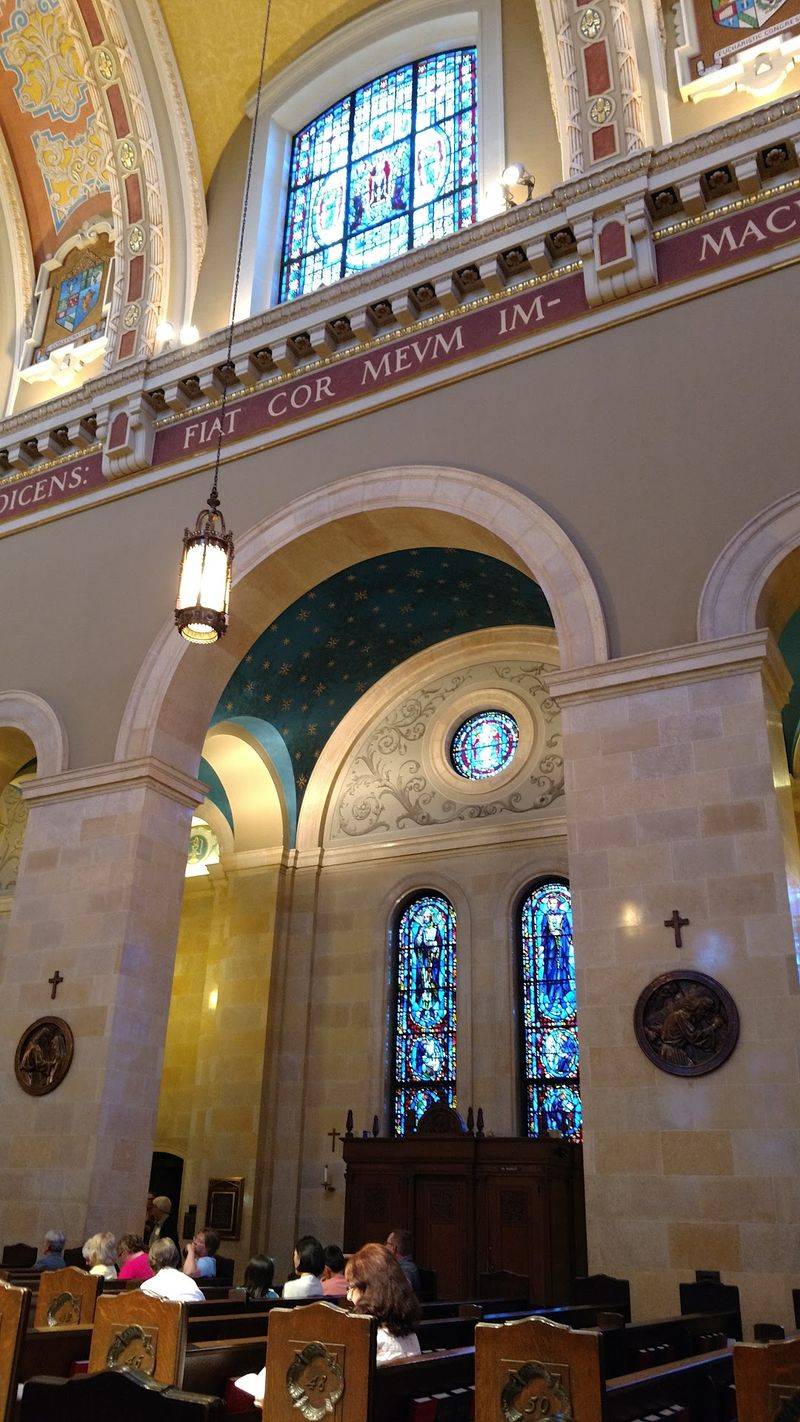
Those antique panels are only part of the story. Fifty-two stained glass windows fill the building altogether, a serious collection by any standard.
Charles Connick Studios in Boston crafted many of them, with additional work from the Rambusch Decorating Company of New York. Two of America’s finest glass houses contributed to a single Nebraska church.
Late morning gave me the richest colors during my visit. The interior changes character hour by hour as the sun tracks across the sky.
Take your time in the side chapels rather than rushing the main nave. Quiet corners hold some of the oldest and most surprising pieces.
I sat in that chapel far longer than planned, watching colored patches creep slowly across the floor tiles.
Colonial Paintings From Cuzco Peru
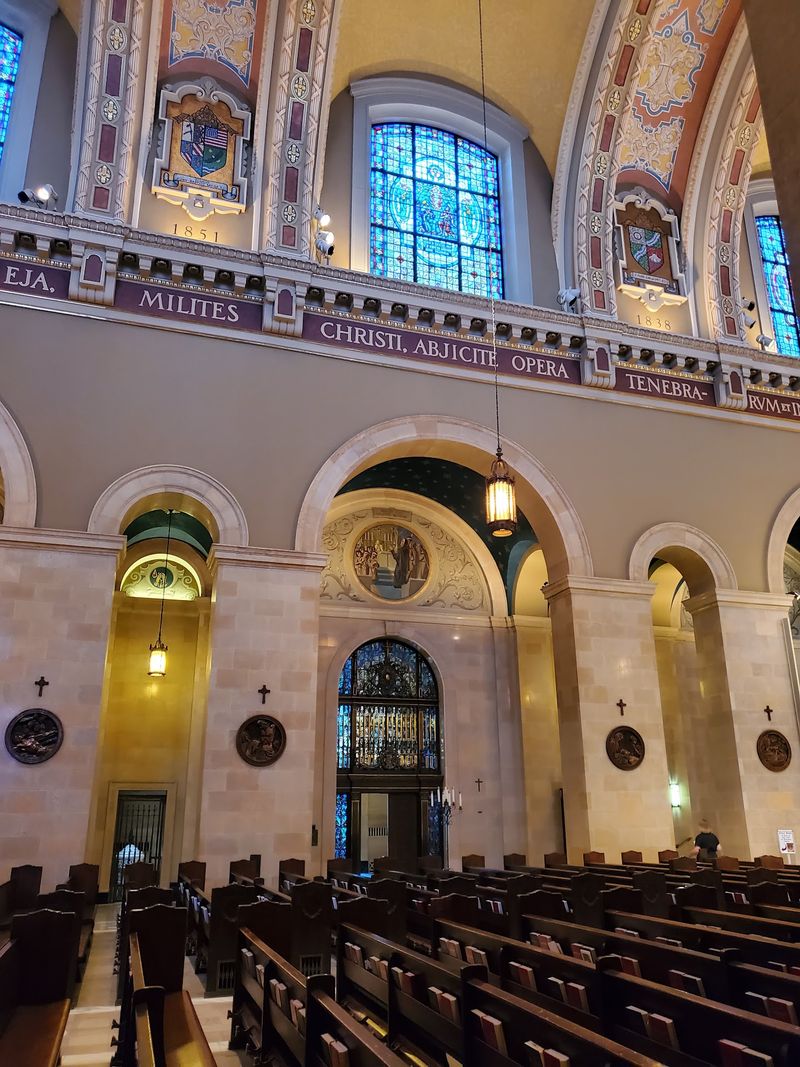
Behind the sanctuary, an ambulatory hides artwork that traveled thousands of miles north. Two dozen paintings, figures, and statues came from Mexico, Central America, and northern South America.
Several pieces belong to the School of Cuzco tradition from Peru. That style blends indigenous Andean techniques with European religious painting, creating something entirely its own.
Gold detailing, unusual color choices, and distinctive facial features set these works apart from the Italian and Spanish material elsewhere in the building. The contrast makes both collections more interesting.
Look for them along the East Ambulatory and inside the smaller Nash Chapel. Most visitors walk straight past without realizing what hangs a few steps away.
The Spanish Colonial collection turns this Omaha landmark into something closer to a museum with an active congregation. Faith expressed through very different cultural lenses shares one roof here.
I found the Cuzco pieces the most memorable part of my visit, partly because I expected nothing like them in Nebraska.
Art Deco Murals And Symbols
Doorway murals in the ambulatories caught my eye on a second pass through the building. Art Deco painter Hugo Ulhm created them, three above openings on the south side and two on the north.
Subjects include beatified and canonized saints of North America from the nineteenth and early twentieth centuries. The Deco styling gives them a crisp, modern edge against the older surroundings.
Higher up at cornice level, illuminated lunettes carry symbolic images. Seven of them represent the gifts of the Holy Spirit, three south and four north.
Other panels stand for Faith, Hope, and Charity. Hope appears as an anchor, and Charity shows up as a flaming heart.
Symbols like these were meant to teach without words, readable at a glance by anyone passing below. That older visual language still works surprisingly well.
It might sound dramatic, but neck strain is real, so find a pew and look up from a seated position. Your shoulders will thank you afterward.
Bronze Stations And Carved Apostles
Sculptor Albin Polasek, a Moravian émigré, began contributing work here in 1939. Roughly forty pieces of his religious art now fill the building.
His bronze Stations of the Cross line the walls, each panel showing a moment from the final hours of Jesus. The faces carry real weight, and I found myself slowing at every station.
Above the main altar hangs his crucifix titled The Victorious Christ. It commands the sanctuary without overwhelming the space around it.
Polasek also carved five relief figures of apostles for the sanctuary wall. His colleague William Hoppe completed the remaining six, finishing the set together.
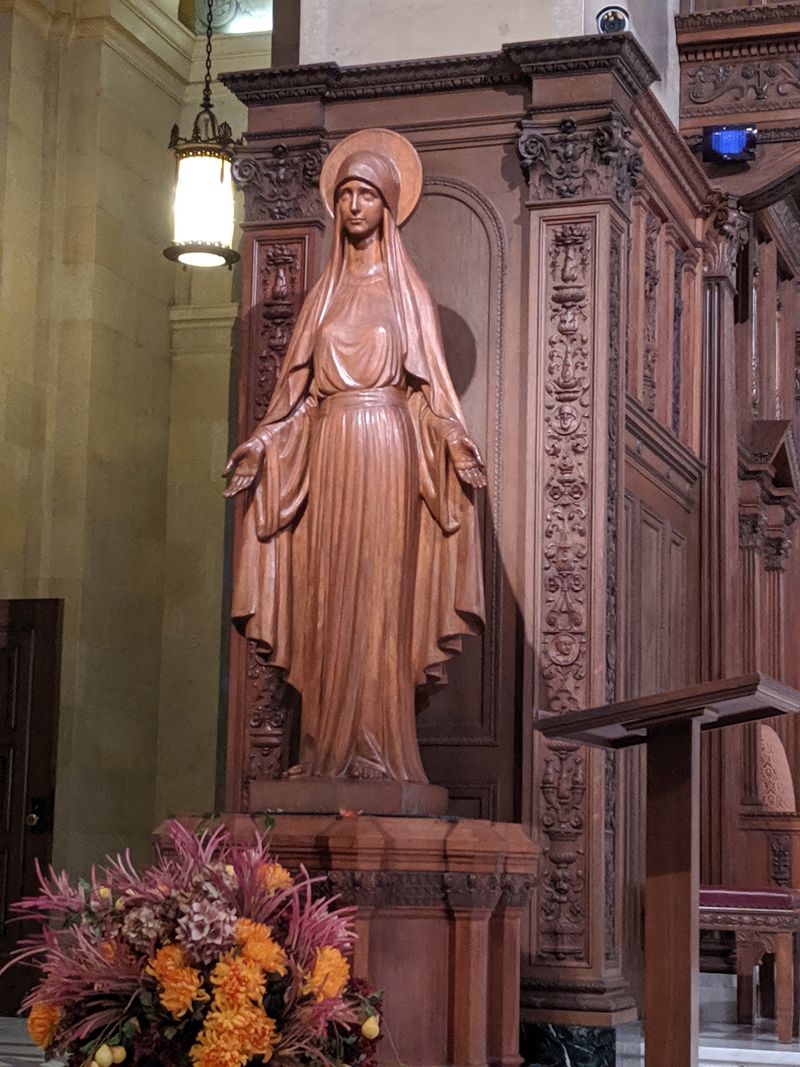
Six mahogany statues of the Doctors of the Church decorate the pulpit, cut from wood with startling precision. The grain still shows through the carving.
Wood, bronze, and marble all appear within a few dozen steps of each other. Few American churches gather that variety of materials under one roof. Visitors often mention the woodwork more than anything else, and I understand why.
Twenty Five Tons Of Music
Naming a church after the patron saint of music sets certain expectations. The Martin Pasi Opus 14 pipe organ more than meets them.
Pasi Organ Builders of Roy, Washington, spent two years and 35,000 hours building it. Installation happened in 2003, with the inaugural performance following in 2004.
Numbers alone are impressive: 34 feet tall, 25 tons, 6,000 pipes, and 55 stops across three manuals and a pedalboard. The instrument dominates its gallery.
Its rarest feature is dual temperament tuning. Organists can switch between meantone and a specially designed well-tempered tuning, allowing authentic Renaissance and Baroque performances alongside later music.
The casework borrows design elements from Thomas Rogers Kimball, the cathedral’s original architect. Old and new blend so smoothly you would assume the organ had always been there.
Acoustics amplify everything. An empty nave holds a seven-second reverberation, so a single chord seems to hang in the air forever. Hearing it played was the highlight of my day in Nebraska.
Fifty Years Of Building Faith
Construction began in 1905, with the cornerstone laid two years later in 1907. Consecration did not happen until 1959.
Fifty-four years of work, funding gaps, and patience went into finishing the project. Five bishops, five pastors, and countless everyday parishioners kept the vision moving forward.
Materials tell part of the story too. Three million red bricks form the core structure, and a hundred tons of steel support the roof and floors.
Recognition arrived in 1979, when the building landed on the National Register of Historic Places and earned official Omaha Landmark status the same year.
A major restoration in 1998 and 1999 refreshed both interior and exterior, bringing Kimball’s original intent back into focus. The results still look sharp today.
Planning a visit is easy. Doors open Monday through Friday from 7 AM to 6 PM, entry is free, and parking sits close by.
Believe me when I tell you that weekday mornings offer the quietest experience, though late January brings an annual flower festival that fills the nave with enormous arrangements.