This California Bowling Ball-Filled Beach In Mendocino Feels Otherworldly
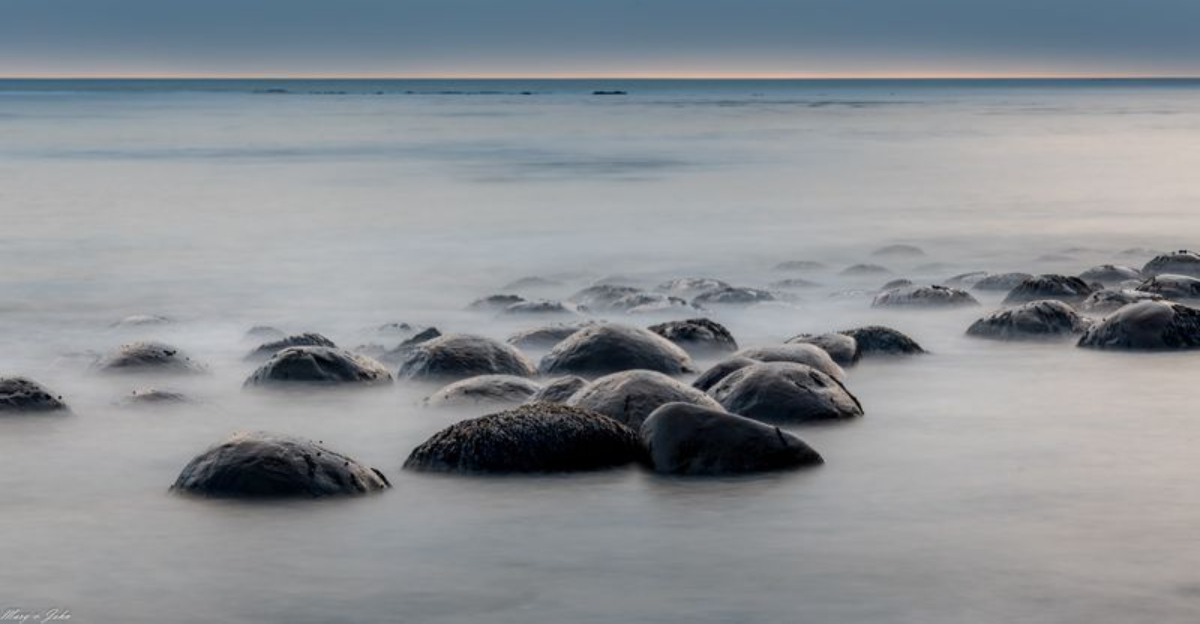
Some beaches blur together. This one doesn’t. Along a rugged stretch of Northern California coastline, there’s a shoreline that looks almost staged.
At first glance, the sand appears scattered with perfectly rounded stones, lined up like someone rolled them in by hand. But nothing here was placed. Nothing was arranged.
Welcome to Bowling Ball Beach, one of the most unusual coastal landscapes in the state.
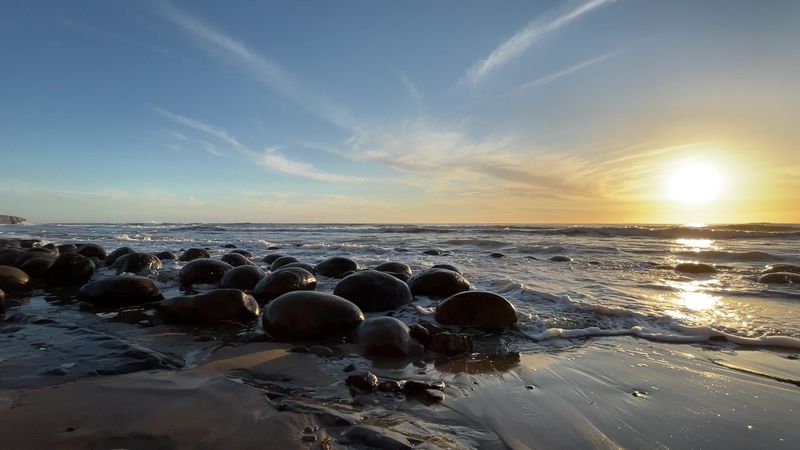
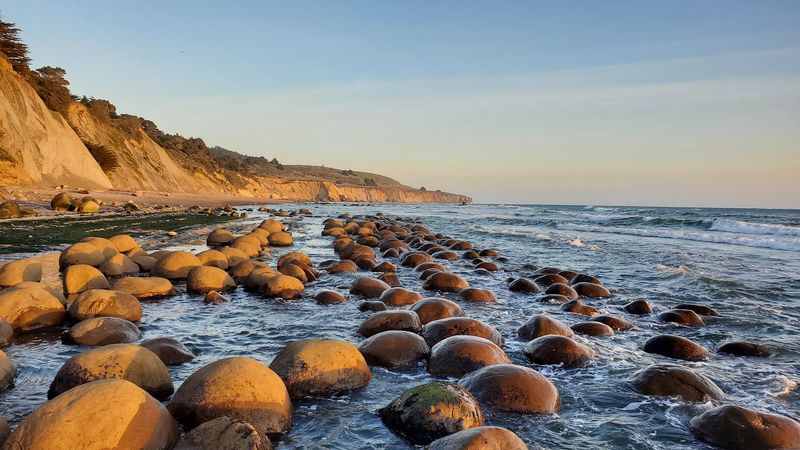
Tucked into the cliffs of Mendocino County, this shoreline only reveals its secret at low tide. As the water pulls back, dozens of massive spherical rocks emerge from the ocean floor, transforming the beach into something that feels almost surreal.
The symmetry is startling. The scale is even more impressive in person.
It’s quiet here. Wind, waves, and the distant crash of surf against rock. No boardwalk. No carnival energy. Just geology on full display.
These formations took millions of years to shape. Standing among them makes time feel bigger. Slower. Heavier.
Whether you’re planning a coastal road trip or just exploring more of California, this shoreline is worth the detour. It delivers something rare – a landscape that truly stops you in your tracks.
1. Geological Formation Of The Concretions
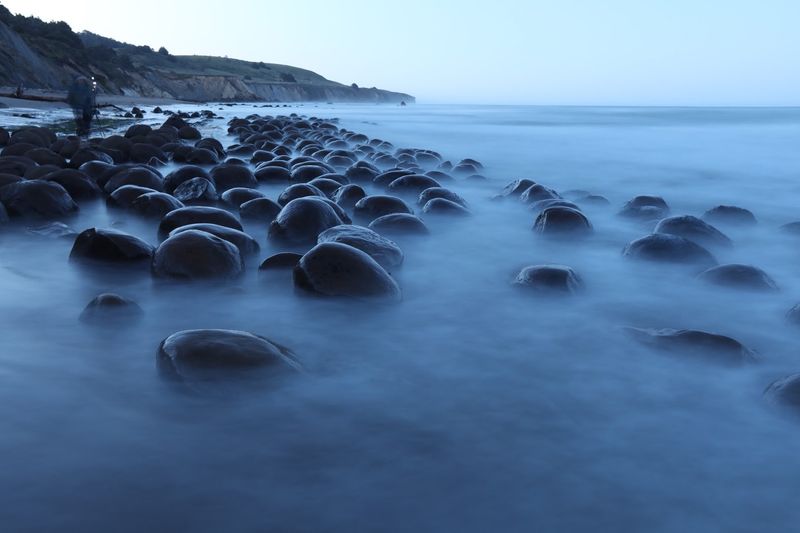
Millions of years in the making, the rounded rocks at Bowling Ball Beach are not actually boulders in the traditional sense.
They are concretions, which are hard masses that form when mineral-rich fluids seep through sedimentary rock and gradually cement grains of sand or stone together around a central point.
The process starts deep within layers of mudstone, where calcium carbonate and other minerals slowly crystallize over enormous spans of time.
The result is a dense, rounded mass that becomes harder than the surrounding rock. As the softer mudstone erodes from centuries of wind, rain, and wave action, these concretions are left behind sitting on the beach.
What makes Bowling Ball Beach particularly striking is how uniform and large many of these concretions are, with some reaching several feet in diameter.
Geologists find the site valuable for studying sedimentary processes, and the formations have been documented in academic literature as a notable example of natural concretion development along the Northern California coast.
2. Optimal Viewing Times And Low Tide Windows
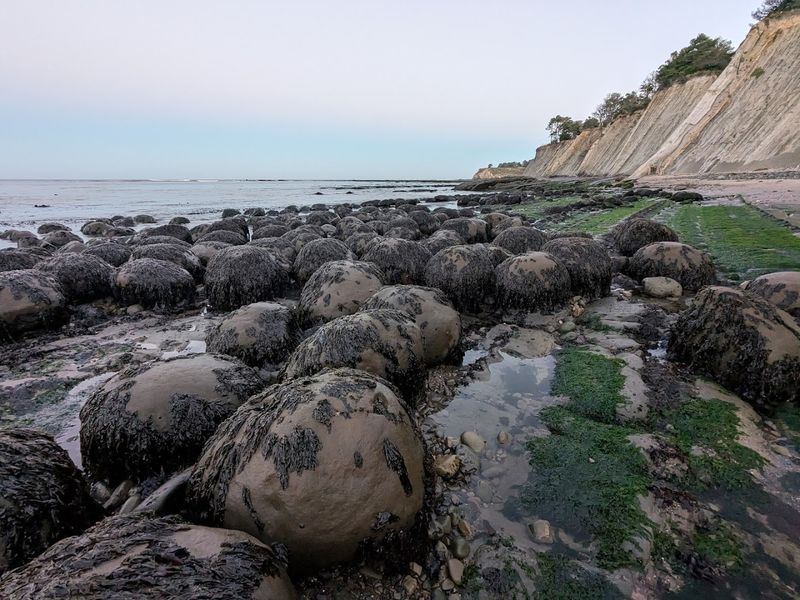
Timing a visit to Bowling Ball Beach correctly makes all the difference between seeing the full spectacle and arriving at a submerged shoreline.
The concretions are only visible during low tide, and at high tide the water covers them almost entirely, leaving no trace of the formations from the trail above.
Checking a reliable tide chart before heading out is strongly recommended, and many visitors plan to arrive at least an hour before the lowest point of the tide to get the most time on the beach.
Tides along the Mendocino coast follow a predictable twice-daily cycle, though the exact timing shifts each day.
Free tide prediction tools are available through NOAA and various coastal apps that cover the Point Arena area specifically.
Morning low tides tend to offer softer natural light that makes photography easier, while afternoon low tides can bring warmer temperatures.
The beach can become slippery when wet, so footwear with good grip is worth considering.
Spending time checking the tide schedule before the trip prevents the disappointment of a wasted drive along Highway 1.
3. How To Access The Beach Via Moat Creek Trail
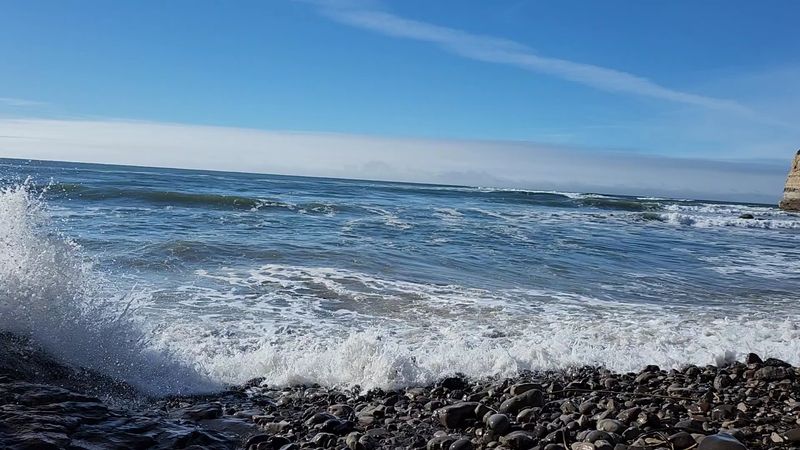
One of the two main ways to reach Bowling Ball Beach is via the Moat Creek Trail, which begins from a gravel parking area directly off Highway 1.
The trailhead is managed by the Mendocino Land Trust and offers a relatively accessible route down to the shoreline compared to other access points along this stretch of coast.
The trail is roughly 1.5 miles in length and descends gradually toward the beach, passing through coastal scrub and offering views of the Pacific along the way.
The path can get muddy during and after rain, and some sections may be uneven, so sturdy shoes are a practical choice.
Dogs are welcome on leash, which makes the trail a popular option for visitors traveling with pets.
Parking at the gravel lot is free and typically has enough space for a dozen or more vehicles, though it can fill up on weekends during good weather.
Arriving early in the morning tends to mean a quieter experience both on the trail and on the beach itself.
The Mendocino Land Trust provides updated trail conditions on its website for those planning ahead.
4. Schooner Gulch Trail As An Alternate Access Route
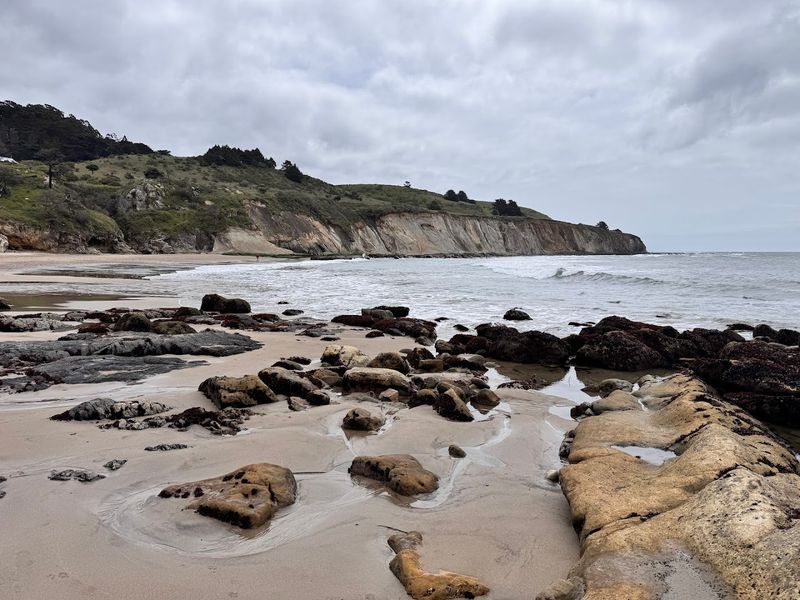
A second trail leading to Bowling Ball Beach starts near mile marker 11.41 on Highway 1 and is known as the Schooner Gulch Trail.
Compared to the Moat Creek Trail, this route is steeper and involves a more rugged descent, making it better suited for visitors who are comfortable on uneven terrain.
The path drops down through coastal bluffs and can show signs of erosion in certain sections, particularly after heavy winter rains.
Footing can be tricky near the bottom where loose soil and exposed roots are common.
Despite the challenge, many visitors prefer this trail because it leads to a wider section of the beach with a different perspective on the concretion field.
The trailhead parking area along Highway 1 is small, with space for only a handful of vehicles, so arriving early is especially important when using this access point.
The trail connects to the same beach as the Moat Creek route, meaning both entry points can be combined into a loop walk for those who want to see the full stretch of shoreline. Checking current trail conditions before visiting is always a smart step.
5. Safety Considerations For Visitors
The trails leading to Bowling Ball Beach come with genuine physical challenges that visitors should take seriously before setting out.
Both the Moat Creek and Schooner Gulch routes involve uneven ground, and the Schooner Gulch descent in particular can be slippery when wet or affected by recent erosion.
Wearing footwear with solid grip is one of the most practical steps any visitor can take.
Flip-flops and smooth-soled shoes are not suitable for the terrain, especially if the trail has been softened by recent rainfall.
Children and older visitors should be closely supervised near the bluff edges, where unstable soil can give way without much warning. Once on the beach, sneaker waves are a known hazard along the Northern California coast.
These are sudden, larger-than-expected waves that can reach further up the shore than the preceding waves suggested.
Standing with full attention on the ocean, keeping a safe distance from the water’s edge, and never turning a back to incoming waves are habits that experienced coastal visitors follow consistently.
Visiting during daylight hours and letting someone know the plan before heading out adds another layer of sensible precaution.
6. Why Checking Tide Charts Is Essential
A tide chart is not just a helpful suggestion for visiting Bowling Ball Beach, it is genuinely essential.
Without checking the tides in advance, there is a real possibility of arriving to find the concretions completely submerged and the beach inaccessible.
The difference between high and low tide along this part of the Mendocino coast can be several feet, which is more than enough to hide the formations entirely.
NOAA maintains a free online tide prediction tool that covers the Northern California coast and can provide hour-by-hour forecasts for the Point Arena area.
Several smartphone apps also offer tide information with easy-to-read graphs that show the rise and fall pattern for any given day.
Planning to be on the beach during the lowest point of the day, known as the tidal minimum, gives the most time to explore the full concretion field.
Tides follow a lunar cycle, meaning the lowest tides of the month often coincide with new and full moons.
These extreme low tides, sometimes called minus tides, expose even more of the rocky seafloor and can reveal additional formations not visible during typical low tides.
Noting these dates on a calendar before booking any travel makes the planning process much more rewarding.
7. Photography Opportunities At The Beach
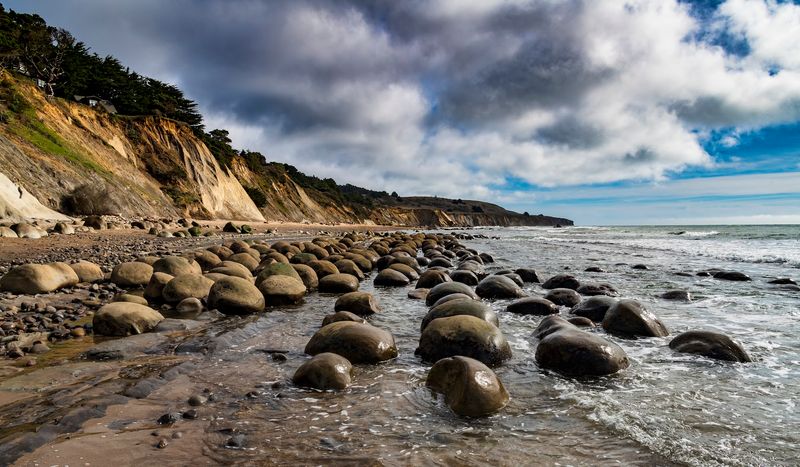
Few natural locations along the California coast offer the kind of visual drama that Bowling Ball Beach delivers during the right conditions.
The combination of perfectly rounded rocks, reflective wet sand, layered mudstone cliffs, and the open Pacific creates a scene with strong compositional depth that photographers of all experience levels find compelling.
Sunrise visits tend to offer soft, directional light that casts long shadows across the concretions and highlights their texture.
Sunset brings warmer tones and the possibility of vivid color in the sky above the ocean.
Both lighting conditions work well, and the choice often comes down to personal preference and which tide window aligns with the time of day. Overcast days are not necessarily a drawback for photography here.
A cloudy sky diffuses harsh shadows and can give the scene a moody, cinematic quality that clear skies sometimes lack.
Wide-angle lenses work well for capturing the full expanse of the concretion field, while a macro lens can reveal the fine mineral textures on the surface of individual rocks.
Tripods are useful for longer exposures that blur the motion of incoming waves around the formations.
8. Wildlife And Tide Pool Discoveries
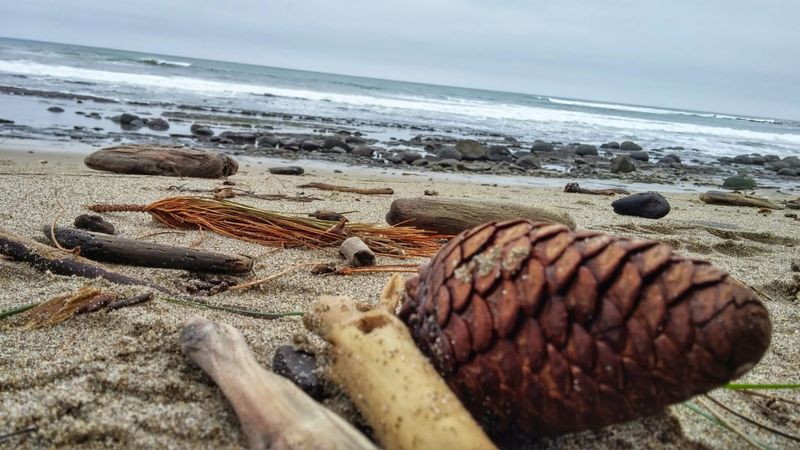
Beyond the geological spectacle, the shoreline at Bowling Ball Beach supports a surprisingly rich variety of marine life.
The rocky substrate created by the concretions and surrounding reef provides ideal habitat for creatures that thrive in the intertidal zone, the narrow band of coast that is alternately covered and uncovered by the tides.
Tide pools in the area contain sea stars, hermit crabs, mussels, barnacles, and various species of anemone. Small fish called sculpins are often spotted darting between rocks in the shallow water.
Harbor seals occasionally haul out on the rocks nearby, and sea birds including cormorants and oystercatchers are regularly seen foraging along the shoreline.
The key rule when exploring tide pools is to look without touching. Removing or disturbing any organism from a tide pool is prohibited, and even stepping on barnacles or mussels causes damage that can take years to recover.
Staying on wet sand or bare rock while observing the pools keeps the habitat intact for future visitors.
Children often find tide pool exploration just as exciting as the bowling ball rocks themselves, making the beach a genuinely well-rounded outdoor destination.
9. Environmental Preservation And Leave No Trace
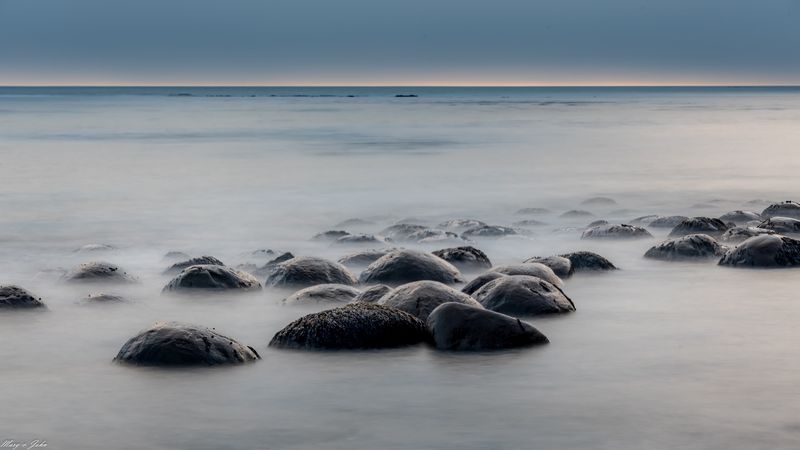
Bowling Ball Beach sits within Schooner Gulch State Beach, a protected area managed under California State Parks.
The designation means that natural features, including the concretions themselves, are protected by law.
Removing rocks, carving into surfaces, or disturbing any geological formation is not permitted and carries legal consequences.
Packing out all trash is a basic expectation at any natural area, and it matters especially here because the beach has no trash cans or facilities on-site.
Bringing a reusable bag for any wrappers, food scraps, or other waste keeps the shoreline clean and helps maintain the experience for everyone who visits after.
Fires might not be allowed on the beach, and camping is not permitted within the state beach boundaries.
Foot traffic concentrated in the same areas over time can contribute to trail erosion, particularly on the bluff sections leading down to the shore.
Staying on established paths rather than cutting new routes helps slow that process.
The Mendocino Land Trust and California State Parks both rely on responsible visitor behavior to keep this site accessible for future generations, and the effort required is genuinely minimal compared to the reward of the experience.
10. Seasonal Variations And Year-Round Appeal

Bowling Ball Beach holds appeal across every season, though the experience shifts noticeably depending on the time of year.
Summer brings the most stable weather and the longest daylight hours, which means more flexibility for planning a visit around low tide windows.
Visitor numbers tend to peak between June and September, and the parking areas at both trailheads can fill up by mid-morning on weekends.
Fall and spring offer a quieter atmosphere with fewer crowds and often dramatic skies that add character to the coastal landscape.
Wildflowers bloom along the bluff trails in spring, and migrating gray whales pass close to the Mendocino coast between December and April, occasionally visible from the beach or the trail above.
Winter visits come with the highest chance of rain and the roughest surf, but the beach has a raw, atmospheric quality during this season that many visitors find memorable.
Tide conditions in winter can also produce some of the year’s lowest tides, which expose the largest expanse of the concretion field.
Layering clothing and wearing waterproof footwear makes a winter visit comfortable and worthwhile for those willing to embrace the cooler, windier conditions.
11. Nearby Amenities In Point Arena
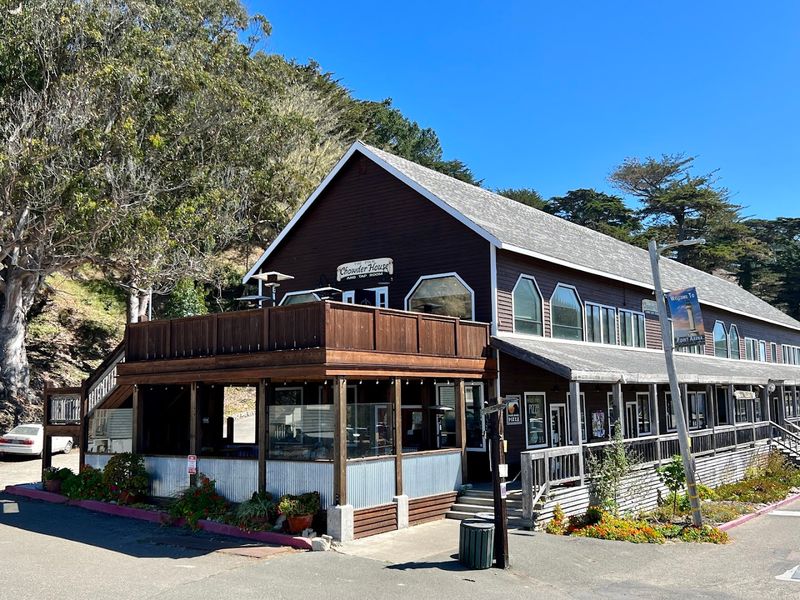
Point Arena is the closest town to Bowling Ball Beach, sitting roughly three miles to the north along Highway 1.
The town is small but has enough practical amenities to support a day trip or overnight stay without needing to drive far for basic needs.
Several locally owned restaurants and cafes are available for a meal before or after the beach visit.
The Arena Theater, a restored historic movie house located at 214 Main Street, Point Arena, CA 95468, operates as a community cinema and event venue and is worth a stop for visitors interested in the town’s cultural character.
Gas stations and a small grocery store are also available in Point Arena, which helps with any last-minute supply needs before heading down to the coast.
Accommodations in and around Point Arena range from small inns to vacation rentals, and booking in advance is recommended during summer weekends when availability tightens.
The Point Arena Lighthouse, one of the tallest lighthouses on the West Coast, is located just a few miles from town and offers tours that pair well with a beach visit for those planning a full day of exploration along this stretch of the Mendocino coast.
12. Historical Background Of Schooner Gulch
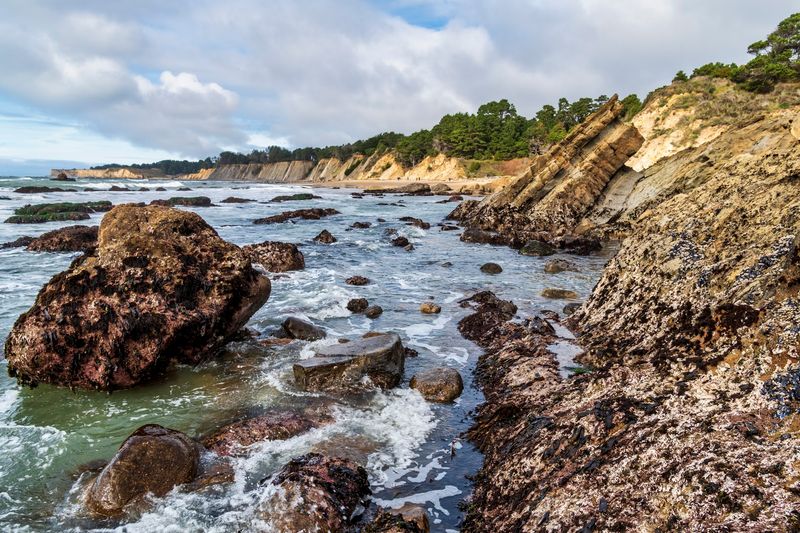
The area surrounding Bowling Ball Beach carries a layer of history that adds depth to what might otherwise feel like a purely geological attraction.
The gulch that gives the beach its alternate name, Schooner Gulch, was once the site of a small settlement during the 19th century.
The name reflects the era when schooners, small sailing vessels, were used to transport timber and other goods along the rugged Northern California coast.
No physical traces of the settlement remain within the current state beach boundaries, but the name itself preserves a record of human activity in a landscape that now feels entirely wild.
The broader Mendocino County coastline was heavily logged during the 1800s, and many of the small coves and gulches along Highway 1 were used as loading points for ships carrying redwood lumber to San Francisco and beyond.
Understanding this history reframes the experience of standing on the beach. What looks like untouched wilderness today was once a working coastal landscape shaped by economic activity.
The recovery of the vegetation and wildlife over the past century reflects how resilient these coastal ecosystems can be when given time and protection.
Interpretive signs near the trailheads occasionally reference this regional history for visitors who want to learn more.